
Most independent studies and “honors theses” do almost nothing for medical school applications.
The problem is not that they are independent or that they are theses. The problem is that they are vague, poorly structured, and disconnected from what admissions committees actually value.
Let me break down how to design an independent study or honors thesis that really helps your med school applications—one that leaves a measurable footprint in:
- your AMCAS/AACOMAS “Work & Activities”
- your letters of recommendation
- your ability to talk like a scientist in interviews and secondaries.
We are not aiming for “looks nice on a transcript.” We are aiming for: This clearly changed how this student thinks, works, and contributes.
Step 1: Define the Purpose in Med-App Terms, Not Just Academic Terms
Most students start with: “I need an honors thesis to graduate” or “I want to do an independent study in something I like.” That is backwards.
You want the project to serve three simultaneous purposes:
(See also: Advanced Study Skills for Pre‑Med Organic Chemistry and Biochemistry for more details.)
- Academic requirement (honors program, department thesis, independent study credits)
- Skill-development vehicle (research design, data analysis, literature synthesis, scientific communication)
- Application value amplifier in at least 2 of these AMCAS “buckets”:
- Research experience
- Leadership/initiative
- Teaching/mentoring
- Community service / advocacy
- Longitudinal commitment
So before you even think topic, answer these four specific questions in writing:
- What new skills will I have by the end of this project that I do not have right now (e.g., logistic regression, REDCap data entry, IRB protocols, R/Python coding, qualitative coding, systematic review methods)?
- How will this project show evidence of initiative and ownership, not just “I joined someone’s lab”?
- What is the realistic path to tangible output: poster, abstract submission, co-authorship, institutional presentation, or formal thesis defense?
- Who will be able to write about this experience in a detailed letter of recommendation?
(Related: Leveraging Statistics and Data Science Courses for Future Clinical Work)
If you cannot answer those with specificity, you are not ready to pick a topic.
Step 2: Choosing the Right Type of Project (Not Just a Topic Area)
Independent study / honors work that helps med apps usually falls into one of these designs:
Hypothesis-driven empirical research
- Lab-based (bench or translational)
- Clinical (chart review, outcomes, QI)
- Behavioral / social science (surveys, interventions, observational)
Structured scholarly synthesis
- Systematic or scoping review
- Meta-analysis (more advanced)
- Policy or curriculum analysis with a primary data component
Hybrid scholarly + implementation project
- Quality improvement (QI) with Plan-Do-Study-Act cycles
- Curriculum design + evaluation for premeds or community health
- Public health intervention with measurable outcomes
Let’s be concrete about their relative value.
Option A: Empirical Research – High Impact if Executed Well
This is typically the strongest fit for MD and MD-PhD programs and still quite valuable for DO schools.
Examples:
Bench research:
“Characterizing the role of microRNA-21 in cardiac fibroblast proliferation using a CRISPR-Cas9 knockdown model.”
– Independent study: you design a focused set of validation experiments, learn cell culture, qPCR, and analysis.
– Output: internal poster, maybe second or third author on a paper.Clinical outcomes project:
“Thirty-day readmission rates after heart failure admission in uninsured vs insured patients at Hospital X.”
– You learn: REDCap, basic statistics, chart abstraction, IRB processes.
– Output: abstract to ACC or local research day.Behavioral/education project:
“Impact of a brief motivational interviewing workshop for student volunteers at a free clinic on patient adherence counseling.”
– Added benefit: overlaps with teaching/leadership.
These signal: scientific thinking, comfort with data, perseverance, and “I can contribute to the evidence base,” which admissions committees like.
Option B: Structured Review – Medium-High Impact if Rigor Is High
If your institution has limited lab/clinical access, a systematic review or scoping review can still be powerful if done with proper methodology and supervision.
Weak version (not helpful): “I read a bunch of papers on burnout and wrote a summary.”
Strong version (helpful):
- Defined question using PICO or similar framework
- Pre-specified inclusion/exclusion criteria
- PRISMA-style flow diagram
- Structured data extraction and risk of bias assessment
- Attempted registration (PROSPERO, OSF) if appropriate
This moves you from “I like reading about medicine” to “I can rigorously synthesize a body of evidence.”
Option C: QI / Implementation – Underrated and Very Relevant Clinically
Quality improvement projects can be extremely attractive, especially for students interested in primary care, hospital medicine, or systems-based practice.
Example:
- “Reducing inappropriate telemetry orders on a general medicine floor through an order-set redesign and provider education.”
You would:
- Collect baseline data
- Implement a simple intervention (e.g., EMR prompt, pocket card)
- Re-measure after implementation
- Present results locally
This aligns with the ACGME’s obsession with QI and patient safety. AMCAS reviewers know this.
Step 3: Selecting a Mentor Strategically (Not Just Nicely)
A kind, approachable mentor is good. A productive, connected mentor is essential. You want both.
Use this checklist when evaluating potential mentors:
Track record of output with undergrads
- Have they had undergraduates as co-authors in the last 5 years?
- Do they routinely submit to your school’s research day?
Clear project scope for a 2–3 semester timeline
- If their last undergrad project took 3 years to yield a poster, be cautious.
Access to infrastructure
- Existing IRB protocols you can be added to
- Access to data sets, lab space, or participant pools
- A research coordinator or senior student/RA who can help you ramp up
Letter-writing reputation
- Ask senior students in the lab:
“Does Dr. X write detailed, advocate-level letters, or are they generic?” - A generic letter from a “famous” PI is less valuable than a detailed letter from a mid-level, hands-on mentor.
- Ask senior students in the lab:
Your independent study / thesis value is often determined more by the mentor ecosystem than your raw enthusiasm.
Step 4: Framing the Project So It Reads Well on AMCAS
You should design your project from day one with the AMCAS “Work & Activities” 700-character and 1325-character “most meaningful” limits in mind.
Build Around Three Core Messages
When someone reads the activity entry or hears your 2–3 minute interview summary, they should be able to answer:
What problem were you trying to address, and why did it matter?
- Not “I did western blots.”
- “We were investigating why patients with X disease do poorly on therapy Y, focusing on pathway Z.”
What was your discrete role?
- “I maintained cell lines” is too generic.
- “I independently designed and optimized the PCR primers, then analyzed the Ct data under supervision” shows ownership.
What did you learn that changed your thinking or future behavior?
- Interpretive, not just descriptive.
Two Parallel Documentation Tracks
From the moment you start, maintain:
A technical log (for thesis/methods):
- Protocols you learned
- Software/statistical tests used
- IRB numbers, sample sizes, timelines
A reflection log (for AMCAS and interviews):
- Specific challenges (a failed experiment, dataset issue, subject recruitment problem)
- Ethical questions or judgment calls
- Times you took initiative to solve a problem
- 2–3 “story” moments that illustrate growth
Those reflection notes become priceless when you write your personal statement, secondaries, and “most meaningful” essays 1–2 years later.
Without them, projects blur together and you default to generic language.
Step 5: Designing Scope and Timeline That Actually Finish
An unfinished thesis or abandoned independent study helps your growth but is much harder to explain on applications.
You want something that:
- Can demonstrate clear milestones within 9–18 months
- Has outputs at 3, 6, 12 months that can go into your CV, even if the final manuscript takes longer
Example of a Practical 12–15 Month Honors Thesis Timeline
Assume you start January of your junior year and apply June after senior year (typical gap year).
Month 0–2: Foundation and Design
- Deep dive into literature (20–40 core articles)
- Narrow your research question into something operational
- Draft protocol (methods, sample size idea, measures, feasibility)
- Meet with mentor and, if applicable, statistician
Month 3–5: IRB / Setup / Pilot
- Submit IRB or be added to existing protocol
- Build data collection instruments (REDCap, Qualtrics, etc.)
- Pilot 5–10 subjects or data points
- Refine methods based on pilot issues
Month 6–10: Full Data Collection and Initial Analysis
- Execute data collection
- Learn and run core analytic methods:
- Basic: t-tests, chi-square, logistic regression
- Qualitative: thematic analysis with a codebook
- Submit an abstract to your institution’s research day or a regional/national meeting
Month 11–15: Interpretation, Writing, and Dissemination
- Complete thesis writing
- Present at research day
- Work with mentor to decide whether to target a poster, brief report, or full manuscript
By the time you submit AMCAS:
- You have a named project with clear methods.
- You likely have at least a poster or institutional presentation under review/accepted.
- You can describe concrete steps you led and obstacles you overcame.
That is exactly the pattern application readers look for.
Step 6: Building “Independence” and “Honors” into the Design
Many students misunderstand “independent study” as “I must do this with no help” and “honors thesis” as “this must be groundbreaking.” Both are wrong.
What “independence” means to application readers:
- You are not just an extra pair of hands.
- You understand the why behind what you are doing.
- You can explain your project without your mentor present.
- You drove at least one substantial part of the process (design, data collection, analysis, or writing).
What “honors” means to them:
- The project required significant intellectual rigor.
- There was some form of evaluation beyond “completed hours” (thesis defense, committee review, graded manuscript).
- You pushed beyond routine lab TA-level tasks into analytical and interpretive work.
Features That Signal True Independence
Try to incorporate at least 3 of the following:
- You authored the first full draft of the protocol or methods section.
- You designed or significantly revised the data collection instrument.
- You pre-specified the primary outcome or analytic plan with guidance.
- You took first pass at the analysis code (R, SPSS syntax, Stata do-file).
- You gave at least one formal presentation (lab meeting, department seminar) where you led Q&A.
These are the details that mentors put into strong letters:
“Alex designed the survey from scratch, conducted the initial factor analysis, and independently led our group meeting where the results were reviewed.”
Step 7: Integrating Clinical or Human Relevance Without Overpromising
You do not earn extra credit by claiming your honors thesis “will change how we treat cancer.” That kind of overreach damages credibility.
Instead, you want:
- A clearly articulated, plausible line from your project to real-world relevance.
- A modest, precise statement of implications.
Examples of strong framing:
- “While our cross-sectional design cannot establish causality, these data suggest that screening for food insecurity in the ED may identify a subset of frequent utilizers for targeted resources.”
- “Our study is a small step in refining the laboratory assay, but it helps narrow the set of candidate conditions where biomarker X might have clinical value.”
This kind of honest, bounded interpretation shows you understand the limits of evidence—a major plus in med school interviews.
Step 8: Aligning with Different Types of Medical Schools
Not every project speaks equally to every kind of medical program. Some nuance:
MD (Allopathic) Schools
They generally value:
- Empirical research with clear methods and outcomes
- Any evidence of potential for future scholarly productivity
- Comfort with reading and interpreting scientific papers
Highly research-intensive schools (e.g., UCSF, Penn, Harvard) will weigh:
- Depth of involvement
- Duration (multi-year is stronger)
- Output (presentations, publications)
…more heavily than less research-intensive schools.
For these, an honors thesis that yields:
- At least one poster or abstract submission
- Clear upward trajectory (e.g., progressing from RA → independent project leader)
is extremely helpful.
DO (Osteopathic) Schools
They tend to be more flexible. While they like research, they may weigh:
- QI projects
- Community-based interventions
- Education scholarship
just as heavily as basic science work. An independent study on:
- Improving vaccination rates in a rural clinic
- Evaluating a health literacy module for underserved high school students
can fit very well with DO schools’ stated missions on holistic, community-oriented care, especially if you show measurable impact.
MD-PhD / Physician-Scientist Tracks
For these programs, an honors thesis alone is rarely enough. But:
- A well-designed thesis embedded in a multi-year research arc
- Co-authorship on at least one peer-reviewed paper (can be middle author)
- Strong letters explicitly stating “This student functions at an early graduate-student level”
will strengthen your competitiveness substantially.
Step 9: Documenting and Packaging Your Work for the Application
A common failure point is at the end. Students complete an excellent project but package it poorly on AMCAS or in secondaries.
On Your CV
Include:
- Formal title of thesis / independent study
- Mentor name and department
- Dates (start–end)
- A 1–2 line description containing:
- Study type (e.g., retrospective cohort study, cross-sectional survey, systematic review)
- Population/context (e.g., patients with X, students at Y)
- Main outcome or focus
Example:
“Honors Thesis: ‘Predictors of 30-Day Readmission Among Heart Failure Patients at a Safety-Net Hospital’ (Retrospective cohort study analyzing 500 admissions; focused on social determinants of health). Mentor: Jane Doe, MD, MSc, Division of Cardiology.”
On AMCAS “Work & Activities”
For a non–most-meaningful entry (700 chars), you emphasize:
- 1–2 key responsibilities
- Specific skills (SPSS, lab techniques, qualitative coding)
- Any outputs (poster, manuscript in preparation)
For a most meaningful entry (1325 chars), you add:
- A brief narrative of challenge and growth
- A concrete story: a failed experiment you salvaged, a recruitment issue you solved, a critical question from your defense that changed your thinking.
In Your Personal Statement and Interviews
Your thesis or independent study can appear as:
- A turning point for how you understand medicine (e.g., complexity of human subjects research, social determinants of health, uncertainty in science).
- Evidence for your claim that you enjoy tackling complex, open-ended problems.
- Illustration that you can sustain effort on a long-term project while managing a heavy course load.
What you avoid:
- Excessive jargon
- Overclaiming impact
- Sounding like you are reciting your methods section
You aim for a middle ground: technically literate but accessible to a non-specialist faculty interviewer in, say, psychiatry or pediatrics.
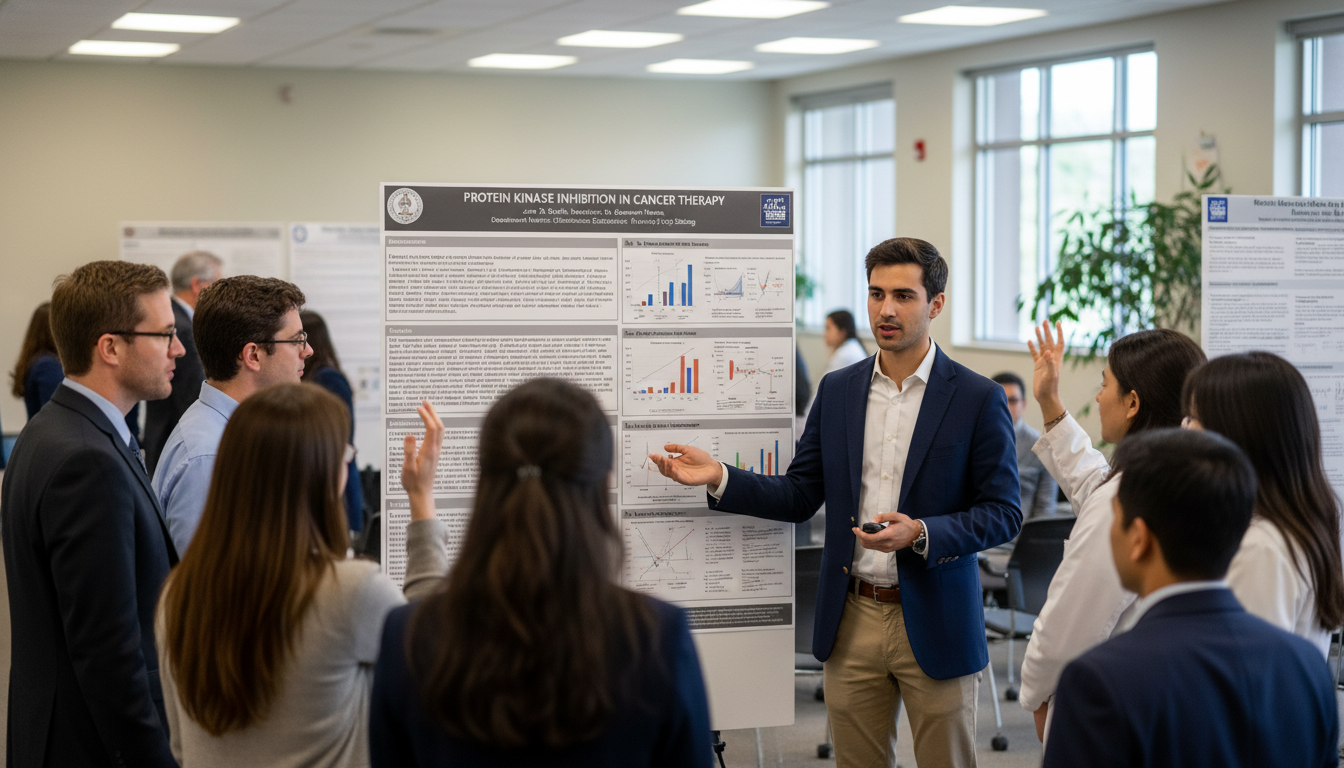
Step 10: Common Pitfalls and How to Avoid Them
Let us be blunt about where many students lose value.
Pitfall 1: Overly Ambitious Scope
Example: A single undergrad trying to run a multi-site RCT, collect follow-up data, and publish in JAMA within 1 year.
Fix:
- Reduce scope to something that can be fully executed locally.
- Aim for methodological soundness over scale.
- Remember: a clean, well designed small project is more impressive than a gigantic mess.
Pitfall 2: “Assistant Forever” Syndrome
You stay in the same lab for 2 years but never move beyond dishwashing, data entry, or animal husbandry.
Fix:
- At the 4–6 month mark, ask explicitly:
“Could I start taking more ownership through an independent project or an honors thesis tied to this work?” - If the answer is “maybe later” repeatedly, consider switching to a mentor who lets undergrads lead small sub-projects.
Pitfall 3: Weak Supervision on Independent Projects
Some independent studies are functionally unsupervised: a faculty member signs off but barely meets you.
Fix:
- Insist on regularly scheduled meetings (biweekly at minimum).
- Create a shared document (e.g., project charter) with goals, deliverables, and deadlines.
- If a mentor is too hands-off, bring in a co-mentor (postdoc, senior grad student, clinician) with the PI’s blessing.
Pitfall 4: Ignoring IRB and Ethical Requirements
Trying to run a survey on patients or collect identifiable data without IRB approval is a serious red flag.
Fix:
- Ask explicitly, “Do we need IRB review for this?”
- If the project involves people, patient data, or sensitive topics, assume yes until told otherwise.
- Being able to discuss IRB processes responsibly is a plus in interviews.
Pitfall 5: Poor Time Management in the Final Semester
You leave analysis and writing until the last 4 weeks. The thesis gets rushed, corners are cut, and no abstract or poster emerges.
Fix:
- Treat Month 6–10 as “analysis and preliminary writing” time, not just data collection.
Step 11: Building Longitudinal Narrative Across College
The strongest applications do not present an honors thesis in isolation. They show a coherent arc:
- Sophomore year: Joined lab / clinic–research project as assistant.
- Junior year: Took on more responsibility; designed independent study / honors thesis.
- Senior year: Led your own sub-project, presented at research day, possibly helped mentor a newer RA.
On paper and in interviews, the honors thesis becomes:
- The culmination of sustained engagement,
- Not a random last-minute add-on.
If you construct that arc intentionally, your application tells a powerful story:
“I can enter a complex environment, learn the basics, earn trust, then develop and execute an original project that adds value.”
That is precisely what medical school, residency, and ultimately practice demand.
FAQ (Exactly 5 Questions)
1. Does an honors thesis “count” as research for medical school, or do I still need separate lab work?
Yes, an honors thesis typically counts as research, especially if it involves empirical data, structured methods, and interpretation. You do not need separate lab work if your thesis is rigorous and supervised, but for highly research-intensive MD programs, multi-year involvement or additional projects strengthen your case. For DO and many MD schools, a solid thesis alone is often sufficient as your primary research experience.
2. What if my independent study is more humanities or social-science focused (e.g., medical ethics, history of medicine)?
These can still help significantly, provided they are methodologically rigorous and clearly tied to medicine or health. For example, a thesis on the ethics of AI triage algorithms or the history of racial bias in spirometry calibration can translate very well if you emphasize analytical reasoning, handling complex source material, and drawing nuanced conclusions. Be prepared to explain methods (archival work, discourse analysis, case comparison) just as a scientist would explain experiments.
3. How important is it that my thesis leads to a publication before I apply?
Helpful, not mandatory. Most undergrad theses do not result in a peer-reviewed publication by application time. Admissions committees know this. What matters more: clear ownership, well-articulated methods, and at least one tangible dissemination step (poster, institutional presentation, abstract submission). You can list manuscripts as “in preparation” only if your mentor agrees the paper is realistically being developed.
4. Is it a problem if I switch topics or mentors midway and end up with a shorter thesis timeline?
Not inherently. What matters is how you frame it. If you switched because the initial project stalled (no IRB approval, mentor left, feasibility collapsed), and then you successfully executed a more focused 9–12 month thesis with a new mentor, that can actually demonstrate adaptability and good judgment. The risk is looking scattered. You mitigate that by clearly explaining the pivot and emphasizing the continuity of skills you carried forward.
5. How do I decide whether to make my thesis a “most meaningful” activity on AMCAS?
Ask yourself three questions:
- Did this project substantially change how you think about science, medicine, or yourself?
- Can you tell at least one vivid, specific story from this experience that illustrates growth or resilience?
- Will at least one strong letter of recommendation discuss this project in detail?
If the answer to two or more is “yes,” it is a strong candidate for a “most meaningful” slot. If the project felt peripheral or mostly task-based, you might highlight it as a regular research entry and reserve “most meaningful” space for experiences with deeper personal impact.
With a deliberately structured independent study or honors thesis, you are not just checking a box; you are proving that you can think, question, and persevere at a level that maps directly onto medical training. Design it with that lens now, and your future self—staring at secondary essays and interview invites—will thank you. The next step after this foundation is learning how to translate these experiences into sharp, compelling application narratives, but that is a discussion for another day.