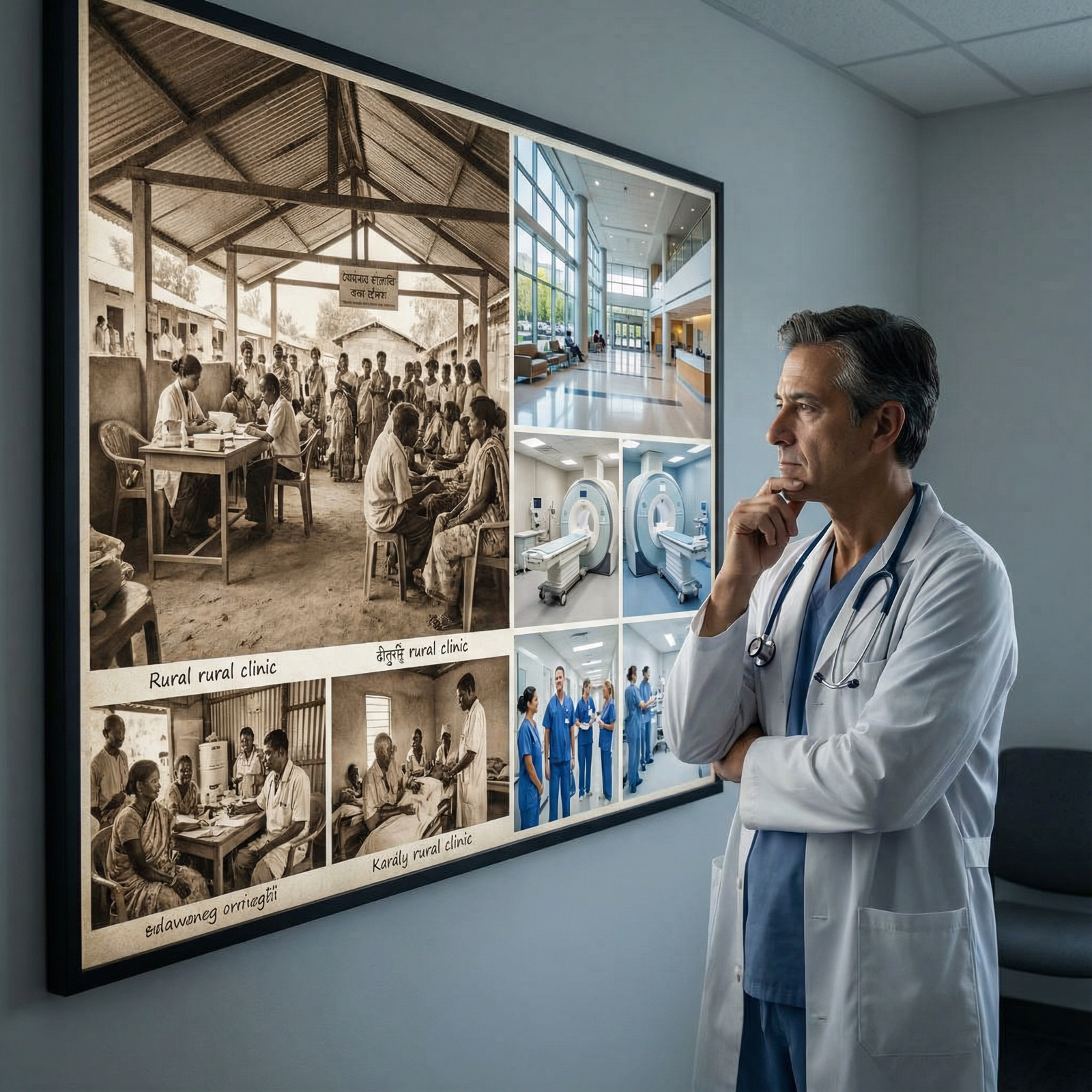
The belief that your ERAS needs one perfect, lifelong “calling” story is the reason a lot of strong applicants write weak applications.
Let me be blunt: most students do not have a clean, cinematic narrative. They have a scattered pile of shadowing, some research that never published, a random global health trip, a tutoring job, and a few leadership titles that felt half-fake. Then they sit down to write ERAS and panic because none of it “connects.”
You do not need a seamless life story. You need a coherent professional narrative. Very different thing.
Let me break this down specifically.
Step 1: Stop Trying to Invent a Fake Origin Story
The most common mistake I see: retrofitting your life into a “since I was five years old I knew I wanted to be a [insert specialty]” script.
Program directors have read that line hundreds of times. It is boring, and it usually forces you into logical contortions where you pretend:
- Your random sophomore-year cardiology research “proved” you were destined for internal medicine.
- Your one-week ortho elective “confirmed” your lifelong passion for surgery.
- Your undergrad psychology major magically predicts your career in psychiatry.
This reads as forced because it is forced.
What you actually need is:
- A clear professional direction now (why this specialty, at this stage).
- A set of experiences that reasonably support that direction.
- A through-line that ties together your interests, even if they changed.
Your narrative is not: “I always wanted X.”
Your narrative is: “Here is how I systematically became the kind of person who will be good in X.”
That is much easier to defend, and much easier to build from disconnected experiences.
Step 2: Inventory Your Experiences the Right Way (Not the Instagram Way)
Before you can build any narrative, you need raw material. Not the polished CV-version. The messy, real one.
I tell students to do this on paper or a plain text document, not directly in ERAS. List everything from med school (and key premed stuff if it genuinely matters). For each entry, write three short lines:
- What it was (role, setting, duration).
- What you actually did (actions, responsibilities).
- What you actually learned/witnessed/changed about yourself.
For example:
“Student-run free clinic – 2 years, weekly”
- Did: intake, vitals, basic counseling, follow-up calls, occasional QI project on no-show rates.
- Learned: how social barriers blow up ‘simple’ care plans, how to talk to patients with low health literacy, satisfaction in longitudinal follow-up.
“Basic science lab – 1 year, no publication”
- Did: western blots, mouse genotyping, weekly lab meetings, wrote one poster that died in a folder.
- Learned: I am not excited by bench work, but I like data, patterns, and explaining results; got comfortable being the least knowledgeable person in a room.
“Global health trip – 2 weeks”
- Did: mostly observed, some triage, a lot of watching logistics fall apart.
- Learned: I dislike ‘parachute’ medicine, but I care a lot about system-level resource allocation and sustainability.
Write brutally honest versions first. You can clean them later.
Then, code each experience with 2–3 tags. Not resume buzzwords, but real themes:
- Population: underserved, rural, urban, immigrant, pediatrics, complex chronic, ICU, etc.
- Mode: teaching, systems/QI, advocacy/policy, acute care, longitudinal care, procedures, multidisciplinary teamwork.
- Personal drivers: autonomy, complexity, ambiguity tolerance, patient stories, technical challenge, mentorship/education.
You may start seeing patterns that are not obvious from the “titles” alone. For example, your random unrelated activities might all lean toward:
- Teaching and explaining.
- Working with resource-limited populations.
- Enjoying high-acuity situations.
- Fixing broken systems.
Those patterns are the skeleton of your narrative.
Step 3: Identify Your Real Through-Line (It Is Almost Never “Everything I Did Was About [Specialty]”)
You are not going to reinvent your past. You are going to reinterpret it.
Look at your coded tags and ask two questions:
- What keeps showing up across different types of experiences?
- What genuinely aligns with the specialty I am applying to?
You are looking for bridge concepts between your experiences and the specialty, such as:
- Complexity and diagnostic reasoning → internal medicine, neurology.
- Procedures + immediate feedback → surgery, EM, anesthesia.
- Longitudinal relationships → family med, pediatrics, psych.
- Systems thinking + coordination → IM, EM, FM, PM&R.
- Communication-heavy roles → psych, peds, primary care.
- Crisis management → EM, ICU-heavy specialties.
For example, if you are applying EM and your CV looks “random”:
- Undergraduate: crisis hotline volunteer.
- Med school: student-run free clinic triage.
- Research: QI project on door-to-needle time in stroke.
- Leadership: orientation leader for M1s.
Individually, they look disconnected. Together, the through-line is obvious: you repeatedly place yourself at points of first contact and early decision-making, in situations where anxiety and stakes are high. That is EM territory.
Your job is not to stretch each experience into “this is emergency medicine.” Your job is to show that you consistently gravitate toward EM-like environments and tasks.
Step 4: Build a Professional Identity Statement Before You Write Anything
Most students start writing the personal statement first. That is backwards.
Start with this one-paragraph professional identity statement. You will not paste it anywhere verbatim, but it will control everything:
- Your personal statement arc.
- The order and framing of your ERAS experiences.
- How you answer “tell me about yourself” in interviews.
Template (loose, not fill-in-the-blank nonsense):
“Right now, I see myself as a future [type of physician within your specialty] who is especially drawn to [2–3 key aspects: e.g., diagnostic complexity, procedures, longitudinal care, systems improvement, patient education]. Across medical school, I kept choosing roles where I could [what you kept doing: coordinate care, break down complex topics, be in high-acuity situations, advocate for X population]. Those experiences convinced me that I am most suited to a career in [specialty] that lets me [insert impact: lead multidisciplinary care, guide families through chronic illness, respond to undifferentiated emergencies, etc.].”
A concrete example, surgery:
“I see myself as a future academic general surgeon drawn to high-acuity, team-based care and to teaching in the OR. Throughout medical school, I gravitated toward roles that required calm decision-making under time pressure and clear communication: running codes as an ACLS instructor, coordinating logistics for our student-run free clinic, and working with our trauma team on a QI project to reduce CT turnaround times. Those experiences showed me that I think clearly when stakes are high, I enjoy procedures that demand precision, and I am energized by teaching in high-intensity settings. I want a residency that will train me to manage complex surgical disease while mentoring students and improving the systems that deliver emergent care.”
This is coherent. And it does not pretend your first shadowing experience at age 12 “sealed” your fate.
Keep this identity statement beside you when you draft ERAS. If a sentence, anecdote, or activity does not support it, you either reframe it or leave it out.
Step 5: Structuring the Personal Statement Around Growth, Not Geography
The personal statement is where applicants usually sabotage themselves with disjointed stories. They throw in every moving experience they ever had and then slap on “these experiences have led me to X.”
That is not a narrative. That is a montage.
A coherent personal statement usually has four parts:
- Anchor moment (present-focused)
- Backward link (how you got here)
- Evidence body (2–3 focused experiences)
- Forward projection (what you want from residency / future)
1. Anchor Moment
Start close to now. A real event on the wards or in an elective that crystallized something about the specialty for you. Not the first time you knew. The time it became clear what kind of doctor you are becoming.
Bad opening: “I have always known I wanted to be a pediatrician.”
Better: “On my third night on the pediatric wards, I realized that halfway through a difficult family meeting, I had stopped thinking about my next question and instead started watching the parents’ shoulders relax.”
Notice: present tense, in the specialty environment, showing behavior aligned with your through-line (communication, emotional attunement, whatever fits).
2. Backward Link
From that anchor, step back. Briefly. This is where your “disconnected” experiences get filtered.
Two rules:
- You do not need to mention everything.
- You emphasize progression, not breadth.
Example for someone with scattered research, a global health trip, and free clinic work applying to IM:
“Long before that rotation, I had been circling around internal medicine without naming it. In our student-run clinic, I was drawn to the patients whose ‘uncontrolled diabetes’ never seemed to improve despite textbook plans. In a brief global health elective, I found myself less fascinated by tropical pathology than by the improvised systems that kept a bare-bones hospital running. Even in my basic science lab, what held my attention was not the pipetting itself but the challenge of explaining our results to a mixed audience at lab meeting.”
You just connected three “random” things into one theme: interest in complex, system-shaped chronic disease. That reads as deliberate.
3. Evidence Body: 2–3 Focused Experiences
Here is where many people overload. You need depth, not a checklist.
Pick 2–3 experiences that:
- Are clearly linked to your through-line.
- Show different facets of you (clinical, systems/leadership, teaching, etc.).
- Can be described with specific behaviors, not abstract adjectives.
Then show growth.
For example, an EM applicant:
- First experience: early free clinic triage—awkward, anxious, but noticed you stayed calm when others panicked a bit.
- Second: EM rotation—handling undifferentiated abdominal pain, learning to tolerate uncertainty.
- Third: QI project—realizing systems can speed or slow life-saving care.
Each paragraph should end with what changed in your thinking or approach, not how inspired you felt.
4. Forward Projection
This is where you connect your coherent narrative to what you want next.
Wrong: “I am excited to learn and grow as an emergency physician.”
Better: “I am looking for a residency that will train me to manage high-acuity, undifferentiated patients while also giving me the tools to improve the flow systems that determine whether those patients receive timely care.”
Then 1–2 lines about long-term direction: academic vs community, teaching, leadership, niche interest (rural EM, ultrasound, critical care, etc.)—only if you genuinely care and can be flexible.
Step 6: Making Your ERAS Experiences Page Tell the Same Story
The biggest missed opportunity is the Experiences section. Students treat it like a glorified CV, and it reads like one.
Programs absolutely read your top 3–5 descriptions. Sometimes more.
The goal is not to sound important. The goal is to reinforce your professional identity through:
- Which experiences you mark as “most meaningful.”
- How you order non-required entries.
- How you use the 1020-character description boxes.
Choosing “Most Meaningful” Experiences
Do not default to “whatever has the biggest title” or “the publication.”
You want a mix that covers:
- Clinical engagement.
- Something showing responsibility/ownership.
- Something aligned with your niche interest (education, QI, advocacy, etc.).
If your narrative is about systems and complex care in IM, “most meaningful” might be:
- Student-run free clinic leadership (clear longitudinal, responsibility).
- QI project on readmissions.
- Sub-I in a safety-net hospital.
Notice: research can be in there, but only if it fits your through-line.
Writing Strong Descriptions That Connect the Dots
For each major experience, structure the description roughly as:
- One line: concise context (what the role is).
- 2–4 lines: specific actions and responsibilities.
- 1–2 lines: concrete skills/insights connected to your narrative.
Example (weak) for “research assistant”:
“I worked on a cardiology research project examining outcomes of patients with heart failure. I helped with data collection and analysis and presented a poster at our school’s research day.”
Example (stronger) for an IM applicant with a complexity/systems theme:
“I worked as a research assistant on a cardiology outcomes project analyzing 500+ patients with heart failure and frequent readmissions. I cleaned and organized large EMR datasets, worked with our statistician on variable selection, and co-presented a poster on predictors of 30-day readmission. This experience sharpened my comfort with messy, incomplete clinical data and showed me how system-level factors often overshadow individual physician decisions in determining outcomes.”
Same job. Different narrative power.
Step 7: Coherence Across Letters, MSPE, and Interviews
Your narrative cannot live only in your personal statement. Programs see:
- Your personal statement.
- Your ERAS activities descriptions.
- Your MSPE (dean’s letter) summary.
- Your LORs.
- You, talking, on Zoom or in person.
If each piece presents a different version of you, you look unfocused.
You do not fully control MSPE language. You might have limited influence on letters. But you do control what you emphasize when you ask for them.
When you ask a faculty member for a letter, do not just say, “Can you write me a strong letter for pediatrics?” Say something like:
“I am applying pediatrics with a big focus on longitudinal care and family communication. On the rotation, I especially valued [X and Y cases]. If that fits what you saw, it would be really helpful if your letter could comment on how I work with families and within the multidisciplinary team.”
You are seeding your narrative.
Then your interviewer asks, “Tell me about yourself.” You do not recite your CV. You translate your professional identity statement into speech:
“I am a fourth-year at [School] applying internal medicine. Over the past few years I have consistently gravitated toward caring for patients with complex chronic disease, especially in resource-limited settings. A lot of my time has been at our student-run clinic and on QI work around readmissions, and I am looking for a residency where I can develop as both a clinician and someone who improves the systems my patients move through.”
That is coherent. Calm. Professional. And it matches what they already read.
Step 8: Handling Genuine Discontinuities and Red Flags
Some of you are not dealing with “disconnected” experiences. You are dealing with actual pivots and problems:
- Thought you were doing surgery, switched to FM M4.
- Took a research year and accomplished less than planned.
- Failed a shelf or a Step exam, took time off.
- Nontraditional background with a whole prior career in something unrelated.
Hiding this never works. The key is to anchor the discontinuity into your narrative of growth and self-knowledge.
Specialty Pivot (e.g., Surgery → FM)
Bad: “I realized I loved continuity of care more than the OR.”
Better:
“Early in third year, I was convinced I would pursue surgery. I loved the technical challenge and the structure of the OR. However, during my outpatient rotations, I noticed that I felt most fulfilled when I could follow patients over time and integrate their medical decisions into the context of their families and communities. By the end of the year, it became clear that the aspects of medicine I valued most—longitudinal relationships, prevention, and whole-person care—aligned best with family medicine.”
Then back it with experiences in primary care, continuity clinic, community work. Your narrative becomes: “I refined my understanding of what kind of work sustains me.”
Time Off / Underperformance
Do not pretend it did not happen. One or two sentences in the personal statement or “additional information” box can blunt a lot of speculation.
Your narrative frame:
- A concrete issue occurred.
- You responded with specific actions (changed study strategy, sought help, adjusted health/life factors).
- Your performance trend improved or stabilized.
- You now understand your limits and learning style.
Programs respect that more than vague language.
Step 9: Avoiding the Common Narrative Traps
A quick hit list of patterns that ruin coherence:
Every experience is “life-changing.”
Then none of them are. Pick a few key shifts, and be honest when something was minor but informative.Buzzword salad without behavior.
“I developed leadership, communication, and teamwork skills” means nothing. “I ran weekly meetings for a 15-person team and handled conflicts about call schedules” is credible.Over-emphasizing what you think they want.
You can smell when a future psychiatrist is pretending to be obsessed with procedures because they think it sounds “hardcore.” Align with your actual strengths.Chronological slavery.
You do not have to tell your story in strict order. Organize by theme, not by date, as long as the transitions are clear.Random, unintegrated personal hardships.
If you mention a personal hardship (illness, family issue, financial struggle), tie it explicitly to qualities relevant to residency: resilience, empathy, time management, maturity. If you cannot connect it cleanly, leave it out or keep it minimal.
Step 10: A Quick Narrative Sanity Check
Before you finalize ERAS, ask yourself and one trusted reader (faculty or resident, ideally in your chosen specialty) these questions:
If you read only my personal statement and “most meaningful” experiences, how would you describe:
- What kind of trainee I am?
- What I care about?
- What my strengths seem to be?
Does that description actually match:
- The specialty I am applying to?
- The person I am on the wards?
Could you summarize my narrative in one or two sentences without sounding generic?
Example of a strong synthesis:
“She is an IM applicant who really likes complex, multi-morbid patients in safety-net settings, and she consistently takes on roles that involve system improvement and patient education.”
If your reviewer instead says:
“You seem like you did a bit of everything and now you want [specialty] because you liked the rotation,”
then your narrative is not coherent enough. You probably:
- Mentioned too many unrelated experiences.
- Failed to emphasize any clear through-line.
- Talked too much about what impressed you, not how you changed.
Tighten. Cut. Refocus around your professional identity statement.

Example: Turning “Random” into Coherent – A Complete Mini-Case
Let me give you a stripped-down composite example.
Student: Applying pediatrics. Experiences:
- Undergrad: chemistry tutor.
- MS1-2: Student-run free clinic (adult).
- MS2-3: QI project on asthma readmissions (mixed ages).
- Summer: Two weeks abroad doing general clinic work.
- MS3: Loved peds, liked IM, disliked surgery and OB.
At first glance, not “laser-focused” on kids.
Possible through-line: teaching + chronic disease + family systems.
Personal statement spine:
- Anchor moment: family meeting for a child with poorly controlled asthma; you realize you are spending more time explaining inhalers and triggers than anything else, and you enjoy it.
- Backward link: tutoring chemistry taught you how to break complex ideas into concrete steps; in clinic, you always gravitated toward the “education heavy” parts.
- Evidence:
- Student-run clinic: you built a simple pictorial med sheet for low-literacy adults and saw adherence improve.
- QI project: you analyzed readmissions for asthma and saw patterns in housing, family routine, and access to meds; you designed a discharge checklist that included caregiver teaching.
- Forward: you want a pediatrics residency with strong continuity clinics and opportunities in patient/family education and QI.
ERAS experiences:
- Mark “Chemistry tutor,” “Student-run clinic,” and “Asthma QI” as most meaningful.
- Write descriptions that hammer the teaching/education/family-system angle, plus data-mindedness from QI.
- De-emphasize the global health trip unless you can connect it to family education or systems work; do not force a “lifelong passion for global pediatrics” if it is not real.
Now the student reads as: “Someone who delights in teaching families and structuring chronic care plans for kids, with some early QI interest.” That is a professional narrative. Built from “disconnected” stuff.
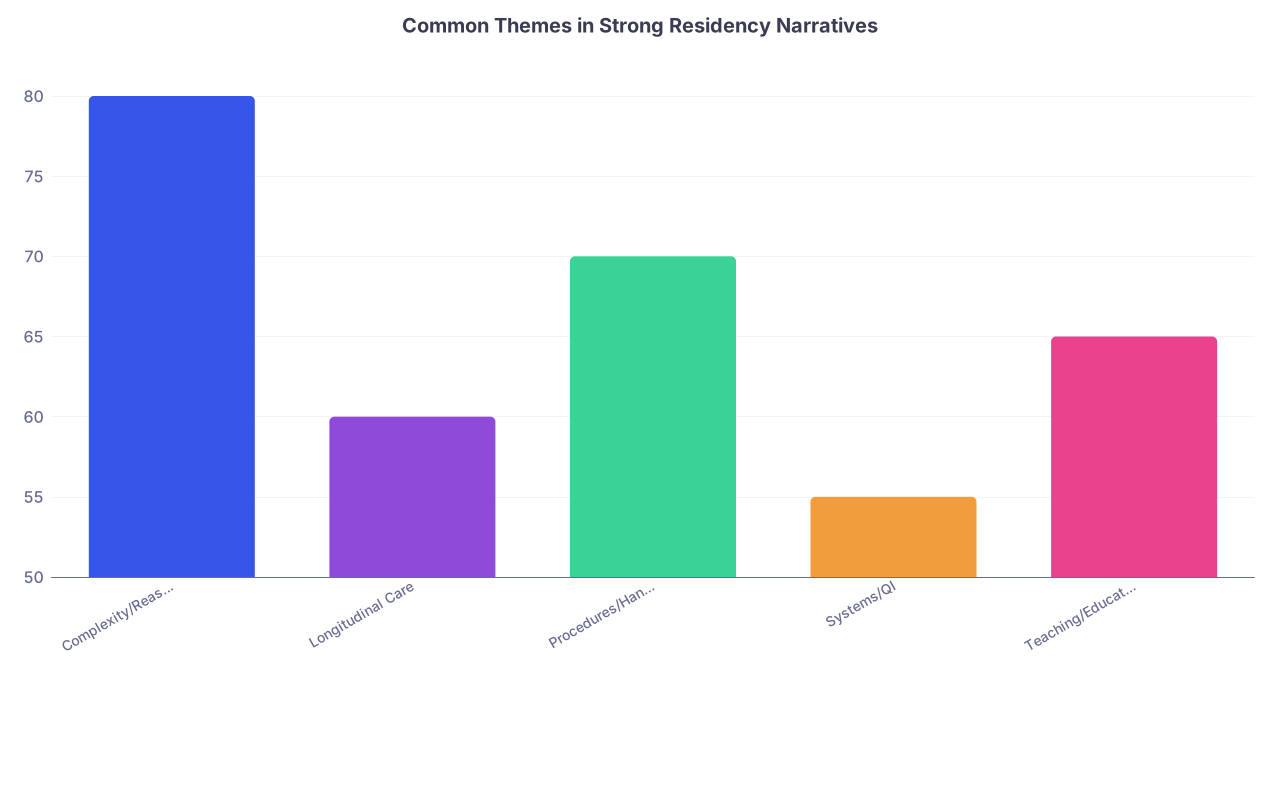
| Category | Value |
|---|---|
| Complexity/Reasoning | 80 |
| Longitudinal Care | 60 |
| Procedures/Hands-on | 70 |
| Systems/QI | 55 |
| Teaching/Education | 65 |
Final Thoughts: What Actually Matters
If you remember nothing else:
- You do not need a perfect, lifelong calling story. You need a clear, honest professional identity built from patterns in what you have actually done.
- Coherence comes from selection and framing, not from inventing connections that are not there. Cut ruthlessly; highlight what fits your through-line.
- Every component—personal statement, ERAS experiences, letters, your interview answers—should point to the same message: the kind of resident you will be and the kind of work you are drawn to within your specialty.
Do that, and your “disconnected” experiences stop looking like a liability. They become exactly what they are: evidence that you grew into this decision, instead of stumbling into it by accident.