
Not answering a residency program’s “check-in” email does not automatically drop you down their rank list. The myth survives because it’s convenient for anxious applicants and lazy advice-givers—but it is not how ranking actually works.
Let me be blunt: for the vast majority of programs, by the time they’re sending those vague “continued interest” or “update us if we’re your top choice” emails, their rank list is already 90% formed based on things that have nothing to do with your inbox behavior.
Does ignoring them ever matter? Sometimes. But not in the simplistic “no reply = we drop you” way people repeat on Reddit.
Let’s walk through what’s really going on.
How Programs Actually Build Rank Lists (Not the Fantasy Version)
Programs do not sit there with a spreadsheet going:
“Responded to our email? +5 spots. Slow to reply? -3 spots.”
Here is the real structure you rarely see applicants talk about out loud.

| Step | Description |
|---|---|
| Step 1 | Interviews Completed |
| Step 2 | Faculty/Resident Evaluations |
| Step 3 | Committee Meeting |
| Step 4 | Preliminary Rank Tiers |
| Step 5 | Adjust for Needs & Diversity |
| Step 6 | Finalize Rank List |
| Step 7 | Certify with NRMP |
Most rank lists are built from:
- Application file: scores, grades, letters, research, fit with specialty and program “type.”
- Interview impressions: faculty sheets, resident feedback, group discussion.
- Global “fit” factors: geography, couples match, diversity, clinical strengths, specialty depth.
Email behavior comes in—if at all—after these core decisions:
- A quick “thank you” email after the interview might get you remembered. Occasionally.
- A well-crafted “this program is my first choice” note might nudge you in a tiebreaker.
- But the idea that not replying to a generic mass email tanks you? That’s fantasy.
Programs are busy closing service gaps, handling call schedules, fire-fighting ACGME issues. They are not obsessively tracking who replied to a vague “hope you’re well” broadcast.
The Different Types of Program Emails (And What They Really Signal)
Lumping all emails together is where people get confused. The content and timing matter a lot more than whether you simply replied.
Here’s the real breakdown.

1. Pure Logistics: “Confirm your interview,” “Please complete this survey”
These are not emotional or strategic. They’re operational.
Examples:
- “Please confirm your interview date by Friday.”
- “Here is the Zoom link and instructions.”
- “Complete this pre-interview form.”
If you do not respond to a logistics email that explicitly requires action, that’s not a rank-list mind game. That’s a professionalism flag.
What happens then?
- If it’s pre-interview and you don’t confirm, they may assume you’re not coming.
- If they explicitly ask for something (survey, form) and you never complete it, someone might mark you as disorganized or unresponsive.
- Does that automatically drop you 30 spots? No. But it can be a weak negative in your file.
These are the only emails where ghosting actually matters somewhat. Because here, not responding is not “signals”; it’s basic reliability.
2. Post-Interview Warm Fuzzies: “We enjoyed meeting you”
These are usually templated. Sent to everyone. Or nearly everyone.
Myth: “If I don’t reply, they’ll think I’m not interested and drop me.”
Reality: Most programs expect maybe a third of applicants to respond, and they know half of those replies are copy-paste.
Truth: A short, polite “thank you, appreciated meeting the team” is fine. But silence here is not some cardinal sin:
- Many faculty never even see your reply.
- Some coordinators never log it anywhere.
- A few APDs skim them to see who’s truly engaged. But that’s a tie-breaker at best.
Not replying to these does not systematically drop you down the list. You are not being tracked like that.
3. “Are We Still On Your Radar?” or “We’re Very Interested in You”
This is where paranoia explodes.
These “interest check” emails usually show up late December to early February, right before rank meetings. They sound like:
- “You remain a highly regarded applicant.”
- “We hope you will rank us highly.”
- “Please let us know if you have any questions or updates.”
Notice what’s missing: anything concrete. No promise. No explicit ask that you must answer.
So what’s going on?
Often:
- The PD likes you and wants to “nudge” you without breaking NRMP rules.
- The program is trying to gauge their yield and avoid getting burned by ranking people who won’t rank them back.
- They may be sending this to 20–60 applicants, not just you.
Does failing to respond hurt you? Usually no. What it does is this:
- If you respond and say you’re very interested, you might climb a little if you were already in their mid/high band.
- If you say “you’re my #1,” some programs actually bump you up in tie situations.
- If you don’t reply at all, you just stay where you were based on your original strength.
It’s not a drop penalty. It’s a missed opportunity at best, in some programs, for a minority of applicants near some decision threshold.
What the Match Data and Rules Actually Allow (And Forbid)
Let’s pull this out of the Reddit imagination and back into the real world for a minute.
NRMP rules are blunt about “soliciting statements implying a commitment.” Programs are not supposed to ask you for rank commitments. Applicants are not supposed to be pressured.
Yet both sides still dance around this with “informal” communication.
Does NRMP publish a stat like “X% of programs change rank based on email replies”? No. But we do have several things:
- Survey data: Program director surveys consistently say the biggest rank drivers are interview performance, letters, clerkship grades, perceived fit. Email communication is near the bottom or not listed.
- Match algorithm design: The algorithm favors the applicant’s preferences. A higher program rank from them helps more than micro-adjustments programs make further down their list.
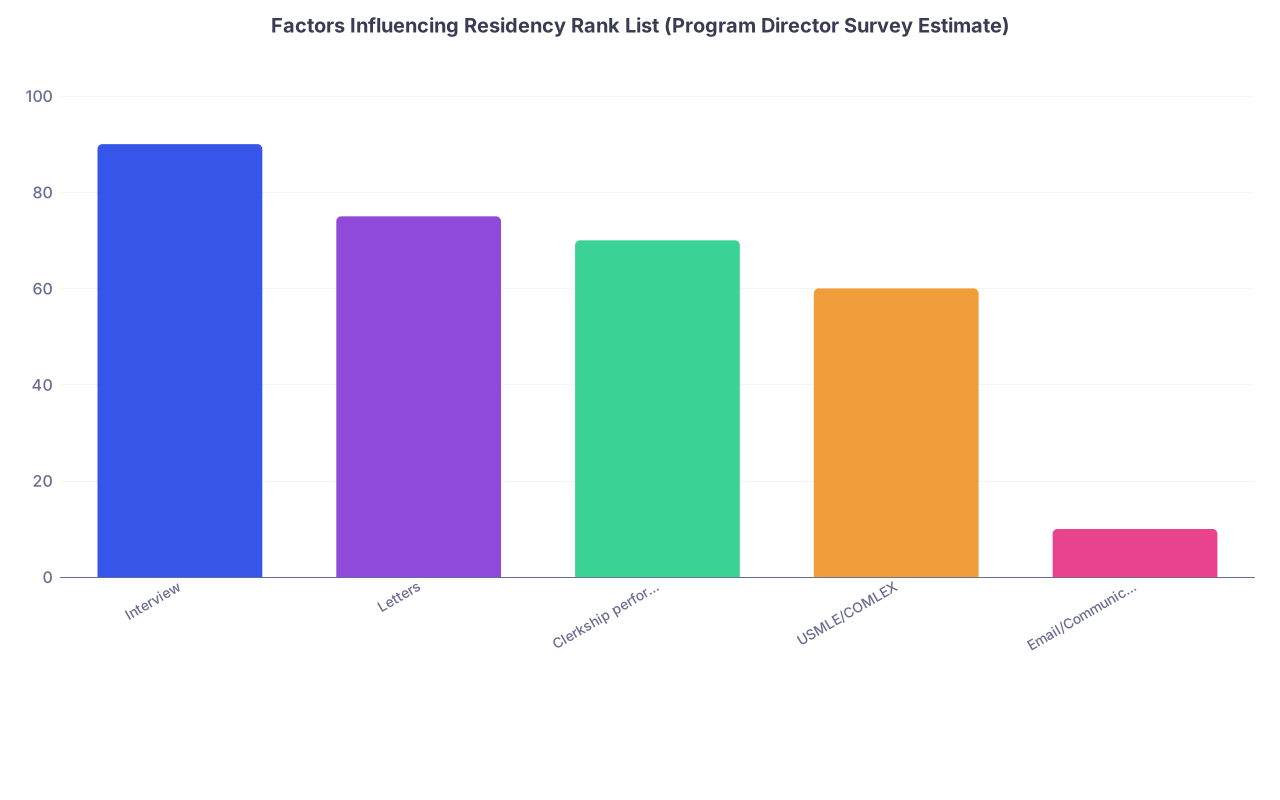
| Category | Value |
|---|---|
| Interview | 90 |
| Letters | 75 |
| Clerkship performance | 70 |
| USMLE/COMLEX | 60 |
| Email/Communication | 10 |
Even if a PD likes your “you’re my top choice” email, that only matters within their list, and only in a small range of applicants where they’re genuinely undecided.
Obsessing that “if I didn’t respond to that email, I’ll be dropped” fundamentally misunderstands the scale of the game. Programs rank dozens to hundreds of people. Your email reply might tweak your relative position against 2–5 of them. Not 200.
The Rare Cases Where Not Responding Can Actually Hurt
Now, I’m not saying email never matters. It can. Just not in the magical, dramatic way people imagine.
Here are the narrower edge cases where ignoring communication can cost you something.

1. You ghost a personalized, specific message
If a PD or chief resident sends a clearly individualized email like:
- “We are strongly considering you near the top of our list. If we are one of your top choices, we would appreciate knowing that.”
And you completely ignore it for weeks?
That might signal either:
- You’re not that interested.
- Or you’re bad at professional communication.
Does that move you from #5 to #50? No. But if they’re agonizing between you and someone equally strong who did reply thoughtfully, they might go with the person who looks engaged and responsive. That’s human.
2. You ignore repeated outreach from the same person
If a faculty mentor at that institution has advocated for you and emails:
- “Hey, PD says you’re on their radar—are you actually serious about us? Let me know so I can advise them honestly.”
And you say nothing?
You are telling them—by silence—that you either:
- Don’t care.
- Or can’t be bothered.
I’ve seen that cost people some goodwill in small, tight-knit programs. Not an auto-drop, but definitely a “why are we fighting internally for this person if they’re not even responsive?”
3. You fail to respond professionally after asking for something
If you email to ask for:
- A second-look visit.
- Clarification about call or fellowships.
- A couples match consideration.
And they respond, and then you… disappear?
That looks flaky. Programs care more about follow-through than whether you replied to their mass “we liked meeting you” email. This kind of behavior absolutely can color their committee conversation about you.
But notice the pattern: these all involve one-to-one, specifically directed communication. Not generic blast emails.
The Applicant-side Anxiety: Why This Myth Won’t Die
A big reason this myth is so durable: applicants desperately want to feel in control of something.
You’ve already:
- Taken the exams.
- Submitted the application.
- Completed the interviews.
What’s left that feels actionable? Emails.
So medical students and residents spin stories like:
- “My friend replied ‘you’re my #1’ and matched there. So it must have bumped them up.”
- “PD said they appreciated my email—so maybe that saved me.”
Maybe. Or maybe they were already high on the list and the email just confirmed what the program was going to do anyway.
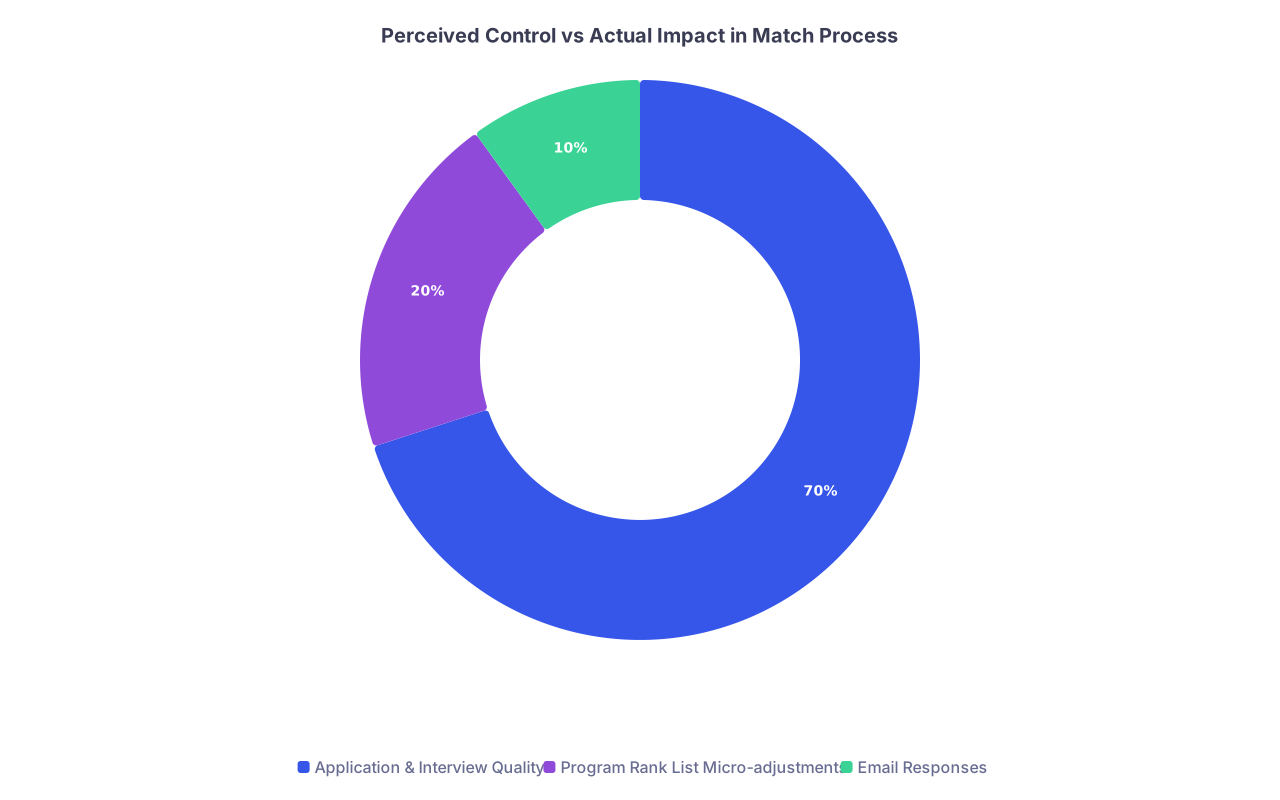
| Category | Value |
|---|---|
| Application & Interview Quality | 70 |
| Program Rank List Micro-adjustments | 20 |
| Email Responses | 10 |
There’s a mismatch between perceived agency (email feels controllable) and actual statistical impact (tiny). That’s why myths like “not responding drops you on the list” spread so fast. They convert chaos into a simple rule.
Real life is messier. Less comforting. But also less catastrophic.
The Smart Way to Handle Program Emails (Without Losing Your Mind)
You do not need a 14-tab spreadsheet and 32 templates. You need a few simple habits that avoid genuine red flags without buying into superstition.

1. Always respond to logistics and direct questions
If:
- The coordinator asks you to confirm.
- The PD asks you a specific question.
- Someone responds to an email you initiated.
Then respond. Brief, clear, on time. That’s baseline professionalism, not rank list wizardry.
2. For generic “we enjoyed meeting you” emails
Reply if:
- It’s a program you genuinely like.
- You already wrote down something specific you appreciated there.
- You can send a 3–5 line specific, non-groveling thank-you.
Skip it if:
- You’re drowning in rotations and would be faking it.
- The email is obviously mass-sent and you have nothing real to say.
Non-response here is not a rank death sentence.
3. For “we’re very interested / are you still interested?” emails
If you’re honestly considering them in your top tier:
- A short, truthful reply can help at the margins.
- You do not need to lie and say “you’re #1” unless that’s actually true.
- Saying “you are one of my top programs and I’d be very happy to train there” is accurate and safe.
If they’re low on your list or essentially out of the running:
- You can either send a polite, neutral response or nothing at all.
- No, you do not owe them a ranking disclosure.
- No, failing to answer does not put you on some universal blacklist.
When Silence Is Actually the Right Move
One thing almost nobody tells you: sometimes, not responding is the mature choice.
If:
- A program is fishing for “you’re my #1” and they’re not.
- You’re being pressured for a commitment that feels sketchy.
- You’ve already decided to rank them very low.
Then radio silence can be cleaner than awkward half-truths. The NRMP Match Communication Code exists to stop exactly this pressure dynamic. You are not obligated to play along with games that exist in the gray zone.
| Situation | Is Silence Reasonable? |
|---|---|
| Generic post-interview thank-you email from program | Yes |
| Vague “we hope to stay on your radar” blast | Yes |
| Explicit “are we your #1?” when they are not | Often yes |
| Request to confirm interview or complete form | No |
| Response to an email you initiated | No |
The Bottom Line: What Actually Moves You on the List
Strip away the superstition, and it comes down to this:
- Your interview performance, letters, and application quality decide your main position on the rank list.
- Thoughtful, honest communication can tweak your position within a narrow band of similar applicants at some programs.
- Not responding to generic or non-essential emails almost never causes a meaningful “drop.” It usually just removes a tiny chance of a marginal bump.
If a program tells you, “You dropped on our list because you didn’t reply to our email,” that’s either a wildly inefficient ranking system or a convenient excuse for something that was going to happen anyway.
Key Takeaways
- Not responding to generic program emails does not automatically push you down their rank list; at worst, it usually just forfeits a small chance at a marginal bump.
- The only emails you must handle professionally are logistics, direct questions, and replies to messages you initiated—those impact your perceived reliability, not just your “interest.”
- Put your energy where it actually moves the needle: strong applications, solid interviews, and an honest rank list. Emails are noise at the margins, not the main event.