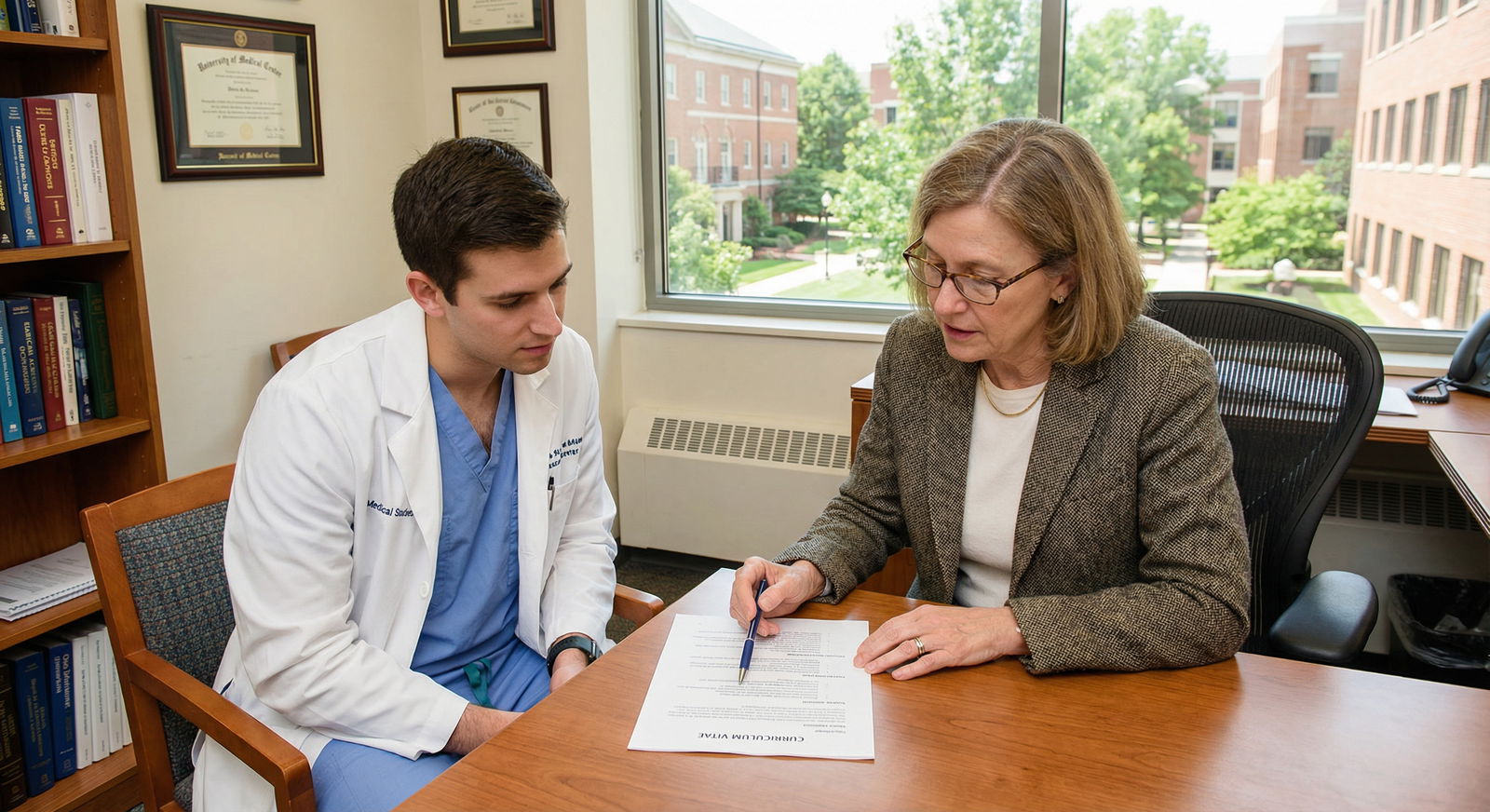
What if pushing your MD graduation back 6–12 months is the difference between matching in your target specialty and not matching at all—is it actually worth it?
Let me answer that directly: delaying graduation can absolutely be the right move. It can also be a complete waste of time that flags you as a risky applicant. The difference comes down to three things:
- Why you’re delaying
- What you’ll concretely accomplish
- How that lines up with your target specialty’s expectations
If you just “need more time” or you’re vaguely hoping an extra year “makes you more competitive,” you’re setting yourself up for disappointment. But if you have a specific deficit (low Step score, no home program, weak letters, no research for a research-heavy field) and a clear plan to fix it, delaying can be strategic.
Let’s break it down like an adult decision, not a panic move.
First: When Delaying Graduation Actually Makes Sense
There are a few scenarios where I’ve seen delaying graduation pay off—meaning the student matched into a significantly better specialty or tier of program than they realistically could have that year.
Here’s where a delay is usually justifiable:
- You need time to recover from a serious red flag
- Major academic failure (multiple failures, remediation, leaves that need reframing)
- Step 1/Step 2 CK well below your specialty’s norms
- You’ve had a personal/health crisis that tanked your performance
In that case, using a year to:
- Retake Step 2 CK (if allowed/strategic)
- Show a sustained pattern of strong clinical performance
- Collect fresh, strong letters saying “this student is now solid and reliable”
…can help programs see your trajectory is upward, not chaotic.
- You’re switching to a more competitive specialty late
Example: You were going to do Internal Medicine, then during MS4 you fell in love with Dermatology or Ortho. You have:- No research in the field
- No specialty-specific letters
- No audition rotations
For derm, plastics, ortho, ENT, neurosurg, rad onc, etc., you need:
- Multiple strong letters from that specialty
- Research (often at least one tangible product: poster, manuscript, accepted abstract)
- Evidence you understand the field
If staying an extra year means: 2–3 away rotations, a research project or two, and 2–3 high-quality letters in the new field—then delaying can turn an essentially impossible match into a realistic one.
- You would otherwise graduate with almost nothing on paper
This is more common at schools without strong home programs or weak advising. You might realize:- You have mediocre clinical comments
- No meaningful research or leadership
- Generic letters that say “pleasant to work with” and nothing else
- You’re applying to a moderately competitive specialty (EM, anesthesia, radiology, OB/GYN, gen surg, even good IM programs)
If you can use an extra year to:
- Do a dedicated research year with a clear output target
- Do sub-I’s/auditions that generate standout letters
- Polish your Step 2 CK if it’s borderline
…then yes, a delay can move you from “probably not matching where you want” to “solid candidate.”
- You’re an international or DO student aiming for a very competitive specialty
If you’re an IMG/DO trying to get into derm, ortho, neurosurg, ENT, plastics, or top-tier academic programs in anything, you’re already fighting uphill. A targeted extra year that adds:- US research at a reputable institution
- US clinical experience with strong letters
- Possibly improved language/communication polish on the wards
…can matter more for you than for a US MD applicant.
When Delaying Graduation Is Usually a Bad Idea
Let me be blunt: a lot of students overestimate what an extra year will do.
Delaying is usually not worth it if:
Your main issue is a modest Step score, but not catastrophic
Example: You want IM, your Step 2 CK is 224. Not amazing, but you’re fine for many community and mid-tier programs, especially if your clinical performance and letters are strong. Delaying a year “in case” you can do more research for IM is often not worth the time and lost income—unless you’re specifically chasing top academic programs.You have no plan beyond “I want to be more competitive”
If you cannot clearly answer:- What exactly will I do this year?
- What measurable outputs will I have by ERAS opening? (X posters, Y manuscripts submitted, Z new letters)
- Which metrics will actually change? (New specialty letters, improved Step 2 CK, new class rank/quartile, etc.)
Then you’re just pressing pause on your life with no ROI.
You’re aiming for a non-ultra-competitive specialty and already meet the bar
Family med, psych (though it’s gotten more competitive), peds, PM&R, pathology, prelim medicine for a future fellowship—if your application is already reasonably solid, a delay rarely gives you enough extra benefit to justify another year of student status.You just want to avoid the stress of applying this year
If you’re delaying because the process feels overwhelming, that’s avoidance, not strategy. The application process will not feel easier next year. You’ll just be older and more frustrated.
What Programs Actually Think When They See a Delayed Graduation
Programs don’t automatically hate delayed or extended graduations. They do hate unexplained gaps and vague stories.
Here’s what they’re looking for:
Is there a clear, coherent reason for the delay?
“I took a funded research year in ortho at Institution X” sounds intentional and strategic.
“Needed time to figure things out” sounds like you weren’t stable or committed.Did you actually accomplish something?
They’ll look at your CV: publications, presentations, significant projects, advanced degrees, leadership roles. A “research year” with zero tangible output looks bad.Is there academic or personal instability?
Multiple leaves, repeats, and unexplained changes raise concern about reliability. That doesn’t mean you’re doomed; it means your explanation needs to be clean and mature.How long since graduation?
Many programs are wary if you’re >3 years out from med school with minimal clinical activity. The further you are from graduation, the stronger the expectation that you stayed clinically connected (locums abroad, research with clinic time, observerships, etc.).
What You Should Actually Do With a “Delay Year”
If you’re going to delay, treat it like a job, not a vague sabbatical.
Here are realistic, high-yield activities:
Structured research year
At a big-name institution or with a well-known PI in your target specialty. Aim for:- Multiple abstracts/posters
- At least one manuscript submitted by ERAS
- Presentations where you are first or presenting author
High-impact clinical rotations
Extra sub-I’s or away rotations in your target specialty at places you’d actually want to match. Focus on:- Crushing the rotation (work ethic, reliability, ownership)
- Impressing 1–2 faculty enough to get very strong, specific letters
Formal degree or certificate that directly helps
MPH, MS in clinical research, or similar—only if:- You’re genuinely interested
- You’ll get publications or networking out of it
- It’s relevant to academic or subspecialty careers
Step 2 CK rescue (if allowed and appropriate)
If your Step 2 is truly hurting you and you haven’t maximized your potential, part of the year can be focused, disciplined prep for a significantly higher score.
Do not spend a year “kind of doing research, kind of working on some projects, kind of helping in clinic” with nothing on paper. That just looks like drifting.
Quick Comparison: When Delay Helps vs Hurts
| Scenario Type | Likely Outcome |
|---|---|
| Switching from IM to Derm with 0 derm research, adding a dedicated derm research year plus 2 aways | Often Helpful |
| FM-bound student with passing scores and decent letters delaying for vague “research” | Mostly Pointless |
| Step 2 CK 205 aiming for Gen Surg, taking a year to get 240+ and do surg research | Often Helpful |
| Already competitive for Psych delaying “just in case” | Usually Not Worth It |
| IMG doing US-based research year with strong letters in desired field | Often Helpful |
| Vague gap year without clear accomplishments | Clearly Risky |
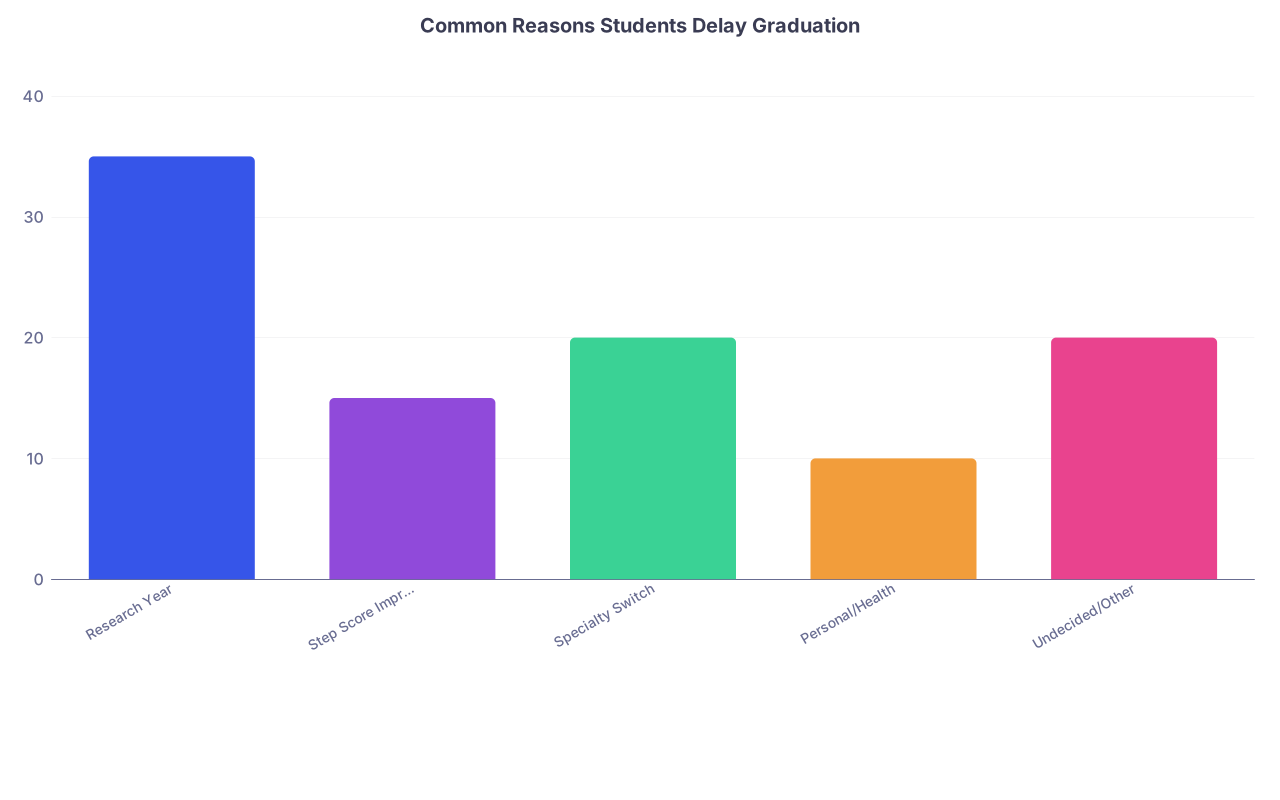
| Category | Value |
|---|---|
| Research Year | 35 |
| Step Score Improvement | 15 |
| Specialty Switch | 20 |
| Personal/Health | 10 |
| Undecided/Other | 20 |
How to Decide: A Simple Framework
Use this like a checklist. If you can’t check most of these, you probably should not delay.
Is your target specialty realistically reachable this cycle?
- Look at NRMP Charting Outcomes, program websites, and talk to advisors who aren’t just cheerleaders.
- If your stats/experiences are far below matched applicants for that specialty, delay might be worth considering.
Can you clearly define 3–5 concrete deliverables from a delay year?
Example:- Two ortho publications submitted
- Three posters presented
- Two strong ortho letters from away rotations
- Step 2 CK from 220 → 245
Do multiple honest advisors (school advisor + specialty mentor) agree it’s strategic—not just “fine”?
If your school’s dean’s office is hesitant or says “I’m not sure what a delay would really fix,” listen.Will this delay close a real gap, or just slightly polish an already ok application?
Delaying to go from “good” to “slightly better” is usually not worth $60–80k of delayed attending income.Are you mentally okay with being “the one who’s still in school” while your classmates start residency?
This sounds minor, but it’s not. I’ve watched this crush people who weren’t ready for it.

| Step | Description |
|---|---|
| Step 1 | Thinking of Delaying Graduation |
| Step 2 | Apply this year |
| Step 3 | Do NOT delay; reconsider specialty tier |
| Step 4 | Refine plan or adjust goals |
| Step 5 | Delay graduation strategically |
| Step 6 | Huge gap vs specialty norms? |
| Step 7 | Clear 1-year plan with outputs? |
| Step 8 | Advisors agree its strategic? |
Financial and Life Consequences You’re Probably Underestimating
This part is boring but real.
You’re delaying attending income by at least one year
Depending on specialty, that’s $200–500k of pre-tax income delayed. Even if you land a better specialty, you need to be honest: will that actually outweigh the lost year?More loan interest accrues
One more year of lower or no payments while interest compounds.Psychological impact
Watching classmates move on, hearing intern horror stories while you’re still in student limbo—it can feel awful if you’re not mentally prepared.
The trade-off only makes sense if the year meaningfully changes your trajectory: either into a much better fit specialty, a much more competitive program tier, or away from a likely non-match.
How to Explain a Delayed Graduation on ERAS and in Interviews
Programs mostly care that your story:
- Makes sense
- Is honest
- Shows growth and productivity
On ERAS:
- Use the “Education” section to accurately list dates
- Use “Experience” sections to describe exactly what you did during the extra time, with dates, roles, supervisors, and outcomes
In your personal statement:
- One tight paragraph is enough:
- “I extended my medical school training by one year to pursue a funded research fellowship in [field] at [institution]. During this time, I led projects on X and Y, resulting in [posters/manuscripts]. The experience deepened my interest in Z and gave me skills in A, B, and C that I bring back to patient care.”
In interviews:
- Own it. Do not sound apologetic or evasive.
- Hit three beats:
- Why you chose to extend
- What you accomplished
- How it made you better for residency
If you talk about your delay with clarity and confidence, most program directors will accept it at face value—if your CV backs it up.
FAQs
1. Is it better to delay graduation or graduate on time and apply as a reapplicant if I don’t match?
If your application is clearly not competitive for your target specialty this year, it’s usually better to delay and fix the problem before you first apply. Reapplicants with the same weak profile are often in worse shape than someone who delayed and applied once with a strong story. However, if you’re borderline and applying broadly to reasonable programs, it can make sense to apply now and only consider extra time if you don’t match.
2. How much research do I need for a delay year to look “worth it”?
For research-heavy specialties (derm, rad onc, ortho, neurosurg), I like to see by ERAS:
- 2–4 abstracts/posters where you’re clearly involved
- At least 1 manuscript submitted or accepted
- A letter from a research mentor who knows you well
For less research-driven fields, even 1–2 solid projects with clear impact can justify the year if they’re combined with strong clinical work and letters.
3. Does a delay hurt my chances for more community-focused or non-academic programs?
Not usually, as long as your reason is coherent and you weren’t just drifting. Community programs care a bit less about publications and more about: Did you stay clinically engaged? Are you reliable? If your delay year was purely research with no clinical touch, be ready to show that your clinical skills are still sharp (recent rotations, observerships, etc.).
4. What if my school is resistant to letting me delay graduation?
That’s common; some schools hate administrative complications. If they’re pushing back, you need to:
- Present a clear written plan with specific goals and proposed mentor(s)
- Get a specialty mentor or department chair to support you
- Be honest: some schools simply won’t approve a delay without strong justification. In that case, you might need to graduate on time and pursue a structured post-grad research position or preliminary year strategy instead.
5. How many years out from graduation before programs start to really worry?
Once you’re more than 3 years from graduation, many programs start getting nervous unless you’ve maintained continuous and meaningful clinical activity. At 5+ years out without residency, your path becomes significantly harder in most specialties. If you delay, think 1 purposeful extra year, maybe 2 if one involves a formal degree or major research with strong mentorship—beyond that, you’re in a different risk category.
6. What should I do today if I’m seriously considering delaying graduation?
Open a blank document and write:
- Your target specialty and realistic competitiveness right now
- The three biggest weaknesses in your application
- Exactly what a delay year would do to fix each one (specific rotations, mentors, projects, score goals)
Then send that document to two people: your school’s advising dean and a trusted faculty member in your target specialty. Ask them one pointed question: “Is this delay plan likely to materially change my match outcome?” Their answers will tell you more than any vague internet advice.
Open your CV right now and mark in bold the parts that would actually change if you delayed graduation by one year. If you can’t clearly improve 3–5 meaningful items, you probably have your answer.