Should I Do an Away Rotation in My Desired Specialty? Decision Checklist
You’re not crazy for being confused about away rotations.
Most of the common advice is oversimplified — “aways are essential” or “aways are a waste.” Both are wrong.
Here’s the truth: an away rotation is a high-risk, high-reward audition. For some specialties and applicants, it’s almost mandatory. For others, it’s optional at best and harmful at worst.
This checklist will walk you through whether you should do one, how many, where, and when to skip it.
Step 1: Figure Out If Your Specialty Actually Values Away Rotations
Some specialties treat away rotations like second-look interviews. Others barely care.
Use this as your first filter.
| Specialty | Importance of Aways | Notes |
|---|---|---|
| Orthopedic Surgery | High | Often 1–2 aways expected |
| Dermatology | High | “Auditions” common |
| Emergency Medicine | High | SLOEs from aways are critical |
| Neurosurgery | High | Programs want to see you work |
| Internal Medicine | Low–Moderate | Helpful for geographic shifts |
| Family Medicine | Low | Usually not necessary |
Generally high-yield for aways
If you’re applying in:
- Orthopedic surgery
- Neurosurgery
- ENT
- Dermatology
- Radiation oncology
- Urology
- Emergency medicine
- Plastics
- Some surgical subspecialties (CT surgery, vascular, etc.)
…aways are often a major part of your application strategy. Not doing any in these fields can hurt, especially if your home program is weak or nonexistent.
Generally low-yield (or optional) for aways
If you’re applying in:
- Internal medicine
- Pediatrics
- Family medicine
- Psychiatry
- Neurology
- PM&R (depends on your context)
- OB/GYN (mixed; some use aways like auditions, others don’t care much)
In these, an away might help if:
- You’re switching geography hard (Midwest med school → West Coast residency)
- You don’t have a home program
- You’re aiming for a very competitive program tier
Otherwise, your time might be better spent doing strong home rotations, research, or Step 2 CK prep.
Step 2: Use This Core Checklist
Here’s the blunt version. If you answer YES to most of these, an away rotation is likely worth it.
1. Is your specialty competitive for your stats?
Be honest with yourself. If your Step 2 CK is weak for the field (or you failed Step 1), aways become more important to show programs how you perform clinically.
Ask:
- Are your scores and class rank at or below the median for your specialty?
- Do you have limited research or weak home letters?
If yes, an away can give you a live audition and a powerful letter to offset those gaps.
If you’re already a strong applicant with great home letters, an away is more about networking and fit than rescue.
2. Do you have a home program in your specialty?
This is huge.
You DO have a home program
Then:- At least one strong home rotation is usually more important than any away.
- You should almost always prioritize impressing your own department.
- Aways are mainly for targeting other regions or tiers.
You DO NOT have a home program
Then:- You’re at a disadvantage on letters and specialty mentorship.
- Aways often become your only shot at:
- A specialty-specific letter
- Real experience in your field
- Getting on a program’s radar
If you don’t have a home program in something like ortho, neurosurg, or EM, not doing at least one away is usually a mistake.
3. Do programs in your specialty expect or strongly prefer aways?
Some fields pretend aways are “optional” while making it clear behind closed doors they’re basically required.
- Ask recent grads from your school who matched that specialty
- Read program websites for phrases like:
- “Away rotations encouraged”
- “Preference given to students who have rotated with us”
- Look at where your school’s past match lists came from: did matched students usually rotate at those programs?
If the people who matched where you want to go all did aways, that’s your answer.
4. Are you geographically targeting a new region?
If you’re trying to move:
- From community MD/DO in the South → academic Northeast
- From Midwest → West Coast
- From Caribbean → anywhere in the US
Then an away in your target region helps prove:
- You understand their system
- You’re serious about relocating
- You can hang with their residents and culture
If you’re staying in your current region and your home program is solid, aways are less critical.
5. Do you need a “person in the room” at rank meeting?
This is harsh but real.
At many competitive programs, when the rank list is made, there’s a question: “Has anyone actually seen this applicant work?”
If:
- Someone says, “Yes, they rotated with us — hard worker, good team fit.”
You jump up the list.
If:
- Nobody has any direct experience with you
You’re relying entirely on paper and Zoom.
If your application isn’t obviously top-tier on paper, you want at least one program where someone can vouch for you from direct observation.
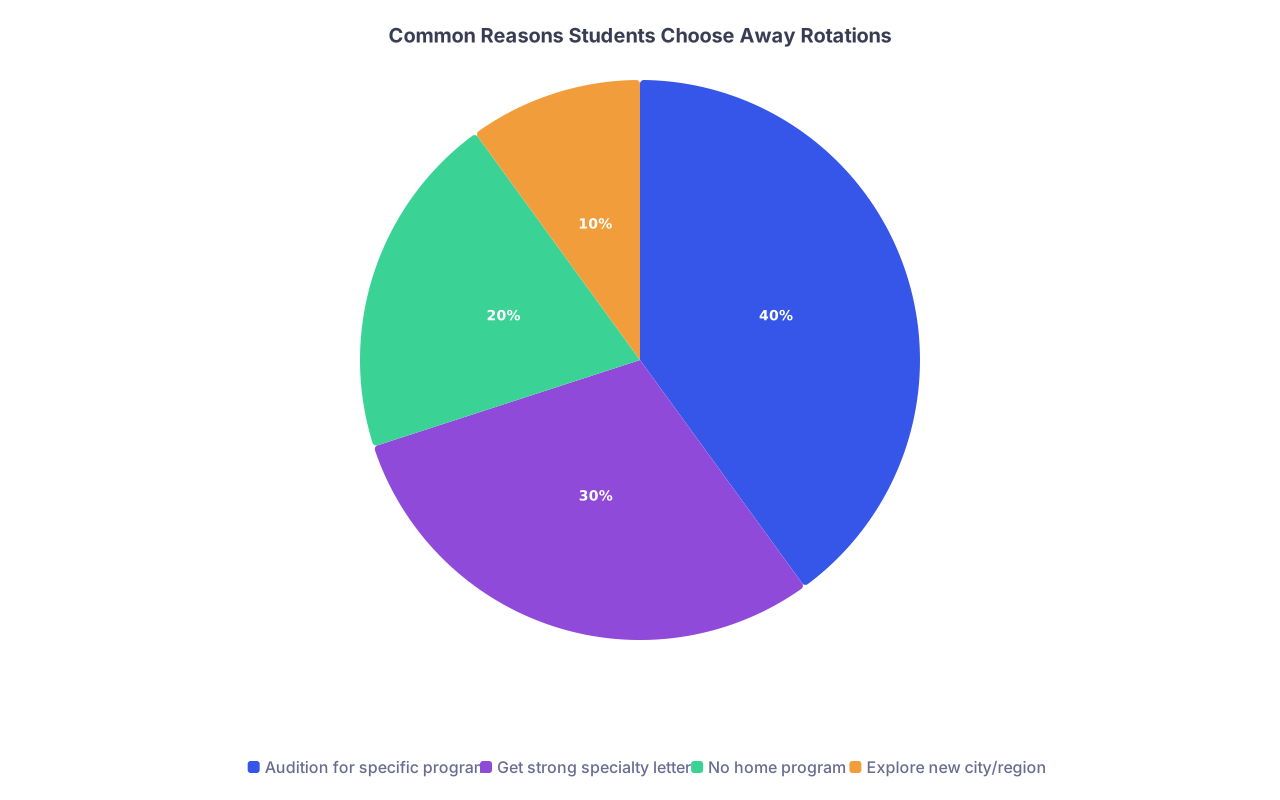
| Category | Value |
|---|---|
| Audition for specific program | 40 |
| Get strong specialty letter | 30 |
| No home program | 20 |
| Explore new city/region | 10 |
Step 3: When an Away Rotation Is a Bad Idea
Plenty of students get hurt by aways. Nobody talks about them as loudly.
Red flags that you shouldn’t do an away (or should delay)
You’re clinically rusty or disorganized
If you struggle with basics:- Pre-rounding efficiently
- Writing coherent notes
- Presenting on rounds without flailing
Then an away at a big-name program can expose that in the worst way. Those programs remember bad rotators.
You’re burned out or checked out
Aways are exhausting:- New EMR
- New hospital layout
- Long days trying to impress everyone
If you’re already at your limit, you’re more likely to underperform and get a “meh” reputation instead of a strong letter.
You’re using it to “find out” if you like the specialty
Don’t.
You shouldn’t use an audition rotation to decide whether you want the job. That exploration should happen on:- Early home elective
- Shadowing
- Short exploratory rotation
By the time you do an away, you should be pretty sure you’re applying in that specialty.
Your Step 2 CK is coming up and you’re not ready
Doing an away while trying to cram for Step 2 is a bad trade:- Mediocre performance on the rotation
- Mediocre exam score
Lose–lose.
Step 4: How Many Away Rotations Should You Do?
Here’s the honest rule: enough to help, not so many that you burn out or destroy your Step 2/studying time.
Reality-based ranges:
Hyper-competitive surgical fields (ortho, neurosurg, plastics, ENT, etc.):
Typically 1–3 aways. Most people land at 2.EM:
Often 1 home EM + 1–2 aways for SLOEs (letters). Some do 2 aways if no home EM.Derm / rad onc / urology:
1–2 strategic aways, often at places you’d legitimately rank high.IM / peds / psych / FM / neuro:
0–1 in most cases. Maybe 2 if you have no home program or are changing regions hard.
More than 3 aways usually isn’t necessary and often backfires. You end up:
- Tired
- Repeating the same “enthusiastic sub-I” act
- Losing time for interviews and exams
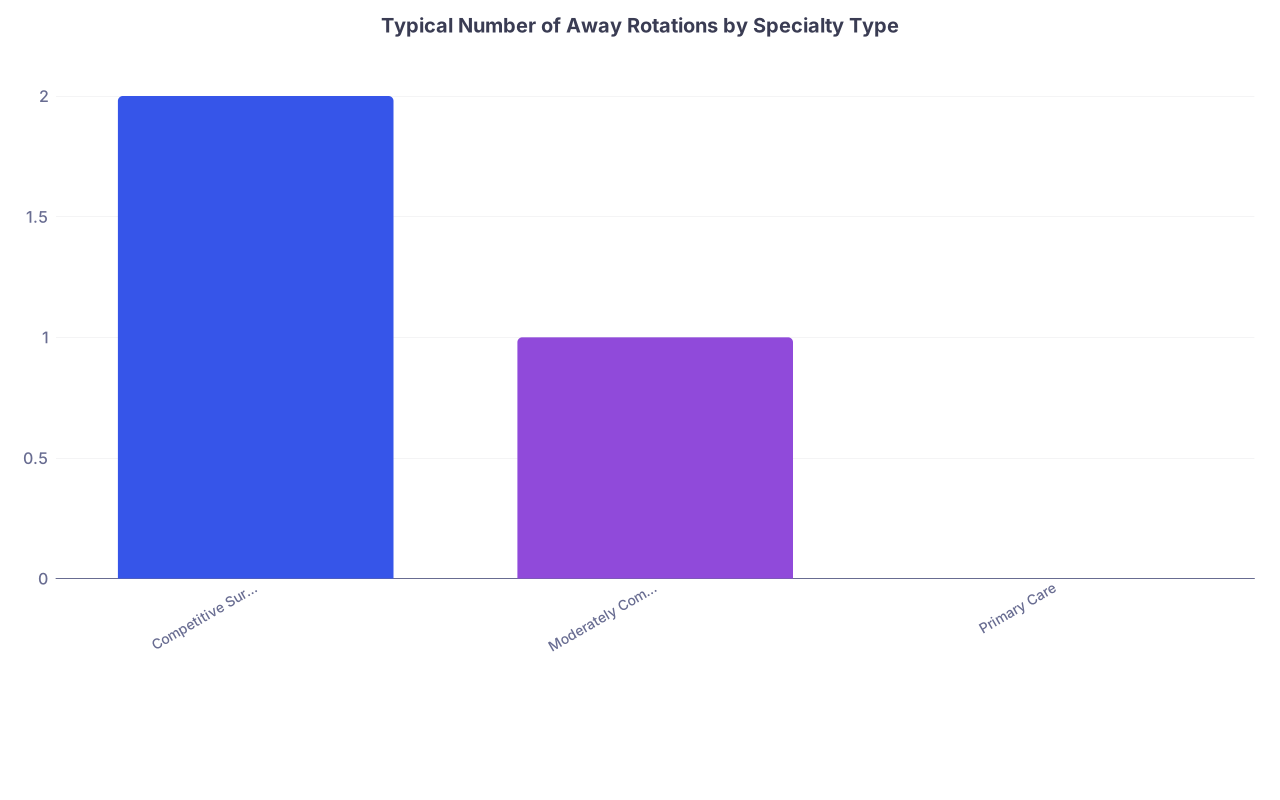
| Category | Value |
|---|---|
| Competitive Surgical | 2 |
| Moderately Competitive | 1 |
| Primary Care | 0 |
Step 5: How to Choose Where to Rotate
If you decide to do an away, where you go matters as much as whether you go.
Think of it as: “Where do I want to audition for a real chance of matching?”
Prioritize:
Programs you’d actually rank in your top 3–5
Don’t waste an away at a place you wouldn’t honestly attend.Places that historically take rotators
Some programs love recruiting from their rotators. Others almost never match them. Ask:- Recent grads
- Residents on Reddit/SDN (with a big grain of salt, but still)
Mix of reach and realistic
If you’re an average ortho applicant:- One away at a dream program
- One away at a realistic solid mid-tier
That’s smarter than both at brand-name, ultra-competitive places.
Step 6: Timing Your Away Rotation
Timing is strategy.
General rules:
- Earlier in the year (July–September) is better for highly competitive fields
Programs remember you more clearly when they’re building rank lists and interviews. - Don’t schedule aways before you’ve had a solid home rotation in that specialty
You need reps before your audition. - Avoid overlapping with Step 2 CK if possible
Step 2 CK is still a major filter. Don’t sabotage it.
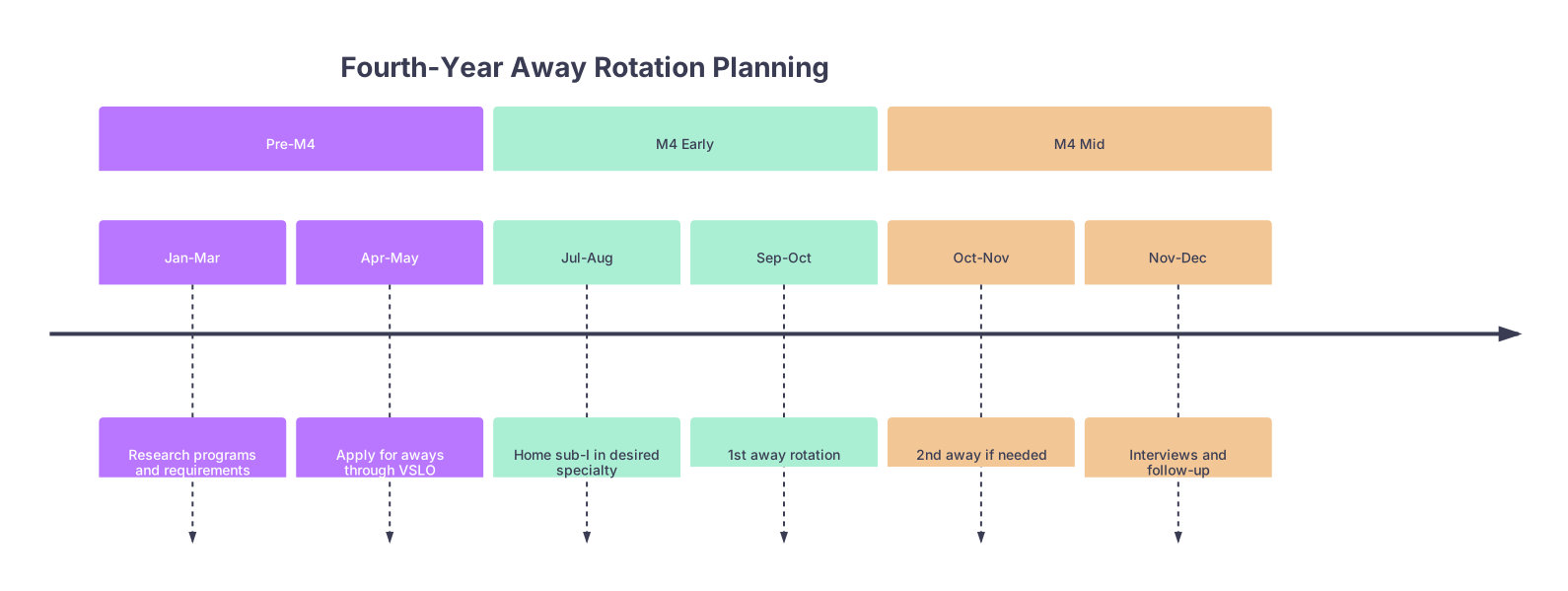
| Period | Event |
|---|---|
| Pre-M4 - Jan-Mar | Research programs and requirements |
| Pre-M4 - Apr-May | Apply for aways through VSLO |
| M4 Early - Jul-Aug | Home sub-I in desired specialty |
| M4 Early - Sep-Oct | 1st away rotation |
| M4 Mid - Oct-Nov | 2nd away if needed |
| M4 Mid - Nov-Dec | Interviews and follow-up |
If your school forces certain required rotations in specific months, build around that. But don’t let an away be your first exposure to the specialty.
Step 7: What You Must Get Out of an Away Rotation
An away rotation isn’t about “having the experience.” It’s about walking away with:
A strong letter of recommendation
From:- Program director
- Chair or well-known faculty
- Or a core faculty member with real say in selection
You want a letter that says:
- “Top 10% of students I’ve worked with”
- “Would rank this applicant to match”
One or two champions
People who will:- Remember your name
- Speak up in rank meeting
- Answer an email from you later asking, “Are there any questions I can answer about my application?”
A clear sense of program fit
Are these your people or not?
You should finish the away able to say:- “Yes, I’d be happy here”
- Or: “Nope, not my culture — crossing them off.”

Step 8: How to Decide: A Quick Yes/No Framework
Here’s the brutal, simplified decision path.

| Step | Description |
|---|---|
| Step 1 | Choosing Specialty |
| Step 2 | Do 1-2 aways at realistic targets |
| Step 3 | Do 2 aways, prioritize strong programs |
| Step 4 | Consider 1 away in target region |
| Step 5 | No away needed; focus on home, Step 2 |
| Step 6 | Competitive field? |
| Step 7 | Home program? |
| Step 8 | Changing region or no home? |
If you’re still stuck, ask yourself this very simple question:
“Is there at least one specific program where I’d be disappointed not to have done an away because it might have moved me from ‘unknown’ to ‘known’?”
If yes, you probably need at least one away.
If no, and you’re in a less competitive field with a good home program, you can probably skip it.
Quick Reality Check
Away rotations are:
- Expensive (travel, housing, application fees)
- Time-consuming
- Emotionally draining
- But sometimes the single most important move you can make for your match
I’ve seen:
- Average applicants match at reach programs because of a stellar away
- Strong applicants sink at dream programs because their away rotation exposed bad habits or ego
- Smart students skip aways in low-yield contexts and match perfectly fine at great programs
You don’t get extra points for suffering through unnecessary aways. You get points for smart, targeted moves.

FAQs: Away Rotations for Residency Applications
1. If I don’t do an away rotation, will I still match in my desired specialty?
In many fields, yes. For internal medicine, pediatrics, family medicine, psychiatry, and neurology, lots of people match with zero away rotations, especially if they have a home program and solid performance. In hyper-competitive surgical subspecialties and EM, skipping aways can hurt you, particularly if you lack a home program or strong letters. Bottom line: your specialty and context decide how risky it is.
2. Is it better to do an away at a “big name” program or a realistic mid-tier?
If you’re an average applicant, one of the biggest mistakes is doing only aways at brand-name, ultra-competitive places where you’re unlikely to match even if you do fine. A smart play is:
- One “reach” away at a top program you’d love
- One “realistic” away at a program where your stats and background fit their typical resident profile
Aim for at least one place where you’re competitive enough that a strong rotation could realistically push you onto their rank list.
3. Can a bad away rotation hurt me beyond that program?
Yes. A truly bad away (unprofessional behavior, poor work ethic, major red flags) can spread through backchannel communication, especially in tight-knit specialties like neurosurgery, ortho, or derm. More commonly, it just kills your chances at that specific program and loses you a potential strong letter. This is why I tell people: don’t do an away before you’re actually ready to perform at sub-I level.
4. I have a strong home program and good letters. Do I still need an away?
“Need”? Probably not, unless you’re in a field where aways are basically standard (orthopedics, EM, some others). But you might still want one if:
- You’re geographically moving far
- There’s a specific program you’re very interested in
- You want a backup letter or another place where someone can advocate for you
If you’re in IM/peds/psych/FM with top home support and no big geographic shift, you’re usually fine focusing on your home rotation, Step 2 CK, and a solid application.
5. What if I can’t afford away rotations?
You’re not alone. Aways are financially brutal. Options:
- Look for visiting student scholarships at individual programs (many offer housing or stipends for URiM or financially needy students)
- Prioritize one away that gives you the biggest strategic benefit (no home program or top-choice region)
- Maximize your home rotation, Step 2 CK, and application quality
Programs know some students can’t do aways; they don’t automatically punish you for that, especially outside the most competitive subspecialties.
6. How do I know if my away rotation went well enough to help?
Signs it went well:
- Residents and attendings started treating you like part of the team, not just “the student”
- You were asked about your application plans or encouraged to apply there
- Someone explicitly offered to write you a letter
- You got constructive but positive feedback (“You work hard, read more on X, but you’re doing great”)
If you left without a clear sense of support, you can still list the rotation, but don’t rely on it as your cornerstone. In that case, your home rotation and other letters may carry more weight.
Key Takeaways:
- Away rotations are strategic tools, not default requirements. Their value depends heavily on your specialty, home program, and goals.
- Do them when they clearly increase your odds — competitive field, no home program, key geographic shift, or specific target programs.
- Don’t waste them: come prepared, time them smartly, and only rotate where you’d actually be happy to match.