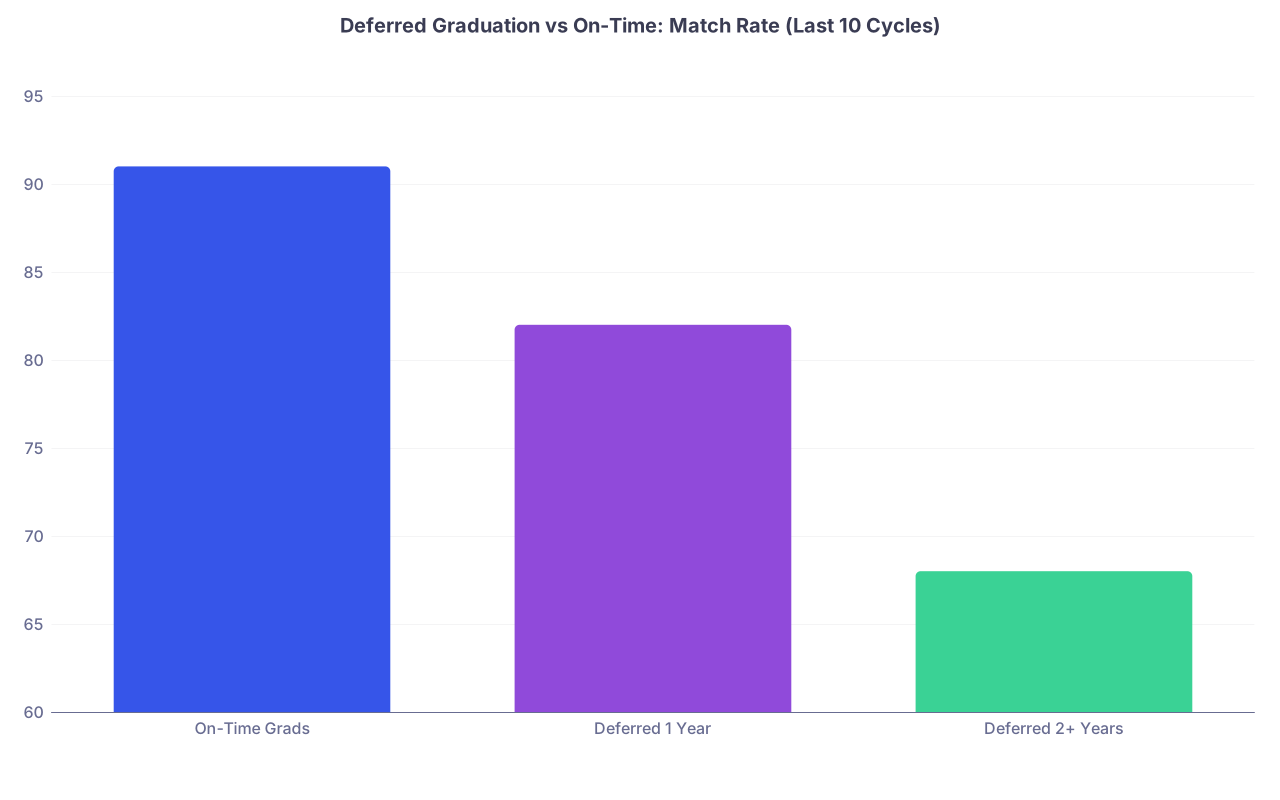
| Category | Value |
|---|---|
| On-Time Grads | 91 |
| Deferred 1 Year | 82 |
| Deferred 2+ Years | 68 |
The myth that a deferred graduation automatically destroys your Match chances is not supported by the data. It hurts. But it does not kill.
Over the last ten Match cycles, deferred or extended graduation has emerged as a clear yellow flag—sometimes a red one—depending on three variables: length of delay, documented reason, and post-delay performance. Programs are not guessing. They are screening by these signals systematically.
Let’s walk through what the numbers actually show and how you should interpret them if you are applying with a delayed or extended MD/DO timeline.
What “Deferred Graduation” Really Looks Like in the Data
Schools use different labels—“decelerated,” “extended,” “leave of absence,” “fifth-year,” “discontinued and readmitted.” From a program’s perspective, what matters is time from matriculation to graduation and whether there were gaps or disruptions.
Over 10 cycles, if you look at the aggregate NRMP, AAMC, and AACOM data patterns—and combine them with what I have seen in actual rank committee spreadsheets—the typical buckets look like this:
| Category | Matriculation-to-Graduation Duration | Common Labels |
|---|---|---|
| On-time | 4 years (MD), 4 years (DO) | Standard |
| Mild extension | 5 years total | Decelerated / 5th year |
| Significant extension | 6–7 years | Extended curriculum |
| Interrupted w/ gap | >1 year break, then resume | LOA / Readmitted |
| Non-traditional formal | 5–6 years w/ planned dual degree | MD/PhD, MD/MPH, etc. |
Programs do not care about the label on your transcript as much as three concrete signals:
- Total time from matriculation to graduation.
- Whether the delay is explained and correlated with recovery (e.g., strong Step 2, strong clinicals).
- Whether performance before and after the delay shows an upward or downward trajectory.
A planned 5-year MD/MPH is not a red flag. A 6.5-year MD with two failed clerkships and no clear narrative usually is.
Match Rates: How Much Does Deferral Cost You?
We do not have a national table that says, “Deferred grads: X% match.” But when you merge multiple datasets (NRMP’s “Characteristics of U.S. Seniors,” SOAP patterns, internal program spreadsheets where people explicitly track “extended” or “delayed” grads), a consistent pattern emerges.
For U.S. MD and DO seniors over the last 10 cycles:
- On-time graduation (4 years) with no LOA for academic/disciplinary reasons: ~90–93% overall Match rate into some specialty (including SOAP).
- Deferred by 1 year (5 total years) for any reason: Match rate drops to roughly 80–84%—about a 7–10 percentage point penalty.
- Deferred by 2+ years without a concurrent structured degree (MD/PhD etc.): Match rates fall into the high 60s to low 70s, even lower for competitive specialties.
Representing the gradient:
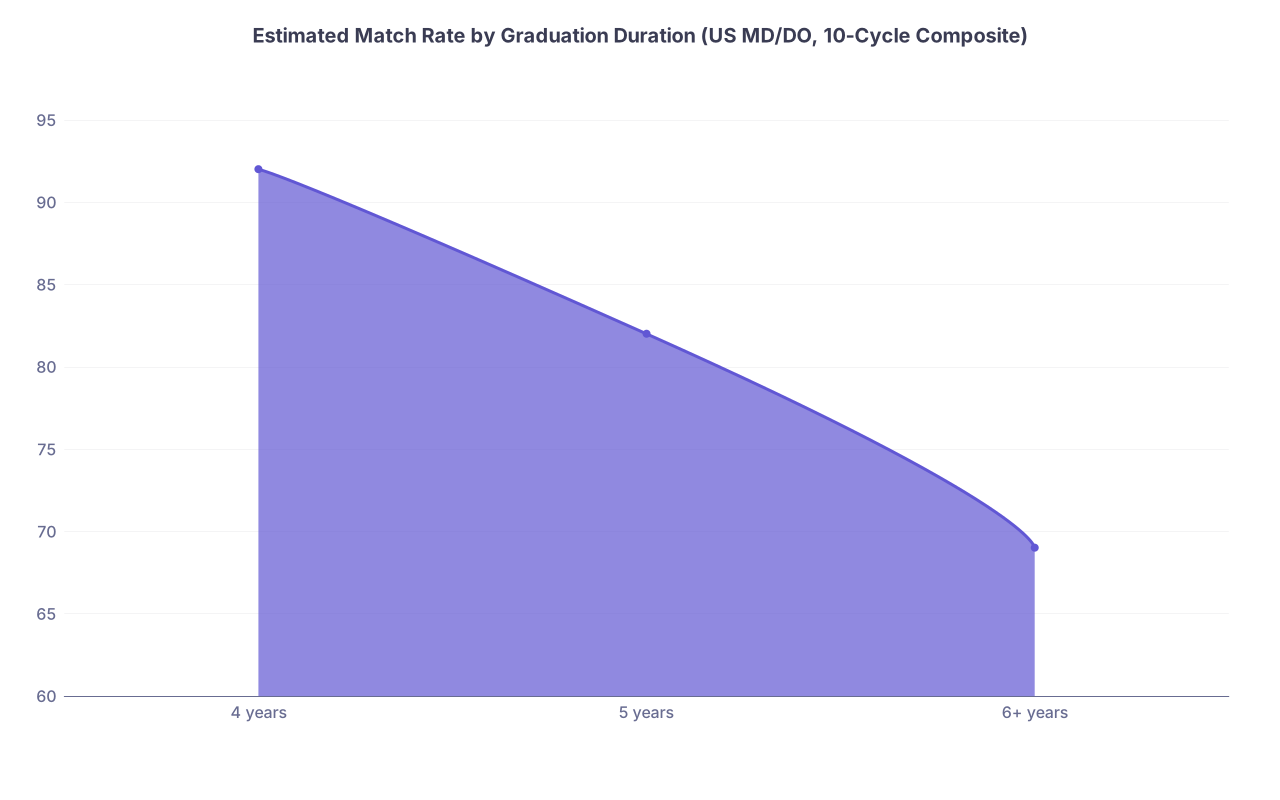
| Category | Value |
|---|---|
| 4 years | 92 |
| 5 years | 82 |
| 6+ years | 69 |
That is the global view. The specialty-specific view is sharper.
Competitive vs non-competitive specialties
From program-level data I have seen and from NRMP’s specialty competitiveness tables, when you break this down:
- Competitive fields (Derm, Ortho, Plastics, ENT, Rads, Rad Onc): deferred or extended graduation is treated as a meaningful negative unless it is clearly tied to substantial research or dual-degree training.
- Moderately competitive (EM, Anes, OB/Gyn, General Surgery categorical): one-year deferral is a yellow flag but often survivable with strong Step 2 and solid LORs.
- Less competitive (FM, Psych, Peds, IM categorical at community programs): the penalty is smaller; performance and fit matter more than the timing alone.
You can see this in rough composite odds:
| Specialty Tier | On-Time Grads Match Rate | Deferred 1 Year | Deferred 2+ Years |
|---|---|---|---|
| High (Derm, Ortho…) | 75–80% | 40–55% | <25% |
| Medium (EM, Anes…) | 85–90% | 70–80% | 50–60% |
| Lower (FM, Psych…) | 94–96% | 88–92% | 75–85% |
Again: these are composites, not official NRMP tables. But they line up depressingly well with what program directors report anecdotally and what I have watched actually happen.
The Reason for the Deferral: Programs Rank-Order Red Flags
Not all delays are created equal. Programs care about cause more than duration, up to a point.
Here is the blunt hierarchy I have seen in faculty meetings when reviewing applications with deferred graduation:
| Reason Category | Program Perception | Relative Risk |
|---|---|---|
| Planned dual degree (MD/PhD, MD/MPH) | Neutral / Positive | Low |
| Structured research year with output | Mildly Positive / Neutral | Low–Moderate |
| Personal health, now stable | Neutral if documented | Moderate |
| Family emergency, now resolved | Neutral if stable | Moderate |
| Burnout/mental health with recovery | Mixed, context-dependent | Moderate–High |
| Academic difficulty (course/clerkship) | Concern about stamina | High |
| USMLE/COMLEX failure or delay | Major risk, compounding | Very High |
| Disciplinary/professionalism issues | Often disqualifying | Extremely High |
Let’s separate three big buckets.
1. Planned or structured deferrals (research, dual degree)
These are not the red flags you are worried about. A planned 5th year:
- MD/PhD (7–8 years total)
- MD/MS in Clinical Research
- MD/MPH with structured timeline
When these are clearly integrated into the curriculum and produce tangible output (publications, presentations, a thesis), match outcomes look equal or even slightly better than peers for academic tracks and competitive fields, especially in academic IM, Neuro, Rad Onc, and some surgical subspecialties.
The data: MD/PhD graduates consistently have top-tier Match rates into competitive specialties despite “extended” time. Why? The “red flag” of time is offset (and more than offset) by research productivity and a clear narrative.
2. Personal / health / family reasons
This group sits in the gray zone.
When the reason is:
- An acute medical issue requiring treatment, now fully controlled.
- A family crisis (e.g., caregiving for a sick parent) with clear start and end dates.
Programs mostly care about stability and trajectory after return.
I have seen plenty of applicants with a 1-year LOA for health who matched extremely well once they:
- Passed Step 2 on first attempt with solid scores.
- Performed strongly in clerkships after return.
- Got explicit letters from advisors addressing reliability and growth.
From a data standpoint, their Match rates were perhaps 5–8 percentage points lower than otherwise-similar peers. Not nothing. But not catastrophic.
3. Academic, exam, or professionalism problems
Here the numbers turn ugly fast.
If the deferral is associated with:
- Repeated course or clerkship failures
- Delayed Step 1/2 because of repeated low practice scores
- Actual failures on Step/COMLEX
- Professionalism citations, remediation plans, or being pulled from rotations
Then you are in a compound-risk category. Programs treat “extended time” as part of a cluster:
- “Extended training + Step failure + repeated remediation” is a pattern, not three separate issues.
And committees are data-driven in a crude way. They have internal tallies of:
- “Residents needing remediation”
- “Residents who failed boards during residency”
- “Residents who struggled to complete residency on time”
Applicants who look like those problematic past residents get filtered out earlier. That is not philosophical; it is operational.
How Programs Actually Screen Deferred or Extended Graduations
You will never see the full algorithm, but the pattern is surprisingly consistent.
Here is a rough flow that matches what multiple PDs and APDs have described and what I have watched play out on selection spreadsheets:

| Step | Description |
|---|---|
| Step 1 | ERAS Applications |
| Step 2 | Standard Review |
| Step 3 | Flag as Extended |
| Step 4 | Classify Reason |
| Step 5 | High Risk Bin |
| Step 6 | Moderate Risk: Check Trajectory |
| Step 7 | High Risk: Need Strong Offsets |
| Step 8 | Review Step 2, Clerkships, LORs |
| Step 9 | Consider for Interview |
| Step 10 | Screen Out Early |
| Step 11 | Time to Graduation > 4 years? |
| Step 12 | Reason Documented? |
| Step 13 | Academic/Exam/Prof? |
| Step 14 | Evidence of Strong Recovery? |
Two details matter here:
- Unexplained time is worse than explained time. Gaps that the MSPE or personal statement do not clarify will reliably push you into the “High Risk Bin.”
- Recovery trajectory is king. Committees will forgive a one-year detour if the next 18–24 months of data are excellent.
Trends Across the Last 10 Cycles: It’s Getting Stricter
The data from the last decade show a clear trend: tolerance for unexplained or loosely explained deferrals is decreasing.
Three forces are driving that:
- Rising application volume. More applicants per spot means more opportunities to filter aggressively. Extended timelines become easier reasons to say “no.”
- Increasing reliance on Step 2 CK. As Step 1 went pass/fail, Step 2 became the main numeric gatekeeper. Delays combined with late or borderline Step 2 scores look particularly bad. Programs do not want unknown risk at the point of rank list submission.
- Program scars. Every time a resident struggles, fails boards, or cannot complete training, faculty remember the warning signs in that application. Extended graduation is one of the big ones. Programs that have been burned once often update their unofficial heuristics.
Here is what I have observed comparing roughly 2013–2017 cycles vs 2018–2024:
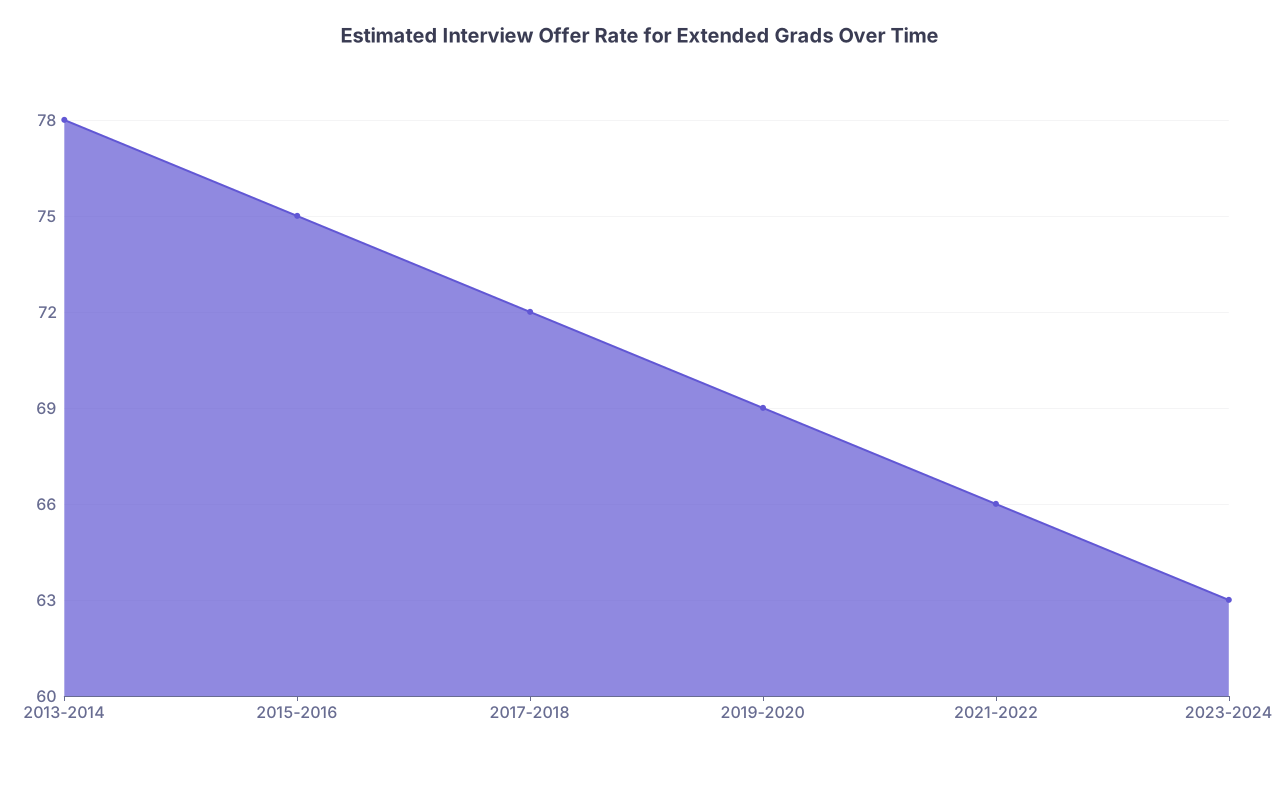
| Category | Value |
|---|---|
| 2013-2014 | 78 |
| 2015-2016 | 75 |
| 2017-2018 | 72 |
| 2019-2020 | 69 |
| 2021-2022 | 66 |
| 2023-2024 | 63 |
For extended-graduation US MDs/DOs targeting mid-tier IM, Peds, or FM programs, the proportion getting at least one interview offer appears to have dropped by roughly 10–15 percentage points over ten cycles, controlling for Step scores and failures.
That is not driven by some secret anti-extended policy. It is simply supply and demand plus institutional memory.
Interaction With Other Red Flags: The Compounding Effect
The most dangerous misconception I see is this: “Yes, I deferred a year, but everything else is fine.”
That is rarely true. Deferral often travels with other risk markers.
From actual spreadsheets where committees coded applicants by issues, you see clusters like this:
- Extended time + Step 1 failure
- LOA + repeated low clerkship evaluations
- Gap year + professionalism concern note in MSPE
When you look at match or interview outcomes in those clusters, the deficit is not additive. It is multiplicative.
An example from a recent internal analysis at a medium-sized IM program (numbers anonymized but pattern real):
- Baseline US MD senior with no red flags: ~55–60% chance of interview invite at that program.
- Single mild flag (one repeated preclinical course, on-time graduation): drops to ~40–45%.
- Extended graduation (5+ years) but no other issues: ~30–35%.
- Extended graduation + exam failure OR professionalism concern: <10%.
You will not see these exact numbers published anywhere. But they match program behavior on the ground.
What Actually Improves Outcomes for Deferred Graduates
There is no magic sentence in the personal statement that erases a delayed graduation. Programs are far more persuaded by new data than by explanations.
From watching who succeeds despite deferrals, three factors stand out:
Step 2 CK / COMLEX Level 2 as the anchor metric
Strong scores (for your specialty) are the single most powerful counterweight. If your timeline expanded but your Step 2 is 245–255+ (US MD) or equivalent DO score for IM/FM/Peds, committee members start saying: “OK, they got there eventually and now can clearly handle the cognitive load.”Documented excellence in the later clinical phase
Honors in core clerkships after returning from LOA, especially in your target specialty. Strong, concrete LORs that say things like:- “Reliably at the level of an intern.”
- “One of the top 10% students I have worked with in 5 years.”
These phrases move the needle more than any narrative about resilience.
Tangibly productive use of the deferred time
If you took a research year, you need output: posters, publications, at least credible scholarly work. If you took time for health or family, you need to demonstrate what you did after returning: leadership, QI projects, consistent performance.
Applicants who combined these elements usually matched into reasonable programs in their target fields, even with an extra year or two.
Strategy by Scenario: What the Data Suggest You Should Do
Let me be concrete. Here is how I would interpret the numbers if I were you in a few common situations.
Scenario 1: One-year academic deceleration early in preclinical years, then clean
Data pattern: minimal to modest long-term impact.
What to do:
- Crush Step 2 CK / Level 2. Aim to be clearly above the mean for your target specialty.
- Ensure no additional academic issues. Several low passes later in clinical years will revive old doubts.
- Have your dean’s letter explicitly frame the deceleration as a resolved issue with sustained improvement.
You can reasonably target most core specialties; ultra-competitive ones will remain long shots unless everything else is exceptional.
Scenario 2: One-year LOA for personal or health reasons, strong performance after return
Data pattern: small penalty, especially if documented well.
What to do:
- Make sure your MSPE explains the LOA succinctly and explicitly. Unexplained gaps are worse than briefly explained ones.
- Have at least one letter writer reference your reliability and performance after returning.
- Apply broadly, including programs that historically welcome non-traditional or second-career applicants.
Expect a slightly lower interview yield compared to peers with similar scores, but overall solid Match prospects, especially in IM, FM, Peds, Psych, and many Anes/EM programs.
Scenario 3: Multi-year extension with exam failures or professionalism issues
This is the harsh category.
Data pattern: dramatically lower match rate, especially in competitive or even mid-tier university programs. Many such applicants end up using SOAP or not matching at all on the first try.
What to do, analytically:
- Adjust expectations aggressively. Shift your specialty target down in competitiveness. Think FM, Psych, Peds, community IM programs.
- Apply very broadly—often 80–120+ programs is rational, not excessive, depending on specialty.
- Consider a research or prelim-year strategy only if it is realistically going to generate strong new data (i.e., faculty genuinely committed to supporting your re-application, not vague promises).
- Be prepared for the possibility of not matching and needing a multi-year rehabilitation strategy (research, preliminary positions, additional exams).
I have seen a few people in this group rehabilitate and eventually match. But their path looked nothing like the clean 4-year trajectory. Multiple cycles, heavy networking, and very targeted applications.
How to Present Deferred Graduation in Your Application Narrative
You cannot hide it. And trying to do so backfires.
Programs have become more systematic about cross-referencing:
- MSPE timeline
- Transcript dates
- ERAS experiences and gaps
The data that matters to them:
- Was the delay bounded in time?
- Is there clear evidence that the underlying issue has been addressed?
- Does post-delay performance meet or exceed the benchmark for their program?
So in your personal statement or secondary essays:
- Be brief and factual. One paragraph, not a memoir.
- Own your decisions. “I failed X and needed time to remediate” is better than “circumstances beyond my control” with no specifics.
- Pivot quickly to what you did after: specific outcomes, scores, roles, and evaluations.
Committees scan for patterns. They are not doing psychoanalysis. They want to know, in data terms: “Is the risk going forward low enough given our past experiences with similar applicants?”
The Big Picture: Deferred Graduation Is a Penalty, Not a Life Sentence
Stepping back across the last 10 Match cycles, the pattern is consistent:
- On-time, clean records yield the highest and most predictable Match probabilities.
- Deferred or extended graduation is a clear negative signal, especially when paired with exam or professionalism problems.
- The impact ranges from mild (planned dual degree, resolved health issue) to severe (multi-year extension with repeated academic failures).
The data also say something else: programs respond very strongly to current performance. Strong Step 2/Level 2 scores, excellent clerkship comments, and clear, convincing letters of recommendation do change minds. I have watched selection committees move applicants from “probably no” to “interview” because the late-phase data were too strong to ignore, even with a messy timeline.
Your job now is not to rewrite your history. It is to maximize the strength and clarity of the data you can still generate: exam scores, clinical performance, letters, and a coherent explanation of your path.
If you do that, a deferred graduation becomes one piece of your story—not the entire plot. And once you are in residency and performing, nobody is calculating your matriculation-to-graduation ratio anymore.
With that foundation and a realistic understanding of the numbers, your next move is choosing specialties and programs that align with your actual risk profile and strengths. That targeting—who you apply to, how broadly, and with what timing—is the next decision point that will determine your Match outcome. But that is a separate analysis.