
The worst post-interview strategy for an applicant with red flags is to “wait and see.”
If you know your file has problems—USMLE failures, gap years, probation, major specialty switch—your post-interview follow-up is not optional. It’s part of your application. And it has to be structured, timed, and strategic.
I’m going to walk you through a day‑by‑day and week‑by‑week schedule from the moment the interview ends until rank lists lock, with specific tweaks for different types of red flags.
Big Picture Timeline
Before we zoom in, here’s the overall arc you’re working with.
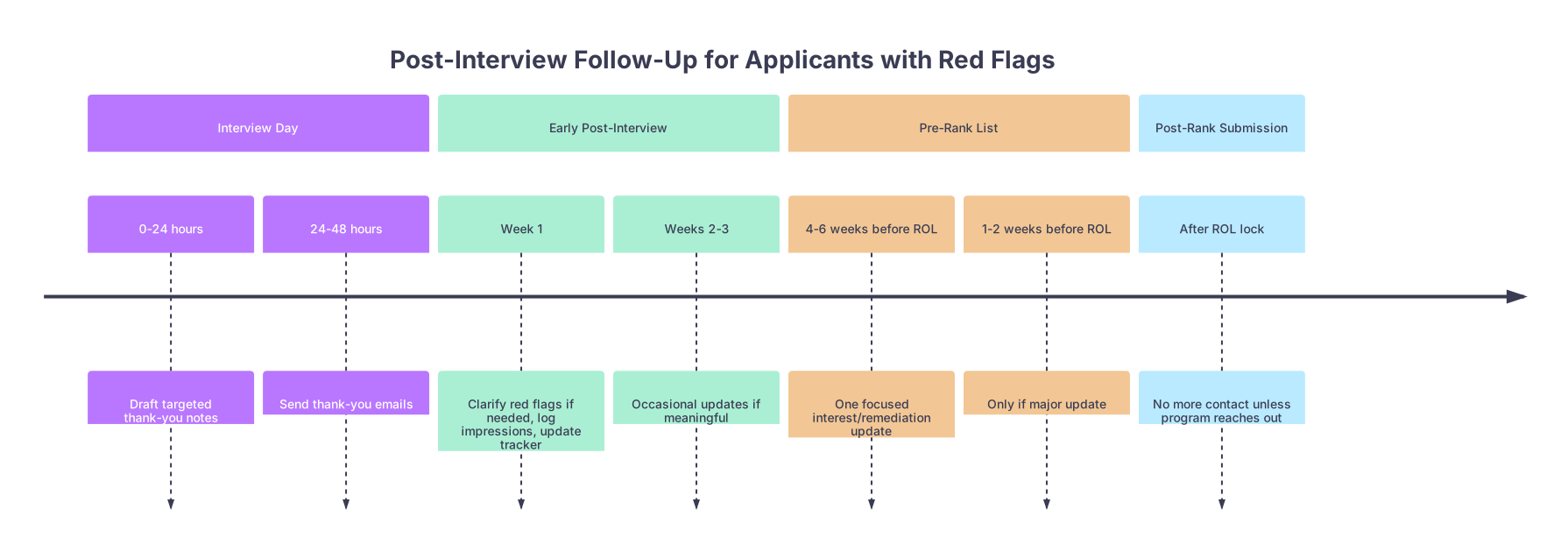
| Period | Event |
|---|---|
| Interview Day - 0-24 hours | Draft targeted thank-you notes |
| Interview Day - 24-48 hours | Send thank-you emails |
| Early Post-Interview - Week 1 | Clarify red flags if needed, log impressions, update tracker |
| Early Post-Interview - Weeks 2-3 | Occasional updates if meaningful |
| Pre-Rank List - 4-6 weeks before ROL | One focused interest/remediation update |
| Pre-Rank List - 1-2 weeks before ROL | Only if major update |
| Post-Rank Submission - After ROL lock | No more contact unless program reaches out |
That’s the skeleton. Now we’ll fill it in with what you should actually do at each point—especially if you have red flags.
Immediately After Each Interview (Day 0–1)
At this point, you should not be “relaxing” after a big day. You’re on the clock.
Within 1–2 hours after the interview (once you’re alone)
You’re still in the building, in your car, or back at the hotel. Do this before your memory fades:
- Open a notes app or paper notebook and capture:
- Names and roles of everyone you met
- Any mention of remediation, support, or “we’ve had similar applicants before”
- Specific moments where your red flag was discussed (or awkwardly avoided)
- Phrases they used you can mirror later (“supportive learning environment,” “team-based care,” “resident wellness,” etc.)
If you have a red flag, these details matter more than you think. You’re looking for:
- Programs that didn't bring it up at all (they may have concerns but didn’t feel time to address)
- Programs that asked pointed questions (they’re deciding: concern vs. risk)
- Programs that explicitly said “this wouldn’t be a dealbreaker here” (gold)
Within 6–12 hours: Draft your thank‑you emails
Do not send yet. Draft.
At this point, you should:
- Create a template skeleton you’ll reuse, but customize content for each person.
- For applicants with red flags, your thank‑you note has one extra job:
- Reinforce your trajectory: what you did after the red flag
- Anchor them to your current performance, not your worst moment
Example framing (you’ll tune this to your own issue):
For a Step 1 failure:
- “I appreciated the opportunity to share how my approach to Step 1 changed my study habits and led to my stronger Step 2 CK performance and consistent clinical evaluations.”
For professionalism probation:
- “Thank you for allowing me to discuss how that early professionalism concern led me to seek feedback actively and build stronger, more reliable habits on the wards.”
For a gap year due to illness/family:
- “I’m grateful we could talk about my leave of absence and how returning to clerkships has reinforced my commitment and resilience.”
You’re not writing an essay. Two short sentences is enough. But some acknowledgment that you’ve grown since the red flag helps them remember you as more than the issue.
24–48 Hours After Interview: Send Thank‑You Emails
At this point, you should send. Waiting longer makes you look disorganized; sending sooner makes you look impulsive.
Who should get an email?
- Program director
- Chair (if you had a separate chair interview)
- Associate PDs or faculty who interviewed you
- Chief resident interviewers
- Coordinator (optional, but recommended—short and polite)
Don’t send mass copy‑paste emails. Directors talk. They notice.
Structure for applicants with red flags
For each email (PD example):
Subject line (simple, no drama):
- “Thank you – [Your Name], [Specialty] Interview [Date]”
Opening:
- “Dear Dr. Smith,
Thank you for the opportunity to interview at the [Program Name] [Specialty] Residency yesterday.”
- “Dear Dr. Smith,
Program‑specific detail (1–2 lines)
Show you paid attention. Morning report format, curriculum, resident culture, niche focus.Subtle red‑flag trajectory reinforcement (1–2 lines; only if you actually discussed it or it’s visible in your file):
- “I appreciated the chance to discuss how I approached my Step 1 setback and how that experience now informs my preparation and reliability on wards.”
Closing:
- “I would be honored to train at [Program Name].
Sincerely,
[Full Name], [Med School], AAMC ID [optional]”
- “I would be honored to train at [Program Name].
Don’t do this
- Don’t apologize again.
- Don’t write long explanations in email form.
- Don’t bring up a red flag that never came up and is minor (e.g., single low clerkship grade) unless it’s central to your story.
You’re reminding them you’re mature and moving forward, not begging for forgiveness.
Week 1 After Each Interview: Organize & Strategize
This is where most applicants get lazy. You cannot afford that.
At this point, you should:
- Build or update a post‑interview tracker.
Something like this:
| Program | Interview Date | PD Email Sent | Key Concerns Mentioned | Red Flag Discussion | Follow-up Needed | Rank Tier (Tentative) |
|---|---|---|---|---|---|---|
| Program A | 11/05 | 11/06 | Prefers high Step 2 | Asked about Step 1 fail | Maybe update later | High |
| Program B | 11/10 | 11/11 | Heavy ICU | Did not mention gap year | No | Medium |
| Program C | 11/15 | 11/16 | Loves research | Discussed professionalism | Yes | High |
Grade each program on two private axes:
- How much did they seem concerned about your red flag?
- How much did they seem to value your strengths?
Decide where a later update email might actually help.
- Only send follow‑up to programs where:
- You’re seriously considering ranking them highly
- There’s something concrete to update or clarify
- Only send follow‑up to programs where:
No “just checking in” emails. Death sentence for borderline applicants.
Weeks 2–3 After Interview: Targeted Updates Only
Most programs hate fluff updates. But if you have red flags, well‑timed, substantial updates can help tip a committee from “risk” to “redeemable.”
At this point, you should send an update only if:
- You’ve received new clinical evaluations that specifically support your growth area (professionalism, reliability, communication).
- You’ve passed a retake of a key exam (e.g., CS/OSCE, remediation course, institutional exam).
- You’ve just received a significant Step 2 CK score that offset a Step 1 problem.
- You’ve completed a mentorship, professionalism program, or wellness plan tied directly to your original issue.
Sample timing
- Interview on Nov 10
- Thank‑you emails sent Nov 11
- New Step 2 score released Nov 25
- At this point, you should send a short update between Nov 26–30.
How to write the update
Aim it to the PD or designated contact. Clear subject line:
- “Update – [Your Name], [Specialty] Applicant [AAMC ID]”
Core structure:
One line reminding them who you are:
- “I interviewed with your program on November 10 and appreciated our conversation about resident support and growth.”
One or two lines of specific, new information:
- “I wanted to share that I recently received my Step 2 CK score (243). Given my earlier Step 1 failure, I’m proud of this improvement and feel it better reflects my current abilities and work ethic.”
One line tying it back to their concerns or culture:
- “This result reflects the more structured, disciplined approach I discussed during our interview, and I’m confident I’d bring that same persistence and resilience to your residency.”
Simple closing:
- “Thank you again for your consideration.
Sincerely, [Name]”
- “Thank you again for your consideration.
That’s it. No attachments unless they explicitly asked for them.
4–6 Weeks Before Rank List Certification: One Interest + Stability Check-In
Most interview seasons are front‑loaded. By the time you’re 4–6 weeks away from rank list deadlines, programs are meeting and re‑meeting to finalize their lists.
At this point, you should consider one carefully timed, non‑desperate message to your genuinely top programs if any of these are true:
- Your red flag was a major focus of your interview, and you now have months of stable performance since.
- You’ve had no new incidents, and you can point to concrete patterns of reliability.
- You have a clear first‑choice program (or top 2–3) and can honestly say they are at or near the top of your list.
This is not a love letter. It’s a stability update with a side of interest.
Structure for applicants with red flags
Subject:
- “Update and continued interest – [Your Name], [Specialty]”
Content:
Grounding:
- “I interviewed with your program on December 5 and continue to think often about our conversations with Dr. X and the residents about your culture of mentorship and feedback.”
Stability / growth proof (this is where red-flag applicants win or lose):
- “Since our interview, I’ve completed my Sub‑I in Internal Medicine and an ICU elective. My evaluations have consistently highlighted dependability, communication, and professionalism—areas where I’ve worked intentionally to grow since my earlier professionalism concern.”
Clear, calm expression of interest (without violating NRMP rules):
- “Your program remains at the very top of my list, and I would be thrilled to have the opportunity to train with your team.”
Close:
- “Thank you again for your time and consideration.
Sincerely, [Name]”
- “Thank you again for your time and consideration.
Notice what’s missing:
No “I will rank you #1” promises, no pushy language, no follow‑up questions. Just stability + sincere interest.
1–2 Weeks Before Rank Lists Lock: Only for Major Changes
By now, programs are basically done. Rapid, anxious emailing this late sends one message: panic.
At this point, you should only reach out if there’s a major, objective change that directly softens your red flag:
- You matched into AOA or honors society after remediation.
- You received a departmental award for professionalism, teaching, or patient care.
- You successfully completed a remediation term that was still “in progress” at the time of interview, with strong feedback.
If yes, send one short note. If no, leave it alone.
What Changes if You Have Different Types of Red Flags?
Let’s get more specific. Different red flags demand slightly different follow‑up emphasis.

1. Exam Failures (Step 1/2, COMLEX, Shelf)
Your schedule priority: get and share a clear upward trend early.
- Post-interview Week 1:
- Make sure your ERAS is updated with any new passing score.
- Weeks 2–3:
- Send an update the week your new passing score posts, especially if:
- Step 1 fail → Step 2 235+
- COMLEX fail → solid COMLEX 2 score
- Send an update the week your new passing score posts, especially if:
Your email language should always point at process change, not “I just guess I got unlucky last time.”
Bad: “I’m glad I finally had better luck on Step 2.”
Better: “The disciplined schedule and question‑based approach I built after my Step 1 failure made a big difference, and I plan to carry that same structure into residency.”
2. Professionalism / Conduct Issues
These are the biggest red flags. Programs fear repeat behavior. Your job: show a long, boring stretch of normal.
Focus your follow‑up timeline on:
- Highlighting consistent evaluations from rotations after the incident.
- Referencing feedback about:
- Timeliness
- Communication
- Team contribution
- Accepting feedback gracefully
Your 4–6 week pre‑rank update email is key:
- “Since our interview, I have continued on my Family Medicine and ICU rotations, with evaluations consistently emphasizing reliability, communication, and being a supportive team member. My faculty advisor and I meet regularly to review feedback and keep these gains durable.”
You want them thinking: This is old news. They’ve moved on. Safely.
3. Leaves of Absence / Gap Years
For medical/mental health/family reasons, the program’s question is: “Are we taking on a high risk of disruption?”
Your timeline focus:
- Early thank‑you note: briefly re‑center on your successful return to full‑time clinical work.
- Week 2–3 update (if relevant):
- If you’ve finished another full‑time clerkship or Sub‑I since:
- “I’ve now completed another 8 weeks of full‑time clinical work without interruption, reinforcing that I’m ready for the demands of residency.”
- If you’ve finished another full‑time clerkship or Sub‑I since:
Do not overshare in email. Details belong in the interview or personal statement, not a follow‑up thread.
4. Major Career Switches (e.g., Path to Psych, Surgery to FM)
Programs worry you’ll switch again or aren’t truly committed.
Your follow‑up timeline should hammer commitment and fit:
- In thank‑you notes:
- Reference specific aspects of that specialty in their program that matched what you’re seeking for the long term.
- In later updates:
- Highlight ongoing experiences in that specialty:
- New psych rotation evaluation
- New FM clinic continuity experience
- Ongoing research in the field
- Highlight ongoing experiences in that specialty:
Not: “I liked your program a lot.”
But: “My recent outpatient Psychiatry rotation strengthened my interest in long-term therapeutic relationships, which is exactly what drew me to your program during our interview day.”
What You Should Not Do at Any Point
A quick anti‑timeline. These are mistakes I see every year.
At no point should you:
- Send weekly check‑ins “just to reiterate my interest.” That reads as needy and tone‑deaf.
- Apologize repeatedly for your red flag. Once clearly addressed = mature. Repeated = unstable.
- Ask where you are on their rank list. Banned topic, makes you look naive.
- Pit programs against each other (“I’ll rank whichever program seems most interested”). Instant turn‑off.
- Blind‑copy mass emails to multiple programs. They can tell.
Your entire schedule of contact should feel:
- Sparse
- Intentional
- Anchored to new information or genuine, specific interest
Anything else is noise.
Compact Calendar View
If you want a simple overlay of timing for a “typical” interview in mid‑season:
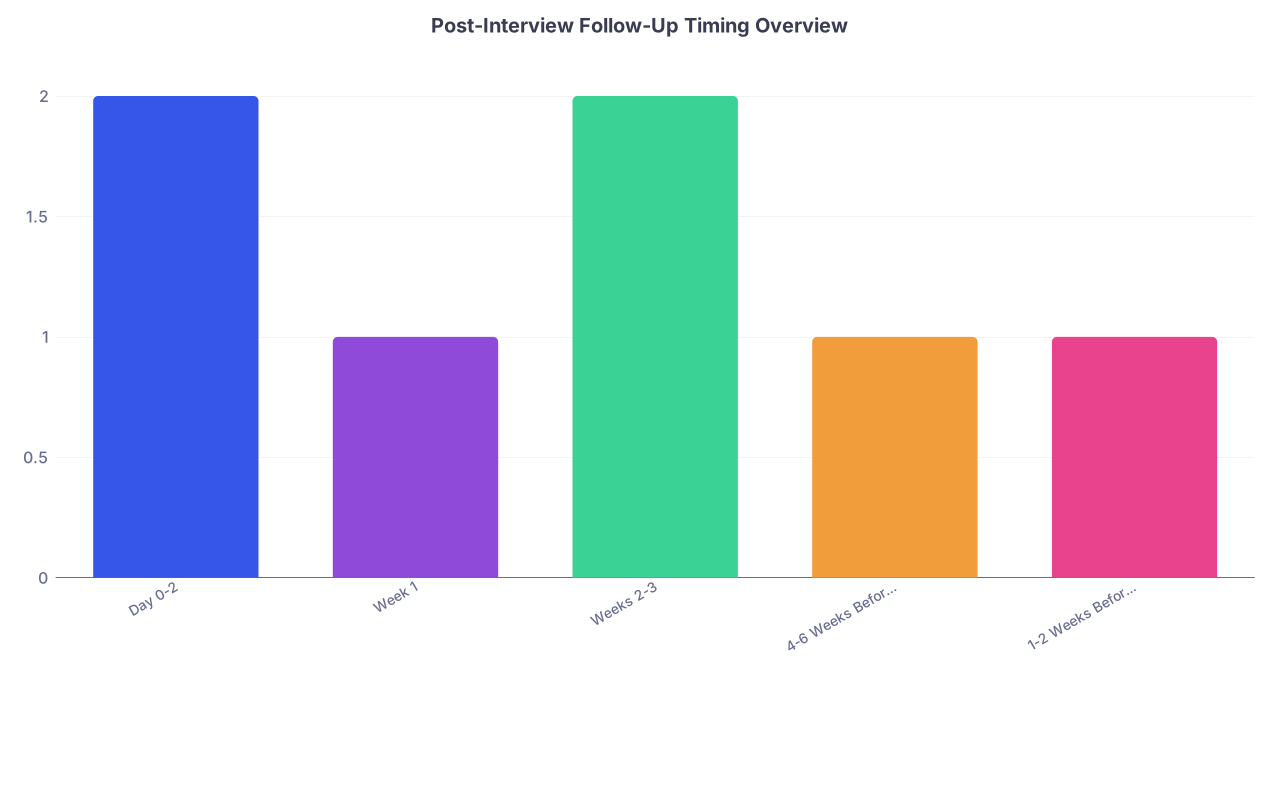
| Category | Value |
|---|---|
| Day 0-2 | 2 |
| Week 1 | 1 |
| Weeks 2-3 | 2 |
| 4-6 Weeks Before ROL | 1 |
| 1-2 Weeks Before ROL | 1 |
Think of the “values” here as relative touch points:
- Day 0–2: Draft + send thank‑you emails (high activity)
- Week 1: Organize notes and tracker (low external contact, internal work)
- Weeks 2–3: Maybe 1–2 strategic updates if you have new data
- 4–6 weeks before ROL: One carefully crafted stability + interest note to top programs
- 1–2 weeks before ROL: Only if major, objective change
Final Takeaways
Three things I want you to remember:
- Your red flag is part of your story, not your whole identity. Use follow‑up to highlight trajectory and stability, not rehearse your worst moment.
- Timing is strategy. Thank‑you within 24–48 hours, substantive updates only when you have real news, one stability/interest note before rank lists finalize.
- Less noise, more signal. Every message should either (a) add new, objective information or (b) calmly reinforce your fit and growth. If it does neither, don’t send it.