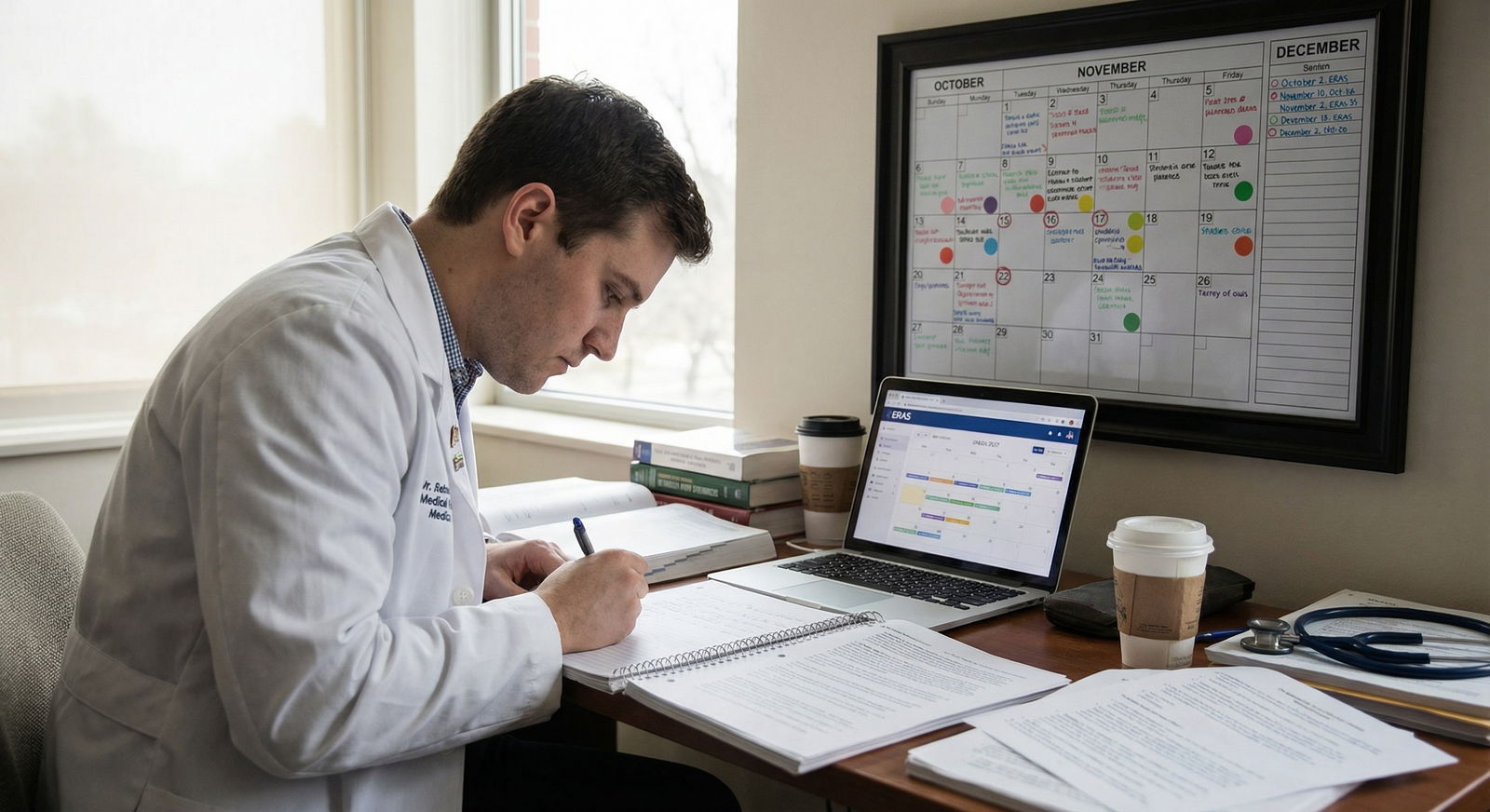
It's early March of your MS3 year. You just got an email from the dean’s office: “This professionalism concern will be documented in your MSPE.”
Your stomach drops. You know program directors actually read that section. You also know you still have some time before the MSPE locks in permanently. The question now is blunt: what can you realistically fix between now and October 1 when the MSPE goes out?
Let’s walk this month-by-month, then zoom into concrete weekly and daily moves when it matters.
Big Picture Timeline: From Incident to MSPE Release
Before we slice this into months, you need the spine of the year.
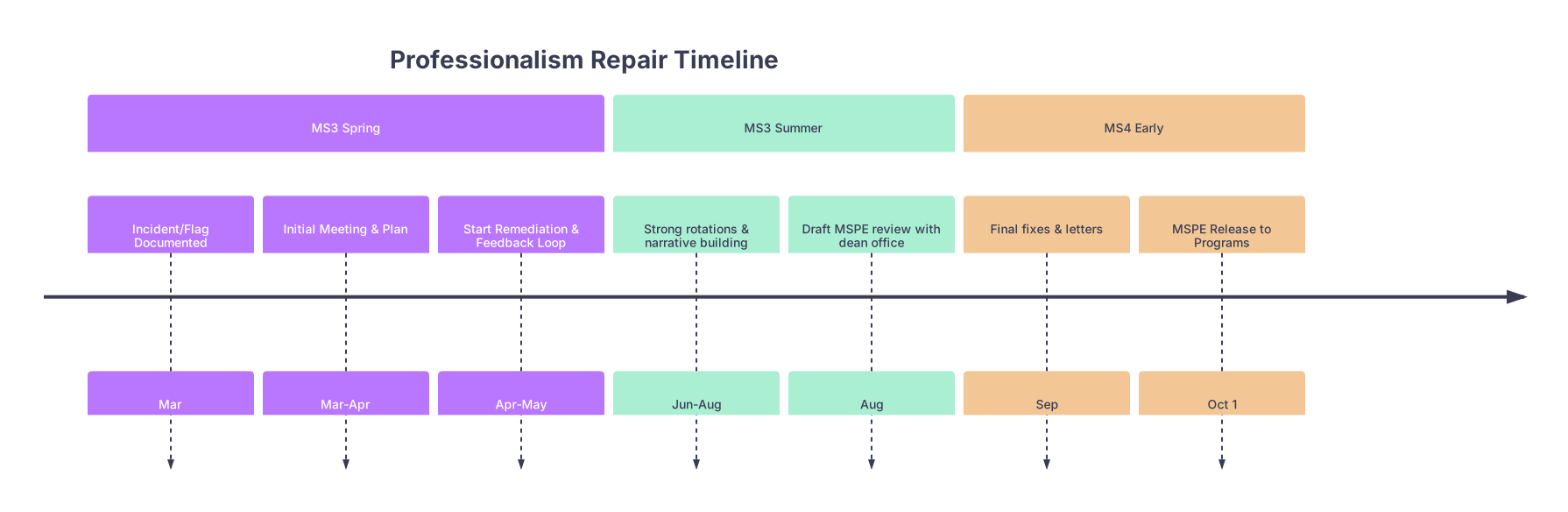
| Period | Event |
|---|---|
| MS3 Spring - Incident/Flag Documented | Mar |
| MS3 Spring - Initial Meeting & Plan | Mar-Apr |
| MS3 Spring - Start Remediation & Feedback Loop | Apr-May |
| MS3 Summer - Strong rotations & narrative building | Jun-Aug |
| MS3 Summer - Draft MSPE review with dean office | Aug |
| MS4 Early - Final fixes & letters | Sep |
| MS4 Early - MSPE Release to Programs | Oct 1 |
That’s the window you’re working with. Roughly 6–7 months if this is happening in early spring. Less if you’re reading this later. The later you are, the more intense and targeted your actions need to be.
Step 1: Week 0–2 After the Professionalism Hit
You're within days to two weeks of the event being formalized. Maybe it was:
- A no‑show for clinic without notifying anyone
- A pattern of tardiness that finally triggered a written concern
- An unprofessional email to a faculty member
- A social media post that crossed a line
At this point you should stop trying to “wait it out” and start actively managing the damage.
Days 1–3: Stabilize and Get the Facts
You need clarity, not rumors.
At this point you should:
- Get the exact wording of the concern
- Ask: “How will this be documented in my file? What exact language will be used?”
- Clarify whether it is reportable in the MSPE
- Some schools include everything, others only “Level 2+” actions
- Identify who holds the pen for your MSPE professionalism section
- Usually an Associate Dean for Student Affairs or equivalent
Daily actions:
- Pull together all relevant emails, schedules, and documentation into a single folder.
- Write a factual, emotionless timeline of what happened. Dates, times, who said what. You’re not defending yet. You’re just getting accurate.
Days 4–7: Own It and Start the Paper Trail
This is where most students screw up. They go quiet. Or defensive. Both look terrible when the dean later writes your MSPE.
At this point you should:
- Request a formal meeting with the dean or professionalism committee rep:
- “I’d like to understand the impact on my MSPE and develop a plan to demonstrate improvement before it’s finalized.”
- Prepare one page:
- 2–3 sentence acceptance of responsibility (no excuses)
- 2–3 bullet points of what you’ve already done differently
- 3–4 concrete steps you propose to improve (communication system, time management changes, mentor check‑ins)
During the meeting:
- Use phrases that actually land:
- “I understand this is serious and that it may appear in my MSPE.”
- “I don’t want this to be the last word on my professionalism.”
- “Here’s what I’m already changing, and here’s what I’d like your guidance on.”
- Ask explicitly:
- “What would you need to see over the next 3–6 months to be able to describe this as a problem that I recognized and demonstrably improved on?”
You want the dean thinking in terms of a closed loop: identified problem → remediation → documented improvement.
Months 1–2: Building the Remediation Plan (MS3 Spring)
You’re now about 1–8 weeks out from the incident and still months away from MSPE release. This is prime repair time.
At this point you should have:
- A written remediation or expectations plan, even if it’s informal:
- Attendance or punctuality targets
- Communication expectations
- Required professionalism workshops or modules
- Mentor or advisor follow‑ups
If administration hasn’t created one, draft it yourself and email it to them:
“Based on our conversation, here’s the plan I’ll follow. Please let me know if you’d like to modify anything.”
Now it’s in the record that you leaned into improvement.
Weeks 1–4: Make Professionalism Impossible to Miss
You need new data points. Fast.
Daily / weekly actions:
On current rotations:
- Arrive 10–15 minutes early. Every day. No exceptions.
- Touch base with your senior resident: “I’m working on being extra reliable. Anything I can do better this week?”
- If you’re leaving early (conference, appointment), tell someone clearly and ahead of time, and follow up with a short “thanks for accommodating” email.
Email structure (yes, this matters):
- Subject: Clear and specific
- Open with a greeting, not “Hey”
- Close with “Thank you” and your full name, MS3/MS4
- Respond within 24 hours unless impossible; if delayed, acknowledge it: “Apologies for the delayed response…”
Document feedback:
- After a week where things go well, ask one attending:
“Could you give me some brief feedback on my professionalism and reliability this week? I’m working deliberately on those areas.” - Jot down their comments with date, rotation, and name.
- After a week where things go well, ask one attending:
You’re building a stack of small, boring wins that can later be converted into language like “student took feedback seriously and showed consistent improvement in reliability across subsequent rotations.”
Month 3–4: Prime Rotation Strategy (MS3 Late Spring / Early Summer)
By now, the initial sting may have faded for you. It has not faded on paper. The record is still there. This is where many students drift. You can’t.
You’re likely entering high-visibility rotations (Sub-I, ICU, Surgical services) or key MS3 core rotations that will be heavily quoted in your MSPE.
At this point you should be choosing rotations and attendings strategically.

Choose Rotations That Give You Narrative Ammo
You want at least 2–3 rotation evaluations after the incident that scream “professional, dependable, great teammate.”
Aim for:
Rotations after the incident with:
- High contact with attendings
- Clear written evaluations (medicine, surgery, OB, etc.)
- Potential letter writers in your target specialty
People who will actually write comments, not just check boxes. Ask around. You know who the detailed evaluators are.
At this point you should:
- Tell trusted attendings (once you’ve proven yourself a bit):
“I had a professionalism concern earlier this year around [brief, non-defensive description]. I’ve been working hard to correct it. If you feel I’ve demonstrated strong professionalism on this rotation, would you be comfortable highlighting that in your evaluation or a letter?”
Yes, that’s uncomfortable. Do it anyway. Their narrative carries more weight than your apology.
Side-by-Side: Weak vs Strong Recovery Pattern
Here’s how this looks when it goes poorly vs when it goes well.
| Pattern Type | What It Looks Like | How It Shows Up in MSPE |
|---|---|---|
| Weak | One incident, no documented follow-up, average later evals | “There was a professionalism concern regarding attendance. Student completed requirements.” |
| Strong | Incident plus clear remediation plan, multiple later evals explicitly praising professionalism | “Early concern regarding punctuality, which the student addressed through structured remediation and subsequently demonstrated consistently strong professionalism on later rotations.” |
| Outstanding | Above plus strong LORs specifically citing reliability, initiative, and insight | Programs read it as growth story, not permanent red flag |
Your goal: move yourself from “Weak” to at least “Strong.”
Month 4–5: Lock in High-Yield Evaluations and Letters
You’re now in late summer before MS4 or early MS4, depending on your calendar. MSPE drafts are starting to form in the background.
At this point you should be engineering who gets to tell your story.
Targeted Letter Strategy (Weeks 12–20 After Incident)
You need at least 1–2 letters that implicitly or explicitly counteract the professionalism concern.
Ideal letter writers:
- An attending or clerkship director after the incident who:
- Saw you consistently
- Will say “Yes, I remember you” without hesitation
- Naturally comments on reliability and work ethic
When you ask for letters, don’t be vague. Say something like:
“I had a professionalism concern earlier in the year related to [brief mention]. I’ve been working very deliberately on reliability and communication. If you feel you can honestly comment on my professionalism and teamwork in a positive way, I would be very grateful for a letter highlighting those aspects.”
If they hesitate, walk away. You don’t want a lukewarm letter where “professional” is missing from the adjectives list.
Late Summer: The MSPE Draft Window (Usually August)
This is where things become very concrete. The MSPE doesn’t appear out of nowhere. Drafts circulate internally well before October 1.
At this point you should proactively engage with the dean’s office instead of waiting to be surprised.
Step 1: Ask for an MSPE Preview Meeting
Many schools allow you to review a draft or at least discuss what will be included.
Your email can be simple:
“I’d like to schedule a meeting to review the professionalism portion of my MSPE and ensure that my remediation and improvement over the past several months are accurately reflected.”
During the meeting:
- Confirm that:
- The incident is described factually, not exaggerated
- Your response and improvement are mentioned, not ignored
- Later positive evaluations are referenced or at least considered
You can say:
- “Since that incident, my last three evaluations describe me as highly reliable and professional. Is there a way to incorporate that trajectory so programs see the full picture?”
You’re not asking them to erase what happened (usually they won’t). You’re pushing for a balanced narrative.
What Deans Actually Respond To
I’ve seen this go two ways.
Deans roll their eyes when:
- The student minimizes the concern: “It was just one time…”
- There’s no structured evidence of improvement. Just vibes.
- The student blames systems, other people, or “communication issues.”
Deans lean in when:
- The student owned it early, in writing
- There’s a clean trail: incident → remediation plan → positive later evals
- Faculty solicitously emailed the dean some version of, “Whatever happened earlier, that’s not the student I worked with. They were stellar on our service.”
At this point (late summer) your job is to put all that evidence on the table in an organized way.
September: Final Tweaks Before MSPE Locks
You’re about 2–4 weeks from MSPE release. ERAS is opening, letters are being uploaded, everyone is stressed.
You don’t have time for big moves now. But you can still tighten the story.
At this point you should:
Make sure your personal statement and ERAS experiences show:
- Reliability (long-term commitments, leadership roles)
- Service and follow-through
- Examples where you handled feedback well
Sync your story with your dean’s letter meeting:
- If your school gives you a meeting to discuss your MSPE or overall application, ask directly:
“If programs asked you about my professionalism record, how would you describe my trajectory?” - If their answer sounds lukewarm, ask what, if anything, can still be emphasized or clarified before October 1.
- If your school gives you a meeting to discuss your MSPE or overall application, ask directly:
This is also when you quietly brief key letter writers if they haven’t submitted yet:
“The professionalism concern from earlier this year will be briefly mentioned in my MSPE along with my remediation. If you sincerely feel that my professionalism and reliability were strong on your service, any positive mention of that in your letter would be very helpful context for programs.”
MSPE Release (October 1): What Happens Now
MSPE goes out. Your professionalism record is baked into it.
At this point you should accept one hard truth: You cannot change the document anymore. But you can absolutely change how programs interpret it.
During Interview Season
You may get asked directly:
- “I see there was a professionalism concern earlier in medical school. Can you tell me about that?”
Your answer needs to be:
- Brief
- Clear
- Owning responsibility
- Focused on what changed, not re-litigating what happened
Skeleton template:
- One sentence describing what happened, owning your part
- One or two sentences on what you changed
- One or two sentences on how others have seen the improvement
Example:
“Early in my third year, I had a professionalism concern related to missing a clinic session due to poor communication on my part. I took that seriously and worked with our dean’s office on a structured plan around communication and time management. Since then, my subsequent evaluations have consistently commented on my reliability and teamwork, and I’ve made a deliberate effort to over-communicate any schedule issues in advance.”
You don’t need to grovel. You do need to sound like someone who learned something and will not repeat it as a resident.
Quick Visual: Your Time Investment Over 6 Months
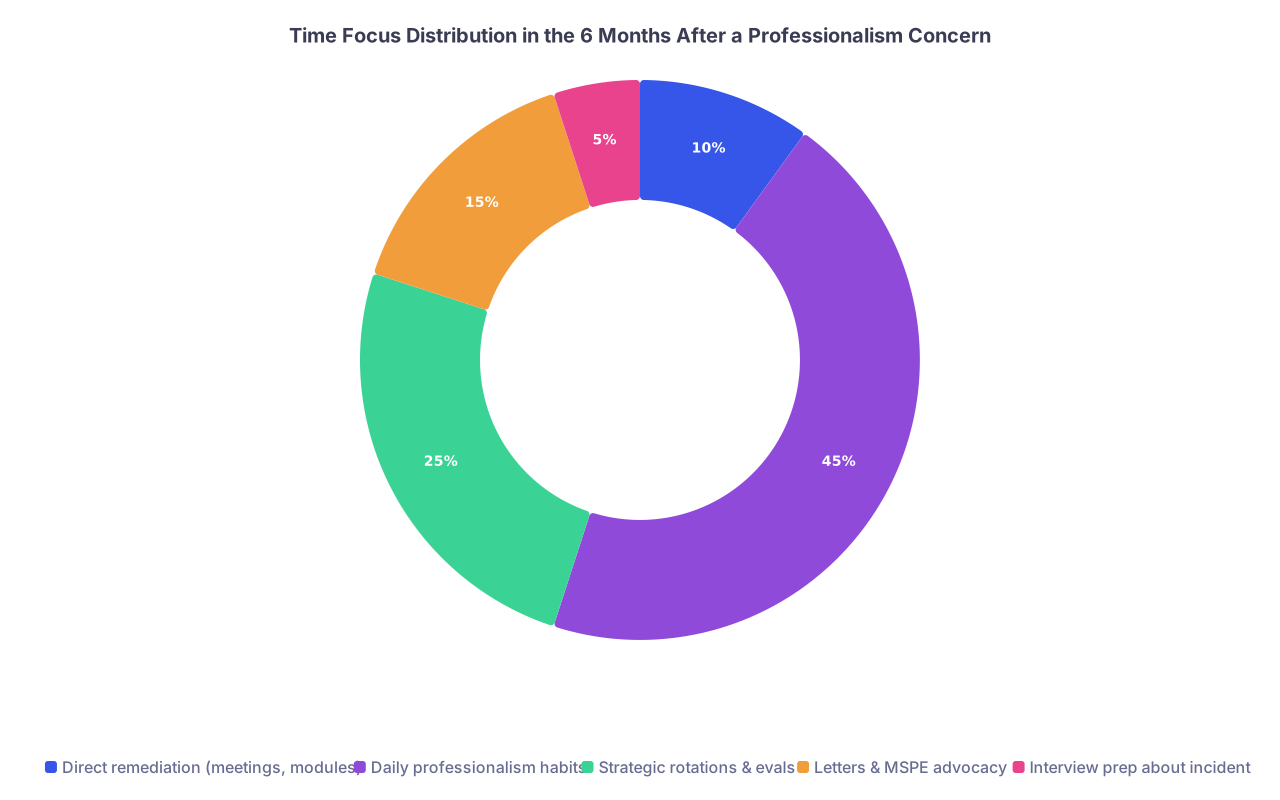
| Category | Value |
|---|---|
| Direct remediation (meetings, modules) | 10 |
| Daily professionalism habits | 45 |
| Strategic rotations & evals | 25 |
| Letters & MSPE advocacy | 15 |
| Interview prep about incident | 5 |
Most of the work isn’t in big formal steps. It’s in the boring daily consistency.
Red Flag Reality Check by Specialty
Some specialties care more about this than others. No, that’s not “fair.” It’s reality.
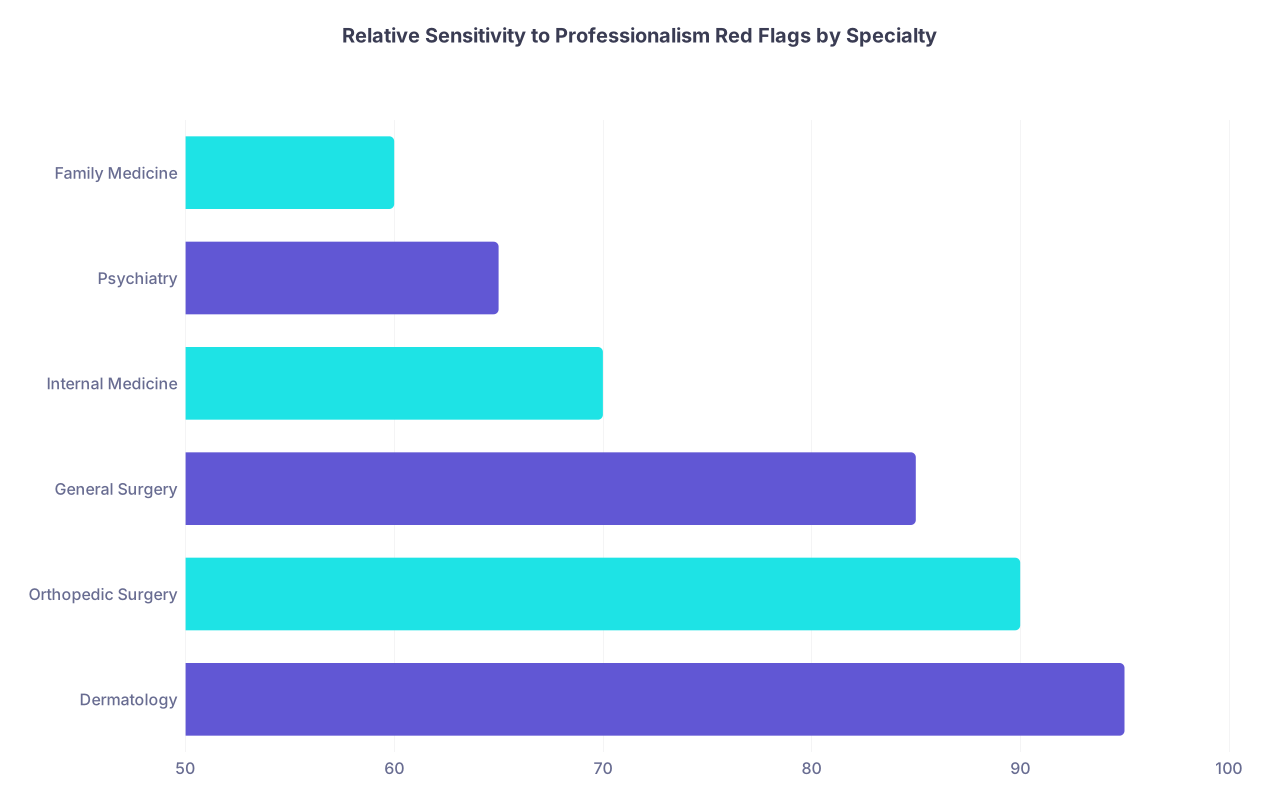
| Category | Value |
|---|---|
| Dermatology | 95 |
| Orthopedic Surgery | 90 |
| General Surgery | 85 |
| Internal Medicine | 70 |
| Psychiatry | 65 |
| Family Medicine | 60 |
If you’re shooting for highly competitive, small programs (derm, ortho, plastics), even a “repaired” professionalism record might cap your options a bit. For IM, FM, psych, peds, a strong recovery usually carries significant weight.
Concrete 4-Week Sprint Plan If You’re Late in the Cycle
Maybe you’re reading this in August or even early September and feel behind. Then you don’t need philosophy. You need a sprint.
At this point (T‑4 weeks to MSPE release) you should:
Week 1:
- Email dean’s office for a professionalism/MSPE meeting
- Collect 2–3 strong recent evaluations that emphasize professionalism
- Ask 1–2 attendings from last rotations if they’re comfortable emailing the dean a short note about your professionalism growth
Week 2:
- Have the dean meeting
- Present a chronology of incident → remediation → improved performance
- Politely request that remediation and positive trend be reflected in the MSPE wording
Week 3:
- Confirm with dean’s office that your final MSPE accurately reflects:
- The incident
- Your response
- Evidence of improvement
Week 4:
- Refine your interview answer about the incident
- Align your personal statement and experiences to emphasize reliability, follow-through, and growth

Not perfect. But better than passively hoping no one notices.
One More Tool: Show, Don’t Beg
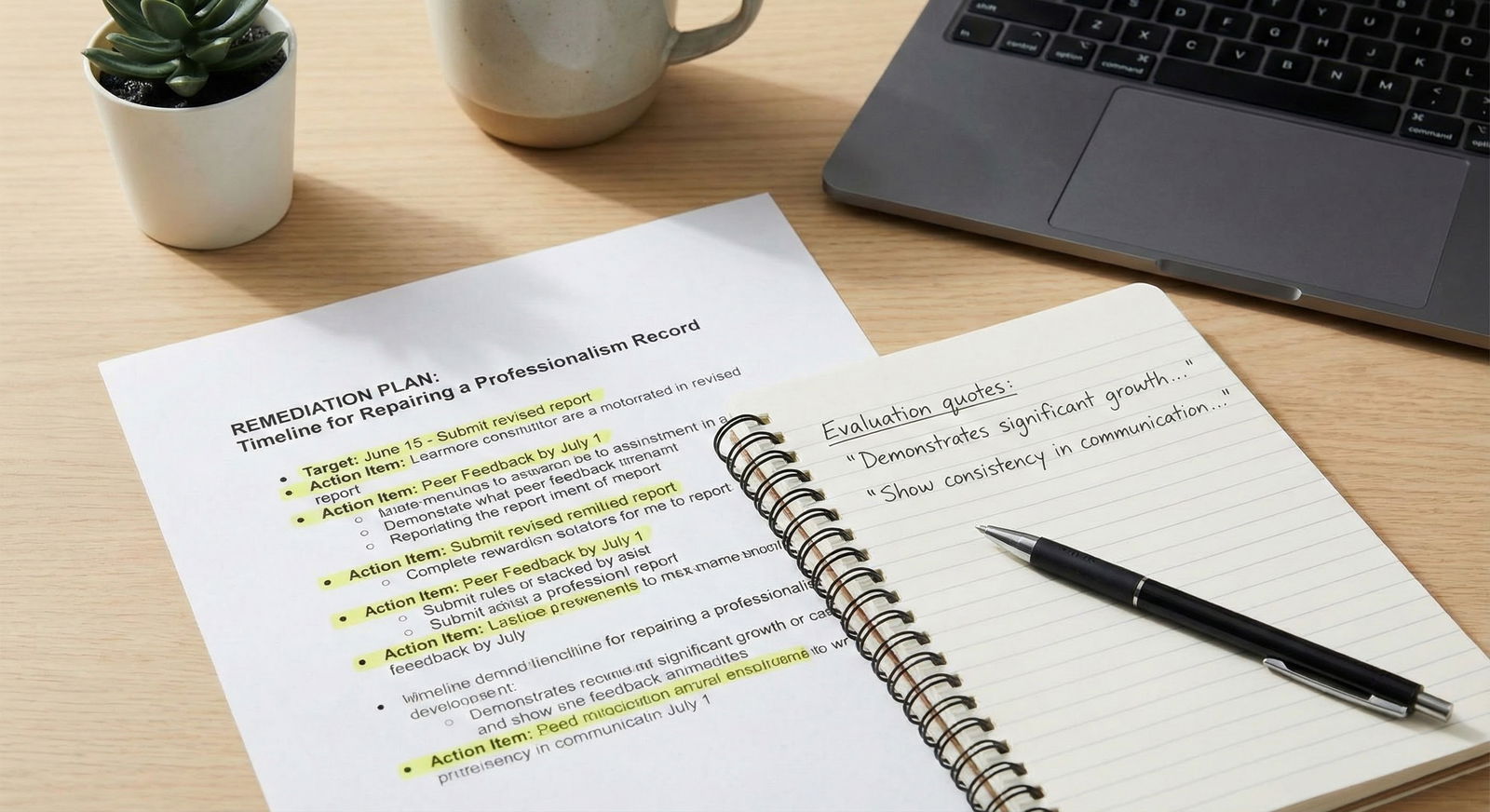
If you’re the type who likes structure, capture your remediation story in a simple one-page document for your own use (not to upload anywhere):
- Top: Date of incident + very short description
- Middle: Remediation steps with dates (meetings, workshops, check-ins)
- Bottom: Selected quotes from later evaluations that support your growth
That sheet exists for you: to keep your story straight, to show the dean if helpful, and to prep for interviews. It also calms you down. Chaos feels smaller when it’s on one page.
Key Points to Walk Away With
- Start early and own it. The professionalism concern itself isn’t what kills you; silence, defensiveness, and lack of a documented improvement trajectory do.
- Stack boring wins. Daily reliability, targeted rotations, and explicit faculty comments give the dean something better to write than, “There was a concern.”
- Shape the narrative, then live it in interviews. You can’t erase the line in your MSPE, but you can make it part of a genuine growth story that most programs will accept—especially if your later behavior and letters clearly back it up.