
The worst red flag in a residency application is not the failure, LOA, or professionalism concern. It is hiding it until it blindsides the people trying to help you.
This is a timing problem. You must disclose the right things to the right people at the right moments in the application year. Not earlier “just to vent.” Not later when nothing can be fixed. There is a narrow window where disclosure helps you instead of hurting you.
Here is how to handle that, month by month, then week by week as ERAS season hits.
Big Picture: Who Needs To Know What, and When
Before the month‑by‑month breakdown, fix this framework in your head.
At any point in the application year, you should be asking yourself three questions:
Does this person have formal influence on my record or application?
- If yes → they need to know earlier.
- If no → they can wait or never need the full story.
Will this red flag appear on paper somewhere?
- Transcript, MSPE, dean’s letter, exam history, professionalism note, police record.
- If it is documented, you disclose early to key allies. Period.
Is there still time for them to help shape the narrative?
- If yes → you gain from disclosure.
- If no → you risk only damage and drama.
Now map that onto roles:
| Person | When They Need Details |
|---|---|
| Core advisor | 9–12 months before ERAS |
| Dean/student affairs | 6–9 months before ERAS |
| Specialty mentor | 4–6 months before ERAS |
| Letter writers | 4–8 weeks before letters due |
| Program directors | Only through application/interviews |
12–9 Months Before ERAS: Quiet Reality Check
Think late MS3 / early MS4 for a traditional applicant. If you are taking a research year or off‑cycle, shift this back 12 months from your planned ERAS submission.
At this point you should:
Make a full, unflinching inventory of potential red flags:
- USMLE/COMLEX failures or multiple attempts
- Course or clerkship failures, remediation, or repeats
- LOA (personal, health, academic, disciplinary)
- Professionalism citations or committee actions
- Criminal charges, DUIs, restraining orders, etc.
- Major gaps in training that will show on your MSPE
Sort them into:
- Documented and visible (will show up somewhere official)
- Undocumented or private (e.g., personal struggles, mental health, family crises that are not in your file)
You do not need to tell anyone everything yet. But you do need one person.
At this point you should: loop in your primary advisor
If your school assigns you a longitudinal advisor or clinical coach, that is your first disclosure target.
Timing:
- 9–12 months before ERAS opens (roughly August–November of MS3 for a standard timeline).
How much to disclose:
- Every documented red flag that will be visible on:
- Transcript
- MSPE
- USMLE/COMLEX history
- Disciplinary record (if reportable)
Conversation agenda (yes, you should plan it):
- “I want to map out my residency application year realistically.”
- “Here are the issues I know will be visible on my record.”
- “I need your honest sense of how programs will see these and what range of specialties and programs makes sense.”
- “What should I be doing over the next 6–9 months to mitigate these?”
Do not show up saying, “I had some issues, what do you think?” Bring specifics. Dates. Outcomes. Official language if you have it.
Why this early?
Because specialty choice is where red flag handling actually begins. A single Step 1 fail is survivable in FM, IM, Peds, Psych. In early‑match surgical subspecialties? Brutal. You want that reality check before you fall in love with an unrealistic path.
9–6 Months Before ERAS: Deans and Damage Control
Now we are in early MS4 (roughly January–April before a September ERAS). The MSPE and your final transcript are being assembled. This is the window where dean’s offices still have flex to phrase, contextualize, and sometimes clarify.
At this point you should:
- Schedule a formal meeting with student affairs / academic affairs / the dean’s office responsible for MSPEs.
Timing:
- 6–9 months before ERAS submission.
- Translation: late winter or early spring before your application cycle.
What must be disclosed to the dean’s office:
Anything that:
- Led to official action (LOA, remediation, probation)
- Might be misinterpreted without context (multi‑month absence, schedule reshuffle, delayed clerkships)
- Shows up weirdly in your timeline (gap semesters, off‑cycle graduation)
If they already have documentation (they do), why bother?
Because you are not just reporting; you are shaping narrative.
Very specific tasks in that meeting:
Clarify official language:
- “What exactly will the MSPE say about my LOA?”
- “Can I see the draft wording around my Step 1 remediation?”
- “How will you describe my professionalism hearing outcome?”
Volunteer concise, unemotional context:
You are not begging for edits. You are giving them the facts they can ethically include:- Brief cause (“family health crisis,” “acute medical issue,” “adjustment to medical school workload”)
- Concrete resolution (“treated and stable since mm/yyyy,” “no additional concerns since,” “all subsequent clerkships completed on time and at expected level or above”)
Ask about disclosure strategy:
- “Do you recommend that I address this briefly in my personal statement?”
- “Will programs already see full details through the MSPE, or do I need to elaborate elsewhere?”
- “Are there specialties you have seen be more receptive in cases like mine?”
You do not fight the existence of the red flag. You fight for clarity and fairness in the language that will follow you into every PD’s inbox.
6–4 Months Before ERAS: Specialty Mentors and Strategic Allies
Now we are in the pre‑ERAS summer. You are finalizing specialty choice, starting to think about letters, and hearing a lot of bad advice from classmates.
At this point you should:
- Identify one specialty‑specific mentor in your chosen field (IM, Peds, Psych, Surgery, whatever you have settled on, realistically).
- Schedule a dedicated 30‑minute meeting focused only on your application strength and liabilities.
Timing:
- About 4–6 months before ERAS submission (e.g., March–May for a September submission).
What to disclose:
Only what is relevant to how that specialty will see you. That means:
- USMLE/COMLEX failures or low passes (especially Step 2 in competitive fields)
- Failed or marginally passed core clerkships in that specialty or neighbors (failed Medicine when applying IM, etc.)
- Any professionalism or behavior concerns that could hint at future problems on their service
You do not need to tell them about your undergrad DUIs if they are long resolved and not in your medical school file. But if there is an ongoing monitoring agreement or board record, yes, disclose now.
What you ask from them:
- “Given this record, what tier of programs should I realistically target?”
- “In your experience on your program’s selection committee, how big a red flag is [X] really?”
- “Is there specific compensatory strength I should be building now? Research? Strong away rotation? Extra Sub‑I?”
- “Should this issue be addressed head‑on in my personal statement or left for MSPE / interview?”
You are not looking for handholding. You are mining their actual PD‑level experience. If their face changes when you say “Step 1 fail” or “professionalism probation,” pay attention. They have seen applicants sunk by less.
4–2 Months Before ERAS: Prepping Letter Writers (Without Torpedoing Yourself)
Letter writers are where most students mess this up. They either tell nothing (so the letter unwittingly contradicts the record) or they overshare trauma with someone who is basically a stranger.
At this point you should:
- Create your LOR target list for each specialty:
- 2–3 letters from the specialty
- 1 from medicine or surgery depending on field
- 1 from a department chair or program director if your school requires a “chair letter”
Timing for disclosure to letter writers:
- Begin outreach 8–10 weeks before you want letters uploaded.
- Red flag disclosure happens after they agree to write a strong letter, but before you send them your materials.
So the sequence looks like:
- Ask: “Would you feel comfortable writing me a strong letter for [specialty] residency?”
- Once they say yes, schedule a short meeting or add a paragraph in your follow‑up email that says, in essence:
- “There is one part of my record that programs will see, and I want you to be aware of it so it does not catch you off guard.”
What to disclose to letter writers:
Only the pieces that intersect with how they describe you:
- If they supervised the rotation you failed or remediated → full facts.
- If your red flag is an exam failure unrelated to them → brief line only.
- If your red flag is professionalism and they saw no issues → even more important to tell them so they can honestly say, “In my work with X, I saw none of these concerns.”
Give them:
- The official version (“My record shows a failed Step 1 on the first attempt; I passed on the second with a 226”).
- The resolution (“Since then, I completed all clinical rotations on time with [X honors, Y high passes] and passed Step 2 on the first attempt with a 241”).
- The framing they can use if they choose (“You are welcome to mention my resilience and improvement pattern if you feel it is appropriate, but I am not asking you to excuse it.”)
You do not ask them to “downplay” or “spin” it. That is how you lose trust.
2–0 Months Before ERAS: Application Assembly and What Goes on Paper
Now we are in the crunch: the 8–10 weeks before ERAS submission. The question shifts from who to tell to where to tell it in writing.
At this point you should:
- Sit down with your advisor or dean and decide:
- Does this red flag get addressed in:
- Personal statement?
- ERAS “additional information” section?
- Nowhere except MSPE / transcript?
- Does this red flag get addressed in:
Here is the rough rule:
| Red Flag Type | Best Primary Location |
|---|---|
| Single exam failure (now passed) | MSPE only; optional brief ERAS |
| Multiple exam failures | MSPE + short ERAS explanation |
| LOA for health/family | MSPE + 2–3 sentence ERAS note |
| Professionalism probation | MSPE; address directly at interview |
| Criminal charge/board issue | MSPE/official; brief ERAS + interview |
You are not writing an essay about your suffering. You are:
- Owning what happened
- Taking responsibility where appropriate
- Showing a clear, sustained pattern of recovery and current function
A useful structure for any written explanation:
- What happened (one sentence, plain language, no drama).
- What you did about it (treatment, remediation, behavioral change, academic recovery).
- Evidence it worked (stable performance since, leadership roles, positive evaluations).
- One forward‑looking sentence (“I am confident in my readiness to meet the demands of residency.”)
You should also:
- Double‑check that every dean, advisor, and letter writer who knows your story has the same timeline and labels.
- Same month/year of LOA.
- Same description of the issue (do not call it anxiety in one place and “family crisis” in another).
This is where applicants get burned: inconsistent explanations that look like they are hiding something, even when they are not.
Interview Season: Real‑Time Disclosure and Damage Control
Once applications are out, the disclosure game shifts again. Now you are reacting to what programs see, not pre‑writing the narrative.
At this point you should:
- Expect that any visible red flag will be asked about during interviews. Not always. But often.
Do not wait for the worst version:
Program Director: “So. You failed Step 1. What happened?”
Prepare a 60–90 second answer using the same four‑part structure you used in writing. Practice it out loud with:
- Your advisor
- A career office mock interview
- A trusted attending who is willing to be blunt
You should also:
- Decide in advance which issues you will not volunteer unless asked.
Examples:- A resolved, early academic issue already fully explained in the MSPE.
- Personal health details where the cause is private but the LOA is already explained as “medical reasons now fully treated.”
If they have not asked, and the committee already has a documented explanation, you do not need to repeat every painful detail in the interview. You answer the question asked.
However:
If you sense obvious confusion or concern (multiple questions circling the same issue), it can help to say:
- “I want to make sure I am being clear about that gap in my training, because it is important to me that programs understand what it was and, just as importantly, where I am now.”
Then give the brief, structured answer again.
Special Situations: Late or Emerging Red Flags
So far this has assumed your red flags are historical. What if something new happens mid‑cycle?
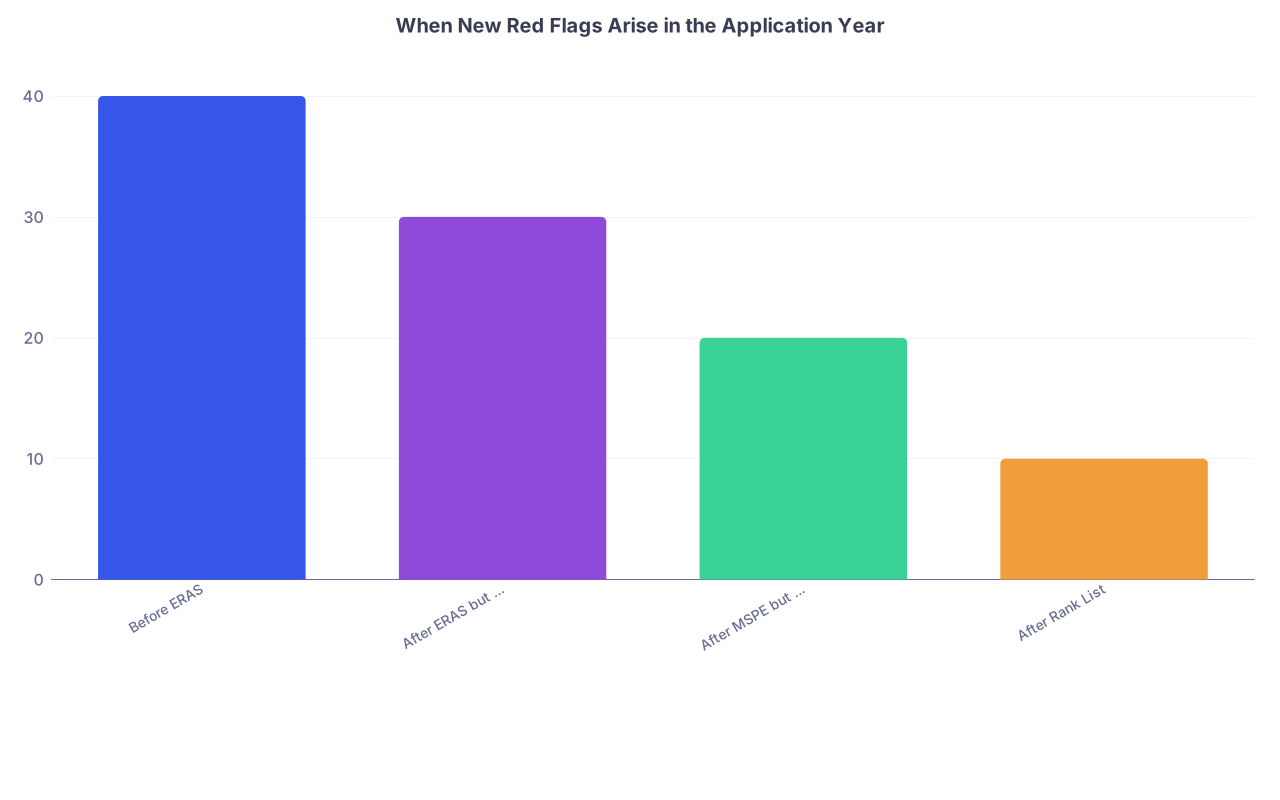
| Category | Value |
|---|---|
| Before ERAS | 40 |
| After ERAS but before MSPE | 30 |
| After MSPE but before Rank List | 20 |
| After Rank List | 10 |
Whether those numbers match your reality or not, here is the rule:
New failure, LOA, or professionalism issue before ERAS submission
At this point you should:
- Notify:
- Your primary advisor
- The dean’s office / student affairs
- Update:
- Your planned application list and specialty strategy
- Any in‑progress personal statements or narratives
If the new red flag will appear on your record before MSPE release, you and your dean must integrate it into your documents. Do not try to “beat the record” by submitting early. That backfires.
New issue after ERAS submission but before rank list
More delicate.
- If it will create an updated transcript/MSPE (e.g., new course failure, probation), most schools have an obligation to update programs.
- If it is personal and not documented (e.g., sudden family crisis), you decide how much to share. You may need to adjust interview schedules or signal to programs that something is going on without oversharing.
Your timeline here:
- Tell student affairs / dean immediately.
- Then tell your advisor.
- Then follow the school’s policy on program notification.
Do not email programs individually first. That is how contradictions and panic start.
Visual Timeline: Who You Tell When
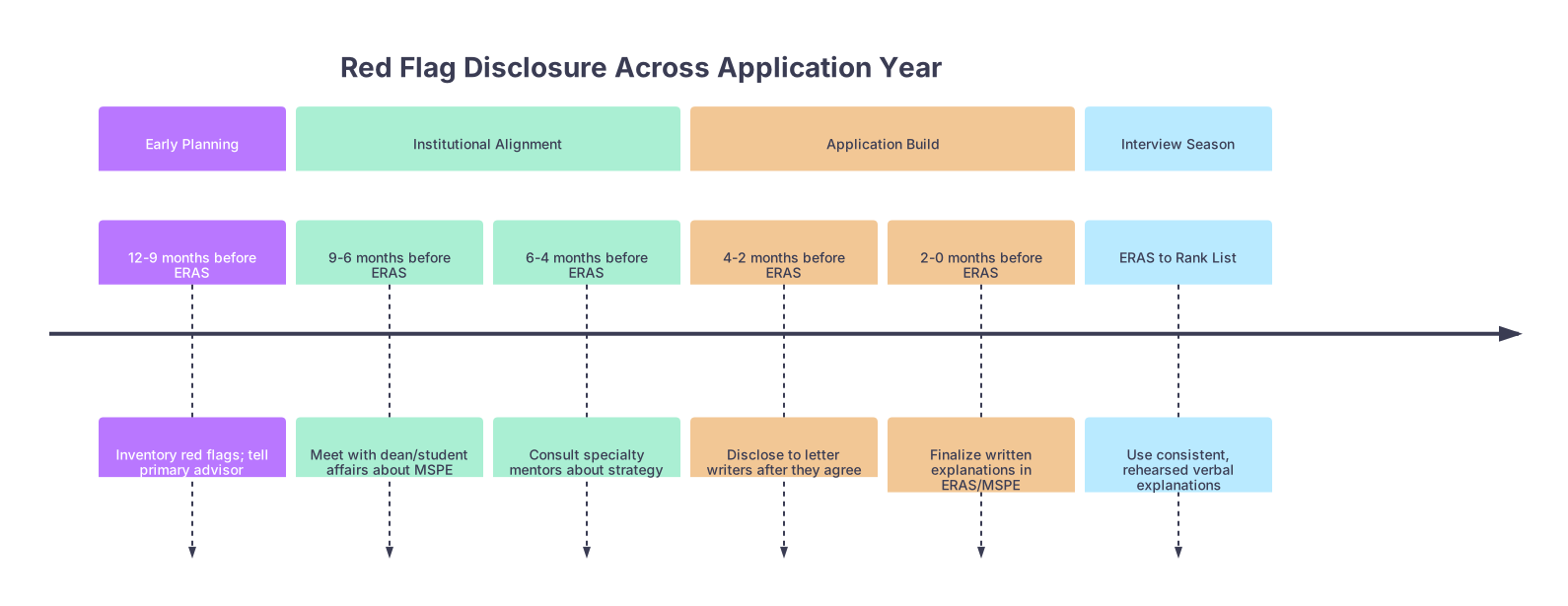
| Period | Event |
|---|---|
| Early Planning - 12-9 months before ERAS | Inventory red flags; tell primary advisor |
| Institutional Alignment - 9-6 months before ERAS | Meet with dean/student affairs about MSPE |
| Institutional Alignment - 6-4 months before ERAS | Consult specialty mentors about strategy |
| Application Build - 4-2 months before ERAS | Disclose to letter writers after they agree |
| Application Build - 2-0 months before ERAS | Finalize written explanations in ERAS/MSPE |
| Interview Season - ERAS to Rank List | Use consistent, rehearsed verbal explanations |
One More Layer: Who You Do Not Need To Tell
Some students wildly over‑disclose out of guilt. You are not obligated to debrief your life with every attending you meet.
You generally do not need to proactively disclose:
- To random faculty you shadowed once
- To residents on your Sub‑I
- To classmates (beyond whatever support you personally want)
- To program coordinators, unless it affects scheduling or logistics
If they do not shape your record, letter, or official evaluation, and the issue is already contained and documented appropriately elsewhere, you are allowed to keep it brief or private.
Example Case Walkthrough
Let me make this concrete.
Case: MS3 fails Step 1. Passes on second attempt with a 219. Wants IM.
Timeline:
- Month 0 (Fail result): Tell primary advisor within 1–2 weeks. Map recovery plan.
- Months 1–3: Study, retake, pass. Start IM clerkship.
- 9–12 months before ERAS: Advisor and student agree IM is still realistic. No need to switch specialties.
- 6–9 months before ERAS: Meeting with dean. Confirm MSPE language: “X failed Step 1 on the first attempt, subsequently passed on the second attempt.” Provide performance data: all core clerkships pass or above, strong comments.
- 4–6 months before ERAS: Discuss with IM mentor how this plays regionally and by program tier. Adjust target list (more community, fewer top‑tier academic programs).
- 8–10 weeks before letters needed: LOR ask: “Would you feel comfortable writing me a strong letter?” After yes: “I also want you to know that I failed Step 1 on my first attempt and passed on the second with a 219. Since then I have [clerkship performance]. I am not asking you to excuse it, just want you to not be surprised when programs see it.”
- 2 months before ERAS: Decide: no mention in personal statement. Single line in ERAS “additional info” at most, focusing on subsequent strong performance.
- Interview season: Prepared, calm answer ready. Same story every time.
This sequence turns a genuine liability into a manageable concern. Not a secret bomb.
Quick Visual: Who to Tell First
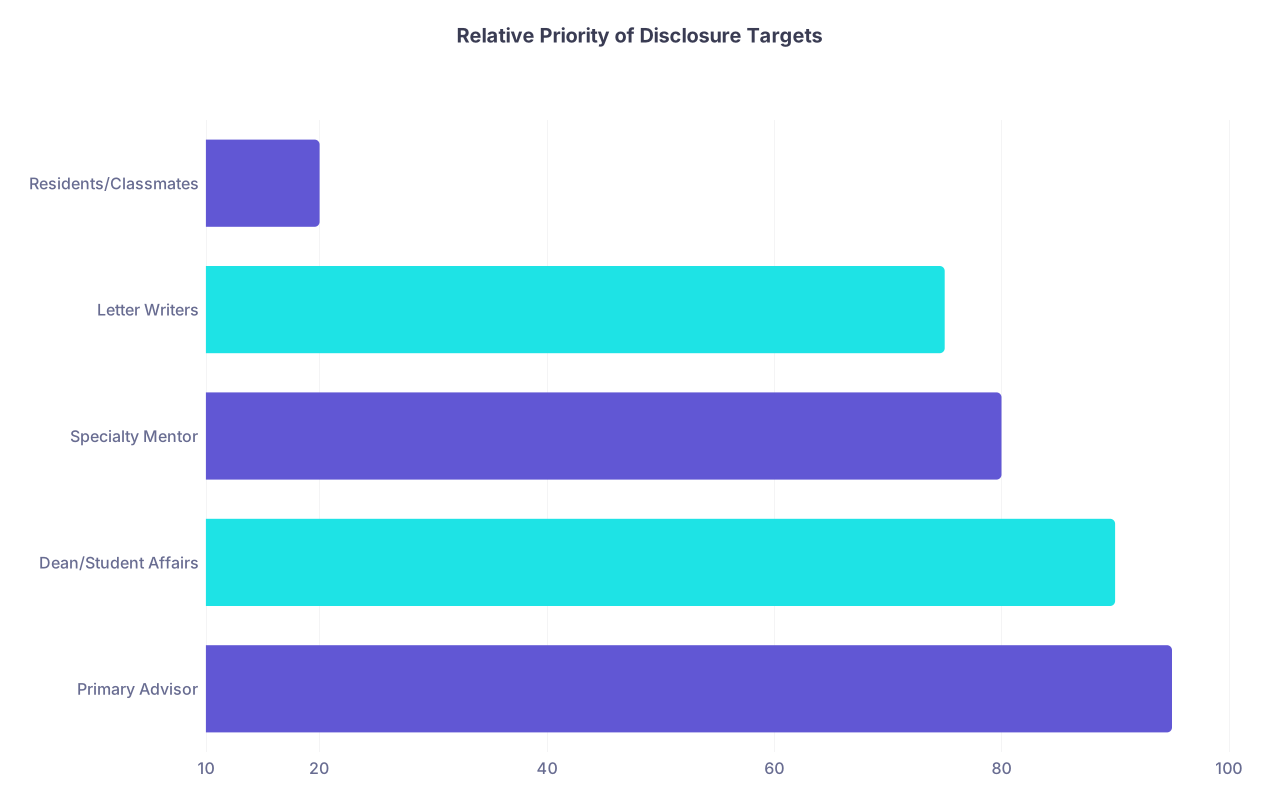
| Category | Value |
|---|---|
| Primary Advisor | 95 |
| Dean/Student Affairs | 90 |
| Specialty Mentor | 80 |
| Letter Writers | 75 |
| Residents/Classmates | 20 |
The order matters more than people think.
Final Thoughts: What Actually Matters
You will not be rejected because you told your dean, advisor, or letter writer about a red flag at the right time. You get rejected when those people are surprised, confused, or contradicted by what programs see.
Three key points to keep straight:
- Disclose early to those who write, sign, or shape your official record. Advisors, deans, and key mentors need the full, accurate version 6–12 months before ERAS.
- Tell letter writers after they commit, but before they write. Give them the official facts and the arc of recovery, not a dramatic saga.
- Keep the story consistent across every channel. Same dates, same labels, same brief explanation—on the transcript, MSPE, ERAS, LOR context, and in your interview answers.
Handle that timeline correctly, and your red flag becomes one data point in a larger story rather than the only thing anyone talks about.