
You shouldn’t blow up your entire career path just because of one bad test score. But you also shouldn’t pretend that exam failures don’t matter. Both extremes are dumb. The real answer sits in the middle—and that’s what we’re going to walk through.
This question—“Do I change specialties because of my exam failures or stay the course?”—usually shows up in three flavors:
- You failed Step 1 or Step 2 (or both) but still love a competitive specialty
- You failed an in‑training exam and are losing confidence
- You’re already in residency and thinking about switching because of repeated testing trouble
Let’s sort out what’s a fixable problem, what’s a genuine red flag for certain specialties, and when it’s time to pivot.
Step One: Separate the Signal from the Noise
Before you even talk about changing specialties, figure out what your exam failure actually means.
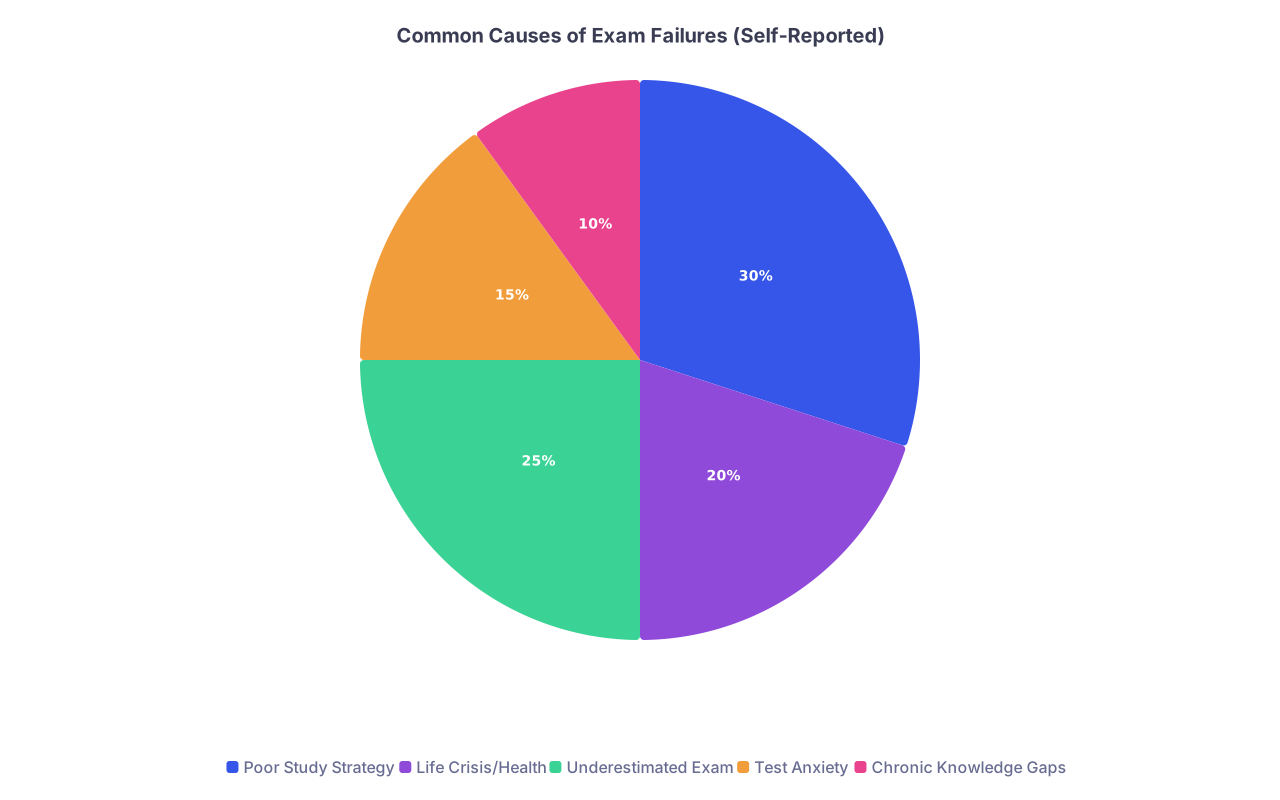
| Category | Value |
|---|---|
| Poor Study Strategy | 30 |
| Life Crisis/Health | 20 |
| Underestimated Exam | 25 |
| Test Anxiety | 15 |
| Chronic Knowledge Gaps | 10 |
There are five main buckets for exam failure:
Strategy failure
You studied a ton, but in a scattered way. Too many resources. Not enough questions. No spaced repetition. This is fixable and doesn’t mean you’re in the wrong specialty.Circumstantial failure
Family crisis. Illness. Depression. Pregnancy complications. I’ve seen people bomb Step 1 while going through chemo and then crush Step 2 with proper stability. Programs can understand this if the story makes sense and your later scores rebound.Miscalculation
You went in underprepared, low NBMEs, and took the risk anyway. That’s a judgment problem. It doesn’t automatically mean you can’t handle your chosen specialty, but it does raise concerns about insight and decision‑making. You’ll have to show you learned from it.Genuine knowledge gaps
You worked hard, used solid resources, and still failed. Then repeated the pattern. This is where you need brutal honesty. Either your approach is deeply flawed, or your baseline test‑taking and knowledge acquisition speed may not match the demands of certain specialties.Pattern of repeated failures
One failure = problem to solve.
Multiple failures on high‑stakes exams = pattern.
A pattern usually matters more for specialty choice.
If you don’t know which bucket you’re in, that’s problem #1. Before you switch specialties, fix the diagnostic question: why did you actually fail?
How Much Do Exam Failures Matter by Specialty?
They don’t all care equally. Not even close.
| Specialty Competitiveness | Example Specialties | Impact of Step Failure |
|---|---|---|
| Ultra-competitive | Derm, Plastics, Ortho | Often fatal, rare exceptions |
| High | ENT, Ortho, Rad Onc | Major red flag |
| Moderate | EM, Anesthesia, OB/GYN | Hurts, but sometimes workable |
| Broad-access | IM, Peds, Psych, FM | Surmountable with strong rest |
| Preliminary/Transitional | Prelim Med/Surg | Case-by-case |
Rough reality:
- Dermatology, plastics, neurosurgery, ortho: a Step failure is almost always game‑changing. Not impossible, but you’re swimming upstream in a hurricane.
- EM, anesthesia, OB/GYN, radiology: it’s a significant hit, but if everything else is strong, there are still options, especially at mid‑tier or community programs.
- IM, peds, psych, FM: programs see exam failures regularly. They don’t love it, but a strong Step 2, solid narrative, and good letters can still get you matched.
- Psychiatry and FM are typically the most forgiving if your story and trajectory are convincing.
So the question isn’t: “Can I do X specialty with an exam failure?”
The real question is: “Given my entire application and pattern, is this specialty still realistic enough that staying the course is rational?”
A Simple Framework: Stay the Course vs Change Specialty
Here’s the decision tree I use with students and residents.

| Step | Description |
|---|---|
| Step 1 | Exam Failure |
| Step 2 | Strong Pattern Concern |
| Step 3 | Reassess Study & Insight |
| Step 4 | Strongly Consider Pivot |
| Step 5 | Stay the Course with Safeties |
| Step 6 | Shift to More Forgiving Fields |
| Step 7 | Accept High Risk & Build Backup Plan |
| Step 8 | Single or Repeated? |
| Step 9 | Clear Cause and Fix? |
| Step 10 | Target Specialty Ultra-Competitive? |
| Step 11 | Willing to Change Specialty? |
Let’s break it down more humanly.
You probably should stay the course if:
- You had one failure, and:
- You’ve already passed on the second attempt with a solid score
- You can clearly explain what went wrong and what you changed
- Your target specialty is not at the very top of competitiveness
- You actually like the specialty, not just the lifestyle or prestige
You should strongly consider changing specialties if:
- You’ve had multiple exam failures (especially on different exams)
- Your failures are on both Step 1 and Step 2 or key in‑service exams
- You’re targeting an ultra‑competitive specialty with no other standout hook (crazy research, PhD, national awards, etc.)
- You dread studying constantly just to barely scrape by—this matters because some specialties lean heavily on ongoing exams (boards, subspecialty certs, in‑training every year)
And you should hit pause before doing anything drastic if:
- You’re reacting in the emotional crash right after seeing “Fail”
- You haven’t had a serious, honest conversation with at least one faculty advisor who knows you
- You don’t fully understand your pattern on practice tests, time usage, and prep strategy
When Exam Failure Really Should Make You Reconsider Specialty
This is the part nobody likes to say out loud, but you need to hear it.
There are certain specialties where chronic testing or cognitive struggle is not just a “match problem,” it’s a career problem.
These are specialties where you’ll face:
- Multiple intense board exams
- High cognitive load, rapid decision‑making, and information density
- Ongoing recertification and heavy reading to stay safe and current
Examples: neurosurgery, interventional cardiology, complex heme/onc, critical care–heavy paths, some high‑acuity EM environments.
If:
- You repeatedly fail exams despite good effort and resources
- You constantly need much more time than your peers to absorb material
- You’re barely scraping “pass” even on second or third tries
Then the question shifts from “Can I match?” to “Can I safely and sustainably practice in this field for 30 years?”
That’s not doom. It just means you might thrive more in:
- Primary care specialties with more longitudinal, relationship‑based work
- Fields where you can narrow your scope and go deep (e.g., outpatient psych, outpatient rheum, certain IM-focused niches)
- Settings with more predictable pace and less constant high‑acuity crisis mode
I’ve seen residents who kept forcing themselves through a misaligned specialty and became miserable, anxious, and burned out. Exam failures were the early symptom. Not the core disease.
When You Probably Shouldn’t Change Specialties
On the flip side, some people overreact and try to abandon a great‑fit specialty because of fear.
You probably shouldn’t pivot just because:
- You failed one exam during a genuinely awful life season
- You actually like your specialty, your attendings see you as a natural fit, and your clinical performance is strong
- You’ve already demonstrated a rebound:
- Failed Step 1, then passed Step 2 with a good score
- Failed an in‑service, then improved significantly the next year
Or you’re in this very common situation:
- You want something like IM, peds, psych, or FM
- You failed Step 1 once
- You’ve passed Step 2
- You’re terrified no one will rank you
In that case, do not blow up your career dream. You adjust your strategy:
- Be smart about program tiers (more community, more mid‑tier, broad geographic spread)
- Address the failure directly and briefly in your personal statement or interviews
- Make sure your letters emphasize reliability, work ethic, and clinical ability
- Apply early and broadly
That’s “double down with a realistic plan,” not “change the whole specialty.”
Already in Residency and Thinking of Switching?
Different ballgame.
If you’re already a resident and failing in‑training exams or boards, your concerns are:
- Will I be allowed to progress or graduate?
- Will I eventually pass boards and get credentialed?
- Is this pattern just a test thing, or a true mismatch of field?
Here’s what I’d do if I were in your shoes:
Get hard feedback from your program director
Not the sugar‑coated version. Ask directly:- “Would you be comfortable signing off on me graduating in this specialty?”
- “Do you think my knowledge trajectory is consistent with a safe, competent attending here?”
Compare your stress level in studying vs clinical work
If you’re clinically thriving, patients love you, your notes and presentations are on point, but exams are lagging, that’s one scenario.
If both clinical performance and exams are poor, that’s another.Ask what it would actually look like to switch
- Are there open spots in other departments at your institution?
- Would you have to re‑enter the Match?
- Would anyone advocate for you?
Sometimes the right move is to:
- Stay in your current specialty but aggressively fix your exam strategy, bring in a tutor, adjust accommodations, and treat this as your #1 project for 6–12 months.
Sometimes the right move is:
- Switch to a more forgiving or better‑aligned specialty where the cognitive style and exam burden better match how you function.
The mistake is doing nothing and just hoping the next exam will magically go better.
How to Decide Practically: A 5‑Question Gut Check
Forget the theory. Ask yourself these five questions and answer brutally honestly:
- If exams disappeared tomorrow, would I still choose this specialty?
- If a trusted attending who knows my work was forced to advise me, would they say “stay” or “pivot”?
- Am I willing to do everything it actually takes (tutoring, dedicated time off, money, ego hit) to fix my exam performance?
- Is my target specialty still realistically attainable given real‑world data—and not just one success story I found on Reddit?
- In 10 years, which regret will hurt more:
- “I gave up too early on a specialty I loved”
- Or “I beat myself up for years forcing a path that was never a fit”?
Your honest answers to those are more valuable than anyone’s generic advice.
What to Do Right Now (Concrete Next Steps)
If you’re on the fence:
- Get an honest advisor
- Program director, specialty mentor, or someone who has sat on a selection committee. Not just your buddy.
- Map your pattern
- List every major exam, score, prep time, and what was going on in your life. Patterns jump out when they’re on a single page.
- Reality‑check your specialty
- Look up NRMP Charting Outcomes data. Compare your record honestly to people who match in that specialty.
- Build a Plan A and Plan B
- Plan A: Stay the course, what specifically needs to improve?
- Plan B: Alternate specialties you’d genuinely be okay with, with more forgiving attitudes to red flags.
- Stop catastrophizing
- One failure isn’t the end of your career. Several failures still don’t mean you’re doomed. But pretending they don’t matter is just as bad.
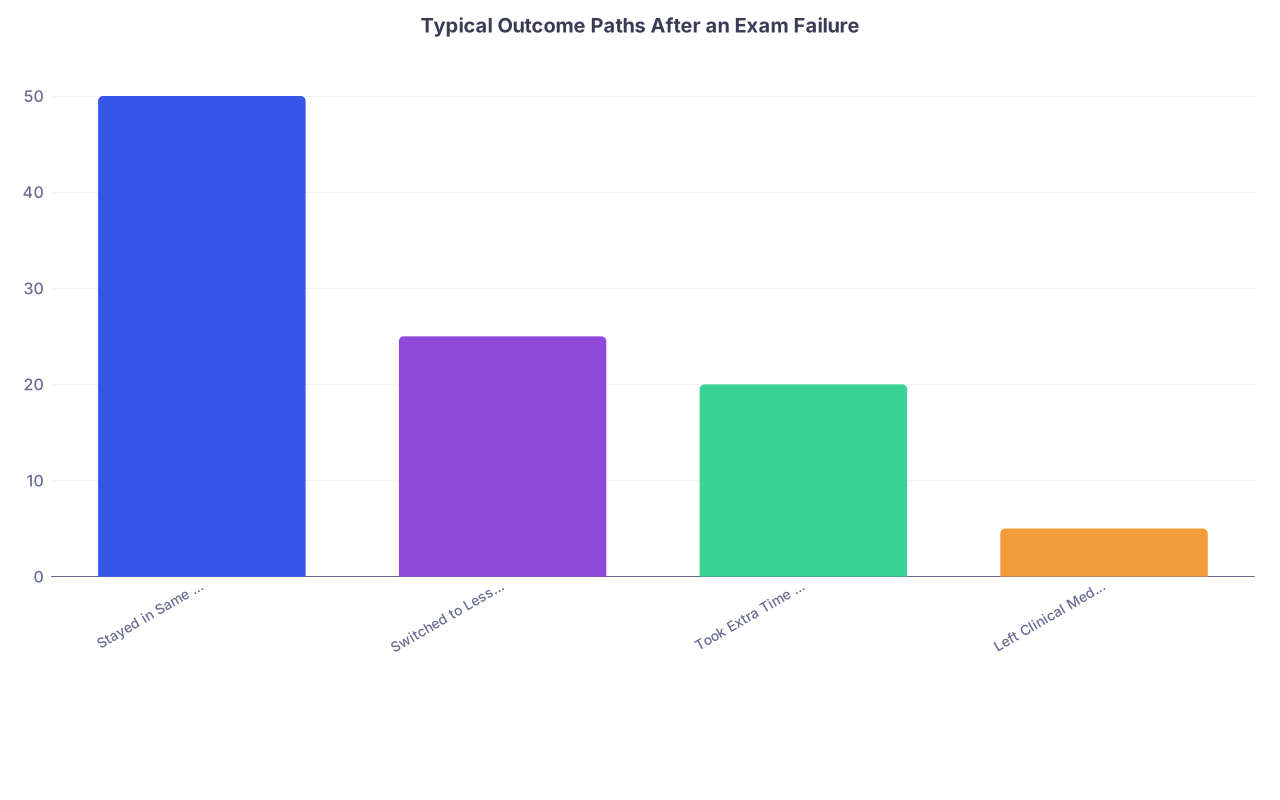
| Category | Value |
|---|---|
| Stayed in Same Specialty | 50 |
| Switched to Less Competitive Specialty | 25 |
| Took Extra Time for Exams | 20 |
| Left Clinical Medicine | 5 |

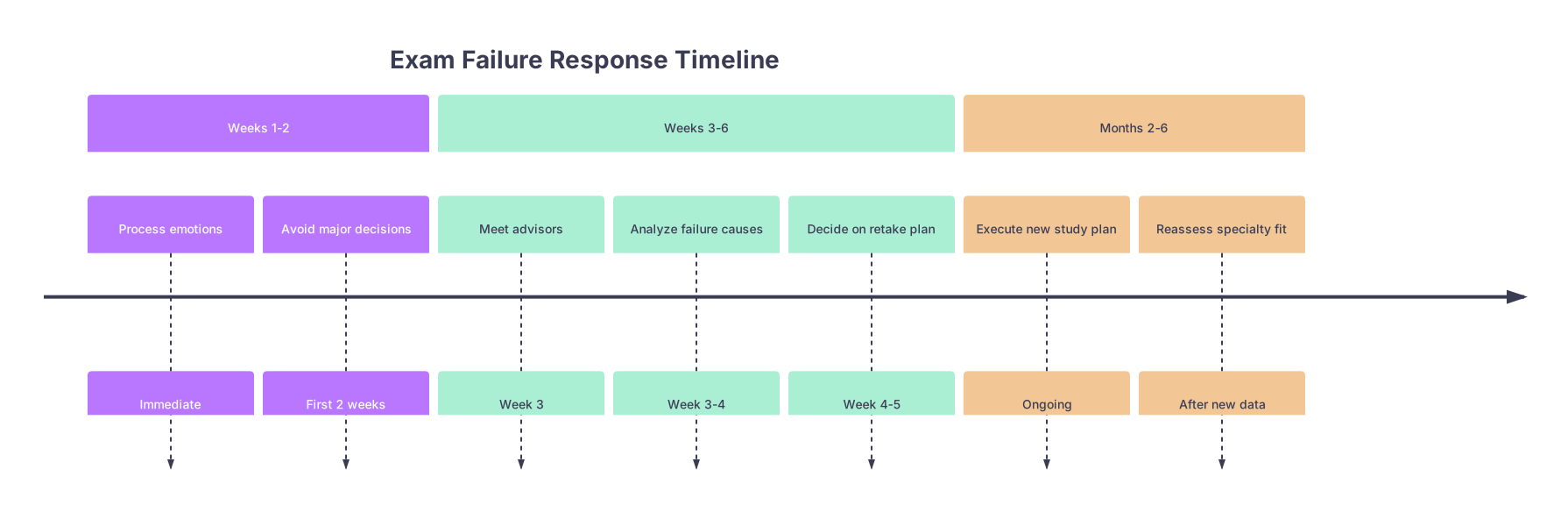
| Period | Event |
|---|---|
| Weeks 1-2 - Process emotions | Immediate |
| Weeks 1-2 - Avoid major decisions | First 2 weeks |
| Weeks 3-6 - Meet advisors | Week 3 |
| Weeks 3-6 - Analyze failure causes | Week 3-4 |
| Weeks 3-6 - Decide on retake plan | Week 4-5 |
| Months 2-6 - Execute new study plan | Ongoing |
| Months 2-6 - Reassess specialty fit | After new data |

FAQ: Exam Failures and Changing Specialties
I failed Step 1. Can I still match into internal medicine or pediatrics?
Yes, absolutely. Step 1 failure is a red flag, but IM and peds programs see this regularly. What matters: you passed on the second attempt, did better on Step 2, and can show consistent clinical performance and good letters. You’ll probably need to apply broadly and be flexible on geography and program prestige, but matching is very realistic.Does a single exam failure mean I should give up on competitive specialties entirely?
Not automatically, but it sharply shrinks your odds for ultra‑competitive fields unless you have significant compensating strengths (major research, home program connections, unique background). For EM/anesthesia/OB‑GYN/rads, you might still be in the game with a strong Step 2, great letters, and a clean story. For derm/plastics/neurosurg, it often pushes people toward reconsidering.How many exam failures are “too many” for most specialties?
Multiple failures on different major exams (e.g., Step 1 and Step 2, or repeated in‑training failures) start to look like a pattern and not a fluke. For many programs, one failure can be forgiven; two or more make them very cautious unless there’s a powerful explanation and clear improvement. It doesn’t make a career impossible, but it usually pushes you toward less competitive specialties and more holistic programs.Should I address my exam failure in my personal statement?
Usually yes, but briefly and surgically. Two–three sentences max: what happened, what you learned, and how your subsequent performance changed. Don’t write a victim essay or overshare personal drama. Programs want to see ownership, insight, and a believable “this won’t keep happening” trajectory.I’m already in residency and failed my in‑training exam. Do I need to think about changing specialties?
Not after a single in‑training failure. Those are often fixable with better study structure, earlier start, and focused remediation. If you repeatedly fail or are way below peers despite heavy effort, then you and your PD should seriously discuss whether this specialty realistically fits your learning style and long‑term trajectory.What if I love a competitive specialty but realistically know my chances are low now?
Then split your strategy: keep a “reach” plan and a “realistic” plan. For example, still apply to a modest number of your dream specialty programs where you have connections, while also applying broadly to a more attainable specialty you’d genuinely be okay practicing. Don’t build a life plan on a 5% probability without a backup you can live with.How do I know if my exam problem is fixable vs a sign I’m in the wrong field?
Look for patterns. If you change your study approach, get support (tutor, advisor, mental health if needed), and your scores improve meaningfully, it’s likely a fixable strategy or circumstance issue. If you’ve repeatedly used solid methods, had time, reduced distractions, and still struggle to pass or retain material at the needed level, that’s when you start asking harder questions about specialty fit and cognitive load.
Key Takeaways:
- One exam failure doesn’t automatically mean you should change specialties—but it does force you to be more strategic and honest.
- Multiple failures, especially with no clear improvement, should make you seriously reconsider ultra‑competitive and high‑cognitive‑load specialties.
- The best decision comes from pattern recognition, honest mentorship, and a realistic Plan A/Plan B—not from panic the week you see the word “Fail.”