You’re six months from when ERAS opens. Your classmates are talking about interview travel plans. You’re staring at your score report—or worse, the word “Fail” or “Incomplete”—and quietly asking yourself the question nobody wants to say out loud:
“Do I try to graduate on time and apply anyway… or do I delay graduation because of this board exam?”
Let me skip the hand‑holding and give you the blunt version:
If you have a major USMLE/COMLEX exam unpassed or failed at application time, applying on time almost always hurts you more than delaying graduation.
Now let’s unpack the nuance, because the details matter.
The Core Answer: In Most Cases, Delay > Apply with an Unpassed Exam
Here’s the hierarchy programs use when they’re forced to choose among imperfect options:
- No red flag → Best
- Delayed graduation with clear reason, now in good standing → Acceptable
- Failed but passed on second attempt, good explanation → Risky but possible
- Currently unpassed/failed board, no retake yet → Almost automatic screen‑out
Programs are flooded with applicants. They use filters. The harsh reality: an active failure or missing required board score often never even reaches human eyes.
So the baseline:
- If your exam is required for interview consideration (Step/Level 1, Step/Level 2, sometimes both)
- And you do not have a passing score by the time programs start reviewing
Then yes—delaying graduation (or delaying your application) is usually safer than applying with an unpassed or failed board exam on your record and no redemption yet.
But that’s the high‑level rule. Your actual decision depends on specifics.
Step 1: Identify Your Exact Situation
You’re not choosing in a vacuum. You’re choosing among your constraints.
| Scenario | Usually Better Option |
|---|---|
| Failed Step/Level 1, need retake | Delay application until you pass |
| Failed Step/Level 2, no retake yet | Delay or skip this Match cycle |
| Step/Level not yet taken, graduation approaching | Delay graduation if needed to take and pass |
| Multiple failures on same exam | Strongly consider delay + extra remediation year |
| IMG needing Step 2 for ECFMG | Never apply without required pass |
Now let’s go through the big variables that actually move the needle:
1. Which Exam and What’s the Status?
- Failed Step 1 / Level 1 and still unpassed
- Failed Step 2 CK / Level 2 CE and still unpassed
- Haven’t taken the exam yet but will cut it close to score release
- Already failed once, retake scheduled, results come after application opens
Residency programs view those differently, but the pattern is:
- A completed failure with no passing retake yet = huge red flag
- An exam still pending with no score by MS4 fall = big risk
- A failure followed by a strong pass = still a red flag, but many programs will at least read your file
2. Specialty Competitiveness
You cannot ignore specialty choice here.
- Competitive: Derm, Ortho, ENT, Plastics, Urology, Ortho, EM in some regions → a single failure can be lethal
- Moderately competitive: Anesthesia, Radiology, OB/GYN, EM, some IM programs
- Less competitive: Psychiatry, Pediatrics, FM, community IM
In highly competitive fields, I’ve seen programs reject automatically for any failure, regardless of retake. In less competitive fields, a single failure with a clear rebound can be survivable.
But going in with the board still unpassed? Across almost every specialty, that’s a near‑universal non‑starter.
3. Graduation and Institutional Rules
Some med schools:
- Will not let you graduate without passing all required boards
- Will force you to take a “research/remediation year” if you fail
- Will strongly recommend delaying Match if you’re not exam‑complete
If your school requires a pass to graduate, this isn’t even a real decision: you’re delaying Match more or less automatically.
If your school is more flexible, then you actually have to choose strategically.
Step 2: What Programs Actually See and Think
Let me translate program director brain for you.
They see three applicants:
Applicant A
- On‑time graduation
- No board failures
- Average scores, okay letters
Applicant B
- Delayed graduation by 6–12 months
- Documented prior failure but now has a solid passing score
- Strong letters explaining improvement and professionalism
Applicant C
- On‑time graduation
- Active failure with no passing score yet, or “exam pending” far into the season
Who gets cut first? Applicant C. Almost every time.
Here’s why:
- Programs need residents who are board‑eligible. A currently failed or uncertain exam = risk they’re taking on your licensing eligibility.
- They have hundreds of alternatives with no such risk.
- They also worry about pattern: if you’re already behind on a major exam, will you struggle with in‑training exams, Step 3, future specialty boards?
By contrast, Applicant B has already demonstrated:
- They took the problem seriously
- They used extra time to fix it
- They now have proof of improvement in the form of a passing (ideally stronger) score
So from a risk management perspective, most PDs are more comfortable with “delayed but now stable” than “on time but unresolved red flag.”
Step 3: Concrete Decision Framework
Here’s the part you probably wanted from the start. Use this as a rough algorithm.

| Step | Description |
|---|---|
| Step 1 | Unpassed or Failed Board Exam? |
| Step 2 | Talk to advisors, may apply |
| Step 3 | Delay application slightly, focus on passing |
| Step 4 | Delay graduation or take extra year, retake, strengthen app |
| Step 5 | Apply to very broad, less competitive list with strong backup |
| Step 6 | Exam required by target programs? |
| Step 7 | Can you pass and have score back by Oct 1? |
| Step 8 | Are you okay skipping this Match cycle? |
Now, more detailed:
If you already failed and haven’t retaken yet
- Do not apply this cycle unless your retake score will be available early in interview season and you’re willing to accept a very low match probability.
- Better: delay graduation, schedule intensive prep, crush the retake, and apply next cycle with a clear story of growth.
If you haven’t taken the exam, and time is tight
Ask yourself:
- Can you realistically score in your target range with a compressed timeline?
- Or are you rushing just to “stay on schedule” and risking a failure?
If the honest answer is “I’m not ready,” forcing the exam to hit a Match timeline is how people generate preventable failures. And preventable failures follow you much longer than a delayed graduation.
In many cases, the smarter move is:
- Push the exam
- Delay graduation or take a research year
- Get the score you need
- Apply a year later with a better, cleaner application
The Real Downsides of Delaying Graduation
Let’s be honest about what delaying costs you, because it’s not trivial.
You’re giving up:
- One year of attending salary (or at least resident salary)
- Marching down the conveyor belt with your classmates
- The emotional hit of “being behind” (even though no one cares 5 years from now)
- Possibly extra tuition or living expenses
You’re also opening questions in interviews later: “Why the delay?”
But those questions are very manageable if you can say:
- “I struggled with my exam preparation, failed my first attempt, and I was not comfortable applying until I could demonstrate I’d fixed the problem. I took an extra year, worked with faculty, adjusted my study approach, and passed with a significantly higher score. That experience made me much more disciplined and self‑aware going into residency.”
PDs respect that. That’s professionalism.
The alternative?
Trying to protect your ego and your timeline, rushing into an exam half‑ready, failing again, and now you’re that applicant with multiple failures and no clear sign you learn from mistakes. That’s a much harder story to sell.
The Hidden Risks of Applying with an Unpassed Exam
Let me spell out the less obvious problems with “just applying anyway and seeing what happens.”
You burn your first cycle.
Programs do remember reapplicants. If you show them your worst version first—unpassed exam, weak file—some places will quietly pre‑reject you next time.You may be forced into a desperation specialty or bad‑fit program.
I’ve watched students panic‑apply to programs or specialties they didn’t actually want just because it was “this or nothing.” Then they’re miserable. That’s not a small thing.Financial and emotional cost.
ERAS fees. NRMP fees. Potential travel. Time spent on an application that never had a realistic shot. For many with a major exam problem, odds of matching that year are single‑digit percentages in some specialties.Visa and timeline issues for IMGs.
If you’re an IMG, applying without required ECFMG‑related scores is almost pointless. Most programs won’t even look. You’ve just donated money to ERAS.
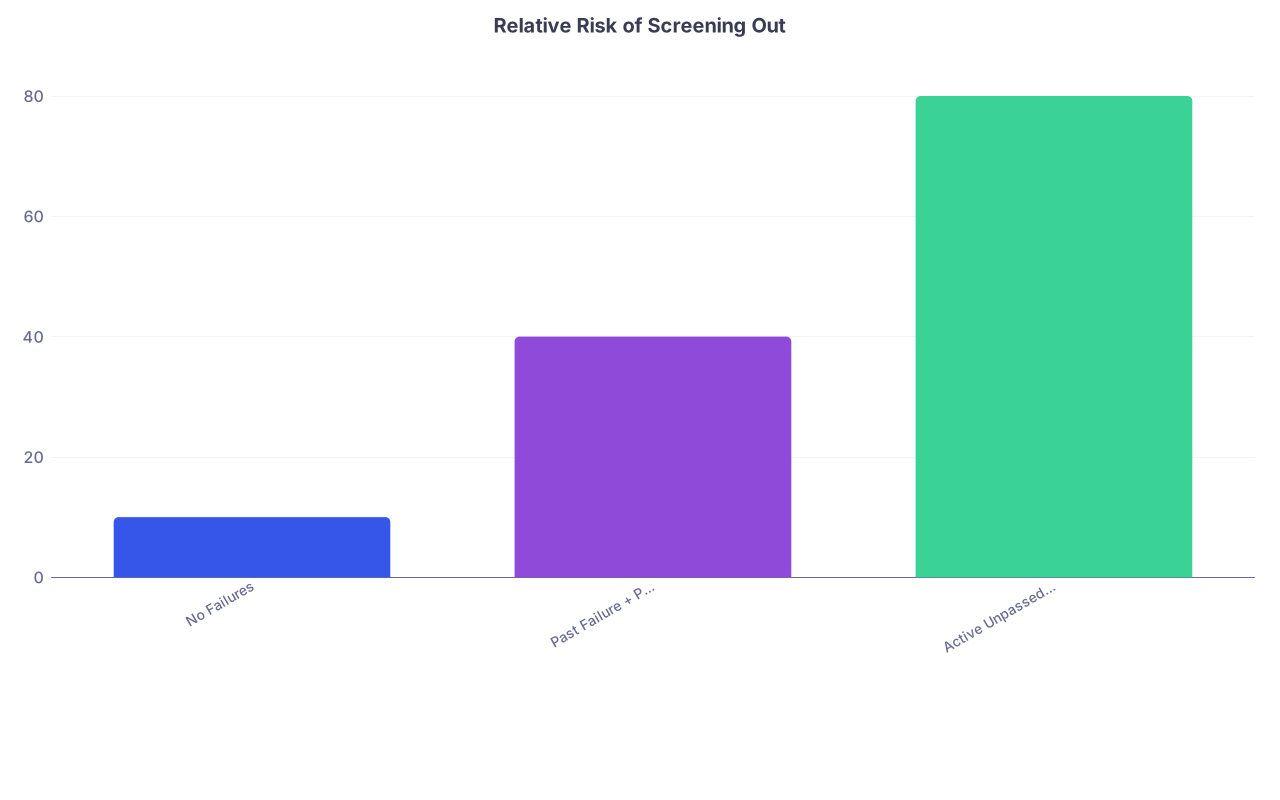
| Category | Value |
|---|---|
| No Failures | 10 |
| Past Failure + Pass | 40 |
| Active Unpassed Exam | 80 |
Interpretation: not exact percentages, but the pattern is real—your risk of being filtered out skyrockets once the exam is currently unpassed or failed without a retake.
When Applying Now Might Still Make Sense
There are a few narrow situations where I’d consider applying even with exam issues:
You already retook, and the result is pending, but:
- You’re confident it went much better
- You’re willing to accept fewer interviews and a wide geographical/net specialty backup
- You have a solid explanation from your school about timing/logistics
You’re applying to less competitive specialties, and your school and advisors with actual PD connections say you’re still viable.
You’re dual‑applying:
For example, you had hoped for EM but now are applying mostly FM/IM with a prior failure but current pass, and you’re prepared for the possibility you don’t match or SOAP. Even here, I’d prefer you have your passing score in hand by October.
But the crucial point: in all of these, you have a passing score by the time programs are actually looking seriously at files. Not an active failure.
How to Use a Delay Strategically (Not Just “I sat at home for a year”)
If you delay graduation or the Match cycle, don’t drift. Turn that year into part of your story.
Good uses of a delayed year:
- Structured research year with publications or posters in your target specialty
- Chief year or extended clinical role (sub‑internships, acting internship)
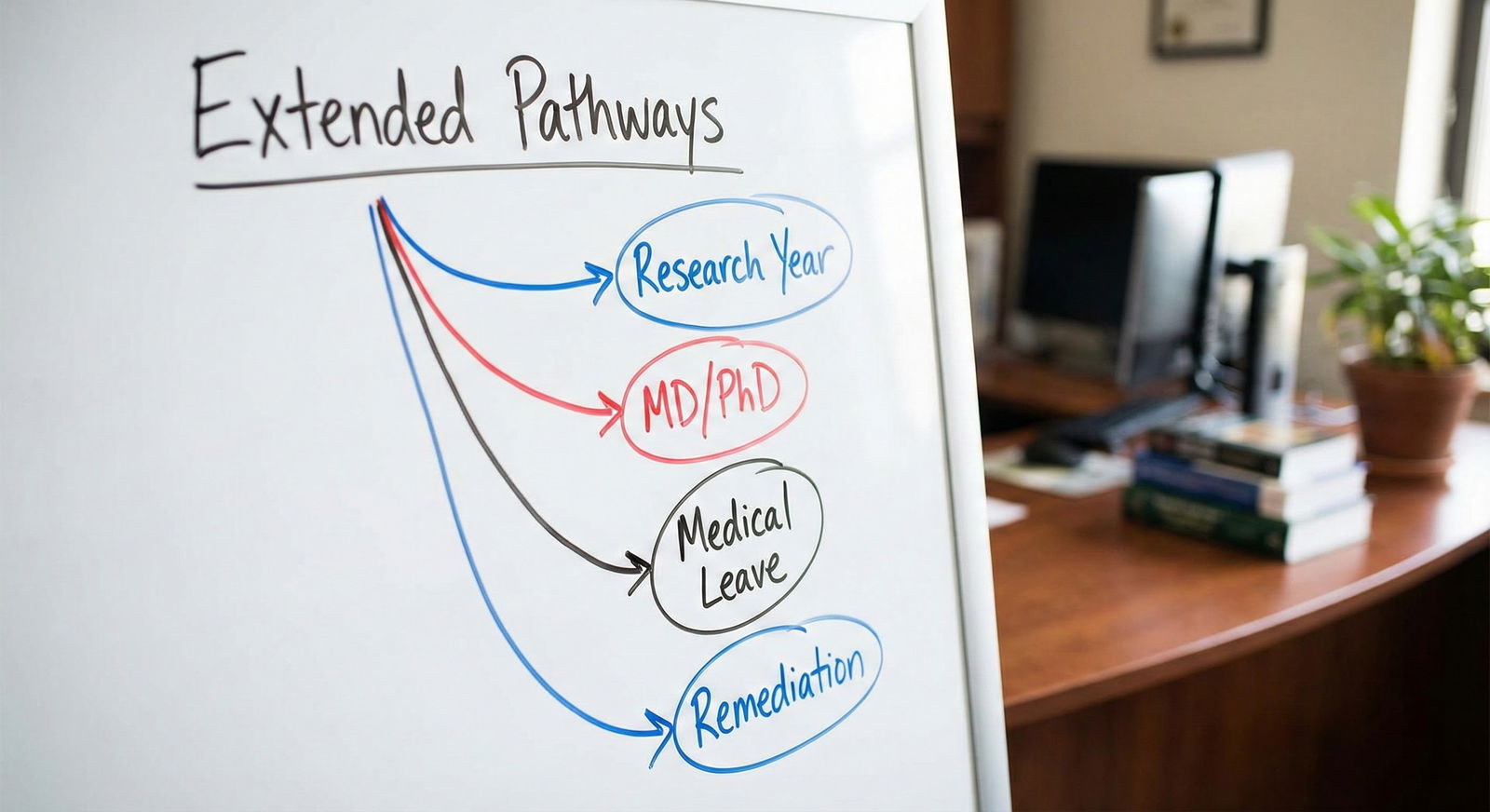
- Formal remediation program with documented improvement
- Teaching role: anatomy TA, Step prep tutor, etc.
- Additional degree: MPH, MBA (less important than people think, but can be fine if aligned with your goals)
The key is you want to show:
- You didn’t disappear
- You responded to adversity with structure and effort
- You’re actually stronger because of that extra time
How to Explain Either Choice in Your Application
You’re going to have to talk about this, whichever path you choose.
If you delay:
- Address the failure/delay briefly in your personal statement or an addendum, not as the centerpiece of your whole narrative.
- Focus on: what went wrong, what you changed, how you improved, what you learned.
- Make sure your MSPE and at least one LOR writer can vouch for your growth and current readiness.
If you apply on time with a prior failure but now a pass:
- Be upfront and concise: “I failed Step X on first attempt due to [brief reason, NOT an excuse]. I re‑evaluated my study strategies, sought faculty support, and passed on my second attempt. That process sharpened my time management and test‑taking skills, which I’m now applying successfully to…”
- Avoid the trap of a 3‑paragraph saga. PDs want evidence of maturity, not melodrama.
If you somehow still consider applying with a currently unpassed exam:
- Expect many places to not consider you at all.
- At interviews (if you get any), you will need a very specific, credible plan for passing before residency starts. Most PDs will be skeptical, and honestly, I don’t blame them.
Bottom Line: Which Is “Better”?
If we collapse all the nuance into a clean answer:
- If your board exam is required and currently unpassed, it is usually better to delay graduation or the Match cycle, pass the exam, and apply with a resolved red flag than to apply on time with an active failure or missing score.
- Programs can work with a delayed graduation and a prior, resolved failure. They can’t do much with an applicant who still has not demonstrated they can pass the licensing exams.
You have to choose between two pains:
- Short‑term pain: delayed timeline, watching classmates move on, financial and emotional hit now.
- Long‑term pain: damaged application history, much lower match odds, and in some cases, permanent career limitation.
From where I’m sitting, short‑term pain is usually the smarter trade.
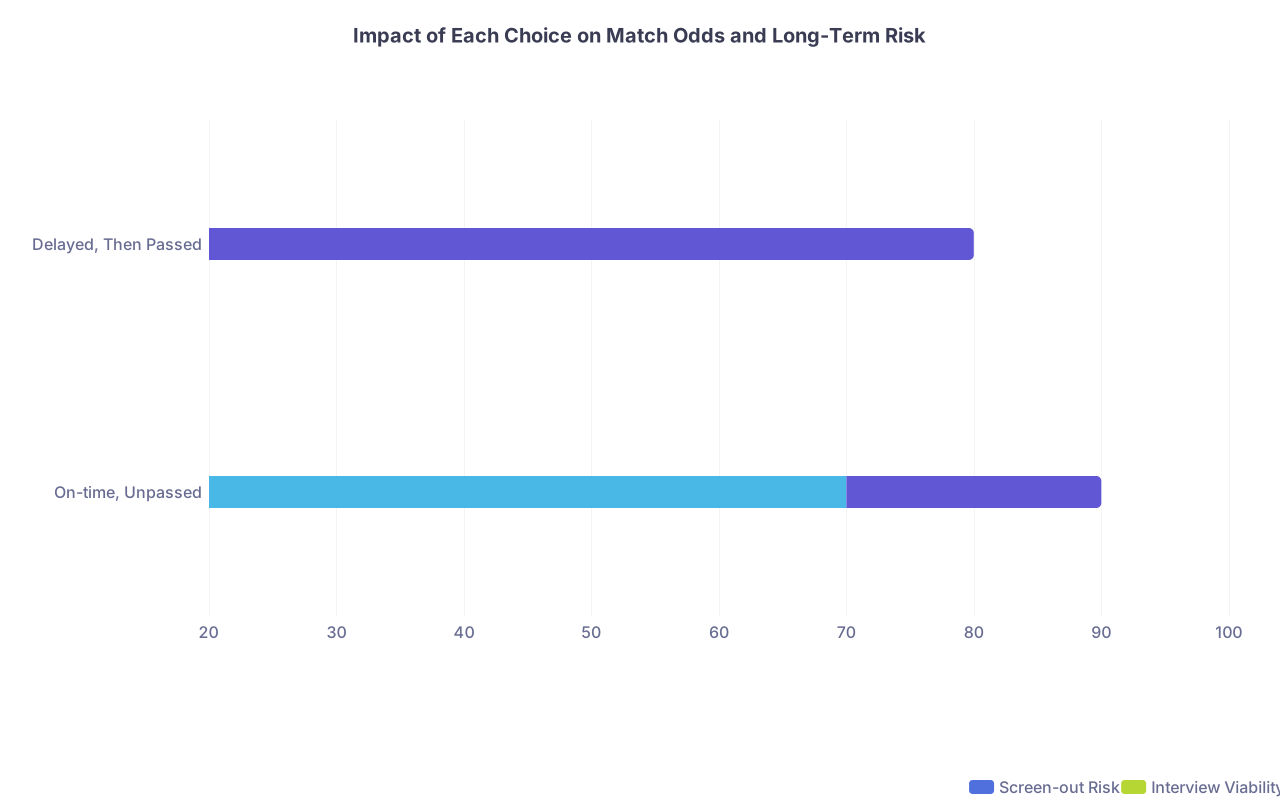
| Category | Screen-out Risk | Interview Viability |
|---|---|---|
| On-time, Unpassed | 70 | 20 |
| Delayed, Then Passed | 20 | 60 |
FAQ: Delay Graduation vs Apply with an Unpassed Board Exam
1. Will delaying graduation ruin my chances forever?
No. A delay is a yellow flag, not a career death sentence. I’ve seen plenty of residents with a delayed graduation year doing just fine. What ruins chances is stacking unresolved problems: multiple failures, no improvement, vague explanations. One well‑managed delay with a clear story and a passing score is survivable.
2. Is one failed attempt on a board exam an automatic rejection?
Not automatically, but it absolutely narrows your options. Some competitive programs will have a hard cutoff against any failures. Many community and less competitive programs will still consider you if you have a strong upward trajectory and other strengths. But this only applies once you’ve actually passed on a retake. An active failure with no pass yet? Very close to automatic rejection at most places.
3. My school says I can still graduate without passing Step 2. Should I?
Technically, maybe. Strategically, usually not. Graduating without a key licensing exam passed puts you in a weird limbo where you’re a doctor on paper but not competitive for residency. Unless you have a rock‑solid reason and timing plan, I’d lean toward delaying graduation until you’ve passed.
4. I’m an IMG. Can I apply without all my USMLEs done?
Realistically, no. Most programs want ECFMG certification or at least Step 1 + Step 2 CK passed before they’ll seriously consider you. Applying without these is usually a waste of money. Your best play is to pass your required exams first, then apply in a cycle where you present as complete and ready.
5. How much does a delayed year hurt compared to a board failure?
On the PD risk scale, a delayed year with a clear explanation and a passing score hurts much less than an unresolved or repeated board failure. A delay raises questions; a failure raises doubts. Questions can be answered. Doubts linger.
6. What should I actually do during a delay year?
Do not disappear. Build a narrative. Ideal moves: dedicated board prep and retake, research in your target field, teaching roles, sub‑internships, structured remediation with documented progress. Your goal is to walk into interview season able to say, “I used that year to fix X and become stronger at Y.”
7. Who should I talk to before deciding?
At minimum: your dean of students or academic affairs, a trusted faculty advisor in your specialty of interest, and if possible, someone who has been a program director or on a residency selection committee. Avoid making this decision alone or based purely on what your classmates are doing. Your situation is different now—treat it like it is.
Key takeaways:
- Applying with an unpassed or actively failed required board exam is almost always worse than delaying graduation, fixing the problem, and applying a cycle later.
- A delayed year can be turned into a strength if you use it intentionally and come back with a clear pass and a coherent story of growth.