Programs are not secretly using your failed Step 1 as proof that you’re dangerous to patients. They’re using it as a signal to ask: “Can this person handle our workload and our exams?” Those are not the same thing.
I know that’s not how it feels at 2 a.m. when you’re doom‑scrolling SDN and Reddit. In your head it turns into:
“I failed Step 1 → I’m dumb → I’m unsafe → No one will rank me → I’ll never be a doctor.”
Let’s pull that whole chain apart.
What Programs Actually Worry About With a Failed Step 1
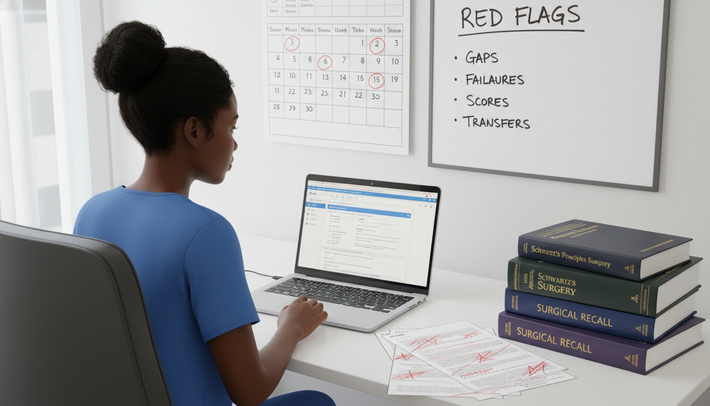
Let me be blunt: a failed Step 1 is a red flag. Pretending it isn’t is dishonest. But it’s a specific kind of red flag, and “unsafe clinician” isn’t the default assumption.
Most PDs I’ve seen (and heard on Zoom sessions, open houses, and behind closed doors) worry about three main things with a Step 1 fail:
- Can you pass future high‑stakes exams (Step 2, in‑service, boards)?
- Can you keep up with the cognitive load of residency?
- Are you reliable and coachable when things get hard?
That’s it. Not “are you going to kill someone on day one.”
They know Step 1 is:
- Multiple‑choice
- Heavy on obscure minutiae and pathophys
- Taken at a brutal stress point (often with crammed schedules, life chaos, etc.)
Clinical safety comes from:
- How you behave on wards
- How you respond to supervision, feedback, and near‑misses
- Whether you ask for help and know your limits
- Your pattern over months of real‑world work, not one exam.
Programs see Step 1 fails all the time in their piles. They don’t immediately picture you writing unsafe orders. They picture: “This might be someone who struggled with test‑taking, time management, or stress. Did they fix it?”
That’s the real question sitting behind your red flag.
The Ugly Voice in Your Head vs. Reality
Let me spell out the worst‑case internal monologue, because I know it:
- “They’ll think I’m clinically incompetent.”
- “Attendings will be scared to let me touch patients.”
- “Other residents will resent covering for me.”
- “If a patient gets hurt anywhere near me, they’ll blame my Step 1 fail.”
I’ve also seen the opposite reality:
MS3: Failed Step 1, passed on second attempt, solid Step 2, great evals
Program: “Yeah, they had a rough start. Look at this upward trend and these comments—‘hard‑working,’ ‘reads about patients,’ ‘knows when to ask for help.’ Let’s interview.”
MS4: Passed everything first try, but clinical evals are full of:
“Dismissive of nursing staff,” “resistant to feedback,” “poor follow‑through.”
Guess which one programs consider more “unsafe”?
Hint: It’s not the test‑fail person who improved.
Your brain is equating “knowledge gap once” with “permanently unsafe.” Programs don’t. They equate ignored patterns with risk. Repeated failures with no remediation. Blown feedback. Arrogance. That’s when “unsafe” starts showing up in whispered conversations.
A single failed Step 1 that you addressed? That’s a liability, yes. But it’s not a scarlet letter of clinical danger.
What Programs Look for to Decide If You’re “Safe”
Let me translate what “safe” actually means to a PD reading your file. They are subconsciously checking boxes like this:
- Do you recognize and escalate when you’re over your head?
- Do you follow through on tasks and documentation?
- Do you own mistakes and fix systems so they don’t repeat?
- Do faculty and residents want to work with you again?
- Are you keeping up with learning and reading?
Exams are a proxy for some of that, but only a proxy. The real evidence is in your evaluations and how your story hangs together.
Here’s how those pieces line up for them:
| Data Point | What PDs Actually Wonder About |
|---|---|
| Step 1 fail | Test‑taking? Stress? Time management? Fixed? |
| Step 2 fail/low | Current knowledge gaps? Poor remediation? |
| Bad eval comments | Professionalism? Team safety? |
| Pattern of failures | Unreliable under pressure? Not coachable? |
Notice the pattern: they’re not saying “one fail = unsafe.” They’re asking “is this a pattern, and did this person respond like a future colleague or like a walking problem?”
Using Your Step 1 Fail to Prove You’re Not Unsafe
This is where you actually have some control, and not in a fake “manifest your future” way. In very practical, concrete ways.
1. Pass Step 2 with authority
You already know this one, but let’s say it clearly: a strong Step 2 score is the single biggest way to reframe the story.
- Step 1 fail + mediocre Step 2 → “Ongoing concern”
- Step 1 fail + solid Step 2 (for your specialty) → “Growth, remediation, resilience”
If you can show:
- You changed how you studied
- You used help (tutors, faculty, disability office if applicable)
- You passed Step 2 comfortably
Then your narrative becomes: “I had an early stumble, I fixed the system, and I’m now functioning at the level needed.”
That’s not unsafe. That’s exactly what safe residents do when they hit a problem.
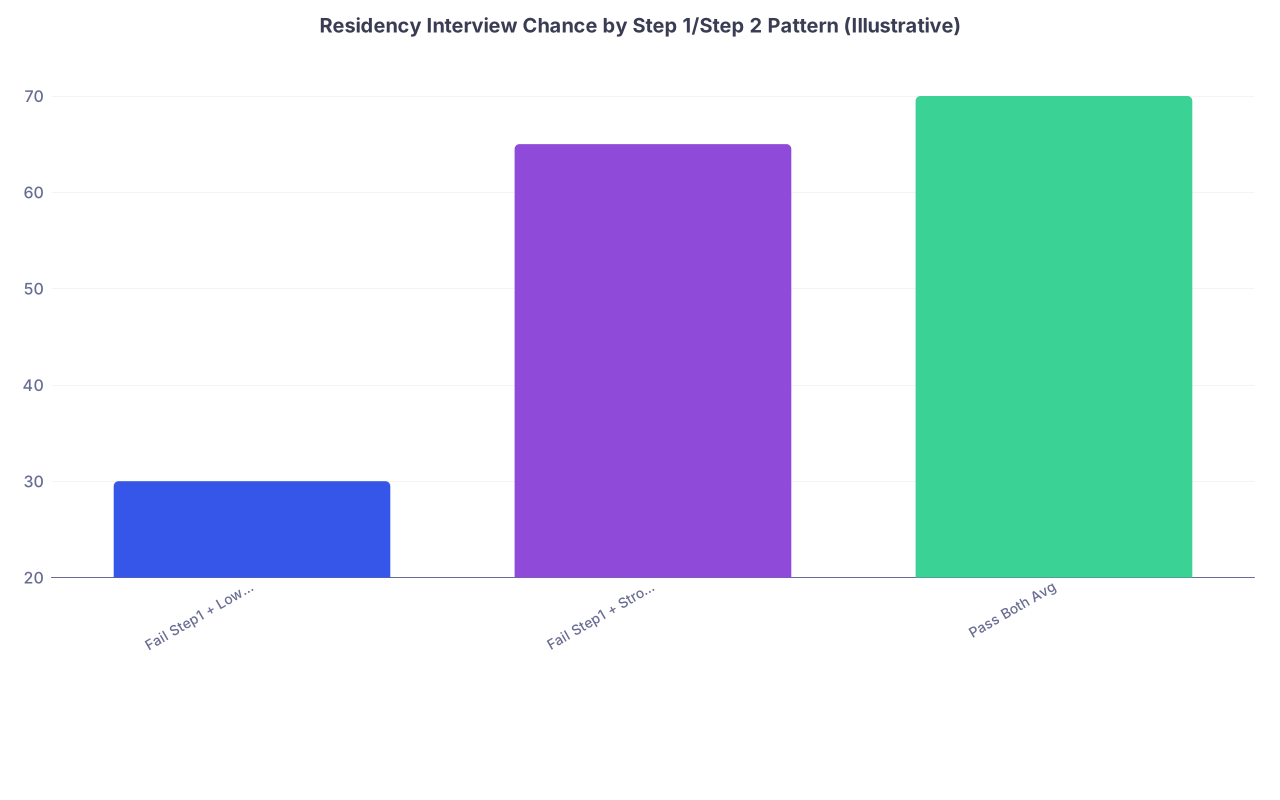
| Category | Value |
|---|---|
| Fail Step1 + Low Step2 | 30 |
| Fail Step1 + Strong Step2 | 65 |
| Pass Both Avg | 70 |
(The exact percentages are fake, but the pattern is real: Step 2 can rescue the story.)
2. Make your clinical evals scream “trustworthy”
This is where safety actually shows up.
On rotations, lean into:
- Reliability: notes done, calls returned, tasks followed through
- Asking for help early: “I’m not comfortable with X yet, can we do it together?”
- Reading about your patients and showing it on rounds
- Being decent to nurses, RTs, pharmacists
Attendings and residents absolutely write comments like:
- “I’d trust them with my own family member.”
- “Very safe and conscientious on the wards.”
Those lines undo so much damage from a past exam failure. If your dean’s letter and MSPE are full of that language, PDs will not see you as a walking safety risk.
3. Own it in your personal statement / secondary / interview
Hiding the fail and praying they don’t notice? They notice. It’s literally printed on your transcript.
What actually reassures people:
- Briefly state what happened
- No melodrama, no excuses, but you can mention context (e.g., health, family, bad study method)
- Then spend more time on what changed and the evidence of that
Something like:
“I failed Step 1 on my first attempt. At the time, I was using passive study strategies and trying to juggle too many commitments. With support from my school’s learning specialist, I changed to a structured schedule, active recall, and weekly self‑testing. Since then I passed Step 1 on my second attempt and scored a 24X on Step 2. On my medicine and surgery rotations, my attendings described me as ‘thorough, prepared, and safe.’ That experience reshaped how I approach growth and feedback, and it’s the mindset I’m bringing into residency.”
That signals: “I will not hide problems. I will bring solutions.”
Unsafe people hide things until they explode. You’re doing the opposite.
When Do Programs Start Thinking “Unsafe”?
Let’s be honest about where this does go off the rails. Because pretending everyone gets a redemption arc isn’t helpful either.
Programs start having real safety concerns with combinations like:
- Multiple exam failures (Step 1, then CK, then in‑service) with no coherent remediation
- Repeated comments like “ignores instructions,” “argues with staff,” “does not recognize limitations”
- Stories of unreported errors, or doubling down after being corrected
- Chronic lateness, no‑shows, or disappearing from the floor
That’s when your name gets quietly labeled “risk” in the back of someone’s mind.
Notice the theme: behavior over time, not one early‑career exam. If your record shows consistent improvement and good citizenship, your Step 1 fail reads as… an early crack you patched, not a live fault line.
Strategy: How to Frame Yourself as Clinically Safe Despite the Fail
Here’s what I’d do if I were sitting where you are, with a Step 1 fail hanging over my head and this specific fear.
1. Build a tight “safety evidence” package
Collect and highlight anything that shows:
- “Safe, thorough, conscientious, asks for help” in evals
- Comments praising your communication with nurses and patients
- Instances where you caught an error or near‑miss and escalated appropriately
You’re not going to paste all this into ERAS, obviously, but you’ll:
- Ask letter writers who have seen this side of you
- Gently remind them of specific examples when you ask for a letter
- Choose rotations and sub‑Is where you can shine in this way
2. Choose letter writers wisely
If you have a Step 1 fail, don’t pick the big‑name researcher who barely knows you. Pick:
- The attending who saw you handle a sick patient overnight
- The hospitalist who watched you own a mistake and fix it
- The surgeon who said, “You’re already functioning like an intern.”
You want letters that basically scream: “Whatever you saw on that test report? This is a safe, teachable, dependable human.”
3. Be ready for the awkward question in interviews
Some programs won’t ask. Some absolutely will:
“So, tell me about your Step 1 attempt.”
Your job is to:
- Not visibly flinch or fold into yourself
- Answer in 3 parts: what happened → what you changed → evidence it worked
Not:
- A 10‑minute sob story
- Or a defensive, “Well, USMLE is trash and my prometric center…” rant
That kind of response does set off clinical alarm bells. Not because of the fail, but because you’re showing poor insight and emotional regulation when challenged.
Practice this answer out loud until it’s boring. Boring is good here.
Timing, Specialty, and How Much This Hurts You
Let’s talk about competitiveness, because that also feeds your “unsafe” fear. Some specialties are more skittish about any red flag, even if they don’t equate it with safety.
| Specialty Type | Impact of Step 1 Fail |
|---|---|
| Highly competitive | Major hurdle, needs strong rehab |
| Mid-competitive | Manageable with strong Step 2 |
| Less competitive | Often overlooked with improvement |
So yes:
- Derm, plastics, ortho, ENT? A Step 1 fail is a very big deal.
- Psych, FM, IM, peds? They see this more often and are more open if the rest is good.
But “less competitive” doesn’t mean “dumping ground for unsafe people.” It means they’re more willing to look at the whole story, not just your first attempt at a standardized test.
If what you’re really asking is: “Will any program trust me with patients?” the answer, if you do the work, is yes. Will every program? No. They already don’t, even for perfect‑score applicants. That’s not about you being unsafe. That’s just the Match being brutal.
Stop Confusing Shame With Danger
Here’s the part no one says out loud: a lot of what you’re calling “they think I’m unsafe” is really “I feel ashamed.”
You’re imagining every attending flipping to your USMLE transcript mid‑rounds and whispering, “Watch out, this one failed Step 1.” They haven’t even looked at that page in months. On day‑to‑day service, people care about:
- Do you show up on time?
- Did you follow up that test like you said?
- Can I trust you to say, “I don’t know,” instead of guessing?
The shame is real. I’m not minimizing it. But shame ≠ objective risk.
If you actually were unsafe clinically, you’d be seeing it in:
- Failing clerkships
- Remediation for professional behavior
- Direct conversations about patterns
If what you have is one failed exam, decent or strong clerkship evals, and a better Step 2, then your “I’m unsafe” narrative is mostly living in your head.
Programs don’t want unsafe residents. They also don’t want brittle residents who crumble at the first sign of imperfection. A Step 1 fail, handled well, can quietly show them you’re not made of glass.
Visualizing the Real Story, Not the Catastrophe
Let me give you a more accurate mental picture than the horror story you’re replaying.

| Step | Description |
|---|---|
| Step 1 | See Step 1 Fail |
| Step 2 | Concern: Ongoing Test Issues |
| Step 3 | Check Clinical Evals & Letters |
| Step 4 | Consider for Interview |
| Step 5 | Real Safety Concerns |
| Step 6 | Passed on 2nd Try? Strong Step 2? |
| Step 7 | Eval Pattern Safe/Professional? |
You’re imagining:
Fail Step 1 → Unsafe → Auto‑reject.
Reality looks more like:
Fail Step 1 → “Ok, what happened next?” → They scan the rest of your story.
So your job isn’t to erase the fail. You can’t. It’s to stack the rest of the file with so much evidence of safety, growth, and reliability that the initial “hmm” turns into “alright, this is fine.”
Concrete Steps for the Rest of Your Application Year
Let’s put some structure to your anxiety so it has something useful to sit on.
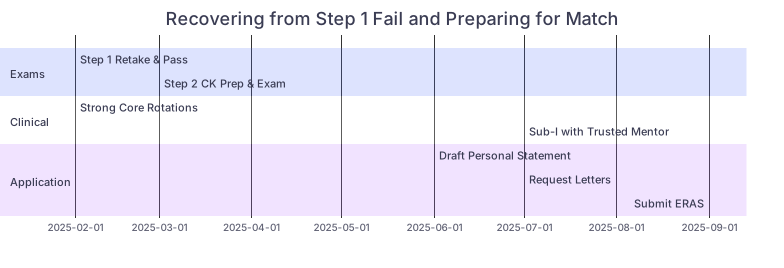
| Task | Details |
|---|---|
| Exams: Step 1 Retake & Pass | a1, 2025-02, 1m |
| Exams: Step 2 CK Prep & Exam | a2, 2025-03, 4m |
| Clinical: Strong Core Rotations | b1, 2025-02, 6m |
| Clinical: Sub-I with Trusted Mentor | b2, 2025-07, 1m |
| Application: Draft Personal Statement | c1, 2025-06, 1m |
| Application: Request Letters | c2, 2025-07, 1m |
| Application: Submit ERAS | c3, 2025-09, 1m |
During this time, focus on:
- Building one or two rotations where an attending can honestly say, “I’d be comfortable with this person as my intern.”
- Getting Step 2 done and done well before applications when possible.
- Writing a personal statement that doesn’t hide the fail but doesn’t wallow in it.
- Practicing that “tell me about your Step 1” answer until it stops feeling like a punch to the stomach.
The Short Version, If Your Brain Is Tired
You failed Step 1. Programs will see it. Some will care a lot, some a little, some almost not at all.
Here’s what actually matters for your “are you unsafe?” fear:
- Programs don’t equate a single Step 1 fail with being clinically dangerous. They see it as a question mark about test performance and stress, not patient safety.
- You can actively counter that question mark with a strong Step 2, solid clinical evaluations that emphasize safety and reliability, and a clear, honest explanation of what changed.
- Real “unsafe” vibes come from patterns: repeated failures, bad behavior, and poor insight. If you show growth, humility, and consistent responsible behavior, your Step 1 fail becomes a stumble you learned from—not a verdict on whether you should be near patients.