
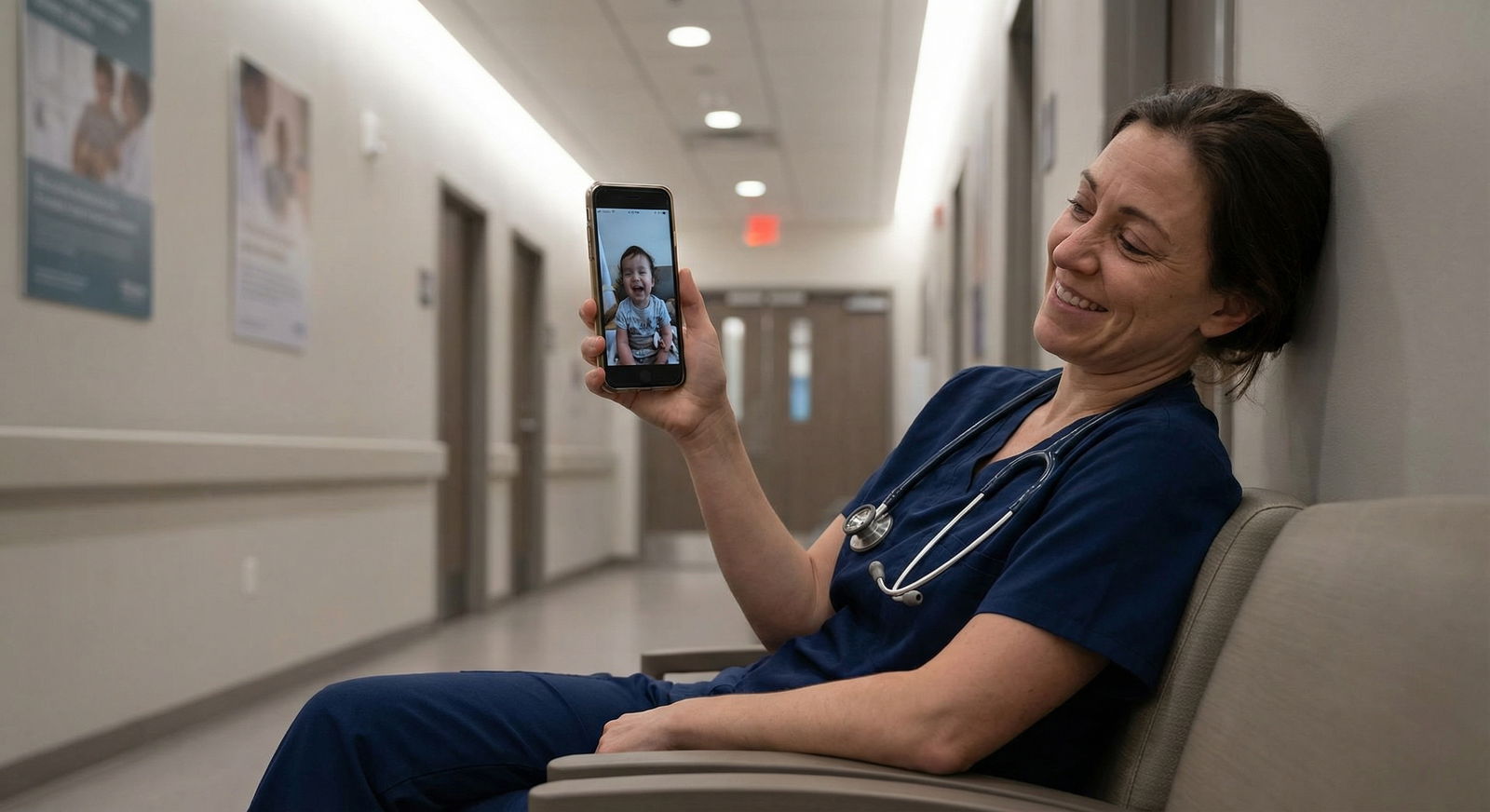
Last week I watched a co-intern step out of the call room to FaceTime her toddler goodnight. A senior glanced over and muttered, “She’s gonna burn out fast with all that at home.”
Ever since, I can’t get one thought out of my head: what if programs look at my family responsibilities and quietly put my application in the “too risky” pile?
The ugly fear: they see “family = liability”
Let me just say the part I’m honestly scared of:
I’m terrified that when a program director reads “primary caregiver,” “two young kids,” or “supporting ill parent” in my personal statement, their brain immediately jumps to:
- “This person will call out all the time.”
- “They won’t stay late.”
- “They’ll be distracted, exhausted, less committed.”
- “We can pick someone ‘simpler.’”
And it’s not like residency culture helps. We’ve all heard the comments:
- “Pregnant again? During residency?”
- “I don’t know how people with kids do this.”
- “You really think you can handle nights with that going on at home?”
So yeah, my brain goes to the worst-case: that my love for my family is going to be interpreted as a red flag. That my very real responsibilities will be seen as a ticking time bomb for burnout.
Here’s the part that’s complicated:
Programs are thinking about burnout. Constantly. They’re judged on it. They’re scared you’ll leave, need remediation, or struggle. They are trying to figure out “risk.”
But “has family responsibilities” is not the same as “will burn out.” A lot of the time, it’s actually the opposite.
Do programs secretly see caregivers as red flags?
Some do, some don’t. I’m not going to sugarcoat it.
There are programs that are still stuck in 1995 mentally: they want the resident who lives and breathes the hospital, no life, no obligations. Especially in surgical subspecialties and hyper-malignant programs.
But there are also programs that prefer applicants who have proven they can manage real life plus medicine. And they will absolutely frame that as resilience, perspective, and maturity.
Here’s how it usually splits out in reality (based on what I’ve seen and what residents quietly say when faculty aren’t listening):
| Program Type | Gut Reaction To Family Responsibilities |
|---|---|
| Malignant/high-volume surgical | Mild to moderate concern; wants “unlimited hours” image |
| Chill community IM/FM/Peds | Often neutral to positive; see it as normal life |
| Academically strong but humane | Curious how you manage it; can be impressed by high functioning |
| Brand-name prestige with macho culture | Mixed; depends heavily on individual PD and chief culture |
| Programs burned by past resident issues | More nervous unless you show clear support systems |
So yes, there are places where the wrong person reading your file might think: “This sounds like burnout risk.” That’s real.
The question is: what can you control?
Not whether you have a family.
Not whether someone’s biased.
What you can control is how your responsibilities show up in your application: as a threat or as a tested system that already works.
What actually worries programs (and what doesn’t)
Programs don’t sit around saying, “Anyone with kids or an elderly parent is out.” They’re more specific—and more selfish.
They’re worried about:
- residents missing a lot of shifts or needing constant schedule swaps
- unplanned, unsupported crises that derail training
- people who show up chronically exhausted and unsafe to practice
- prior patterns of failing exams, failing rotations, or professionalism issues
- legal/HR nightmares if someone feels “set up to fail”
They’re less worried about the label (parent, caregiver, married, single) and more worried about: is this person stable, reliable, and safe?
So where do family responsibilities become a red flag?
Not just because they exist.
But when your application implies:
- chaotic, unpredictable home situation with no backup
- “I’m barely hanging on already” vibes
- no evidence you’ve successfully balanced this level of load before
- vague language that hints at drama without showing resolution
Compare these two versions of the same reality:
“I have three young children and a partner who travels frequently, which has been challenging to balance during medical school.”
→ That reads like, “Uh oh. How is this going to work during 28-hour calls?”“As the parent of three young children with a spouse who travels for work, I’ve had to build a layered support system: nearby grandparents who handle early mornings, a reliable nanny for school pickups, and backup childcare for nights and weekends. That structure has allowed me to complete all rotations on time without missed shifts.”
→ Same situation. Very different signal.
One screams “risk.”
The other says, “I’ve thought this through. I’ve already proved this can work in a demanding environment.”
How to talk about family without screaming “burnout risk”
You don’t have to hide your life. But you do need to be strategic.
Here’s the mental rule I use:
Only talk about family responsibilities if you can clearly show stability + support + performance.
1. Don’t overshare the chaos
You’re not on a therapy couch. You’re applying for a job.
What interviewers don’t need:
- detailed description of custody battles
- ongoing, unresolved crises
- how alone, scared, or overwhelmed you feel at 2 a.m.
You can be honest about challenges, but keep it framed as: here’s what happened, here’s how I adapted, here’s how I performed.
2. Translate “responsibilities” into “evidence”
Any time you reference caregiving, try to connect it directly to clear outcomes:
- consistent clinical performance
- no professionalism issues
- strong letters from rotations you did during intense home responsibilities
- Board/Step scores you earned during that same period
Example:
“I became the primary caregiver for my father after his stroke during third year. I worked closely with the dean’s office to adjust my schedule while ensuring all core rotations were completed on time. I maintained honors in medicine and neurology and didn’t miss a single clinical shift, which required building a reliable team of family support and respite care.”
That’s not “look at this dramatic story.”
That’s “look at how I function under pressure—and still show up.”
3. Proactively answer the question they’re too polite to ask
They’re thinking: Does this person have a plan?
So give them one. In your personal statement or—more often—in an interview answer if it comes up:
- Who helps you with childcare or caregiving?
- How will nights/weekends/long calls work?
- What did you learn from juggling both that will help you as a resident?
You don’t have to give names and addresses. Just show you’re not winging this.
Something like:
“I know residency is demanding, which is exactly why we already built a support system that can handle nights and weekends. My partner works from home and we live ten minutes from my in-laws, who currently do school pickups and can stay overnight when needed. That structure is what allowed me to complete surgery and inpatient medicine rotations without missing shifts, and it’s the same system we’ll be using during residency.”
That answer says: I know what I’m walking into. I’m not delusional. And I’ve already pressure-tested this.
Programs that will actually value your responsibilities
Here’s the thing that surprised me once I started talking to more residents: a lot of program directors like applicants who have real lives.
Not in a “we want you to suffer twice as hard” way. More like:
- People with caregivers roles often have better boundaries.
- They’re sometimes less likely to self-destruct with workaholism.
- They bring empathy that isn’t fake. You can tell who’s slept in an ICU waiting room with a family member.
And in some specialties—FM, IM, Peds, Psych—your experience can be a huge asset if you present it right.
For example:
- Parenting → understanding development, family dynamics, systems of care
- Caring for an ill parent → insight into discharge planning, home health, caregiver burden
- Supporting a disabled sibling → advocacy mindset and practical resource knowledge
The key is again: connect your responsibilities to how you show up as a physician.
Not just: “I love my kids so much.”
But: “Parenting has fundamentally changed how I talk to exhausted caregivers in the ED at 3 a.m. I recognize that look.”
What you should be screening for in programs
You’re allowed to decide that programs treating your life as a liability aren’t worth three miserable years.
Listen carefully during interviews. Watch the micro-reactions.
Red flags from their side:
- “Residency is your family now.” (No. No, it’s not.)
- Jokes about people “dropping the ball once they have kids.”
- Proud stories about how “nobody here ever leaves early for anything.”
- No clear parental leave policy, or the PD seems annoyed you even asked.
Healthier signals:
- Residents casually mentioning partners, kids, or pets without whispering
- Chiefs openly referencing coverage for maternity/paternity leave in a matter-of-fact way
- A PD who says, “We want you to have a sustainable life here” and backs it up with examples
- Transparent conversations about scheduling flexibility in genuine emergencies
You’re not just hoping they pick you. You’re also asking: “Do you deserve me and my very real life?”
Because if they resent you for having a family before you even arrive, how supportive do you think they’ll be when something actually happens?
How to answer “How will you balance residency and family?” without panicking
This question terrifies me, honestly. Because it feels like a trap.
Here’s a framework you can use that doesn’t sound defensive:
- Acknowledge reality
- Show you’ve already done it
- Describe your system
- End on how this makes you a better resident
Example answer:
“Residency is intense, and I don’t underestimate that. I’ve already been balancing demanding inpatient rotations with caring for my two kids during medical school. That’s forced me to be very intentional about support—my partner has flexible hours, we have full-time childcare, and grandparents live nearby for backup when I’m on call or nights. That structure is already in place and working. Honestly, being in that role at home has strengthened my time management and made me much more efficient and focused at work, because when I’m at the hospital, I’m 100% there.”
You’re not apologizing. You’re laying out a plan.
Quick reality check: is it ever better not to mention family?
Yes. Sometimes.
You don’t have to:
- discuss kids in your personal statement if they’re not relevant to your path
- center your whole narrative on caregiving if it’s not the main driver of your story
- volunteer potential worries they wouldn’t have had otherwise
Ask yourself:
- Did this responsibility shape my path, values, or specialty choice in a clear way?
- Can I talk about it without sounding like I’m barely surviving?
- Do I have clear evidence of strong performance while carrying that load?
If the answer is mostly “no,” you can keep it light or leave it out of written materials and address it only if it comes up naturally in interviews.
You’re not hiding. You’re prioritizing what’s most relevant to your professional case.
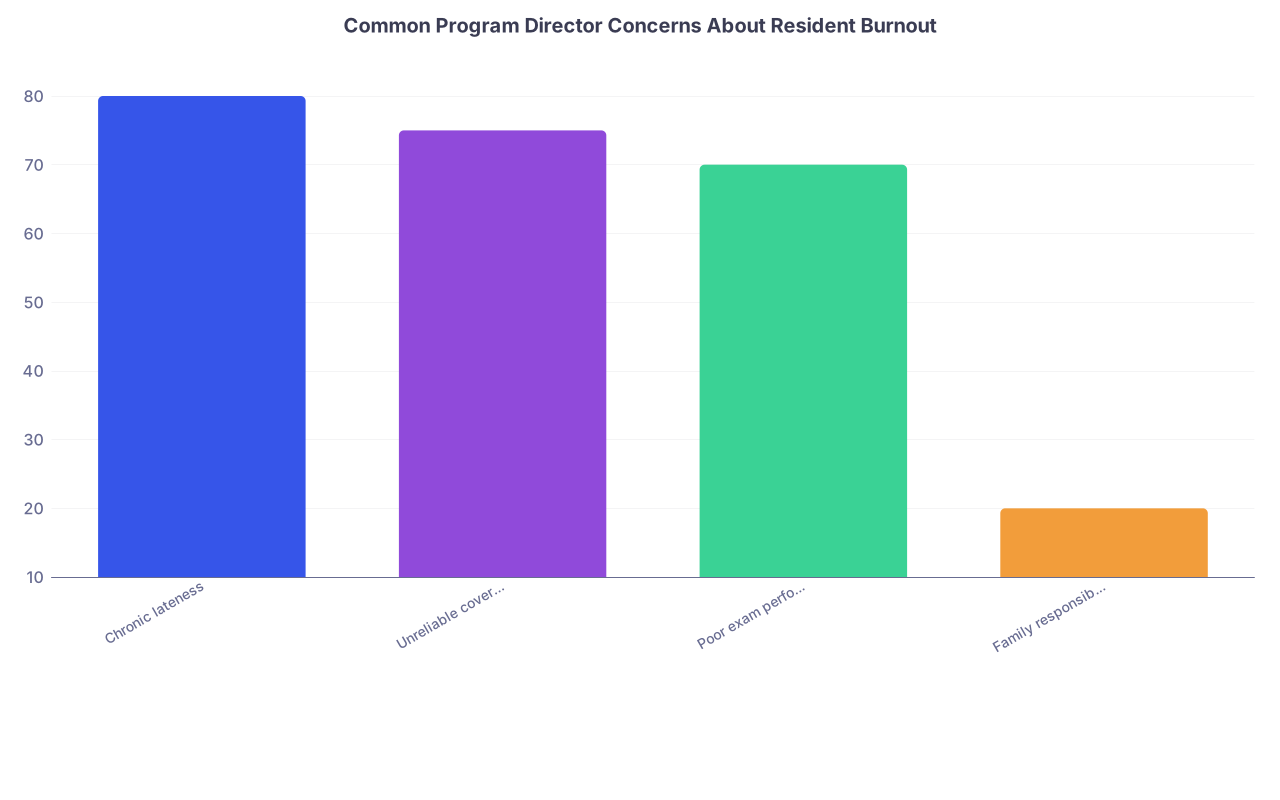
| Category | Value |
|---|---|
| Chronic lateness | 80 |
| Unreliable coverage | 75 |
| Poor exam performance | 70 |
| Family responsibilities alone | 20 |

| Step | Description |
|---|---|
| Step 1 | Family Responsibilities Mentioned |
| Step 2 | Seen as Burnout Risk |
| Step 3 | Seen as Resilience/Asset |
| Step 4 | Mostly Neutral |
| Step 5 | How Is It Framed? |

FAQ (You’re not the only one spiraling about this)
1. Will programs rank me lower just because I have kids or caregiving duties?
Some might, yes. Especially more rigid or malignant programs. But many won’t, and some will even see it as a strength if your application shows you’ve handled intense responsibilities and performed well. You don’t need every program to love your situation—you need enough that understand adults in residency can have actual lives.
2. Should I avoid mentioning my children or family in my personal statement?
If your family responsibilities truly shaped your path, values, or specialty choice and you can present them as a source of resilience with clear support systems, it’s fine to include. If it would just be emotional context without clear relevance, or you can’t articulate stability and support, you’re better off focusing on other parts of your story and discussing family only if asked in interviews.
3. What if something changes—like a new baby or a parent’s health worsening—after I match?
Programs have to deal with real life. Residents have babies, get sick, lose loved ones. You’d work with your PD and GME office to adjust schedules, use parental or medical leave, and lean on coverage systems. That doesn’t mean it’ll be easy or drama-free, but you’re not the first or last person this will happen to. What matters most is communication, documentation, and not trying to silently power through until everything collapses.
4. How do I know if a program is actually family-friendly and not just pretending on interview day?
Listen more to residents than to faculty. Ask directly: “How does the program handle parental leave or family emergencies?” Watch their faces. If residents look tense, dodge the answer, or tell you to “ask the PD,” that’s a sign. If they can rattle off real examples—“Our co-resident took parental leave last year and we rearranged rotations like this”—that’s better. Also check: clear written policies, normal talk about life outside the hospital, and residents who don’t look completely wrecked all the time.
Here’s the bottom line that I keep trying to remind myself of:
- Having a family or caregiving responsibilities doesn’t automatically mark you as a burnout risk.
- How you present those responsibilities—supported, stable, high-functioning or chaotic and unresolved—matters more than the fact they exist.
- You deserve a program that sees you as a whole person, not a liability for caring about people outside the hospital.
You’re not broken for wanting both: to be a good doctor and a decent human to your family. The programs that understand that are the ones you actually want to train in.