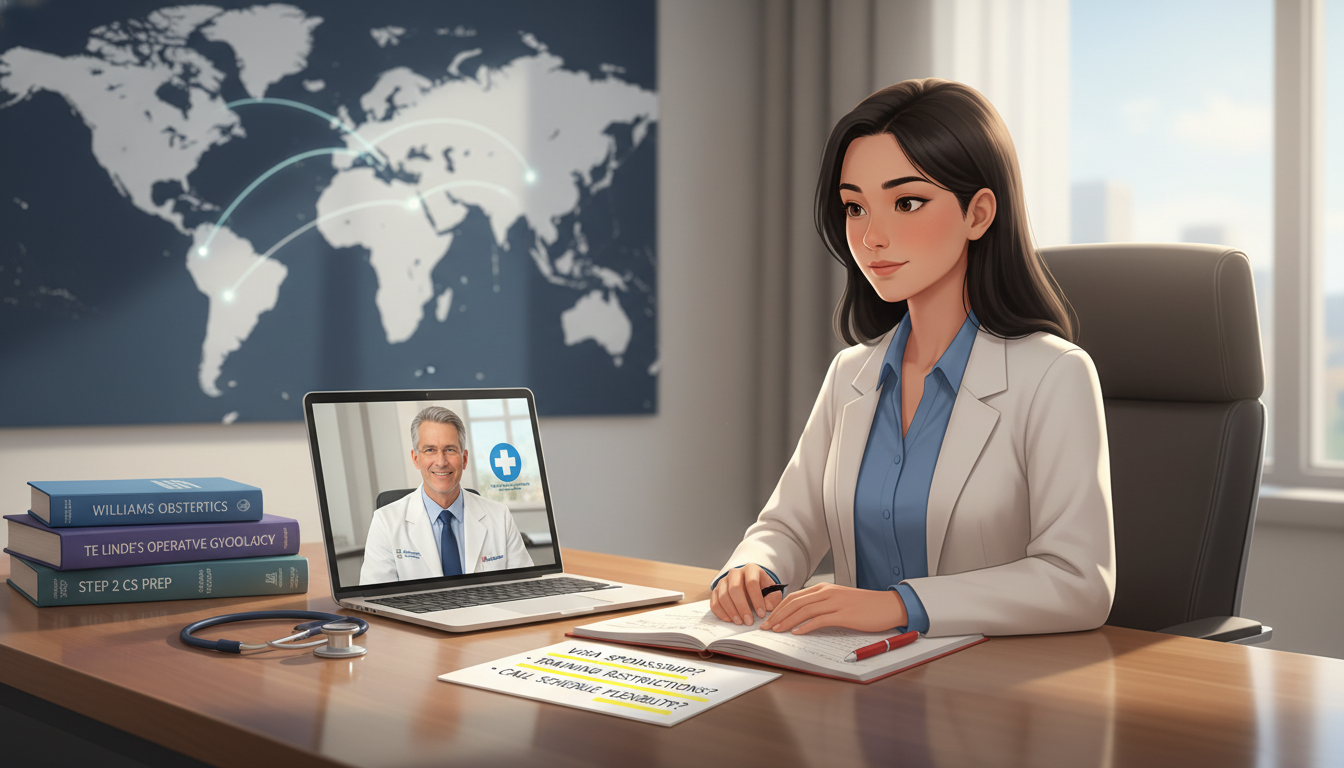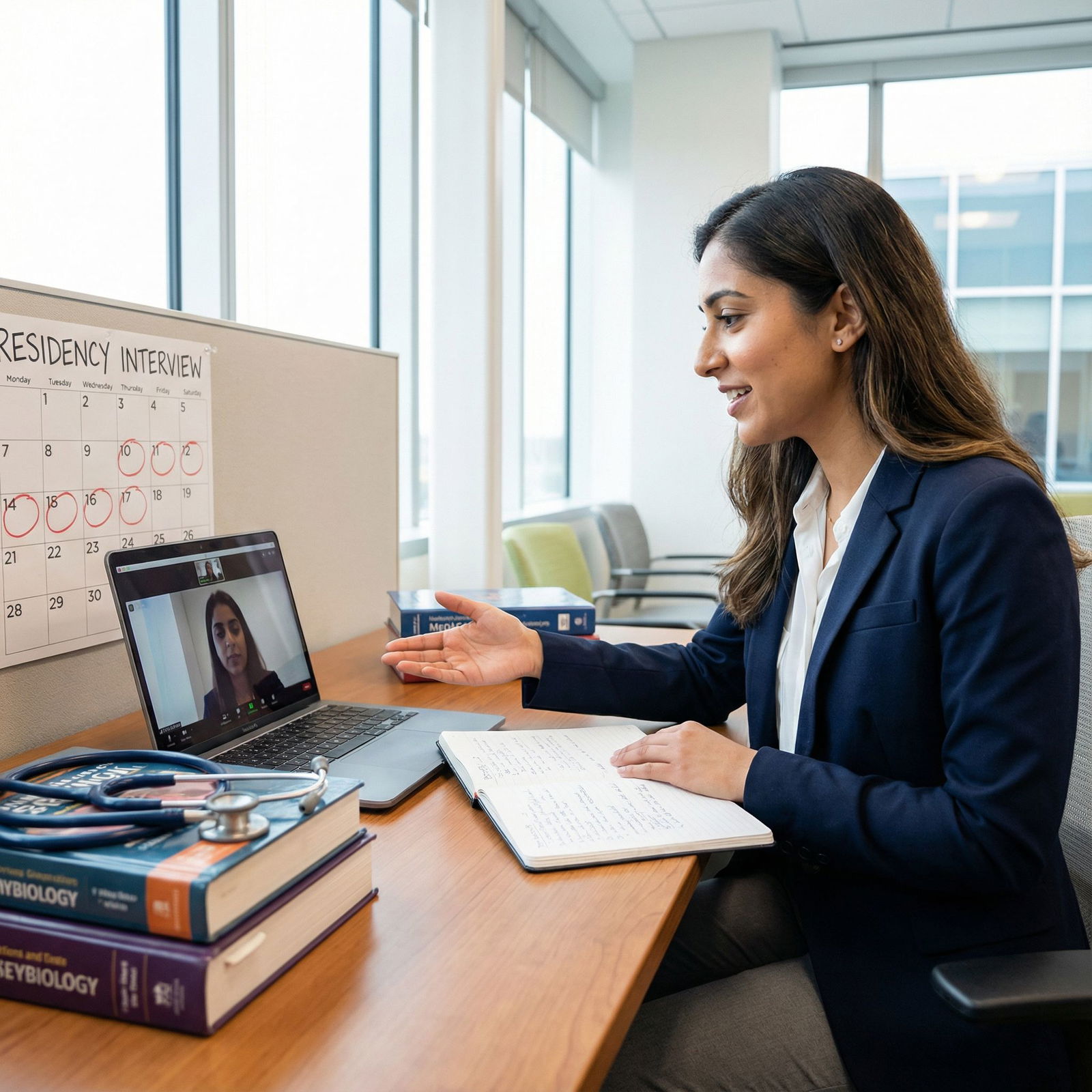
Understanding the Modern Residency Interview Landscape
Residency interviews are one of the final—and most influential—steps between you and the next phase of your medical training. Programs receive hundreds, sometimes thousands, of applications. Your residency interview is your opportunity to move from being a name on a screen to a colleague they can imagine working with for the next three to seven years.
This guide walks through practical, high-yield strategies grounded in medical education best practices and real interview experiences. The focus is on actionable Interview Tips you can implement immediately to strengthen your Communication Skills, professional presence, and overall Career Preparation.
Why Residency Interviews Matter More Than You Think
Residency programs use interviews for three main reasons:
Selection and Risk Assessment
Programs are looking for:- Clinical readiness and professionalism
- Emotional intelligence and teamwork
- Reliability, integrity, and teachability
The interview is often the most heavily weighted factor once you’ve received an invitation. At this stage, everyone is “qualified” on paper; the conversation determines who stands out.
Mutual Fit and Career Preparation
The Residency Interview is not just about them evaluating you—it’s also your chance to assess:- Training quality and support
- Educational philosophy and feedback culture
- Alignment with your specialty interests and long-term goals
Viewing the day as a two-way evaluation reduces anxiety and helps you ask better questions.
Personality, Culture, and Team Dynamics
Programs want to know:- Will you be someone residents enjoy being on call with at 3 a.m.?
- Do you communicate respectfully with staff and patients?
- Will you contribute positively to the program’s culture, DEI efforts, and patient care mission?
Your Medical Education has prepared you clinically; now your job is to communicate who you are as a future resident.
Common Residency Interview Formats You’ll Encounter
Different specialties and institutions use different structures. Knowing the format in advance helps you tailor your preparation.
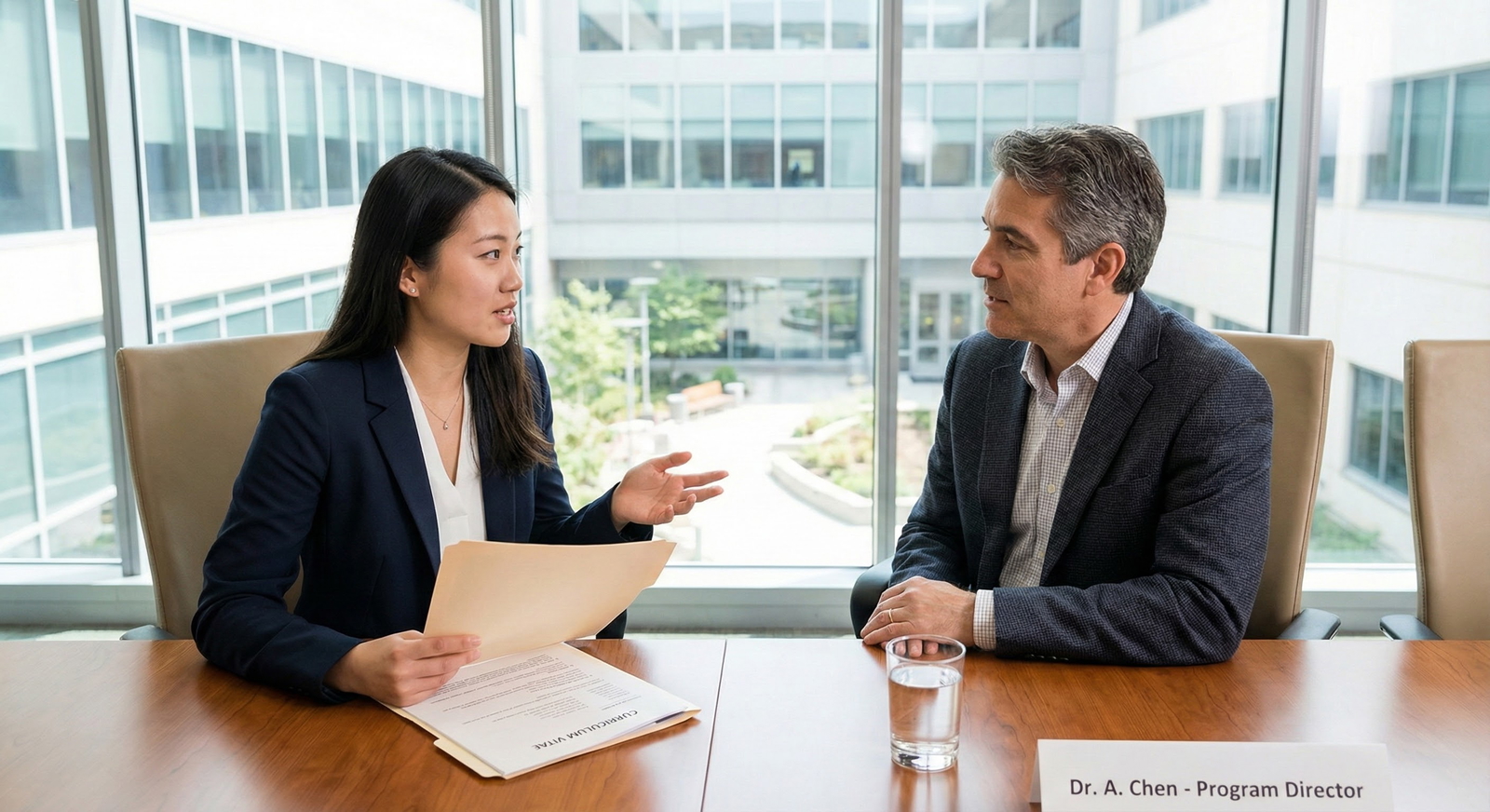
Traditional One-on-One Interviews
- 20–30 minutes with a faculty member, program director, APD, or senior resident
- Often conversational with standard questions about motivation, strengths/weaknesses, and career goals
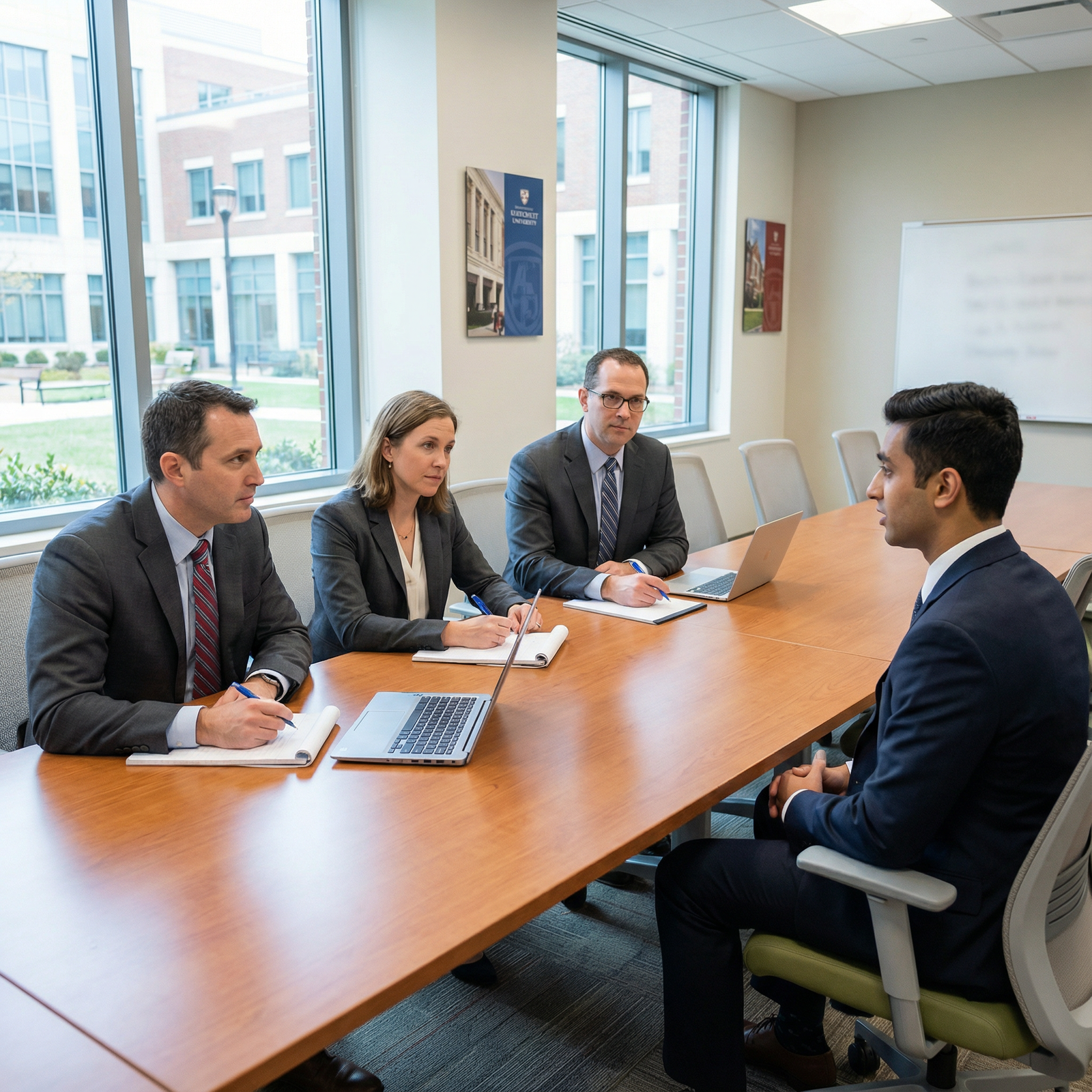
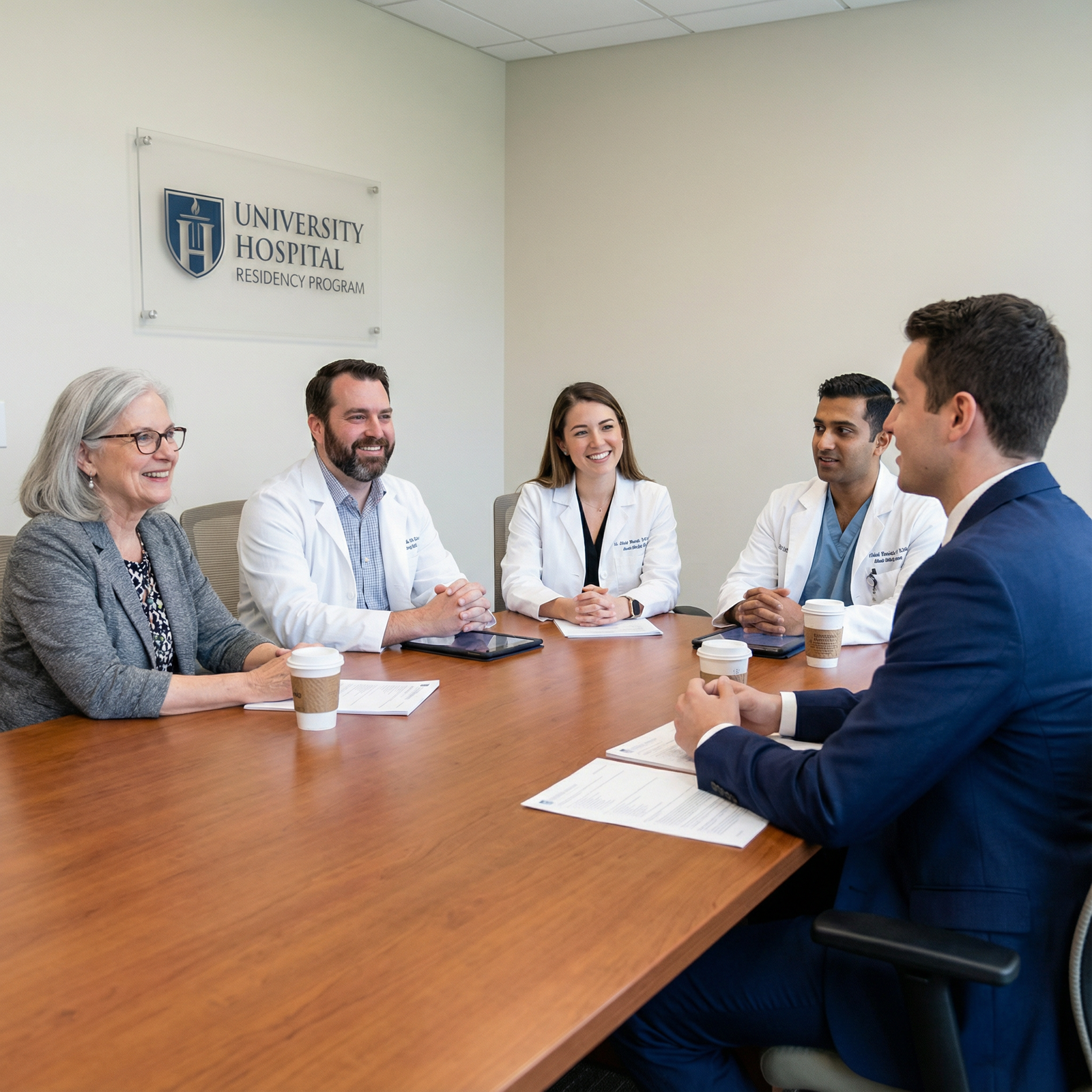
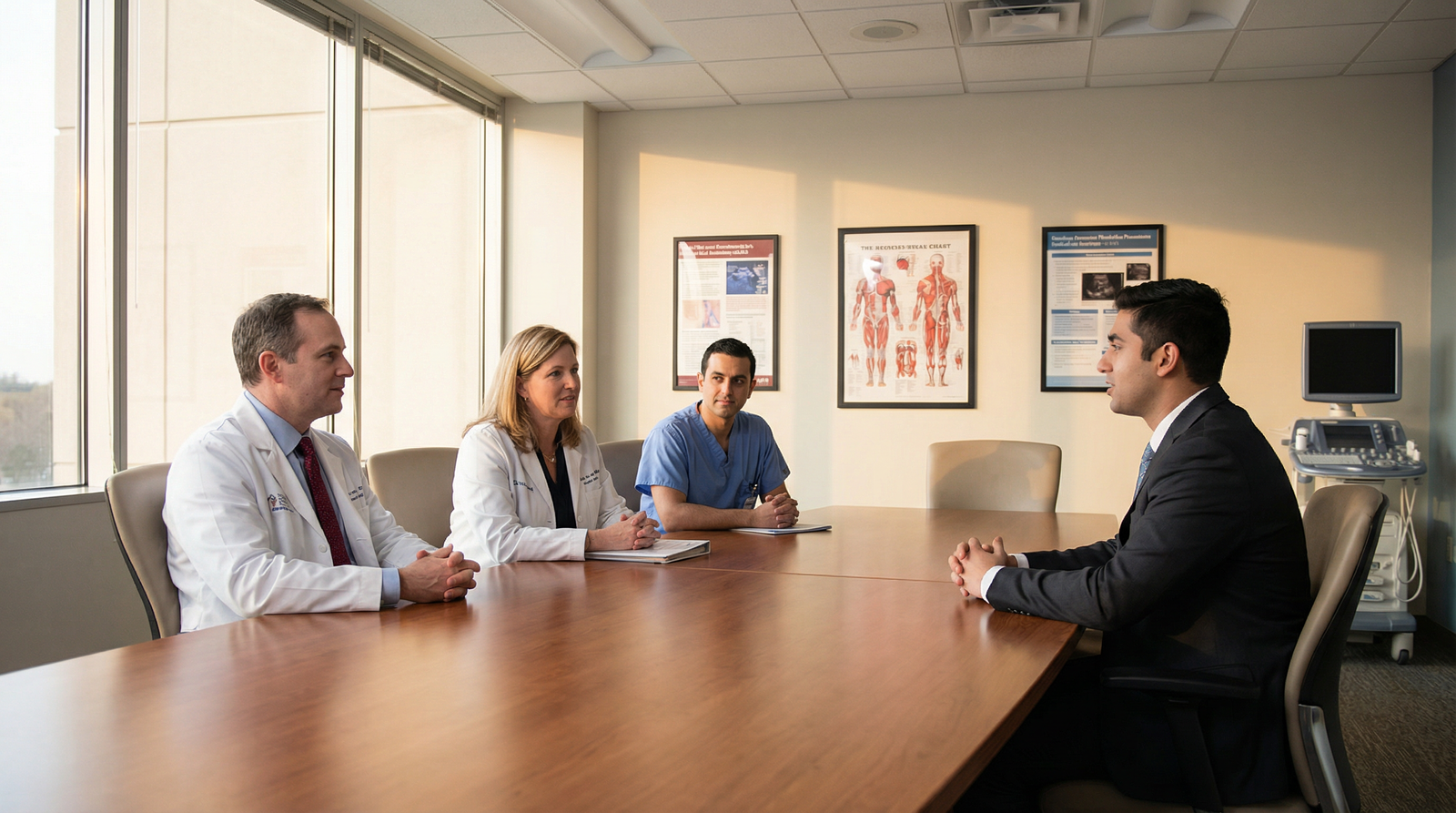
Panel Interviews
- Multiple interviewers (faculty, chief residents, leadership)
- Focus on how you handle group dynamics and your ability to read a room
- Expect follow-up questions from different perspectives (e.g., clinical, academic, wellness)
Multiple Mini Interviews (MMIs)
- A circuit of short stations (5–10 minutes each)
- Each station assesses a specific attribute: ethics, Communication Skills, professionalism, empathy, or problem-solving
- Scenarios may involve role-play, ethical dilemmas, or teamwork questions
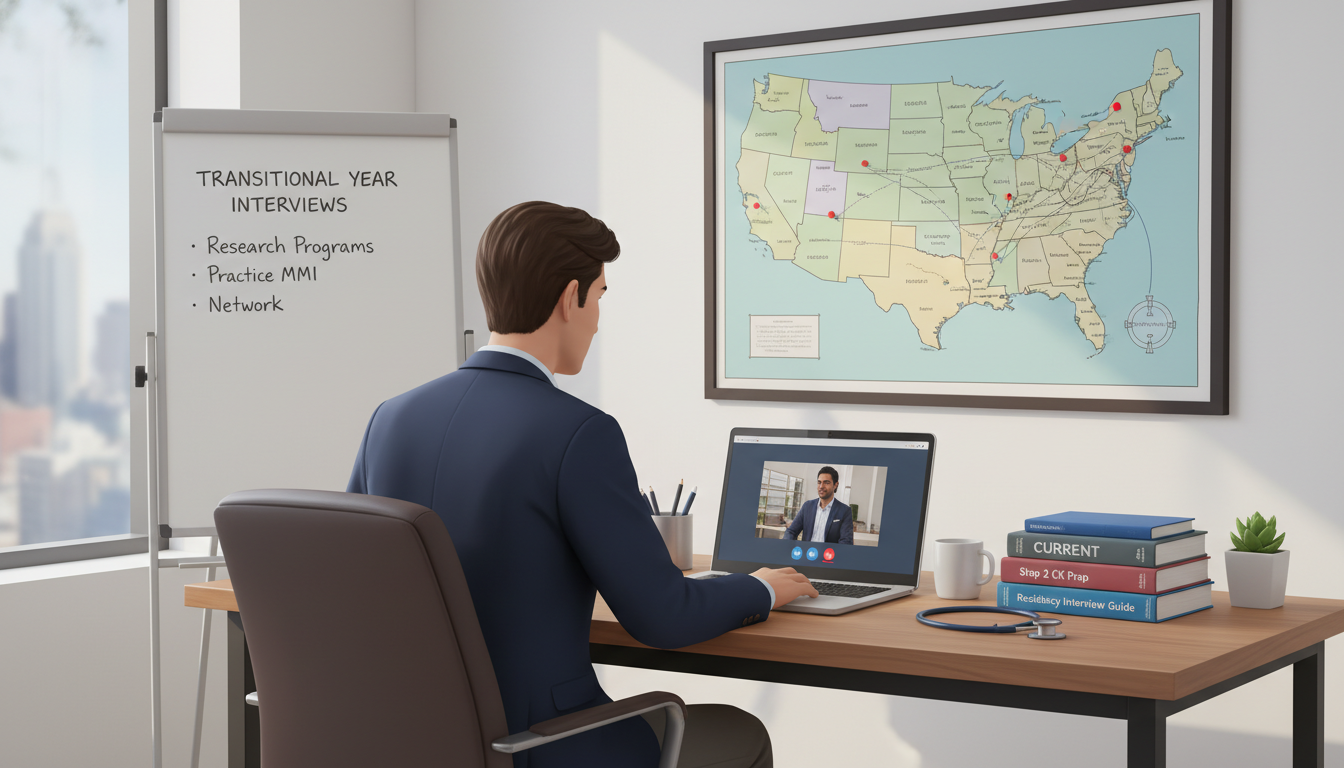
Virtual Interviews
- Now common across many specialties
- Format may include breakout rooms, virtual social events, or pre-recorded questions
- Technical preparation and online presence are critical components of success
Before each interview day, check the program’s website and ERAS communication for details on format, schedule, and who you’ll meet. If unclear, it’s acceptable to email the coordinator for clarification.
Strategic Preparation Before Your Residency Interview
Preparation is where most of your competitive advantage is built. Thoughtful planning transforms your nerves into focused confidence.
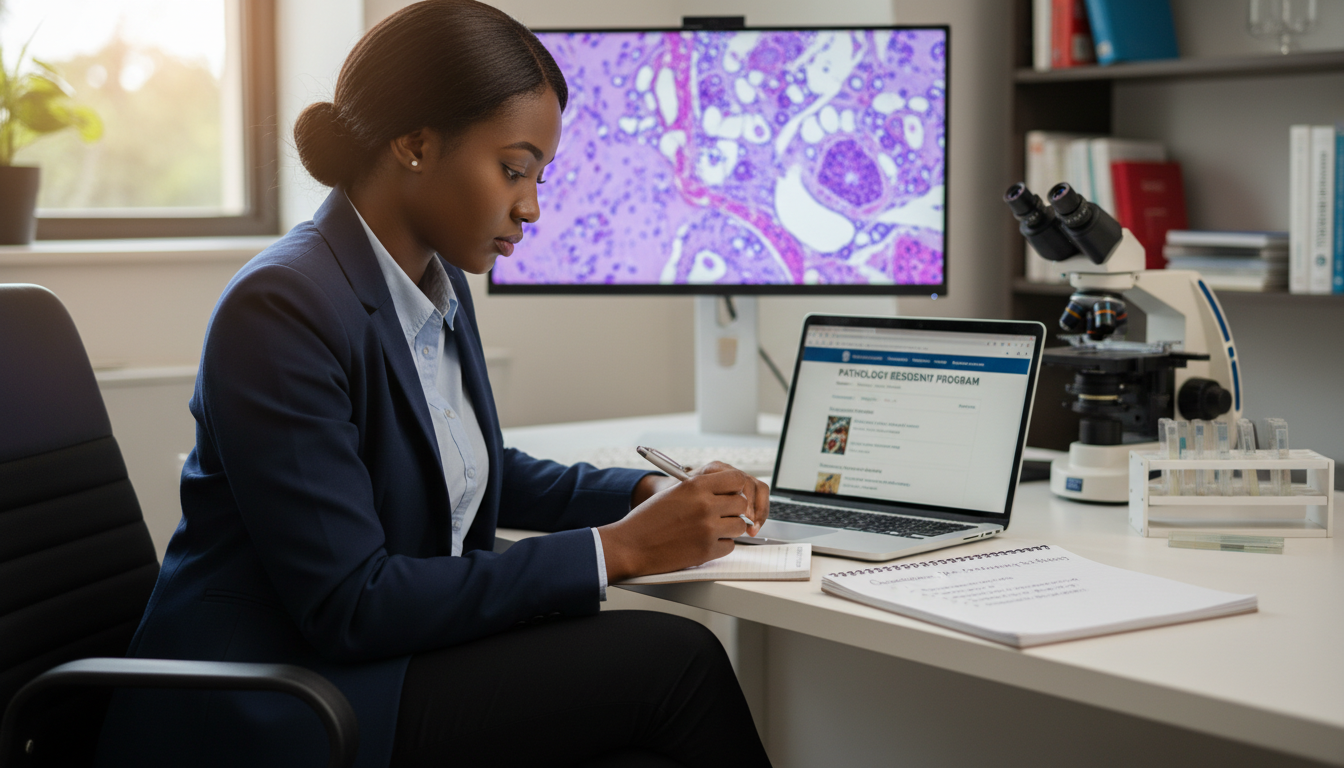
Research the Program Like a Future Colleague
Going beyond a quick website scan is essential. Your questions and comments should make it clear you’ve done your homework.
Key elements to research:
Program Mission, History, and Identity
- What populations does the program serve?
- Are they community-based, academic, or hybrid?
- Do they emphasize primary care, subspecialty training, research, or advocacy?
Curriculum and Educational Structure
- Call schedules, night float, didactics, simulation opportunities
- Board prep strategies and exam pass rates
- Mentorship models (assigned mentors vs. self-selected)
Fellowships and Career Outcomes
- What fellowships are available in-house?
- Where do graduates go—fellowship, community practice, academics, rural practice, etc.?
- Does that match your envisioned career path?
Faculty and Resident Interests
- Check faculty profiles for research themes or QI projects aligned with your interests
- Identify residents or chiefs involved in leadership, wellness, DEI, or teaching roles
Program Culture and Wellness
- Read recent reviews (e.g., online forums, though interpret cautiously)
- Look at social media for resident activities, community engagement, and educational highlights
- Notice how the program talks about wellness and support during challenging rotations
Practical Ways to Gather Insider Insight
Program Website and Official Materials
Start here to understand the structure, requirements, and formal mission.Social Media (Twitter/X, Instagram, LinkedIn)
Look for:- Resident takeovers or “day in the life” posts
- Photos from social events, conferences, and graduations
- Highlighted faculty or resident achievements
Current Residents and Alumni
- Use alumni networks, mentors, or LinkedIn to connect
- Ask targeted questions:
- “What surprised you most after you started?”
- “What kind of resident thrives there?”
- “If you could change one thing about the program, what would it be?”
This level of research helps you tailor answers to “Why our program?” and ask meaningful questions that show maturity and insight.
Crafting and Refining Your Personal Story
Your “personal story” is the backbone of your Residency Interview performance. It should be coherent, authentic, and aligned with your specialty.
Key components to prepare:
Your Path to Medicine
- When and why did you decide to pursue medicine?
- What experiences confirmed or challenged that decision?
Why This Specialty
Programs will always want a clear, thoughtful answer here:- What aspects of the specialty energize you (patient population, procedures, continuity, acuity, problem-solving style)?
- Which rotations or mentors shaped your decision?
- How have you sampled alternatives and still chosen this path?
Clinical Experiences and Growth
- Select 3–5 pivotal experiences that highlight:
- Clinical judgment
- Resilience and adaptability
- Teamwork and Communication Skills
- Empathy and professionalism
- Be ready to discuss what you learned and how it changed your practice.
- Select 3–5 pivotal experiences that highlight:
Research, QI, and Scholarly Work
- Emphasize your role, not just project titles
- Be honest about your level of involvement: design, data collection, analysis, writing, presenting
- Prepare to explain:
- What question you were trying to answer
- What you actually found or contributed
- How it informs your approach to evidence-based medicine
Personal Attributes and Interests
- Reflect on 2–3 traits you genuinely embody (e.g., reliable, curious, calm under pressure, good listener)
- Have examples ready to prove them
- Include non-medical interests briefly—they humanize you and can build natural rapport
Practicing Common and High-Yield Residency Interview Questions
Verbal practice is crucial. Thinking about good answers is not enough; you need to hear yourself say them.
Frequently asked questions include:
- Why did you choose this specialty?
- Why are you interested in our program?
- What are your strengths and weaknesses as a physician?
- Tell me about a challenging clinical case and how you handled it.
- Describe a conflict on the team and how you resolved it.
- Tell me about a time you made a mistake. What did you learn?
- How do you handle stress and prevent burnout?
- Where do you see yourself in five to ten years?
- Tell me about a time you advocated for a patient.
How to Practice Effectively
- Record yourself on video and watch critically
- Do mock interviews with:
- Faculty advisors
- Residents
- Career services or professional coaches
- Pay attention to:
- Length of answers (aim for 1–2 minutes per question)
- Clarity and organization
- Filler words, pacing, and tone
Mastering Behavioral and Situational Questions (STAR+ Reflection)
Behavioral interviewing assumes past behavior predicts future behavior. The STAR method keeps your answers structured:
- S – Situation: Briefly set the context
- T – Task: Your specific responsibility or role
- A – Action: What you did, step-by-step
- R – Result: What happened and what improved
To make responses stronger, add a quick Reflection at the end:
- What did you learn?
- How has this changed your approach moving forward?
Example (Conflict with a Colleague)
- Situation: “During my internal medicine rotation, a senior resident and I disagreed about the management of a patient with suspected sepsis…”
- Task: “As the student presenting the case, I felt responsible for advocating for timely care while respecting the team structure…”
- Action: “I calmly presented the guideline-based reasons for early antibiotics, asked to review the case together at the bedside, and invited the attending to weigh in when we were still uncertain…”
- Result: “We started treatment earlier than initially planned, and the patient clinically improved. Afterward, the resident and I debriefed, which improved our communication for the rest of the rotation.”
- Reflection: “Since then, I’ve been more intentional about raising concerns early and framing them collaboratively rather than confrontationally.”
Prepare 6–8 STAR stories that can flexibly answer different questions (leadership, conflict, error, resilience, teamwork, advocacy).
Professional Appearance and Technical Readiness
Dressing for Success and Authentic Professionalism
Whether in-person or virtual, your appearance should support—not distract from—your message.
General Guidelines
- Choose a well-fitting suit (dark blue, gray, or black are common)
- Simple, clean lines; avoid overly trendy, flashy, or revealing clothing
- Closed-toe shoes, minimal jewelry, and neutral colors are safest
- Make sure your clothing allows you to sit and move comfortably
Grooming and Presentation
- Neat hair, trimmed facial hair if present
- Conservative makeup if you wear it
- Avoid strong perfume or cologne, especially for in-person interviews
- Bring a portfolio or folder with a notepad and pen for in-person days
The goal is to appear like a future colleague who can represent the program to patients, families, and other professionals.
Virtual Interview Essentials
If your Residency Interview is virtual, technical preparation is part of your professional image.
Technology Setup
- Stable high-speed internet connection
- Laptop or desktop preferred over phone
- Test your microphone, camera, and platform (Zoom, Webex, Teams) ahead of time
- Have a backup plan (hotspot, phone dial-in, alternate device)
Environment
- Quiet, private space with a neutral or tidy background
- Good lighting (natural light from in front of you, or a soft lamp)
- Camera at eye level to simulate natural eye contact
On-Screen Etiquette
- Look at the camera when speaking, not at your own image
- Mute when appropriate on multi-person calls
- Avoid multitasking; interviewers can tell
Mastering Communication Skills During the Interview
Communication Skills are one of the top competencies programs assess. Your Medical Education has trained you to discuss complex topics; now you must present yourself with the same clarity.
Verbal Communication: What You Say and How You Say It
Be Clear and Structured
- Use concise, organized answers
- For complex questions, consider a quick mental outline (e.g., “three main reasons are…”)
Be Authentic but Professional
- Speak naturally; avoid scripted-sounding language
- Show real enthusiasm for patient care, teaching, and learning
- Avoid negativity about prior institutions, supervisors, or peers
Adapt to Your Audience
- With program directors: emphasize professionalism, readiness, and long-term fit
- With residents: ask about day-to-day life, support, and wellness
- With faculty: highlight academic, research, and teaching interests
Non-Verbal Communication: What Your Body Language Conveys
Posture and Presence
- Sit upright, slightly leaning forward to show engagement
- Avoid fidgeting with pens, hair, or jewelry
Eye Contact and Facial Expression
- Aim for steady but not intense eye contact
- In panels, include each interviewer with brief eye contact
- Nod occasionally to show active listening
Active Listening
- Let interviewers finish before responding
- Paraphrase or reference something they said in your answers when appropriate
- Ask follow-up questions that show you’re genuinely thinking about their responses
Effective communication doesn’t mean having perfect answers; it means interacting thoughtfully, respectfully, and with emotional intelligence.

Post-Interview Strategy and Professional Follow-Up
How you handle the hours and days after your interview can reinforce the positive impression you’ve made.
Thoughtful Thank-You Notes
While requirements vary by program and specialty, concise, personalized thank-you emails are generally viewed positively.
Guidelines:
- Send within 24–72 hours of the interview day
- Address each interviewer by name and role
- Reference a specific topic you discussed
- Reaffirm what excites you about the program
Sample Thank-You Email (without code formatting)
Subject: Thank You for the Interview – [Your Name]
Dear Dr. [Interviewer’s Last Name],
Thank you for taking the time to speak with me during my interview for the [Name of Residency Program] on [date]. I truly appreciated our conversation about [specific topic, e.g., resident autonomy in the ICU or your work in community outreach], and your perspective on [another topic] gave me a clearer picture of the culture and values of your program.
Our discussion reinforced my strong interest in training at [Institution Name], particularly because of [one or two concrete reasons—curriculum, mentorship, patient population, fellowship preparation]. I would be honored to contribute to your team and learn from the residents and faculty at your institution.
Thank you again for your time and consideration.
Best regards,
[Your Full Name]
[Medical School]
[Preferred Contact Information]
Keep your message honest and succinct. Avoid repeatedly emailing unless the program specifically invites updates.
Organizing Impressions and Ranking Decisions
Immediately after each interview:
Take 5–10 minutes to jot down:
- What impressed you most
- Any concerns or red flags
- How residents seemed (genuine, supported, burnt out, enthusiastic?)
- Your “gut feeling” rating at that moment
Consider using a simple spreadsheet with columns like:
- Curriculum
- Culture
- Location
- Support for wellness
- Fellowship opportunities
- Diversity and inclusion efforts
- Overall fit (1–10)
As Match rank list season approaches, these notes will be far more reliable than vague memories.
Frequently Asked Questions About Residency Interviews
How can I manage anxiety before and during my residency interview?
Some degree of nervousness is normal and can even sharpen your focus. To prevent it from becoming overwhelming:
- Do at least 1–2 realistic mock interviews
- Create a pre-interview routine (light exercise, brief mindfulness, breathing exercises)
- Prepare your outfit, documents, and tech the night before to reduce last-minute stress
- Reframe interviews as conversations to explore mutual fit, not exams you must “pass”
- Remember: you already cleared the major screen; they invited you because they are interested
If performance anxiety is significant, consider seeking support from counseling services, wellness offices, or a trusted mentor.
What should I do if I’m asked a question I don’t know how to answer?
Programs often intentionally ask challenging or unexpected questions to see how you think, not to get a “perfect” answer.
- Pause and take a breath
- It’s okay to say, “That’s a great question; let me take a second to think about it.”
- If it’s knowledge-based:
- Acknowledge the limit of your knowledge honestly
- Briefly outline how you would approach finding the answer (guidelines, seniors, literature)
- If it’s ethical or situational:
- Identify the core conflict (autonomy vs. beneficence, confidentiality, etc.)
- Walk through your reasoning, emphasizing patient safety and communication
Staying calm and transparent is often more impressive than having an immediate response.
Should I ask questions during the residency interview—and what kind?
Yes. Asking thoughtful, specific questions signals genuine engagement and Career Preparation. Avoid asking about things clearly answered on the website.
Good examples include:
To residents:
- “What qualities do you think define a successful resident in this program?”
- “How does the program respond when a resident is struggling academically or personally?”
To faculty/PDs:
- “What changes or improvements have you made in the last 2–3 years, and what prompted them?”
- “How do residents participate in quality improvement or curriculum development?”
Prepare a list, but adapt based on what’s already been covered.
How important are social events or virtual socials with residents?
Very important. Socials are often where programs assess fit most naturally, and where you get the clearest sense of culture.
- Behave professionally but relaxed—this is still part of the interview day
- Ask residents candid, respectful questions about:
- Work-life balance
- How approachable attendings are
- How the program handled COVID/post-COVID changes or other system stressors
- Notice whether residents feel comfortable being honest and whether they speak positively about each other
Can I tell a program they are my top choice—and should I?
If you are certain a program is your true first choice, it is acceptable to communicate strong interest later in the season, as long as you:
- Are honest; do not tell multiple programs they are your “#1”
- Phrase it professionally and respectfully
- Understand that programs must follow Match rules and cannot solicit such statements
Example:
“I remain very excited about your program and can see it as an excellent fit for my training and long-term goals.”
Residency interviews are a pivotal moment in your Medical Education journey. With targeted preparation, polished Communication Skills, and a clear sense of who you are as a future resident, you can approach each interview day with confidence. Treat every interaction—from the coordinator’s emails to the closing handshake or virtual goodbye—as part of your professional presentation.
The investment you make now in thoughtful preparation, self-reflection, and strategic follow-up will pay dividends not only in the Match, but throughout your medical career.