Understanding the Anesthesiology Interview Landscape as a Caribbean IMG
As a Caribbean medical school graduate aiming for an anesthesiology residency in the United States, your pre-interview preparation is not just about “being ready for questions.” It’s about strategically addressing three parallel realities:
- Anesthesiology is moderately competitive. Programs care deeply about clinical performance, professionalism, and your ability to handle high-stakes, fast-paced environments.
- Caribbean IMGs face unique scrutiny. Program directors may question clinical exposure, US training experience, and long-term commitment to the specialty.
- You can absolutely match successfully. Many Caribbean IMGs match into anesthesiology each year—especially those who prepare early, build a targeted application, and excel during interviews.
Whether you’re from SGU, AUC, Ross, Saba, or another Caribbean school, this guide will help you structure your pre-interview preparation to maximize your chances in the anesthesia match and stand out on interview day.
We’ll focus on three pillars:
- Content preparation (what you say)
- Performance preparation (how you say it)
- Strategic preparation (where you apply, how you schedule, and how you present your Caribbean background)
Step 1: Build a Strong Foundation Before Interview Invitations Arrive
You should begin pre-interview work months before your first email invitation. Early preparation makes your conversations natural and confident rather than rehearsed and robotic.
1.1 Refine Your Story as a Caribbean IMG in Anesthesiology
Programs want to understand:
- Why anesthesiology?
- Why the U.S. system?
- Why as a Caribbean IMG?
Your narrative needs to be clear, honest, and cohesive across your personal statement, ERAS application, and interview answers.
Key elements to define:
- Initial exposure to anesthesiology
- A case, mentor, or rotation that first drew your interest.
- Example: Your first experience observing airway management in the OR and being struck by how anesthesia kept the patient safe and comfortable.
- Sustained interest over time
- Electives, research, or leadership that deepened your commitment.
- Example: A sub-internship in anesthesia at a U.S. hospital where you helped manage pre-op evaluations.
- Fit with your strengths
- Emphasize traits that align with anesthesiology: calm under pressure, attention to detail, strong physiology and pharmacology foundation, teamwork with surgeons and nurses.
- Addressing the Caribbean medical school residency context
- Be prepared to frame your Caribbean education positively:
- Exposure to diverse pathologies
- Resilience and adaptability (moving countries, learning a new system)
- Initiative taken to secure strong U.S. clinical experiences
- Be prepared to frame your Caribbean education positively:
Write this out in a one-page “personal narrative” document. This will become the backbone of your answers—especially “Tell me about yourself” and “Why anesthesiology?”
1.2 Know Your Application Inside and Out
Before any residency interview preparation, you must be able to discuss every line of your ERAS application confidently.
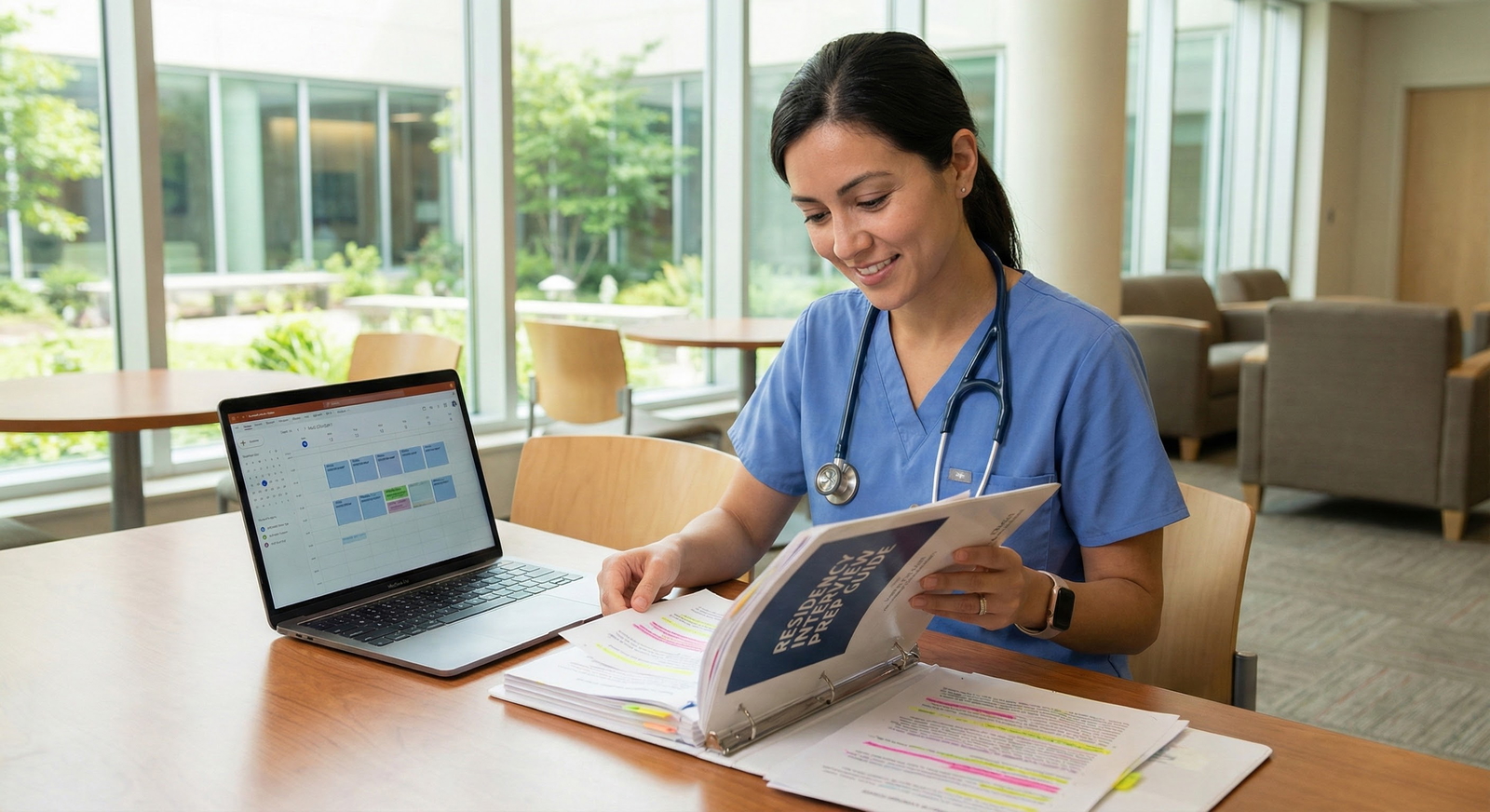
Create a “Master Interview Binder” (digital or physical) with:
- Personal Statement
- Highlight 2–3 key anecdotes and be ready to expand on them with more detail or reflection.
- CV / ERAS Application
- Experiences section: clinical rotations, leadership roles, volunteering, teaching.
- Research section: every project, poster, or publication—know your hypothesis, methods, and results.
- Caribbean clinical experiences
- Be ready to explain how your core rotations and electives were structured, especially if the program faculty are unfamiliar with your school.
- US clinical experience (USCE)
- Audition rotations / sub-internships in anesthesiology or critical care
- Observerships or externships: what you did, what you learned, and what you contributed.
For each major entry, prepare:
- What you did (role, responsibilities)
- What you learned (specific skills, clinical knowledge, professional growth)
- How it relates to anesthesiology (e.g., airway management exposure during ICU rotation)
This preparation prevents you from being caught off-guard by detailed questions like, “Tell me about this project you listed from three years ago,” or “What exactly did you do during your ICU rotation?”
1.3 Understand the Anesthesiology Residency Landscape
You should walk into interviews with a basic understanding of:
- Structure of anesthesiology training
- Clinical Base Year (CBY) vs Advanced positions vs Categorical programs
- Mix of OR time, ICU, pre-op, and post-op care
- Subspecialty areas
- Regional anesthesia, cardiac, neuro, pediatric, obstetric, critical care, pain medicine.
- You don’t need to commit to a subspecialty, but awareness shows genuine interest.
- Current challenges in anesthesiology
- OR efficiency, patient safety, opioid crisis, perioperative medicine, burnout, and workforce issues.
This knowledge ensures you can confidently answer both broad and specific interview questions residency programs frequently ask, such as:
- “How do you see the role of anesthesiologists evolving?”
- “What aspects of anesthesiology interest you most right now?”

Step 2: Deep-Dive Residency Interview Preparation for Anesthesiology
Once interview season starts, you’ll be balancing ERAS updates, SGU residency match or other Caribbean school counseling sessions, and potential travel or virtual interview logistics. Having a structured, specialty-specific plan for how to prepare for interviews is critical.
2.1 Practice Common Core Questions—With an Anesthesia Lens
Many interview questions are standard across specialties, but your examples and emphasis should reflect anesthesiology.
Core questions to prepare:
“Tell me about yourself.”
- Structure:
- Brief background
- Why medicine
- Why anesthesiology
- Where you are now and what you’re looking for in a residency
- Keep it 1.5–2 minutes, conversational, and logically organized.
- Structure:
“Why anesthesiology?”
- Use 2–3 concrete experiences:
- A transformational clinical encounter
- A specific anesthesiologist role model
- Your appreciation for physiology/pharmacology and acute care
- Connect to your strengths:
- “I like working in time-sensitive situations with clear, measurable outcomes.”
- “I enjoy managing complex monitoring and making real-time decisions.”
- Use 2–3 concrete experiences:
“Why did you attend a Caribbean medical school?”
- Answer confidently, without defensiveness:
- “I was committed to becoming a physician and the Caribbean route gave me that opportunity.”
- Highlight what you gained: adaptability, cultural humility, strong clinical exposure.
- Briefly address any concerns about the Caribbean medical school residency path by showing how you proactively overcame challenges (seeking US rotations, extra studying for USMLE, etc.).
- Answer confidently, without defensiveness:
“Why this program?”
- Programs expect a personalized answer that reflects research you’ve done:
- Unique features: case mix, trauma level, ICU exposure, regional anesthesia volume, strong didactics.
- Mention anything that suits your goals: critical care interest, diversity of patient population, mentorship structure.
- Tie your goals to what they offer:
- “I’m particularly interested in perioperative medicine, and your structured rotation in the pre-op clinic…”
- “As a Caribbean IMG, I appreciate your history of supporting international graduates and your mentorship culture.”
- Programs expect a personalized answer that reflects research you’ve done:
“Tell me about a time you made a mistake” or “Tell me about a challenge you faced.”
- Use the STAR framework: Situation, Task, Action, Result.
- Choose examples that:
- Show growth and insight.
- Are relevant but not catastrophic to patient safety.
- Demonstrate responsibility and learning.
“What are your strengths and weaknesses?”
- Strengths: pick traits that matter in anesthesia (calm under pressure, communication, analytical thinking, attention to detail).
- Weaknesses: choose something real but manageable (e.g., initially over-detail oriented), and show concrete steps taken to improve.
2.2 Anesthesiology-Specific Interview Questions to Anticipate
Programs may ask specialty-specific scenarios or reflective questions to evaluate your fit.
Be prepared for:
“What do you think is the anesthesiologist’s role in the OR team?”
- Emphasize:
- Patient safety advocate
- Perioperative physician (pre-op optimization through post-op pain control)
- Effective communicator with surgeons, nurses, and patients.
- Emphasize:
“Describe a high-stress clinical situation and how you responded.”
- Ideal examples:
- Managing a deteriorating patient in ICU or ED.
- Handling acute hypoxia or hypotension during a procedure.
- Focus on:
- Staying calm
- Following a systematic approach
- Calling for help appropriately
- Reflecting afterward to improve.
- Ideal examples:
“How do you handle uncertainty in clinical decision-making?”
- Show that you:
- Prioritize patient safety
- Use guidelines and evidence
- Consult seniors when appropriate
- Reassess dynamically as new data come in.
- Show that you:
Ethics and communication:
- Breaking bad news, code status discussions, informed consent for anesthesia, managing family expectations for high-risk patients.
Practicing these in mock interviews will help you sound thoughtful and composed during the real thing.
2.3 Prepare for Behavioral and Situational Questions
Residency interview questions increasingly include behavioral and situational components.
Use STAR for all such questions:
- Situation – Brief background
- Task – What you needed to do
- Action – What you actually did
- Result – Outcome + what you learned
Common themes:
- Conflict with a colleague or nurse
- Working on a team with someone not pulling their weight
- Caring for a difficult patient or family
- Handling fatigue and long hours
Programs are assessing whether you have the interpersonal skills and professionalism to succeed in a high-stakes environment like anesthesiology.
Step 3: Strategic Image Management as a Caribbean IMG
You can’t change that you went to a Caribbean medical school, but you can strongly influence how programs interpret that fact.
3.1 Anticipate Program Director Concerns—and Address Them Proactively
Common concerns about Caribbean IMGs:
- Quality of training and supervision
- Board exam performance consistency
- Ability to integrate into U.S. healthcare teams
- Long-term commitment and professionalism
Pre-interview preparation to address these:
- USMLE performance
- Be ready to discuss your exam journey honestly—especially any score dips or failures.
- Focus on what you learned and how you improved your study strategy.
- US clinical experience
- Highlight your US clerkships and sub-internships:
- Responsibility level
- Direct patient care
- Exposure to OR, ICU, or perioperative settings.
- Highlight your US clerkships and sub-internships:
- Letters of Recommendation
- Know what your U.S. anesthesiologists or intensivists emphasized in your letters (if they discussed them with you). That way, your verbal narrative aligns with how others describe you.
- Professionalism and reliability
- Use examples where you went above expectations, handled extra responsibilities, or built trust with attendings and staff.
If you’re coming from a school known to have a strong SGU residency match or similar, you can subtly reference its track record—but your personal track record still matters most.
3.2 Clarify Your Immigration and Visa Situation
Programs will likely ask about your visa status if you are not a U.S. citizen or permanent resident.
Prepare clear answers:
- What type of visa you’ll need (J-1 vs H-1B).
- Any prior U.S. visa history, if relevant.
- Willingness to comply with visa requirements (e.g., return-home rule for J-1, if it applies to you).
Do not let this be a surprise question you fumble. A brief, confident explanation can reduce hesitation from the program’s side.

Step 4: Performance Skills – How to Present Yourself on Interview Day
Content mastery is not enough. Programs assess how you communicate, connect, and carry yourself. This matters in anesthesiology, where trust and calm under pressure are essential.
4.1 Virtual vs In-Person Interview Logistics
Most anesthesiology programs are now heavily or fully virtual, though some offer open houses or second looks.
For virtual interviews:
Technical setup
- Stable internet; test speed ahead of time.
- Good quality webcam and microphone.
- Neutral, uncluttered background (or a professional virtual background if allowed).
- Good lighting (light source in front of you, not behind).
Environment
- Quiet room, no interruptions.
- Device fully charged or plugged in.
- Backup plan if your connection fails (phone hotspot, alternate device).
For in-person interviews:
- Plan travel and lodging early.
- Arrive the day before.
- Verify directions and parking.
- Bring copies of your CV, a notepad, and a pen.
4.2 Professional Appearance and Body Language
Attire
- Conservative suit (dark navy, black, or charcoal) with a professional shirt/blouse.
- Minimal, neat accessories.
- Clean, polished appearance.
Body language
- Maintain eye contact (look at the camera for virtual).
- Sit upright but relaxed.
- Nod occasionally to show engagement.
- Avoid fidgeting, crossing arms, or looking away frequently.
Voice
- Speak clearly and at a moderate pace.
- Allow brief pauses to think; you don’t need to answer instantly.
- Show enthusiasm but avoid sounding overly rehearsed.
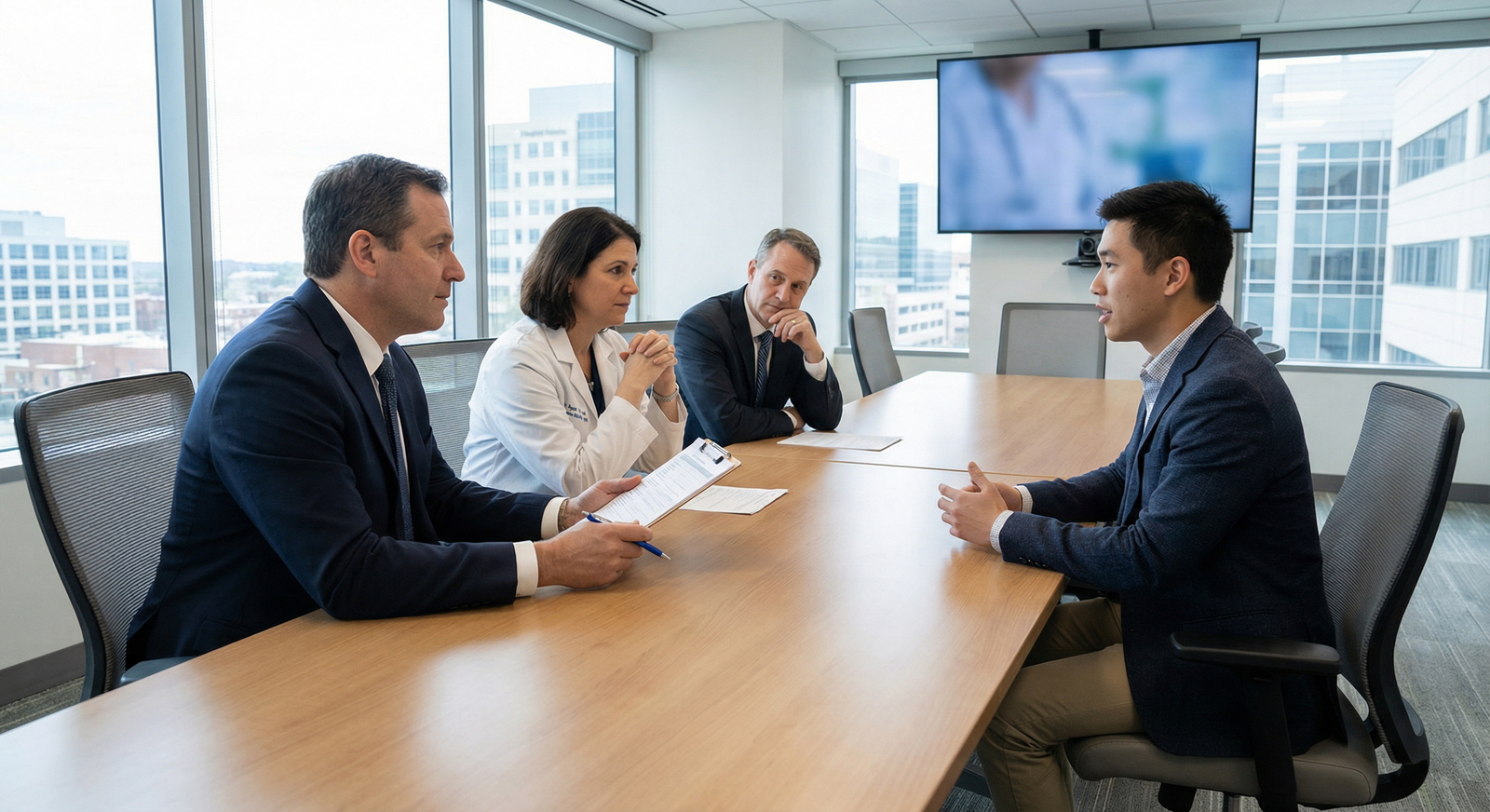
4.3 Mock Interview Practice – The Most Powerful Preparation Tool
Effective residency interview preparation almost always includes mock interviews.
Ideal practice partners:
- Faculty advisors or deans at your Caribbean school
- U.S. attendings from your anesthesia or ICU rotations
- Residents (especially anesthesiology residents)
- SGU residency match or similar office mock interview services (if available at your school)
Structure:
- At least 3–5 formal mock interviews:
- 1 focusing on general behavior and personal questions
- 1 focused on anesthesiology-specific questions
- 1–3 comprehensive sessions simulating real interviews
Ask for feedback on:
- Clarity and organization of answers
- Body language and eye contact
- Whether your passion for anesthesiology comes through
- Whether you’ve adequately and positively framed your Caribbean IMG background
Record at least one session (video) and review it critically.
Step 5: Program Research and Tailored Preparation
Anesthesiology programs vary widely in case mix, trauma level, patient population, and educational style. Tailored preparation signals genuine interest.
5.1 Create a Program Research Template
For each program, prepare a one-page summary with:
- Location, hospital type (academic center, community, hybrid)
- Trauma level, subspecialty strengths (cardiac, peds, neuro, regional, pain, ICU)
- Call structure and schedule basics
- Resident class size and diversity
- Faculty or program director interests (e.g., simulation, global health, quality improvement)
- Any visible history of Caribbean IMGs or international graduates
Use:
- Program websites
- FREIDA
- Virtual open houses or info sessions
- Social media (program’s Twitter/X, Instagram, or LinkedIn)
- Resident bios and alumni lists
5.2 Prepare Program-Specific Questions
You will almost always be asked, “What questions do you have for us?”
Prepare 3–5 thoughtful questions per program, such as:
- “How does your program support residents interested in critical care or regional anesthesia early on?”
- “What qualities have you seen in successful residents who came from international or Caribbean medical schools?”
- “How are residents involved in quality improvement or patient safety projects in the OR?”
- “How has the program adapted its educational curriculum in response to recent changes in anesthesiology practice?”
Avoid questions that are easily answered on the website or purely logistical (salary, parking) unless the interviewer initiates them.
Step 6: Mental Preparation, Burnout Prevention, and Follow-Up
Anesthesia match season can be exhausting. Pre-interview preparation also includes caring for your physical and mental stamina.
6.1 Manage Anxiety and Imposter Syndrome
As a Caribbean IMG, it’s common to feel like you must “prove” yourself more than U.S. grads.
Strategies:
- Reframe your mindset:
- You bring unique strengths: resilience, multicultural experience, adaptability, often significant clinical exposure.
- Practice self-talk:
- “I have earned these interviews.”
- “Programs invited me because they saw potential.”
- Use repetition to reduce anxiety:
- The more you practice key answers, the more automatic and calm you’ll feel.
6.2 Build a Daily Interview-Season Routine
During interview season:
- Keep a simple routine:
- Regular sleep schedule
- Light exercise
- Nutrition and hydration
- After each interview:
- Immediately jot down:
- People you met (names and roles)
- Program features you liked and disliked
- Your overall impression (for future ranking)
- This is invaluable months later when you’re building your rank list.
- Immediately jot down:
6.3 Post-Interview Thank-You Notes (If Appropriate)
Programs vary in how they view post-interview communication, but in general:
- If thank-you notes are allowed or welcomed:
- Send brief, personalized emails within 48–72 hours.
- Mention something specific from your conversation.
- Reiterate your interest and how you see yourself fitting the program.
- Avoid:
- Overly long messages
- Statements that imply promises (“I will rank you #1”) unless you are certain and it’s close to rank list time.
For Caribbean IMGs, thoughtful, concise follow-up can help reinforce professionalism and interest, especially at programs where you felt a strong connection.
Frequently Asked Questions (FAQ)
1. As a Caribbean IMG, how can I best address concerns about my medical school during anesthesiology interviews?
Be transparent, confident, and forward-looking. Briefly explain why you chose your Caribbean school, then immediately pivot to what you’ve done to prepare for U.S. residency:
- Strong USMLE scores or clear improvement over time
- Solid U.S. clinical experiences, especially in anesthesia, ICU, or perioperative medicine
- Positive letters from U.S. faculty
- Examples of professionalism, teamwork, and reliability
Avoid sounding apologetic. Focus on how your path has made you resilient, adaptable, and deeply motivated—qualities highly valued in anesthesiology.
2. How different is anesthesiology residency interview preparation from other specialties?
The general framework (behavioral questions, “tell me about yourself,” etc.) is similar, but anesthesiology programs will especially look for:
- Comfort with acute care, physiology, and pharmacology
- Examples of staying calm under pressure
- Situations where you made quick, sound clinical decisions
- Teamwork in high-stakes environments (OR, ICU, ED)
Tailor your answers to highlight these themes and emphasize your alignment with the role of the anesthesiologist as the perioperative physician and patient safety advocate.
3. What are some red flags for anesthesiology programs when interviewing Caribbean IMGs?
Potential red flags include:
- Not knowing your own ERAS application details
- Weak explanations for exam failures or significant score drops
- Inconsistent interest in anesthesiology (e.g., last-minute switch with no clear rationale)
- Poor understanding of the specialty or training structure
- Unclear visa status or hesitancy in discussing it
- Negative talk about your Caribbean school, prior institutions, or colleagues
You can mitigate many of these by preparing thoughtful, honest explanations, demonstrating specialty-specific knowledge, and framing your journey positively.
4. How early should I start preparing for anesthesiology residency interviews as a Caribbean IMG?
Ideally:
6–9 months before interview season:
- Clarify your anesthesiology narrative
- Strengthen USCE, especially in anesthesia/ICU
- Work with mentors and your school’s advising office (e.g., SGU residency match resources, if applicable).
2–3 months before interview season:
- Begin formal residency interview preparation
- Draft your personal narrative and practice core questions
- Arrange initial mock interviews.
During interview season:
- Continue practicing weekly
- Customize program-specific questions and research
- Reflect after each interview to improve performance.
Consistent, early preparation often makes the biggest difference for Caribbean IMGs seeking a successful anesthesia match.