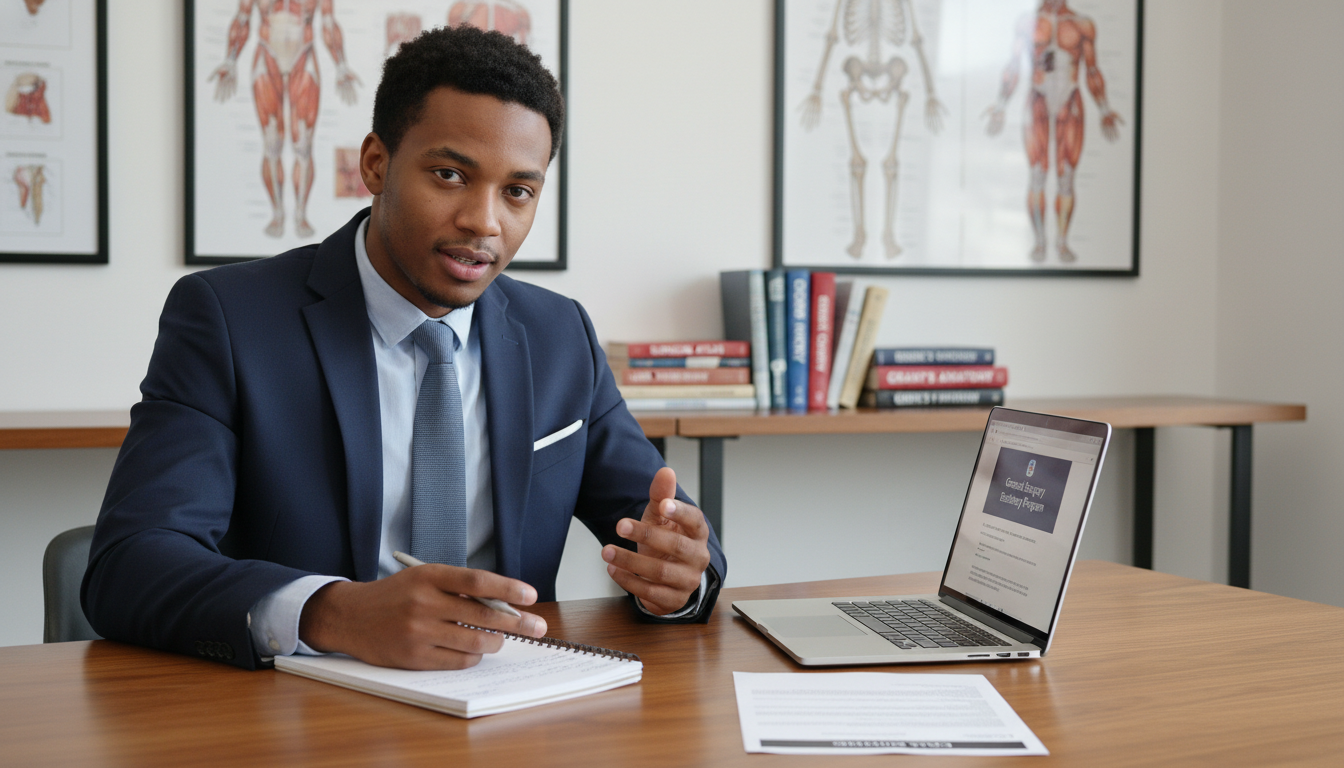
Understanding the General Surgery Residency Landscape as a Caribbean IMG
For a Caribbean medical school graduate, securing a general surgery residency in the United States is absolutely achievable—but it is also highly competitive and demanding. Pre-interview preparation often makes the difference between a generic performance and a memorable, rank-list-changing impression.
Before you plan how to prepare for interviews, you need to understand the environment you’re walking into:
- General surgery residency is among the more competitive specialties, especially for IMGs.
- Program directors expect:
- Strong exam performance (USMLE/COMLEX)
- Demonstrated surgical interest (rotations, research, electives)
- Clear communication and professionalism
- Evidence you understand the realities of surgical training (long hours, resilience, team-based care)
- As a Caribbean IMG, you may face:
- Questions about your training background
- Assumptions about exam performance or clinical exposure
- Extra scrutiny of communication skills and clinical reasoning
- Close attention to visa status and long-term plans
However, programs also recognize that many Caribbean IMGs, including those from schools with strong reputations like SGU, Ross, and AUC, match successfully into surgery each year. The SGU residency match lists, for instance, consistently include general surgery spots at community and some academic programs. Your job is to show that you’re one of the prepared, polished, and resilient applicants who will thrive in their program.
Your pre-interview preparation should focus on three pillars:
- Content – What you say: your stories, experiences, and motivations
- Delivery – How you say it: clarity, confidence, professionalism
- Strategy – Where and why: choosing programs, understanding their needs, and aligning your strengths
The sections below break these down into concrete, actionable steps tailored to Caribbean IMGs aiming for general surgery.
Know Your Story: Building a Coherent Surgical Narrative
Your interviewers will be listening for one thing above all: Does this person have a consistent, believable story that fits general surgery? Before any residency interview preparation practice, you must understand your own narrative.
1. Clarify Your “Why Surgery?” Answer
Expect to be asked, often more than once:
“Why general surgery?” or “What draws you to surgery specifically?”
A weak answer:
- Is vague (“I like working with my hands.”)
- Could apply to any specialty (“I enjoy helping patients.”)
- Sounds rehearsed or generic
A strong, Caribbean IMG–specific answer:
- Connects your path through Caribbean medical school to exposure in U.S. clinical sites
- Shows understanding of what general surgery actually involves
- Demonstrates insight into your own personality and strengths
Use a 3-part structure:
Origin – Where your interest started
- Example: “During my 3rd-year core surgery rotation in Brooklyn, I was assigned to a vascular service and saw how quickly surgical decisions could change a patient’s trajectory.”
Validation – How you tested and confirmed that interest
- Sub-internships, surgical electives, research, trauma call, skills labs, simulation centers
Fit – Why your traits match what surgery demands
- Work ethic, comfort with acute decision-making, ability to function in teams, resilience
Example (high-level structure):
“Initially, I became interested in surgery during my core rotation in [U.S. hospital]. I realized I was drawn to the combination of hands-on problem solving and immediate impact on patient outcomes. I then pursued two sub-Is in general surgery and trauma, where I experienced the workload and call schedule firsthand. Rather than discouraging me, the intensity suited my personality—I like structured environments, team-based decision-making, and situations where preparation and precision matter. Those experiences, along with my research in postoperative complications, confirmed that general surgery is where I can contribute most.”
Write out your “why surgery” story, refine it, and practice it out loud. It should sound conversational but precise, not memorized verbatim.
2. Connect Your Caribbean Background to Your Strengths
Program directors will notice you went to a Caribbean medical school. Instead of treating that as a liability, reframe it into:
Evidence of adaptability
You moved countries and adapted to different health systems and cultures.Proof of resilience
You navigated a non-traditional path and still achieved competitive board scores and clinical performance.Diverse clinical exposure
You may have seen a broader range of pathology across Caribbean and U.S. patient populations.
You might be asked directly or indirectly:
- “Why did you choose a Caribbean medical school?”
- “Tell me about your clinical training environment.”
Prepare a concise, confident framing:
- Own your decision (e.g., timing, competitiveness of U.S. admissions, or personal circumstances).
- Emphasize what you gained from the experience (clinical exposure, independence, adaptability).
- Avoid sounding defensive or apologetic.
Example framing:
“I chose a Caribbean medical school because at the time, it was my most realistic path to earning a U.S.-recognized MD and ultimately training in general surgery. The structure of my program allowed early exposure to diverse clinical environments—first in the Caribbean, then in multiple U.S. hospitals. Moving between systems required adaptability and self-direction, which I believe are essential traits in a surgical resident. I’ve had to be very intentional about seeking strong surgical mentors and opportunities, and that’s helped shape a clear commitment to this field.”

Master Your Application Content: Know Every Detail Cold
Before you even think about tricky interview questions residency programs might ask, you must be completely fluent in your own file. Many interview questions come directly from your ERAS application.
1. Deep-Dive on Your ERAS and Personal Statement
Print your entire application and read it as if you were the PD. Highlight:
- Every clinical rotation listed (especially U.S.-based surgery experiences)
- Every research project and your exact role
- Every leadership and volunteer activity
- Every gap or unusual timeline
- Any red flags (exam failures, repeats, LOA, transfer, etc.)
Next, predict what a PD might ask:
- “Tell me more about your sub-I at [Hospital].”
- “What was your role on this research project?”
- “I see a gap between Step 1 and Step 2—what happened during that time?”
- “What did you actually do in this volunteer experience?”
Prepare brief, honest, 2–3 sentence answers for each.
Your personal statement should align with what you actually say in person. If you wrote about:
- A powerful surgical case → be ready to describe it clinically and emotionally.
- A mentor → be ready to say what you learned from them and how it shaped you.
- A specific interest (e.g., trauma, critical care, global surgery) → be prepared for follow-up questions like, “How do you see that interest evolving in residency?”
2. Organize Your Clinical Experience Story
General surgery interviewers want to gauge your clinical readiness and realistic understanding of surgical training. As a Caribbean IMG, much of your clinical work may have occurred at different sites; structure it clearly:
Create a simple “clinical story” template:
Core surgery rotation:
- Where? (location, type of hospital)
- What teams? (general surgery, subspecialties, trauma)
- Key responsibilities and skills learned
Sub-internships or audition rotations:
- Any rotations at programs where you’re now interviewing?
- Experiences with call, pre-rounding, writing notes, presenting on rounds
Other relevant rotations:
- ICU, emergency medicine, surgical subspecialties (vascular, colorectal, surgical oncology)
Be ready with 2–3 specific patient cases from these experiences, especially:
- A complication case where you learned something
- A challenging communication case
- A moment you saw excellent teamwork in the OR or ICU
When describing cases, use a focused structure:
- Brief scenario (age, key problem, setting)
- Your role (what you did)
- The challenge or decision point
- Outcome
- What you learned (about surgery, teamwork, or yourself)
Core Residency Interview Questions for General Surgery (and How to Answer as a Caribbean IMG)
You don’t need to memorize answers, but you must prepare for the most common and high-yield questions. This is a key part of residency interview preparation for any IMG, and even more crucial in a competitive field like general surgery.
1. Foundational Questions
“Tell me about yourself.”
This is often your first impression; keep it 60–90 seconds:
- Where you’re from originally
- Brief educational path (including Caribbean school + key U.S. experiences)
- Why surgery (1–2 sentences)
- One or two defining strengths/traits relevant to surgery
Avoid repeating your entire CV. Aim for a narrative that leads naturally into “Why surgery?” or “Why this program?”
“Why general surgery and not another surgical specialty?”
Show you understand the breadth and identity of general surgery:
- Acute care and emergency surgery
- Breadth of pathology (GI, endocrine, trauma, oncologic surgery)
- Longitudinal care in some settings vs episodic in others
- Team-based management with ICU, anesthesia, medicine, radiology
You might say:
“I considered [orthopedics / neurosurgery / etc.] during early rotations, but what drew me to general surgery was the combination of complex abdominal pathology, acute decision-making, and longitudinal follow-up—particularly in cases like colorectal cancer or complicated hernias. I like that general surgeons are often the first called for undifferentiated abdominal emergencies and that the skill set is so broadly applicable, from trauma to elective cases to potential work in resource-limited settings.”
“Why our program?”
This is where many applicants sound identical. For a strong answer:
Research the program thoroughly:
- Case mix (trauma level, cancer center, community vs academic)
- Program size and operative volume
- Any strengths in research, global surgery, critical care, or rural surgery
- Fellowships available or typical fellowships their grads pursue
Make 3 specific points that link your goals to what they offer:
- Clinical training and case exposure
- Education/mentorship or research opportunities
- Geography, community, or patient population fit
As a Caribbean IMG, you can specifically mention:
- Appreciation for programs that train residents from diverse backgrounds
- Value you place on strong structure and support in the transition from medical school to internship
- Prior rotation experience if you’ve rotated there or in a similar environment
2. Behavior-Based and “Fit” Questions
Programs increasingly use behavioral questions to understand how you function under stress—critical in a general surgery residency.
Common examples:
- “Tell me about a time you made a mistake.”
- “Describe a conflict you had with a team member and how you handled it.”
- “Tell me about a challenging feedback you received and what you did with it.”
- “How do you handle long hours or stress?”
Use the STAR method:
- Situation – Set the context
- Task – What you were responsible for
- Action – What you did
- Result – What happened and what you learned
As a Caribbean IMG, you’ll have unique stories about:
- Adapting to new hospital systems when you started U.S. rotations
- Miscommunications (and how you corrected them)
- Being proactive when expectations were less clearly defined than in some U.S. schools
Choose examples that:
- Show accountability (you own your mistakes)
- Demonstrate growth (you learned and changed behavior)
- Highlight self-awareness (you understand your tendencies under stress)
3. Technical and Clinical Questions (Common in Surgery Interviews)
While many general surgery interviews are conversational, some programs ask clinical or technical questions to gauge how you think:
- “How would you work up right lower quadrant pain?”
- “What’s your approach to a patient with GI bleeding?”
- “What’s in your differential for an acute abdomen?”
You’re not expected to function as a chief resident, but you should:
- Think out loud in an organized way (airway, breathing, circulation; hemodynamic status; immediate resuscitation)
- Mention appropriate imaging/labs
- Prioritize safety and early surgical involvement when indicated
To prepare:
Review common ER and surgical ward problems:
- Acute abdomen
- Bowel obstruction
- Appendicitis
- Cholecystitis
- GI bleed
- Trauma basics (primary survey)
Practice explaining brief, structured approaches verbally, like you would on rounds.

Practical Steps for High-Impact Pre-Interview Preparation
Now that the content is clear, you need a concrete plan for how to prepare for interviews in the weeks leading up to your general surgery residency interviews.
1. Build Your Interview Prep Binder or Digital Folder
Create a single, organized system that includes:
- Your ERAS application and personal statement
- A 1–2 page document with:
- Top 8–10 stories (clinical, research, leadership, adversity)
- Each mapped to common behavioral questions
- A “Why surgery” and “Why this program” outline
- Quick review notes on:
- Your research (aims, methods, key findings, limitations)
- Common surgical clinical scenarios
For Caribbean IMGs doing an SGU residency match–style strategy (broad geographically and program-type distribution), keep a program-specific notes page for each interview:
- Program type (academic/community, trauma level)
- What you like about it (3 bullets)
- People you’ve met from the program (if any)
- Specific questions you want to ask faculty and residents
2. Do Targeted Mock Interviews
Mock interviews are one of the highest-yield ways to improve your performance. Aim for:
- At least 3–5 full-length mock interviews before your first real one.
- Include:
- One with a faculty member (preferably a surgeon)
- One with a senior resident (who knows current interview styles)
- One recorded via Zoom or similar so you can review your affect, pace, and nonverbal communication
Focus feedback on:
- Clarity and structure of answers
- Fillers (“um,” “like,” “you know”)
- Eye contact and body language
- Tone (confident vs arrogant, humble vs apologetic)
Because some Caribbean schools may have more limited in-person faculty networks, consider:
- Online IMG-focused coaching services (if affordable and reputable)
- Group practice with other applicants via video calls
- Alumni from your school who successfully matched into general surgery—ask them to simulate interviews from their program’s perspective
3. Prepare Strong Questions to Ask Programs
Your questions reflect how seriously you’re considering a program and whether you understand what makes a general surgery residency good or bad.
Avoid generic questions you could answer from the website. Instead, consider:
To PDs/faculty:
- “How would you describe the balance between service and education for interns here?”
- “What qualities distinguish residents who thrive in this program?”
- “How do you see the program evolving over the next 5 years?”
To residents:
- “Can you walk me through a typical day for an intern on your busiest service?”
- “How is operative autonomy graded or increased over the 5 years?”
- “What types of graduates does this program produce—are most going into fellowship, private practice, academics?”
As a Caribbean IMG, you might also ask, where appropriate:
- “Have IMGs historically done well in this program, and what support systems help them adjust?”
- “How does the program support residents with visa needs?” (If this is relevant to you)
4. Logistics, Technology, and Presentation
Strong interview preparation isn’t only about what you say; it’s also about how consistently professional you appear.
For in-person interviews:
- Suit that fits well; conservative, neat appearance
- Organized folder or padfolio with:
- Printed CV and application
- List of questions for the program
- Travel planning with extra time to avoid late arrivals
- Knowledge of parking, security check-in, and building locations
For virtual interviews (still common in many programs):
- Neutral, well-lit background
- Reliable internet; test video and audio beforehand
- Proper camera positioning (eye level)
- Professional attire head-to-toe (just in case you need to stand)
Do a full tech rehearsal:
- Log into the same platform the program uses (Zoom, Webex, Thalamus, etc.)
- Practice muting/unmuting, screen views, and joining “breakout rooms” if needed
Handling Common Caribbean IMG Concerns and Red Flags
Many Caribbean IMGs worry that certain aspects of their application will dominate the conversation. Effective residency interview preparation includes proactive, honest framing of any potential red flags.
1. USMLE or COMLEX Challenges
If you have:
- A failed attempt
- A low Step score
- A long interval between exams
You may be asked about it. Prepare an answer that:
- Accepts responsibility (no blame-shifting)
- Explains context briefly but doesn’t over-justify
- Emphasizes what changed and how your later performance improved
Example approach: “On my first Step 1 attempt, I underestimated the exam and over-relied on a limited set of resources. After that, I reassessed my approach completely—seeking faculty guidance, expanding my resources, and creating a structured schedule with weekly self-assessments. I passed on the second attempt with a significantly higher score, and my later clinical performance and Step 2 score reflect the more disciplined approach I’ve maintained since then.”
2. Transfers, Leaves, or Extended Timelines
Caribbean training often involves multiple locations or non-linear paths. Be prepared to explain any timeline issues:
- Keep it factual and non-dramatic.
- End with what you learned and how you’re now stable and ready for residency.
3. Visa and Long-Term Plans
If you need a visa:
- Know exactly what type (J-1 vs H-1B) and whether the program sponsors it.
- Be honest about your long-term intentions without sounding rigid.
You may be asked:
- “Where do you see yourself practicing in 10 years?”
- “Do you plan to remain in the U.S. long-term?”
A balanced answer might express:
- Commitment to completing general surgery training in the U.S.
- Interest in contributing to underserved populations (either in the U.S. or abroad)
- Openness to opportunities as they arise during training
Putting It All Together: A 2–3 Week Pre-Interview Preparation Timeline
Here is a sample structured plan to execute your residency interview preparation efficiently:
2–3 Weeks Before First Interview
- Review entire ERAS application and personal statement
- Draft/refine:
- “Tell me about yourself”
- “Why general surgery?”
- “Why this program?” template
- Identify 8–10 key stories for behavioral questions
- Build your program notes document/template
10–14 Days Before
- Schedule 2–3 mock interviews (one recorded)
- Review common clinical scenarios for general surgery
- Update your CV review file with talking points for:
- Each research project
- Each major leadership/volunteer experience
5–7 Days Before
- Finalize program-specific notes for your first few interviews
- Prepare a list of tailored questions for PDs and residents
- Confirm logistics (travel or tech setup)
1–2 Days Before Each Interview
- Re-read your application and program notes
- Light review of your stories and “why this program” points
- Sleep adequately; avoid last-minute cramming
Day of Interview
- Arrive/log on early
- Have water, notepad, and printed schedule ready
- After the interview: jot down impressions and key details for later reference (useful for rank list)
FAQs: Pre-Interview Preparation for Caribbean IMGs in General Surgery
1. As a Caribbean IMG, do I need to prepare differently for interviews compared to U.S. grads?
Your core preparation is similar, but you should be especially ready to:
- Explain your choice of Caribbean medical school confidently
- Demonstrate that your clinical training (especially in the U.S.) has prepared you well
- Address any perceived concerns (exam attempts, rotating at multiple sites) transparently
You’ll also benefit from highlighting the strengths your path has developed—adaptability, resilience, and familiarity with diverse systems and populations.
2. Will programs ask clinical or technical questions in a general surgery residency interview?
Some will, especially more academic programs. Questions may cover:
- Evaluation and initial management of common surgical complaints
- Basic trauma principles
- Postoperative complications
You don’t need to know subspecialty-level details, but you should be able to reason through common scenarios logically and safely. Reviewing key topics a few weeks before interviews is wise.
3. How important is it to know details about each program before the interview?
Very important. Interviewers can tell when you:
- Haven’t read about the program
- Use generic answers
You don’t need to memorize everything, but you should know: - Program type (community vs academic)
- Size and structure
- Special strengths (trauma, critical care, oncologic surgery, etc.)
- Any specific features that align with your goals
This is essential to make your “Why our program?” answer compelling.
4. How do I handle nerves and come across as confident but not arrogant?
Nerves are normal—especially when you’ve invested so much into your Caribbean medical school residency journey. To manage them:
- Practice repeatedly with mock interviews
- Record yourself and adjust posture, tone, and pace
- Focus on being clear and honest rather than “perfect”
Confidence shows when you speak clearly, take a second to think before answering, and own your experiences. Humility shows when you acknowledge what you’re still learning and give credit to mentors and teams. Programs want residents who are teachable and reliable, not flawless.
A carefully planned pre-interview preparation strategy transforms the interview from a high-stress unknown into a structured, manageable task. As a Caribbean IMG pursuing a general surgery residency, your goal is to show that your path has prepared you—not just clinically, but in character—to thrive in a demanding field. With deliberate practice, thoughtful reflection on your story, and targeted knowledge of each program, you can turn your interviews into a genuine opportunity to stand out and secure the surgery residency match you’ve worked for.