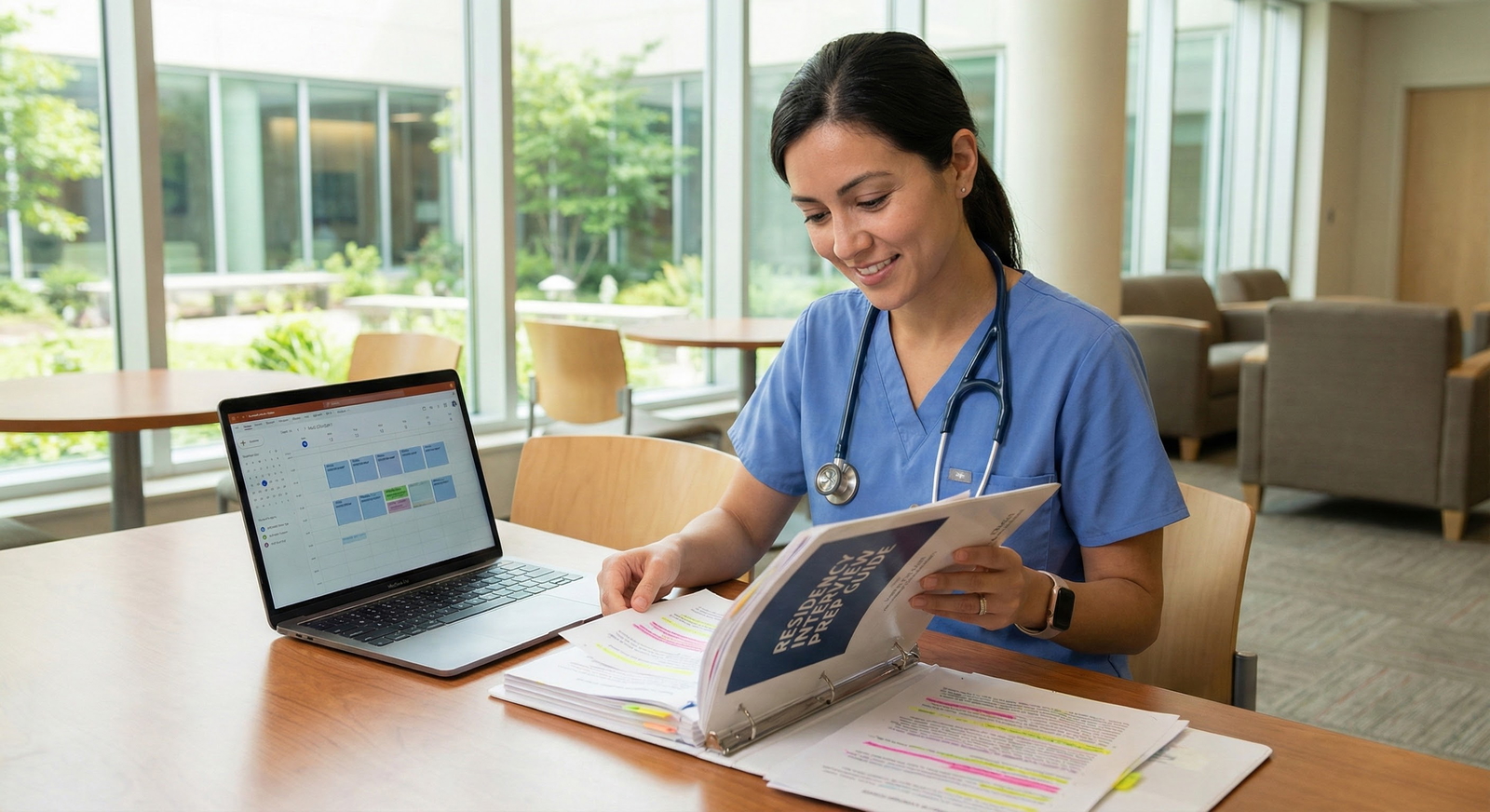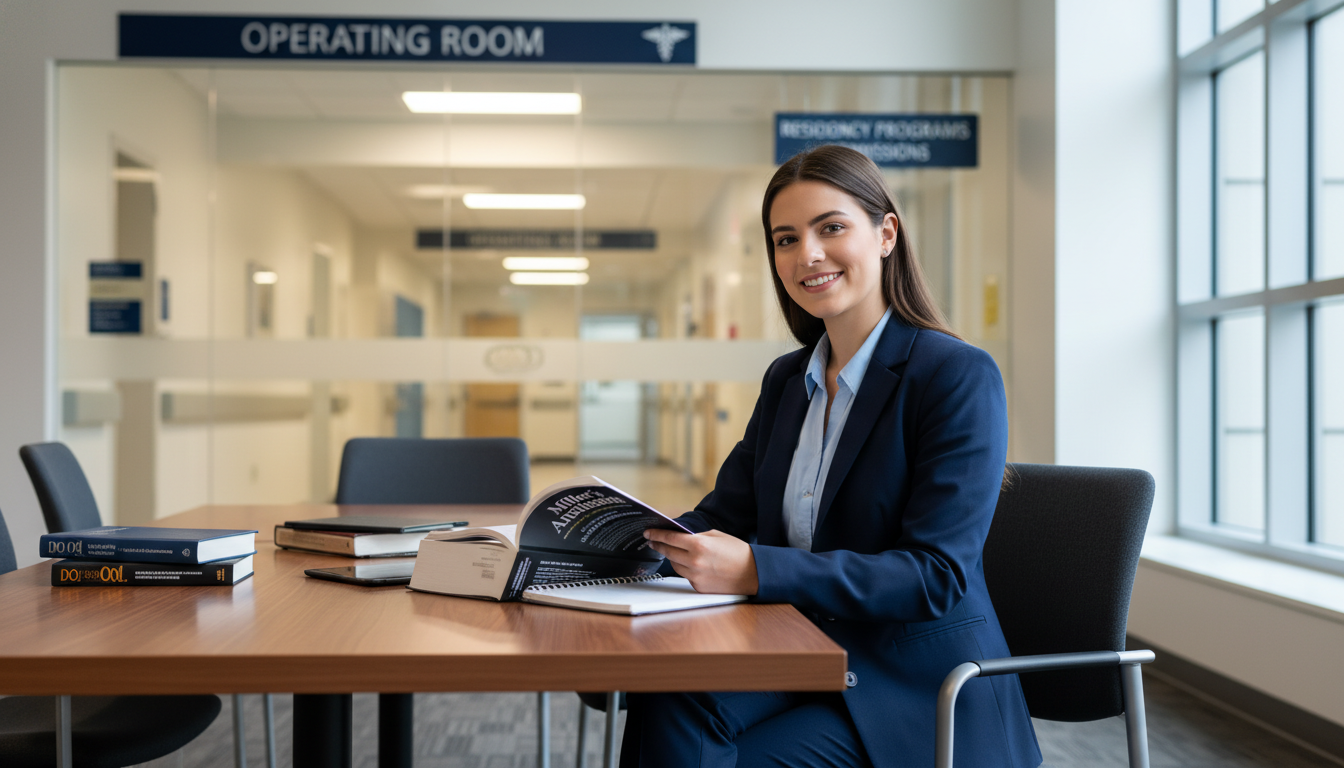
Understanding the IM Residency Landscape as a Caribbean IMG
Caribbean-trained international medical graduates (IMGs) successfully match into internal medicine every year, but the road is competitive and structured. Before you think about what to say on interview day, you need a clear understanding of:
- How program directors view Caribbean IMGs
- The specific strengths and vulnerabilities of a Caribbean medical education
- Where pre-interview preparation most impacts your IM match chances
How Programs View Caribbean Medical School Graduates
Programs don’t evaluate you purely based on school name; they look at your entire application:
Key factors for Caribbean medical school residency applicants:
- USMLE scores (Step 1, Step 2 CK)
- Clinical performance in US rotations – especially internal medicine
- Letters of recommendation from US academic IM physicians
- Evidence of professionalism and reliability (no major gaps or red flags)
- Communication skills and “fit” assessed during the residency interview
For many Caribbean IMGs, the interview is the strongest opportunity to overcome lingering doubts about:
- Basic science training quality
- Need for more supervision initially
- Long-term commitment to internal medicine vs “backup” specialty
Your goal: arrive at the interview already positioned as a safe, reliable, hard-working intern who can thrive on busy internal medicine floors starting July 1st.
Why Pre-Interview Preparation Matters More for Caribbean IMGs
As a Caribbean IMG, your application may not automatically stand out on paper in the same way as a top US MD applicant. That makes your performance in:
- Virtual or in-person interviews
- Pre-interview dinners or social events
- Post-interview correspondence
particularly consequential.
Pre-interview preparation allows you to:
- Turn your nontraditional path into a compelling story instead of a liability
- Show that you understand US healthcare systems and internal medicine workflow
- Demonstrate professionalism, maturity, and resilience in a structured, clear manner
- Maximize the value of each hard-earned interview – especially important if you have a limited number of invites
If you’re coming from major Caribbean schools like SGU, AUC, Ross, Saba, etc., you may benefit from institutional advising. Still, your own structured preparation will determine whether those SGU residency match statistics or similar outcomes work in your favor.
Step 1: Clarify Your Internal Medicine Story and Personal Brand
Before you rehearse answers, define who you are as an internal medicine applicant. This personal “brand” should be consistent across:
- ERAS application
- Personal statement
- CV
- Letters of recommendation (when possible)
- Interview answers and small talk
Build Your IM Narrative
Ask yourself:
- Why internal medicine and not another specialty?
- Be specific: patient stories, mentor influence, intellectual appeal (diagnostic complexity, chronic disease management, continuity of care).
- How did your Caribbean training shape you?
- Resource-limited environments, diverse patient populations, early hands-on experience, resilience.
- What type of intern will you be?
- Reliable, detail-oriented, team-focused, strong in communication, efficient note-writer, etc.
- What are your longer-term goals within IM?
- Primary care, hospitalist, fellowship (cards, GI, pulm/crit, heme/onc, etc.), academic medicine, health equity, global health.
Now condense this into a 2–3 sentence core message you can weave into answers:
“I’m a Caribbean-trained IMG who chose internal medicine because I love complex problem-solving and building long-term relationships with patients. My training in [Caribbean school] and US rotations in [sites] taught me to adapt quickly, work in resource-limited settings, and communicate clearly with diverse patients. I’m looking for a program that emphasizes strong clinical training, supportive mentorship, and exposure to [inpatient medicine / primary care / research / a specific fellowship pathway].”
Align Your Story With Internal Medicine Values
Programs want IM residents who embody:
- Intellectual curiosity and critical thinking
- Teamwork and communication
- Patient-centered care and empathy
- Professionalism and reliability
- Lifelong learning – especially around evidence-based medicine
As you prepare answers, explicitly tie your experiences to these values:
- “This case taught me the importance of evidence-based medicine because…”
- “This rotation highlighted how crucial communication is between nurses and residents because…”
You’re not just telling stories; you’re showing you already think like an internist.

Step 2: Master Core Residency Interview Questions for IM
The best way to prepare for interviews is to systematically rehearse the highest-yield interview questions residency programs ask, especially for internal medicine. As a Caribbean IMG, you should particularly anticipate:
1. “Tell me about yourself.”
Purpose: Opens the interview, sets tone, tests your communication, and checks coherence with your application.
Structure a 60–90 second response:
- 1–2 sentences: Where you’re from and medical school
- 2–3 sentences: Major clinical and academic interests in internal medicine
- 1–2 sentences: What you’re looking for in a residency
- 1 sentence: Quick personal detail (hobby/family/interest)
Example (Caribbean IMG, IM-focused):
“I grew up in [country] and completed my medical education at [Caribbean medical school], where I developed a strong interest in internal medicine during my core rotations and sub-internships in the US. I’m particularly drawn to inpatient general medicine and chronic disease management, especially in underserved populations. During my US rotations at [hospital names], I focused on improving my clinical reasoning, presentation skills, and evidence-based management of common internal medicine conditions. I’m now looking for a program that offers strong mentorship, diverse pathology, and the opportunity to grow as both an educator and a clinician. Outside of medicine, I enjoy [brief hobby], which helps me maintain balance and resilience.”
2. “Why internal medicine?”
Avoid generic answers like “I enjoy helping people” or “I like variety.” Use:
- A specific patient or rotation story
- A reason that fits IM uniquely (diagnostics, chronic disease, continuity)
- A tie-in to your future plans (hospitalist, fellowship, primary care)
Example framing:
- Brief story: “During my internal medicine rotation at [US site], I took care of…”
- Reflection: “This experience showed me that internal medicine allows me to…”
- Future: “Because of that, I see myself as…”
3. “Why did you choose a Caribbean medical school?”
This is especially important for Caribbean IMGs. Be honest, mature, and non-defensive:
Do:
- Acknowledge reality (e.g., competitive admissions, nontraditional timeline) without apologizing for it
- Emphasize what you gained: adaptability, resilience, diverse exposure
- Connect it to your growth and current readiness
Example:
“I wasn’t accepted into a US medical school on my first application, but I knew I was fully committed to becoming a physician. Choosing [Caribbean school] allowed me to pursue that goal while gaining exposure to diverse patient populations and practicing medicine in resource-limited environments. It also meant I had to be very intentional about my study strategies and time management to succeed on the USMLE exams and in my US rotations. That experience has made me more resilient, disciplined, and adaptable—qualities I believe will serve me well as an internal medicine resident.”
Avoid:
- Blaming: “The system is unfair,” “My advisors misled me”
- Over-explaining or sounding apologetic
- Dismissing the difference between Caribbean and US schools (“It’s basically the same”)
4. “Why our program?”
Every program wants to feel like you’re genuinely interested, not just mass-applying.
Prepare 3–4 program-specific reasons based on:
- Patient population (urban, underserved, county, academic medical center)
- Training structure (X+Y schedule, ward/clinic balance, ICU exposure)
- Fellowship opportunities or hospitalist tracks
- Research or QI focus areas that match your interests
- Global health, community outreach, or other unique features
Use their website, social media, and any alumni/SGU residency match or other Caribbean school match lists to see where prior grads have gone. Then say:
“I’m especially drawn to your program because of [specific curriculum/clinic/hospital features], the exposure to [type of patients or pathology], and the strong placement in [fellowships/hospitalist jobs] after residency. The emphasis on [e.g., resident autonomy, mentorship, or community health] aligns closely with my goals in internal medicine.”
5. “Tell me about a challenging clinical case.”
For IM, be ready with 2–3 core cases where you can discuss:
- Diagnostic reasoning: how you approached differential diagnoses
- Communication: with patients, families, and the team
- Systems awareness: handoffs, consults, discharge planning
Structure:
- Brief context (setting, your role)
- Clinical problem and what made it challenging
- What you did (actions, decisions, communication)
- What you learned (clinical or professional takeaway)
Keep clinical details accessible; focus on what you did and learned.
6. “Tell me about a time you made a mistake or received critical feedback.”
Caribbean IMGs often feel pressure to appear “perfect.” That backfires. Programs want:
- Insight into your self-awareness
- Responsibility, not defensiveness
- Evidence of growth and implementation of feedback
Example structure:
- Situation: “During my [IM rotation], I…”
- Mistake: Clear, specific, non-catastrophic but meaningful
- Response: How you corrected it and communicated
- Learning: Concrete change in behavior
7. Behavior-Based Questions
Expect questions like:
- “Tell me about a time you had a conflict with a team member.”
- “Describe a situation where you had to adapt quickly.”
- “When have you felt overwhelmed in clinical work, and how did you handle it?”
Use the STAR method: Situation – Task – Action – Result. Prepare at least 5–7 stories you can adapt.
Step 3: Practical Interview Preparation Strategy and Timeline
Many Caribbean IMGs underestimate how much time effective residency interview preparation takes. Start before you get your first invite.
8–12 Weeks Before Interview Season
Audit Your Application for Consistency
- Re-read your ERAS application and personal statement.
- Identify any red flags or question-provoking areas:
- USMLE attempts
- Gaps in training
- Transfers between schools
- Changes in specialty interest
- Prepare brief, honest, non-defensive explanations.
Research Internal Medicine as a Specialty in Depth
- Keep up with IM-related topics:
- Hypertension and diabetes management updates
- Sepsis guidelines
- Anticoagulation basics
- Common floor issues: pneumonia, heart failure, COPD exacerbations
- You’re not in a viva exam, but you should sound clinically grounded.
- Keep up with IM-related topics:
List and Practice Top 20 Interview Questions
- Write bullet points (not scripts) for:
- Common general questions
- Caribbean-specific ones (“Why Caribbean?”, “How did you adapt?”)
- Program-fit questions
- Write bullet points (not scripts) for:
4–6 Weeks Before Interviews
Conduct Mock Interviews
- With: school advisors, mentors, residents, or even peers.
- Record at least one on video (phone is fine).
- Focus on:
- Clarity of speech and organization
- Avoiding filler words (“um,” “like,” “you know”)
- Pace—neither rushed nor overly slow
Refine Your “Case Stories”
- Select:
- 2–3 internal medicine ward cases
- 1 ICU or step-down case (if you have it)
- 1 outpatient or continuity clinic case
- Know them well enough to discuss comfortably.
- Select:
Prepare Strong Questions for Interviewers Have 6–8 thoughtful, program-specific questions ready, such as:
- “How are residents supported when managing high-acuity patients early in intern year?”
- “What distinguishes your graduates’ training when they enter hospitalist roles or fellowships?”
- “How does the program support IMG residents in adapting to the US healthcare system?”
Avoid questions easily answered by the website.
1–2 Weeks Before Each Interview
Program-Specific Deep Dive
- Review: website, curriculum, affiliated hospitals, EMR used, call schedule, didactics.
- Check: recent changes (new PD, new site, new tracks).
- Look at: program’s social media, resident bios, any information on Caribbean IMG presence.
Finalize Logistics
- For virtual:
- Test your internet, webcam, audio.
- Check Zoom/Teams/Webex version and updates.
- For in-person:
- Confirm travel, hotel, directions, parking, and time zones.
- Plan to arrive at least 15–20 minutes early.
- For virtual:
Prepare Your “One-Minute Rotation Summary” Especially important if you’ve rotated in internal medicine at US hospitals.
Be ready to describe each major IM rotation and sub-I in about a minute:
- Location and setting (community, academic, county)
- Your responsibilities (admissions, notes, presentations, call)
- What you gained (clinical reasoning, procedures, communication)

Step 4: Optimize Your Interview Day Presentation (Virtual and In-Person)
Your preparation must extend beyond answers to how you present yourself.
Professional Appearance and Environment
For Virtual Interviews
- Background: Neutral wall, minimal distractions; avoid messy rooms.
- Lighting: Face a window or place a lamp behind the camera. Avoid backlighting.
- Camera Position: Eye level; frame from mid-chest upward.
- Audio: Use wired or quality wireless headphones if possible.
Dress code:
- Standard: Suit jacket or blazer, conservative shirt/blouse, professional hairstyle.
- Avoid loud patterns or distracting accessories.
Test with a friend and ask: “Do I look like a resident in a professional environment?”
For In-Person Interviews
- Traditional business formal attire.
- Clean, polished shoes; neatly groomed hair; avoid strong fragrances.
- Carry a simple portfolio with:
- Copies of your CV
- Notepad and pen
- List of questions for the program
Communication Style: What Programs Assess
Programs are silently asking:
- Would I trust this person to talk to my patients?
- Would I want to be on call with this person at 2 am?
- Can they present clearly and concisely?
Focus on:
- Speaking in organized, short paragraphs, not long monologues
- Pausing briefly after complex questions
- Maintaining eye contact (camera lens for virtual)
- Listening carefully; don’t rush to answer before the question is finished
Handling Caribbean IMG-Specific Concerns
Be ready for versions of:
- “How was your transition from Caribbean to US clinical rotations?”
- “How do you think your training compares to US-based students?”
- “Do you anticipate any challenges adapting to our system?”
Strategy:
- Acknowledge: “There are differences between Caribbean and US-based training, especially in…”
- Highlight adaptation: “During my US rotations at [sites], I made sure to…”
- Emphasize patient care: “Ultimately, I learned to work within the US system, including…”
- Reassure: “That experience has prepared me to hit the ground running as an intern.”
Small Talk and Social Events
Pre-interview dinners (virtual or in-person) and resident socials are evaluated, even if informally.
Do:
- Ask residents about their real experiences: workload, support, teaching culture.
- Show interest in the city and lifestyle factors.
- Be friendly but professional—these might be your future colleagues.
Don’t:
- Ask aggressively about salaries, moonlighting, or gossip about other programs.
- Complain about other interviews or ranking.
- Over-share personal issues (visas, finances) early; save logistical questions for appropriate time/program coordinator.
Step 5: Post-Interview Strategy and Avoiding Common Caribbean IMG Pitfalls
Your preparation doesn’t end when the interview day does.
Taking Structured Notes After Each Interview
Immediately after each interview (same day if possible):
- Write down:
- What you liked and didn’t like
- People you met (names, positions, anything memorable)
- Specific program features that stood out
- Note:
- How you felt about resident morale
- How the program treated IMGs (if visible)
- Any strong red flags (poor supervision, disrespectful tone, inconsistent answers)
These notes will guide your rank list later.
Thank-You Emails: When and How
Not all programs require them, but they’re rarely harmful if done well.
Guidelines:
- Send within 24–72 hours.
- Keep it short and specific:
- Mention a topic you discussed.
- Reiterate one or two reasons you’re genuinely interested.
Do not:
- Exaggerate or make promises (e.g., “You are my #1 choice”) unless you truly mean a specific signal much later in the season and understand NRMP rules.
Common Pitfalls for Caribbean IMGs in Pre-Interview Preparation
Over-rehearsed, robotic answers
- Avoid memorized monologues; use bullet points and practice spontaneity.
Ignoring red-flag explanations until the interview itself
- Prepare brief, honest, confident responses to:
- Failed attempts
- Gaps
- Transfers or extended timelines
- Prepare brief, honest, confident responses to:
Lack of familiarity with US healthcare norms
- Read about:
- HIPAA basics
- Team structure (attending, fellow, resident, intern, NP/PA, nursing)
- Typical day on an IM inpatient service
- Read about:
Neglecting wellness and mindset
- Interview season is long and stressful, especially with travel and time zones.
- Maintain:
- Sleep hygiene
- Some physical activity
- Support from family/friends/peer IMGs
Undervaluing Your Caribbean Experience
- Don’t be defensive or ashamed of your path.
- Frame it as:
- “I chose a challenging route and succeeded.”
- “I’ve proven I can adapt, work hard, and deliver for my patients.”
Putting It All Together: A Sample Preparation Plan for a Caribbean IMG in IM
Here’s how a Caribbean IMG targeting internal medicine might structure their pre-interview preparation:
Month 1 (Before Interview Invitations)
- Re-read ERAS and personal statement.
- Draft bullet points for top 20 questions.
- Identify 5–7 versatile clinical and behavioral stories.
- Begin staying updated on basic internal medicine topics.
Month 2 (Early Interview Season)
- Complete at least 2–3 mock interviews (1 recorded).
- Refine “Why IM?”, “Why Caribbean school?”, “Why this program?” answers.
- Create a template for program research.
Ongoing During Interview Season
For each interview:
- 1 week before:
- Deep dive into program specifics.
- Prepare tailored “Why this program?” reasons and questions.
- 1–2 days before:
- Check tech/logistics.
- Review your clinical and feedback stories.
- Day of:
- Maintain professional appearance and calm communication style.
- After:
- Write detailed notes.
- Optionally send a brief thank-you email.
By treating the interview as the central opportunity to convert a Caribbean medical school residency application into an IM match, you’ll approach preparation with the seriousness and structure it deserves.
FAQs: Pre-Interview Preparation for Caribbean IMGs in Internal Medicine
1. As a Caribbean IMG, how many internal medicine interviews do I need for a good IM match chance?
Numbers vary by year and by your specific profile (USMLE scores, visa needs, gaps, etc.), but for many Caribbean IMGs, aiming for 12–15+ IM interviews provides a reasonable chance at matching. Some match with fewer, especially if they have strong scores and US clinical experience; others need more. Because each interview is valuable, maximizing your performance on every single one is critical.
2. How should I address a failed USMLE attempt during the interview?
Be brief, honest, and forward-looking:
- Acknowledge: “I failed Step [X] on my first attempt.”
- Explain succinctly without excuses: “At that time, I misjudged the exam’s difficulty and didn’t use question banks effectively.”
- Emphasize improvement: “For my next attempt, I changed my strategy, completed [QBanks, NBMEs], and passed with [score].”
- Connect to residency: “This taught me to recognize weaknesses early and adjust quickly, which I’ve applied in my clinical rotations and will bring into residency.”
Avoid extended rationalization or emotional over-sharing.
3. What if I have limited research experience—will that hurt my internal medicine residency chances?
For most community and many university-affiliated internal medicine residency programs, strong clinical performance, USMLE scores, and professionalism matter more than research, especially for Caribbean IMGs. If you lack research:
- Emphasize your clinical strengths, work ethic, and communication skills.
- Highlight any QI projects, audits, case reports, or presentations, even if small.
- If you’re interested in future fellowship, express openness to doing research during residency.
Research is more heavily weighted at top academic IM programs, but many solid training programs do not require extensive pre-residency research.
4. How different is residency interview preparation for SGU residency match compared to other Caribbean schools?
The core preparation strategy is essentially the same for SGU, AUC, Ross, Saba, and other Caribbean medical schools:
- Clarify your IM narrative
- Prepare for standard and Caribbean-specific questions
- Showcase US clinical experience and adaptation
The main difference is that some larger schools (like SGU) may provide more structured advising and alumni networks. Use those resources but remember that your individual preparation, professionalism, and interview performance determine your outcome more than the school’s match statistics alone.
With thorough, structured pre-interview preparation tailored to your path as a Caribbean IMG, you can present yourself as exactly what internal medicine residency programs seek: a resilient, thoughtful, and well-prepared future internist ready to contribute from day one.