
Understanding Why Your Questions Matter as a Caribbean IMG in Pathology
As a Caribbean medical school graduate aiming for a pathology residency in the U.S., the questions you ask programs are not a formality—they are a strategic tool. Thoughtful, well‑targeted questions:
- Show programs you understand pathology as a specialty
- Signal that you have done your homework about their program
- Help you assess whether a program will genuinely support a Caribbean IMG in pathology
- Provide specific details you can use in rank list decisions
For applicants from Caribbean schools, including those focused on the SGU residency match path or similar routes, your questions can also discreetly explore how programs treat IMGs, how they remediate gaps, and how they prepare residents for the pathology match for fellowships and jobs.
This guide focuses on questions to ask residency programs, faculty, residents, and program directors, tailored specifically for Caribbean IMGs pursuing pathology.
Core Strategy: How to Use Questions Effectively
Before diving into lists, it helps to have a framework. You will get multiple chances to ask questions—during interviews, resident panels, meet‑and‑greets, and even in follow‑up emails. Think in terms of:
Different audiences
- Program director / leadership
- Core faculty
- Current residents (especially IMGs)
- Fellows or alumni (if available)
- Program coordinator
Different goals
- Assess fit and support for Caribbean IMGs
- Understand training quality and case mix
- Clarify expectations and workload
- Evaluate fellowship and job placement
- Explore wellness, culture, and location
Different settings
- Formal interview: more strategic, professional questions
- Resident-only Q&A: candid, culture and lifestyle questions
- Email after interview: clarifying details you didn’t get to
Use this structure to avoid repeating the same generic “interview questions for them” and instead come across as thoughtful, mature, and well‑prepared.
Questions to Ask Program Directors and Leadership
When you ask yourself “what to ask program director specifically,” think about issues only leadership can answer clearly: program philosophy, support structures, remediation, and post‑residency outcomes.
A. Questions About Program Philosophy and Training Structure
“How would you describe the overall philosophy of your pathology training?”
- What you learn: Whether they emphasize autonomy vs supervision, academic vs community focus, research vs service.
“What qualities do you value most in residents, and how does your program help us develop those qualities?”
- Signals insight about professional growth and expectations.
“How has your program evolved in the last 5–10 years, and what changes are you planning for the next few years?”
- Reveals how adaptive and forward‑thinking the program is, especially with digital pathology, AI, and new regulations.
“How is education protected during busy service—what structures are in place to ensure we keep learning even when volume is high?”
- Focuses on whether teaching gets sacrificed when caseload spikes.
B. Questions About Support for Caribbean IMGs and Non‑Traditional Backgrounds
Because this is a Caribbean medical school residency context, you want to understand how well the program supports IMGs without making your questions sound defensive.
“What has been your experience training international medical graduates, particularly those from Caribbean medical schools?”
- Listen for specifics, not vague reassurances.
“Do you have any structured support or orientation for residents who may be new to the U.S. health care or pathology lab system?”
- Especially important if you had limited U.S. pathology exposure.
“Can you share any examples of how you’ve helped a resident who struggled early on to become successful in the program?”
- This reveals how they handle remediation, not just performance problems.
“Have your Caribbean or other IMG residents gone on to competitive fellowships or academic positions? What helped them succeed?”
- Helps you judge whether they truly invest in IMG advancement.
C. Questions About Case Mix, Autopsy, and Subspecialty Exposure
“What is the approximate balance between surgical pathology, cytology, autopsy, and clinical pathology in your training?”
- You’re looking for broad exposure and flexibility.
“Which subspecialties are strongest here in terms of volume, faculty expertise, and fellowships?”
- Clarifies whether your interests (e.g., heme path, GI, derm) are well supported.
“How is sign‑out typically structured for junior versus senior residents?”
- Ensures you understand progressive responsibility and supervision.
“How much graduated responsibility do residents get in grossing, frozen sections, and independently previewing cases?”
- You want strong autonomy by senior years, but safe supervision early on.
D. Questions About Outcomes, Board Pass Rates, and Pathology Match for Fellowships
Your end goal is the pathology match for fellowships or practice. You should treat their track record as critically as they treat yours.
“Where have your graduates gone in the last 3–5 years—for fellowships and first jobs?”
- Ask them to be specific: academic vs community, geographic spread, and types of fellowships.
“How does the program support residents interested in competitive fellowships, such as heme, derm, or GI pathology?”
- Look for dedicated mentoring, letter-writing, networking, and flexible electives.
“What is your recent board pass rate, and how do you support residents preparing for boards?”
- Follow up: “Are there structured board review sessions or resources provided?”
“Do you anticipate any changes that might affect case volume, fellowship opportunities, or job placement (e.g., mergers, expansions, or changes in hospital affiliations)?”
- Important for residents who will graduate after major system shifts.
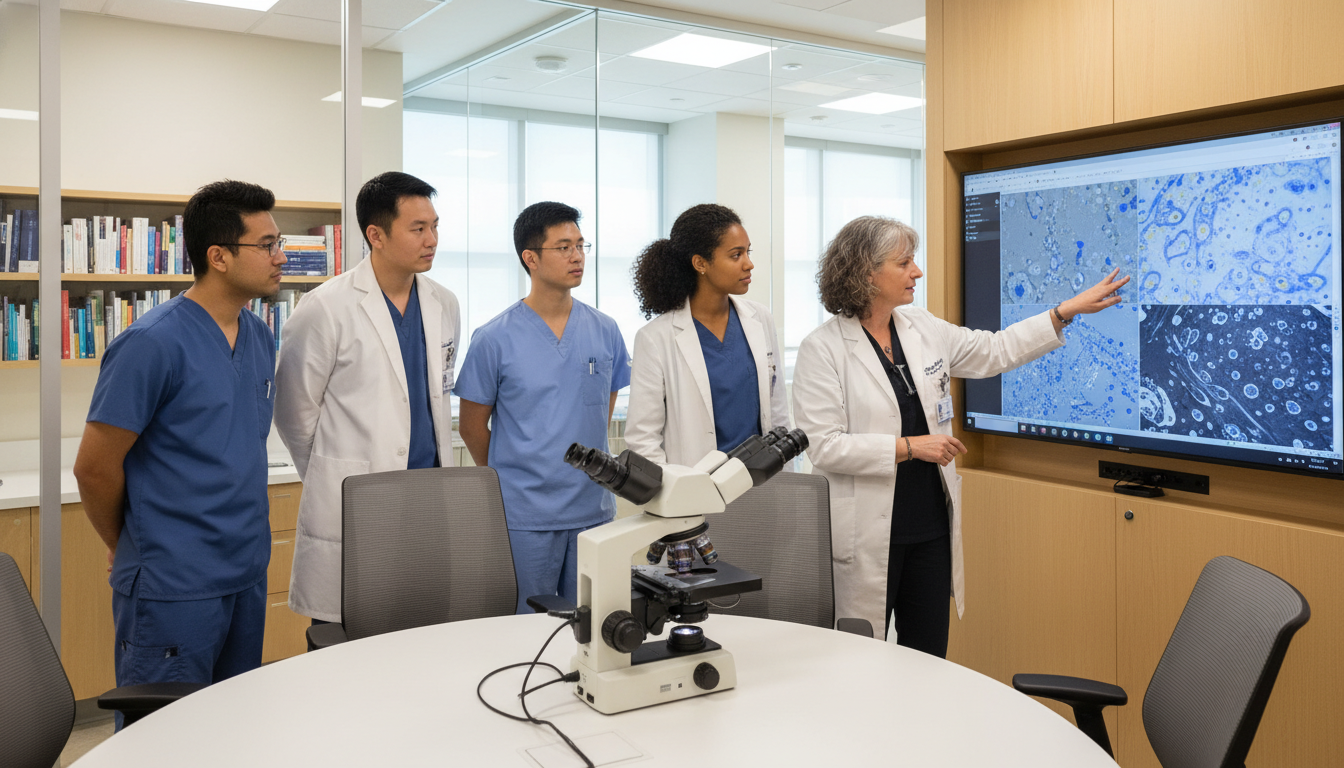
Questions to Ask Current Residents (Especially IMGs)
Current residents are your most candid source of information. In resident‑only rooms, you can ask more pointed questions about culture, workload, and how Caribbean IMGs are treated.
A. Questions About Culture, Support, and How IMGs Fit In
“As residents, how would you describe the culture here—collaborative, competitive, more laid‑back?”
- Ask several residents separately to cross‑check for consistency.
“Do you feel the program is supportive of international medical graduates? Are there any unique challenges IMGs have faced here?”
- Listen for honesty and examples, not rehearsed answers.
“How approachable are faculty and the program director when you have academic, personal, or visa‑related issues?”
- Critical for Caribbean IMGs who may face visa or relocation stress.
“Can you tell me about a time a resident struggled—whether clinically, personally, or with boards—and how the program responded?”
- Culture of blame vs culture of support will be apparent here.
“Do you see graduates from Caribbean schools succeeding here and beyond? What helped them, and what pitfalls should I avoid?”
- This can yield very practical, IMG‑specific advice.
B. Questions About Day‑to‑Day Workload and Practical Realities
“What does a typical day on surgical pathology look like for a PGY‑1 and for a senior resident?”
- Ask about start time, end time, and how often days run late.
“How intense is the grossing workload? Is it manageable, or do you often feel rushed?”
- Some programs are notorious for heavy grossing with limited tech support.
“How are weekend calls structured? How many weekends per month do you cover, and what is the actual workload like?”
“Do you have time built into the schedule for studying, previewing cases, or research, or does most of that happen on your own time?”
“How is moonlighting handled, if allowed? Do any residents actually have time to moonlight?”
C. Questions About Education, Feedback, and Mentorship
“How consistent is teaching at the microscope? Do most faculty take time to teach, or does it vary a lot?”
“Do you have regular didactics, unknowns, and journal clubs? Are these protected from service demands?”
“How is feedback delivered—formally, informally, and how often?”
“Is there structured mentorship, especially for those interested in certain fellowships or academic careers?”
“Do you feel the program truly prepares you for boards and independent practice?”
D. Questions About Location, Lifestyle, and Wellness
“What is it realistically like to live in this city/area on a resident salary?”
- Housing, commute, safety, cost of living.
“How does the program support wellness and work–life balance? Are there real, usable resources, or just policies on paper?”
“Do residents actually use vacation time, and is it easy to schedule?”
“If you had to choose a program again, would you choose this one? Why or why not?”
- One of the most revealing questions you can ask.
Questions to Ask Faculty, Subspecialists, and Fellowship Directors
Faculty and subspecialty attendings can address depth of training and academic opportunities—especially relevant if you’re aiming for competitive fellowships after residency.
A. Questions About Subspecialty Training and Case Mix
“In your subspecialty, what kind of case volume and variety do residents see by the end of their training?”
“How early do residents get involved with your subspecialty service, and how much responsibility do they take on?”
“Are there opportunities for focused electives or mini‑fellowships in specific pathology areas?”
B. Questions About Research and Scholarly Activity
“What opportunities exist for residents to get involved in research or scholarly projects in your division?”
“For residents interested in publishing or presenting at national meetings, how do you support them—mentorship, funding, time off?”
“Have past residents from Caribbean or other international schools been successful in research here?”
C. Questions About Teaching and Evaluation
“From your perspective, what distinguishes your strongest residents by the time they finish the program?”
“How do you approach teaching at the microscope with junior vs senior residents?”
“What skills do you think incoming residents from Caribbean schools should focus on developing before starting here?”
- This can give you a practical roadmap for your final year before residency.

Questions to Ask About Fellowship, Job Placement, and the Pathology Match
For many Caribbean IMG pathology residents, the ultimate question is: Will this program open doors? You want clear, measurable indicators.
A. Questions About the SGU Residency Match–Style Outcomes and Beyond
Even if you’re not from SGU specifically, you can use SGU residency match reporting as a mental benchmark: transparent, data‑driven, and outcome‑focused.
- “Do you track and share data on where your graduates match for fellowships?”
- Follow‑up: “Could you describe the last few years’ trends?”
“Have your residents matched into top‑tier or nationally recognized fellowships? What do you think helped them stand out?”
“For residents who do not pursue fellowship, how successful have they been in obtaining general pathology positions?”
“Are there alumni networks that help residents with job or fellowship placement?”
B. Questions About Letters, Advocacy, and Career Coaching
“How active is the program leadership in advocating for residents during the fellowship application process?”
“Do faculty provide structured guidance on timing, strategy, and where to apply for fellowships?”
“How early in training do you recommend residents start planning for fellowship, and how do you help them explore options?”
C. Questions Specific to Caribbean IMG Challenges
“For IMG residents, especially those from Caribbean medical schools, have there been any additional challenges in the fellowship or job market, and how have you helped them navigate those?”
“Are there any specific strengths you’ve seen in your Caribbean IMG graduates that fellowship directors or employers particularly appreciate?”
- This helps you learn how to frame your background as an asset, not a liability.
How to Customize and Deliver Your Questions
Simply having a long list isn’t enough. You must prioritize, personalize, and deliver your questions effectively.
A. Before the Interview: Research‑Driven Customization
- Review the program’s website, recent publications, and any available pathology residency reviews.
- Note anything unique: big transplant program, reference lab, digital pathology adoption, unusual case mix (e.g., high-volume cancer center).
- For each program, prepare:
- 2–3 questions specific to that institution
- 3–5 core questions important to your decision (case mix, support for IMGs, fellowship outcomes, culture)
Example customization:
Instead of asking, “Do you have strong heme pathology?” say:
“I saw on your website that your center is a major referral site for hematologic malignancies. How does that translate into day‑to‑day exposure for residents interested in heme pathology?”
B. During the Interview: Reading the Room
- Program director sessions: Ask big‑picture, outcome‑oriented questions (philosophy, support structures, fellowship/job placement).
- Faculty one‑on‑one: Ask subspecialty and training structure questions.
- Resident sessions: Ask about culture, workload, reality vs brochure.
Avoid asking questions whose answers are easily found on the website (e.g., “Is your program 4 years?”) unless you’re asking for clarification or nuance.
C. Phrasing Questions as a Caribbean IMG Without Over‑Explaining
You don’t need to open every question with “As a Caribbean IMG…” but you can strategically reference your background when helpful:
- “As an IMG who has done most of my clinical years in the Caribbean and some in the U.S., I’m curious how you’ve supported prior residents with similar paths in adapting to your system.”
- “My long‑term goal is to practice in [region/setting]. How have prior residents from Caribbean schools navigated that from your program?”
This shows self‑awareness and focus without sounding apologetic.
D. After the Interview: Follow‑Up Questions
If something remains unclear or you forgot to ask:
- Email the program coordinator or associate PD with 1–3 concise, specific questions.
- Example:
- “Could you clarify how often residents rotate at the community affiliate site and what the main differences in case mix are compared to the main hospital?”
- “During the interview, we touched on your residents’ success in the heme pathology match. Could you share whether most interested residents have been able to secure heme fellowships in recent years?”
This can also reinforce your interest—especially if your questions show you are seriously considering them.
Putting It All Together: A Sample Question Strategy for a Single Interview Day
To make this concrete, here is how a Caribbean IMG pathology applicant might distribute questions at one program:
Program Director Interview
- “How has your program adapted to the increasing use of digital pathology?”
- “What has been your experience training and supporting Caribbean IMG residents?”
- “Where have your last several graduates gone for fellowship and first jobs?”
Faculty Interview (Heme Pathologist)
- “What opportunities exist for residents to get involved with heme pathology research here?”
- “How early can residents start tailoring their experiences if they are strongly interested in heme?”
Faculty Interview (General AP/CP)
- “How do you see the balance between AP and CP training here, especially with changing practice patterns?”
- “What distinguishes your best residents by the time they graduate?”
Resident Panel / Resident‑Only Session
- “How intense is the grossing workload for juniors? Do you feel supported?”
- “Have Caribbean IMGs here felt fully integrated into the group?”
- “Do you feel the program genuinely prepares you for boards and independent practice?”
- “What do you wish you had known before starting this program?”
Follow‑Up Email
- One or two clarifying questions about case mix or call schedule, plus a brief thank‑you.
Using this framework for each interview ensures your questions are coherent, IMG‑aware, and pathology‑specific, rather than generic.
FAQ: Questions to Ask Programs for Caribbean IMG in Pathology
1. As a Caribbean IMG, should I directly ask how many IMGs the program has taken in the past?
You can, but phrase it professionally and contextually. For example:
- “Could you share a sense of the diversity of your residents’ backgrounds—U.S. grads, DOs, and IMGs, including Caribbean schools?”
This is less confrontational and opens the door to discussing success stories and support structures for Caribbean IMGs.
2. What are the most important questions to ask residency programs if I have limited interview time?
If time is tight, prioritize:
Training quality and structure:
- “How would you describe your program’s training philosophy?”
- “What is the balance of AP/CP training, and how is education protected during busy times?”
Support for IMGs and development:
- “How have you supported international or Caribbean IMG residents in your program?”
Outcomes/fellowships (pathology match oriented):
- “Where have your graduates gone for fellowships and first jobs in the past few years?”
Culture and fit (asked to residents):
- “How would you describe the program culture and work–life balance here?”
3. Is it appropriate to ask about board pass rates and remediation as an applicant?
Yes—board outcomes are central to your career. Ask tactfully:
- “What have your recent board pass rates been, and what structures are in place to help residents prepare?”
- “If a resident is struggling academically or clinically, how does the program typically respond and support them?”
These are standard, reasonable questions, and strong programs will answer them transparently.
4. Should I ask about visa sponsorship as a Caribbean IMG?
Absolutely, but do it briefly and professionally, ideally with the program coordinator or PD:
- “Do you currently sponsor [J‑1 / H‑1B] visas for residents, and have there been any recent changes in your visa policies?”
Confirm visa details early in the process so you don’t waste effort on programs that can’t support your needs.
By approaching your pathology interviews with a clear strategy for what to ask program directors, faculty, and residents, you’ll not only appear polished and prepared—you’ll gather the specific information you need to choose programs where a Caribbean IMG can truly thrive, match well into fellowship, and build a long‑term career in pathology.