Understanding the Clinical Informatics Landscape as a Caribbean IMG
Entering the residency and fellowship pipeline as a Caribbean medical graduate interested in clinical informatics is both exciting and challenging. As an International Medical Graduate (IMG), and especially as a graduate of a Caribbean medical school, you are competing in a niche field where programs expect you to clearly articulate:
- Why clinical informatics?
- Why you, specifically, in this specialty?
- How your pathway (including a Caribbean medical school residency route and your clinical experiences) uniquely prepares you.
Clinical informatics is still relatively new as a formal medical subspecialty. Many programs recruiting residents and fellows in this area look for:
- Demonstrated interest in health IT and digital health
- Evidence of systems thinking and comfort with data
- Strong communication skills for bridging clinicians, IT, and leadership
- A track record of follow-through on projects (QI, EHR optimization, analytics, etc.)
As a Caribbean IMG, your pre-interview preparation must do three things:
- Neutralize or address any implicit concerns about your training background.
- Highlight your added value—resilience, adaptability, multicultural experience, and often strong clinical exposure.
- Showcase a coherent story of how your background leads naturally to clinical informatics.
The goal of pre-interview preparation is to have every aspect of your profile—CV, personal statement, projects, and talking points—aligned to support that story before you ever log in to Zoom or walk into a conference room.
Step 1: Clarify Your Story and Brand as a Caribbean IMG in Informatics
Before you practice how to prepare for interviews, you must understand what you want to communicate. This is your “professional brand”—how you want programs to remember you after the interview day.
A. Define Your Core Narrative
Start by answering these questions in writing:
What drew you to clinical informatics?
- Was it an EHR optimization project during clinical rotations?
- Work with telemedicine in an underserved area?
- A data analysis project, registry, or QI initiative?
- Exposure to clinical decision support tools or AI in healthcare?
How did your Caribbean medical school experience shape this interest?
Examples:- Limited resources in your Caribbean clinical setting pushed you to seek digital solutions.
- You noticed workflow inefficiencies and created simple tracking tools (e.g., spreadsheets, forms).
- You worked on research or QI with a focus on documentation or data.
What unique strengths do you bring as a Caribbean IMG?
- Cultural and linguistic diversity.
- Proven adaptability to new systems and countries.
- Strong clinical volume during core rotations.
- Resilience in navigating visas, exams, and different healthcare environments.
What is your long-term vision in clinical informatics?
- Leadership in hospital IT.
- EHR implementation and optimization.
- Digital health solutions for low-resource settings.
- Population health analytics.
- AI/ML integration in clinical workflows.
Turn your answers into a 2–3 sentence “brand statement” you can reuse during residency interview preparation. For example:
“I’m a Caribbean-trained physician with strong frontline experience in resource-variable settings. Working with fragmented documentation systems led me to clinical informatics, where I want to build and optimize data-driven tools that make care safer and more efficient for diverse patient populations.”
Memorize and refine this—variations of it will become your answer to “Tell me about yourself,” “Why clinical informatics?” and even “Where do you see yourself in five to ten years?”
B. Align Your Experiences with Informatics Competencies
Clinical informatics typically values skills in:
- Workflow analysis
- Data literacy and basic analytics
- Change management and team collaboration
- Quality improvement and patient safety
- Human–computer interaction (EHR usability)
- Implementation and evaluation of health IT solutions
Look at your CV and identify at least 3–5 experiences that illustrate one or more of these. These could include:
- A QI project to reduce medication errors through improved documentation.
- A research project using EHR data or simple registries.
- A student role in implementing a new clinical documentation process.
- Self-taught skills (SQL, Python, R, Excel dashboards) applied to a real problem.
- Telehealth or remote monitoring initiatives.
For each experience, prepare a 60–90 second story using the STAR method:
- Situation – context
- Task – what you were responsible for
- Action – your specific actions
- Result – measurable or concrete outcomes
This level of organization is crucial for standing out in interview questions residency programs often ask about leadership, teamwork, and problem-solving.

Step 2: Build a Strong Clinical Informatics Profile Before Interview Day
Your pre-interview preparation isn’t just about rehearsing answers. It’s also about strengthening your substance in clinical informatics so you can speak with authenticity and depth.
A. Formal and Informal Health IT Training
If you’re targeting clinical informatics, programs will look for signs of health IT exposure or health IT training, even if informal:
Online courses / certificates
- Coursera, edX, or university-based courses in:
- Introduction to Health Informatics
- Data Science in Healthcare
- EHR and Clinical Decision Support
- Implementation Science or QI
- Be ready to explain not only that you took them, but also:
- How you applied what you learned.
- Which concepts were most impactful.
- Coursera, edX, or university-based courses in:
Technical Skills (even at beginner level)
- Basic SQL queries, Excel data analysis, or simple dashboards.
- Introductory Python or R for data manipulation.
- Familiarity with FHIR, HL7, or clinical vocabularies (ICD-10, SNOMED, LOINC) at a conceptual level.
- Any EHR super-user or optimization work.
You don’t need to be a software engineer to impress; you need to show curiosity, initiative, and practical application.
B. Projects and Experiences to Highlight
Before interviews, make a one-page “project inventory” that lists:
- Title of the project
- Your role
- Tools/skills used
- Outcomes (clinical, operational, educational)
Examples relevant to a Caribbean IMG:
- Developed a simple spreadsheet-based tool to track diabetic follow-up in a resource-limited clinic; led to improved appointment adherence.
- Participated in a hospital initiative to standardize admission order sets in the EHR.
- Helped design a telemedicine workflow for patients on remote islands, addressing bandwidth and documentation challenges.
- Contributed to a research project using EHR data to study readmission rates.
In interviews, this helps you answer questions like:
- “Tell me about a project you’re proud of.”
- “Describe a time you improved a clinical process.”
- “What experience do you have with EHRs or health IT systems?”
C. Leverage the Caribbean Medical School Residency Pathway
Programs may be aware of Caribbean medical school residency challenges (perceived variability in training quality, competition for spots). Turn this into an advantage by emphasizing:
- High clinical exposure (often more hands-on work in varied settings).
- Adaptability to different healthcare systems (Caribbean, US, possibly UK/Canada).
- Comfort with limited resources—very relevant to informatics implementations.
If you are from institutions like SGU (St. George’s University), Ross, AUC, etc., you may have access to alumni in clinical informatics roles. For example, many applicants reference SGU residency match outcomes to show that alumni have successfully entered competitive specialties and subspecialties, including informatics. Use your network:
- LinkedIn searches: “[Your school] clinical informatics” or “[Your school] health IT.”
- Email alumni politely for 15–20 minute informational calls.
- Ask what interview questions they received and what programs cared most about.
You can then integrate these insights into your preparation.
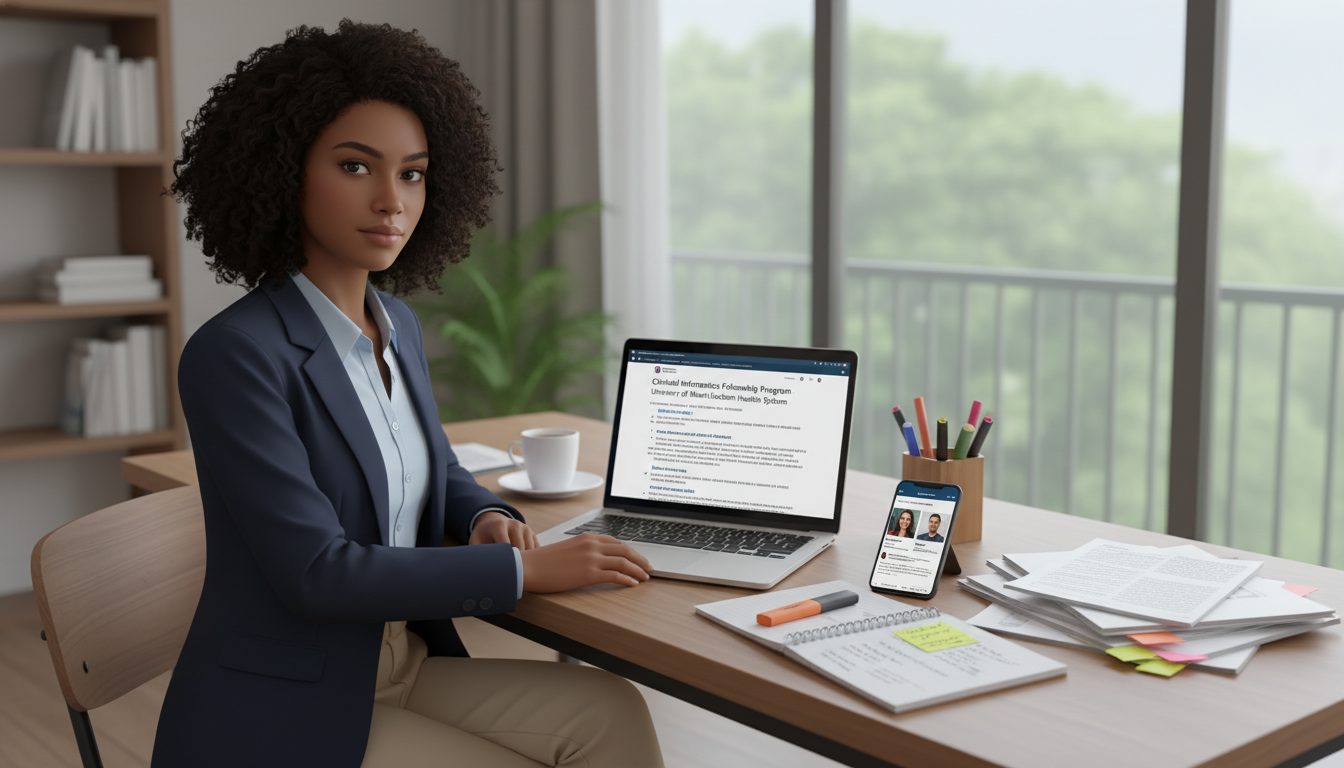
Step 3: Researching Programs and Fellows Thoroughly
Most Caribbean IMGs underestimate just how deeply they should research programs before interviews—especially for a niche path like clinical informatics fellowship or informatics-focused residency tracks.
A. Program-Level Research Checklist
For each program, prepare a one-page summary (digital or printed) including:
Program structure
- Is it a dedicated clinical informatics fellowship (post-residency), an informatics track within IM/FM/EM, or an informatics-heavy role integrated into residency?
- Duration, rotation sites, didactics, projects, and typical fellow/resident responsibilities.
Major health IT systems used
- EHR vendor (Epic, Cerner, Meditech, etc.).
- Known institutional informatics projects (CDS tools, telehealth expansion, data warehouse, AI initiatives).
Faculty interests
- Review faculty bios and recent publications.
- Identify at least 2–3 faculty whose work overlaps with your interests (e.g., CDS, population health, usability, global health informatics).
Unique features
- Partnerships with schools of public health, computer science, or data science.
- Innovation labs, digital health incubators, or startup collaborations.
- Emphasis on underserved populations or global health.
Use this research to tailor your answers and questions. For instance:
“I noticed your team recently implemented a sepsis alert CDS tool with a focus on reducing alert fatigue. During my internal medicine rotation, I saw the downside of excessive alerts. I’d love to be involved in evaluating and refining those tools.”
This level of specificity makes you memorable and demonstrates genuine interest.
B. Fellow/Resident-Level Research
Search for current and recent trainees:
- Program website trainee pages.
- LinkedIn profiles.
- PubMed for their publications.
Look for:
- Backgrounds similar to yours (IMG, Caribbean graduate, visa needs).
- Projects you can mention: “I read Dr. X’s work on tele-ICU implementation in rural settings.”
This is also useful for:
- Assessing program culture (through social media, blogs, conference presentations).
- Preparing “fit” answers about why this program aligns with your goals.
Step 4: Mastering Interview Questions for Clinical Informatics
Once your story and research are in place, move into active residency interview preparation. For a Caribbean IMG interested in clinical informatics, you must be ready for both standard and specialty-specific questions.
A. Core General Interview Questions Residency Programs Ask
Tell me about yourself.
- Use a 1–2 minute, structured answer:
- Brief background (Caribbean school, core clinical strengths).
- Spark for clinical informatics.
- Current activities (projects, learning, health IT training).
- Future goals in informatics and clinical care.
- Use a 1–2 minute, structured answer:
Why this specialty and why our program?
- “Why clinical informatics?”: Emphasize clinical problems you’ve seen and how informatics can address them.
- “Why our program?”: Mention 2–3 program-specific features linked to your interests.
What are your strengths and weaknesses?
- Strengths: Choose ones relevant to informatics—analytical thinking, communication, systems perspective, persistence in solving complex problems.
- Weaknesses: Be honest but strategic—e.g., “I tend to volunteer for too many projects, but I’ve learned to use project management tools and set realistic boundaries.”
Tell me about a challenging clinical situation or mistake.
- Emphasize insight, accountability, and systems-thinking. For example, reflecting on documentation gaps and how better EHR workflows could have helped.
Why are you an IMG / Caribbean graduate, and how has that shaped you?
- Avoid defensiveness. Focus on maturity, exposure to diverse health systems, and resilience.
B. Informatics-Focused Interview Questions and How to Prepare
Programs with a strong informatics component may ask:
What is clinical informatics to you?
Prepare a concise definition:“Clinical informatics is the application of information technology and data science to improve clinical decision-making, workflows, and patient outcomes. It bridges clinicians, IT, and leadership to design, implement, and evaluate health IT tools that actually work in real-world care.”
Describe a time you used data to solve a problem.
- Use STAR with a clear “data-to-action” storyline:
- How you collected or interpreted data.
- How you translated it into an operational or clinical change.
- Use STAR with a clear “data-to-action” storyline:
How comfortable are you with technology and data tools?
- Be honest about your current level.
- Emphasize ongoing learning and give concrete examples:
- “I’ve completed a course on SQL and used it to extract simple patient cohorts.”
- “I created a small dashboard in Excel to track clinic wait times.”
What do you think are the biggest challenges in EHR use today?
Possible talking points:- Alert fatigue and cognitive overload.
- Poor integration into clinician workflow.
- Documentation burden and burnout.
- Data quality and interoperability issues.
Always connect challenges to solutions or your interest in solving them.
How do you see your career evolving in clinical informatics?
- Integrate your long-term vision:
- Leading hospital or system-wide informatics.
- Building tools for underserved or global settings.
- Combining informatics with a clinical specialty (e.g., IM + CI).
- Integrate your long-term vision:
C. Behavioral and Scenario-Based Questions
Clinical informatics work involves change management and diplomacy. Expect questions like:
- “Tell me about a time you had to convince others to adopt a new process.”
- “Describe a conflict with a colleague and how you handled it.”
- “How would you work with clinicians who are resistant to a new EHR feature?”
Prepare at least five behavioral stories in advance using STAR, focusing on:
- Leading or supporting change.
- Working on multidisciplinary teams.
- Handling resistance or skepticism.
- Communicating complex concepts in simple terms.
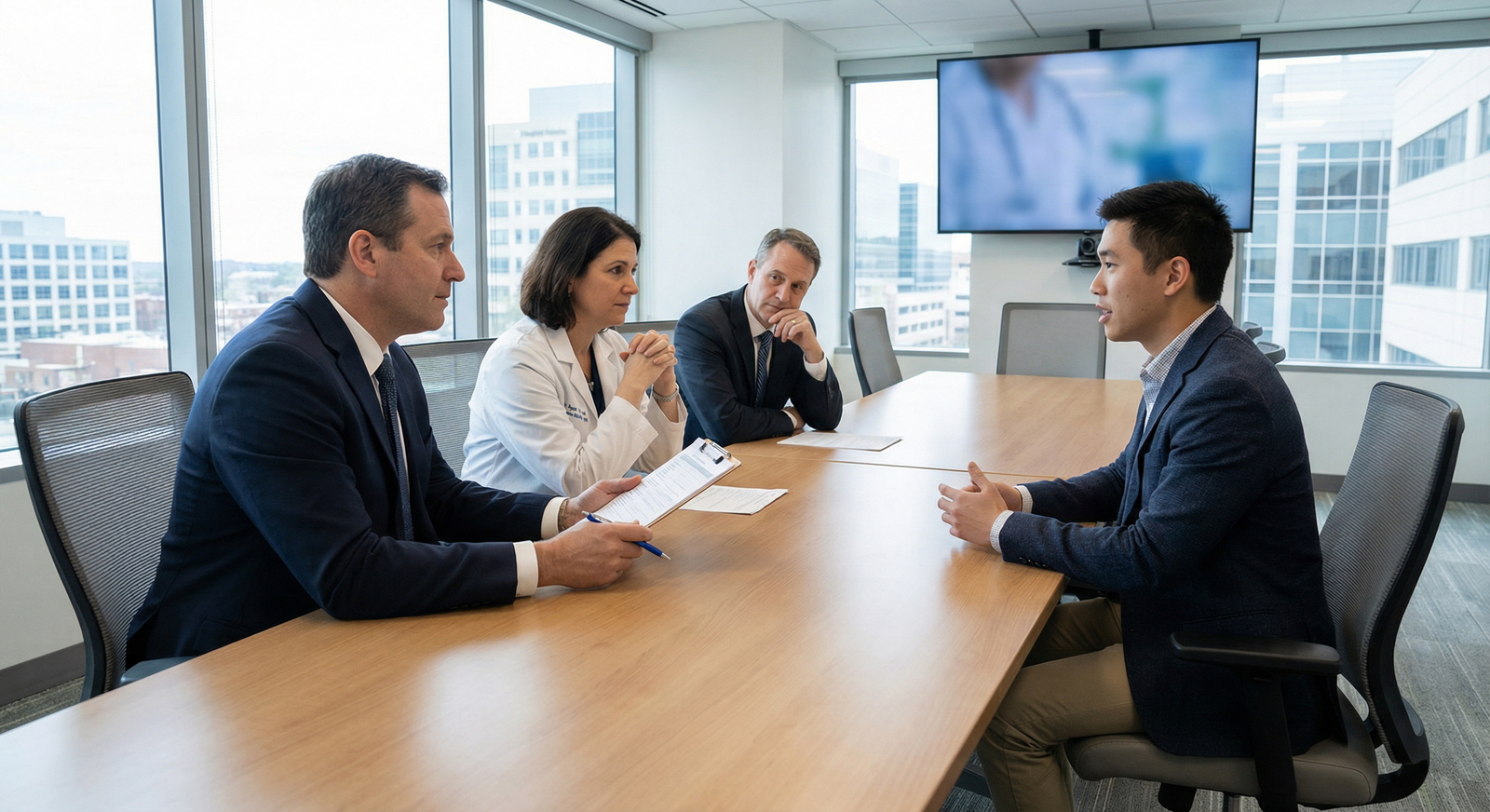
Step 5: Structured Practice and Mock Interview Strategy
Even with strong content, you must practice delivery. Especially for Caribbean IMGs, clear communication and confidence can significantly reduce bias and elevate your candidacy.
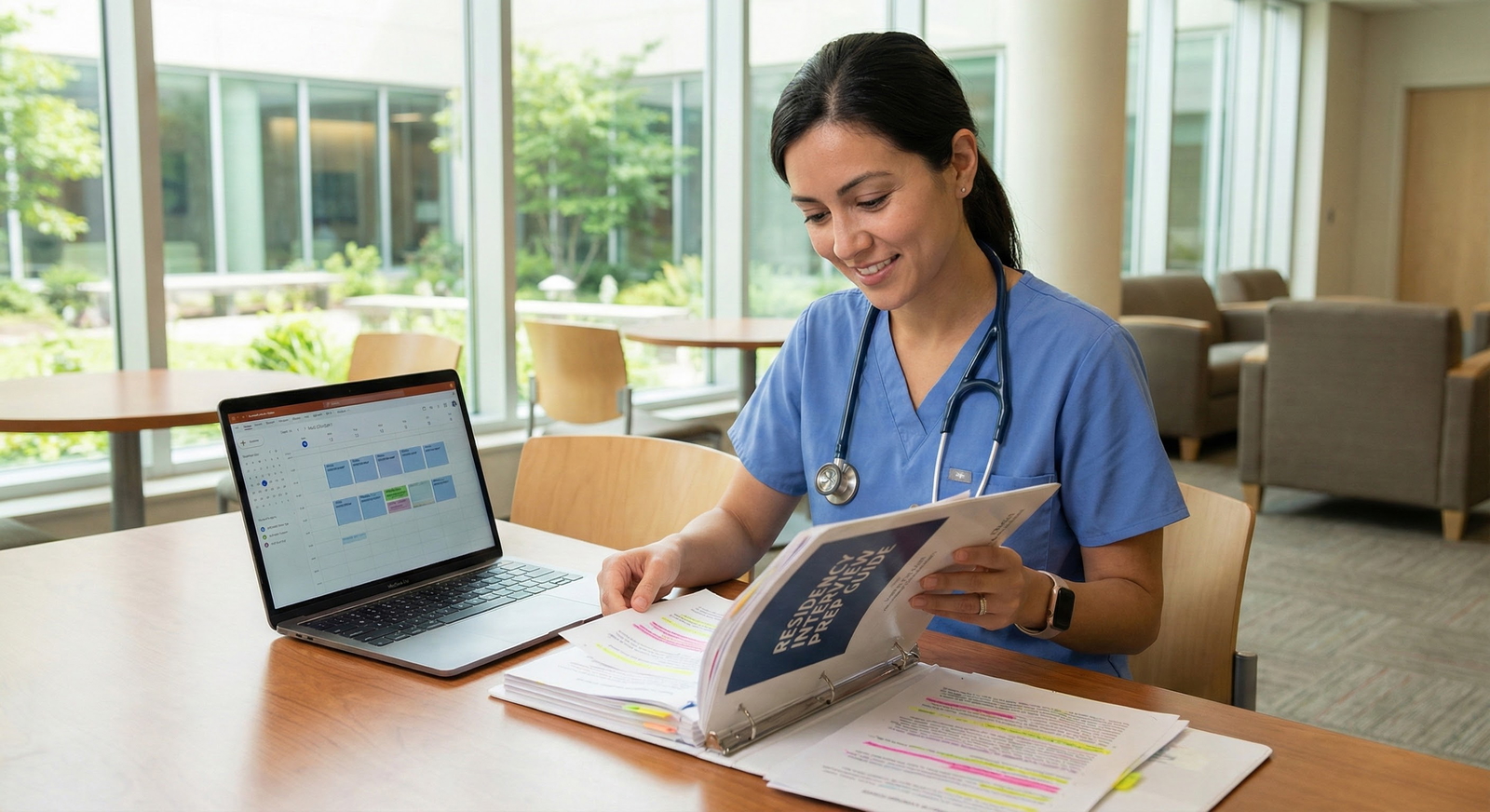
A. Develop a Practice Schedule
At least 4–6 weeks before your first interview:
Week 1–2: Content creation
- Draft answers to common general and informatics-specific questions.
- Prepare your top 5 STAR stories.
- Refine your personal “brand statement.”
Week 2–3: Individual practice
- Record yourself answering “Tell me about yourself,” “Why informatics?” and 3–4 other central questions.
- Review body language (eye contact, posture, fidgeting).
- Adjust for clarity, pacing, and length (aim for 60–90 seconds for most answers, 2 minutes max for “Tell me about yourself”).
Week 3–6: Mock interviews
- Use:
- Faculty mentors or advisors with interview experience.
- Alumni from your Caribbean medical school who matched into informatics or tech-heavy programs.
- Structured online mock interview services, if available.
- Use:
Ask for feedback on:
- Clarity of your story.
- How convincingly you demonstrate interest and readiness for clinical informatics fellowship or informatics-focused training.
- Any accent or communication issues that might require deliberate pacing or repetition.
B. Virtual Interview Readiness
Many informatics-oriented programs conduct virtual interviews, especially for fellowships or secondary rounds. Prepare as if it’s in-person:
Technology check
- Stable internet, HD camera, good microphone.
- Neutral, well-lit background.
- Test your platform (Zoom, Teams, WebEx) with a friend.
Professional appearance
- Formal attire, even if at home.
- Avoid distracting patterns; choose solid, calm colors.
Environment
- Quiet room; notify others in your household.
- Turn off notifications on computer and phone.
Practice making eye contact with the camera, not the screen—a subtle but important detail.
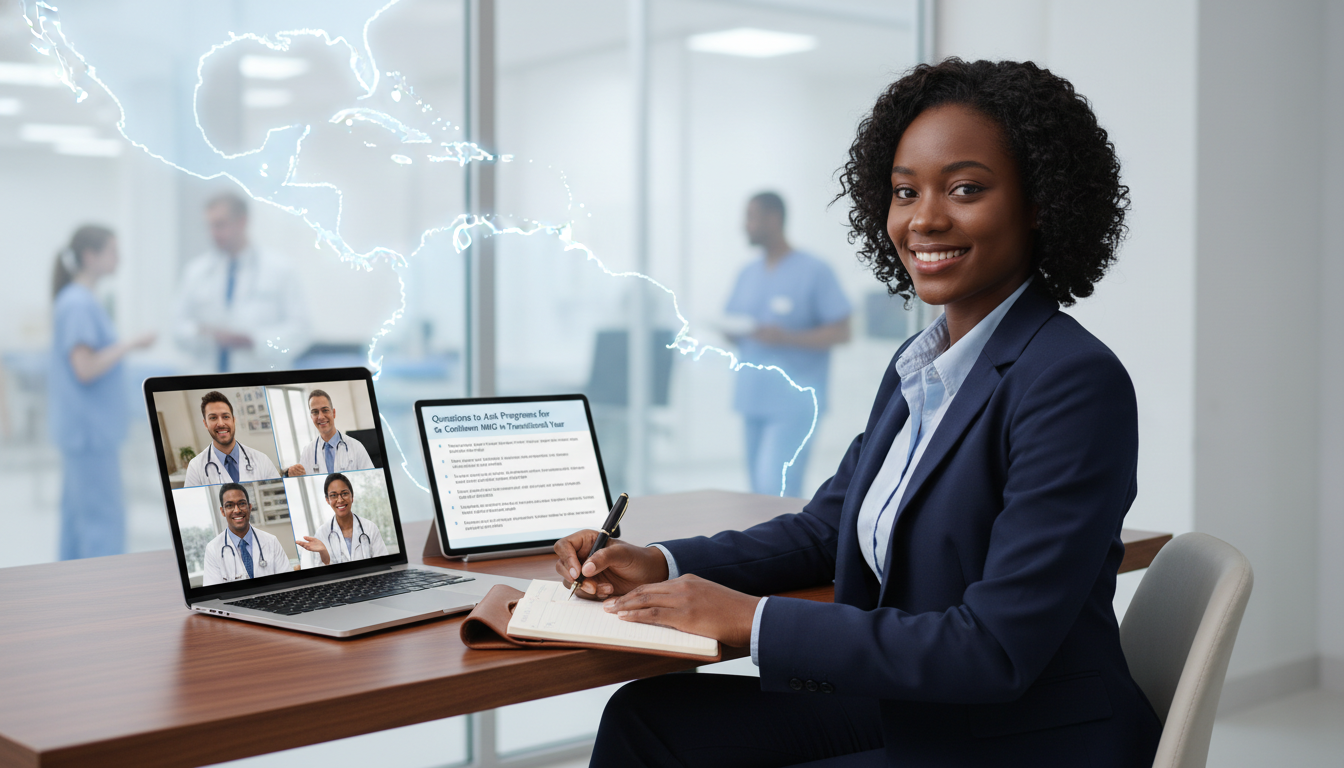
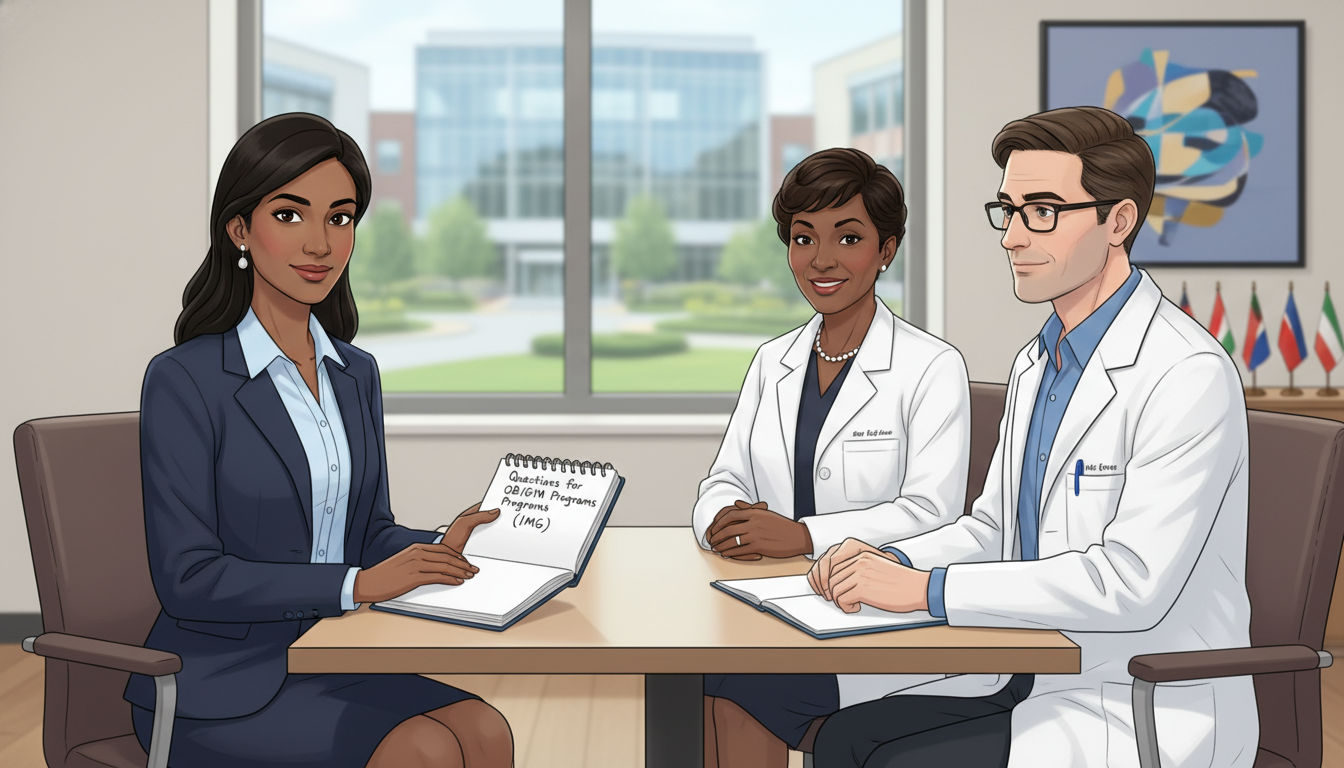
C. Questions to Ask Programs
Have 3–5 thoughtful questions per program, tailored to informatics. Examples:
- “How are residents/fellows involved in EHR optimization or clinical decision support projects?”
- “What opportunities exist for collaboration with data science or IT departments?”
- “How do you support trainees who are IMGs or come from non-traditional paths, like Caribbean medical schools?”
- “What kinds of health IT training or certifications can residents/fellows pursue while in the program?”
Good questions signal genuine interest, maturity, and strategic career thinking.
Step 6: Logistics, Documents, and Mental Preparation
A. Organize Your Documents
Before any interview:
- Updated CV (match what is in ERAS or fellowship application).
- Personal statement—re-read it so your verbal answers align.
- List of projects with bullet points you can recall quickly.
- Publication list, with a one-sentence takeaway for each.
- List of programs with your notes and prepared questions.
For visa-needing Caribbean IMGs, be prepared to briefly and confidently address:
- Visa status and what you will require (J-1 vs H-1B, as relevant).
- Reassure that you understand the process and have done preliminary research.
B. Addressing Common IMG Concerns Confidently
Programs might not explicitly ask, but may implicitly wonder:
- Why not a US/Canadian school?
- Will this candidate adapt well to our system?
- Are there gaps in training or exam performance?
Craft short, honest, positive responses:
- “I chose a Caribbean medical school for [concise reason], and it gave me [specific strengths]. Since then, my US clinical rotations and informatics projects have shown me how to integrate that experience into this healthcare system.”
If you have exam delays, gaps, or remediations:
- Own it.
- Explain what you learned.
- Emphasize what you changed to improve performance.
C. Mental and Physical Preparation
You will give your best interview only if you are physically and mentally ready.
- Sleep adequately two nights before (not just the night prior).
- Eat light but sustaining meals before the interview.
- Have water available; avoid too much caffeine.
- Use a short centering routine (deep breathing, short walk, power pose) 10–15 minutes before.
Remember: Your goal is not perfection, but authentic, prepared, and clear communication of who you are and why you fit clinical informatics.
Frequently Asked Questions (FAQ)
1. As a Caribbean IMG, do I really have a chance in clinical informatics?
Yes, but you must be intentional. Programs care more about evidence of genuine interest, project engagement, and the ability to work well with teams than about where you went to school alone. Strengthen your application with:
- At least one concrete health IT or QI project.
- Some form of health IT training (courses, workshops, certificates).
- Clear, well-practiced explanations of your pathway and goals.
Many Caribbean graduates have successfully matched into informatics-oriented internal medicine, family medicine, or pathology programs and then continued into a clinical informatics fellowship.
2. How can I stand out in my SGU residency match or other Caribbean school matches if I want informatics later?
Even during core rotations and residency:
- Volunteer for documentation, workflow, or QI committees.
- Join or initiate small data projects (e.g., tracking adherence, wait times).
- Seek mentors in informatics or health IT within your training hospitals.
- Document your experiences carefully so they translate into compelling STAR stories.
By the time you apply for informatics-heavy positions, your file will show a sustained, coherent interest instead of a last-minute pivot.
3. Do I need strong programming skills to be competitive?
No, but familiarity and comfort with data and technology help a lot. You don’t need to be a software engineer to succeed in clinical informatics. Focus on:
- Conceptual understanding of data flows, interoperability, and EHR functionality.
- Basic exposure to tools like Excel, SQL, or R/Python for simple tasks.
- Learning how to collaborate with IT and data teams, not replace them.
During interviews, describe real situations where you used data or tools, even at a basic level, to solve clinical or operational problems.
4. What are the most important interview questions residency and fellowship programs will ask about my IMG background?
Expect variations of:
- “Tell me about your path as an IMG and why a Caribbean school.”
- “How has your Caribbean training prepared you for practice in the US?”
- “What challenges have you faced as an IMG, and how did you overcome them?”
Prepare concise, confident answers that frame your background as:
- A source of resilience and adaptability.
- A foundation in diverse clinical environments.
- An asset for informatics work in varying resource settings.
By clarifying your story, deepening your informatics profile, researching programs thoroughly, and deliberately practicing key interview questions, you can transform your Caribbean IMG journey into a compelling narrative for clinical informatics training. Pre-interview preparation is not just about rehearsing answers—it is about strategically aligning who you are, what you’ve done, and where you want to go, so that every conversation with a program clearly reflects your readiness for this evolving and impactful field.