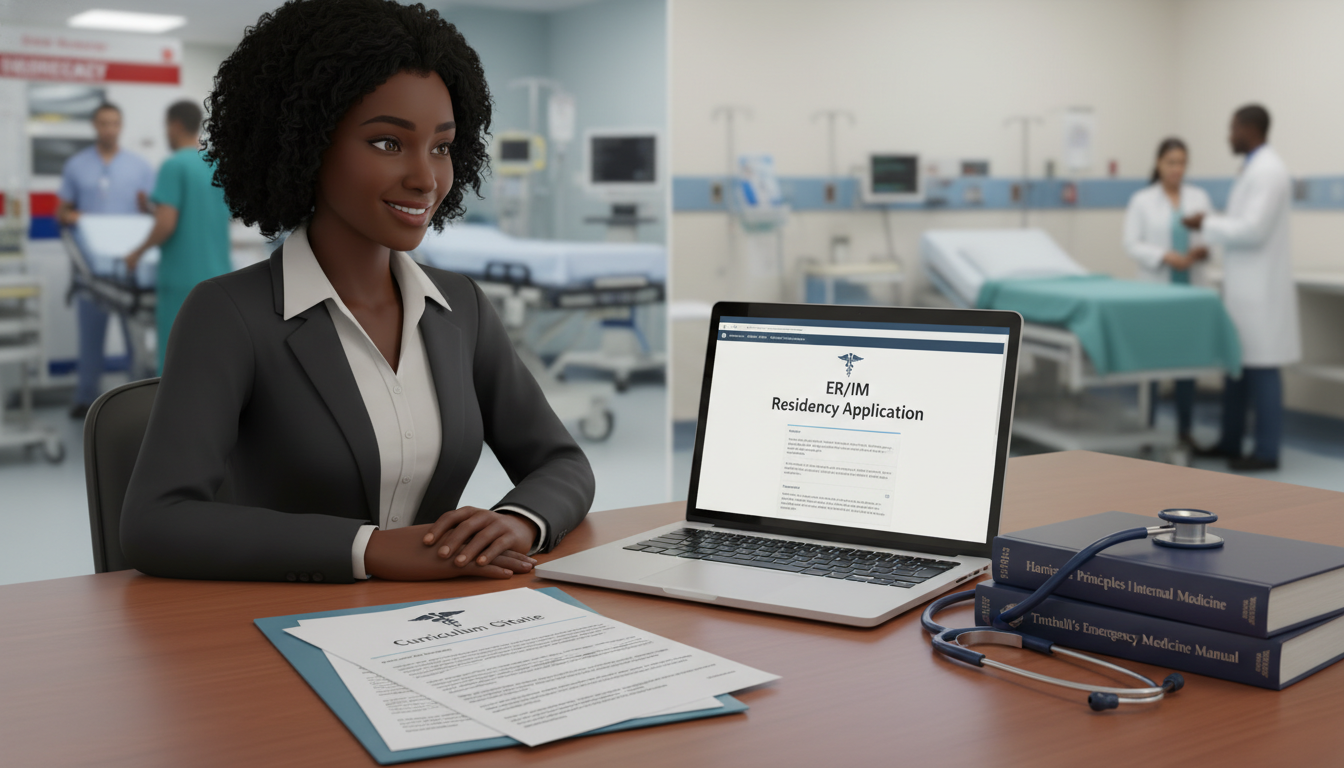
Understanding the EM-IM Landscape as a Caribbean IMG
Applying to Emergency Medicine–Internal Medicine (EM-IM) combined programs as a Caribbean IMG is both exciting and uniquely challenging. Before you start residency interview preparation in earnest, you need a solid understanding of:
- The EM-IM combined pathway
- How program directors may view a Caribbean medical school residency applicant
- The strengths you bring as a Caribbean IMG
- Where pre-interview preparation fits in the overall SGU residency match or broader Caribbean IMG match strategy
What Makes EM-IM Combined Programs Unique?
EM-IM combined training is a five-year program that leads to board eligibility in both Emergency Medicine and Internal Medicine. These programs are:
- Highly structured and demanding – You are mastering two specialties at once.
- Relatively small in number – Fewer programs, fewer positions, more focus on fit.
- Looking for specific traits – Adaptability, resilience, strong clinical reasoning, and excellent communication.
Programs know that EM-IM residents will be expected to function in high-acuity, fast-paced ED settings and also manage complex, longitudinal care on the wards or in clinic. Your pre-interview preparation should be geared toward demonstrating:
- Ability to handle pressure and uncertainty (EM)
- Depth of clinical thinking and follow-through (IM)
- Maturity, emotional intelligence, and self-awareness
How Programs View Caribbean Medical School Residency Applicants
As a Caribbean IMG, you are not disqualified from EM-IM—many programs have matched strong Caribbean graduates, including from SGU and other schools. However, you must recognize how program directors often view Caribbean applicants:
Potential concerns:
- Variable clinical training environments
- Perceived differences in academic rigor
- Need for more evidence of performance (USMLEs, clinical evaluations, SLOEs, etc.)
- Questions about communication, professionalism, and readiness for U.S. healthcare
Opportunities to stand out:
- You often have robust clinical exposure and adaptability
- You have already navigated complex transitions (moving abroad, new systems, new cultures)
- Many Caribbean IMGs demonstrate strong work ethic and resilience, which EM-IM programs value highly
Your pre-interview strategy must highlight these strengths clearly and consistently.
Laying the Foundation: Academic and Application Readiness
Before you focus on “how to prepare for interviews,” ensure that your core application is tight, consistent, and strategically aligned with EM-IM.
Clarify and Communicate Your EM-IM Motivation
Combined programs want to know why EM-IM, not just why EM or why IM. Before interview season:
Write a focused EM-IM narrative (for yourself, even if not separate in ERAS):
- When did you first realize you enjoyed both acute care and longitudinal medicine?
- What clinical moments connected EM and IM in your mind?
- How have your rotations, electives, or research reinforced this dual interest?
Craft a concise “elevator pitch” you will use repeatedly:
- “I’m drawn to EM-IM because…” (1–2 sentences)
- “In the ED, I love…”
- “In internal medicine, I value…”
- “Together, EM-IM fits me because…”
Example (adapt for your story):
“I’m pursuing EM-IM because I’m energized by the rapid decision-making and undifferentiated presentations in the ED, but I also value following patients through complex diagnostic workups and chronic disease management. In my sub-internship, I saw how the skills of each specialty deepen the other—understanding long-term management improved my ED dispositions, and my comfort in acute care made me a more decisive ward resident.”
You’ll reuse and refine this narrative in your personal statement, emails, and especially interview answers.
Audit Your Application for Consistency
Before interview invitations arrive:
- Review ERAS for inconsistencies or gaps
- Timeline issues (leaves, gaps after graduation)
- Discrepancies between CV, personal statement, and experiences
- Prepare a neutral, honest explanation for each potential concern:
- USMLE failures or repeats
- Extended time to graduate
- Visa issues
- Limited U.S. clinical experience
Never wait until the interview to “figure out” how you’ll discuss these topics. Plan your framing now:
- Own your decisions or circumstances
- Describe what you learned
- Emphasize how you changed your behavior or improved
- Keep it brief and non-defensive
Optimize EM-IM-Relevant Experience
Before interviews begin, map your rotations and experiences to EM-IM:
- Emergency Medicine:
- ED core rotations, EM electives, trauma exposure
- Any procedures (intubations, lines, reductions) you can discuss comfortably
- Internal Medicine:
- Sub-internships, inpatient medicine, ICU, cardiology, pulm/crit, etc.
- Longitudinal clinic or continuity experiences
From each major rotation, identify:
- One challenging case that highlights your clinical reasoning
- One case showing professionalism, communication, or teamwork
- One situation where you managed uncertainty or made a difficult decision
You’ll use these repeatedly in interview questions residency programs commonly ask: “tell me about a difficult patient,” “a time you made a mistake,” or “a time you had a conflict with a team member.”

Strategic Interview Preparation: Content, Stories, and Fit
Residency interview preparation for EM-IM involves more than generic “practice some questions.” You need targeted preparation around:
- Your personal story as a Caribbean IMG
- Your EM-IM identity and career goals
- Your understanding of the combined structure
- The specific program you’re interviewing at
Build Your Core Story Bank
A strong pre-interview plan includes preparing a story bank: 10–15 short, vivid stories you can adapt to many questions. Focus on:
Clinical reasoning stories
- A complex ED patient with an unclear diagnosis
- A medicine ward patient with multiple comorbidities and competing priorities
Teamwork and conflict stories
- A disagreement with a senior or attending and how you handled it
- Working with nurses or consultants under pressure
Leadership stories
- Leading a code, rapid response, or critical conversation
- Organizing sign-out, triage, or complex discharge planning
Professionalism and resilience
- Handling a mistake or near-miss
- Dealing with burnout, homesickness, or bias as an IMG
Systems and improvement
- Noticing a patient safety issue and acting on it
- Improving workflow or teaching in the ED or on the wards
For each story, outline briefly:
- Situation (1–2 lines)
- Task (your role)
- Action (what you did)
- Result (what happened and what you learned)
This is essentially the STAR or PAR method; practicing in this structure keeps answers organized, concise, and powerful.
Anticipate Common EM-IM and IMG-Focused Questions
When you search “how to prepare for interviews,” you’ll see long lists of generic prompts. As a Caribbean IMG targeting EM-IM, prioritize:
Personal and background:
- “Tell me about yourself.”
- “Walk me through your path from Caribbean medical school to applying for an EM-IM combined program.”
- “How has training in the Caribbean shaped you as a physician?”
Specialty choice:
- “Why Emergency Medicine?”
- “Why Internal Medicine?”
- “Why EM-IM combined, and not just one or the other?”
- “What do you see as the strengths and challenges of EM-IM training?”
Caribbean medical school residency–specific:
- “What challenges did you face as a Caribbean IMG, and how did you overcome them?”
- “Tell me about differences between your Caribbean training and U.S. clinical experiences.”
- “Some people question the quality of Caribbean medical schools. How do you respond to that?”
Performance and resilience:
- “Tell me about a time you failed or struggled academically.”
- “Discuss a time you felt overwhelmed in a clinical setting.”
- “Describe a mistake you made and what you learned.”
Future goals:
- “Where do you see yourself 5–10 years after training?”
- “Are you interested in critical care, administration, global health, or academic medicine?”
- “How do you plan to integrate EM and IM in your career?”
Prepare structured responses in writing, then practice them aloud until they sound natural but not scripted.
Show That You Understand EM-IM Training
Programs want to avoid candidates who see EM-IM as:
- A “backup” for EM or IM
- A way to keep options open without understanding extra workload
- A resume booster without clear intention
Your preparation should include:
- Reviewing each program’s schedule (how many EM vs. IM months per year)
- Understanding rotation sites (county hospital, academic center, VA, community hospitals)
- Learning about opportunities: ICU exposure, ultrasound, procedures, research, global health, or administrative tracks
Be ready to answer:
- “What appeals to you about our specific EM-IM curriculum?”
- “How do you see yourself using dual training after residency?”
- “What aspects of our program worry you, and how would you handle them?”
Specificity signals maturity and true interest.
Practical Logistics: Before, During, and After Interview Invitations
Pre-interview preparation isn’t only about what you’ll say; it’s also about how you’ll manage the logistics, especially across time zones and visas as a Caribbean IMG.
Before Invitations: Get Logistically Ready
Professional communication setup:
- Create a dedicated, professional email address if you don’t already have one.
- Ensure your voicemail greeting is clear and professional (if using a U.S. number).
- Check email and ERAS at least twice daily during interview season.
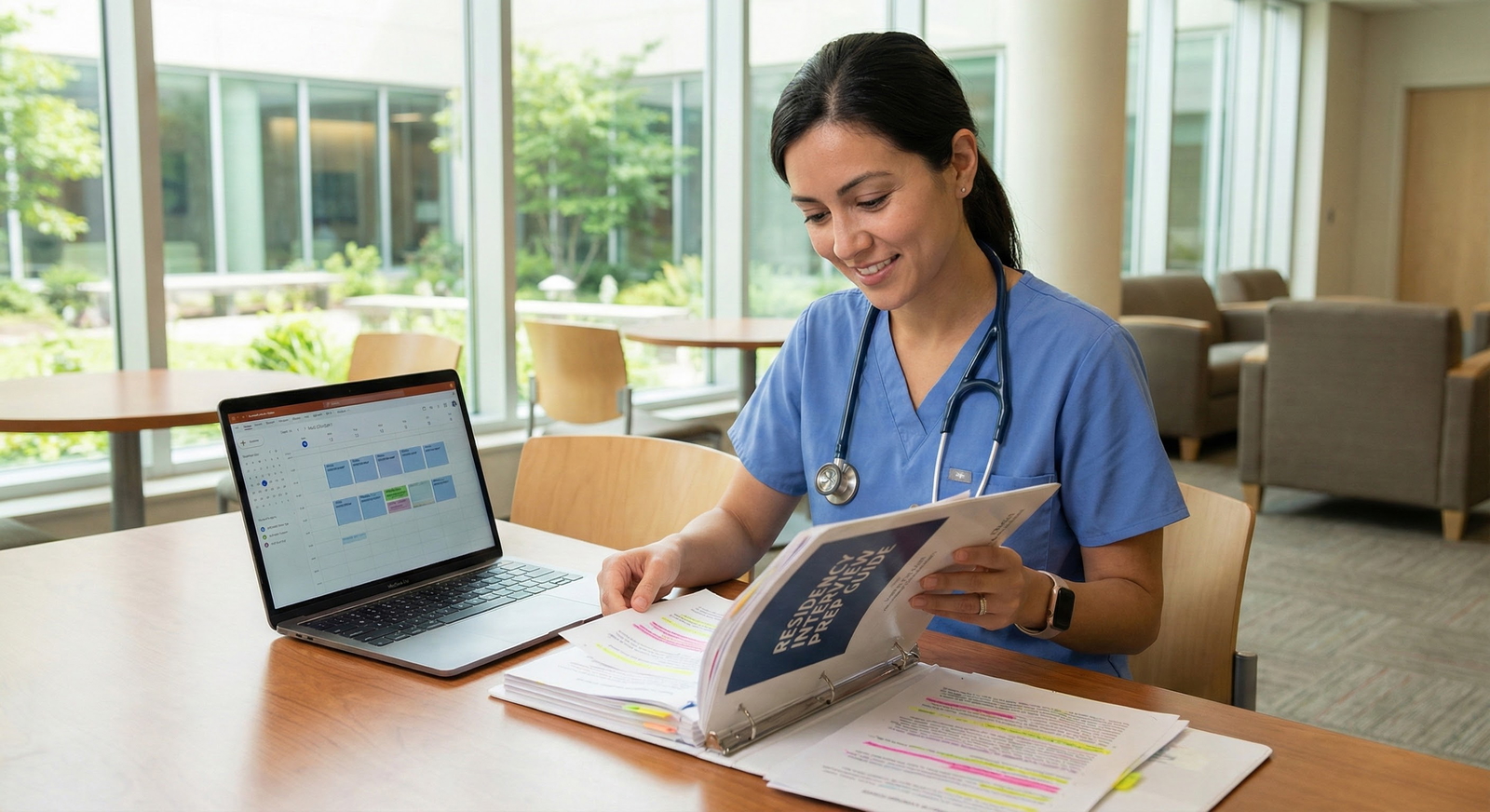
Calendar and scheduling system:
- Use a single master calendar (digital) for all potential interview dates.
- Block off time zones clearly (especially if you’re still in the Caribbean or abroad).
- Pre-identify which dates are firm conflicts (exams, travel, visa appointments).
Technology readiness (for virtual interviews):
- Reliable laptop/computer with a working camera and microphone
- Stable internet connection; test from the exact location you plan to use
- Backup plan (hotspot, second device) in case of technical issues
- Familiarity with Zoom, Teams, or whatever platform programs commonly use
Documents ready to reference:
- Updated CV and ERAS printout or PDF
- Personal statement copy
- List of your research, publications, and presentations
- A quick-reference sheet with each program’s key information and your specific talking points

When Invitations Arrive: Respond Strategically
As a Caribbean IMG, you may receive fewer total invitations than U.S. grads, making your scheduling strategy critical.
- Respond quickly and professionally to invitations; popular dates fill fast.
- Prioritize EM-IM programs first, then EM or IM categorical backups, based on your match strategy.
- Be careful about overbooking; virtual interviews are draining. Most applicants find 1–2 interviews per day is the maximum sustainable load.
- Confirm time zones and note them explicitly in your calendar.
If you’re in a Caribbean timezone:
- Double-check whether the program’s times are in Eastern, Central, Mountain, or Pacific.
- Practice being online and ready 15–20 minutes before any scheduled session.
Pre-Interview Research: Depth over Volume
For each program, create a one-page “Program Snapshot” including:
- Location and hospital types (academic, safety net, community)
- Number of EM-IM residents and class size
- Unique aspects of their EM and IM departments (trauma level, ICU exposure, etc.)
- Mission or population focus (underserved, urban, rural, etc.)
- Specific reasons you are drawn to them (mentorship, dual interests, geography)
Having this ready reduces last-minute panic and lets you ask meaningful questions during interviews.
Performance Skills: How You Come Across on Interview Day
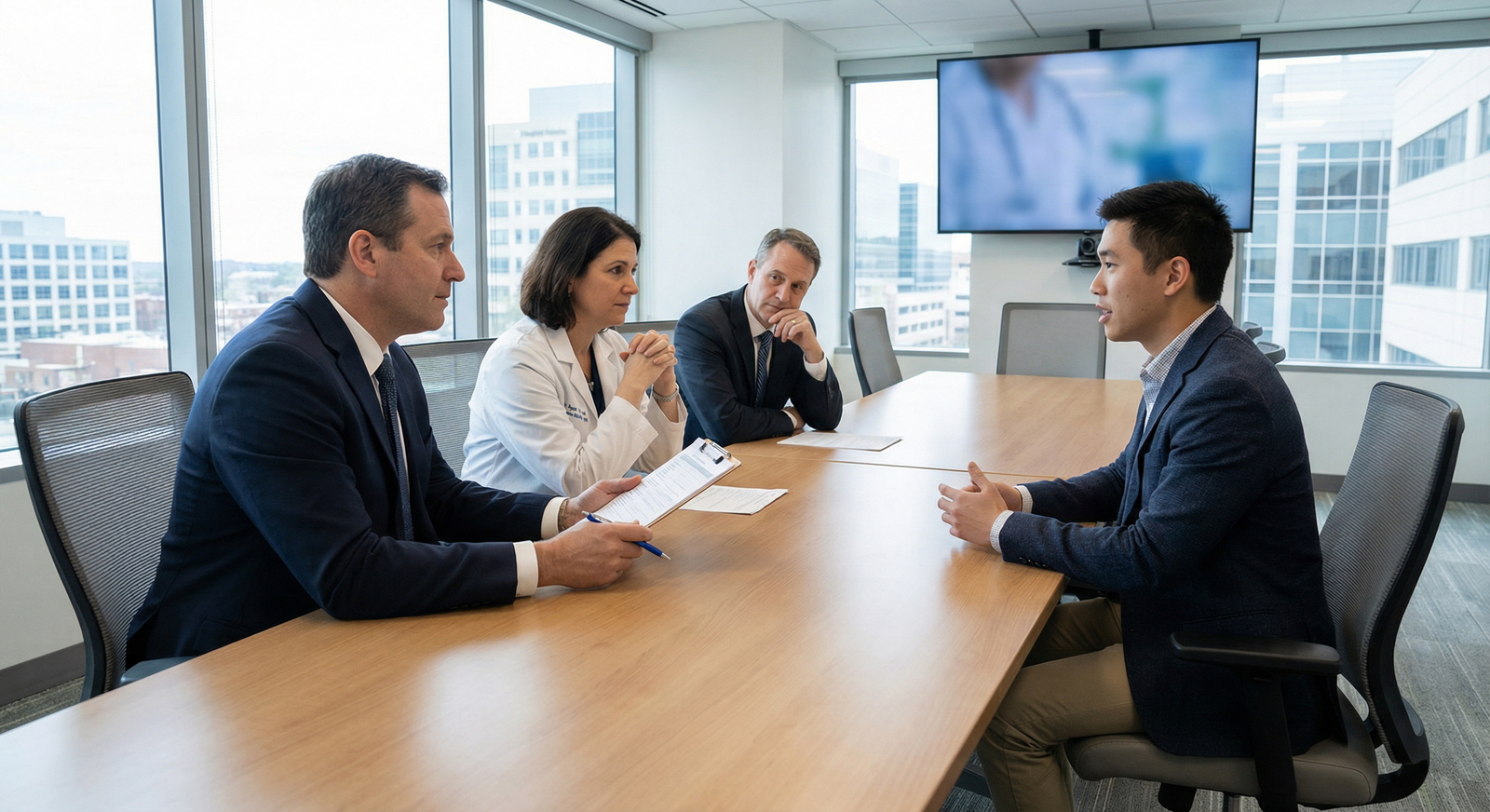
Knowing what to say is only half of residency interview preparation; how you say it matters just as much, especially when programs may carry preconceived ideas about Caribbean training.
Professional Presence for Virtual Interviews
As a Caribbean IMG, many or all of your interviews may be virtual. Pay attention to:
Environment:
- Neutral, clean background (plain wall, bookshelf, or tidy study area)
- Good lighting (face gently lit from the front; avoid backlighting)
- Camera at eye level; your head and shoulders should be clearly visible
Attire:
- Professional (suit jacket or blazer, collared shirt or blouse)
- Solid or subtle patterns; avoid loud prints or distracting jewelry
Body language:
- Look at the camera when speaking (simulates eye contact)
- Nod and use small facial reactions to show engagement
- Avoid fidgeting, background movement, or checking your phone
Practice one or two mock interviews on video and watch the recordings:
- Do you appear confident or hesitant?
- Are your answers concise or rambling?
- Are there verbal fillers (“um,” “like,” “you know”) that you can reduce?
Communicating Clearly as an IMG
Even with excellent English, communication style can differ by culture. Pre-interview, focus on:
Pacing:
- Speak slightly slower than you think you should; clarity beats speed.
- Pause before answering complex questions to organize your thoughts.
Structure:
- Use 1–2 sentence summaries before longer explanations.
- End your answers by circling back to the question or to the EM-IM context.
Content boundaries:
- Be honest but professional—avoid oversharing personal grievances, financial hardships, or negativity about your school, country, or colleagues.
- Practice talking about your Caribbean school with pride and balance—acknowledge limitations without sounding defensive or bitter.
Handling Difficult or Unexpected Questions
You may encounter:
- Questions about low scores, failures, or gaps
- Questions about visas or long-term plans in the U.S.
- Behavioral questions you didn’t anticipate
Pre-interview, decide on principles:
- Stay calm and take a brief pause before answering.
- Acknowledge reality (“Yes, I did have to repeat Step 1”) without excuses.
- Focus on growth:
- What changed about your study strategy or mindset?
- What habits or systems did you implement afterward?
- How have your subsequent performances improved?
Example for a Step failure:
“I did fail Step 1 on my first attempt. At the time, I underestimated the adjustment from my Caribbean curriculum to the style of U.S. exams. I reevaluated my approach, worked with mentors, and used more U.S.-based question banks. On my second attempt, I passed with a solid margin, and since then I’ve performed consistently on my clinical rotations and shelf exams. That experience has made me more disciplined and reflective about how I learn—skills I bring into my day-to-day clinical work.”
Post-Interview Organization and Professionalism
Pre-interview preparation also includes planning how you’ll handle the period after each interview day, which affects how you’re remembered and how you rank programs.
Immediately After Each Interview
Within 24 hours of each interview:
- Jot down immediate impressions:
- Culture and “vibe” of residents and faculty
- Unique strengths (curriculum, volume, support for IMGs)
- Any concerns or uncertainties
- Write down specific details:
- Names and roles of interviewers
- Memorable questions you were asked
- Topics you discussed (shared interests, particular cases, etc.)
These notes are essential later when forming your rank list and writing any follow-up messages.
Thank-You Emails and Follow-Up
Not all programs expect or value thank-you emails, but as a Caribbean IMG, professional follow-up rarely hurts as long as it’s genuine and concise.
- Send short, personalized emails to key faculty or the program director within 48–72 hours.
- Reference something specific from your conversation—this shows attention and sincere interest.
- Reiterate 1–2 reasons why the program is a good fit for your EM-IM goals.
Example structure:
Dear Dr. [Name],
Thank you for taking the time to speak with me during my interview for the EM-IM program on [date]. I appreciated our conversation about [specific topic], and learning more about [program feature].
I am particularly drawn to your program’s [EM-IM feature—e.g., strong critical care exposure, emphasis on underserved populations, or dual-boarded faculty mentorship], which aligns closely with my goal of [brief career goal].
Thank you again for your time and consideration.
Sincerely,
[Your Name]
Reflecting on Fit as a Caribbean IMG
Beyond prestige or location, consider:
- IMG support: Did current residents (especially IMGs) describe supportive leadership and fair treatment?
- Education structure: Is there organized teaching for both EM and IM, or do EM-IM residents feel stretched and unsupported?
- Career outcomes: Where have recent EM-IM graduates gone (fellowships, academic vs. community, visas)?
- Personal life factors: Cost of living, distance from family, immigration/visa environment in that state.
Pre-interview, you can create a simple rubric (1–5 scale) with categories:
- EM training quality
- IM training quality
- Culture/support for IMGs
- Location and lifestyle
- Career alignment (critical care, academic EM, global health, etc.)
Update this rubric after each interview; it will help you create a thoughtful rank list, particularly if you are also considering EM or IM categorical programs as part of your SGU residency match or broader Caribbean medical school residency plan.
FAQs: Pre-Interview Preparation for Caribbean IMGs Applying to EM-IM
1. How many interviews do I need as a Caribbean IMG aiming for EM-IM?
EM-IM combined programs are few and competitive, so most Caribbean IMGs also apply to categorical EM, IM, or both. There is no magic number, but in general:
- For EM-IM alone, expect a limited number of invitations (often <10) even for strong applicants.
- Many Caribbean IMGs target a mixed portfolio: EM-IM + EM + IM. Aim for a total number of interviews that historically gives a high match probability for IMGs (often 10–15+ across all specialties, though this varies by profile).
Focus on maximizing the quality of each interview rather than chasing an unrealistic number of combined interviews.
2. How should I address being from a Caribbean medical school during interviews?
Acknowledge it honestly, without apology or defensiveness:
- Highlight strengths: clinical exposure, adaptability, resilience, cultural competence.
- Briefly acknowledge challenges (distance from U.S. system, need to adapt to new exams).
- Pivot to how you’ve demonstrated readiness through USMLE performance, strong U.S. letters, SLOEs, and clinical evaluations.
Avoid negative comments about your school, peers, or faculty.
3. What are the most important interview questions residency programs will ask for EM-IM?
While every program differs, you should be prepared for:
- “Tell me about yourself.”
- “Why EM-IM combined?” (with specific reasons beyond “I like both”)
- “What are your strengths and weaknesses as a future EM-IM resident?”
- Behavioral questions: difficult patient, conflict on the team, mistake you made, handling stress or burnout.
- Your long-term goals and how dual training fits those goals.
Thoroughly preparing for these core questions will make you more confident with any variant you encounter.
4. Is there anything unique I should emphasize as an EM-IM applicant compared with a pure EM or IM applicant?
Yes. You should:
- Explicitly address how you balance acute care and longitudinal care in your interests.
- Show that you understand the extra intensity and length of EM-IM training and have thought about the workload.
- Highlight experiences where you followed patients across settings (e.g., from ED to ward, or from admission to outpatient follow-up).
- Clarify a coherent vision for how you will use both skill sets in your career (e.g., academic EM with an inpatient medicine role, critical care, hospital administration, rural practice, or global health).
With deliberate, structured pre-interview preparation that addresses both your Caribbean IMG background and the unique expectations of EM-IM combined programs, you can present yourself as a mature, well-informed, and compelling candidate—ready to thrive in one of the most demanding and rewarding residency pathways.