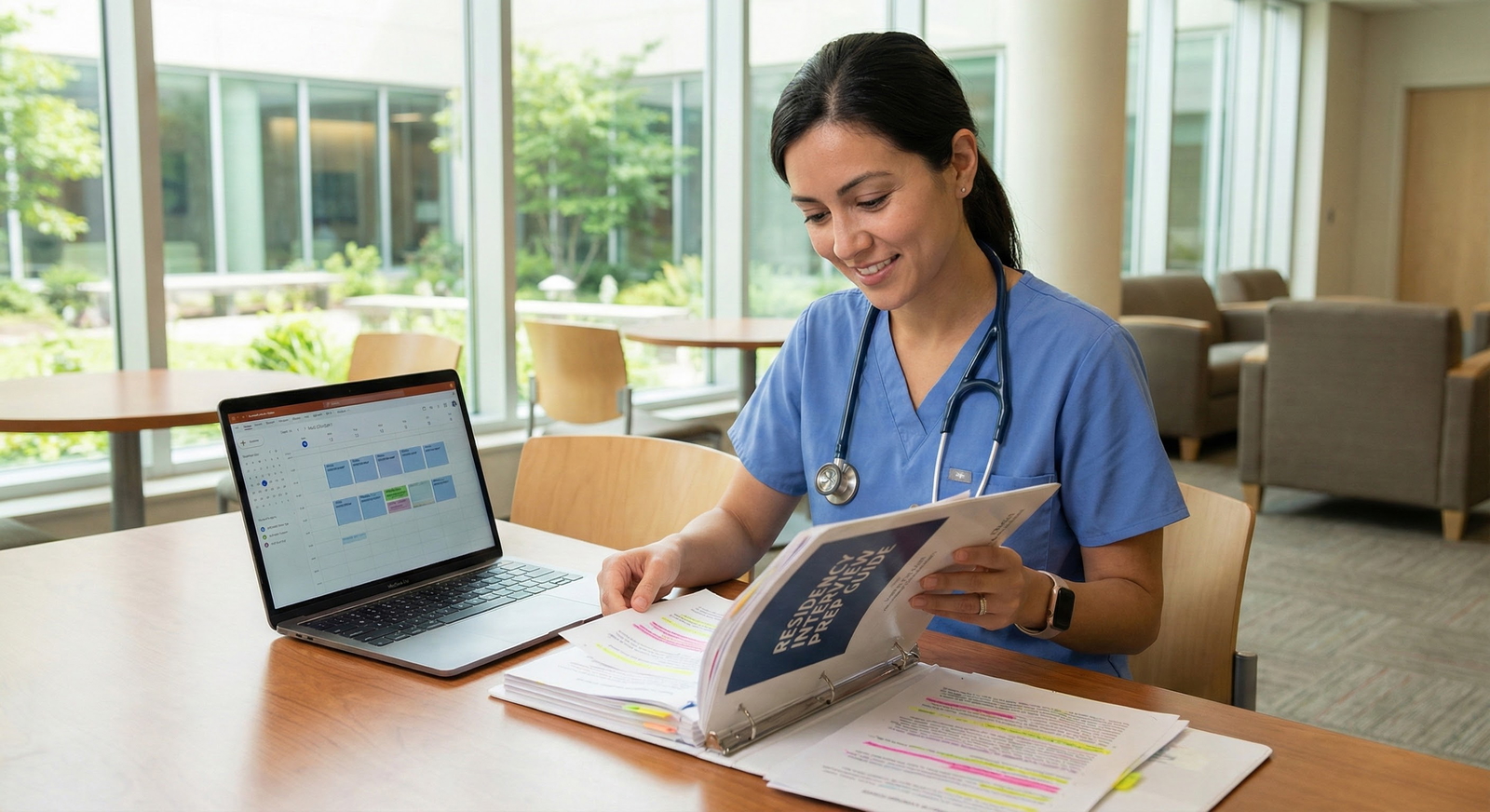
Preparing for residency interviews is a pivotal step in your journey as a Caribbean IMG, especially if you’re pursuing a career in global health. You’re not only competing for a training spot—you’re also trying to show programs that you understand population-level care, health equity, and international medicine, and that your Caribbean medical school background is an asset, not a liability.
This guide will walk you through what to do before interview day: what to research, how to align your story with global health, how to handle concerns about being a Caribbean IMG, and how to build a structured, high-yield interview preparation plan.
Understanding the Unique Position of Caribbean IMGs in Global Health
Caribbean medical graduates bring a distinct perspective to residency—one that can be particularly valuable to programs with a global health residency track or strong focus on international medicine and underserved care.
Why your background is an asset
As a Caribbean IMG, you often come with:
First-hand exposure to resource-limited settings
Rotations in the Caribbean frequently involve working with constrained diagnostic tools, limited subspecialty access, and high-need communities.Lived experience with health inequities and cross-cultural care
You’ve likely seen how social, economic, and political factors affect access to care, adherence, and outcomes.Adaptability and resilience
Navigating Caribbean medical school systems, visa issues, and clinical rotations abroad demonstrates persistence and problem-solving.
When framed well, these elements powerfully support your interest in global health, health policy, humanitarian work, or international medicine.
Common concerns programs may have about Caribbean IMGs
You should also be realistic about the concerns some program directors may have:
- Variable clinical training environments
- USMLE/Step scores and exam pass rates
- Need for more supervision and onboarding time
- Perceived differences in academic rigor
Your pre-interview preparation should focus on anticipating these concerns and providing evidence-based reassurance (strong USMLE performance, positive US clinical experiences, strong letters, research, leadership).
How this connects to global health programs
Programs with a global health residency track or robust international partnerships are often looking for:
- Demonstrated commitment to underserved populations
- Long-term interest in global health (not just “medical tourism” electives)
- Cultural humility and ethical awareness
- Ability to work in interprofessional, resource-limited settings
Your goal in pre-interview prep is to link your Caribbean training and experiences directly to these priorities.
Researching Programs with Global Health Opportunities
Interview prep starts well before you practice any answers. You need to deeply understand each program, especially the ones advertising global health, international medicine, or a global health residency track.
Step 1: Identify global health–oriented programs among your interviews
For each interview offer, determine:
- Does the program offer:
- A formal global health residency track or pathway?
- A global or immigrant health clinic?
- Established international rotations or partnerships (e.g., sites in Africa, Latin America, the Caribbean, Asia)?
- Are there faculty with:
- Global health training (e.g., DTM&H, MPH with global health focus)?
- Experience in humanitarian work, WHO projects, NGOs, or academic global health?
Use:
- Program websites (Global Health, International Health, or Community Health sections)
- Faculty bios and publication lists (PubMed, Google Scholar)
- Social media (program Twitter/X, Instagram, LinkedIn)
- Alumni pages (to see where graduates work—MSF, WHO, academic global health centers, etc.)
Step 2: Build a concise “Program Snapshot” for each interview
Create a one-page document per program with:
- Program basics: Size, location, affiliated hospitals
- Global health elements:
- Formal track: structure, duration, requirements
- Key global health faculty and their interests
- Types of international or underserved rotations
- Mission and values:
- Statements about health equity, diversity, international medicine
- Specific populations served (refugees, migrants, rural, urban poor)
- Unique features:
- Collaborations with NGOs or schools of public health
- Long-standing partnerships in low- or middle-income countries
- Global health research or implementation science focus
This snapshot becomes your pre-interview briefing sheet and supports tailored answers and questions.
Step 3: Connect your experiences to each program’s global health priorities
For each program, write short notes on:
How your Caribbean training aligns with their mission
Example: “Program cares for large immigrant population; my experience caring for Haitian and Venezuelan patients in the Caribbean aligns with working in multilingual, multicultural settings.”What you can contribute
Example: “Experience adapting to limited diagnostic resources; can contribute to QI projects optimizing care in low-resource clinics.”What you hope to gain
Example: “Formal training in global health ethics, program evaluation, and implementation science.”
Having this mapped out before the interview will sharpen your responses and make your interest feel specific, not generic.

Crafting Your Personal Global Health Narrative
Your story is your most powerful tool. For a Caribbean IMG pursuing global health, your narrative should clearly answer:
- Why medicine?
- Why global health specifically?
- Why training in the U.S. (or the specific country/region) as a Caribbean IMG?
- How have your experiences prepared you for this path?
- What are your long-term goals?
Step 1: Clarify your core motivations
Write 3–5 bullet points answering:
When did global health first become meaningful to you?
(e.g., personal/family experience, clinical rotation, public health project)What specific global health themes speak to you most?
Examples:- Infectious diseases in resource-limited settings
- Maternal and child health
- Noncommunicable diseases in low-income communities
- Disaster response and humanitarian crises
- Health systems strengthening
- Migrant and refugee health
Why do you believe residency with a global health residency track is the right path, versus solely working abroad after residency?
Use concrete, honest reasons—avoid vague phrases like “I just love helping people abroad.”
Step 2: Build 2–3 anchor stories
Select 2–3 specific experiences that showcase:
Commitment to underserved care
Example: Longitudinal volunteer or clinical work in a rural Caribbean clinic or urban underserved area.Adaptability and problem-solving in low-resource settings
Example: Managing complex cases with limited diagnostics and coordinating community-based solutions.Ethical and culturally sensitive practice
Example: Navigating language barriers, cultural beliefs about illness, or resource allocation in a respectful and thoughtful way.
For each story, outline:
- Context (where, when, who)
- Challenge or dilemma (clinical, cultural, ethical, logistical)
- What you did (actions, collaboration, communication)
- What you learned about:
- Yourself
- Teamwork
- Systems-level or population-level care
- Global health ethics
These stories become the backbone of your answers to many interview questions residency programs will ask, such as:
- “Tell me about a difficult clinical situation.”
- “Describe a time you worked with limited resources.”
- “What experiences have shaped your interest in global health?”
Step 3: Strategically address the “Caribbean IMG” label
You will not always be explicitly asked about this, but you should be ready to address it smoothly and confidently.
Prepare a short, positive framing, for example:
“Training at a Caribbean medical school has been a defining part of my development. I’ve learned to adapt quickly, work in multicultural teams, and care for patients in settings where we often had to be creative and resourceful. That experience has reinforced my interest in global health and in working with underserved communities, because I’ve seen firsthand how social and structural factors shape health outcomes.”
Then, quietly back it up with evidence:
- Strong USMLE/COMLEX performance
- Solid US clinical experience with letters from U.S. faculty
- Examples of initiative (research, QI projects, leadership)
You’re not apologizing for being a Caribbean IMG; you’re showing how it has strengthened your global health perspective.
Systematic Residency Interview Preparation: From Questions to Practice
Once you understand your story and the programs, you can shift to structured residency interview preparation: learning how to prepare for interviews in a disciplined, high-yield way.
Step 1: Know the common question types—and their global health angle
You can expect:
Tell me about yourself.
- Include: where you trained (Caribbean medical school), major themes of your journey, and a clear link to global health.
Why this specialty and why this program?
- Be specific about:
- The program’s global health residency track or clinics
- Faculty whose work aligns with your interests
- Populations the program serves that connect with your previous experiences
- Be specific about:
Why global health / international medicine?
- Connect long-term goals (e.g., academic global health, NGO work, health systems strengthening) with the program’s offerings.
Behavioral questions (using “Tell me about a time…”):
Prepare examples that incorporate global or underserved contexts:- Conflict on a team
- Ethical dilemmas
- Handling mistakes
- Working with limited resources
Addressing weaknesses
- Gaps, exam attempts, delays, or transitions from Caribbean school to U.S. rotations
- Use a growth-focused framing: what happened, what you learned, how you improved.
Global health ethics and expectations
Programs may probe:- Short-term “mission trips” vs. sustainable partnerships
- Respecting local health professionals
- Understanding of “do no harm” in international medicine
Be ready to reflect critically, not just describe travel experiences.
Step 2: Use structured frameworks for answering
Adopt frameworks so your answers are clear and concise:
Tell me about yourself:
- Past → Present → Future
- End with a statement tying you to global health and that program.
Behavioral questions:
- STAR or CAR method:
- Situation / Context
- Task / Role
- Action
- Result / Reflection
- Emphasize reflection and learning—especially around global health or cross-cultural care.
- STAR or CAR method:
Why this program?:
- 1–2 specific global health–related features
- 1–2 general strengths (education, research, mentorship)
- 1–2 ways you will contribute.
Step 3: Build a personal “answer bank”
Document:
- 3–4 core global health stories
- 2–3 stories showcasing teamwork and communication
- 1–2 examples of handling failure or setbacks (exam issues, personal adversity)
- 1 clear, compelling long-term career vision involving global health
You can re-use each story to answer multiple question types by changing the angle. For example:
- A story about adapting to limited lab access can answer:
- “Tell me about a challenging clinical situation.”
- “How do you manage limited resources?”
- “Why are you interested in global health?”
Step 4: Rehearse—not memorize
For each anticipated question:
- Write brief bullet points, not full scripts.
- Practice speaking your answers aloud; aim for 1–2 minutes per typical question.
- Record yourself (audio or video) and self-evaluate:
- Clarity and structure
- Filler words (“um,” “like”)
- Tone: confident but not rehearsed
- Eye contact and posture (if video interviewing)
Avoid robotic or overly polished responses. You want to sound prepared but authentic.

Practical Logistics: Documents, Technology, and Mindset
The best answers in the world won’t matter if you’re flustered by logistics, especially in a virtual interview era. As a Caribbean IMG, you may also contend with time zones, internet stability, and documents spread across different systems.
Step 1: Organize your application materials
Before interviews start, assemble a digital folder for quick reference:
- Your ERAS application (PDF)
- Personal statement (highlighting global health)
- CV
- Copies of USMLE/COMLEX scores
- List of research, QI, or global health projects
- List of publications/abstracts/posters
- A spreadsheet or document with:
- All programs and dates
- Interview platform (Zoom, Thalamus, Microsoft Teams, in-house systems)
- Program snapshot and key talking points
Review this before each interview to refresh specific details.
Step 2: Prepare for virtual interviews (common for IMGs)
Internet:
- Test speed and stability at the time of day your interviews will occur.
- Have a backup plan: mobile hotspot, different location, or institutional Wi-Fi.
Equipment:
- Functional webcam, microphone, and headphones/earbuds.
- Neutral, uncluttered background; good lighting aimed at your face (natural light or lamp).
Platform familiarity:
- Install and test Zoom / Teams / WebEx or the specific residency platform.
- Practice logging in, screen positioning, and muting/unmuting.
Dress code:
- Professional attire (suit or equivalent), just as for an in-person interview.
Step 3: Time zones and scheduling across regions
Many Caribbean IMGs interview with programs in multiple U.S. time zones:
- Confirm the time zone for each interview (ET, CT, MT, PT).
- Translate into your local time and double-check.
- Use calendar alerts with 30-, 10-, and 5-minute reminders.
If you anticipate technical issues due to your location, consider:
- Inquiring about using a hospital or university space with reliable internet.
- Scheduling interviews at times of day when your internet is most stable.
Step 4: Mental preparation and wellness
Residency interview season can be mentally exhausting and emotionally draining, especially when balancing visa concerns, financial stress, and the pressure as a Caribbean IMG.
Before interviews:
Establish a routine:
- Sleep schedule
- Light exercise
- Short breathing or mindfulness practice before interviews
Prepare one or two confidence-boosting reminders:
- Evidence of your achievements: scores, honors, strong letters, successful clinical feedback.
- A written note about why you chose this path and why global health matters to you.
Build a support structure:
- Fellow Caribbean IMGs or SGU / other Caribbean alumni who have matched (e.g., to track the SGU residency match outcomes and others for perspective).
- Mentors or faculty advisors who encourage and coach you.
Questions to Ask Programs: Global Health–Focused and Caribbean IMG–Savvy
Interviewers will almost always ask if you have questions. This is a key chance to:
- Demonstrate your sincere interest in global health and international medicine.
- Evaluate whether the program truly supports IMGs and your career goals.
Prepare 5–7 strong questions in advance; ask 2–3 per interview, tailored to the interviewer’s role.
Global health–oriented questions
For program directors or global health track directors:
- “Can you describe the structure of your global health residency track and how residents balance track activities with core clinical training?”
- “What types of international partnerships or longitudinal global health projects are available to residents, and how sustainable are these collaborations?”
- “How do you prepare residents for the ethical challenges of working in low-resource international settings?”
- “Are there opportunities to integrate research, QI, or implementation science into global health work during residency?”
For faculty with global health or immigrant health focus:
- “How have residents from your program gone on to work in global health or international medicine after graduation?”
- “What support is available for residents to present global health projects at conferences or pursue additional training (e.g., MPH, DTM&H)?”
Questions relevant to IMGs and Caribbean graduates
You might ask more generally about support, without focusing solely on your IMG status:
- “How does your program support residents transitioning from different medical education systems, including international graduates?”
- “Are there mentorship structures that pair residents with faculty who share similar backgrounds or career interests, such as global health or coming from international schools?”
- “Do you have recent graduates who were IMGs and went on to fellowships or careers involving global health?”
These questions help you gauge:
- How frequently Caribbean IMGs or other IMGs are matched and supported
- Whether the program is structurally oriented toward equity and inclusion
FAQs: Pre-Interview Preparation for Caribbean IMGs in Global Health
1. How can I best explain being from a Caribbean medical school in a way that helps, not hurts, my application?
Be straightforward and positive. Briefly acknowledge your training background, then emphasize skills and perspectives you gained:
- Working in resource-limited settings
- Caring for diverse, often underserved populations
- Adapting to different healthcare systems and cultures
Connect this directly to global health and the program’s mission. Avoid sounding defensive or apologetic; instead, frame it as a strength that prepares you for international medicine and health equity–focused work.
2. What specific interview questions residency programs might ask about global health?
Common global health–related questions include:
- “What does global health mean to you?”
- “Tell me about a meaningful global or underserved experience you’ve had.”
- “How do you think short-term international rotations should be structured ethically?”
- “What are your long-term goals in global health or international medicine?”
- “How would you balance global health work with personal life and responsibilities?”
Prepare clear, reflective answers that go beyond travel stories and show understanding of systems, ethics, and sustainability.
3. How can I relate my Caribbean clinical experiences to a U.S.-based global health residency track?
Highlight parallel themes:
- Managing diseases common in low- and middle-income countries
- Navigating resource limitations (labs, imaging, medications)
- Learning from and collaborating with local healthcare workers
- Addressing social determinants of health (transportation, cost, stigma, housing, education)
Explain how these experiences have given you foundational skills that you want to refine through a global health residency track—including research, leadership, and system-level interventions.
4. As a Caribbean IMG, how early should I start my residency interview preparation?
Start before interview invitations arrive:
- 3–6 months prior: refine your global health narrative, update your CV, pursue any last-minute global or underserved projects.
- 1–2 months prior: research likely programs, understand which have global health tracks, and draft question lists.
- Once invites arrive: build your program snapshots, practice answers daily or several times per week, and rehearse mock interviews.
This timeline is especially important if you’re balancing rotations, visa planning, and other responsibilities.
By approaching your residency interview season with this structured, global health–centered strategy, you can transform potential doubts about being a Caribbean IMG into a compelling case for why your background uniquely prepares you for a career in global health and international medicine. Your pre-interview preparation is not just about rehearsing answers—it’s about owning your story, aligning it with each program’s mission, and demonstrating that you are ready to grow into a physician who can serve patients and communities across borders and systems.