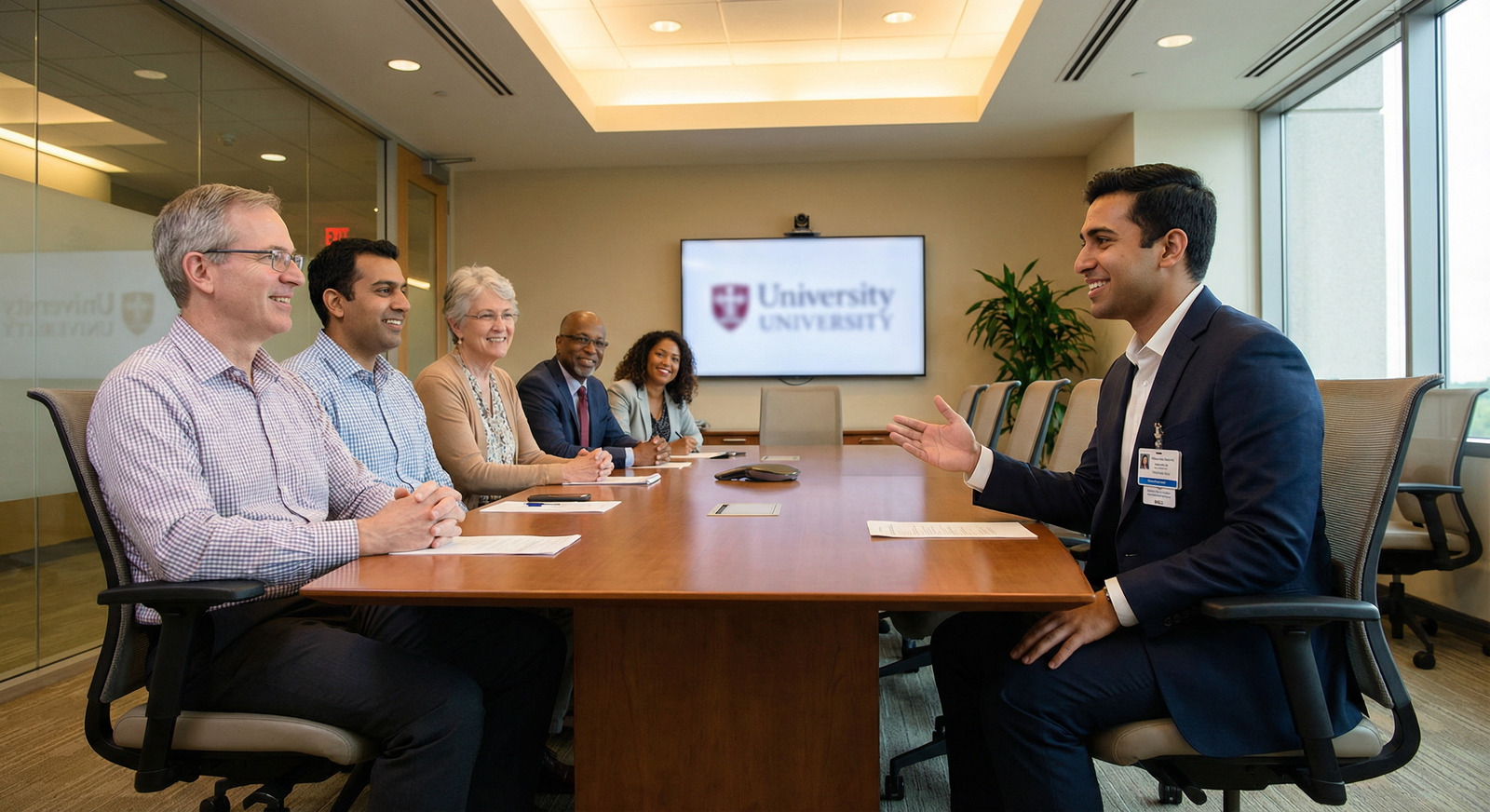
As a Caribbean IMG targeting a Transitional Year (TY) residency, the questions you ask programs can powerfully shape how you’re perceived—and how you decide where to rank. This article focuses on what to ask and how to ask during interviews, resident socials, emails, and second looks, especially tailored to Caribbean medical school graduates (including those from SGU, AUC, Ross, Saba, etc.).
We’ll cover strategic, high-yield questions that help you:
- Understand how friendly a program is to Caribbean IMGs
- Evaluate whether their Transitional Year truly supports your long-term specialty goals
- Spot red flags in training, culture, and support
- Stand out as a mature, prepared candidate
Why Your Questions Matter So Much as a Caribbean IMG
For a Caribbean IMG aiming for a Transitional Year residency, every interaction is an opportunity to:
- Show you understand the purpose of a TY program (not just “a year before something else”).
- Signal professionalism and maturity by asking thoughtful, specific questions.
- Clarify whether a program will actually help you match into your ultimate specialty (radiology, anesthesiology, neurology, PM&R, dermatology, radiation oncology, etc.).
- Assess how they view Caribbean graduates and how often they help IMGs, especially from Caribbean medical schools, successfully match into advanced programs.
Well-prepared questions = clear evidence that you’ve done your homework and are serious about your training.
Core Strategy: How to Approach Asking Questions
Before we get into specific questions, keep this strategy in mind:
Ask targeted questions to different people
- Program Director (PD) / Associate PD
- Residents (especially TY interns)
- Program Coordinator
- Faculty in your intended specialty (if available)
Avoid questions easily answered on the website (schedule structure, basic benefits). Instead, reference that info and ask for clarification or nuance.
Prioritize depth over volume. 3–5 strong, open-ended questions per session are enough.
Adapt to your situation as a Caribbean IMG:
- Highlight your clinical experience, especially if you did rotations in the U.S.
- Subtly probe support for visa sponsorship (if needed), the Caribbean medical school residency track record, and mentoring for advanced matches.
High-Value Questions to Ask the Program Director (PD) or Leadership
When planning what to ask the program director, focus on questions that show you understand the structure and intent of a Transitional Year and that you’re thinking long term.
1. Questions About Program Philosophy and Structure
Goal: Understand what the program really values and how that translates into day-to-day training.
Consider questions like:
“How would you describe the mission of your Transitional Year residency within the broader institution?”
- Signals: You’re interested in more than a one-year placeholder; you want to align with their goals.
“What do you see as the strengths and unique features of this TY program compared to a preliminary medicine or preliminary surgery year?”
- Helps clarify whether the program is cushioned, intense, research-focused, or lifestyle-friendly.
“How do you balance service needs with educational priorities for Transitional Year residents?”
- Allows you to assess whether interns are primarily “workhorses” or truly learners.
2. Questions About Opportunities and Curriculum
Goal: See how the program supports your long-term specialty, not just the intern year.
Examples:
- “How flexible is the elective time for Transitional Year residents, and how do residents typically use that time to prepare for advanced specialties?”
- “Are there dedicated rotations or experiences tailored to residents entering radiology/anesthesiology/neurology/PM&R/etc.?”
- “How do you support TY residents who are still exploring between a few potential advanced specialties?”
If you already know your advanced specialty (for example, you have a linked SGU residency match into radiology or anesthesiology):
- “For residents matched to advanced positions, how does your TY program help them transition smoothly and build relevant skills?”
3. Questions About Outcomes and Advanced Placement
Goal: Understand the program’s track record, especially for Caribbean IMGs moving into advanced specialties.
Examples:
“Where have your recent Transitional Year graduates gone for their advanced residencies?”
- Ask for recent years and look for: competitive advanced programs, variety of specialties, consistent placement.
“Do you keep data on match outcomes for TY residents, particularly IMGs and Caribbean graduates?”
- Very important for a Caribbean medical school residency pathway.
“For residents seeking advanced positions during the TY year, what formal support is available—for example, advising, letters, or help arranging away rotations?”
Listen carefully to whether they:
- Know their outcomes well
- Mention IMGs and Caribbean grads positively and specifically
- Focus on real mentorship vs “you’re on your own”
4. Questions About Evaluations, Feedback, and Support
Goal: Ensure you won’t be invisible or unsupported.
Ask:
- “How is feedback delivered to Transitional Year residents during the year, and how often?”
- “If a resident is struggling—whether clinically, personally, or with exams—what kind of support systems are available?”
- Especially important if you had any academic challenges early in med school.
If applicable:
- “Do you have experience supporting residents who are graduates of Caribbean medical schools and may have unique transitions into the U.S. system?”
This politely signals your background and gauges their comfort level with Caribbean IMGs.

High-Yield Questions to Ask Current Residents (Especially TY Interns)
Current residents (and especially those in the Transitional Year program) are your best source of honest, practical insights.
Focus resident questions on day-to-day reality, culture, workload, and hidden red flags.
1. Questions About Culture and Work Environment
“How would you describe the culture between attendings, residents, and nursing staff here?”
“What kind of resident tends to be happy and successful in this TY program?”
- This helps you see whether you’d fit in—and whether their answer sounds healthy.
“How approachable are the faculty when you have questions during busy rotations?”
As a Caribbean IMG:
- “Have there been many Caribbean IMGs in this program? How have they done here, and how are they viewed?”
- Watch for hesitation or negative patterns vs. pride in IMG success.
2. Questions About Schedule, Workload, and Autonomy
You need to know what your life will look like and how much bandwidth you’ll have for interviews, Step 3, or research.
Ask:
- “What does a typical week look like for a TY resident—on wards, on electives, and on nights?”
- “Are the duty hour limits respected in practice, or do you often stay late to finish work?”
- “How much autonomy do you have on inpatient rotations, and how comfortable do you feel with the level of supervision?”
A strong follow-up:
- “Do you feel like this is more of a ‘cush’ TY or a very intense intern year?”
- Many residents will answer this candidly.
3. Questions About Support for Career Goals
For a Caribbean IMG, the TY program must help you move forward, not just keep you afloat.
Ask:
- “How supportive is the program when residents need time for interviews for advanced or categorical positions?”
- “Did you feel supported in applying to your advanced specialty (letters, guidance, flexibility)?”
- “Do residents who don’t have an advanced spot already typically succeed in matching after this TY?”
If you’re still securing your advanced spot:
- “For residents entering without a guaranteed advanced position, what has the experience been like applying during the TY year?”
4. Questions About Education and Learning Experiences
- “How consistent and protected are teaching conferences and didactics for TY residents?”
- “Are didactics tailored to TY residents’ needs, or do you join categorical residents’ teaching sessions?”
- “Do you feel you’re gaining a solid clinical foundation that will help you in your advanced specialty?”
5. Questions to Detect Red Flags
These questions can reveal subtle problems:
- “If you could change one thing about this program, what would it be?”
- “Have there been any major changes in leadership, curriculum, or accreditation in the last few years?”
- “Do people usually renew their contracts or stay connected to the program after they leave?”
If you sense hesitation, gently probe:
- “Can you tell me a bit more about that?”
Special Considerations for Caribbean IMGs (Including SGU, Ross, AUC, etc.)
As a Caribbean IMG, you should deliberately evaluate each Transitional Year residency for how it supports international graduates and non-traditional pathways. This is especially true if you’re still seeking an advanced spot, didn’t achieve your ideal SGU residency match initially, or are using TY to strengthen your profile.
1. Questions to Clarify IMG/Caribbean Friendliness
You might ask the PD or faculty:
- “How many of your current or recent Transitional Year residents are IMGs or Caribbean graduates?”
- “What qualities have made IMGs successful in your program in the past?”
Or to residents:
- “Have there been barriers that IMGs or Caribbean graduates face here that I should be aware of?”
Listen for:
- Clear experience with IMGs
- Respectful, positive tone about Caribbean grads
- Concrete examples of successful IMG outcomes
2. Visa and Documentation Questions (If Applicable)
If you need visa sponsorship, do not wait until after interview day to clarify this.
Appropriate, professional wording:
- “Does your program sponsor visas for residents, and if so, which types (J-1, H-1B)?”
- “Have you had recent residents on visas, and did they encounter any difficulties with credentialing or scheduling?”
Confirm this with both program coordinator and official websites.
3. Stepping Stone Strategy Questions
Many Caribbean IMGs use a Transitional Year residency as a stepping stone to strengthen their application for:
- Radiology
- Anesthesiology
- Neurology
- PM&R
- Dermatology
- Other competitive specialties
Ask:
- “For residents who entered the TY with the goal of strengthening their application for a more competitive specialty, how successful have they been?”
- “Are there research opportunities or faculty mentorships that TY residents have used to improve their competitiveness?”
If you had prior application cycles with no match:
- “Have you worked with residents who were reapplicants, and how did the program support them in improving their application?”

Tailored Questions About Transitional Year Structure and Flexibility
Because a TY year is unique, your questions should reflect that you understand how it differs from a categorical internal medicine or surgery position.
1. Questions About Electives and Specialty Alignment
Elective structure is critical for a Transitional Year residency, especially if you’re using it to pivot or reinforce your advanced specialty choice.
Ask:
- “How many months of elective time do TY residents typically have, and how is that time usually scheduled?”
- “Are there any restrictions on which electives TY residents can choose?”
- “Can TY residents repeat an elective if it aligns with their advanced specialty—for example, two months of radiology or anesthesiology?”
If you already have your advanced spot:
- “For residents already matched into [specialty], are there recommended elective choices that best prepare them for their PGY-2 year?”
2. Questions About Board Exams and Step 3
For many Caribbean IMGs, Step 3 during TY is a strategic move.
Ask:
- “Do most TY residents take Step 3 during the year, and does the schedule allow flexibility for exam preparation?”
- “Are there any institutional resources or time-off policies to support residents taking Step 3?”
This tells you both about logistics and how invested the program is in your long-term success.
3. Questions About Rotations and Balance
- “What is the mix of inpatient vs outpatient time for TY residents?”
- “Are TY residents integrated with categorical residents on teams, or do they have separate roles?”
- “How has the program adjusted the curriculum over time based on resident feedback?”
You’re looking for signs of responsiveness and continuous improvement.
Smart “Interview Questions for Them” That Make You Stand Out
Program leadership and current residents notice when a candidate’s questions are:
- Specific to the Transitional Year structure
- Clearly connected to a realistic long-term plan
- Grounded in prior research about the program
Here are polished examples you can adapt.
1. To Show You Understand Transitional Year Design
- “I saw on your website that TY residents have X months of electives and participate in Y type of didactics. How have these elements evolved to better serve residents going into a variety of advanced specialties?”
2. To Show Commitment to Growth and Feedback
- “What differentiates residents who simply ‘get through’ the year from those who truly grow and excel here?”
3. To Show You’re Thinking About the Team and Culture
- “How do TY residents contribute uniquely to the program, and how are they integrated into the resident community socially and academically?”
4. To Show Self-Awareness as a Caribbean IMG
Without overemphasizing your background, you can frame a question like:
- “As a Caribbean IMG with strong U.S. clinical experience, I’m particularly interested in structured feedback and mentorship. How do faculty here mentor residents who are transitioning from different training environments?”
This frames your Caribbean background as a strength and a context, not a liability.
Questions to Avoid or Handle Carefully
Some questions can raise concerns if phrased poorly. You still need the information, but frame them wisely.
1. Overemphasis on Lifestyle Only
Avoid blunt questions like:
- “How easy is it here?”
- “Is this a chill program?”
Instead, ask:
- “How do residents maintain work–life balance, and how does the program support wellness?”
2. Salary/Benefits as a First Priority
You can get most benefit info online. If you must ask:
- “I’ve reviewed the benefits listed on your website—are there any additional wellness or educational benefits for TY residents that aren’t obvious from the official materials?”
3. Location Questions That Sound Negative
Avoid criticizing the city or region. Instead of:
- “Isn’t this area kind of boring?”
Try:
- “For residents who are new to this area, what have they enjoyed most about living here?”
Putting It All Together: How to Prepare Your Personal Question List
To stay organized and strategic:
Step 1: Research Each Program
Before each interview, review:
- Program website (rotations, curriculum, electives, call schedule)
- Current residents’ backgrounds (especially IMGs/Caribbean grads)
- Any links between the program and your advanced specialty
Step 2: Draft 8–10 Total Questions Per Program
Group them into:
- 3–4 for the Program Director/faculty
- 3–4 for current TY residents
- 1–2 for the Program Coordinator (logistics, visas, onboarding)
Step 3: Prioritize During the Interview
You may not get to all of them. Prioritize:
- Questions about training quality and culture
- Questions about advanced outcomes and support
- Questions about IMG/Caribbean track record (if not already obvious)
Step 4: Take Notes Immediately After
Write down:
- Specific wording used by PDs and residents
- Any mentions of Caribbean medical school residency success or advanced match data
- Any red flags or inconsistencies
This will be invaluable when building your rank list.
Frequently Asked Questions (FAQ)
1. As a Caribbean IMG, should I directly ask programs about their attitude toward Caribbean graduates?
Yes, but phrase it professionally. For example:
“What has been your experience working with graduates from Caribbean medical schools, and what has made them successful in your program?”
This invites them to highlight strengths and gives you insight into whether they are supportive, neutral, or hesitant about Caribbean IMGs.
2. What are the most important “questions to ask residency” programs for a Transitional Year specifically?
Focus on:
- Elective flexibility and how it supports your advanced specialty goals
- Track record of TY graduates matching into advanced positions
- Culture and workload (is it educational vs. purely service-driven?)
- Support for Step 3, interviews, and reapplicants
- How IMGs and Caribbean grads have historically performed in the program
These go beyond generic interview questions and show that you understand the purpose of a TY program.
3. Is it appropriate to ask what to ask the program director beforehand (e.g., from residents or current contacts)?
Absolutely. If you know a current or former resident, you can say:
“I’m interviewing with your program next month. Are there particular aspects of the TY or leadership that you’d recommend I ask the PD about?”
This can help you tailor interview questions for them that highlight what the program is proudest of and avoid topics they consider sensitive or over-asked.
4. How many questions should I ask during each interview?
Aim for 3–5 thoughtful questions per interview session (PD/faculty) and 3–5 for residents during socials or breakout rooms. More than that can feel forced, but fewer may signal lack of interest. Depth and relevance matter far more than sheer number.
By preparing targeted, strategic questions as a Caribbean IMG, you demonstrate insight, seriousness, and professionalism—and you gain the information you need to choose the right Transitional Year residency and pave the way for your long-term specialty success.