Why Your Residency Interview Introduction Matters More Than You Think
Walking into your residency interview, the first 60–90 seconds can shape how the entire conversation unfolds. Your introduction isn’t just a polite formality—it’s a strategic moment of personal branding, professional development, and storytelling that influences how interviewers remember you at the end of a long interview day.
Program directors and faculty may interview dozens of candidates in a short time. A well-crafted, authentic introduction helps you:
- Stand out as a memorable candidate
- Frame your story on your own terms
- Highlight your motivation and fit for the specialty
- Set a confident, engaging tone for the rest of the conversation
This guide will walk you step-by-step through how to design and deliver a memorable introduction for your residency interviews, with structure, examples, and practical tips you can start using immediately.
Core Objectives of a Strong Residency Interview Introduction
Before you start drafting your words, it helps to understand what an excellent introduction actually accomplishes. In the context of your medical career and the Residency Match and Applications process, a strong introduction should do four main things.
1. Capture Interest and Attention
Your interviewers are busy, often tired, and have heard many similar stories. You need to give them a reason to lean in and think, “I want to hear more from this applicant.”
Your introduction should:
- Start with a hook: a moment, question, or insight that sparks curiosity
- Feel personal and specific, not generic
- Show something about who you are—not just what you’ve done
2. Establish Rapport and Human Connection
Residency is fundamentally about teamwork. Programs care just as much about who you are as a colleague as they do about your CV.
Your introduction should help interviewers sense:
- Your personality (warm, thoughtful, reflective, enthusiastic, calm, etc.)
- Your communication style
- Your ability to connect with others quickly and professionally
These are crucial aspects of your professional development and how you’ll function in a team.
3. Set the Stage for Your Story
Think of your introduction as your interview “trailer.” It shouldn’t cover everything; it should set up the key themes you want to explore later.
Your introduction should:
- Briefly highlight your most relevant experiences
- Hint at your core strengths and interests
- Introduce themes you want to return to (e.g., underserved care, research, medical education)
This framing helps interviewers generate follow-up questions that play to your strengths.
4. Communicate Motivation and Fit
Residency programs want to know:
- Why this specialty?
- Why this program (or this type of program)?
- How do your experiences and goals align with their mission and strengths?
A good introduction subtly weaves in your motivation for the specialty and your fit with residency training, even before you’re directly asked.

Step-by-Step Framework: How to Craft a Memorable Introduction
Think of your introduction as a short, four-part narrative. This structure works well whether you’re interviewing in person or virtually.
Step 1: Open with a Hook That Feels Authentic
You don’t need to be dramatic or overly poetic. You need to be specific and true to you. Here are three types of hooks you can use, with updated examples.
a. A Brief Personal Anecdote
Use a short, concrete moment that illustrates why you’re drawn to your specialty or how you practice medicine.
“During my third-year rotation in internal medicine, I followed a patient with decompensated heart failure over several weeks. What stayed with me wasn’t just the physiology, but the continuity—adjusting his meds, calling his family, and seeing him walk into clinic breathing easier. That experience solidified how much I value long-term relationships and complex problem-solving in internal medicine.”
b. A Compelling Observation or Fact (Linked to Your Story)
If you use a statistic or fact, immediately tie it to your lived experience.
“Nearly half of adults with mental health conditions don’t receive treatment. During my psychiatry clerkship in a safety-net hospital, I saw that gap play out daily. Working with patients who had been marginalized for years made it clear to me that psychiatry is where I can combine advocacy, long-term patient relationships, and systems-level thinking.”
c. A Thought-Provoking Question
Use this only if it feels natural to your style—and always connect it quickly to your story.
“What does it mean to meet a patient on one of the worst days of their life—and then walk with them through it? That question has driven much of my training, and it’s what excites me most about emergency medicine.”
Key tips for your hook:
- Keep it to 2–3 sentences
- Avoid clichés (“I’ve always wanted to be a doctor”) unless you add specific detail
- Make sure you can discuss the story comfortably if they ask follow-up questions
Step 2: Clearly Introduce Yourself
After your hook, ground the conversation with a concise, professional self-introduction. Include your:
- Name
- Medical school (or current status)
- Specialty you’re applying to
For example:
“My name is Dr. Jane Doe, and I’m a recent graduate of XYZ Medical School, applying to categorical internal medicine.”
Or, if you’re an international or non-traditional applicant:
“My name is Dr. Ahmed Ali. I completed medical school at ABC University, practiced as a general physician for two years in rural clinics, and I’m now applying to family medicine residency in the U.S.”
Step 3: Highlight 2–3 Relevant Experiences or Themes
This is where your personal branding comes in. Instead of listing every achievement, choose two or three themes you want to be known for, such as:
- Commitment to underserved populations
- Strong research background
- Leadership and teaching
- Quality improvement and systems-based practice
- Global health work
- Interest in medical education
Then choose specific experiences that support those themes.
Example for Internal Medicine:
“Throughout medical school, I’ve gravitated toward complex medical patients and longitudinal care. During my sub-internship in general medicine, I enjoyed managing multi-morbidity and coordinating with a multidisciplinary team. In parallel, I spent a year working on a quality improvement project to reduce 30-day readmissions in heart failure, which taught me how small systems changes can meaningfully impact patient outcomes.”
Example for Pediatrics:
“I discovered how much I enjoy pediatrics during my inpatient rotation, but it was working at a community free clinic for children that shaped my goals. There, I saw how social determinants, family dynamics, and access to care influence every clinical decision. I also joined a research project on childhood obesity in underserved communities, which deepened my interest in preventive care.”
Tips for this section:
- Aim for 4–6 sentences total
- Keep it focused on what you learned and how it shaped your goals
- Avoid jargon and overly long descriptions
Step 4: Close with Your Goals and Why This Program/Type of Program
End your introduction by zooming out: where are you headed, and how does this program fit into your medical career path?
You can briefly mention:
- What type of physician you hope to become
- Specific aspects of training you value (e.g., community-based, academic, research-heavy, strong mentorship)
- Program characteristics that align with your goals (if you know them)
Example:
“Looking ahead, I hope to build a career in academic internal medicine, combining complex inpatient care with resident education and quality improvement work. I’m especially drawn to programs like yours that emphasize strong clinical training in a diverse patient population and support resident-led QI projects. I’m excited to learn more about how residents here are involved in improving care transitions and patient safety.”
This signals that you’ve done your research, you understand your own goals, and you’re thinking beyond just “matching somewhere.”
Putting It All Together: Sample Full Introductions
Use these as models—not scripts—to help structure your own.
Example 1: Pediatrics
“My interest in pediatrics started earlier than I expected. During my third-year rotation, I helped care for a child with new-onset diabetes whose family had limited healthcare literacy. Over several days, I watched our team not only stabilize her medically but also empower her parents with education and support. That experience showed me how pediatrics blends science, communication, and advocacy in a way that really resonates with me.
My name is Dr. Jane Doe, and I recently graduated from XYZ Medical School, applying to pediatrics residency. Throughout medical school, I found myself most fulfilled working with children and families, particularly in underserved settings. I volunteered at a community mobile clinic where we provided well-child visits and vaccinations in neighborhoods with low access to care, and I completed a research project on improving adherence to asthma medications in low-income populations.
Long term, I hope to work as a general pediatrician in a community setting while remaining involved in quality improvement and resident education. I’m especially drawn to programs that emphasize community engagement, strong primary care training, and support for resident-led projects—values that I know are central to this program.”
Example 2: Psychiatry
“During my psychiatry clerkship, I met a patient who had cycled through multiple hospitalizations without sustained outpatient support. Over several weeks, I watched our team build trust with him, coordinate social services, and see him gradually engage in his own recovery. That experience highlighted for me how transformative comprehensive psychiatric care can be.
I’m Dr. Alex Chen, a fourth-year medical student at ABC Medical College, applying to psychiatry. I’ve always been drawn to understanding people’s stories and how their experiences shape their health. In addition to my clinical rotations, I completed a year-long research project on the impact of trauma-informed care in inpatient psychiatry, and I co-led a student-run mental health advocacy group that partnered with campus counseling services.
I envision my career at the intersection of clinical care, advocacy, and medical education, working with populations that have been historically marginalized in mental healthcare. I’m excited about programs that provide strong psychotherapy training, exposure to diverse patient populations, and opportunities to engage in community-based initiatives—features that really stand out to me about your residency.”
Delivery Skills: Turning a Good Introduction into a Great One
Even the best-written introduction falls flat if your delivery is rushed, monotone, or uncomfortable. Practicing how you say it is just as important as what you say.
1. Practice, But Don’t Memorize Verbatim
- Outline your key points (hook → name/school → 2–3 themes → goals)
- Practice aloud until it feels natural, not scripted
- Aim for the same structure each time, but allow wording to vary slightly
A good rule of thumb: if you wake up on interview morning and couldn’t say your introduction without notes, you’re not ready yet.
2. Aim for 60–90 Seconds
Most strong introductions for residency interviews are about 1–1.5 minutes. Longer than 2 minutes can feel like a monologue.
To check your timing:
- Record yourself on your phone
- Practice with a friend, advisor, or mentor
- Ask for feedback on clarity and engagement
3. Master Your Nonverbal Communication
Whether in-person or on Zoom:
- Maintain soft, steady eye contact (look at the camera for virtual interviews)
- Sit upright, with open posture
- Use natural hand gestures, but avoid fidgeting
- Smile briefly at the beginning—it signals warmth and confidence
These nonverbal cues are a key part of your professional development and how you present yourself as a future colleague.
4. Adjust for Virtual vs. In-Person Interviews
For virtual residency interviews:
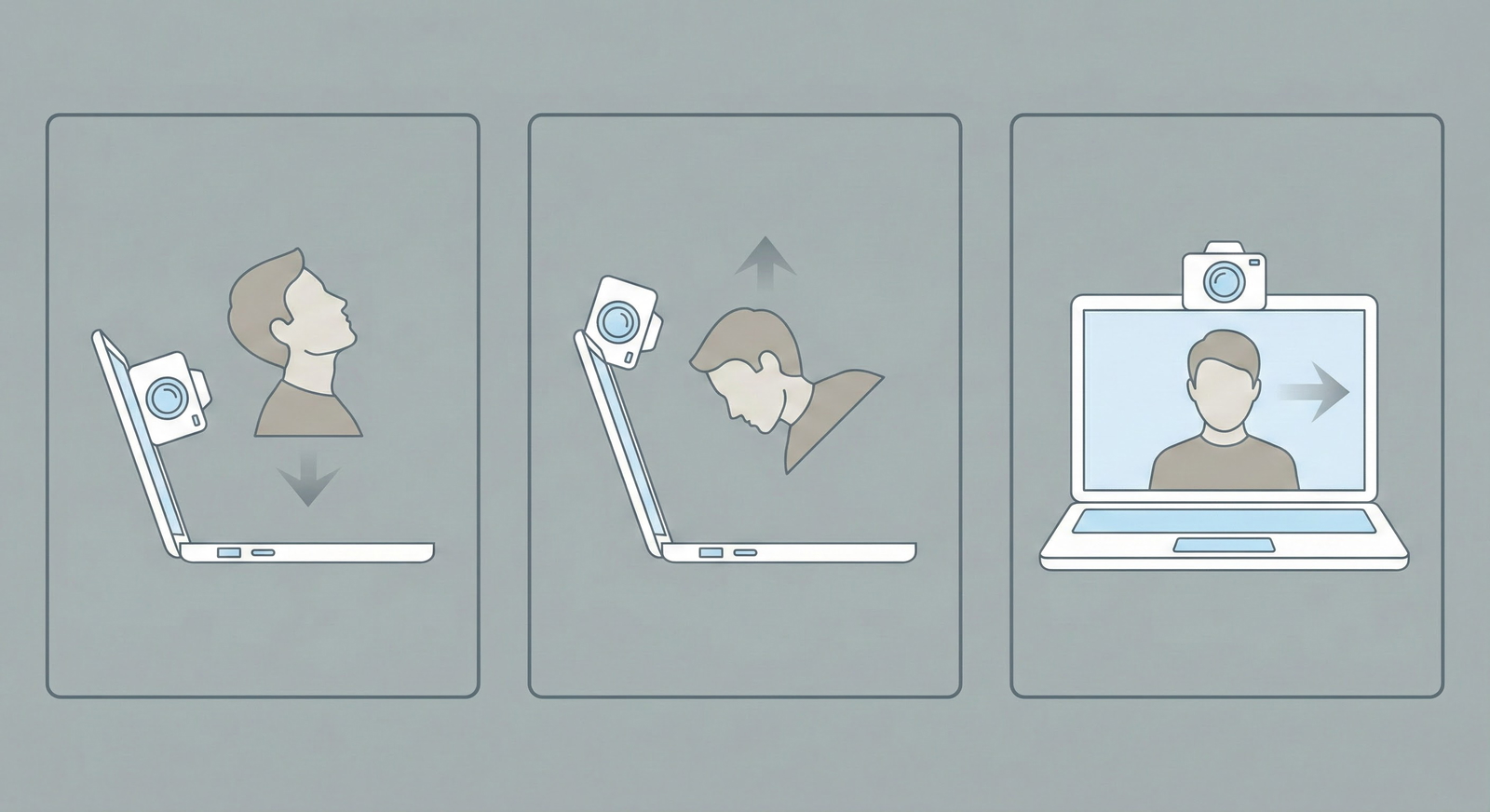
- Position your camera at eye level
- Ensure good lighting (face a window or use a ring light)
- Look at the camera when you deliver key lines of your introduction
- Test your audio quality in advance
For in-person interviews:
- Practice standing and sitting introductions (you may do either)
- Be ready to adapt if your introduction is prompted during a walking tour or more informal setting
Customizing Your Introduction for Different Programs and Situations
You don’t need a new script for every program—but you should adapt your introduction slightly based on setting and audience.
1. Tailoring to Program Type
Academic Medical Center
- Emphasize: research, teaching, subspecialty interests, QI projects
- Example: “I’m especially excited about training in an academic environment where I can continue my work in [research area] and contribute to resident education.”
Community Program
- Emphasize: continuity of care, community engagement, broad clinical exposure
- Example: “I’m drawn to community-based training where I can build long-term relationships with patients and understand the communities I serve.”
Hybrid Programs
- Blend both, focusing on what genuinely aligns with your goals
2. Adapting to Different Prompts
Sometimes you’ll be asked directly, “Tell me about yourself.” Other times, it may sound like:
- “Walk me through your journey in medicine.”
- “How did you become interested in [specialty]?”
- “Can you start by introducing yourself?”
Your prepared introduction can flex to any of these. For more open-ended prompts, you can slightly expand the anecdote or background story; for direct prompts, keep it tighter and more structured.
3. Integrating Red Flags or Non-Traditional Paths (Thoughtfully)
If you have a gap year, career change, or unique path, you can briefly and positively frame it in your introduction:
“Before medical school, I worked as a high school science teacher for three years. That experience shaped how I communicate complex information and is a big part of why I’m drawn to a career that combines clinical care with teaching.”
Avoid over-explaining or apologizing in your introduction—you can address details later if asked.

Anticipating and Using Follow-Up Questions to Your Advantage
A strong introduction naturally invites follow-up questions. That’s a good thing—it means your interviewer is engaged.
Common follow-ups include:
- “Tell me more about that patient you mentioned.”
- “What did you learn from your research experience?”
- “How did that project change your perspective?”
- “You mentioned being interested in [X]; can you elaborate?”
To prepare:
- For each story you include, know 1–2 key lessons or reflections
- Be ready with one challenge you faced and how you handled it
- Link your answers back to how you’ll function as a resident
For example:
“Working on that QI project taught me how important it is to involve frontline staff early. Initially, our proposed changes weren’t practical for nursing workflow. After we sought their input and adjusted our plan, our intervention was much more successful. That experience really shaped how I think about teamwork and systems-based practice.”
This shows maturity, insight, and readiness for residency-level responsibility.
Frequently Asked Questions About Residency Interview Introductions
Q1: How long should my residency interview introduction be?
Aim for about 60–90 seconds. That’s usually enough time to include a brief hook, your name and background, 2–3 key themes or experiences, and a short statement about your goals. Longer than 2 minutes can feel too scripted or overwhelming for the interviewer.
Q2: Can I use the same introduction for all of my residency interviews?
You can absolutely use the same core structure and themes, but you should lightly tailor your closing to each program type. Adjust:
- How you describe your goals (academic vs. community focus)
- Which experiences you emphasize most
- A short sentence about why the program’s features align with your interests
You don’t need to rewrite everything—just show that you’ve thought about fit.
Q3: Should I memorize my introduction word-for-word?
It’s better to memorize the outline than a script. Know your:
- Hook (story, observation, or question)
- Name, school, specialty
- 2–3 key experiences or themes
- Closing line about your goals and fit
Practice enough that the flow feels natural, but allow your exact wording to vary. Overly memorized answers can sound rigid or robotic.
Q4: What if I get nervous and forget part of my introduction?
If you blank out:
- Pause, take a breath, and smile briefly
- Say something like, “I’m happy to start with a brief overview of my background and what drew me to [specialty].”
- Then move to your basics: name, school, specialty, and one key experience
Interviewers understand nerves. Handling the moment calmly can actually demonstrate your professionalism and composure under pressure.
Q5: How is my introduction different from my personal statement?
Your personal statement is a written, detailed narrative. Your introduction is a concise, spoken “highlight reel” that:
- Focuses on 1–2 key stories or themes (not your entire journey)
- Emphasizes what’s most relevant right now for the interview
- Sets up talking points for the rest of the conversation
They should be aligned, but your introduction doesn’t need to repeat your personal statement. Think of it as your real-time, conversational version of your core message.
Crafting a memorable introduction is a powerful step in your interview preparation and overall professional development. With thoughtful structure, authentic stories, and practiced delivery, you’ll not only make a strong first impression—you’ll guide the interview toward the parts of your journey that best represent the physician you’re becoming.