Understanding the Dermatology Interview Landscape
Dermatology is one of the most competitive specialties in the residency match. That competition shapes what “good” residency interview preparation looks like: it’s not enough to be clinically strong or have good scores—you need to present a coherent, compelling story about who you are, why dermatology, and how you will add value to a program.
Before you plan how to prepare for interviews, it helps to understand the unique features of dermatology residency interviews:
- High applicant quality: Most applicants have strong USMLE/COMLEX scores, research, and honors. Interviews often focus more on fit, maturity, communication, and professionalism than on raw metrics.
- Small program sizes: Many dermatology programs take 2–5 residents per year. This magnifies the importance of interpersonal dynamics, collegiality, and culture fit.
- Research-heavy specialty: Applicants are often questioned about their scholarly work, especially dermatology-specific projects, case reports, or QI.
- Visual and communication demands: Dermatology requires precise description, pattern recognition, and counseling about chronic, visible, or stigmatizing conditions. Programs look for clear, empathetic communicators.
Pre-interview preparation in dermatology, therefore, must be structured, deliberate, and specialty-specific—you’re preparing not just for “interview questions residency programs might ask,” but for a conversation that helps programs see you as a future colleague.
Step 1: Strategic Self-Assessment and Story Building
Before you practice interview questions, you need clarity on your own narrative. This is the most important—and most neglected—part of residency interview preparation.
Clarify Your Core Themes
Aim to identify 3–5 themes that genuinely describe you and that you want programs to remember. Examples:
- “Committed to academic dermatology with a focus on complex medical derm”
- “Patient-centered, empathetic communicator interested in underserved dermatology”
- “Research-oriented with strong interest in inflammatory skin disease”
- “Procedurally inclined with a long-term goal of Mohs or dermatologic surgery”
- “Educator and leader committed to resident teaching and curriculum development”
These themes should align with:
- Your personal statement
- Your CV (activities, leadership, research)
- Your letters of recommendation (LoRs) (what letter writers likely emphasized)
- Your career goals
Write them down in a short list. Everything else in your interview preparation should reinforce and illustrate these themes.
Build Your Dermatology “Origin Story”
You will be asked some version of “Why dermatology?” repeatedly. A vague answer (“I like the variety”) won’t differentiate you in a derm match context.
Aim for a 60–90 second answer that includes:
A clear starting point:
- A specific patient encounter
- A formative derm rotation
- A mentor’s influence
- A research project that changed your trajectory
Concrete exposure:
- Outpatient clinics, inpatient consults, dermatopathology sign-out, procedures
- What you observed and what it taught you about the specialty
Personal alignment:
- How dermatology fits your skills (visual learning, pattern recognition, meticulousness)
- How it fits your values (longitudinal care, quality of life, chronic disease management)
Forward-looking statement:
- How you see yourself in dermatology 5–10 years from now
Example structure (adapt, don’t memorize):
“Initially I thought I would go into internal medicine, but during my third-year rotation I had a patient with severe psoriasis whose life changed after coordinated derm care. On my dermatology rotation, I saw how closely skin disease is tied to systemic conditions and quality of life. I’m a very visual learner and I enjoy the challenge of pattern recognition, but I was particularly drawn to the long-term relationships and detailed counseling that dermatologists provide. Through my research on atopic dermatitis and my continuity clinic experience, I realized I want a career in academic dermatology focusing on complex medical derm and resident education.”
Prepare 5–7 Signature Stories
Programs remember stories, not lists. Develop a small set of detailed, flexible stories that you can adapt to answer many interview questions residency programs might ask.
Aim for stories across categories like:
- Teamwork/Collaboration:
- Example: Coordinating with medicine and derm on an inpatient SJS/TEN case.
- Leadership:
- Example: Leading a student-run free clinic with a focus on skin cancer screening.
- Conflict or challenge:
- Example: Managing disagreement within a research team or during a busy consult service.
- Failure or setback:
- Example: A research manuscript rejection or a clerkship challenge—and how you responded.
- Ethical or professionalism dilemma:
- Example: Addressing unprofessional comments about patients with visible skin disease.
- Diversity, equity, inclusion (DEI):
- Example: Working with skin of color clinics or teledermatology for rural patients.
- Resilience and wellness:
- Example: Coping with emotional fatigue from seeing disfiguring or stigmatizing conditions.
Outline each story using a simple framework:
- Situation: Brief clinical or academic context.
- Task: Your role and responsibility.
- Action: What you did specifically.
- Result/Reflection: Outcome and what you learned (and how it informs your future as a dermatologist).
Have these in bullet-point form; you’re not memorizing scripts, just anchor points.
Step 2: Know Your Application Cold
Every line on your application is fair game. A core component of residency interview preparation is making sure you can speak comfortably and confidently about anything a program might pick up on.
Research and Scholarly Work
Dermatology is research-heavy. Expect focused questions like:
- “Tell me about your derm research project.”
- “What question were you trying to answer?”
- “What were your main findings, and how do they impact patient care?”
- “What would you study next if you had more time?”
For each research project:
Write a 2–3 sentence plain-language summary:
- What you studied.
- Why it matters.
- What you found or what you’re hoping to find (if in-progress).
Clarify your specific role:
- Study design, data collection, chart review, coding, data analysis, manuscript writing, recruiting participants, IRB submission, etc.
Prepare one limitation and one next step:
- Shows maturity and understanding of the research process.
If you have no dermatology-specific research, reflect on how your other work still demonstrates skills valued in dermatology (critical thinking, evidence-based practice, attention to detail).
Clinical Experiences and Rotations
Programs will often ask about:
- Your dermatology electives (home and away)
- Any sub-internships
- Memorable patients or clinical situations
Prepare for these:
- Identify 2–3 key derma-related clinical experiences that highlight your growth, empathy, or skill development.
- Be ready to describe:
- The patient scenario (de-identified).
- Your role.
- What it taught you about dermatology (e.g., chronic disease management, impact on psychosocial wellbeing, interprofessional communication).
Example:
“On my derm elective, I met a teenager with severe acne whose self-esteem was deteriorating. I saw how carefully the attending discussed options, expectations, and social impact. It taught me that treating visible skin disease often means addressing emotional health and body image, not just prescribing medications.”
Non-Clinical Experiences: Leadership, Volunteerism, and Teaching
Dermatology programs value:
- Leadership in organizations or projects
- Teaching or curriculum involvement
- Service to underserved populations
- Quality improvement initiatives
For each major activity:
- Clarify your role (member vs coordinator vs founder).
- Identify quantitative impact if possible (e.g., “increased screening events from 2 to 6 per year”).
- Extract 1–2 skills gained (organizing, advocating, teaching, problem-solving).
This preparation enables you to connect the dots when asked, “How will you contribute to a dermatology residency program?”
Step 3: Program Research and Customization
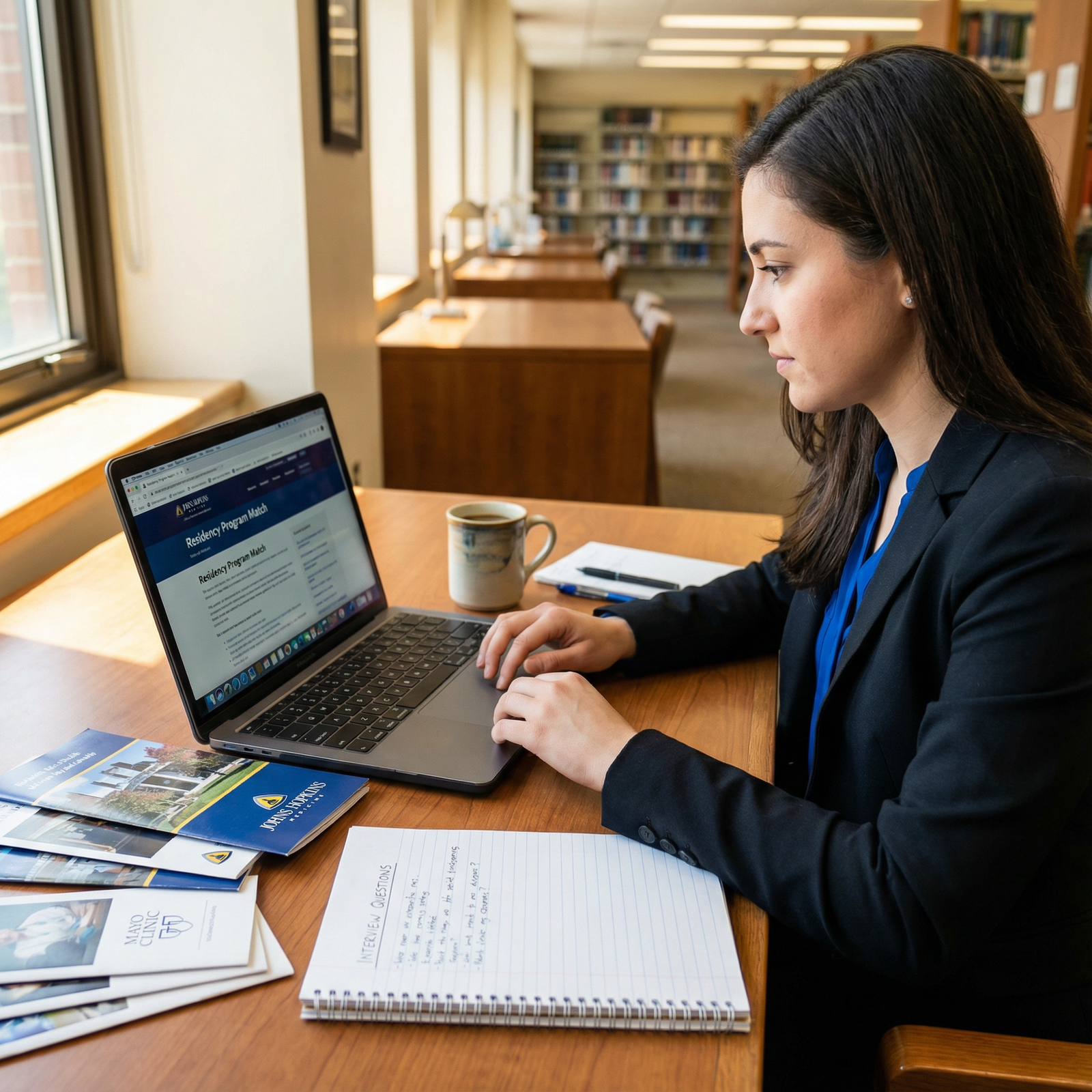
Knowing how to prepare for interviews includes understanding that program-specific preparation separates strong from outstanding candidates—especially in a competitive derm match.
Build a Program Research Template
Create a simple one-page document for each program you’re interviewing at. Suggested sections:
Program basics:
- Number of residents per year
- Program type (university, community, hybrid)
- Tracks (research, clinician-educator, combined, etc.)
Clinical strengths:
- Subspecialty clinics (psoriasis, complex medical derm, pediatric derm, contact derm)
- Procedural volume (surgery, cosmetics—if relevant)
- Skin of color focus, global health, teledermatology
Academic profile:
- Key faculty you might work with (especially those aligned with your interests)
- Ongoing dermatology research projects (check PubMed, department website)
- Opportunities for resident scholarly work
Culture and structure:
- Call schedule and workload
- Inpatient vs outpatient balance
- Didactics, journal clubs, pathology exposure
Why this program fits your goals:
- 2–3 bullet points specific to that program (avoid generic statements)
Questions you want to ask:
- At least 3–5 thoughtful, program-specific questions.
Avoid Generic Responses
Programs often ask:
- “Why are you interested in our program?”
- “What are you looking for in a dermatology residency?”
Make your answers specific and purposeful:
- Instead of: “I like that your program has strong clinical training and research.”
- Aim for:
“I’m particularly interested in your complex medical dermatology clinic and the opportunity to work with Dr. X on autoimmune blistering disease research. I value the combination of strong inpatient consult exposure and the structured dermatopathology teaching you provide. The emphasis on resident-led QI projects also aligns with my past work in care delivery improvement.”
This kind of specificity signals genuine interest and preparation.
Step 4: Mastering Common Residency Interview Questions – Dermatology-Focused
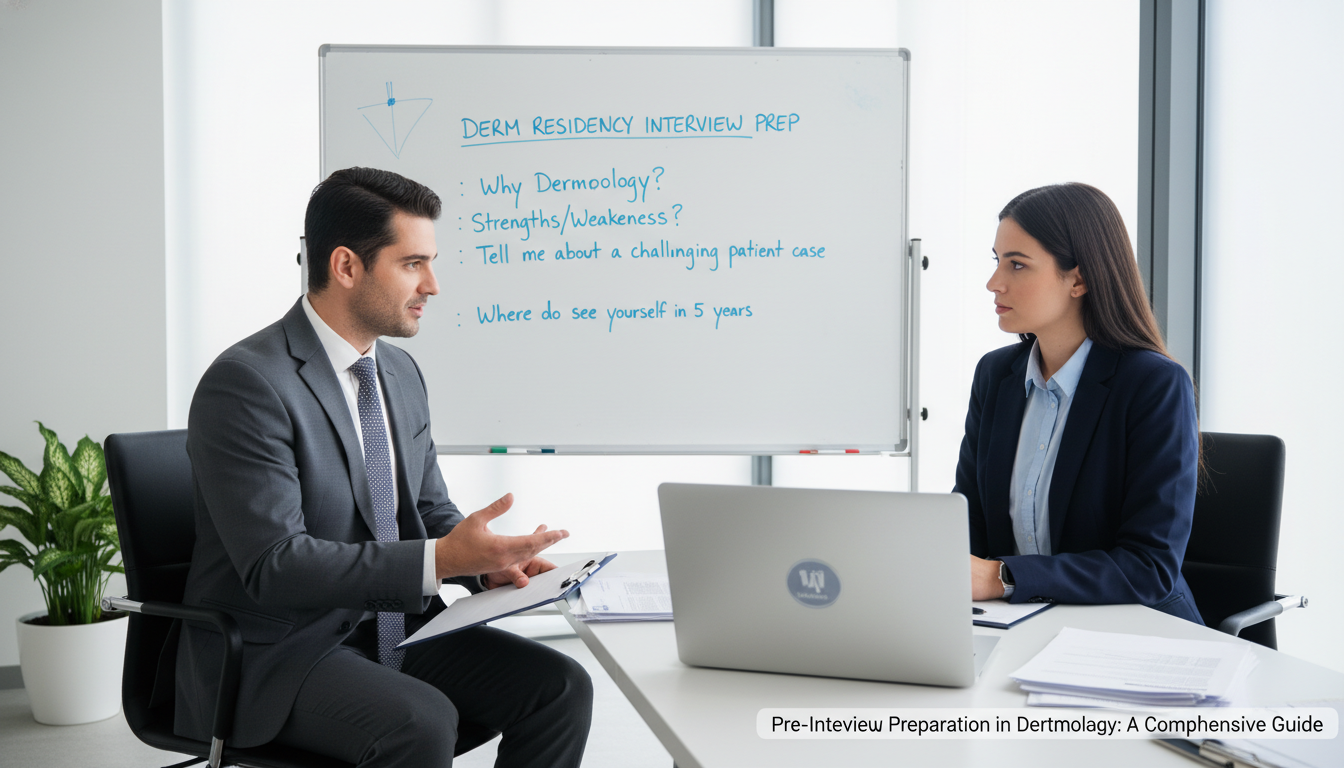
Practicing frequently asked interview questions residency programs tend to use is central to residency interview preparation. Your goal is to become comfortable—not scripted.
Classic Questions and How to Approach Them
“Tell me about yourself.”
- Aim for a 60–90 second structured narrative:
- Brief background (where you’re from, where you trained).
- Key experiences that shaped you as a future dermatologist.
- A sentence tying you to your future goals.
- Example:
“I grew up in a small town in [state] and completed medical school at [institution], where I initially considered internal medicine. During my clinical years, I was drawn to dermatology through a combination of visual diagnostic work and the opportunity to significantly impact patients’ quality of life. I’ve been involved in research on atopic dermatitis and run a skin cancer screening initiative at our student-run free clinic. I’m now seeking a residency that emphasizes complex medical derm and teaching so I can build a career as an academic dermatologist and educator.”
- Aim for a 60–90 second structured narrative:
“Why dermatology?”
- Use your previously developed origin story.
- Highlight unique aspects: chronic disease management, procedures, dermpath, systemic connections.
“Why our program?”
- Draw on your program research template.
- Include 2–3 specific elements (faculty, clinics, training structure, culture).
“What are your strengths?”
- Pick 2–3 relevant to dermatology:
- Attention to detail
- Visual pattern recognition
- Strong communication, especially around sensitive issues (appearance, chronic disease)
- Reliability and follow-through (critical for longitudinal care)
- Curiosity and commitment to staying up to date
- Back each with a brief example.
- Pick 2–3 relevant to dermatology:
“What are your weaknesses?”
- Choose something real but non-fatal.
- Show insight and active improvement.
- Example:
“Early in clinical rotations, I sometimes hesitated to speak up with my differential in group rounds if I wasn’t completely sure. I realized that this limited my learning and contribution, so I actively started setting goals to verbalize my thoughts and seek feedback. Over the last year, attendings have commented that they appreciate my willingness to think out loud and refine my reasoning.”
“Tell me about a time you had a conflict on a team.”
- Use one of your prepared signature stories.
- Emphasize:
- Communication
- Respect
- Shared goals
- Specific actions to resolve the issue
- What you learned about collaboration
“Describe a failure or a time you were disappointed in your performance.”
- Be honest but professional (avoid major professionalism breaches).
- Emphasize:
- Owning your part
- Concrete changes since then
- Evidence of improved performance.
“Where do you see yourself in 5–10 years?”
- Be honest, even if uncertain.
- It’s fine to say you are undecided among several areas (e.g., complex medical derm vs pediatric derm vs surgery) but have convincing reasons for each interest.
- Align your answer with what the program can offer.
Dermatology-Specific Behavioral Questions
Be prepared for questions that test your understanding of dermatology’s unique challenges:
- “How would you counsel a patient with a visible facial condition who is very distressed?”
- “How do you approach caring for patients with chronic conditions when they are non-adherent to treatment?”
- “Tell me about a time you cared for a patient whose appearance significantly impacted their mental health.”
For these:
- Demonstrate empathy and non-judgmental communication.
- Emphasize interdisciplinary care (e.g., psychology, social work, primary care).
- Show awareness of stigma and cultural sensitivity (especially for skin of color).
Practice Without Over-Scripting
Effective residency interview preparation means practicing enough to be fluent, not robotic:
- Record yourself answering 5–10 core questions; watch for:
- Excessive filler words
- Speed of speech
- Eye contact (for virtual interviews, look at the camera)
- Body language and facial expressions
- Do mock interviews:
- With a mentor, faculty, or resident in dermatology if possible.
- With peers interested in other specialties (they can still give excellent feedback).
- Ask specifically for feedback on:
- Clarity
- Conciseness
- Professionalism and warmth
- How convincingly your passion for dermatology comes across.
Step 5: Logistics, Professionalism, and Day-Before Preparation
Excellent content can be overshadowed by poor logistics or unprofessional presentation. Pre-interview preparation is also about managing details.
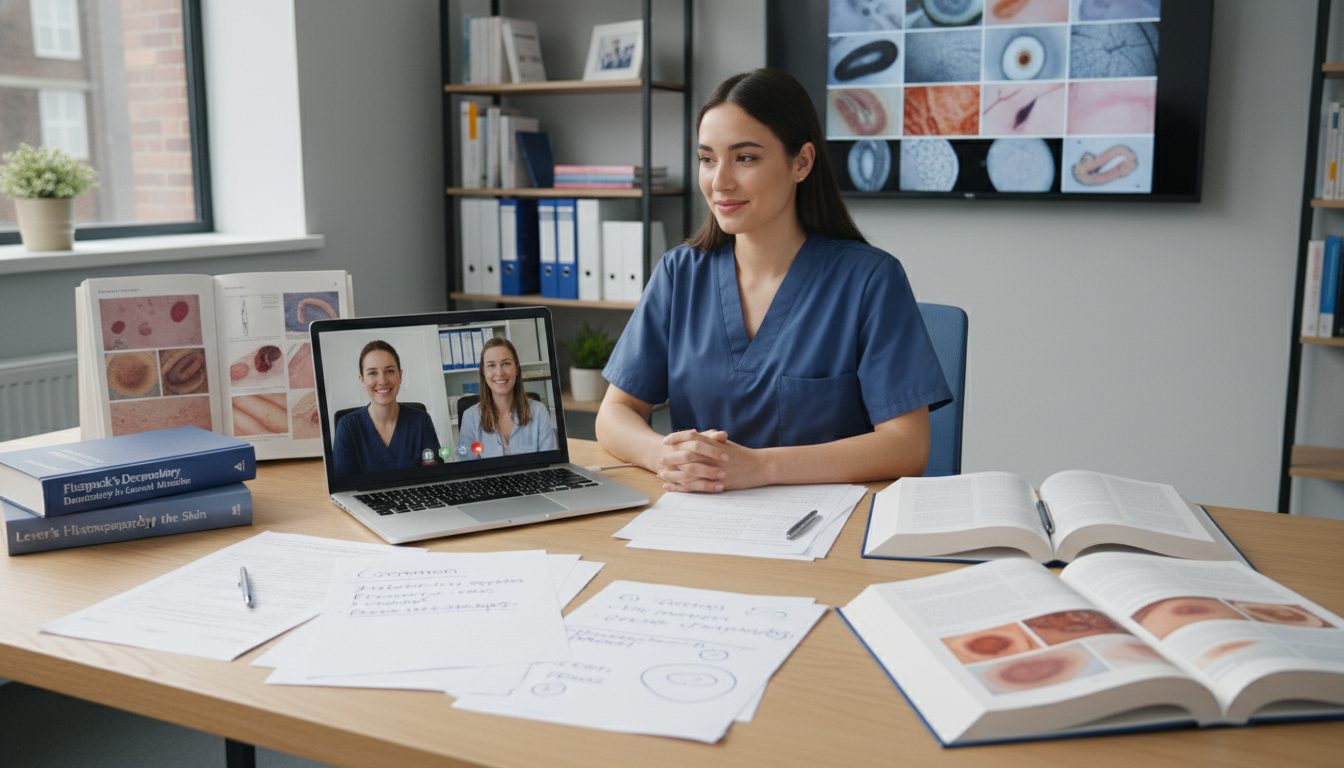
Virtual Interview Setup (Very Common in Dermatology)
Most dermatology interviews are still virtual or hybrid. Pay attention to:
Environment:
- Quiet, private space.
- Neutral, uncluttered background (or professional virtual backgrounds if allowed).
- Good lighting (light facing you, not behind you).
Technology:
- Test your camera, microphone, and internet connection well before.
- Update and test the specific platform (Zoom, Webex, Thalamus, etc.).
- Have a backup plan: hotspot, second device, phone audio.
Framing:
- Camera at eye level.
- Head and shoulders visible.
- Direct gaze into the camera when speaking.
Documents at hand:
- Printed or digital copies of:
- Your CV
- Personal statement
- Program research template
- List of questions for interviewers
- Printed or digital copies of:
In-Person Considerations
If your dermatology residency interviews are in person:
- Confirm location, timing, parking, and dress code.
- Aim to arrive 15–30 minutes early.
- Bring:
- A professional folder or padfolio
- Copies of your CV
- A small notebook and pen
- Remember: everyone you meet (administrative staff, residents, coordinators) may provide feedback on your candidacy.
Professional Attire and Appearance
Dermatology is a visually oriented specialty, but you are not being judged on fashion. Aim for:
- Classic, conservative, and neat professional attire:
- Dark suit (navy, black, or charcoal).
- Simple shirt or blouse (solid or subtle pattern).
- Minimal, professional accessories.
- Grooming:
- Neat hair.
- Avoid strong fragrances (some patients and staff are sensitive).
- For virtual interviews, dress fully—not just from the waist up. It affects your mindset and protects you from surprises.
The Day Before the Interview
Use the day before as a focused, calm preparation period:
Review program notes:
- Re-familiarize yourself with each program’s strengths.
- Refresh the names of key faculty and residents you may meet.
Review your application:
- Re-read your personal statement.
- Scan your CV for items you haven’t thought about recently.
Prepare your questions:
- 3–5 per program.
- Examples:
- “How does your program support residents interested in [your specific research/clinical interest]?”
- “Can you describe how feedback and evaluation are given to residents?”
- “What changes has the program made in the last few years, and what changes are on the horizon?”
Plan your logistics:
- Outfit chosen and ready.
- Tech checked.
- Schedule printed or easily accessible.
Take care of yourself:
- Reasonable bedtime.
- Hydration and a light, balanced meal.
- Short relaxation activity (walk, stretching, reading for pleasure).
Step 6: Mindset, Etiquette, and Post-Interview Follow-Through
Professional Etiquette During the Interview
Be present and engaged:
- Listen fully to questions.
- Avoid interrupting.
- Pause briefly to think if needed.
Be yourself—but professional:
- Authentic enthusiasm is valuable.
- Avoid overly rehearsed, cliché responses.
Don’t badmouth anyone:
- Never speak negatively about other specialties, programs, colleagues, or institutions.
Be consistent:
- Your answers about goals and interests should not contradict your application.
Asking Insightful Questions
Thoughtful questions show that you have truly considered how you would fit into a program. Tailor by role:
To program directors or chairs:
- “How do you see your program evolving over the next 5 years?”
- “What characteristics distinguish residents who thrive here?”
To faculty interviewers:
- “How do residents get involved in your clinic or research?”
- “How is mentorship structured in your department?”
To residents:
- “What surprised you most after starting here?”
- “How does the program support wellness and work-life balance?”
- “What kinds of graduates has the program produced recently (fellowships, jobs)?”
Avoid questions that are easily answered on the website or that focus too early on vacation time or salary.
Post-Interview Reflection and Notes
Immediately after each interview day:
- Write brief notes including:
- People you met and what you discussed.
- What you liked and what concerned you.
- Your gut feeling about culture and fit.
- Any follow-up needed (e.g., sending a paper you discussed, clarifying information).
These notes will be invaluable when you create your rank list and decide how to communicate with programs afterward.
Thank-You Notes
Practices vary, but in a competitive derm match environment, thoughtful communication can reinforce positive impressions.
- If you choose to send thank-you notes:
- Send within 24–72 hours.
- Keep them concise and specific:
- Reference a particular conversation or topic.
- Reiterate a genuine point of appreciation or alignment with the program.
- Email is generally preferred unless otherwise specified.
Example structure:
“Dear Dr. [Name], Thank you for taking the time to speak with me on [date] during my interview at [program]. I enjoyed our discussion about [specific topic], particularly your insights on [detail]. Our conversation reinforced my interest in [specific aspect of the program], and I would be excited to contribute to [related opportunity]. Sincerely, [Your Name]”
Do not imply ranking commitments you do not mean, and follow NRMP rules around post-interview communication.
FAQs About Pre-Interview Preparation in Dermatology
1. How early should I start residency interview preparation for dermatology?
Begin structured preparation at least 4–6 weeks before your first interview, earlier if possible. That timeline allows you to:
- Clarify your narrative and career goals.
- Develop and refine your key stories.
- Review your research and application materials.
- Conduct multiple mock interviews.
- Research programs thoroughly.
If interviews span several months, maintain a weekly rhythm of short refreshers on your story bank and program research.
2. Do I need dermatology-specific mock interviews?
They are extremely helpful but not absolutely mandatory. Ideally, you would have:
- At least one mock interview with a dermatologist or derm resident who knows the field’s culture, common questions, and expectations.
- Additional mock interviews with:
- General faculty.
- Career advisors.
- Peers (to practice fluency and comfort).
If you can’t find a dermatology-specific interviewer, ask a mentor to focus on:
- Your explanation of “Why dermatology?”
- Your dermatology research.
- Your understanding of the specialty’s challenges (chronic disease, skin of color, cosmetic vs medical balance).
3. How important is program-specific knowledge in dermatology residency interviews?
Program-specific knowledge is very important, especially in a competitive specialty like dermatology. Interviewers can usually tell who has:
- Read only the front page of the website.
- Genuinely engaged with the program’s structure, faculty, and priorities.
Strong candidates can clearly articulate:
- Why this program fits their interests.
- How they would engage with specific clinics, research areas, or educational initiatives.
- What they hope to contribute to the program community.
4. What if I’m asked about weaknesses in my application (e.g., a step failure, a leave of absence)?
Approach this proactively and transparently:
- Acknowledge the issue directly, without being defensive.
- Briefly provide context if appropriate, but don’t over-explain.
- Emphasize:
- What you learned.
- Concrete steps you took to improve.
- Evidence of more recent success or stability (e.g., improved clerkship performance, strong letters, later exam scores).
Example:
“I did not pass Step 1 on my first attempt, which was very difficult. It helped me recognize that my study methods were inefficient. I sought guidance from our learning specialists, changed my approach to active recall and spaced repetition, and adjusted my schedule. These changes led to a pass on my second attempt and much stronger performance on my clinical rotations, where I consistently received honors.”
Handled well, such answers demonstrate maturity, insight, and resilience—the same traits programs want in their residents.
Thoughtful, specialty-specific preparation transforms dermatology residency interviews from high-stress interrogations into professional conversations about fit and potential. By building a clear narrative, mastering your application content, researching programs in depth, and refining your communication, you’ll enter each interview day as a well-prepared future colleague in dermatology.