Understanding the Unique Position of a DO Graduate in Dermatology
Dermatology is one of the most competitive specialties in the residency match, and as a DO graduate, you occupy a unique position. The transition to a single accreditation system has expanded opportunities for DO graduates, but program selectivity and expectations remain high—especially in dermatology residency.
Before you step into your first interview, you should have strategic clarity in three areas:
Your identity as a DO graduate
- How your osteopathic training shapes your clinical reasoning
- How OMT exposure enhances your physical exam and hands-on skills
- How your background supports a holistic, patient-centered approach
The dermatology competitiveness landscape
- Dermatology residency programs (both historically MD and DO-affiliated) look for evidence of:
- Strong test performance (COMLEX/USMLE)
- Dermatology-specific experiences (research, rotations, electives)
- Professionalism, maturity, and teachability
- Programs may still have subtle biases favoring MD applicants; you must be prepared to proactively highlight the strengths of your DO background.
- Dermatology residency programs (both historically MD and DO-affiliated) look for evidence of:
How interviews fit into the derm match process
- Interviews often are the deciding factor after academic thresholds are met.
- Your goal: translate your application into an authentic, memorable narrative that aligns with what dermatology programs value—clinical rigor, attention to detail, empathy, and intellectual curiosity.
Pre-interview preparation isn’t only “residency interview preparation” in the generic sense. For a dermatology-bound DO graduate, it’s targeted, strategic, and specialty-specific.
Step 1: Know Your Story—Crafting a Compelling Dermatology Narrative
Interviewers will be asking themselves: “Why should this applicant train here, in dermatology, as a DO graduate?” You need a polished, honest narrative that answers that clearly.
A. Clarify Your “Why Dermatology?” Story
Program directors hear “I like skin and procedures” dozens of times a day. You need depth and specificity.
Reflect on:
Clinical encounters
- A patient whose skin disease impacted their mental health or quality of life
- A moment where you realized the complexity of systemic diseases manifesting in the skin
- An inpatient consult that highlighted the diagnostic challenge of rashes or blistering diseases
Longitudinal exposures
- Continuity clinic where you saw chronic conditions like psoriasis, hidradenitis suppurativa, or atopic dermatitis
- Experience with skin cancer screenings in underserved communities
Professional values that match dermatology:
- Detail-oriented, visual problem-solver
- Interested in procedural work combined with long-term patient relationships
- Strong interest in immunology, rheumatology, and internal medicine overlap
Actionable exercise:
Write a one-paragraph answer to “Why dermatology?” that:
- Starts with a concrete story or image (e.g., a specific patient experience)
- Connects that story to your skills and values
- Ends by linking to your future goals (e.g., academic derm, private practice, rural access, skin of color, procedural dermatology)
Then refine it into a 60–90 second spoken response.
B. Articulate “Why as a DO?” with Confidence
You should anticipate questions, explicit or implicit, about being a DO graduate in a competitive specialty like dermatology:
- “Tell me about your choice to attend an osteopathic medical school.”
- “How has osteopathic training influenced your approach to patient care?”
Avoid defensive tones. Instead, present your DO background as an asset:
- Emphasize:
- Strong foundation in holistic, biopsychosocial care
- Extra practice with hands-on examination and patient communication
- Interest in functional/structural connections that are highly relevant for musculoskeletal, rheumatologic, and chronic pain aspects of derm patients
Example talking point:
“My osteopathic training really emphasized seeing patients as whole people—how skin disease affects sleep, mood, work, and family life. That lens has been especially important in dermatology, where even ‘benign’ conditions can cause significant psychological distress. It’s made me very intentional about discussing quality of life, mental health, and expectations with my derm patients.”
Prepare a 45–60 second response that merges “why DO” with “why dermatology” rather than treating them as unrelated topics.
C. Prepare Your “Academic and Professional Journey” Summary
Many interviews start with: “Tell me about yourself.” It’s an opportunity to control the direction of the conversation.
Use a simple 3-part structure:
- Background – Who you are, where you trained, brief personal details.
- Medical school arc – Key themes: early clinical interests, dermatology exposure, growth, leadership.
- Current focus and goals – Why dermatology now, and what you hope to contribute.
DO-specific tip: If you took COMLEX and USMLE, or navigated nuances of the osteopathic residency match, you can briefly weave that into your narrative as evidence of adaptability and commitment to broad opportunities.

Step 2: Deep Dive into Program and Specialty-Specific Research
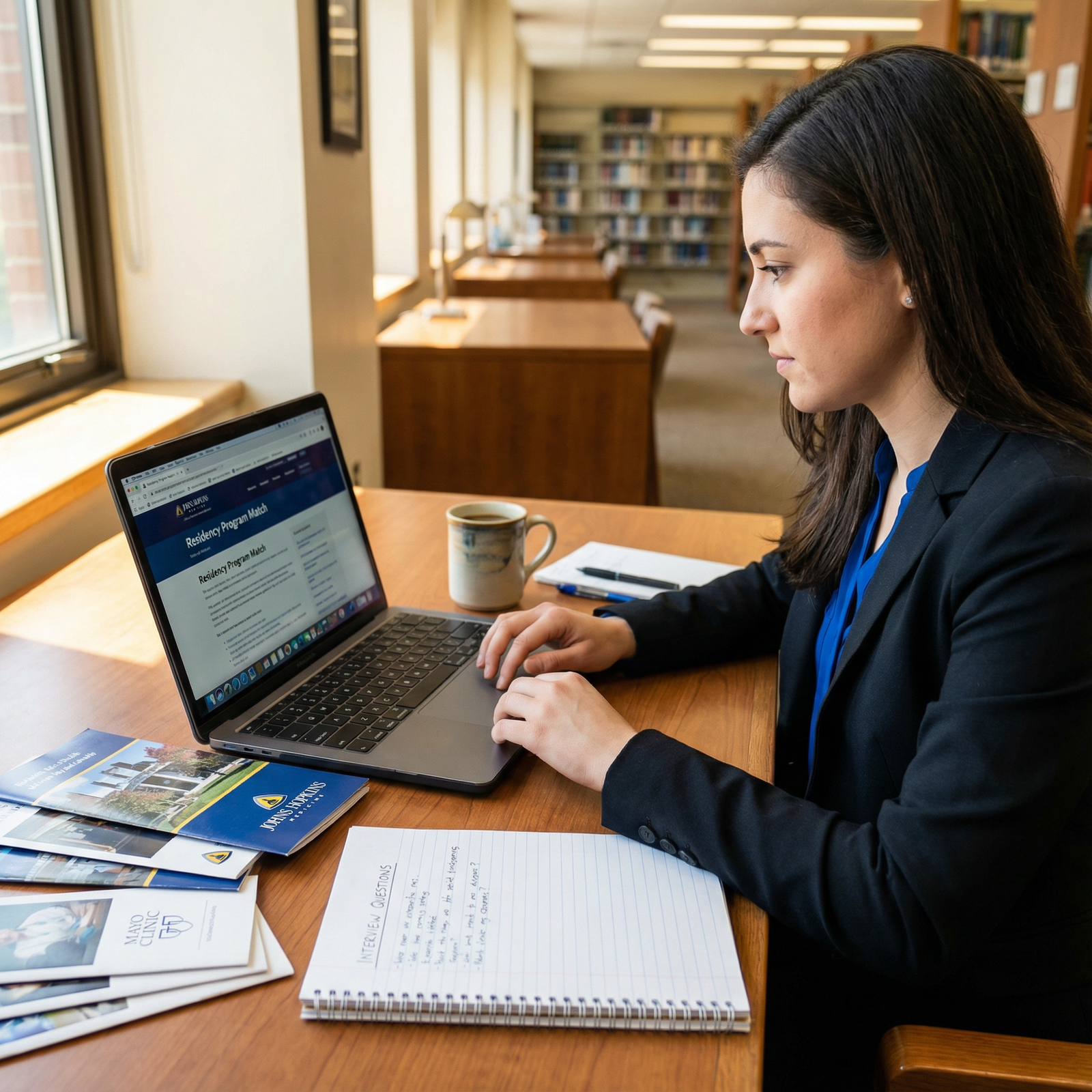
Strong residency interview preparation requires deliberate research before each interview. For a dermatology residency, this is even more crucial—many programs are small, tightly knit, and highly specialized.
A. Research the Program Beyond the Website
Start with the obvious (website, social media) but go further:
Program website:
- Curriculum and rotation structure (e.g., inpatient consults, pedi derm, cosmetics, dermatopathology exposure)
- Number and background of residents (DO vs MD; research experience; prior careers)
- Faculty interests (psoriasis, hair disorders, immunobullous disease, skin of color, global health, dermpath, Mohs)
Social media & online presence:
- Program Instagram/X (often show resident culture, wellness activities, teaching sessions)
- Grand rounds topics posted online
- Any specific outreach clinics or community initiatives
Published work:
- Search faculty names in PubMed or Google Scholar
- Look for themes that align with your interests (e.g., inflammatory derm, complex medical dermatology, teledermatology, medical education)
Create a one-page summary sheet for each program including:
- 3–5 unique attributes of the program
- 1–2 faculty whose work aligns with your interests
- Any mention of DO graduates or osteopathic-focus pipelines (if applicable)
- Specific questions you want to ask
Having this sheet ready will make you sound informed and genuinely interested—crucial in a tight derm match.
B. Understand the Program’s Patient Population and Strengths
Interviewers often gauge whether you understand who they serve:
- Is the program in an urban academic center with tertiary referrals?
- Does it serve rural or underserved communities with limited derm access?
- Is there a strong emphasis on:
- Skin of color
- Complex rheumatologic/dermatologic overlap
- Transplant dermatology
- Oncology/skin cancer prevention
- Cosmetic/procedural dermatology
Prepare to connect your background to the program’s strengths:
Example:
“My continuity clinic served a large rural population with limited access to dermatology. I saw how long delays could worsen skin cancers and inflammatory conditions. Your program’s outreach clinics and teledermatology initiatives resonate with my interest in improving access for similar populations.”
C. Clarify Where You Fit: Academic vs Community, General vs Subspecialty
Dermatology programs vary widely:
- Large academic centers: more subspecialty clinics, research, complex cases, fellowships.
- Smaller or community-based programs: broader general derm exposure, more autonomy, possibly less formal research infrastructure but strong clinical volume.
Decide what you value most:
- Are you aiming for future fellowship (e.g., Mohs, pediatric derm, dermpath)?
- Do you prioritize high patient volume and procedural exposure?
- Are you interested in teaching and academic promotion?
Your pre-interview reflection should enable you to answer program-specific questions like:
- “What kind of learning environment do you thrive in?”
- “Where do you see yourself after residency?”
- “How do you see yourself contributing to our program?”
Step 3: Mastering Dermatology and General Residency Interview Questions
Dermatology interviews mix standard residency interview questions with content- or specialty-specific questions. Preparing both in advance is essential to avoid being caught off guard.
A. Core “Interview Questions Residency” Programs Commonly Ask
Practice structured responses to:
- “Tell me about yourself.”
- “Why dermatology?”
- “Why our program?”
- “What are your strengths and weaknesses?”
- “Tell me about a time you made a mistake in patient care.”
- “Describe a conflict with a team member and how you handled it.”
- “How do you handle stress or burnout?”
- “What are you looking for in a residency program?”
Use the STAR format (Situation, Task, Action, Result) for behavioral questions.
Example – conflict resolution (STAR):
- Situation: Team disagreement about management of a derm inpatient consult.
- Task: Maintain patient safety and team cohesion.
- Action: Clarified guidelines, sought attending input, facilitated group discussion.
- Result: Agreed-upon plan, improved team communication, positive feedback.
B. Dermatology-Specific Interview Questions to Expect
You may encounter:
- “What do you find most challenging about dermatology?”
- “Which dermatologic condition have you found most interesting so far and why?”
- “Tell me about a dermatology-related patient interaction that impacted you.”
- “How do you approach patients who are focused primarily on cosmetic concerns?”
- “How would you balance cosmetic and medical dermatology in your practice?”
- “How do you stay current with dermatology literature?”
Have 2–3 specific derm cases ready to discuss, ideally representing:
- A diagnostic challenge
- A high-stakes or emotionally impactful case
- A situation reflecting ethical or communication complexities (e.g., isotretinoin counseling, cosmetic expectations, chronic disease management)
C. Addressing DO-Specific and Exam Questions
As a DO graduate, you might be asked:
- “Did you take the USMLE in addition to COMLEX? Why or why not?”
- “Tell me how your osteopathic training will influence your approach as a dermatologist.”
- “Have you worked with MD students/residents? What did you learn from that?”
Prepare concise, neutral explanations for:
- Any USMLE vs COMLEX decisions
- Score discrepancies or exam retakes
- Gaps or changes in your academic path
Focus on growth, resilience, and reflection, not excuses.
D. Practice Out Loud and Get Feedback
Knowing what to say is different from being able to say it smoothly and confidently.
Action steps:
- Record yourself answering 8–10 core questions (video or audio).
- Watch for:
- Overuse of filler words (“like,” “um”)
- Speaking too fast or too softly
- Rambling answers that lack a clear structure
- Ask a mentor, advisor, or peer to conduct a mock dermatology interview and provide specific feedback.
For DO graduates, consider asking a mentor who has matched into derm or another competitive specialty to perform a mock session that explicitly includes osteopathic-related questions.
Step 4: Preparing Your Portfolio—Application, Research, and Experiences
Interviewers will expect you to know your application inside and out. This is where many candidates underestimate the level of preparation needed, especially those with robust CVs.
A. Review Your Application Line-by-Line
Before each interview cycle:
- Re-read your:
- Personal statement
- ERAS application, including every bullet point
- Research descriptions, abstracts, posters
- Volunteer experiences and leadership roles
Identify potential question triggers:
- “Tell me more about your research on psoriasis epidemiology.”
- “What did you do as Derm Interest Group president?”
- “You mention you’re interested in global health. How does that intersect with dermatology?”
You should be able to discuss confidently:
- Your specific role in each research project (data collection, analysis, writing, etc.)
- The main findings and relevance of any published or presented work
- Skills gained from leadership/teaching roles and how they translate to residency
B. Anticipate Probing into Research and Scholarly Work
Dermatology values research heavily in many programs, especially academic ones.
Be ready for questions such as:
- “Walk me through your most meaningful research project.”
- “What did you learn from encountering obstacles in your research?”
- “Do you see research being part of your future dermatology career?”
Prepare a 2–3 minute narrative for your main project:
- Background & question being addressed
- Your specific role
- Main findings or status (even if in progress)
- What you learned or how it shaped your thinking
If you have no or limited derm-specific research, focus on transferable skills (critical appraisal, data analysis, perseverance, teamwork) and emphasize your openness to scholarly work during residency.
C. Highlight Osteopathic Clinical Strengths with Derm-Relevant Examples
Think carefully about how your osteopathic clinical experiences will appeal to derm programs:
- OMT training and musculoskeletal assessment skills can lend themselves to:
- Understanding posture and pressure points related to pressure ulcers or recurrent lesions
- Appreciating physical contributors to chronic pain related to dermatologic conditions
- Holistic philosophy can apply to:
- Psychodermatology (e.g., trichotillomania, body dysmorphic disorder)
- Chronic disease management requiring lifestyle and behavioral changes
Prepare at least one case where you used osteopathic principles in a way relevant to the practice of dermatology or patient-centered care.
Step 5: Logistics, Professionalism, and Presentation
No matter how strong your derm match profile is, poor logistical preparation can harm your chances. Pre-interview preparation must also address appearance, technology, and professionalism.
A. Planning for Virtual vs In-Person Interviews
Most dermatology programs now use virtual interviews, though some may incorporate in-person “second look” experiences. Be prepared for both.
Virtual interview preparation:
Environment:
- Neutral, uncluttered background
- Good natural or ring light in front of you
- Quiet space with door closed; notify roommates/housemates
Technology:
- Test your platform (Zoom, Teams, Webex) ahead of time
- Use a stable internet connection; have a backup plan (hotspot, alternate device)
- Adjust camera at eye level; do a test recording for sound and framing
Professionalism:
- Dress as you would for in-person interviews (typically dark suit, conservative and clean)
- Have a printed or digital copy of your application and program summary sheet nearby
- Turn off notifications on devices
In-person interview preparation:
- Confirm parking, travel time, weather, and dress code.
- Carry:
- A slim folder with a notepad, extra copies of your CV, and a list of questions
- A small snack and water if allowed
- Arrive 10–15 minutes early; being too early can be awkward and put pressure on the staff.
B. Nonverbal Communication and First Impressions
Interviewers will remember how you made them feel. Focus on:
- Eye contact (or looking at the camera in virtual settings)
- Upright posture, open body language
- Natural, professional smile; calm demeanor
- Appropriate use of hand gestures—measured, not distracting
Practice introductions:
- A firm, professional handshake (in-person)
- Confident greeting: “Good morning, Dr. [Name], thank you for taking the time to meet with me today.”
C. Preparing Insightful Questions for Interviewers and Residents
You will almost always be asked: “What questions do you have for us?”
Avoid generic questions you could have answered from the website. Instead, ask:
About curriculum and training:
- “How are residents supported in pursuing specific interests such as [e.g., skin of color, teledermatology, pediatric derm]?”
- “Can you describe how autonomy increases over the three years of training?”
About culture and mentorship:
- “How would you describe the culture among the dermatology residents here?”
- “What kind of mentorship structure exists between faculty and residents?”
About research and scholarly opportunities:
- “What support is available for residents interested in research, particularly in [your area of interest]?”
As a DO graduate, you might ask:
- “How have DO graduates in your program contributed or found their niche here?”
- “What qualities do you see in your most successful residents, regardless of training background?”
Having 4–6 thoughtful questions ready per program demonstrates engagement and maturity.
Step 6: Mental Preparation, Mindset, and Post-Interview Strategy
Finally, strong pre-interview preparation includes your mental state and follow-up plan. The derm match is stressful; resilience and perspective are critical.
A. Managing Anxiety and Imposter Feelings (Especially as a DO in Derm)
As a DO pursuing dermatology, it’s common to worry you’re being compared unfavorably to MD peers. Counter this by:
Reframing:
- You bring a distinct, valuable training path—not a deficit.
- Programs invited you because your paper application crossed their thresholds. Now they want to know you as a person.
Preparing grounding strategies:
- Controlled breathing before starting the interview day
- A short affirmation: “I’ve prepared well. I bring important strengths. My job is to learn whether this is a mutual fit.”
- Brief stretch or walk between interviews if virtual
B. Structuring Your Interview Day
- Sleep 7–8 hours before each interview.
- Eat a light, balanced meal; avoid heavy, greasy foods that may cause fatigue.
- Keep water nearby and hydrate.
- For virtual interview days, schedule breaks between interviews if possible—minimize back-to-back commitments.
C. Post-Interview Reflection and Notes
Immediately after each interview:
Write brief notes on:
- Your overall impression of the program and people
- Specific positive/negative aspects
- Any unique experiences or conversations
- How you see yourself fitting in
Note any follow-up questions you still have.
These notes will help you later when:
- Creating your rank list
- Writing thank-you emails (if you choose to)
- Differentiating dozens of programs that start to blur together
D. Thank-You Notes and Professional Communication
Practices vary, and programs may explicitly state their preference.
If appropriate:
- Send a short, sincere thank-you email within 24–72 hours:
- Mention one or two specifics from your conversation.
- Reaffirm your interest without making promises you can’t keep (“I enjoyed learning about your emphasis on complex medical dermatology and the collegial atmosphere among residents.”)
Avoid:
- Multiple follow-up emails if you receive no response
- Overstating interest (“You are my number one choice”) unless you truly mean it and it matches your ranking intentions.
FAQs: Pre-Interview Preparation for DO Graduates Applying to Dermatology
1. As a DO graduate, how can I best address concerns about osteopathic vs allopathic training during dermatology interviews?
Acknowledge your path confidently and briefly:
- Emphasize the strengths of osteopathic training: holistic care, communication skills, hands-on approaches.
- If asked directly, clarify any decisions about taking USMLE vs COMLEX calmly and factually.
- Pivot toward what you’ve done to succeed in a unified, competitive environment: strong clinical evaluations, derm exposure, research, or away rotations.
You’re not there to “apologize” for being a DO; you’re there to show how your training prepares you to be a strong dermatologist.
2. How should I prepare for dermatology-specific clinical questions, if they come up?
Most programs don’t quiz you heavily, but some may ask about:
- Approach to a rash, lesion, or concerning skin finding
- Basics of skin cancer screening or common conditions like acne, psoriasis, or eczema
To prepare:
- Review high-yield topics from a derm handbook or board review resource.
- Practice articulating clinical reasoning out loud—how you’d work up a suspicious lesion, counsel a patient about isotretinoin, or triage a new rash.
The focus is less on trivia and more on your thought process.
3. What’s the best way to prepare for “Why this program?” for each dermatology residency?
Use your pre-interview program research:
- Identify program-specific features (patient population, faculty interests, unique clinics, research strengths).
- Connect these directly to your experiences and goals as a DO graduate.
- Keep your answer 60–90 seconds, concrete, and program-specific, not generic.
If you can honestly say, “Here is what I value in a derm residency and here’s how your program offers that,” you’ll stand out.
4. How many mock interviews should I do, and with whom?
Aim for at least 2–4 focused mock interviews:
- One with a faculty advisor or mentor who understands dermatology or competitive specialties.
- One with a peer or senior resident (ideally in derm or another competitive program) who can give frank feedback.
- If possible, one specifically focused on DO- and derm-related questions (USMLE/COMLEX, osteopathic identity, derm competitiveness).
Record at least one mock interview to self-critique your tone, pacing, and nonverbal cues. This structured practice dramatically boosts your confidence on actual interview days.
By investing heavily in pre-interview preparation tailored to your identity as a DO graduate and your goal of securing a dermatology residency, you transform interviews from high-stress interrogations into informed, professional conversations. That deliberate preparation—intellectual, logistical, and emotional—can make the crucial difference in a highly competitive derm match.