Understanding the Ophthalmology Residency Landscape as a DO Graduate
Ophthalmology is one of the most competitive specialties, and being a DO graduate adds a few extra considerations as you prepare for the ophtho match. Pre-interview preparation is where you can transform your application—from “solid on paper” to “memorable and convincing in person.”
As a DO applicant, your goals before interview season are to:
- Understand how ophthalmology programs view DO graduates
- Strengthen any perceived gaps (research, board scores, letters)
- Build a compelling personal story around your path to ophthalmology
- Prepare strategically for residency interview preparation, including in-depth ophthalmology-specific questions
- Plan for both MD and osteopathic residency match pathways where relevant
This guide focuses on pre-interview preparation—everything you should do weeks to months before your first ophtho interview invite arrives, so you can walk into each meeting prepared, confident, and clear on your message.
Step 1: Clarify Your Ophthalmology Story and DO Identity
Before you rehearse answers or memorize common interview questions residency programs ask, you need clarity on your narrative. Ophthalmology is small, tight-knit, and programs care deeply about fit, motivation, and long-term commitment.
Build Your Core Story
Your “ophthalmology story” answers 3 foundational questions:
- Why medicine?
- Why ophthalmology specifically?
- Why you—and why now?
Spend time writing out your answers to each in detail. You’re not scripting; you’re clarifying. Include:
- The first meaningful exposure to ophthalmology (clinic, surgery, research, family member, mission trip, etc.)
- A defining patient encounter that solidified your interest
- What aspects of ophthalmology you find intellectually and emotionally compelling (microsurgery, continuity, visual function, technology, global blindness, etc.)
- How you’ve tested your interest (electives, sub-internships, research, shadowing)
Then, edit your thoughts into 2–3 minute spoken summaries for each theme. You’ll use these across multiple questions, including:
- “Tell me about yourself.”
- “Why ophthalmology?”
- “Walk me through your CV.”
Integrate Your DO Background Authentically
As a DO graduate, interviewers may be curious about:
- Why you chose a DO program
- How osteopathic training has shaped your clinical style
- How you see OMT and the osteopathic philosophy fitting into a high-tech surgical field like ophthalmology
Reflect specifically on:
- Osteopathic principles you actually use in patient care (whole-person approach, function-structure relationship, preventive focus)
- Clinical scenarios where your DO perspective helped you understand or manage a patient better
- Experiences where being a DO put you in a position to advocate for patients, collaborate across disciplines, or think more holistically
Be prepared to frame your DO identity positively:
- Confident but not defensive
- Specific, not generic (“holistic care” is overused unless you give tangible examples)
- Oriented toward how this benefits your future patients and your residency team
Example: Weaving DO and Ophthalmology Together
Instead of:
“As a DO, I value holistic care, and I like that in ophthalmology we help restore vision.”
Try something like:
“In osteopathic training, we’re pushed to think beyond the isolated organ system and really understand how a patient’s function, environment, and comorbidities interact. In ophthalmology, I’ve found that mindset crucial when caring for patients with diabetic eye disease—understanding their systemic disease control, barriers to follow-up, and functional needs at work and home. My DO background doesn’t change the anatomy of the eye, but it shapes how I understand the person attached to that eye—and that’s how I want to practice.”
Spend time refining expressions like this before interviews so your DO identity feels integrated, not like an add-on.

Step 2: Know the Ophthalmology Match and Program Landscape
Effective pre-interview preparation means understanding the system you’re entering. As a DO graduate, you are navigating both the ophthalmology residency match (typically via SF Match for ophtho) and the general osteopathic residency match past context, with all programs now in a single ACGME system but with historical patterns that still matter.
Research the Ophtho Match Dynamics
Before interviews, you should:
- Know how competitive ophthalmology is (low match rate, high test scores, strong research profile)
- Be familiar with SF Match timelines (applications, interview offers, rank list deadlines)
- Understand advanced vs categorical positions and how prelim/transitional years fit in
Use these sources:
- SF Match resources and program directory
- AAO (American Academy of Ophthalmology) and AUPO information for applicants
- NRMP data reports and Charting Outcomes in the Match (for general context, even if ophtho uses SF Match)
This knowledge helps you ask smarter questions and plan your year more strategically.
Assess DO-Friendliness of Programs
Ophthalmology historically has had fewer DOs than many other specialties. That is changing, but patterns persist.
Before interview season:
Create a spreadsheet of all programs you applied to, including:
- Past or current DO residents (check program websites and resident bios)
- Statements about welcoming DO applicants
- Whether they require or prefer USMLE scores
- Approximate volume and diversity of clinical exposure
- Research expectations and scholarly environment
Identify tiers of DO-friendliness, for example:
- Tier 1: Programs with multiple DO residents, explicit DO inclusion
- Tier 2: Programs with occasional DO residents, neutral but open
- Tier 3: No DOs visible, minimal information—likely more competitive to break into
Use this data to:
- Prioritize away rotations (if applicable)
- Anticipate potential skepticism and prepare strong, confident responses
- Tailor your interview questions and talking points
Align Your Story With the Program Type
Different ophthalmology residency programs value different things:
- Heavy surgical volume programs: emphasize your hands-on skills, dexterity, OR comfort, and resilience
- Research-intensive academic centers: highlight your scholarly work, curiosity, and long-term academic aspirations
- Community-focused or safety-net hospitals: emphasize your commitment to underserved care, continuity, and communication skills
Pre-interview, study each program’s:
- Case volume and types (retina, glaucoma, oculoplastics, pediatrics)
- Research output and subspecialty strengths
- Patient population and institutional mission
Then, identify 2–3 aspects you genuinely connect with and prepare to reference them in answers like:
- “Why our program?”
- “What are you looking for in a residency?”
- “How do you see yourself fitting here?”
This makes you sound tailored, not generic.
Step 3: Master the Fundamentals of Residency Interview Preparation
Once your story and program knowledge are in place, focus on the mechanics of how to prepare for interviews effectively. For a DO graduate in ophthalmology, your preparation should cover:
- Content (what you’ll say)
- Structure (how your answers are organized)
- Delivery (how you come across in person or on screen)
Anticipate Common Interview Questions (General and Ophtho-Specific)
Many interview questions residency programs ask overlap across specialties, but ophthalmology adds unique dimensions.
High-Yield General Questions
Prepare structured responses to:
- “Tell me about yourself.”
- “Walk me through your CV.”
- “Why this program?”
- “What are your strengths and weaknesses?”
- “Describe a challenge you’ve faced and how you handled it.”
- “Tell me about a time you made a mistake in clinical care.”
- “How do you handle stress or long hours?”
- “What do you like to do outside of medicine?”
Use concise frameworks like Situation–Action–Result (SAR) or STAR to structure examples. Practice giving 1–2 minute answers, not 5-minute monologues.
Ophthalmology-Specific Questions to Anticipate
- “Why ophthalmology instead of another surgical specialty?”
- “What do you think will be the hardest part of ophthalmology residency?”
- “Tell me about an ophthalmology patient who impacted you.”
- “What aspects of ophthalmology are you most interested in? Any subspecialties in mind?”
- “How do you see your career in ophthalmology 10 years from now?”
Be honest if you’re undecided about subspecialty, but show curiosity and exposure rather than vague uncertainty.
DO-Specific or Sensitive Questions
Interviewers may or may not ask these directly, but you should be prepared:
- “You’re a DO—why did you choose osteopathic training?”
- “Did you take USMLE? How did that go?”
- “How do you think being a DO influences your approach as a future ophthalmologist?”
- “If you don’t match into ophthalmology, what are your plans?”
Respond with calm, self-assured explanations—not defensiveness. Keep the focus on your preparation, growth, and readiness for ophthalmology.
Prepare Your Own Questions for Programs
Programs almost always ask, “What questions do you have for us?” This is an underused opportunity to distinguish yourself.
Before interviews, build a question bank with categories such as:
Education & training
- “How do you ensure graduated responsibility in the OR over the three years?”
- “How is feedback delivered to residents, and how often?”
Clinical exposure
- “What types of pathology are most common in your clinics?”
- “How much exposure do residents get to subspecialties like uveitis or oculoplastics?”
Culture and support
- “How would you describe the resident culture here?”
- “What characteristics have made residents particularly successful in this program?”
For DO-specific curiosity (used carefully and respectfully):
- “Can you tell me about the backgrounds of your most recent residents—have you had DOs in the program, and how were their experiences?”
Avoid questions you could easily answer by reading the website. Use your pre-interview research to show you’ve done your homework.

Step 4: Strengthen Your Application Narrative Before Interviews
Pre-interview preparation isn’t just about practicing answers; it’s also about tightening any loose threads in your file and anticipating questions about them.
Review Your Own Application Like an Interviewer
Print or open:
- ERAS (or SF Match) application
- Personal statement
- CV
- Publications, posters, manuscripts
- Letters of recommendation (if you’ve seen them or have a sense of their content)
Look for:
- Timeline gaps (time off, LOA, delayed graduation)
- Board score patterns (DO COMLEX vs USMLE, any failures or big jumps)
- Shifts in interest (e.g., early research in another specialty)
- Low grades or failed rotations
Then, for each potential concern, draft:
- A brief, factual explanation (no excuses, no oversharing)
- What you learned or changed afterward
- Evidence of improvement (higher subsequent scores, stronger performance, more maturity)
You want to be ready with composed, reflective answers like:
“During my second year, I failed COMLEX Level 1 on my first attempt. Looking back, I didn’t manage my time or stress well, and I over-relied on question banks without mastering foundational concepts. I completely restructured my approach—daily content review, scheduled breaks, and more practice with spaced repetition. I passed comfortably on my second attempt and went on to perform much stronger on Level 2. It taught me to recognize struggles early and adjust, which has helped me in clinical rotations and will help me during residency.”
Clarify Your Research and Ophthalmology Engagement
Ophthalmology programs often place strong weight on:
- Research productivity
- Demonstrated interest in the field
- Faculty who can vouch for you
Before interviews:
Re-read every abstract, paper, poster, and project on your CV. Be prepared to discuss:
- Your exact role (design, data collection, analysis, writing)
- The research question and clinical relevance
- Limitations and what you learned
Prepare short explanations of:
- Why you pursued each project
- How it deepened your interest in ophthalmology or research skills
If your research is mostly outside ophthalmology, be ready to connect the skills and habits (critical thinking, collaboration, data literacy) to your future ophtho career.
Address the DO Graduate Perspective Proactively
As a DO applicant, you can preempt unspoken assumptions by:
- Emphasizing the rigor of your training (objective achievements, leadership, honors)
- Highlighting performance in ophthalmology electives, sub-Is, away rotations
- Referencing strong letters from ophthalmologists (especially MD attendings at ACGME programs)
You don’t need to constantly mention being a DO, but selectively emphasizing your successes in common metrics (USMLE, research, sub-I performance) can quietly reassure programs that you’re not just competitive “for a DO,” but competitive, period.
Step 5: Practical Logistics and Simulation: Turning Prep Into Performance
Content alone doesn’t win interviews. You must show up as a confident, composed future colleague. Pre-interview preparation should include deliberate practice and logistical planning.
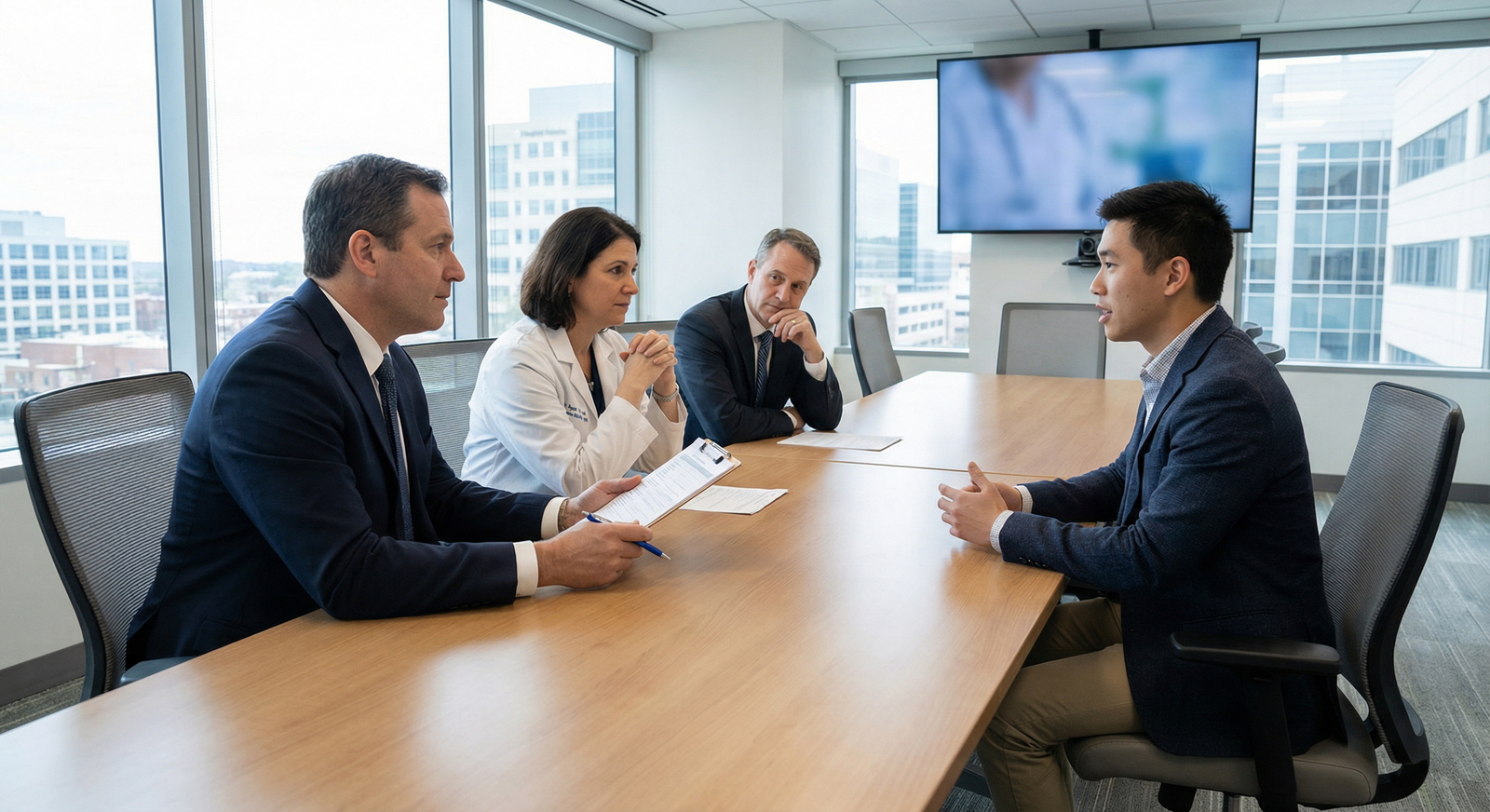
Conduct Timed Mock Interviews
Set up at least 3–5 formal mock interviews focused on:
- General behavioral questions
- Ophthalmology-specific questions
- DO-identity and “red flag” topics (if applicable)
Options:
- Your medical school’s career or advising office
- Ophthalmology faculty or mentors
- Senior residents who recently matched
- Peers (especially if you record and review sessions)
Ask your mock interviewers to give you blunt feedback on:
- Clarity and structure
- Rambling or over-talking
- Filler words (“um,” “like”)
- Eye contact, posture, and tone
Refine repeatedly. Your goal: concise, confident, conversational answers.
Prepare for Virtual Interviews (Common in Ophthalmology)
Many ophthalmology residency interviews are now virtual or hybrid. Before the season:
Optimize your setup
- Neutral, uncluttered background
- Good lighting (face lit from front, not behind)
- Reliable internet and backup plan (hotspot, secondary device)
- High-quality audio (wired or reasonable-quality wireless headset if needed)
Do test runs on the same platform programs will use (Zoom, Teams, Webex):
- Check camera angle (eye-level)
- Verify screen name is professional
- Learn how to mute/unmute, manage camera, and handle breakout rooms
Practice full-length mock interviews in your actual setup. Small technical distractions can derail your confidence if you discover them the morning of a big interview.
Plan Professional Attire and Non-Verbal Communication
For both in-person and virtual interviews:
- Choose professional, comfortable attire you’ve worn before (no experimenting day-of).
- Avoid distracting patterns or overly bright colors on camera.
- Practice your non-verbal communication:
- Upright but relaxed posture
- Natural facial expressions
- Subtle, attentive nodding while listening
Record yourself answering “Tell me about yourself” and “Why ophthalmology?” Watch without sound to evaluate your non-verbal presence.
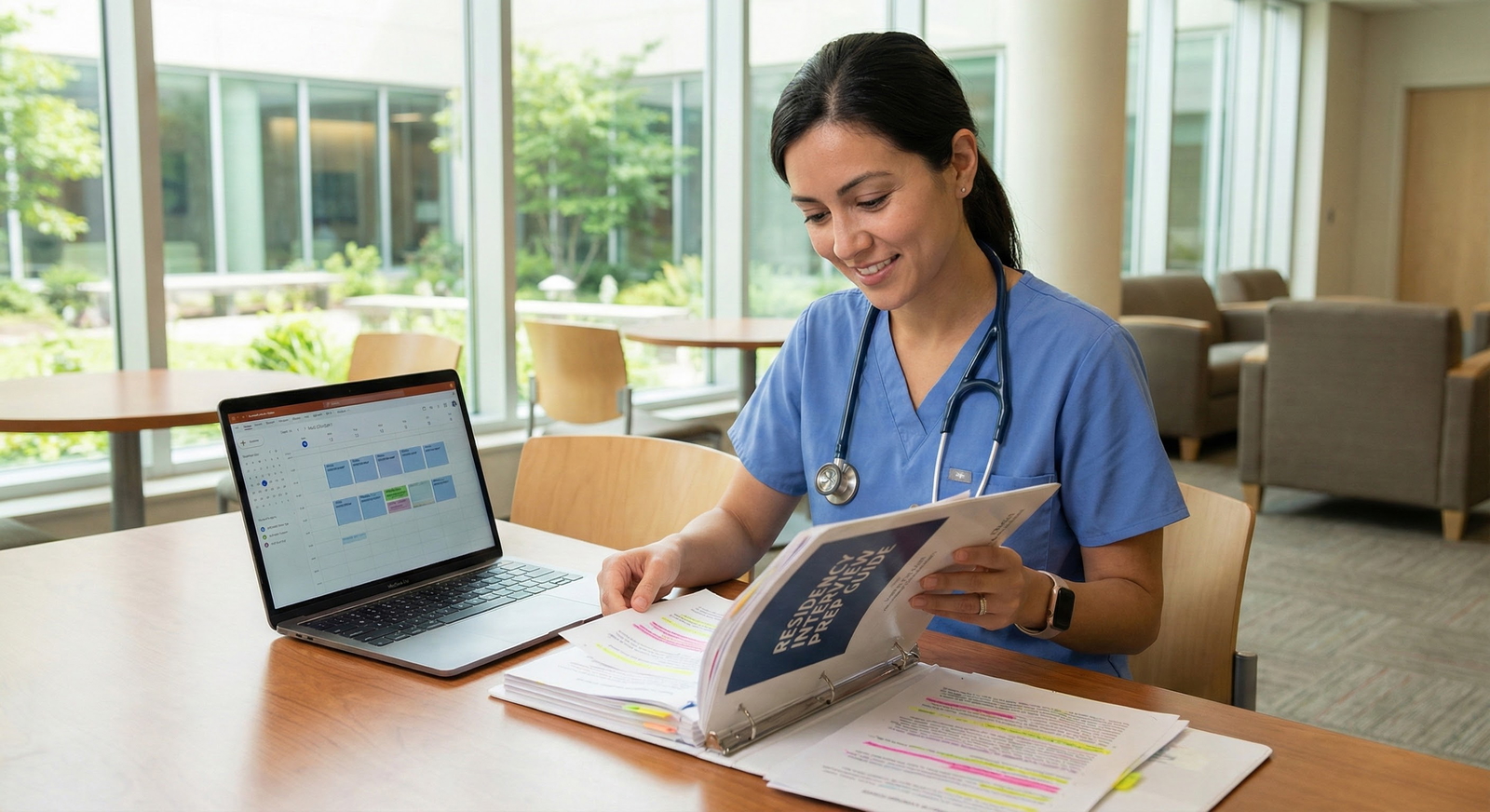
Organize Program-Specific Notes
Pre-interview organization can dramatically reduce stress mid-season.
Consider:
A digital or physical binder with one section per program, including:
- Program highlights and unique features
- Names and backgrounds of key faculty and current residents
- Research areas that interest you
- Questions you plan to ask
- Any personal connections or notes from pre-interview communication
A post-interview template where you can jot:
- Immediate impressions
- Pros/cons
- Culture notes
- How you felt about resident interactions
Preparing this structure ahead of time makes it easier to keep programs straight when it’s time to make your rank list.
Step 6: Mental Preparation, Contingency Planning, and Confidence as a DO Applicant
Finally, pre-interview preparation is also psychological. Ophthalmology is high-stakes and competitive, and as a DO graduate you may feel extra pressure. You need a mindset plan as much as a content plan.
Manage Expectations and Emotional Resilience
Before interviews begin:
- Acknowledge that not every program will see your value, even if you’re a strong applicant.
- Normalize the idea that you may get fewer interviews than some MD classmates but still match successfully.
- Commit to learning from every interview, regardless of the outcome.
Consider simple habits:
- Scheduled time away from applications weekly
- Exercise, sleep, and basic nutrition as non-negotiables
- Mentorship check-ins to recalibrate expectations
Create a Clear Contingency Plan
Interviewers may ask directly or indirectly what you’ll do if you don’t match into ophthalmology. Having a plan:
- Shows maturity
- Reduces your own anxiety
- Helps you answer confidently rather than with panic
Common elements:
- A realistic backup specialty you would genuinely consider
- A plan for an ophtho-focused research year or preliminary clinical year, if you’re all-in on reapplying
- Steps you’d take to strengthen your future ophthalmology application (more research, networking, sub-Is, test scores if incomplete)
Frame your answer to show determination without rigidity:
“My primary goal is to match into ophthalmology, and I’ve oriented my training, research, and mentorship around that. If I don’t match, my first step would be to seek honest feedback from my mentors and program directors, and I would likely pursue a one-year ophthalmology research position or a strong preliminary year that keeps me clinically active while strengthening my application. I’m committed to a career in this field, and I’ve thought carefully about how to grow from any setback.”
Build Quiet Confidence in Your DO Background
Confidence is critical. Many interviewers will be more impressed by your self-assurance and clarity than by the initials after your degree.
Internalize these points before interviews:
- You have completed a rigorous medical education, with additional training in osteopathic principles.
- Your DO status does not limit your potential as an ophthalmologist; your preparation, performance, and professionalism determine that.
- Your path gives you a distinctive perspective in a specialty that needs diverse thinkers and backgrounds.
Remind yourself of specific accomplishments:
- Strong clinical evaluations from ophthalmology rotations
- Research projects completed or in progress
- Leadership, teaching, or advocacy roles
- Positive feedback from mentors and attendings
Walk into each interview viewing yourself as a future colleague, not as an applicant begging for approval.
FAQs: Pre-Interview Preparation for DO Graduates in Ophthalmology
1. As a DO graduate, do I need to take USMLE for the ophthalmology residency match?
Many ophthalmology programs still prefer or require USMLE scores, even though they recognize COMLEX. While some DO graduates match with COMLEX alone, taking USMLE (especially Step 1 and 2) can expand the number of programs that will seriously consider you. If you already have USMLE scores, be ready to discuss them; if you do not, focus on:
- Strong COMLEX performance
- Excellent clinical evaluations
- Robust ophthalmology letters and research
Always check individual program requirements carefully before interview season so you can anticipate questions.
2. How can I stand out in ophthalmology residency interviews as a DO applicant?
You stand out by substance and preparation:
- A clear, well-articulated “Why ophthalmology?” narrative
- Demonstrated commitment through electives, sub-Is, and research
- Thoughtful, specific questions for each program
- Confident, composed explanations of your DO background and training
- Professionalism in every interaction—emails, virtual etiquette, and in-person behavior
Being a DO is part of your story, but what truly distinguishes you is how well you’ve prepared, how genuinely you connect with ophthalmology, and how aligned you are with each program’s mission.
3. How early should I start residency interview preparation for the ophtho match?
Ideally, start structured preparation at least 2–3 months before interviews:
- 2–3 months before: refine your narrative, review your application, research programs
- 4–6 weeks before: begin focused mock interviews and practice common questions
- 2–3 weeks before: finalize your question bank for programs, test your technical setup
- Ongoing: adjust and improve after each interview based on what felt strong or weak
Starting early allows enough time to refine your answers and become truly comfortable, rather than memorized or stiff.
4. Are there osteopathic-specific resources that can help with ophthalmology interview preparation?
Yes. Useful resources include:
- Your DO school’s career office and ophthalmology faculty (if available)
- DO ophthalmologists in practice—reach out through alumni networks or state osteopathic associations
- National organizations and listservs where DO ophtho residents and attendings share advice
- General interview preparation guides tailored for DO students, combined with specialty-specific resources from AAO or AUPO
Combining osteopathic mentorship with ophthalmology-specific content gives you the best preparation for interviews in this highly specialized, competitive field.
With deliberate, structured pre-interview preparation, you can present yourself not just as a strong DO graduate, but as a ready, motivated future ophthalmologist who will add value to any residency program that invests in you.