Understanding the Pathology Residency Landscape as a DO Graduate
As a DO graduate preparing for pathology residency interviews, your pre-interview groundwork can significantly influence your success in the pathology match. While pathology programs are generally receptive to DO applicants, the bar for preparation is high. Your goal is to demonstrate:
- Strong understanding of what pathology actually involves day-to-day
- Clear, realistic career goals within the field
- Evidence that you will thrive in a laboratory-based, analytic specialty
- Maturity, professionalism, and collaborative skills
Pathology is a small specialty; many programs know each other well, and impressions travel. Thoughtful, targeted pre-interview preparation can distinguish you from other applicants—even those with similar board scores and grades.
This article focuses on pre-interview preparation for a DO graduate seeking a pathology residency, covering:
- Program research and application targeting
- Building a pathology-focused narrative as a DO
- Specific residency interview preparation strategies
- Common pathology-focused interview themes and questions
- Logistics, professionalism, and virtual vs. in-person considerations
Throughout, you’ll see the keywords you need to consider for your own planning: osteopathic residency match, pathology residency, pathology match, residency interview preparation, how to prepare for interviews, interview questions residency—all framed for your circumstances as a DO graduate.
Step 1: Strategic Program Research for the Pathology Match
Before you rehearse a single answer, you need clarity about where you’re interviewing and why. Program research shapes your talking points, questions, and even how you present your strengths as a DO graduate.
A. Start with Program Basics
For each program offering you an interview, create a concise “program snapshot” document or spreadsheet. Include:
- Program type: University-based, community, hybrid, or academic-affiliated
- Location: City size, cost of living, proximity to family/support system
- Program size: Number of residents per class and total residents
- Track offerings: AP/CP combined, AP-only, CP-only, physician-scientist tracks
- Accreditation & affiliations: Teaching hospital, medical school, research center
This allows you to tailor your answers when asked, “Why our program?” or “What about our training environment appeals to you?”
B. Pathology-Specific Features to Research
For pathology residency, focus on features that matter in your everyday experience:
Case mix and volume
- Are there high volumes of complex cancer cases, transplant pathology, hematopathology, or neuropathology?
- Is there a balance between community cases and tertiary referral cases?
Subspecialty strengths
- Do they highlight strong hematopathology, cytopathology, forensic pathology, molecular/genomic pathology, or informatics?
- Do they mention specialized labs or centers (e.g., cancer centers, transplant centers)?
Teaching structure
- Daily sign-out with staff (attendings), unknown conferences, tumor boards, journal clubs
- Formal didactics vs. self-directed slide review
- Resident responsibilities at the gross bench, autopsy service, frozen section, and call
Research and scholarly activity
- Access to projects for posters/publications
- Expectations vs. opportunities (are residents required to complete a project?)
Fellowships and career outcomes
- In-house fellowships (e.g., GI, heme, dermpath, forensic, molecular)
- Where graduates go: academic vs. community vs. private lab vs. industry
Make a brief note for each program:
“This program stands out because of X (e.g., strong heme path and cytopath, robust tumor boards, emphasis on informatics). I can connect this to my interests by A, B, C.”
C. DO-Friendliness and Culture
As a DO graduate, you should pay special attention to:
- Percentage of DO residents in current or recent classes
- Explicit DO inclusion (some programs list “we welcome DO applicants” on their websites)
- History of DO graduates in leadership roles, chief residents, or fellowship placements
If you see DO graduates flourishing there, it’s a concrete indicator that you’ll be evaluated fairly in the osteopathic residency match environment for pathology.
D. Use Research to Inform Your Talking Points
Once you know each program, refine your specific “fit” statements:
- “I’m particularly drawn to your program’s strong hematopathology and cytopathology training and the way residents are involved in multidisciplinary tumor boards early. That aligns with my interest in oncologic pathology and team-based diagnostics.”
- “Your emphasis on informatics and digital pathology is exciting to me, especially since I’m comfortable with technology and interested in how AI is changing pathology practice.”
This level of granularity differentiates you from candidates who give generic, unconvincing answers.
Step 2: Building Your Pathology Narrative as a DO Graduate
Most interview questions residency programs will ask are designed to assess your fit, motivation, and professionalism. For DO graduates entering pathology, two key narratives need to be crystal clear:
- Why pathology?
- Why DO + pathology (i.e., how does your osteopathic background strengthen you as a future pathologist)?
A. Clarifying “Why Pathology?”
Before your interviews, write out:
First exposure to pathology
- A pre-clinical course, a pathology lab, a rotation, or a mentor
- A specific moment where the specialty “clicked” for you
What you enjoy day-to-day in pathology
- Visual pattern recognition and analytic reasoning
- Integrating clinical, radiologic, and lab data
- Using microscopes, gross examination, and ancillary tests (IHC, molecular)
- Consulting for other specialties and guiding management
Personality and skills that fit pathology
- Detail-oriented, systematic, and meticulous
- Comfortable with delayed gratification vs. immediate patient interactions
- Strong written communication and report-writing skills
- Ability to handle large volumes of cases and maintain consistency
Long-term career vision
- Academic vs. community setting
- Subspecialty interests (even if tentative) like GI, heme, derm, cytopath, or forensic
- Interest in leadership, informatics, teaching, or quality assurance
Turn this into a concise, honest answer:
“I was drawn to pathology during my second-year systems course when I realized I enjoyed understanding disease at a microscopic and molecular level more than any other part of medicine. During my third-year elective in surgical pathology, I loved the process of correlating the gross specimen with clinical and radiologic information to make a diagnosis that directly shaped treatment decisions. My strengths are attention to detail, methodical thinking, and comfort with high volumes of analytic work, all of which fit a career in pathology. Long-term, I’m particularly interested in hematopathology and working in an academic center where I can teach and contribute to multidisciplinary cancer care.”
B. Owning Your DO Identity in a Pathology Context
The DO graduate residency path comes with unique assets you can leverage:
- Holistic perspective: You are trained to see the patient as a whole person—this helps in clinicopathologic correlation and empathy in challenging cases (e.g., fetal demise, malignancy in young patients).
- Interpersonal strengths: DO curricula often emphasize communication, empathy, and team collaboration—critical when working closely with clinicians, tumor boards, and lab staff.
- Hands-on orientation: Many DOs have strong procedural and practical laboratory skillsets from rotations and electives.
Anticipate questions like:
- “Tell me about your decision to attend a DO school.”
- “How does your osteopathic training influence how you approach pathology?”
Be ready to answer confidently and positively:
“I chose a DO school because I valued its emphasis on holistic care and the integration of structure and function—principles that are actually deeply relevant to pathology. Osteopathic training sharpened my ability to connect clinical presentation with underlying pathophysiology, and that translates directly to making more meaningful, clinically relevant pathology reports. It also strengthened my communication and collaboration skills, which are essential for working with clinicians and multidisciplinary teams.”
Avoid sounding defensive; frame your DO background as a strong foundation, not something you need to “explain away.”
C. Aligning Your CV with Pathology
Before interviews, carefully review your CV and be prepared to:
- Highlight any pathology electives, away rotations, or observerships
- Discuss your experiences in histology, lab medicine, autopsy, or research
- Translate non-pathology clinical experiences into relevant skills:
- Example: “During my internal medicine rotation, I became comfortable synthesizing complex clinical data, which now helps me when I review cases in a pathology context.”
If you have research or case reports, practice a 30–60 second, jargon-light summary of each:
“I worked on a case report describing a rare variant of endometrial carcinoma. My role involved literature review, assembling clinical and pathologic data, and drafting the discussion. Through that, I improved my ability to connect microscopic findings to clinical implications and standard-of-care management.”
Step 3: Residency Interview Preparation – Content and Practice
With your narrative solid, now focus on how to prepare for interviews in a systematic, pathology-focused way.
A. Anticipate Common Pathology Interview Questions
Many questions are general to all specialties, but pathology has its own nuances. Prepare bullet-point outlines (not scripts) for questions such as:
Motivation and Fit
- Why pathology?
- Why this program?
- How did you decide between pathology and other specialties you considered?
- Where do you see yourself in 5–10 years?
Experience and Skills
- Tell me about a pathology case or rotation that had a big impact on you.
- What strengths will you bring to our pathology residency?
- What are your areas for growth, and how are you working on them?
Teamwork and Communication
- Describe a conflict with a colleague or team and how you handled it.
- Tell me about a time you had to communicate complex information to someone with less background knowledge.
Professionalism and Resilience
- Describe a mistake you made (clinical or academic) and what you learned from it.
- How do you handle stress or high workload?
DO-Specific or Background Questions
- Why did you choose a DO program?
- Did you feel you had any challenges accessing pathology experiences as a DO graduate, and how did you address them?
Write 3–4 key ideas for each question in bullet form, and practice answering out loud. Avoid memorizing word-for-word; aim for natural, structured responses.
B. Behavioral and Scenario-Based Questions
Many programs use behavioral interviewing:
“Tell me about a time when…”
Prepare 3–5 strong stories from your clinical, academic, or personal experience and map them to common themes using the STAR method (Situation, Task, Action, Result):
- Teamwork: A case where you worked closely with staff or peers to solve a problem (e.g., resolving a lab error in reporting).
- Leadership: Organizing a teaching session, quality-improvement project, or student group.
- Ethical challenge: Handling an issue with professionalism or integrity.
- Resilience: Overcoming a setback, poor test result, or personal hardship.
Example mapping:
Situation: On my pathology elective, a mislabeled specimen was discovered during sign-out.
Task: As the student, I was asked to help clarify the chain of events and ensure accurate tracking.
Action: I methodically reviewed the order entry, specimen log, and communication between surgical and lab staff, and I helped draft a step-by-step description of the error.
Result: We identified a systems gap in the labeling process, and the lab implemented a double-check protocol at the time of specimen receipt. I learned the importance of systems-based thinking and clear documentation in pathology.
Having these stories ready makes you nimble when responding to a range of interview questions residency programs may ask.
C. Practicing Delivery: Mock Interviews and Feedback
Effective residency interview preparation is not just about content; it’s about delivery:
- Schedule mock interviews with:
- Your school’s career office or residency advising office
- Pathology faculty or residents
- Peers, particularly those also applying to pathology
Ask for specific feedback on:
- Clarity and structure of your answers
- Eye contact and body language (even on video)
- How well you convey enthusiasm for pathology
- Whether you talk too fast, too slow, too long, or too short
Record yourself (video or audio) and review:
- Do you ramble or repeat yourself?
- Do you use filler words (“um,” “like,” “you know”) excessively?
- Do you sound engaged and interested, or monotone and disengaged?
Commit to 3–5 focused practice sessions before your first interview.

Step 4: Logistics, Professionalism, and Virtual Interview Execution
Even the strongest candidate can be undermined by poor logistics or unprofessional details. Pre-interview preparation must include these practical aspects.
A. Organizing Your Interview Season
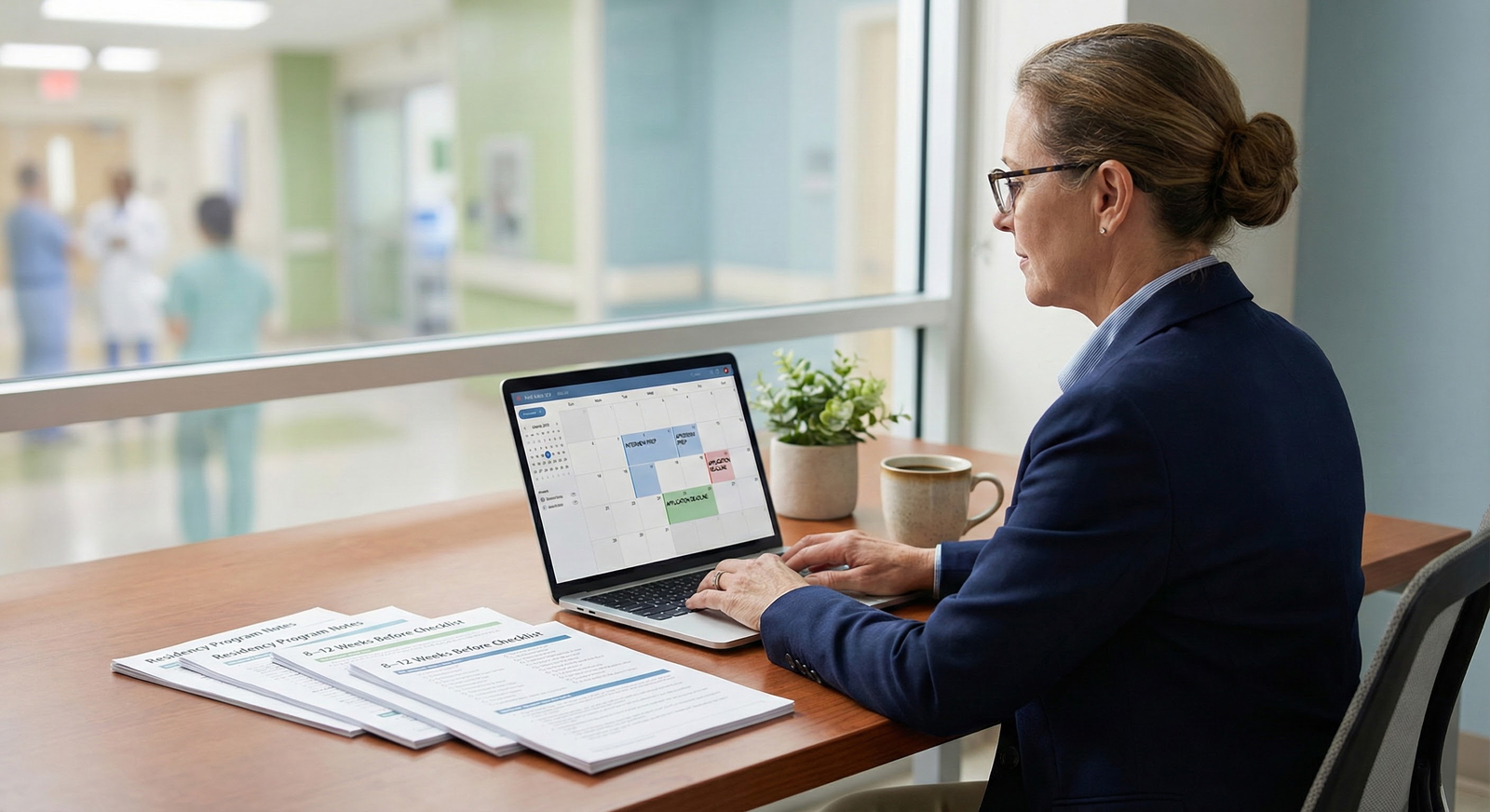
Create a master document or calendar that includes:
- Interview dates, times, and time zones
- Interview platform (Zoom, Thalamus, Webex, etc.)
- Names and roles of interviewers (if provided)
- Program-specific notes and questions you want to ask
- Post-interview reflection space (impressions, pros/cons, “gut feel”)
This organization helps you compare programs later for your rank list and reduces day-of stress.
B. Virtual vs. In-Person: Technical Preparation
Most pathology residencies still use virtual interviews at least in part. For virtual formats:
Technology check
- Test your camera, microphone, and speakers
- Ensure stable, high-speed internet
- Update your videoconferencing software
- Do a test call with a friend to check lighting and background
Environment
- Quiet room with minimal noise
- Neutral, uncluttered background (blank wall or simple bookshelf)
- Good lighting facing you, not behind you (avoid strong backlighting)
Body language
- Look at the camera when speaking, not at your own image
- Sit upright, avoid swiveling or fidgeting
- Keep your hands occasionally visible to appear engaged, but avoid constant gestures
For in-person interviews, prepare:
- Directions, parking information, and backup transportation options
- A professional portfolio with printed CV, personal statement, letters of interest, and a notepad
- Comfortable but polished shoes (you may be walking and touring the hospital)
C. Professional Attire and Presentation
Pathology is somewhat less formal than some procedurally heavy specialties, but you should still aim for classic professionalism:
- Men/masculine attire: Dark or neutral suit, dress shirt, conservative tie, polished shoes.
- Women/feminine attire: Suit (pants or skirt) or professional dress with blazer; closed-toe shoes.
- General:
- Minimal, non-distracting jewelry
- Neat, conservative hairstyle
- Avoid strong fragrances (especially important in hospital environments)
Remember that even online, first impressions matter; aim for “polished, calm, and prepared.”
D. Preparing Insightful Questions for Programs
Near the end of each interview, you’ll be asked if you have questions. Thoughtful questions:
- Show you researched the program
- Help you assess whether you’d thrive there
- Demonstrate your engagement with pathology specifically
Avoid questions easily answered on the website. Instead, consider:
- “How are residents involved in intradepartmental quality improvement projects?”
- “Can you describe how residents are introduced to sign-out and how responsibility increases over the first and second years?”
- “How does your program support residents who want to pursue subspecialty fellowships?”
- “What are some recent changes the program has implemented based on resident feedback?”
As a DO graduate, you may also gently probe program culture:
- “How would you describe the culture among residents and between residents and faculty?”
- “How does the program support residents from diverse educational backgrounds, including DO graduates?”
Step 5: Post-Interview Reflection and Ongoing Preparation
Your pre-interview preparation doesn’t end once the interview starts; you also need a strategy for what happens afterward, especially as you build your rank list for the pathology match.
A. Structured Post-Interview Notes
Within 24 hours of each interview, write:
- Your overall impression of the program and people
- Pros and cons (training, location, culture, case mix, fellowships)
- Any red flags (lack of transparency, negativity, poor resident morale)
- Specific moments that stood out (positive or negative)
This helps counter the “everything blends together” problem later in the season.
B. Thank-You Messages
Many programs neither require nor expect thank-you messages, but polite, concise emails can reinforce a positive impression:
- Send within 24–48 hours
- Address each interviewer individually when possible
- Mention a specific topic you discussed to personalize your note
Example:
Dear Dr. Smith,
Thank you again for taking the time to speak with me during my interview with [Program Name]. I especially appreciated our discussion about resident involvement in hematopathology research and how your department supports early participation in tumor boards. Our conversation reinforced my impression that [Program Name] would be an excellent environment for me to grow as a future pathologist.
Sincerely,
[Your Name], DO
Keep it genuine and brief.
C. Continuing to Strengthen Your Application During Interview Season
Even as interviews progress, you can continue to enhance your profile as a DO graduate entering pathology:
- Stay engaged in your current rotations, especially pathology-related work
- Maintain professionalism in all email and phone communications with programs
- If you complete a new scholarly activity (e.g., abstract acceptance), consider a brief update email to programs where you’ve interviewed, following your dean’s or advisor’s guidance
These updates should be occasional and meaningful, not frequent or self-promotional.
FAQs: Pre-Interview Preparation for DO Graduates in Pathology
1. As a DO graduate, will I be at a disadvantage in the pathology match?
Many pathology programs are quite welcoming to DO graduates, and pathology is generally less biased than some other fields. However, you should:
- Demonstrate strong academic fundamentals (COMLEX, and USMLE if taken)
- Show clear, consistent interest in pathology (electives, research, mentorship)
- Articulate how your osteopathic training enhances your abilities as a future pathologist
Focus your residency interview preparation on confidently owning your DO identity and connecting it to pathology’s analytic and clinicopathologic nature. Check current and past resident lists to identify programs accustomed to training DO graduates.
2. How technical should I be when discussing pathology cases in interviews?
Aim for clinically relevant clarity rather than extreme subspecialty detail:
- Use proper terminology but avoid excessive jargon
- Focus on the thought process: clinical context, gross and microscopic findings, differential diagnosis, and final interpretation
- Emphasize how you worked as part of a team, communicated with clinicians, or learned from errors
The goal is to show that you understand pathology principles and clinical impact, not to impress with obscure details.
3. What are some red flags to watch for during pathology residency interviews?
Potential red flags include:
- Residents who appear overworked, unhappy, or reluctant to talk freely
- Faculty or leadership speaking negatively about residents or other programs
- Lack of clarity about case volume, supervision, or progression of responsibility
- Poor board pass rates without a clear, proactive plan to support residents
- Dismissive attitudes toward DO graduates or non-traditional backgrounds
Use your pre-interview research and on-the-day observations together to assess program health.
4. How many practice interviews should I do before my first real interview?
Aim for at least 3–5 structured mock interviews:
- One focused on general behavioral questions
- One focused specifically on pathology content and your “why pathology” narrative
- One or two virtual mock interviews to refine your camera presence and technical setup
- Optional additional sessions targeted to specific weaknesses identified in feedback
Quality matters more than quantity; targeted practice with honest feedback is the most efficient way to improve.
By combining thoughtful program research, a clear pathology-focused narrative, polished responses to common interview questions, and meticulous logistical preparation, you’ll enter each interview as a confident, compelling DO candidate for pathology residency. This pre-interview preparation positions you not just to match—but to match into a program where you will thrive as a future pathologist.