
As a DO graduate applying to pathology, you’re navigating two parallel challenges: standing out in a competitive pathology match and ensuring that the programs you rank will genuinely support your career as an osteopathic physician. One of the most powerful tools you have is the quality of the questions you ask programs—not just to impress them, but to gather the information you need to make a smart, confident rank list.
This guide focuses on high‑yield, practical questions tailored for a DO graduate interested in pathology residency. It will also help you frame interview questions for them—program directors, faculty, and residents—so you can evaluate fit, osteopathic friendliness, training quality, and long‑term career support.
Understanding Your Priorities as a DO in the Pathology Match
Before you can decide what to ask, you need clarity on what you actually care about. As a DO in the osteopathic residency match (now integrated into the NRMP), some questions matter more for you than for your MD peers.
Key factors to consider:
Osteopathic friendliness
- How many DOs are in the program?
- Are DOs in leadership (chief residents, faculty)?
- Are COMLEX scores truly accepted, or only “on paper”?
Pathology training quality
- Case volume and case mix (community vs tertiary, subspecialties)
- Degree of autonomy and graduated responsibility
- Balance between anatomic pathology (AP) and clinical pathology (CP)
Board exam and fellowship outcomes
- AP/CP board pass rates
- Fellowship placement in competitive subspecialties (e.g., dermpath, hematopathology, cytopathology, GI, forensics)
- Support for DOs in academic or research careers
Culture and environment
- Collegiality between pathologists and clinicians
- Wellness, workload, and support systems
- How DO graduates are perceived and supported within the larger institution
Once you know your priorities, you can choose targeted questions to ask residency programs—not just generic ones.
High-Yield Questions to Ask the Program Director
Your meeting with the program director (PD) is your best opportunity to ask big‑picture questions about training philosophy, DO support, and outcomes. These should be thoughtful, specific, and show that you understand pathology as a specialty.
1. Questions About Program Philosophy and Training Structure
These questions help you understand how the program is designed and what kind of pathologist it aims to produce.
Questions to ask the program director:
“How would you describe the type of pathologist your program is designed to train?”
- Follow‑up: “Are graduates typically more community‑practice focused, academic, or a mix?”
“Can you walk me through how autonomy and responsibility increase from PGY‑1 to PGY‑4?”
- Ask for concrete examples: grossing, case sign‑out independence, teaching responsibilities.
“How is the balance between AP and CP structured, and has that changed in recent years?”
- Clarify whether the program is AP/CP, AP‑only, or AP/NP, and how much exposure you get to each area.
“How does your program incorporate new technologies like digital pathology, molecular, and informatics into resident training?”
- This is essential for a modern pathology residency, especially if you’re considering academic or subspecialty careers.
“If you had to identify the top 2–3 strengths and top 1–2 weaknesses of your program, what would they be?”
- This is a bold but informative question. Programs that answer honestly show transparency and growth mindset.
2. DO‑Specific Questions for the Program Director
As a DO graduate in pathology, you need to evaluate how well the program truly supports DOs.
Targeted osteopathic residency match questions:
“How many DO residents are currently in the program, and how many have graduated in the last 5–10 years?”
- Ask for numbers, not vague reassurances.
“Are there any DO faculty members or DOs in leadership positions (chief, assistant PD, etc.)?”
- Their presence often signals structural support for DOs.
“How do you view COMLEX scores compared to USMLE for DO applicants?”
- If you took only COMLEX: “Do you have any concerns about residents who have not taken USMLE for fellowship or job placement?”
- You want a concrete answer, not generic statements.
“Have DO graduates from your program had any challenges with fellowship applications or academic jobs compared to MDs?”
- Follow‑up: “How does the program support them in those processes?”
“Do you see any differences in the way DO graduates transition into pathology training compared to MDs, and how do you support that?”
- Their answer should be about support, not stereotypes.
These questions subtly assess how genuinely osteopathic‑friendly the program is—and how that might impact your pathology match outcome and career trajectory.
Questions to Ask Residents: The Real Story Behind the Brochure
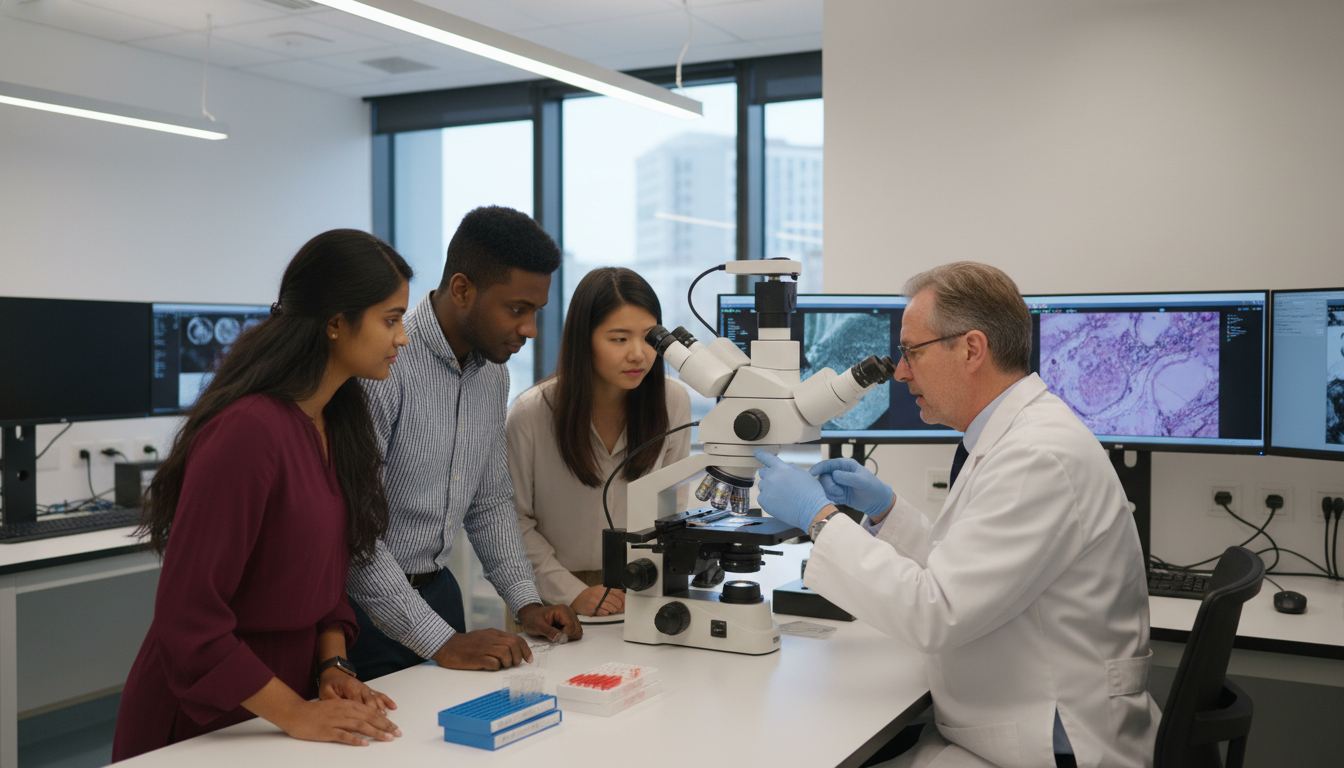
Residents will often be your most honest source of information. They’ll tell you what you won’t see in the brochure or hear in a formal presentation. Your interview questions for them should dig into day‑to‑day life, culture, and hidden expectations.
1. Questions About Daily Workflow and Training Quality
These questions help you understand how you’ll actually spend your time for four years.
Questions to ask pathology residents:
“On a typical day, what time do you arrive and what time do you usually leave?”
- Ask separately for AP heavy rotations (surgical pathology, autopsy) and CP rotations (hematology, transfusion, micro, etc.).
“How is the grossing workload distributed among residents and PAs?”
- Clarify: “Do junior residents gross the majority of specimens? How does that change over the years?”
- Over‑grossing can be a red flag; under‑grossing can limit skill.
“How much preview time do you realistically get before sign‑out?”
- Poor preview time can harm your learning and exam preparation.
“Do you feel you’re seeing a good variety and volume of cases?”
- Ask specifically: “Are there enough complex cases, or is most of the work routine?”
- For fellowship ambitions, strong case mix matters.
“How closely do attendings supervise at the beginning, and do you feel you gain appropriate independence by the end?”
- Independence at the senior level is crucial for real‑world practice.
2. Questions About Education, Feedback, and Board Prep
Pathology is exam‑heavy. You need a program that will prepare you well for boards and fellowships.
Resident‑focused questions:
“How consistent and useful are didactics and conferences?”
- Follow‑up: “Are they protected time, or do you frequently get pulled away for service?”
“How does the program support AP/CP board prep?”
- Ask about:
- In‑service exams and how results are used
- Structured review courses or board review series
- Access to study resources (textbooks, online modules, PathPrimer, etc.)
- Ask about:
“Do you know your program’s recent AP/CP board pass rates, and do residents feel well prepared?”
- A lack of awareness plus weak pass rates can be concerning.
“How often do you get formal feedback, and is it actually actionable?”
- Ask for examples of how feedback helped residents grow.
“Are there any rotations where you feel the educational value is weak or mostly service‑driven?”
- Follow‑up: “Has the program been responsive to feedback about those rotations?”
3. Questions About Culture, Support, and Fit
Culture makes or breaks your residency experience—especially in a specialty like pathology where much of the work is behind the scenes.
High‑yield culture questions:
“How would you describe the relationship between residents and attendings?”
- Look for phrases like “approachable,” “invested in teaching,” “treat us like colleagues.”
“How is the relationship between pathologists and clinicians (surgeons, oncologists, internists) in this hospital?”
- Pathology thrives when clinicians value pathology input and collaborate.
“Is there a culture of teaching and mentorship, or mostly service?”
- Ask for specific examples of mentorship: research projects, career guidance, conference sponsorship.
“How does the program respond when a resident is struggling—academically, clinically, or personally?”
- Strong programs have structured support, not just ad‑hoc reactions.
“What kind of residents tend to be happiest and most successful here?”
- This helps you assess whether you fit that profile.
4. DO‑Specific Questions to Ask Current Residents
If there are DO residents at the program—talk to them. Their perspective is uniquely valuable.
Targeted questions for DO residents:
“As a DO, have you felt fully accepted and supported by the faculty and co‑residents?”
- Probe for subtle bias versus genuine inclusivity.
“Did you take USMLE, and has not having it (if applicable) ever been an issue?”
- Ask particularly about fellowship applications and job searches.
“Have you felt any differences in expectations or treatment compared to MD residents?”
- Listen carefully; small comments can reveal bigger systemic issues.
“Would you recommend this program specifically to another DO interested in pathology?”
- A simple but powerful question.
Questions to Ask About Career Outcomes, Pathology Match, and Fellowships
A core part of evaluating a pathology residency is understanding its ability to launch your career—especially if you’re pursuing competitive fellowships or academic positions.
1. Fellowship and Job Placement Questions
You want hard data and concrete stories, not vague assurances.
Questions for PDs and senior residents:
“What proportion of your graduates pursue fellowships, and in which subspecialties?”
- Look for breadth: dermpath, heme, cytopath, GI, molecular, pediatric, forensics, etc.
“Can you share some examples of recent fellowship placements, including any competitive institutions?”
- This will show how the program’s name and training are perceived nationally.
“Do you have in‑house fellowships, and how are residents selected for them?”
- Clarify: “Do internal residents get preference?”
- In‑house fellowships can be a major advantage.
“For graduates going directly into practice, what types of jobs are they getting and where?”
- Academic vs community; regional vs national spread.
“How involved is the faculty in mentoring residents through the fellowship application process?”
- Personal advocacy from faculty can be particularly important for DO graduates.
2. Questions Specifically About DO Graduate Outcomes
As a DO graduate in pathology, you should explicitly ask about DO outcomes.
“Can you speak specifically to the fellowship or job outcomes of your DO graduates?”
- Ask for a few recent examples.
“Have any DO graduates from your program pursued academic careers, and how were they supported?”
- This matters if you’re considering teaching or research.
“Do external programs or employers ever raise questions about COMLEX or osteopathic training, and how has that been handled?”
- You’re assessing real‑world perceptions and advocacy.
Questions to Ask About Logistics, Wellness, and Day-to-Day Life
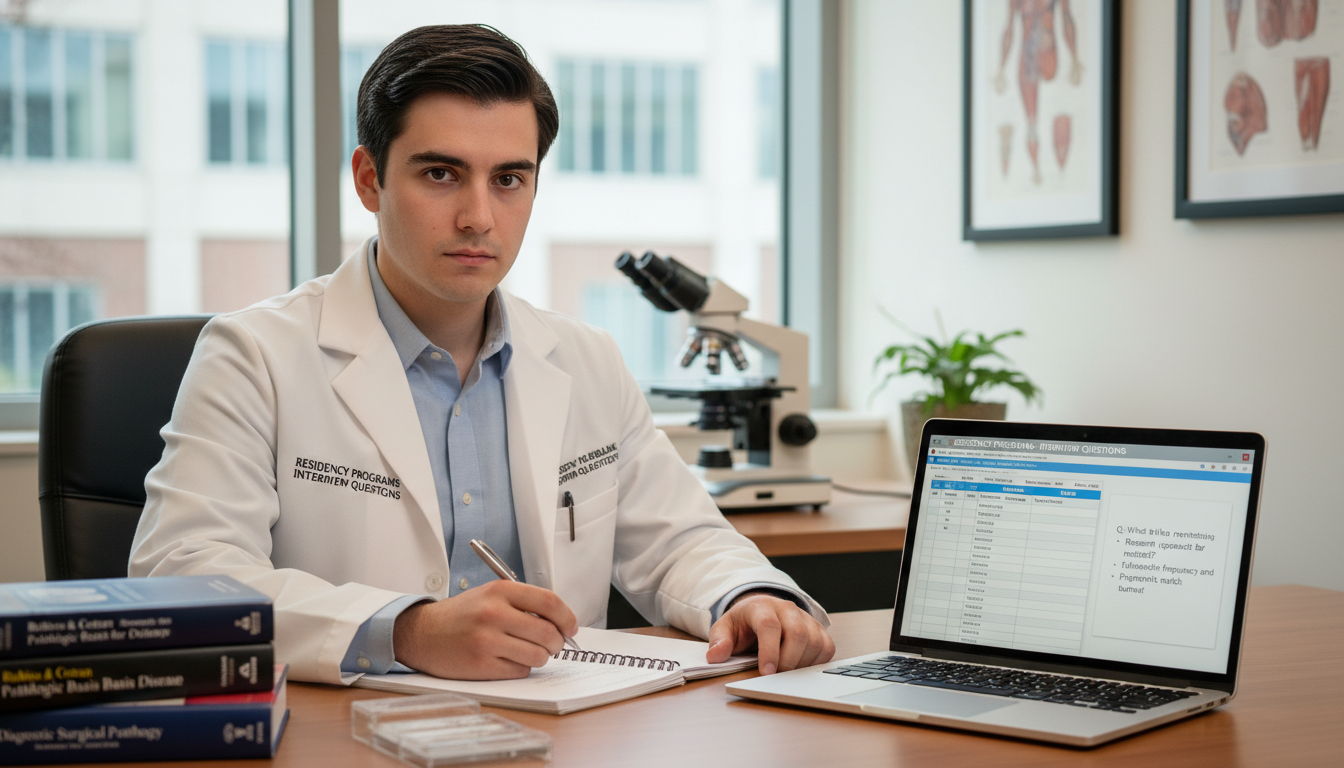
Residency is your life for four years. Beyond training quality, you need to know if the lifestyle is sustainable and compatible with your personal needs.
1. Workload, Call, and Coverage
In pathology, call may be lighter than in other specialties—but it can still be stressful.
Questions to ask:
“What does call look like here—frequency, responsibilities, and how often are you called in overnight?”
- Clarify differences between AP and CP call.
- Ask about frozen sections, transfusion issues, gross room emergencies, autopsy call.
“How is work distributed when someone is out sick or on vacation?”
- Are residents regularly covering multiple services?
- Excessive coverage can burn you out.
“Do you feel the workload is generally reasonable, or do you often feel overwhelmed?”
- Ask residents to compare it to their peers at other programs if they have a sense.
“Has the program made changes in response to resident feedback about workload?”
- Shows responsiveness and commitment to wellness.
2. Wellness, Support, and Life Outside the Lab
Residency is not just about work. You need a life outside of pathology.
Key wellness questions:
“What wellness or mental health resources are available specifically for residents?”
- Institutional support, confidential counseling, wellness days, etc.
“How supportive is the program when residents have personal or family emergencies?”
- Look for real examples.
“Do residents have time for hobbies, family, or side projects?”
- Ask: “What do people do for fun here?”
- If no one can answer, that’s telling.
“How often do residents socialize together, and is there a sense of community?”
- Especially important if you’re moving far from your support system.
“What’s the cost of living like, and does the salary feel adequate for this city?”
- Ask residents how they manage housing, commuting, and expenses.
Strategy: How to Use These Questions Effectively as a DO Pathology Applicant
Knowing what to ask programs is only half the battle—how and when you ask also matters.
1. Before the Interview
Research each program thoroughly
- Website, rotation schedule, case volumes, faculty bios, fellowship list.
- Look up DO representation (if visible) and any mention of osteopathic training.
Tailor your questions
- Avoid asking things easily found online (e.g., “How long is your program?”).
- Use your research to ask deeper questions like:
- “I noticed you have a strong hematopathology service; how early do residents rotate there and how much exposure do they get to flow and molecular?”
Prepare a short, prioritized list
- Have 3–5 must‑ask questions for PDs and 3–5 for residents.
- Keep a longer “backup” list if time allows.
2. During the Interview Day
Be conversational, not interrogational
- Frame questions as curiosity and engagement, not as cross‑examination.
- Example: “I’m very interested in AP/CP board prep, especially as a DO applicant. Can you tell me how your program supports residents in preparing for boards?”
Ask different people different targeted questions
- PD: philosophy, outcomes, DO‑specific policies, big picture.
- Faculty: subspecialty teaching, mentorship, research access.
- Residents: day‑to‑day life, culture, hidden pros/cons, real workload.
Take notes immediately after each conversation
- You will forget details quickly after multiple interviews.
- After each program, jot down:
- Pros and cons
- DO friendliness impressions
- Red flags and “green flags”
3. After the Interview: Using Your Answers to Build a Rank List
Once you’ve completed your interviews, use your notes and the answers you received to:
Create a comparison table
- Columns: Program name, DO support, culture, board pass rates, fellowship outcomes, workload, location, gut feeling.
- Fill in with data and impressions.
Weigh DO‑specific factors more heavily if needed
- If you want academic or competitive fellowship paths, prioritize programs with proven DO success.
- If you’re more community‑practice focused, case mix, autonomy, and local job connections may matter more.
Trust your pattern recognition
- After several interviews, you’ll notice patterns:
- Which programs were transparent versus vague
- Where DO graduates seemed truly integrated
- What environments made you feel energized vs uneasy
- After several interviews, you’ll notice patterns:
Your questions to ask residency programs are ultimately a tool to help you answer the most important question:
“Can I see myself thriving here as a DO pathologist for the next four years—and beyond?”
Frequently Asked Questions (FAQ)
1. As a DO, should I specifically ask programs if they are “DO‑friendly”?
Yes—but phrase it thoughtfully. Instead of asking directly, “Are you DO‑friendly?”, ask for objective indicators:
- “How many DO residents and graduates have you had recently?”
- “Are there DO faculty or leaders in the department?”
- “Can you share outcomes for your DO graduates in terms of fellowships and jobs?”
Their answers will tell you far more than a simple yes or no.
2. What should I avoid asking during a pathology residency interview?
Avoid:
- Questions you could easily answer from the website (e.g., “Is this a 3‑ or 4‑year program?”)
- Overly personal questions about other residents or faculty
- Overemphasis on salary or vacation as the first topic you raise
- Anything that suggests you haven’t thought seriously about pathology as a career
Focus instead on training, case mix, support, DO outcomes, and long‑term development.
3. Do I need to ask different questions as a DO compared to MD applicants?
Many questions are similar, but your emphasis differs. As a DO in the pathology residency match, you should:
- Ask explicitly about DO representation, COMLEX considerations, and DO career outcomes
- Clarify if not having USMLE (if applicable) has ever limited fellowship or job options
- Seek programs that demonstrate not just “acceptance” of DOs, but active support and advocacy
4. Is it okay to email follow‑up questions to programs after the interview?
Yes, as long as:
- Your questions are concise and thoughtful
- You don’t ask things that were already clearly covered
- You avoid sounding anxious or demanding
Email is especially appropriate for clarifying DO‑specific issues, fellowship details, or research opportunities. Address the PD or coordinator politely and thank them for their time.
By preparing focused, insightful questions to ask programs—and listening carefully to the answers—you’ll not only make a strong impression as a thoughtful DO applicant, but also gather the information you need to choose a pathology residency where you can truly thrive.