Understanding the Neurology Residency Landscape as a DO Graduate
Entering the neurology residency match as a DO graduate comes with unique strengths and specific challenges. Before you dive into residency interview preparation, you need a clear understanding of where you stand and how programs are likely to view your application.
The DO Advantage in Neurology
Neurology is increasingly DO-friendly. Many programs actively value:
- Strong clinical skills and bedside manner, frequently emphasized in osteopathic training
- Exposure to holistic patient care, which fits well with chronic neurologic disease management
- The ability to communicate complex conditions (stroke, epilepsy, neurodegenerative disease) in patient-friendly language
If you’ve done neurology rotations, sub-internships, or audition rotations at ACGME neurology programs, that’s a major plus. These experiences show you can perform in the same environment as MD applicants.
Common Concerns for DO Graduates
As you approach the osteopathic residency match (now fully integrated into the NRMP match), you might worry about:
- Whether Step 1/Level 1 scores or pass/fail statuses will be an issue
- How to address having only COMLEX or needing to justify taking/not taking USMLE
- Perceptions (accurate or not) of differences in training
You can’t change what’s already in your application—but you can prepare to address these points confidently in interviews. Pre-interview preparation must include:
- A clear, concise way to explain your testing strategy (COMLEX only vs COMLEX + USMLE)
- An understanding of ACGME neurology program requirements and culture
- A polished narrative about your path as a DO graduate choosing neurology
Keep this context in mind as you prepare; it will shape the stories you choose, how you present your background, and how you answer program-specific questions.
Building Your Neurology-Specific Narrative
Residency interviews are, at their core, about your story. For a strong neurology residency and neuro match outcome, you need a coherent, memorable narrative tailored to neurology and framed from the DO perspective.
Step 1: Clarify Your “Why Neurology?” Story
Nearly every neurology residency interview will include some version of:
“Why neurology?”
Your answer needs to be specific, personal, and grounded in real experiences. Avoid vague statements like “I like the brain” or “Neurology is fascinating.” Instead, build a 2–3 minute narrative:
Framework:
- Origin moment – A specific patient, rotation, mentor, or experience
- Confirmation – Experiences that deepened your interest (e.g., stroke service, EEG reading, neuromuscular clinic)
- Alignment – How neurology fits your personality, skills, and long-term goals
Example structure:
- Origin: A patient on your internal medicine rotation with unexplained weakness that led to a neurology consult.
- Confirmation: Time spent on an inpatient stroke service seeing rapid interventions change outcomes, plus an outpatient movement disorders clinic.
- Alignment: You enjoy detailed physical exams, pattern recognition, and building long-term relationships with patients with chronic disease.
Write out your answer in bullet form, then practice aloud until it feels natural—not memorized.
Step 2: Integrate Your DO Background into the Story
As a DO graduate, incorporate osteopathic principles in a thoughtful, non-forced way:
- Highlight your emphasis on whole-person care: mental, social, and physical aspects
- Discuss how chronic neurologic conditions (MS, epilepsy, neuropathies, dementia) benefit from holistic management
- If you use OMT, be realistic about its role in neurology (e.g., headache, chronic neck pain associated with neurologic conditions) without over-claiming
You might say, for instance:
“My osteopathic training has shaped how I approach patients with chronic neurologic illness: I think in terms of function, quality of life, and systems, not just imaging and labs. That perspective helps when managing patients with progressive conditions like Parkinson’s disease or dementia.”
Prepare one or two short examples where your osteopathic perspective improved patient care or rapport.
Step 3: Identify 4–6 Anchor Stories
Many interview questions can be answered using a small set of well-chosen experiences. Before interview season:
Choose 4–6 “anchor stories” that illustrate:
- Leadership
- Teamwork and communication
- Resilience and dealing with setbacks
- Ethical decision-making or professionalism
- Handling difficult feedback
- Clinical reasoning in complex neurology or internal medicine cases
For each story, outline:
- Context: Rotation, level of responsibility
- Challenge: What went wrong or what was at stake
- Action: What you did specifically
- Result/Reflection: Outcome and what you learned
This structure (similar to STAR/CARE) helps you respond clearly under pressure and is key to strong residency interview preparation.
Mastering Common Neurology Residency Interview Questions
Knowing how to prepare for interviews means anticipating common interview questions residency programs love to ask—especially in neurology.
Below are categories of questions with examples and guidance on how to answer them as a DO applicant.
1. Motivation and Career Goals
Typical questions:
- “Why neurology?”
- “What sparked your interest in neurology specifically?”
- “Where do you see yourself in 5–10 years?”
- “Are you interested in a particular subspecialty (stroke, epilepsy, neuromuscular, movement disorders, neurocritical care, behavioral neurology, etc.)?”
Preparation tips:
- Connect your reason for neurology to real experiences (rotations, patient stories, research).
- If you have a subspecialty interest, state it, but remain open:
- “I’m currently drawn to epilepsy and neurophysiology because… though I’m very open to how residency will shape that interest.”
- If you’re undecided, focus on what aspects of neurology you consistently enjoy (acute management vs chronic care, procedural vs diagnostic, inpatient vs outpatient).
2. DO-Specific and COMLEX/USMLE Questions
Programs may ask directly or indirectly about your testing choices or DO background.
Possible questions:
- “Why did you choose to take/ not take the USMLE?”
- “How has your osteopathic training prepared you for neurology?”
- “Tell me about any challenges you faced as a DO applying to mainly ACGME programs.”
How to respond:
- Be honest and concise about USMLE/COMLEX decisions. Avoid defensiveness.
- Frame your DO training as an asset:
- Strong physical exam skills, communication, early patient exposure
- Emphasis on musculoskeletal and neuroanatomy from an OMM/OMT and functional perspective
- If you encountered bias or barriers, acknowledge them briefly, then focus on what you did about it (seeking ACGME rotations, strong letters, extra studying, research).
3. Clinical and Neurology Knowledge
While many neurology residency interviews are conversational, some include light clinical questions to see how you think.
Common formats:
- “Walk me through your approach to a patient with acute onset focal weakness.”
- “How would you evaluate a patient with new-onset seizures?”
- “What is your approach to a patient with chronic headaches?”
Preparation strategy:
- Review core neurology topics:
- Stroke/TIA, seizure/epilepsy, status epilepticus
- Headache disorders and red flags
- Neuromuscular weakness (GBS, myasthenia gravis, neuropathies)
- Demyelinating diseases (MS) and basic imaging findings
- Focus on frameworks, not obscure facts:
- Symptom localization
- Distinguishing emergent vs non-emergent situations
- Initial workup, key questions, and basic management steps
You’re not expected to be a neurologist already, but you should demonstrate logical, methodical thinking and safe decision-making.
4. Behavioral and Situational Questions
These interview questions residency programs use to assess how you function as a team member.
Examples:
- “Tell me about a conflict you had with a team member and how you resolved it.”
- “Describe a time you made a mistake in patient care.”
- “How do you handle stress or long hours?”
- “Tell me about a time you received critical feedback.”
Use your anchor stories here. Keep them:
- Honest (don’t pretend you’ve never struggled)
- Professional (avoid gossip, blame, or oversharing)
- Reflective (spend time on what you learned and how you changed)
5. Red Flags and Weaknesses
Program directors want to know how you handle adversity.
Questions you might face:
- “Can you explain your Step/COMLEX score?”
- “Tell me about this gap in your training.”
- “What’s your greatest weakness?”
How to approach:
- Be straightforward, factual, and brief about the issue.
- Then pivot to:
- What you learned
- What you changed (study strategies, time management, wellness)
- Evidence of improvement (better scores, stronger clinical evaluations, new responsibilities)
Avoid cliché weaknesses (“I work too hard”) unless you can ground them in real, specific behavior and genuine growth.
6. Program Fit and “Why Our Program?”
Programs want residents who actively chose them, not those blindly applying to every neurology residency.
Prepare specific answers for:
- “Why our program?”
- “What are you looking for in a neurology residency?”
- “How would you decide between programs on your rank list?”
Research each program beforehand:
- Clinical strengths (stroke center, epilepsy monitoring unit, neuro ICU, movement disorders lab, EMG/NCV volume)
- Teaching style (morning report, bedside rounds, simulation)
- Patient population and catchment area
- DO-friendly history (previous DO residents, faculty)
Then connect these to your goals:
- “I’m interested in a program with strong exposure to neurocritical care and stroke because…”
- “Your emphasis on early autonomy and continuity clinic aligns with…”
Have notes ready (notebooks or organized digital files) so you can quickly refresh yourself before each interview.
Practical Pre-Interview Preparation: From Logistics to Mindset
Neurology residency interviews often come clustered and can be exhausting. Systematic preparation ahead of time can dramatically reduce day-of stress.
Organizing Your Interview Season
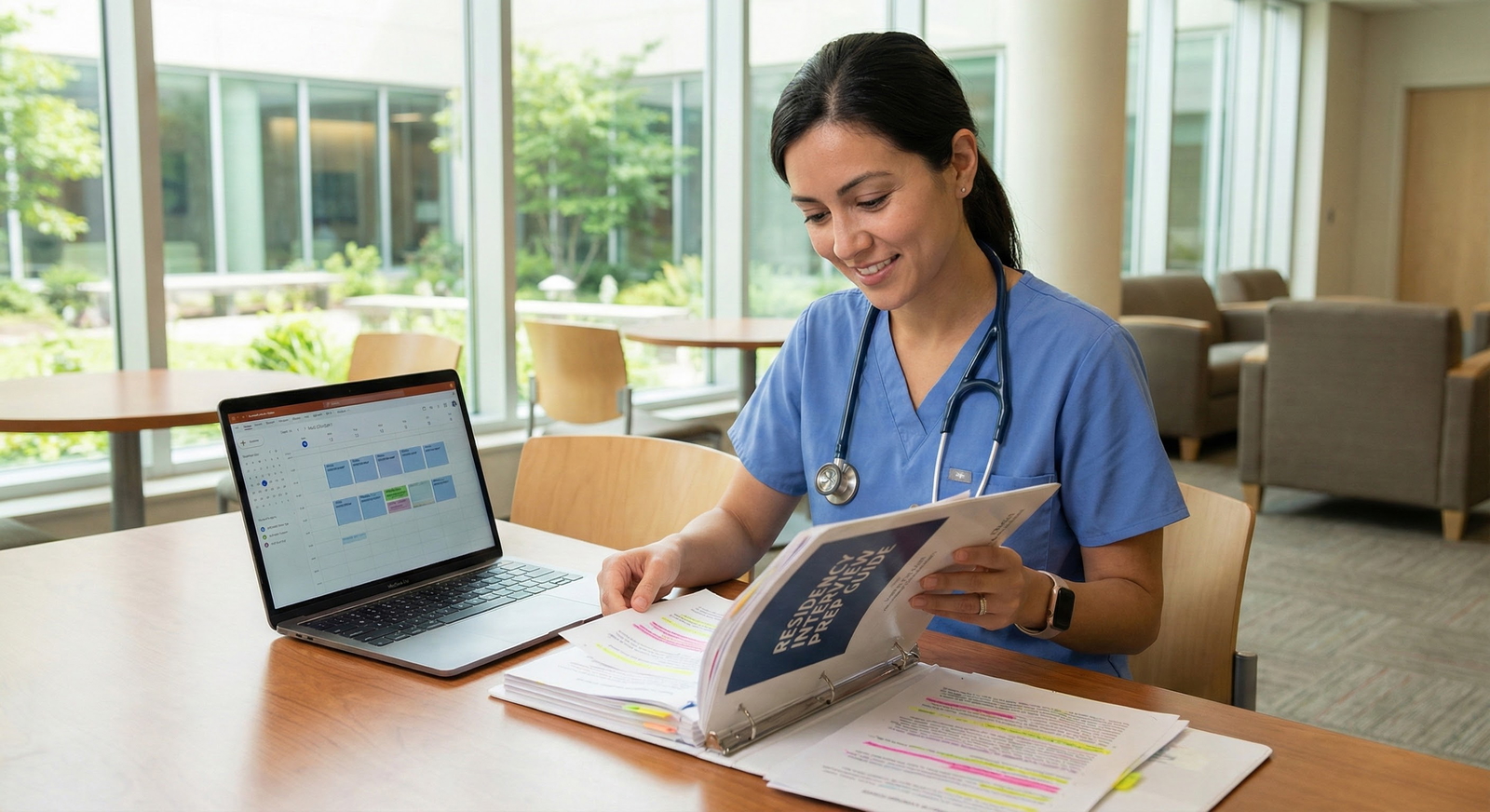
Create a Master Spreadsheet for the osteopathic residency match / neuro match:
- Program name, city, region
- Interview date and time (with time zone!)
- Interview format (Zoom, Thalamus, in-person)
- Interviewers (if known) and their roles/interests
- Key program features (research, subspecialties, call structure)
- Your quick pros/cons and post-interview impressions
Plan travel early for any in-person or second-look opportunities:
- Group interviews geographically when possible
- Budget realistically – flights, hotels, local transit
- Keep essentials ready: Interview outfit, shoes, copies of CV, small notebook, pen
Backup plans for virtual interviews:
- Stable primary internet and backup (hotspot, alternate location)
- Quiet, professional space with good lighting and minimal echo
- Backup device (tablet/phone) with software installed and tested
Perfecting Your Interview Environment (Virtual)
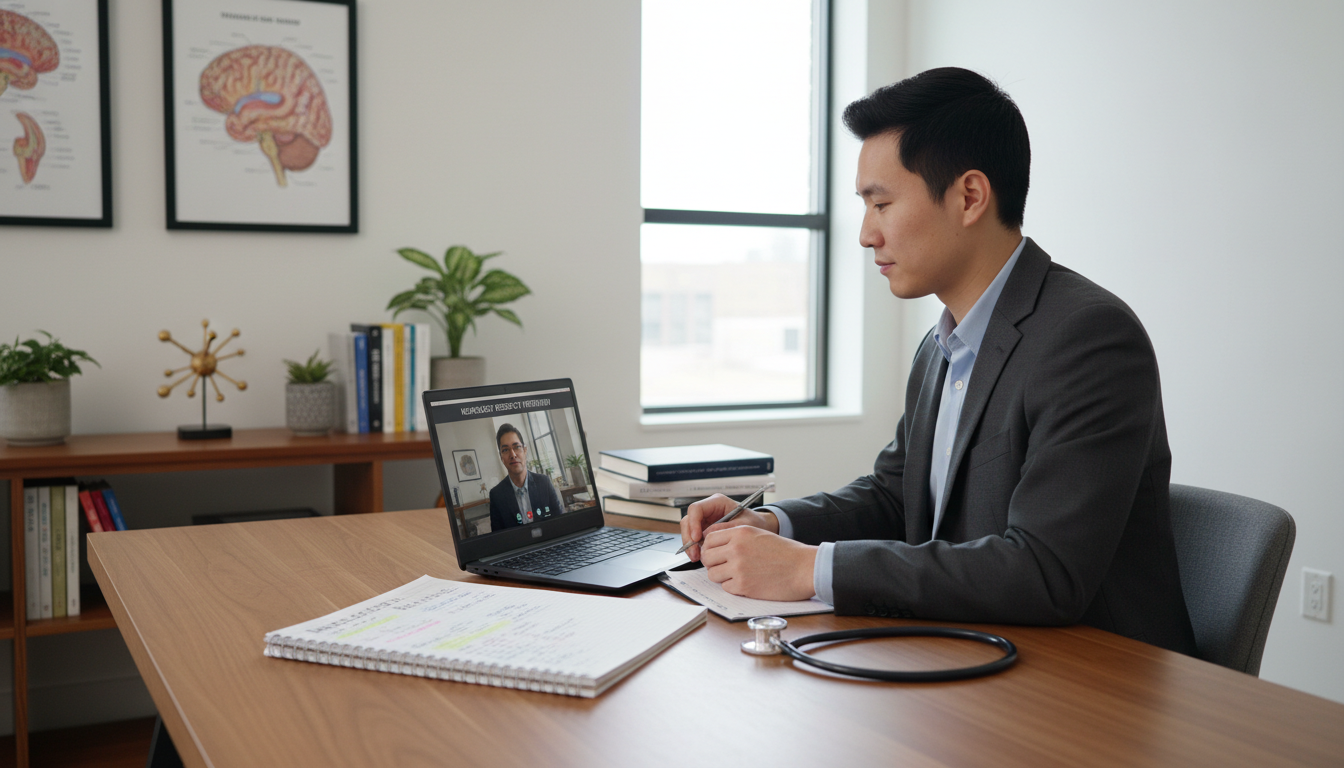
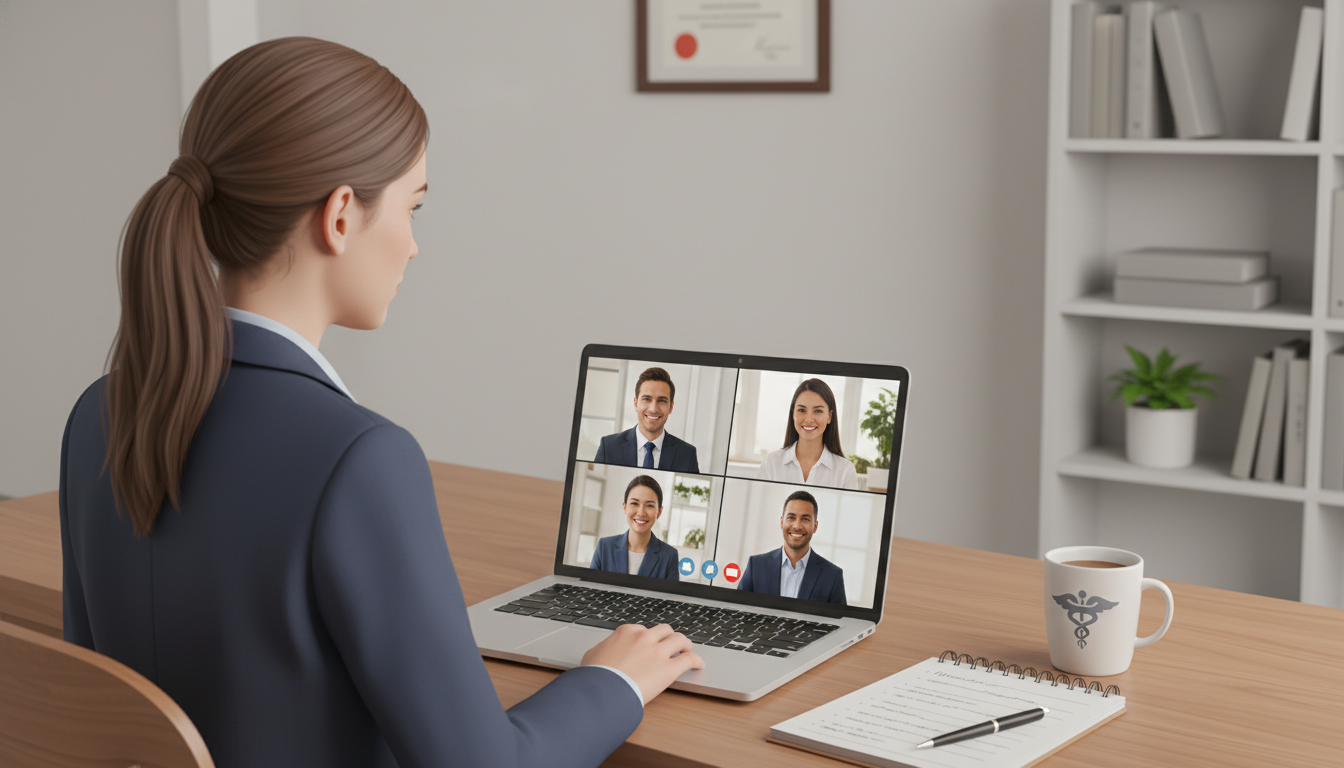
If your neurology residency or osteopathic residency match interviews are virtual:
- Background: Neutral, uncluttered; a bookshelf, plain wall, or tasteful artwork. Avoid beds or busy kitchens.
- Lighting: Soft light from in front of you (window or lamp), avoid strong backlighting.
- Camera angle: Eye level; avoid looking down at a laptop camera.
- Audio: Use headphones or a dedicated microphone if available; test before.
Do a full mock run:
- Log into the platform (Zoom, Thalamus, WebEx)
- Check audio, video, screen name (use your full name, no nicknames)
- Practice looking at the camera when speaking—not at your own image.
Crafting and Practicing Your Answers
- Compile a question bank of neurology residency and general interview questions. Group them by category (motivation, behavioral, clinical, DO-related, program fit).
- Outline, don’t script, your answers:
- For each question, list 3–4 bullet points you want to mention.
- Practice aloud to make answers natural and conversational.
- Use mock interviews:
- Ask a mentor, neurology faculty member, or advisor to simulate a residency interview.
- Use your school’s career services or mock interview program if available.
- Record yourself (video) and review posture, tone, clarity, and filler words.
Managing Stress and Interview-Day Mindset
Neurology interviews can be mentally draining, especially if you have multiple back-to-back. You’ll perform better if you plan for stress management:
- Sleep: Prioritize 7–8 hours before interview days—this directly affects cognition and recall.
- Nutrition: Eat light but sustaining meals; avoid heavy or very sugary foods right before interviews.
- Hydration and caffeine: Stay hydrated; use caffeine as usual, not excessively.
- Micro-breaks: Between sessions, stand up, stretch, deep-breathe for 2–3 minutes.
- Self-talk: Frame interviews as conversations, not interrogations. You’re evaluating them just as they’re evaluating you.
Presenting Yourself Professionally: Communication, Body Language, and Questions to Ask
Your content (what you say) matters, but so does your delivery (how you say it). Both are central to effective residency interview preparation.
Verbal and Nonverbal Communication
Verbal:
- Speak clearly, at a moderate pace.
- Avoid overusing filler words (“like,” “um,” “you know”).
- Keep answers structured: brief intro → main points → concluding sentence.
Nonverbal:
- Sit upright, slightly leaning forward—conveys engagement.
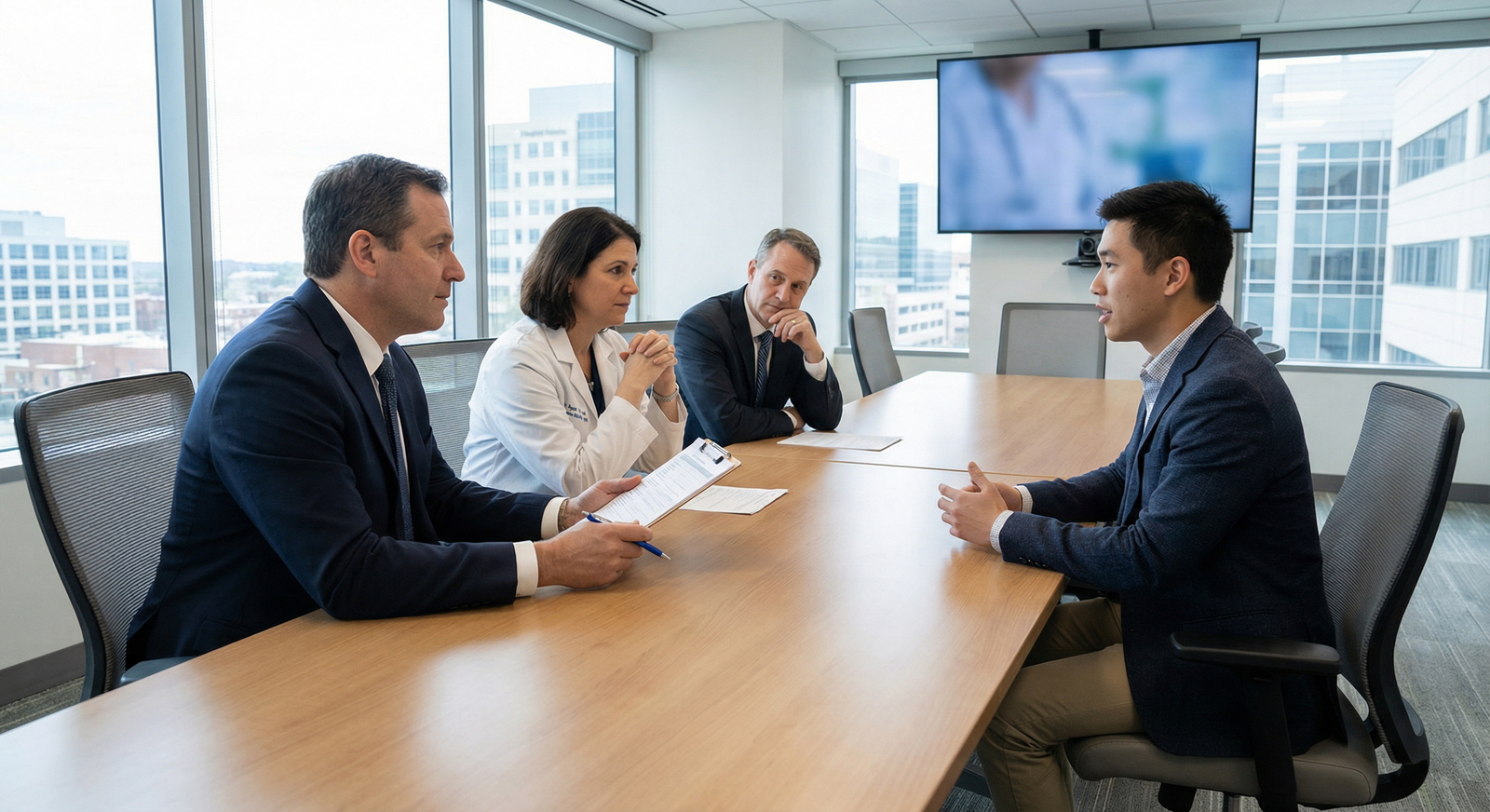
- Make eye contact with the camera or interviewer (for virtual) and naturally rotate among interviewers in multi-person panels.
- Use small, natural hand gestures; avoid fidgeting with pens, jewelry, or hair.
- Smile occasionally—especially in greetings and closing.
Practice this in mock interviews and review recordings.
Asking Insightful Questions
Programs expect you to ask questions; this is part of how they gauge your maturity and genuine interest.
Prepare 5–8 thoughtful questions you can rotate, for example:
About training and education:
- “How is feedback provided to residents, and how often?”
- “What does autonomy look like for a PGY-2 in your neurology program?”
About culture and wellness:
- “How would you describe the culture among the residents here?”
- “What systems are in place to support resident wellness and prevent burnout?”
About DO inclusion and mentorship:
- “Have you had DO residents or faculty in the program, and how have they integrated into the team?”
- “Are there particular mentors or faculty with an interest in osteopathic graduates or holistic approaches to chronic neurologic disease?”
About career development:
- “How are residents supported in pursuing fellowships, particularly in [your interest area, e.g., epilepsy or stroke]?”
- “What kind of research opportunities are available for residents interested in clinical neurology or quality improvement?”
Avoid questions you could easily answer from the website (“Do you have a stroke unit?”) unless you’re asking for clarification or expansion.
Tailoring Your Approach for Neurology
Neurology programs often value:
- Curiosity and intellectual humility
- Strong clinical reasoning
- Patience and communication skills with complex, sometimes refractory conditions
- Comfort with uncertainty and chronic disease management
Highlight these by:
- Sharing examples of complex diagnostic reasoning
- Describing how you explain neurologic conditions to patients
- Showing persistence in following up complicated cases or long-term patients
- Acknowledging limits of current science but enthusiasm for evidence-based care
Post-Interview Strategy: Notes, Thank-You Messages, and Rank List Planning
Pre-interview preparation also involves having a post-interview plan. The way you process interviews and follow up can influence how you rank programs and sometimes how they remember you.
Taking Useful Post-Interview Notes
Right after each neurology residency interview:
- Spend 10–15 minutes writing down:
- Overall impression and “gut feel”
- Program strengths and any concerns
- Notable interactions with residents and faculty
- Lifestyle considerations (location, cost of living, support system)
- Fit as a DO graduate (receptiveness, support, prior DO residents)
- Rate each program in key domains (1–5 scale):
- Clinical training
- Culture/fit
- Research/academic opportunities
- Location and lifestyle
- DO friendliness and inclusivity
These notes will be invaluable when building your rank list weeks later.
Thank-You Emails
While not universally required, concise, sincere thank-you messages are often appreciated.
Guidelines:
- Send within 24–72 hours.
- Keep each message 1–2 short paragraphs.
- Mention something specific from your conversation (case discussed, shared interest, program detail).
- Reaffirm interest without making promises you can’t keep (“I will rank your program #1” should be avoided unless you truly mean it and it’s late in the season).
Sample structure:
- Greeting + thank you for their time
- One specific takeaway from your conversation
- Brief statement of continued interest
- Professional closing with your full name and contact
Building a Thoughtful Rank List
As interviews end, reflect on:
- Where you felt most comfortable and supported as a DO graduate
- Balance between academic rigor and wellness
- Breadth of neurology exposure and subspecialties
- Mentorship potential and career guidance
- Geographic and personal factors (family, partner, long-term plans)
Remind yourself:
The best neurology residency is not the highest-ranked program on a national list; it’s the program where you will learn, grow, and be supported for four years.
FAQs: Pre-Interview Preparation for DO Graduates in Neurology
1. As a DO graduate, do I need to take the USMLE in addition to COMLEX for neurology?
Not always, but it can help—especially for more competitive academic programs or those unfamiliar with COMLEX. If you’ve already taken only COMLEX, focus your preparation on explaining your decision clearly and emphasizing strong clinical performance, strong letters, and neurology exposure. If you’re earlier in your path and considering neurology, taking USMLE can broaden your options.
2. How can I make my osteopathic training stand out positively in neurology interviews?
Be ready with concrete examples where your osteopathic approach improved patient care: thorough neuromuscular exams, functional and holistic treatment planning for chronic neurologic conditions, attention to social determinants of health, or using OMT appropriately for musculoskeletal contributors to headaches or pain. Integrate these into stories about patient care and teamwork, rather than bringing them up abstractly.
3. How much neurology knowledge do programs expect me to demonstrate in interviews?
Programs don’t expect you to function as a neurologist already, but they do expect you to think logically and safely. You should be comfortable with basic localization, initial workups for common complaints (weakness, numbness, seizures, headache, altered mental status), and distinguishing emergencies from non-emergencies. Focus on frameworks and clinical reasoning, not memorizing rare syndromes.
4. What’s the single most important thing I can do in the weeks before interviews to improve my chances?
Deliberate practice. Identify your key stories (4–6 anchor experiences), outline answers to common neurology and behavioral questions, and complete multiple mock interviews—ideally with feedback from a mentor or neurology faculty member. Record yourself at least once to refine your communication and body language. This structured preparation, combined with honest self-reflection and targeted program research, will significantly strengthen your performance in neurology residency interviews as a DO graduate.