Understanding Your Unique Position as a DO Applicant in Medicine-Psychiatry
Applying as a DO graduate to a medicine psychiatry combined residency is both a challenge and a strategic advantage. Pre-interview preparation starts with understanding how you fit into this niche.
Why Your DO Background Is an Asset
Medicine-psychiatry (med psych residency) programs are drawn to applicants who:
- Think holistically about patients
- Value mind–body connections
- Are comfortable with complexity, ambiguity, and comorbidity
Your osteopathic training naturally reinforces these themes:
- Holistic lens: OMM/OMT and the osteopathic philosophy emphasize the interplay of structure and function, which parallels how med-psych views the interaction between physical and mental health.
- Primary care orientation: DO graduate residency training often emphasizes continuity, communication, and community-based care—highly valued in medicine psychiatry combined programs.
- Interdisciplinary comfort: DO curricula are often collaborative, mirroring the interprofessional teams in med psych settings.
Programs may still ask, implicitly or explicitly, “Why DO?” or test your understanding of how a DO fits in an ACGME environment. Pre-interview preparation means being ready to answer this confidently and succinctly.
Clarifying Your Professional Identity
Before any residency interview preparation, clearly define for yourself:
Why medicine-psychiatry vs. categorical internal medicine or psychiatry?
Be able to explain in 2–3 sentences:- What you gain from dual training
- The specific patient populations you want to serve
- How you envision your long-term role (e.g., integrated consult services, academic leadership, primary mental health care for medically complex patients, etc.)
Why you as a DO? Consider points like:
- How osteopathic principles guide your clinical reasoning
- Experiences where an osteopathic mindset changed your management or patient communication
- How you see yourself bridging internal medicine, psychiatry, and osteopathic philosophy
Write these down now. You will reuse these ideas in almost every interview answer.
Researching Programs and Building a Strategy
Effective pre-interview preparation for an osteopathic residency match in Medicine-Psychiatry begins with deep, targeted program research.
Step 1: Understand the Landscape of Med Psych Residency Programs
Medicine psychiatry combined residencies are relatively few and highly specialized. Before interviews:
- Identify all programs you’ve applied or been invited to
- For each, track:
- Number of positions per year
- IM vs. psych inpatient and outpatient balance
- Presence of consult-liaison, addiction, psychosomatic medicine, or collaborative care strengths
- Percentage of DO residents historically (if available from websites or photos)
This helps you tailor how you discuss your fit and how you may address the DO graduate residency context.
Step 2: Deep-Dive into Individual Programs
For each program, create a one-page “Program Snapshot”:
Include:
- Program structure:
- How are the 5 years divided between medicine and psychiatry?
- Unique rotations (e.g., HIV psychiatry clinic, ICU with integrated psych, collaborative care in primary care clinics).
- Clinical strengths:
- Do they emphasize severe mental illness with chronic medical illness?
- Are there strong addiction medicine or psychosomatic medicine services?
- Is there emphasis on underserved populations, VA, or academic tertiary care?
- Faculty and leadership:
- Program Director and core faculty backgrounds (med/psych, consult-liaison, addiction, integrated care).
- Any DO faculty or alumni you can mention as role models or examples.
- Scholarly opportunities:
- QI projects in integrated care, research in mind–body medicine or collaborative models.
- Culture and values:
- Clues from mission statements, resident bios, and social media about emphasis on wellness, diversity, advocacy, or teaching.
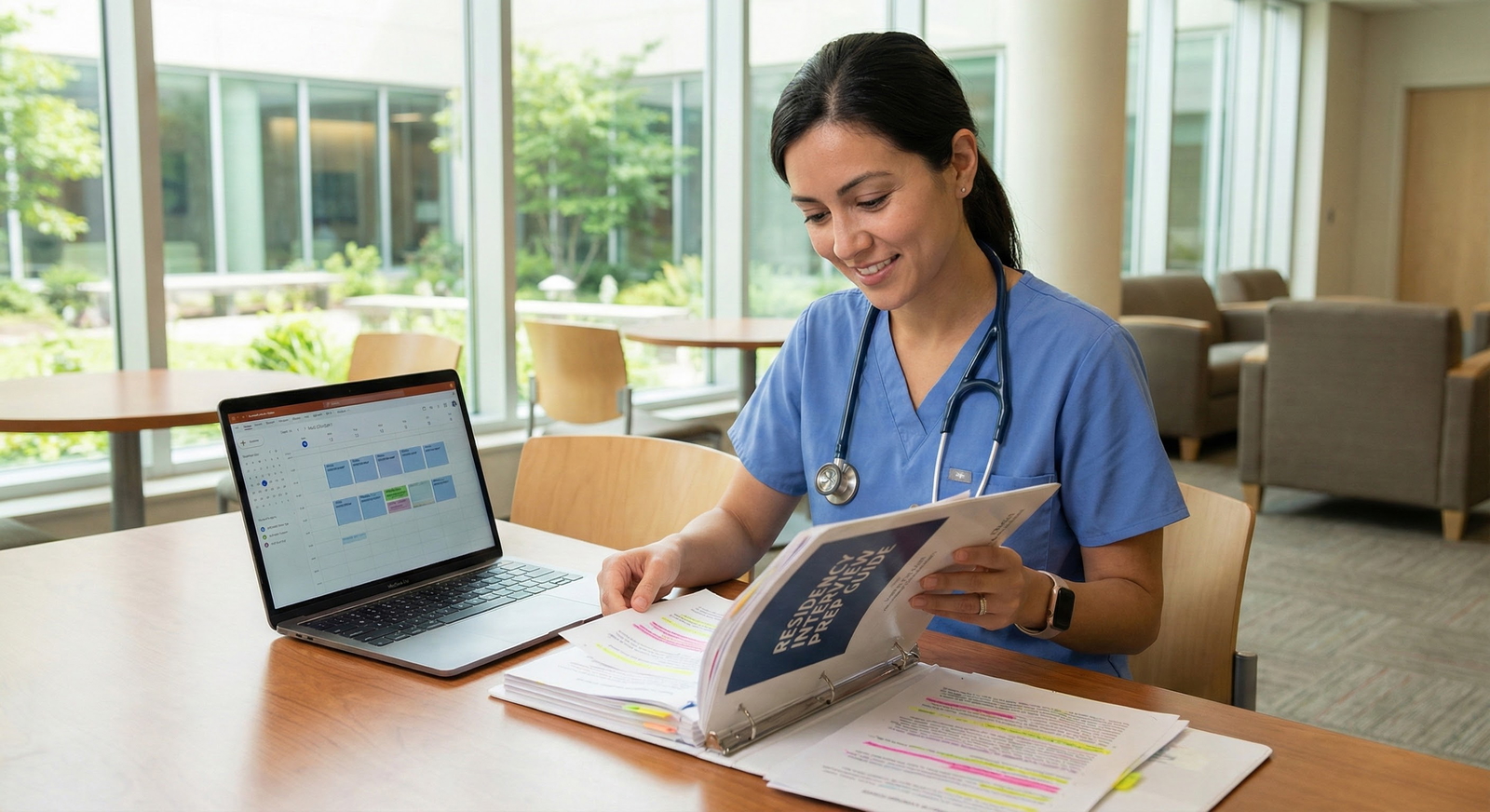
Bring printed or digital notes (discreetly) for review the night before and morning of the interview.
Step 3: Align Your Experiences with Each Program
For each program snapshot, write out:
- 1–2 rotations or experiences from your clinical years that match the program’s strengths.
Example:- Program has strong CL-psychiatry → You describe your internal medicine rotation where you closely collaborated with psychiatry for delirium and substance use, linking to your interest in medically complex patients with co-occurring psychiatric illness.
- 1–2 unique contributions you could bring:
- DO perspective on musculoskeletal pain, chronic pain management, or somatic symptoms
- OMM-informed approach to physical exam or longitudinal care
- Experience in rural, underserved, or integrated primary care settings
This pre-interview matching work dramatically improves how targeted and persuasive your answers sound.

Core Content: What You Must Be Ready to Talk About
Residency interview preparation for medicine psychiatry combined programs should be issue-specific. You’ll likely face recurring themes and classic interview questions residency programs use.
Theme 1: Your Narrative – Why Medicine-Psychiatry?
Expect some version of:
- “Why Medicine-Psychiatry instead of just Internal Medicine or Psychiatry?”
- “What drew you specifically to this combined training?”
Structure your answer:
- Origin moment:
- A meaningful clinical encounter early in training OR
- A pattern you noticed in patients with both complex medical and psychiatric issues
- Insight gained:
- You saw how fragmented care led to worse outcomes
- You realized you enjoyed switching between medical and psychiatric frameworks
- Decision point:
- When you discovered med psych residency as a formal path
- How you explored it: rotations, mentors, reading, electives
- Future vision:
- The role you want: inpatient CL, integrated primary care, academic leadership, rural bridge-builder, etc.
- How dual training positions you uniquely for that role
Aim for 60–90 seconds, specific and personal, not abstract.
Theme 2: Your DO Training and the Osteopathic Residency Match Context
Programs may directly or indirectly probe your DO background:
Potential questions:
- “Tell us how your osteopathic training influences your clinical practice.”
- “How do you see OMM/osteopathic principles playing a role in med-psych?”
- “Have you worked in primarily MD environments, and how was that transition?”
Be ready to address:
- Osteopathic principles in med psych:
- Whole-person care aligns with integrated mind–body treatment
- Emphasis on structure-function relationships can inform chronic pain, somatization, and medically unexplained symptoms
- OMM relevance (even if you don’t plan to practice it heavily):
- Enhancing rapport via therapeutic touch when appropriate
- Understanding biomechanics in functional neurological disorders, chronic pain, and tension-related conditions
- Collaboration:
- Your comfort practicing alongside MD colleagues in clerkships
- Your adaptability to ACGME environments that are predominantly MD
Avoid defensiveness or overcompensation; instead, project calm confidence and concrete examples.
Theme 3: Dual-Identity Challenges and Resilience
The combined nature of med psych residency raises concerns programs want to address:
- “How will you balance the demands of two specialties?”
- “Tell us about a time you had too many competing priorities and how you handled it.”
Prepare examples that show:
- Time management:
- Balancing intense rotations, COMLEX/USMLE, research, leadership, and wellness
- Cognitive flexibility:
- Shifting between medical and psychiatric frameworks for the same patient
- Emotional resilience:
- Managing burnout risk in complex patient populations
- Using supervision, peer support, and reflection effectively
Use the STAR method (Situation, Task, Action, Result) for behavioral questions.
Theme 4: Cases That Demonstrate Integrated Thinking
In med psych residency interviews, you may be asked:
- “Tell us about a complex patient you managed.”
- “Describe a case where both medical and psychiatric issues were central.”
Prepare 2–3 cases that highlight:
- A clear interplay between medical and psychiatric conditions
- Example: A patient with CHF and severe depression whose non-adherence improved after coordinated psych and medical treatment
- Your role:
- Gathering a thorough biopsychosocial history
- Coordinating with multiple teams
- Advocating for integrated care (e.g., involving social work, addiction services, psychoeducation)
- Reflective learning:
- What you would do differently now
- How the case strengthened your conviction about medicine psychiatry combined training
Skills-Based Preparation: Communication, Questions, and Logistics
Beyond content, pre-interview preparation includes practicing how you interview.
Practicing Behavioral and Classic Interview Questions
Common interview questions residency programs use, adapted to med psych and DO applicants, include:
- “Walk me through your CV.”
- “What is your greatest strength and your greatest weakness?”
- “Tell me about a conflict with a team member and how you handled it.”
- “Describe a time you made a clinical mistake or missed something and what you learned.”
- “How do you handle stress and possible burnout?”
For each:
- Draft short bullet points, not a script.
- Use STAR structure:
- Situation: Brief context
- Task: What you needed to achieve
- Action: What you did, focusing on your specific behaviors
- Result: What happened and what you learned
Practice out loud with:
- A mentor or advisor
- A fellow applicant
- Your phone camera (self-review for clarity, fillers, and nonverbal cues)
Question Bank for Self-Practice
Create a personal question bank, including:
- Medicine-psychiatry specific:
- “What aspects of internal medicine do you enjoy least and how will you stay engaged with them?”
- “In 10 years, do you see yourself identifying more as an internist, a psychiatrist, or both equally?”
- DO-specific:
- “Have you experienced bias as a DO and how did you respond?”
- “How do you explain the DO degree to patients or colleagues unfamiliar with it?”
- Ethical/clinical scenarios:
- “How would you approach a patient refusing life-saving treatment due to psychosis or mood disorder?”
- “A patient is repeatedly admitted for medical complications from substance use and declines treatment options—how do you approach care?”
Even short, 10–15 minute daily sessions of mock responses are powerful for residency interview preparation.
How to Prepare for Interviews Logistically
Logistics can derail a strong candidate more than content. Build a pre-interview checklist:
1–2 Weeks Before Each Interview:
- Confirm:
- Interview date, time zone, and platform (Zoom, Thalamus, Teams, in-person logistics)
- Backup contact (coordinator phone/email) in case of technical problems
- Test technology:
- Camera, microphone, internet stability (for virtual interviews)
- Background: neutral, uncluttered, with good lighting
- Prepare your interview outfit:
- Professional, comfortable, and consistent across programs
- For virtual: ensure full outfit (top and bottom) in case you need to stand
Night Before:
- Review:
- Program snapshot (curriculum, unique features, faculty of interest)
- 2–3 key stories you definitely want to share if opportunities arise
- Print or digitally open:
- Your ERAS application, personal statement, and CV
- A list of questions you want to ask faculty and residents
- Plan:
- Sleep timing, meals, and transportation (for in-person)
Day Of:
- Eat a light, sustaining meal.
- For virtual:
- Log in 10–15 minutes early
- Silence phone and notifications
- Have water nearby, but not on screen
- For in-person:
- Arrive 15–20 minutes early
- Bring a simple folder with copies of your CV and a notepad (no large bags or clutter)

Crafting High-Impact Questions for Programs
Programs assess you partly by the questions you ask. Thoughtful, specific questions demonstrate preparation, insight, and genuine interest.
Principles for Strong Questions
- Be specific to med psych residency: Show you understand the dual nature of the program.
- Reference something you learned about the program’s curriculum, rotations, or mission.
- Avoid questions easily answered on the website (number of residents, basic rotation schedule).
Examples of Faculty-Focused Questions
Adapt these to your style:
- “How do your graduates typically divide their time between internal medicine and psychiatry in their careers, and how does the program support that transition toward the end of training?”
- “What opportunities exist for residents to get involved in integrated care quality improvement or research projects early in training?”
- “How do you manage evaluation and feedback for residents across two departments to prevent mixed messages and ensure growth?”
- “For a DO graduate, are there particular faculty or alumni you’d recommend I connect with who have navigated both the combined training and osteopathic identity?”
Examples of Resident-Focused Questions
Ask current residents:
- “What has surprised you most about medicine psychiatry combined training compared to your expectations?”
- “How do you maintain your identity as both an internist and a psychiatrist across different rotations?”
- “How responsive has the program been to resident feedback, especially regarding workload, call structure, or didactics?”
- “As a DO, is there anything you wish you’d known before starting here that would have made the transition smoother?”
Have 5–7 questions prepared; you won’t ask them all, but you’ll never be stuck when someone says, “What questions do you have for us?”
Managing Stress, Imposter Syndrome, and Post-Interview Follow-Up
Pre-interview preparation isn’t just academic; it’s also emotional and strategic.
Managing Stress and Imposter Feelings as a DO Applicant
Combined programs can be competitive, and you might worry about:
- Being a DO in a mostly MD applicant pool
- Limited med psych residency spots
- Non-traditional backgrounds, exam scores, or gaps
To manage this:
- Anchor in your strengths:
- Holistic training
- Communication skills with complex patients
- Adaptability and resilience
- Normalize nerves:
- Most applicants feel underqualified; what matters is how you manage that under pressure.
- Rehearse, don’t script:
- Over-scripting leads to stiffness; aim for a conversational, reflective tone instead.
Consider brief grounding practices before interviews (e.g., deep breathing for 3–5 minutes, a short walk, or a pre-planned affirmation like, “I’ve done the work; I’m here to learn if this is the right mutual fit.”).
Post-Interview Reflection and Tracking
Immediately after each interview:
- Write a short debrief (5–10 minutes):
- Strengths: What you think went well
- Gaps: Questions you stumbled on; note them for future practice
- Program impressions: Culture, resident satisfaction, faculty enthusiasm
- Capture:
- Any specific faculty or resident you connected with, plus discussion highlights.
- Instinctual “fit” rating (1–10) before you overanalyze.
This helps with future rank list decisions and improves performance for subsequent interviews.
Thank-You Notes and Communication
Practices vary by program, but in general:
- Thank-you emails are acceptable and usually preferred over physical notes.
- Keep them:
- Brief (3–6 sentences)
- Specific: Mention something concrete from your conversation.
- Professional and typo-free.
Example structure:
- Thank the interviewer for their time.
- Mention 1–2 program features or discussion points that resonated with you, especially those related to medicine-psychiatry integration.
- Reaffirm interest without overstating (e.g., “I remain very interested in your program” rather than ranking promises, unless explicitly allowed and close to rank season).
Always check each program’s stated policy on post-interview communication before sending detailed updates.
FAQs: Pre-Interview Preparation for DO Graduates in Medicine-Psychiatry
1. As a DO, do I need to defend my degree during medicine-psychiatry interviews?
You shouldn’t be on the defensive, but you should be prepared to explain your training and its value:
- Briefly clarify what a DO is when needed (if an interviewer seems unfamiliar).
- Focus on:
- Holistic, patient-centered approach
- Osteopathic principles that align closely with mind–body integration
- Specific examples where this perspective shaped your care
- Avoid negative comparisons with MDs; emphasize complementarity and shared goals.
2. How can I best prepare for combined med psych clinical questions if I haven’t had a formal med-psych rotation?
Even without a dedicated medicine psychiatry combined rotation, you can prepare by:
- Reviewing cases where medical and psychiatric issues overlapped in your internal medicine, family medicine, emergency medicine, and psychiatry rotations.
- Studying:
- Delirium, dementia, substance use in medical inpatients
- Depression and anxiety in chronic medical illness
- Functional neurological symptoms, chronic pain, and somatic symptom disorders
- Framing your experiences explicitly around integration when telling stories in interviews: show how you thought medically and psychiatrically about the same patient.
3. What if I’m not sure about my exact career plan after a med psych residency?
Programs know that plans evolve. What they want to see is thoughtful engagement, not rigid certainty. You can:
- Describe several plausible paths, e.g.,:
- CL-psychiatry and integrated inpatient medicine
- Outpatient primary care with integrated behavioral health
- Academic teaching role focused on biopsychosocial models
- Emphasize the skills you hope to acquire (e.g., systems-based practice in integrated care, leadership in collaborative models), even if the exact job title is still flexible.
- Highlight that combined training expands options and that you are drawn to versatility and complexity.
4. How much should I talk about OMM/OMT in interviews?
Balance is key:
- If you actively practice OMM/OMT and wish to continue:
- Share concrete examples where it helped patients with pain, tension, or somatic symptoms.
- Briefly discuss how you’d like to incorporate it responsibly in a med psych context.
- If you don’t plan to practice much OMT:
- Focus on osteopathic principles rather than techniques:
- Whole-person assessment
- Understanding structural contributions to symptoms
- Emphasis on prevention and function
- Focus on osteopathic principles rather than techniques:
- Avoid making OMT the central point of your candidacy unless the program specifically highlights interest in it; med psych programs are usually more focused on integration of medical and psychiatric care.
Thoughtful, structured pre-interview preparation will allow you, as a DO graduate, to present yourself as a confident, reflective, and mission-aligned candidate for medicine psychiatry combined residency. Start early, practice deliberately, and use every step—from program research to question-writing—to refine how you communicate the unique value you bring to this integrated specialty.