Understanding the Radiation Oncology Residency Landscape as a DO Graduate
Radiation oncology is a small, competitive specialty that demands strong academics, mature clinical judgment, and genuine commitment to oncology. As a DO graduate, you bring unique strengths—holistic training, strong communication skills, and often significant clinical exposure—but you may also worry about perceptions in an historically MD-heavy field.
Before you dive into residency interview preparation, you need a clear understanding of:
- The current competitiveness of the radiation oncology residency match
- The specific challenges and opportunities for DO graduates
- How programs evaluate applicants before and during interviews
The Rad Onc Match and DO Applicants
The radiation oncology residency (often called “rad onc”) match has gone through cycles—from highly competitive to relatively less so, and now stabilizing—but it remains a specialty where:
- Applicant numbers are relatively low, but so are positions
- Programs are small, often with 1–4 residents per year
- Many programs are at large academic centers with strong research cultures
For a DO graduate residency applicant, the key is to show that you can thrive in this environment and that you are indistinguishable from strong MD candidates in preparation and performance.
Programs typically focus on:
- Clinical performance (MS3/MS4 rotations, especially oncology/IM)
- Radiation oncology electives and letters of recommendation
- Board exam performance (COMLEX, and USMLE if taken)
- Research and scholarly activity, especially oncology-related
- Evidence of professionalism, resilience, and teamwork
Understanding this landscape shapes how you approach your osteopathic residency match strategy, your pre-interview preparation, and your performance on interview day.
Step 1: Clarify Your Personal Narrative and Specialty Fit
Before practicing interview questions for residency, you must be able to clearly and convincingly explain:
- Why radiation oncology
- Why you, as a DO graduate, are a strong and authentic fit
- Why this specific program
Build Your Radiation Oncology Story
Start by outlining the core events that led you to radiation oncology:
- A specific patient or family experience with cancer
- A powerful clinical rotation (in rad onc, heme/onc, palliative care, or IM)
- A research project that drew you into cancer care or imaging
- Mentorship from a radiation oncologist or oncologist
Turn this into a short narrative (2–3 minutes) you can adapt to:
- “Tell me about yourself.”
- “Why radiation oncology?”
- “How did you decide on this specialty?”
Example structure:
- Background: Briefly describe your initial interests in medical school.
- Catalyst: Highlight key experiences that pulled you toward oncology.
- Confirmation: Describe how rotations, research, and mentorship confirmed rad onc as your path.
- Future: Share your vision (e.g., academic practice, community oncology with strong patient-centered care, interest in specific disease sites like breast, GI, or peds).
Integrate Your DO Identity Authentically
As a DO graduate residency applicant, you should be ready to address:
- How your osteopathic training shapes your approach to cancer care
- How you integrate whole-person care in difficult, life-altering diagnoses
- Your exposure to communication, empathy, and longitudinal care
Be prepared for explicit or implicit questions about your DO background:
- “How has your DO training influenced your approach to oncology?”
- “Tell me about how you incorporate osteopathic principles in patient care.”
- “Did you take USMLE, and how do you feel that compares with COMLEX?”
You don’t need to be defensive. Focus on strengths:
- Strong clinical communication skills
- Attention to functional status, quality of life, and symptom management
- Experience in interprofessional teams and patient education

Step 2: Master Core Residency Interview Questions (with a Rad Onc Lens)
Residency interview preparation should be highly strategic, not generic. You’ll see many lists of interview questions residency programs commonly ask, but for radiation oncology you should focus on tailoring your answers to:
- Cancer care
- Team-based decision-making
- Ethics and communication
- Longitudinal, emotionally complex patient relationships
Below are key categories and examples, plus how to prepare.
1. Classic “Getting to Know You” Questions
Common questions:
- “Tell me about yourself.”
- “Walk me through your CV.”
- “How would your classmates describe you?”
Preparation tips:
Keep “Tell me about yourself” 2–3 minutes, chronological, and focused on:
- Origins (brief personal background)
- Medical school experiences
- Why radiation oncology
- What you’re looking for in training
Emphasize traits programs value in rad onc:
- Reliability, attention to detail
- Communication with anxious and vulnerable patients
- Comfort with complex information and technology
2. “Why Radiation Oncology?” and “Why Our Program?”
These are central for the rad onc match.
Why Radiation Oncology?
Your answer should include:
What aspects of rad onc fit you:
- Long-term patient relationships
- Integration of imaging, anatomy, and technology
- Team-based care with medical and surgical oncology
- Mix of outpatient continuity, procedure-like planning, and intellectual challenge
Concrete experiences:
- A rad onc elective where you participated in contouring, simulation, or treatment planning
- Cases where you saw radiation’s impact on symptom control or survival
Why Our Program?
Before each interview, review:
- Disease-site strengths (e.g., strong CNS program, proton therapy, peds rad onc)
- Research infrastructure and ongoing trials
- Program size, call structure, and culture
- Any DO or previous osteopathic residents in their program (if applicable)
Translate that into specific fit:
- “I’m particularly drawn to your robust head and neck program and the opportunity to work closely with your speech and swallowing team.”
- “Your emphasis on resident-led research projects in GI oncology aligns with my long-term goal of an academic career.”
3. Behavioral and Ethical Questions
Radiation oncology deals with serious, often life-limiting diagnoses; interviewers want to know how you function in complex, tense, and emotional scenarios.
Expect questions like:
- “Tell me about a time you made a mistake in patient care.”
- “Describe a conflict you had on the team and how you handled it.”
- “Tell me about a difficult conversation you had with a patient or family.”
- “Describe an ethical dilemma you encountered in clinical rotations.”
Use the STAR method:
- Situation – Brief, relevant context
- Task – Your role
- Action – What you did (focus here)
- Result – Outcome and what you learned
Connect your answers to rad onc:
- Communicating complex prognoses
- Respecting patient autonomy vs. family wishes
- Balancing high-tech treatments with quality of life
4. Academic & Research Questions
Radiation oncology remains an academic-heavy field. Prepare for questions on:
- Your research involvement (especially oncology-related)
- Understanding of clinical trials and basic statistics
- Comfort with literature review and evidence-based medicine
Possible questions:
- “Tell me about your research project.”
- “If you had more time, what would you do differently in that study?”
- “What did you learn from your research experience that will make you a better resident?”
Be ready to:
- Summarize your research question, methods, results, and implications in 2–3 minutes
- Acknowledge limitations without being defensive
- Highlight your role (data collection, analysis, poster presentations, manuscript writing)
5. DO-Specific and Board-Related Questions
For DO graduate residency applicants, anticipate:
- “Did you take USMLE as well as COMLEX?”
- “How do you feel your board performance reflects your strengths?”
- “Have you had any challenges with standardized tests, and how did you address them?”
Be honest and constructive:
- If your scores are average or lower: emphasize growth, improvement, and strong clinical performance.
- If you only took COMLEX: be prepared to describe your test performance confidently and highlight other markers of academic strength (rotations, research, letters).
Step 3: Program-Specific Preparation and Research
If you want to stand out in the osteopathic residency match, you must treat every interview as if it’s your top choice. That means deep, structured preparation for each program.
Create a Program Research Template
For each program, prepare a 1–2 page summary including:
- Program basics: Location, size, number of residents per year, major affiliated hospitals
- Faculty interests: Especially chairs, PDs, and faculty you’ll likely meet
- Disease-site strengths: e.g., CNS, breast, lung, GI, GU, peds, lymphoma
- Technology: Proton center, MR-linac, SBRT programs, brachytherapy capabilities
- Educational structure: Rotations by year, call schedule, didactics
- Research: Ongoing trials, major publications, available resources for residents
Use:
- Program websites
- Recent publications (PubMed search for chair/PD names)
- ASTRO materials and institutional profiles
- Alumni lists or resident bios
This preparation allows you to:
- Ask informed, specific questions
- Show genuine interest in their strengths
- Quickly articulate why you’d be a good fit
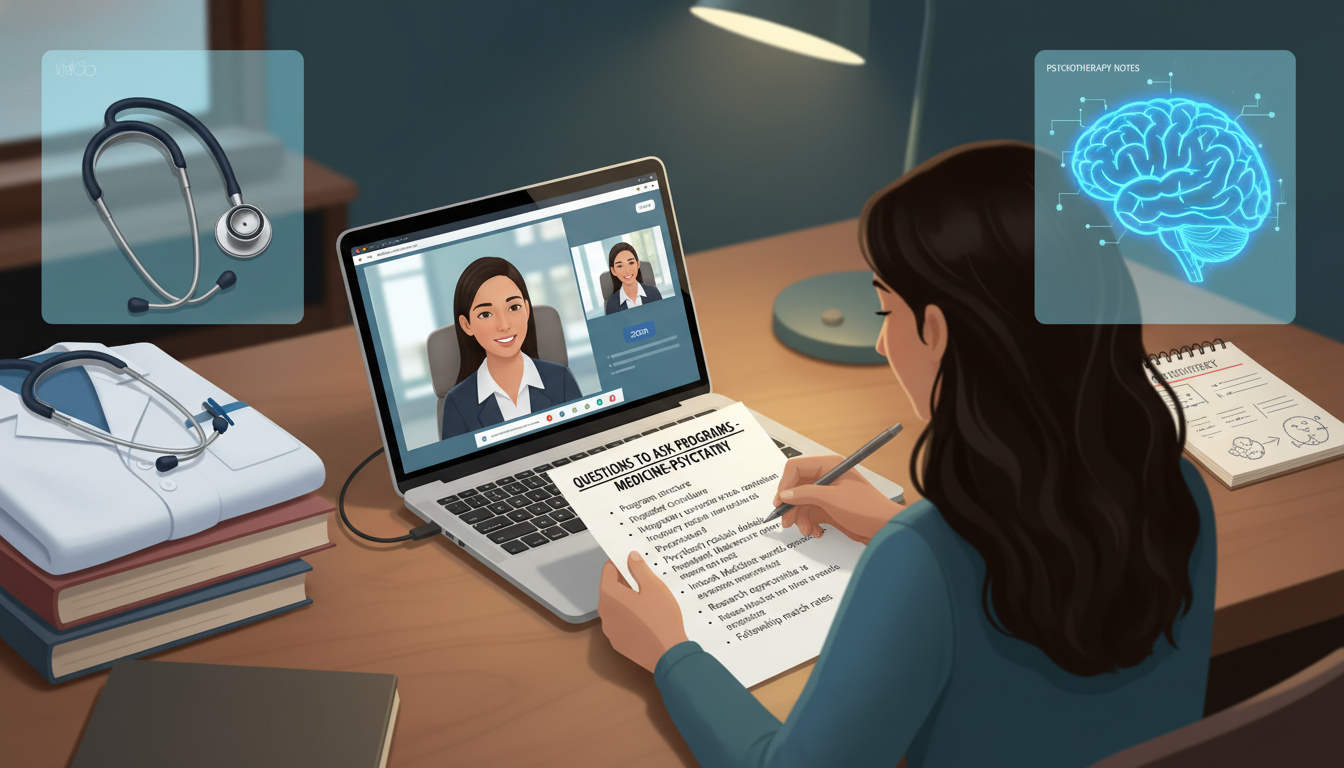
Formulate Strong Questions to Ask Interviewers
Have at least 3–5 thoughtful questions ready for each interviewer. Examples:
Program Director:
- “How do you see the program evolving over the next 5 years?”
- “How do you support residents interested in academic careers or specific disease-site focuses?”
Faculty (disease-site specific):
- “How are residents integrated into decision-making at your tumor boards?”
- “What opportunities are there for residents to lead QI or clinical projects in your disease-site group?”
Residents:
- “Can you describe a typical resident’s week on service?”
- “What aspects of wellness and support have been most helpful during your training?”
Avoid questions easily answered on the website unless you’re asking for clarification or deeper insight.

Step 4: Practical Logistics and Mock Interview Practice
Knowing how to prepare for interviews goes beyond content—you must manage the logistics and your performance on the actual day.
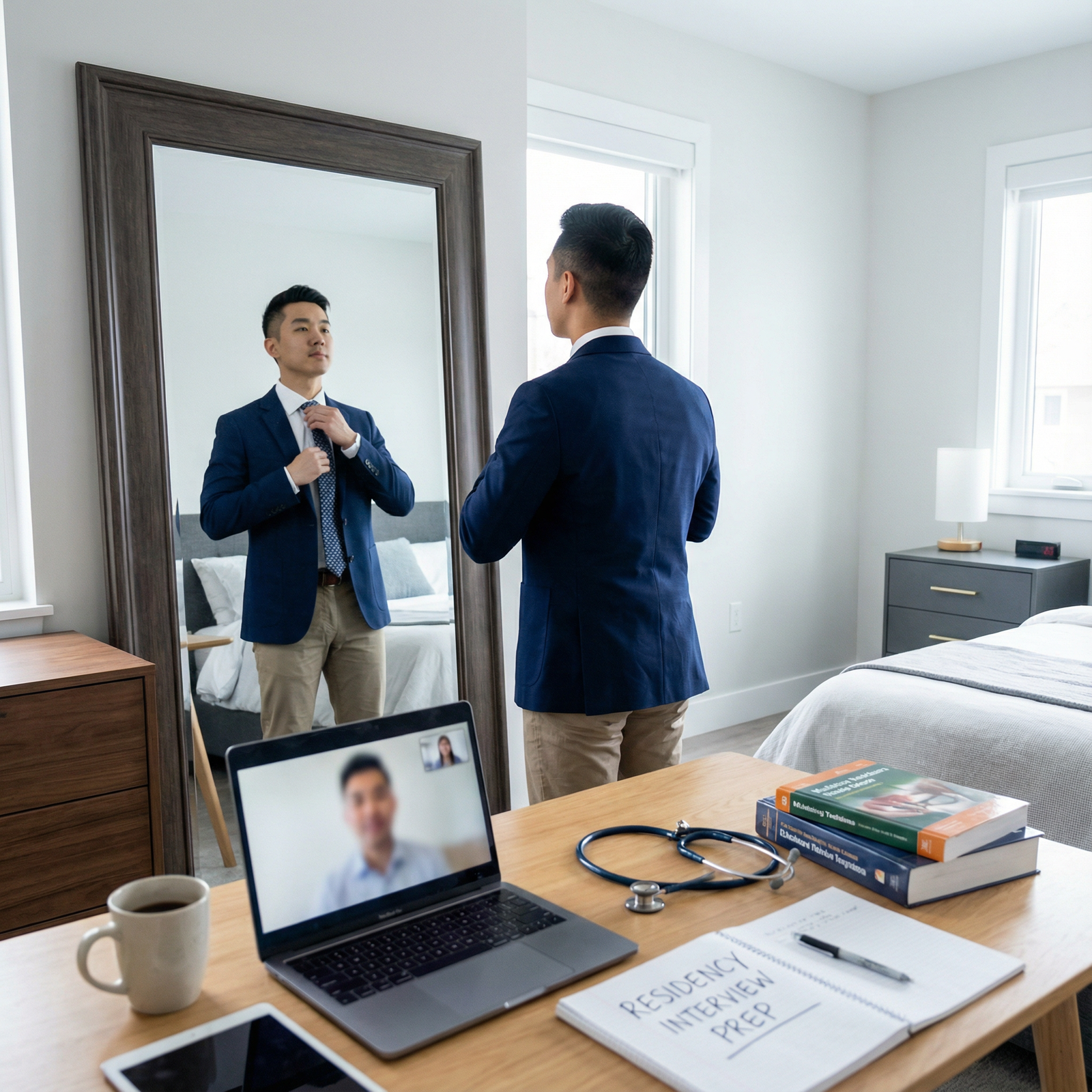
Technical and Environmental Setup (Especially for Virtual Interviews)
Radiation oncology programs often conduct virtual interviews. Prepare:
Technology
- Test your laptop, webcam, microphone, and internet connection
- Download and test the required platform (Zoom, Teams, WebEx, Thalamus, etc.)
- Have a backup device and hotspot if possible
Environment
- Quiet, well-lit area with a neutral background
- Camera at eye level
- Avoid backlighting (window behind you)
- Keep desk clear but have water, notepad, and pen
Appearance
- Professional attire (suit jacket, conservative colors)
- Neat grooming; avoid distracting accessories
Conduct Multiple Mock Interviews
Residency interview preparation is not complete without live practice. Aim for at least:
- 2–3 general mock interviews (with advisors, faculty, or career services)
- 1–2 specialty-specific sessions (with rad onc faculty or residents, if possible)
Structure:
- Full-length 30–45 minute session
- Mix of general and rad onc–specific questions
- Immediate feedback on:
- Content of answers
- Clarity and organization
- Non-verbal communication and pacing
As a DO graduate, consider seeking:
- A mock interview with a faculty member who has matched DOs into rad onc
- Perspective on how to best present your osteopathic background confidently and succinctly
Record at least one session (with permission) and review:
- Filler words (“um,” “like”)
- Eye contact with the camera
- Speaking speed and clarity
- Whether your answers stay within 2–3 minutes for most questions
Step 5: Pre-Interview Day Routine, Mindset, and Follow-Through
Your preparation doesn’t end when you feel “ready.” The 24–48 hours before each interview are critical for performance and impression.
24 Hours Before the Interview
Re-review:
- Your ERAS application, personal statement, and CV
- Your program-specific notes and faculty names
- Your prepared questions for interviewers
Print or digitally organize:
- Interview schedule and links
- Program contact information (coordinator, PD)
Sleep:
- Aim for 7–8 hours the night before; adequate sleep will help cognitive performance and emotional regulation.
Day of the Interview: Performance Tips
Start strong
- Log in 10–15 minutes early
- Have your camera and audio tested
- Take a few deep, slow breaths before joining
During interviews
- Answer questions directly first, then expand
- If a question is unclear, ask for clarification
- If you need time to think, it’s okay to pause briefly: “That’s a great scenario, let me think for a moment.”
Communicate like a rad onc resident
- Show that you can explain complex ideas clearly and compassionately—skills central to explaining treatment plans to patients
- Demonstrate organized thinking, like presenting a case or discussing treatment options logically
Professionalism and demeanor
- Be polite to everyone, including staff and residents
- Avoid negative comments about prior institutions, programs, or colleagues
- Maintain energy throughout the day (short stretch breaks between sessions can help)
After the Interview
Immediate notes
- After logging off, write down:
- Key impressions of the program’s culture and strengths
- Specific conversations or people that stood out
- Any red flags or reservations
- These notes will help later when creating a rank list.
- After logging off, write down:
Thank-you messages
- Many programs no longer require or even discourage emails to all interviewers, but:
- A concise thank-you to the PD or coordinator is often appropriate
- If you had a particularly meaningful conversation with a faculty or resident, a short, specific note can be helpful
- Keep messages professional, sincere, and non-committal (avoid implying ranking promises).
- Many programs no longer require or even discourage emails to all interviewers, but:
Integrating It All: Strategic Pre-Interview Plan for a DO Applicant in Rad Onc
Here’s a practical timeline you can follow in the weeks leading up to your radiation oncology residency interviews:
4–6 Weeks Before First Interview
- Clarify your radiation oncology narrative and DO identity story.
- Draft and practice answers to the most common interview questions residency programs ask.
- Start building program research templates for all interviews you anticipate.
2–3 Weeks Before
- Schedule and complete at least one general mock interview and, if possible, one rad onc–specific.
- Refine answers based on feedback; shorten overly long responses.
- Ensure you understand your own research and can discuss it confidently.
1 Week Before
- Finalize program-specific notes for your earliest interviews.
- Create a bank of questions for interviewers customized to rad onc and each program.
- Test your tech, refine your interview environment, and select interview attire.
1–2 Days Before Each Interview
- Re-review your CV, personal statement, and each program’s details.
- Practice “Tell me about yourself” and “Why radiation oncology?” out loud several times.
- Plan your sleep, meals, and schedule so you are rested and focused.
By following this structured approach, you position yourself not just as a strong DO graduate residency applicant, but as a thoughtful, well-prepared future radiation oncologist—someone programs will want to work with for the next 4–5 years.
FAQs: Pre-Interview Preparation for DO Graduates in Radiation Oncology
1. As a DO, do I need to take the USMLE for a radiation oncology residency?
Not all programs require USMLE, but many academic rad onc programs are more familiar with USMLE than COMLEX. If you are early in training, taking USMLE can broaden your options. However, if you have already applied with only COMLEX:
- Focus on highlighting strong clinical evaluations, letters of recommendation, and research.
- In interviews, be prepared to discuss your boards confidently and redirect to other evidence of your academic strength.
2. How can I best highlight my osteopathic training during interviews?
Emphasize elements that resonate strongly with oncology:
- Your training in whole-person care, including mental health, functional status, and quality of life.
- Communication skills and experience in delivering bad news or supporting patients with chronic illness.
- Interprofessional collaboration (palliative care, rehab, primary care) common in osteopathic curricula.
Frame your DO background as a strength that complements the technical and academic rigor of radiation oncology.
3. I don’t have extensive oncology research. Will that hurt my chances?
Oncology research is helpful but not always mandatory, especially for community-focused or smaller programs. If your research is in another field:
- Be ready to explain what skills you gained (data analysis, critical appraisal, teamwork).
- Show your genuine interest in oncology through electives, tumor boards, reading, and mentorship.
- During interviews, demonstrate an understanding of evidence-based medicine and how you stay updated on literature.
If you lack research altogether, highlight your clinical excellence, strong letters, and long-term commitment to caring for cancer patients.
4. What are some red flags interviewers look for in radiation oncology applicants?
Common concerns include:
- Inconsistent interest in rad onc (no rotations, minimal exposure, weak “why this specialty” answer).
- Poor insight into the emotional challenges of oncology (e.g., difficulty with death and dying, unrealistic expectations about cure rates).
- Limited understanding of team-based care or difficulty collaborating across disciplines.
- For DO applicants, defensiveness or discomfort when discussing osteopathic training or COMLEX vs. USMLE.
Your pre-interview preparation should specifically address these points—through your narrative, examples, and demeanor—so you present as a mature, self-aware, and committed future radiation oncologist.