Understanding the Unique Context: DO Graduate in Pediatrics-Psychiatry
Pre-interview preparation for a DO graduate applying to a Pediatrics-Psychiatry (Peds-Psych) or Triple Board residency has some nuances that differ from more traditional pathways. You are navigating:
- The osteopathic residency match environment and its expectations for DO graduates
- A combined specialty (pediatrics, psychiatry, and often child & adolescent psychiatry) that values holistic, developmental, and biopsychosocial perspectives
- Programs that may receive relatively few applications, meaning each candidate is scrutinized more deeply
Before you even start formal residency interview preparation, clarify these three pillars:
Your professional identity as a DO graduate
- How your osteopathic training informs your clinical reasoning, communication, and patient care
- How OMT (even if not used daily) shaped your understanding of structure–function relationships and holistic care
- Your experience bridging biomedical and psychosocial models
Your motivation for Pediatrics-Psychiatry / Triple Board
- Why a peds psych residency rather than categorical pediatrics or psychiatry alone?
- What experiences convinced you that you want the full integrated training?
- How you envision your career (e.g., integrated clinics, systems-level work, child mental health advocacy, complex developmental/behavioral needs)
Your match strategy as a DO applicant
- Understanding which programs are historically DO-friendly
- Recognizing how to position yourself for both ACGME programs and any still-recognizing osteopathic-focused pathways
- Being ready to articulate why you are a strong DO graduate residency candidate in this niche field
Every element of your interview preparation should echo these themes clearly and consistently.
Step 1: Deep Program and Specialty Research
Understand the Training Model
Peds-Psych and Triple Board programs are intensive and highly structured. Before any interview, you should be able to confidently explain:
- The training breakdown (e.g., 2 years pediatrics, 1.5 years psychiatry, 1 year child & adolescent psychiatry, 6 months elective/integrated time – varies by program)
- What makes Triple Board different from sequential categorical residencies (e.g., integrated identity, longitudinal exposure versus serial siloed training)
- The types of patients you’ll see:
- Medically complex children with psychiatric needs
- Children with developmental and behavioral disorders
- Youth in foster care, juvenile justice, or high-risk environments
- Families under significant psychosocial stress
This knowledge shows programs that you understand what you’re signing up for and that your interest is informed, not superficial.
Program-Level Research: Go Beyond the Website
For each program where you’ll interview:
- Review the program’s website thoroughly
- Training structure and rotation schedule
- Specific pediatric and psychiatry sites (children’s hospital, community clinics, inpatient psych units)
- Research or QI focus areas (e.g., autism, trauma-informed care, early childhood, child welfare)
- Osteopathic recognition or faculty with DO degrees
- Search for recent scholarly work
- PubMed/Google Scholar for the program director and key faculty
- Topics commonly include: integrated care, child trauma, developmental disabilities, psychopharmacology in youth, health disparities
- Check resident profiles
- How many DO graduates are in the program?
- Typical backgrounds (MPH, psychology majors, child advocacy experience, etc.)
- Evidence of support for diverse career paths (academics, policy, primary mental health care, consultation)
Organize your findings in a simple table or spreadsheet with columns such as:
- Program name
- Strengths/unique features
- DO-friendliness (e.g., # of DO faculty/residents)
- Specific interests that align with yours
- Questions you want to ask at the interview
This will directly feed into tailored interview questions residency program committees love to hear—questions that show you truly understand their offerings.

Step 2: Clarifying and Practicing Your Core Narrative
Your core narrative is the backbone of all residency interview preparation. It should answer:
- Who are you as a DO physician?
- Why Pediatrics-Psychiatry specifically?
- What will you bring to a Peds-Psych or Triple Board program?
- How do you see your future career?
Build a Clear, Three-Part Story
Origin story (Why this path?)
- A formative experience, such as:
- Working with a child with autism and comorbid epilepsy
- Seeing adolescent depression complicating diabetes management
- Rotating in a pediatric psych consult service and recognizing the bidirectional mind–body interplay
- Link this to your osteopathic philosophy—understanding the child as a whole: body, mind, and environment.
- A formative experience, such as:
Development (How you prepared)
- Pediatric experiences:
- Core clerkship stories – complex cases, continuity of care, families you followed
- Sub-I or acting internship in pediatrics or PICU/NICU (if applicable)
- Psychiatry experiences:
- Child & adolescent psychiatry electives
- CL (consult-liaison) psychiatry, especially pediatric CL
- Integration experiences:
- Research or QI on behavioral health in pediatrics
- Work with schools, foster care systems, or community mental health
- Any exposure to integrated behavioral health in primary care
- Pediatric experiences:
Future vision (What you’re aiming for)
- Potential career goals:
- Integrated pediatric-medical home with mental health embedded
- Academic Triple Board faculty
- Advocacy for child mental health policy
- Early childhood intervention programs, trauma-focused clinics
- Emphasize that Triple Board or Peds-Psych training is the only pathway that fully aligns with your long-term integrated goals.
- Potential career goals:
Practice articulating this story in 2–3 minutes. It should feel natural, not memorized, and demonstrate maturity and insight.
Highlighting Your DO Background Authentically
As a DO graduate, residency programs may ask about:
- Why you chose DO over MD
- Your osteopathic manipulative treatment (OMT) exposure
- How osteopathic principles influence your approach in psychiatry and pediatrics
You should be ready with concise, genuine points such as:
- Osteopathic training fostered a holistic, system-based understanding—perfectly aligned with biopsychosocial frameworks in psychiatry and developmental pediatrics.
- OMT training strengthened your palpatory skills, physical exam comfort, and appreciation of how physical discomfort, sleep, and somatic symptoms tie into psychiatric and developmental concerns.
- Even if you don’t plan to use OMT routinely, you bring osteopathic clinical reasoning and whole-person care into integrated child and family work.
Programs are not looking for technical OMT skills in Peds-Psych; they are looking for thoughtful integration of osteopathic philosophy with mental and developmental health.
Step 3: Systematic Practice With Residency Interview Questions
You will be asked a mix of standard and specialty-specific questions. Effective residency interview preparation means:
- Predicting likely interview questions residency programs use
- Preparing structured frameworks for responses
- Practicing out loud and getting feedback
Common General Questions and How to Tackle Them
“Tell me about yourself.”
Structure:- Brief background (school, geographic ties)
- Core professional identity (DO with interests in child development and mental health)
- Peds-Psych motivation and one unique personal detail (e.g., teaching, languages, advocacy work)
“Why this specialty (Peds-Psych / Triple Board)?”
Address:- A specific patient or clinical experience
- How pediatrics and psychiatry are inseparable for you in practice
- Why the combined training model makes sense for your career goals
“Why our program?”
Use your research:- Point to 2–3 specific program strengths (e.g., strong autism center, integrated primary care clinic, robust foster care system rotation)
- Tie them directly to your interests (e.g., research in trauma, complex developmental cases, integrated behavioral health models)
- Mention fit with culture (e.g., DO-friendly, smaller program size, longitudinal mentorship model)
“Tell me about a challenging situation with a patient or family.”
Be ready with examples from:- A medically complex child with family-system stress
- A case of non-adherence in an adolescent with mental health issues
- A family conflict around psychiatric medication for a child
Use the STAR method (Situation, Task, Action, Result) to structure your answers.
Peds-Psych and Triple Board–Specific Questions
Expect questions like:
- “Tell us about a time you cared for a child with both medical and psychiatric/developmental needs.”
- “How do you see yourself balancing your pediatric and psychiatric identities?”
- “What draws you to a triple board program rather than doing pediatrics then child psychiatry separately?”
- “How would you handle differences in opinion among consultants—for example, between pediatrics and psychiatry—about a child’s care?”
Prepare 3–4 cases that showcase:
- Complexity across medical and psychiatric domains
- Interprofessional collaboration
- Longitudinal thinking and follow-up
- Family-centered care
A strong answer might, for example, describe:
A 12-year-old with poorly controlled asthma and anxiety about leaving the house, frequent ED visits, and school avoidance. You worked with pediatrics, behavioral health, and the school to create a unified plan, addressing both triggers and anxiety, plus family stress.
Addressing DO-Specific Questions Confidently
Interviewers might ask:
- “Did you face any challenges as a DO applicant?”
- “How has your osteopathic training prepared you for this integrated specialty?”
- “Do you anticipate using OMT in your future practice?”
Answer honestly but positively:
- Acknowledge systemic biases you may have encountered, but emphasize how they pushed you to improve your academic performance, board scores (COMLEX/USMLE), and resilience.
- Highlight how DO training aligns with the integrative nature of peds psych residency.
- If you don’t plan heavy OMT usage, position it as an added perspective rather than a missing tool.
Preparing for Behavioral and Ethical Questions
Programs want to see emotional maturity and ethical reasoning, such as:
- Handling suspected child abuse or neglect
- Navigating parents refusing recommended care for psychiatric or developmental conditions
- Dealing with boundary issues or confidentiality in adolescent patients
You might be asked:
- “Tell me about an ethical dilemma you encountered and how you handled it.”
- “How do you manage your own emotional reaction to difficult child or family situations?”
Use specific examples emphasizing:
- Respect for autonomy, beneficence, nonmaleficence, justice
- Seeking supervision and interprofessional consultation
- Reflective practice and self-care (critical in psychiatry and pediatrics)
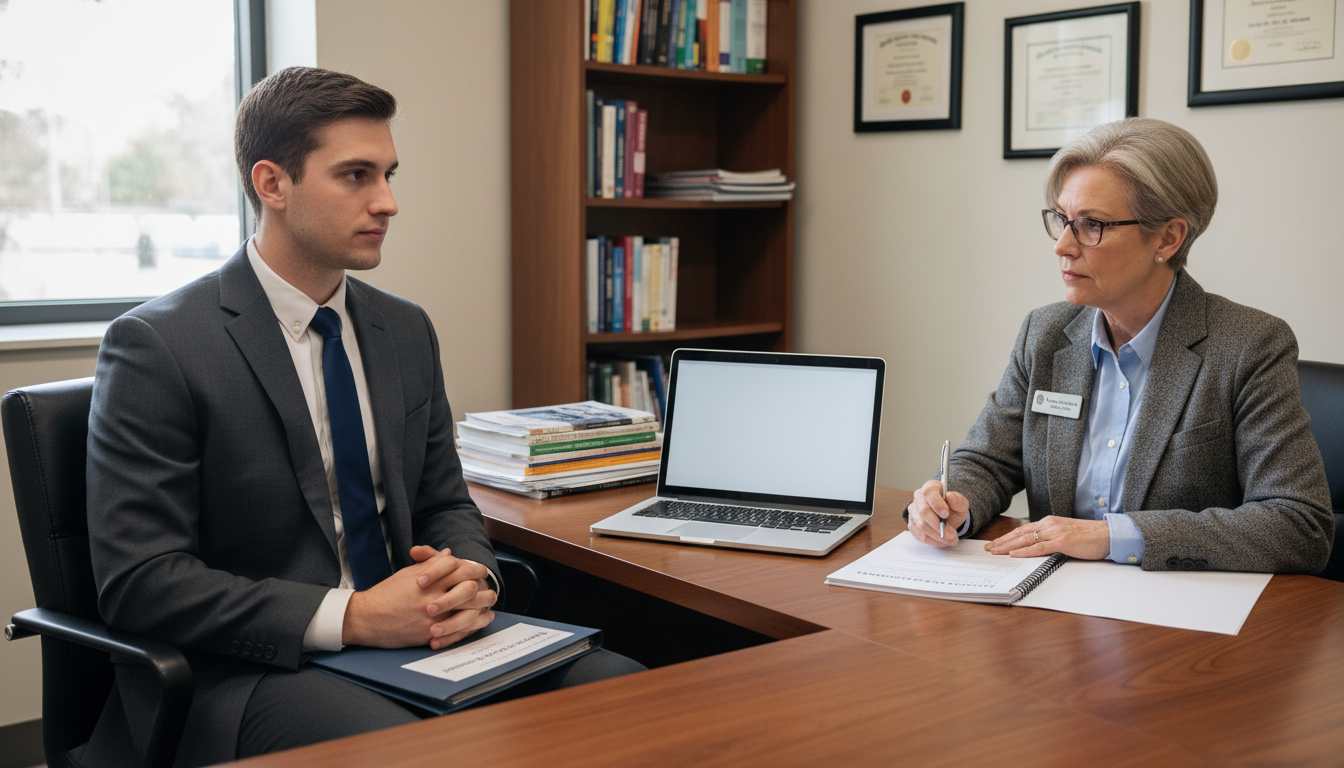
Step 4: Practical Logistics and Professional Presentation
Technical and Practical Planning (Virtual and In-Person)
Whether your interviews are virtual or in-person, how to prepare for interviews includes controlling everything you can.
If Virtual:
- Technology
- Stable internet (test with a friend or mock session)
- Updated Zoom/Teams software
- Webcam at eye level, good audio (headset or external mic if needed)
- Environment
- Neutral, clean background (bookshelf, plain wall, or tasteful décor)
- Good lighting (natural light or lamp in front of you, not behind)
- No visual distractions or background noise
Do a full mock run: log in as if it were interview day, check camera framing, and record a short practice to see how you appear.
If In-Person:
- Travel logistics
- Confirm directions, parking or public transport
- Arrive early, but not excessively (10–15 minutes is ideal)
- Materials to bring
- Printed CV, personal statement, and ERAS application
- List of questions for the program
- Notepad and pen (for brief notes right after sessions)
Professional Attire and Nonverbal Communication
Attire
- Conservative suit (dark or neutral) with minimal accessories
- Comfortable but polished shoes (you may walk/stand a lot)
- Neat hair and minimal fragrance (peds and psych settings can be sensitive to scents)
Nonverbal communication
- Maintain appropriate eye contact
- Nod or use brief verbal signals to show engagement (e.g., “I see,” “That makes sense”)
- Sit upright, avoid fidgeting
- Be aware of facial expressions—warmth and openness count, especially in family-centered fields
Peds and psychiatry both value approachability, patience, and empathy—your demeanor should reflect these qualities consistently.
Preparing Insightful Questions for Programs
High-quality questions demonstrate maturity and investment in the specialty. Examples:
- “How do residents experience the transition between pediatric and psychiatry rotations? What supports are in place during those shifts?”
- “Can you tell me about opportunities for integrated clinics or longitudinal care of patients across pediatric and psychiatric settings?”
- “How does the program support DO residents specifically, including opportunities to maintain osteopathic identity or skills if we wish?”
- “What are typical career paths of your recent Peds-Psych or Triple Board graduates?”
Avoid questions that are easily answered on the website (e.g., call schedule details) unless you are clarifying nuances.
Step 5: Mindset, Wellness, and Managing the Match Strategy
Managing Performance Anxiety
Residency interview preparation is not only about content; it’s also about state of mind.
Strategies:
- Rehearse under semi-real conditions
- Mock interviews with faculty, advisors, or peers
- Record yourself answering 3–5 core questions and critique your performance
- Use brief relaxation techniques
- Box breathing (inhale 4, hold 4, exhale 4, hold 4)
- Grounding exercises (name 5 things you can see, 4 you can feel, etc.)
- Normalize anxiety
- Remind yourself: mild anxiety can sharpen focus. You don’t need to appear perfectly calm—you need to appear thoughtful and sincere.
Remember: psychiatry and pediatrics faculty are typically empathic and understanding. They do not expect perfection; they expect authenticity, teachability, and insight.
Refining Your Match List Strategy as a DO Graduate
As you go through interviews, continuously update your impressions:
- Program culture and DO-friendliness
- Faculty interest in your background and goals
- Resident happiness and support systems
- Opportunities in integrated behavioral health, advocacy, and research
After each interview, jot down:
- Pros and cons
- How you felt during resident-only sessions
- Whether you can imagine yourself working with these people for 5+ years
As a DO graduate in a niche field like Triple Board, balance:
- Aim for programs with a track record of welcoming DOs
- Include a range of competitiveness levels (a “ladder” of reach, target, and safety options)
- Consider geographic/regional factors that may affect family or support networks
This deliberate reflection will help you build a rank list that is both strategic and aligned with your long-term goals.
Frequently Asked Questions (FAQ)
1. As a DO graduate, do I need to do anything different to be competitive for Peds-Psych or Triple Board?
You don’t need a fundamentally different strategy, but you should:
- Emphasize how your osteopathic training naturally aligns with integrated, holistic care of children and families.
- Highlight any strong board scores (COMLEX and/or USMLE) and robust clinical evaluations to reassure programs about your academic readiness.
- Target programs that are DO-friendly, as shown by current DO residents or faculty.
- Be ready to answer questions about how you will incorporate—or not incorporate—OMT in your future practice, without being defensive.
2. How can I show interest in both pediatrics and psychiatry without seeming undecided?
Peds-Psych and Triple Board programs expect you to love both specialties. The key is to show:
- You understand the unique, integrated identity of a combined specialist, not someone who “couldn’t pick.”
- Your examples consistently demonstrate medical and psychosocial complexity (not purely “peds” or “psych” cases).
- Your long-term goals clearly require both training components (e.g., working in integrated clinics, managing medically and psychiatrically complex youth, leading systems-level initiatives).
Talk about pediatrics and psychiatry as naturally intertwined in your vision of care.
3. What are the most important interview questions I should practice in advance?
At minimum, prepare polished answers for:
- “Tell me about yourself.”
- “Why Peds-Psych / Triple Board?”
- “Why did you choose osteopathic medical school, and how has it shaped your practice?”
- “Tell me about a challenging patient or family encounter and what you learned.”
- “What are your career goals after residency?”
- “Why this program?” (tailored individually)
Additionally, prepare a few integrated cases involving pediatric patients with significant psychiatric, developmental, or psychosocial needs.
4. How early should I start residency interview preparation?
For a Peds-Psych or Triple Board applicant, ideal timing is:
- 2–3 months before interviews: Begin outlining your core narrative, reviewing your application, and researching programs.
- 4–6 weeks before: Start regular mock interviews, refine answers, and build your question bank for programs.
- 1–2 weeks before each specific interview: Deep-dive into that program’s details, tailor your talking points, and rehearse your introduction and closing questions.
Starting early allows you to refine your message, build confidence, and minimize last-minute stress.
Preparing for a Peds-Psych or Triple Board residency interview as a DO graduate is about much more than memorizing answers. It’s about clearly articulating who you are, why integrated child mental and physical health matters deeply to you, and how your osteopathic background positions you uniquely for this work. With deliberate, structured preparation and a focus on authenticity, you can present yourself as a compelling, mission-aligned candidate ready to thrive in this demanding and rewarding training pathway.