Understanding the Preliminary Surgery Year as a DO Graduate
For a DO graduate, the pre-interview preparation process for a preliminary surgery residency has unique nuances. Before you can prepare effectively for interviews, you need to be very clear on what programs are actually looking for and how you fit into that picture.
What is a Preliminary Surgery Year?
A preliminary surgery year (or prelim surgery residency) is a one-year training position in general surgery. It differs from a categorical surgery position in that:
- Prelim = 1 year of training, with no guaranteed continuation
- Categorical = 5+ years of planned training to board eligibility
Preliminary surgery positions are typically:
- Designated prelim spots: Tied to an advanced position (e.g., integrated with a radiology or anesthesiology match)
- Nondesignated prelim spots: Stand-alone positions often used by:
- Applicants re-applying to categorical surgery
- Those needing a surgical year before switching specialties
- International or DO graduates strengthening their applications
For a DO graduate residency applicant, this year can be:
- A bridge to a future categorical surgery position
- A pathway into another competitive specialty (e.g., radiology, anesthesiology)
- A career exploration year to clarify if surgery is truly your long-term fit
Why Programs Take DO Graduates Seriously
Many DO graduates successfully match into surgery each year. The osteopathic background gives you:
- Strong training in holistic, patient-centered care
- Often significant clinical exposure and hands-on skills
- A reputation for work ethic and team orientation, highly valued in surgical services
However, you may need to address:
- Variable exposure to large academic surgical centers depending on your school
- Perceptions (accurate or not) about COMLEX vs. USMLE scores
- Less structured exposure to high-volume, research-heavy academic surgery environments
Your pre-interview strategy must show that you:
- Understand what the preliminary surgery year actually entails
- Are prepared for the intense workload and team dynamics
- Have a clear, realistic plan for what you want after the prelim year
This context sets the stage for how you’ll approach your residency interview preparation and how you’ll answer interview questions residency programs are likely to ask.
Laying the Groundwork: Research and Strategy Before Interview Season
One of the most effective ways to stand out is to do deeper, more targeted preparation than other applicants. This starts weeks—ideally months—before your first interview.
1. Build a Clear Program Strategy
Before you walk into any interview, you should understand:
Your primary goal:
- Transition to categorical general surgery at that institution?
- Use the prelim surgery year as a bridge to another field?
- Strengthen your CV for a re-application?
Your target program types:
- Large academic centers
- Community-based programs
- Hybrid programs (academic-community partnership)
Create a simple tracking spreadsheet with:
- Program name, location
- Type (academic, community, hybrid)
- Designated or nondesignated prelim positions
- Surgical subspecialties available
- Historical treatment of prelims (e.g., do some convert to categorical spots?)
- DO-friendliness (number of recent DO graduates, faculty with DO backgrounds)
- Notes about call schedule, operative experience, research expectations
This level of structured preparation directly improves how confidently, specifically, and intelligently you can speak during interviews.
2. Deep-Dive Program Research
Before any given interview, do program-specific research beyond just reading their website “About Us” page:
Review their case mix and strengths:
- Strong in trauma? HPB? Colorectal? Minimally invasive?
- Are there rotations that might especially benefit a prelim surgery resident?
Check their prelim-to-categorical track record:
- Do they ever promote prelims to categorical positions?
- Are there recent examples on their website or alumni pages?
Study their educational structure:
- Protected didactic time
- Simulation center access
- Skills labs and boot camps for interns
Look at DO representation:
- Residents or faculty with DO degrees
- Any mention of osteopathic recognition or osteopathic training pathways
Use this information to:
- Tailor your “Why this program?” answer
- Develop genuine, specific questions to ask faculty and residents
- Signal that you have done your homework and are envisioning yourself in their environment

Crafting Your Personal Narrative as a DO Applying to Prelim Surgery
Your story is often what differentiates you from hundreds of similarly qualified applicants. Pre-interview preparation should include intentional work on how you will explain your path, your “why surgery,” and your “why prelim.”
1. Clarify Your Surgical “Why”
Expect multiple versions of the same question:
- “Why surgery?”
- “Why preliminary surgery?”
- “Why not apply categorical directly?”
- “What is your long-term career plan?”
Your answer should:
- Be specific, not generic (“I like fixing problems with my hands” is not enough)
- Show insight into the realities of surgical life—long hours, hierarchy, emotional load
- Reflect your DO perspective—whole-person care, empathy, communication skills
Example structure:
- Origin – How you became interested in surgery
- Exposure – Clinical experiences that confirmed or reshaped that interest
- Reflection – How you processed what you saw (patient suffering, OR intensity, team dynamics)
- Fit – Why your traits (work ethic, resilience, curiosity) align with a surgical career
- Forward look – How a prelim year will move you toward your long-term goals
2. Explain Why a Preliminary Surgery Year (Not Just “Any” Spot)
Program directors want to know that you are not treating their prelim spot as a backup plan you barely care about. Prepare a tailored explanation that:
Acknowledges the realities of your application:
- COMLEX-only vs. COMLEX + USMLE
- Score profile, attempts, or red flags (if any)
- Late decision to pursue surgery or need to strengthen your application
Demonstrates a clear strategy:
- “A prelim surgery year will give me X, Y, Z experiences/skills that directly strengthen my application for categorical general surgery.”
- Or, “I am interested in [another specialty]; a strong surgical foundation and this specific program’s case mix will prepare me for that path.”
Communicates genuine interest in being part of their team, even if it’s only for a year:
- Emphasize your readiness to function as a reliable, low-drama intern
- Focus on service, teamwork, and learning, not just your future goals
3. Addressing the DO Perspective Thoughtfully
Some programs have long histories with DO graduates; others have less experience. Anticipate questions like:
- “Tell me about your osteopathic training.”
- “How has your DO background shaped how you approach patients?”
- “Why did you choose a DO school?”
Prepare to discuss:
- Your comfort with OMT in surgical patients (when appropriate)
- How osteopathic principles influence:
- Pre-op risk assessment
- Post-op pain management
- Communication with anxious patients and families
- Any DO mentors who inspired your surgical path
Avoid being defensive or apologetic. Instead, frame your DO background as:
- A strength in holistic thinking and patient communication
- A contributor to your resilience and adaptability
Practical Residency Interview Preparation: Skills, Questions, and Logistics
This is where how to prepare for interviews becomes very concrete. Focus your pre-interview preparation in three major domains: content, delivery, and logistics.
1. Core Content: Prepare for Common Interview Questions (Residency-Focused)
You should write out bullet-point responses (not scripts) to core interview questions residency programs frequently ask, then practice aloud.
High-Yield Question Categories
Motivation and Fit
- “Why surgery?”
- “Why preliminary surgery?”
- “Why our program?”
- “Where do you see yourself in 5–10 years?”
Clinical Experiences
- “Tell me about a challenging case you’ve managed.”
- “Describe a time you made a mistake and what you learned.”
- “Talk about a conflict you had on a team and how you resolved it.”
Work Ethic and Resilience
- “How do you handle long hours and fatigue?”
- “Tell me about a time you received tough feedback.”
- “What do you do when you feel overwhelmed on a busy rotation?”
Ethical and Professional Scenarios
- “Describe a time you advocated for a patient.”
- “What would you do if you saw a senior resident behaving unprofessionally?”
- “Tell me about a time you had to deliver bad news.”
Application-Specific or Red-Flag Questions
- “I see a leave of absence—can you tell me more?”
- “Your scores are lower in [X]; what happened there?”
- “Why did you switch interest from [other specialty] to surgery?”
How to Prepare Your Answers
Use structured frameworks to make your responses concise and powerful:
- STAR format (Situation, Task, Action, Result) for behavior-based questions
- PAR format (Problem, Action, Result) for clinical/ethical case narratives
Example (abbreviated):
“Tell me about a time you made a mistake.”
- Situation/Problem: On a busy general surgery service during my sub-I, I miscommunicated a lab result to my senior.
- Action: I immediately clarified the result, informed my team, apologized, and then created a checklist approach for pre-rounding to prevent similar errors.
- Result: The patient’s care was not compromised, my senior appreciated my transparency, and I’ve used the checklist approach since then to maintain accuracy even when tired.
Practice aloud until your answers feel natural, consistent, and under 2–3 minutes each.
2. Delivery: Mock Interviews and Behavioral Practice
Even if your answers are excellent, poor delivery can undermine your message. Focus on:
Verbal communication:
- Clear, measured pace
- Avoiding filler words (“um,” “like,” “you know”)
- Confident but not arrogant tone
Non-verbal communication:
- Eye contact (or “camera contact” for virtual interviews)
- Neutral, professional facial expression
- Open posture; avoid crossing arms or fidgeting
Actionable steps:
Do at least 2–3 mock interviews:
- With a faculty mentor
- With a surgery resident
- With a career advisor or peer
Record yourself on video:
- Review for distracting mannerisms
- Check if your answers sound too scripted or too vague
- Adjust your posture and tone accordingly
For a DO graduate targeting an osteopathic residency match landscape that’s now integrated with ACGME, mock interviews can also help you:
- Practice explaining your osteopathic training confidently
- Highlight any rotation experiences at academic centers or large hospitals that show you can thrive in high-acuity environments

3. Logistics: Technical, Travel, and Presentation Details
The best content in the world won’t help if you miss an interview or arrive flustered. Build a repeatable system for:
A. Scheduling and Organization
Maintain a central calendar with:
- Interview dates and times (time zones clearly noted)
- Contact info for each program’s coordinator
- Zoom/Teams/online platform links (if virtual)
- Pre-interview dinner or virtual social events
Confirm 1–2 days in advance:
- Time zone
- Video link
- Dress code (if stated)
- Parking or security details for in-person interviews
B. Professional Appearance
Standard attire:
- Well-fitting suit (dark gray, navy, or black)
- Conservative shirt or blouse
- Polished shoes
- Simple, professional grooming
For DO graduates:
- Wear your DO pin or name badge if already given by your institution; it can spark positive conversation and signal pride in your background.
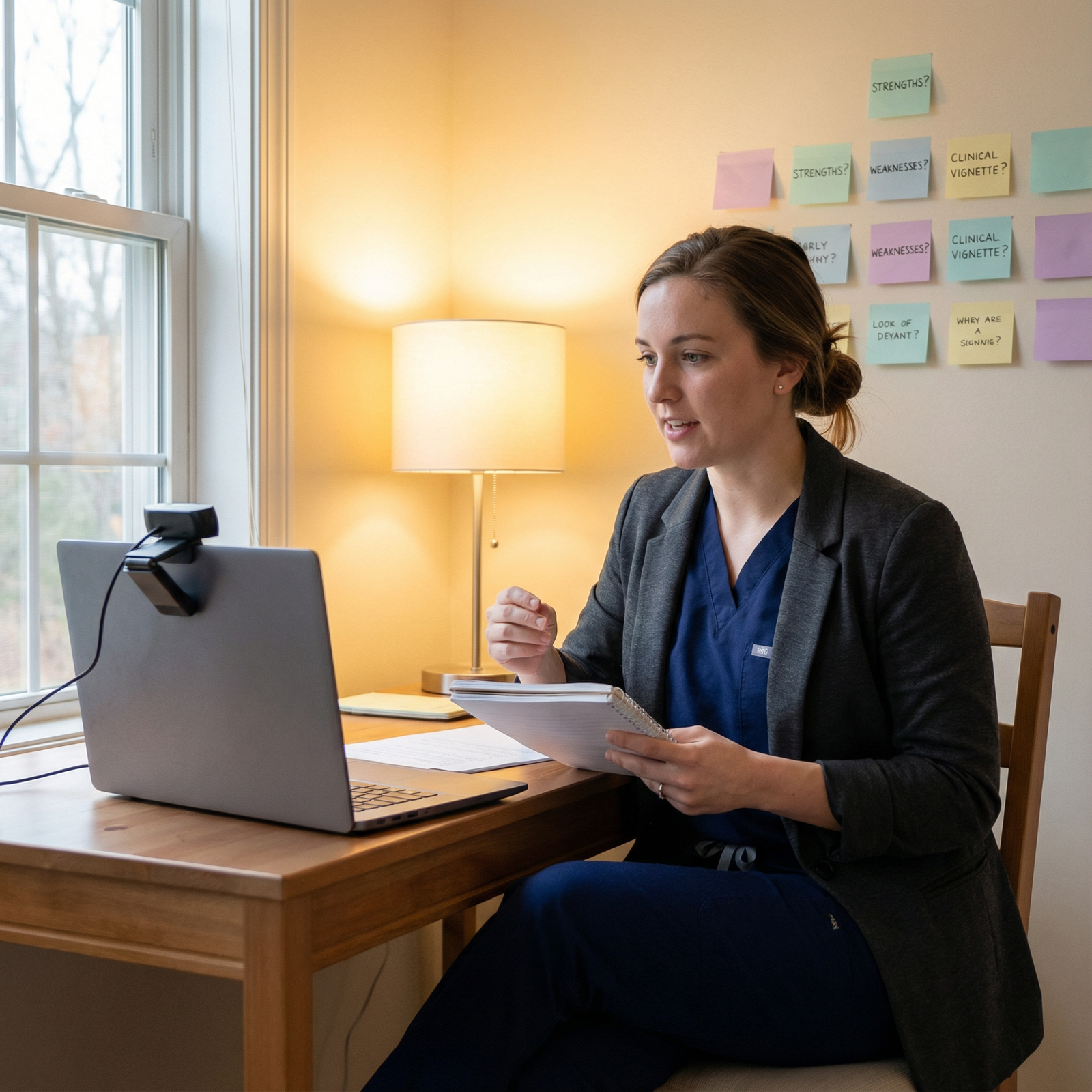
C. Virtual Interview Setup
If your preliminary surgery interviews are virtual:
- Test your camera, mic, and internet a week before and again the day prior
- Choose a neutral background (plain wall, tidy bookshelf)
- Position your camera at eye level; look at the camera, not the screen, when speaking
- Close all distracting apps; silence notifications on phone and computer
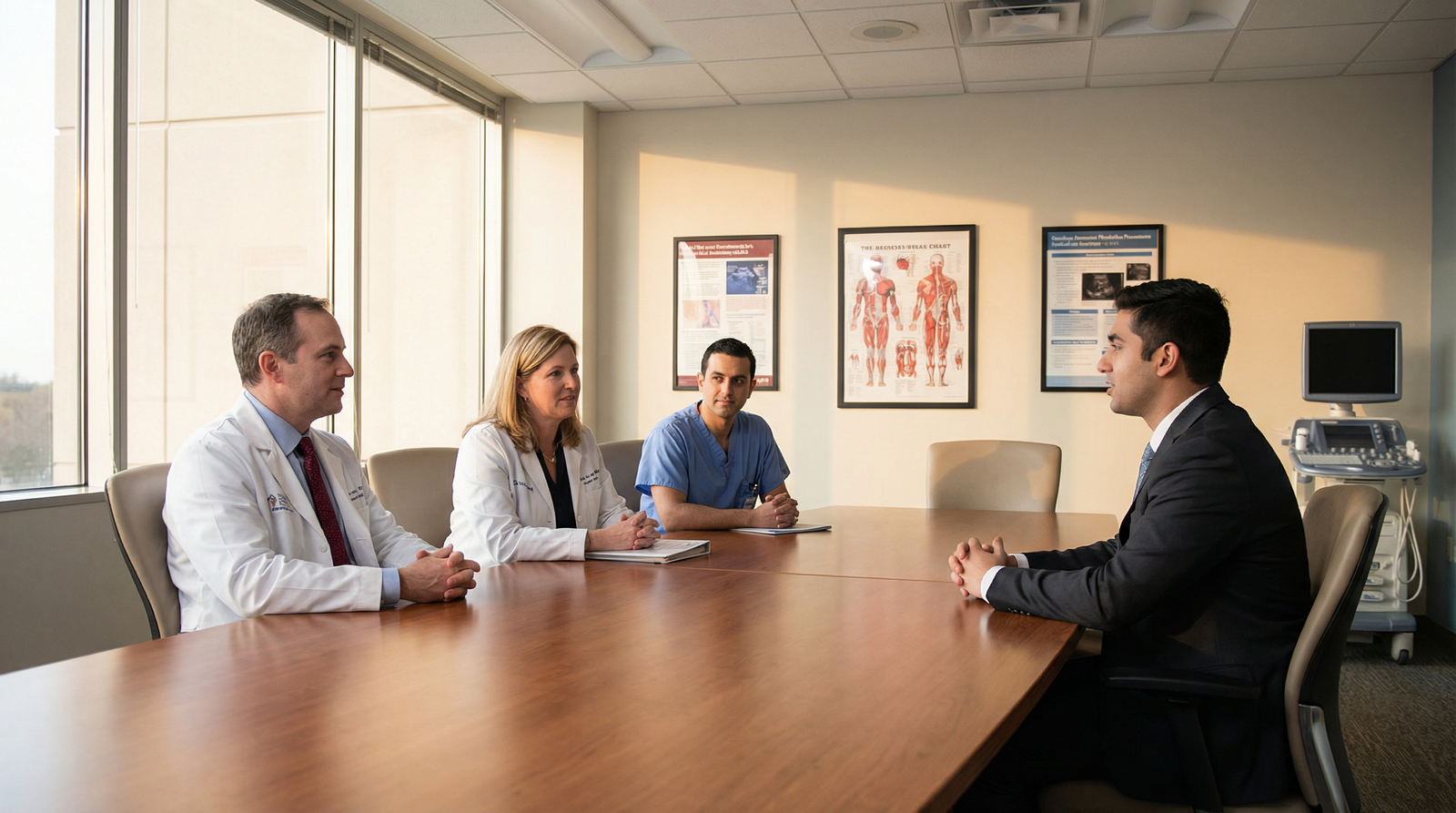
D. Travel and On-Site Details (In-Person Interviews)
- Arrive in the city the day before whenever possible
- Visit the hospital area to get a sense of parking and entrance locations
- Bring:
- Copies of your CV and personal statement
- A small notebook and pen
- A list of 3–5 specific questions for faculty and 3–5 for residents
Tailored Strategies for DO Graduates and the Prelim Surgery Path
Because you are both a DO graduate and applying to a preliminary surgery residency, you must be ready for certain types of conversations that categorical applicants may encounter less frequently.
1. Discussing Long-Term Plans Honestly (Without Undermining Your Application)
Programs know that many prelim interns are:
- Reapplying to categorical surgery
- Targeting another field after the prelim year
- Unsure, using the year for clarifying their path
The key is honesty + commitment:
If your goal is categorical general surgery:
- Be explicit about your passion for surgery
- Show you understand the competitive reality
- Emphasize that you want to prove yourself clinically, gain strong letters, and grow as a colleague
If your goal is another surgical-adjacent specialty (e.g., radiology, anesthesia):
- Frame the prelim year as foundational to your intended specialty
- Highlight benefits: anatomy, critical care exposure, perioperative medicine, procedural skills
- Emphasize that you will still be fully committed to functioning as an excellent intern on the surgical team
Programs care most that:
- You will show up, work hard, and contribute positively
- You are not planning to mentally “check out” once your future specialty is secured
2. Handling Questions About COMLEX, USMLE, and DO Training
Be prepared for:
- “Did you take USMLE as well as COMLEX?”
- “How do you think COMLEX compares to USMLE?”
- “Do you feel your training prepared you well for ACGME surgery?”
Guiding principles:
- Answer directly and non-defensively
- Do not disparage either exam or training pathway
- Pivot to how you have demonstrated readiness, such as:
- Strong clinical evaluations on surgery
- Sub-internship performance at ACGME institutions
- Research or QI projects in surgery
- Strong letters from MD or DO surgeons
Example approach:
“I took COMLEX Levels 1–3 and USMLE Step 2. I recognize that programs are more familiar with USMLE, which is partly why I chose to take it. Regardless of the exam format, I’ve shown my ability to apply that knowledge clinically during my general surgery sub-I and trauma rotation, where my attendings consistently noted my preparation and clinical reasoning in their evaluations.”
3. Showcasing DO Strengths in a Surgical Context
You can differentiate yourself by showing how osteopathic principles improve surgical care:
Pre-op assessment:
- Whole-person view (social support, baseline function, anxiety)
- Collaborative communication with anesthesia and medicine
Post-op care:
- Thoughtful pain management strategies
- Considering musculoskeletal issues affecting mobility and rehabilitation
Communication:
- Translating complex surgical plans into language patients and families understand
- Using empathy and active listening to build trust
These examples transform “I’m a DO” from a fact into a clinical advantage.
FAQs: Pre-Interview Preparation for DO Graduates in Preliminary Surgery
1. As a DO graduate, do I need to prepare differently than MD applicants for a prelim surgery interview?
The core principles of residency interview preparation are the same—know your story, research programs, practice common questions, and present professionally. However, as a DO graduate you should also:
- Be ready to articulate how osteopathic principles benefit surgical patients
- Explain your decision to attend a DO school confidently and positively
- Be prepared to discuss COMLEX vs. USMLE and how you have demonstrated readiness for an ACGME environment
2. How can I explain why I’m applying to a preliminary surgery year without sounding like I failed to match?
Focus on your strategy and insight, not just your setbacks. For example, you might say:
- You recognized that to be competitive for categorical surgery (or another competitive specialty), you need stronger US clinical experience, letters, and operative exposure
- You want to prove yourself in a demanding environment, build technical and non-technical skills, and clarify your specific career interests within or adjacent to surgery
Avoid defensive language; show that you have a clear plan for making the most of the year.
3. What specific interview questions residency programs ask prelim surgery applicants more often?
Common prelim-specific questions include:
- “What are your plans after this preliminary year?”
- “If a categorical spot opened up here, would you be interested?”
- “How will you stay motivated knowing this is a one-year position?”
- “How would you handle it if your next match outcome is not what you hope for?”
Prepare honest, thoughtful answers that emphasize resilience, work ethic, and commitment to being a high-functioning intern regardless of the uncertainty.
4. How much should I talk about wanting to convert to a categorical surgery spot at the same program?
If your genuine goal is categorical surgery, it is reasonable—and often helpful—to say so. The key is balance:
- Affirm your interest in a long-term surgical career
- Make clear that you will be all-in for the prelim year, whether or not a categorical position becomes available
- Avoid sounding entitled or as if you assume you’ll be “upgraded”; instead, express readiness to earn that opportunity through performance
By combining program-specific research, a clear personal narrative, strong command of common interview questions residency programs will ask, and a confident approach to your DO background, you can enter each prelim surgery residency interview with purpose and poise. Thoughtful pre-interview preparation not only improves your match chances—it is also your first act of professionalism as a future surgical intern.