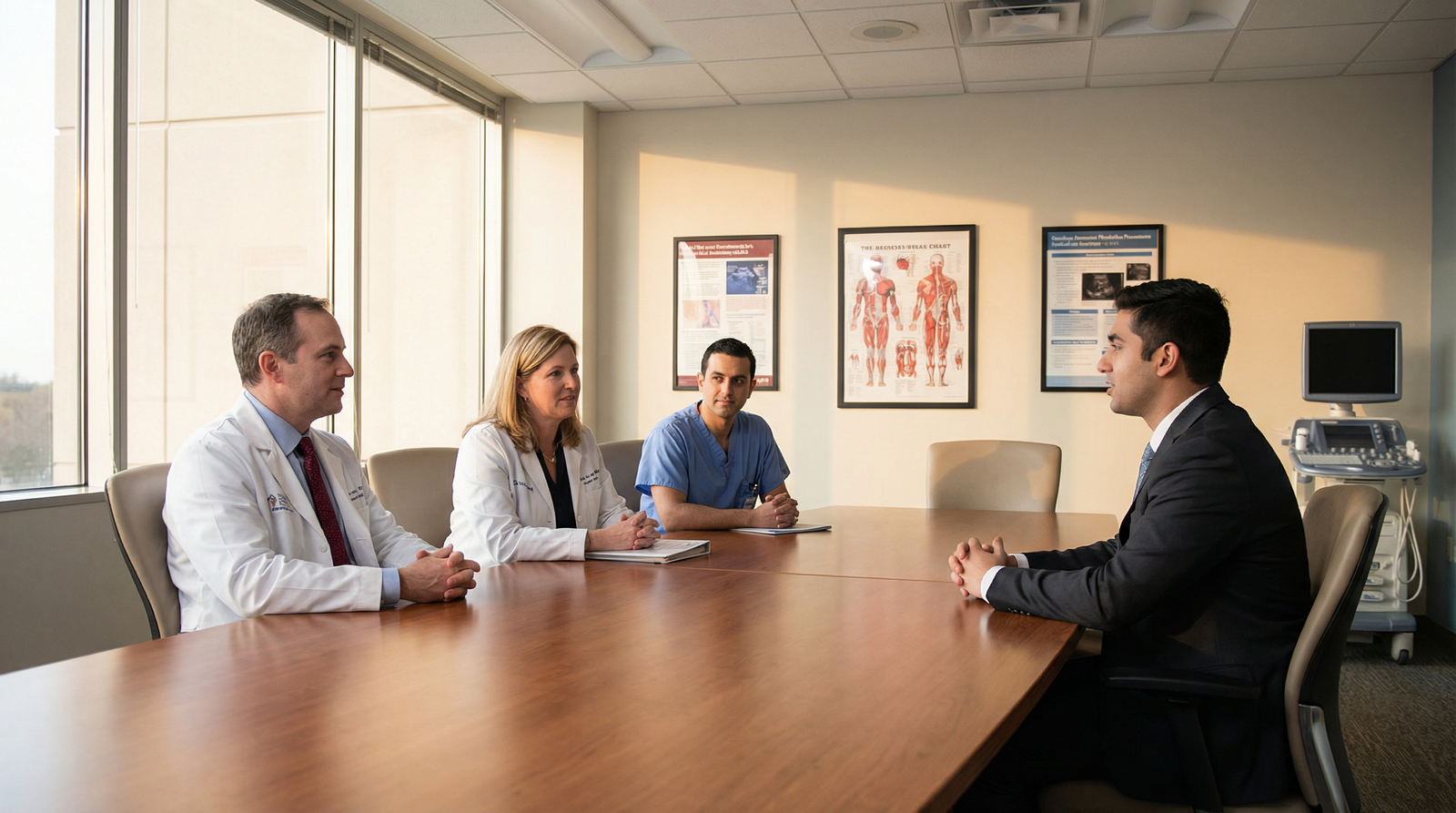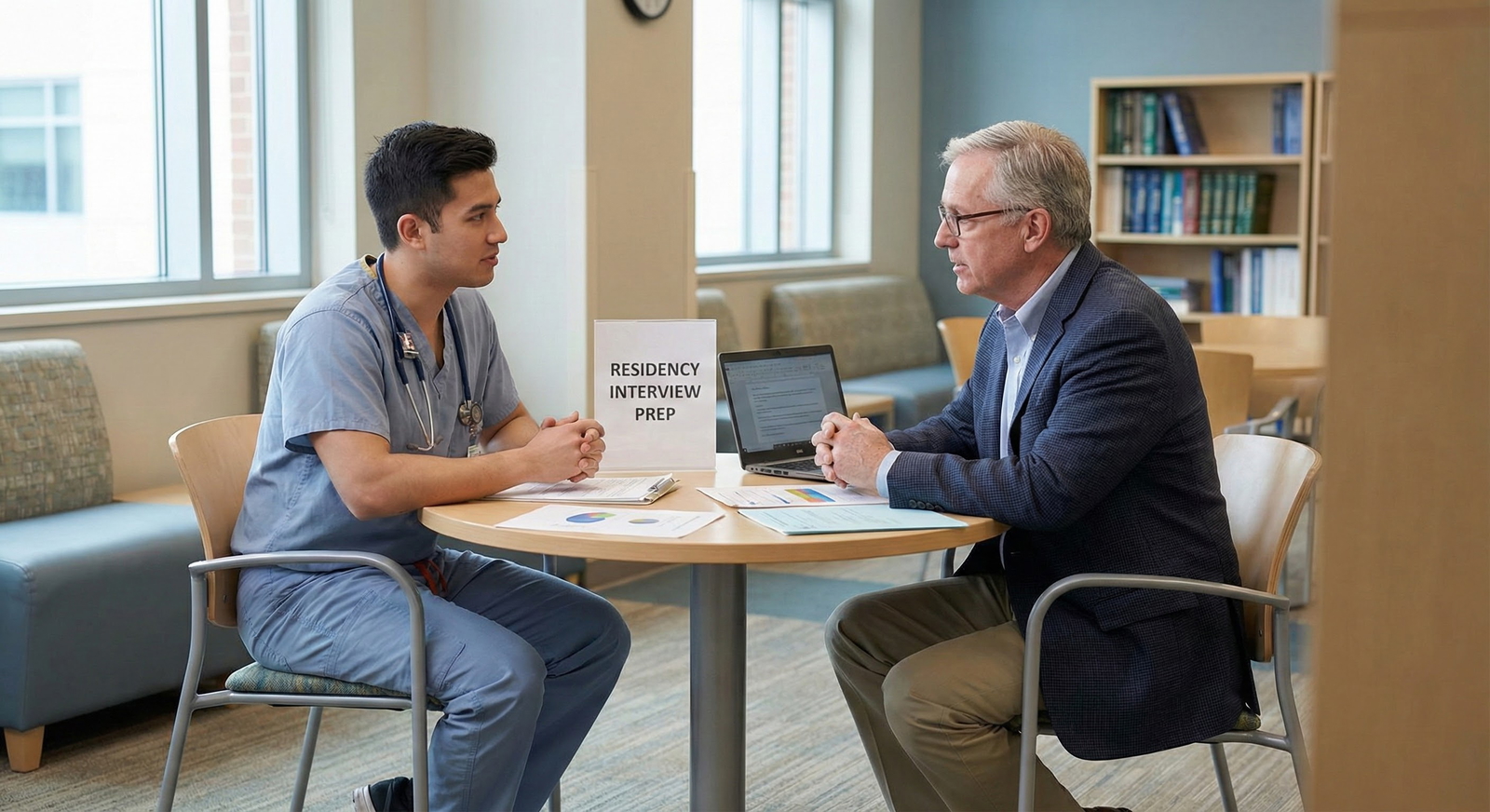
Introduction: Turning Residency Interview Stress Into Strategic Focus
Residency Interviews mark a pivotal transition from medical school to professional training. They are high‑stakes, high‑visibility events that can shape your career path for years to come. It’s no surprise that many medical students experience intense stress and anxiety during Interview Preparation and throughout interview season.
You may worry about:
- Saying the “wrong” thing
- Being compared to classmates
- Gaps or weaknesses in your application
- Making a strong impression over Zoom
- How this one day may affect your future
These feelings are normal. What matters is not whether you feel stress, but how you manage it. With the right tools, you can transform anxiety into focused energy, communicate more clearly, and actually enjoy aspects of your residency interviews.
This guide walks you through practical, evidence-informed strategies for Stress Management and Anxiety Relief before, during, and after your interviews. The goal is not to eliminate nervousness (that’s unrealistic) but to help you stay grounded, authentic, and effective when it counts most.
Understanding Stress and Anxiety in Residency Interviews
Residency interviews are a perfect storm of triggers: time pressure, uncertain outcomes, social evaluation, and high personal stakes. Understanding what you’re experiencing biologically and psychologically can make it feel more manageable—and less like something is “wrong” with you.
Stress vs. Anxiety: What’s Actually Happening?
Stress
A short-term response to a specific external demand or challenge—like your interview date, travel logistics, or running late. It often shows up as:- Increased heart rate
- Sweaty palms
- Muscle tension
- Feeling keyed-up or restless
Anxiety
A more sustained internal state that can persist even when the external stressor is gone (or hasn’t happened yet). Anxiety tends to involve:- Persistent worry or “what if” thinking
- Catastrophizing (“If I mess up one answer, I won’t match”)
- Difficulty concentrating
- Trouble sleeping
Both stress and anxiety activate your body’s fight‑flight‑freeze system. While some activation can sharpen your thinking and performance, too much can:
- Disrupt your memory recall (e.g., forgetting key experiences or research)
- Make your speech rushed or disorganized
- Reduce your ability to connect with interviewers
- Increase self‑criticism and negative self‑talk
Effective Stress Management is about finding that “optimal zone” where you are alert and engaged but not overwhelmed.
Normalizing the Experience
A few key truths to keep in mind:
- Nearly everyone in your applicant pool is stressed.
- Many faculty remember their own interview anxiety and are sympathetic.
- Being nervous does not mean you are unqualified or unprepared.
- You do not need to feel confident to appear composed and engaged.
Approach anxiety as something to work with, not something you must eradicate. This mindset alone often reduces secondary anxiety (“I’m anxious about being anxious”).
Pre‑Interview Strategies: Building a Foundation of Calm and Confidence
Intentional Interview Preparation is one of the most powerful forms of Anxiety Relief. The more you reduce unknowns, strengthen your content, and plan logistics, the more bandwidth you’ll have on the actual day to stay present and calm.
1. Strategic Content Preparation
Research the Program Deeply
Go beyond the website’s landing page:
- Mission & values: How do they align with your interests or background?
- Clinical strengths: Tertiary care vs. community focus, patient population, subspecialty exposure.
- Curriculum & call schedule: Rotation structure, night float, electives.
- Faculty & leadership: PD, APDs, chief residents, and areas of scholarly interest.
- Wellness & support: Resident resources, mentorship, DEI initiatives.
Use this information to:
- Craft specific “Why this program?” responses.
- Prepare individualized questions that show genuine engagement.
- Connect your experiences to what the program offers (e.g., underserved care, research, teaching).
Feeling well‑informed lowers anxiety by making the interview feel like a targeted conversation, not a blind test.
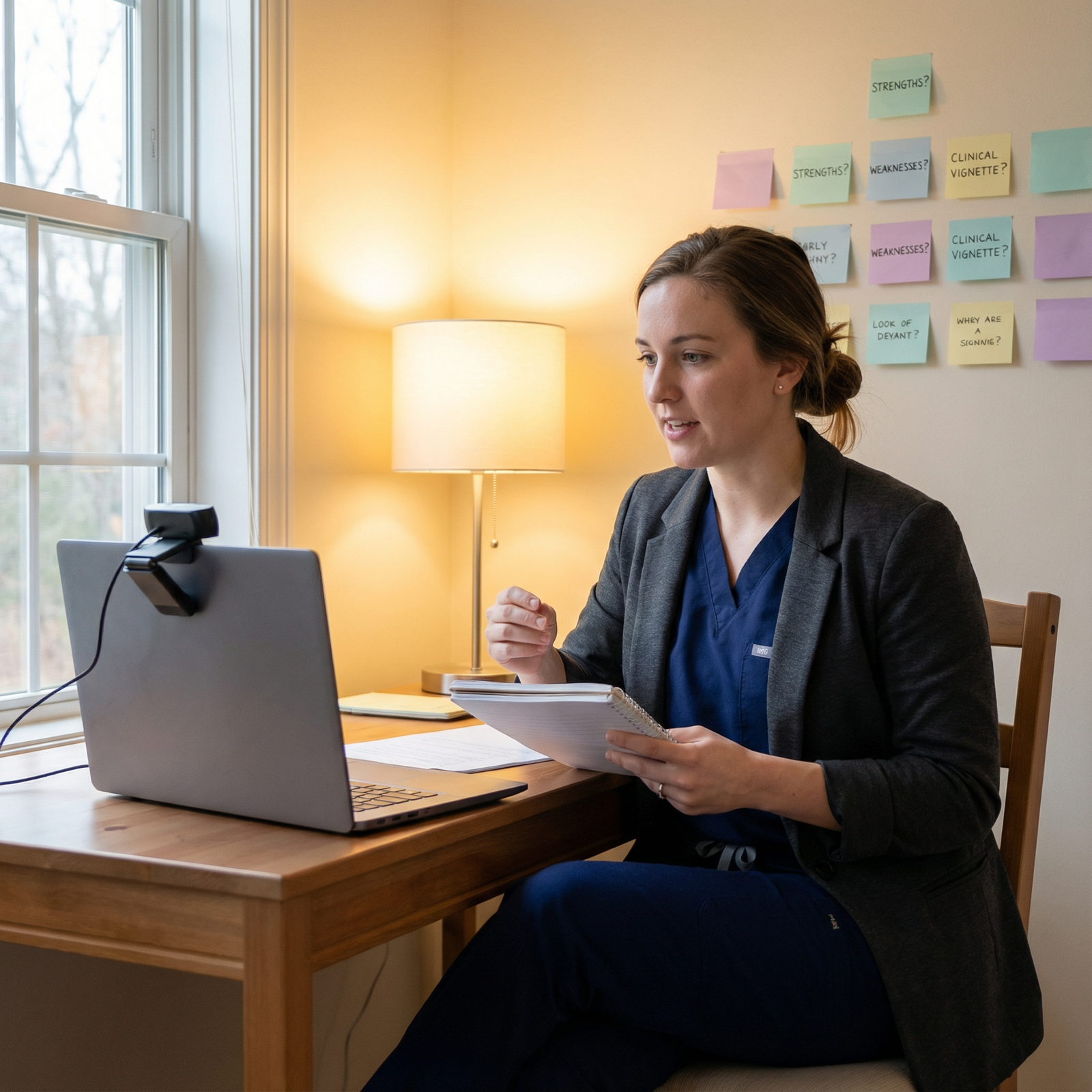
Practice Common and High‑Yield Interview Questions
Start with standard questions you are almost guaranteed to encounter:
- “Tell me about yourself.”
- “Why this specialty?”
- “Why our program?”
- “What are your long‑term career goals?”
- “Describe a challenging situation in medical school and how you handled it.”
- “Tell me about a time you received critical feedback.”
- “What are your strengths and areas for growth?”
Tips for practicing effectively:
- Use mock interviews with peers, residents, or advisors.
- Record yourself (audio or video) to assess pacing, clarity, and body language.
- Avoid memorized scripts. Aim for organized talking points, not word-for-word recitations.
- Practice behavioral questions (“Tell me about a time when…”) using the STAR framework (Situation, Task, Action, Result).
The goal: when nerves hit, you have well‑rehearsed structures and stories ready, even if exact wording varies.
2. Organizing Your Materials and Logistics
Prepare and Review Your Application Packet
- Re‑read your ERAS application, personal statement, and CV before each interview day.
- Identify 3–5 core themes (e.g., leadership, service, research, advocacy) you want to highlight.
- Prepare to discuss:
- Any gaps in training
- USMLE/COMLEX attempts
- Career changes or specialty switches
- Red flags (if applicable) in a calm, honest, growth-oriented way
Knowing you won’t be caught off‑guard by your own application can significantly lower anxiety.
Logistics for In‑Person Interviews
- Confirm date, time, and exact location; map travel time with a buffer.
- Plan transportation and parking (or rideshare) the night before.
- Lay out your interview outfit and pack:
- Printed copy of your CV
- Notepad and pen
- A small water bottle
- Snacks (low sugar, not messy)
- Backup phone charger
- If the route is unfamiliar, do a test run if possible.
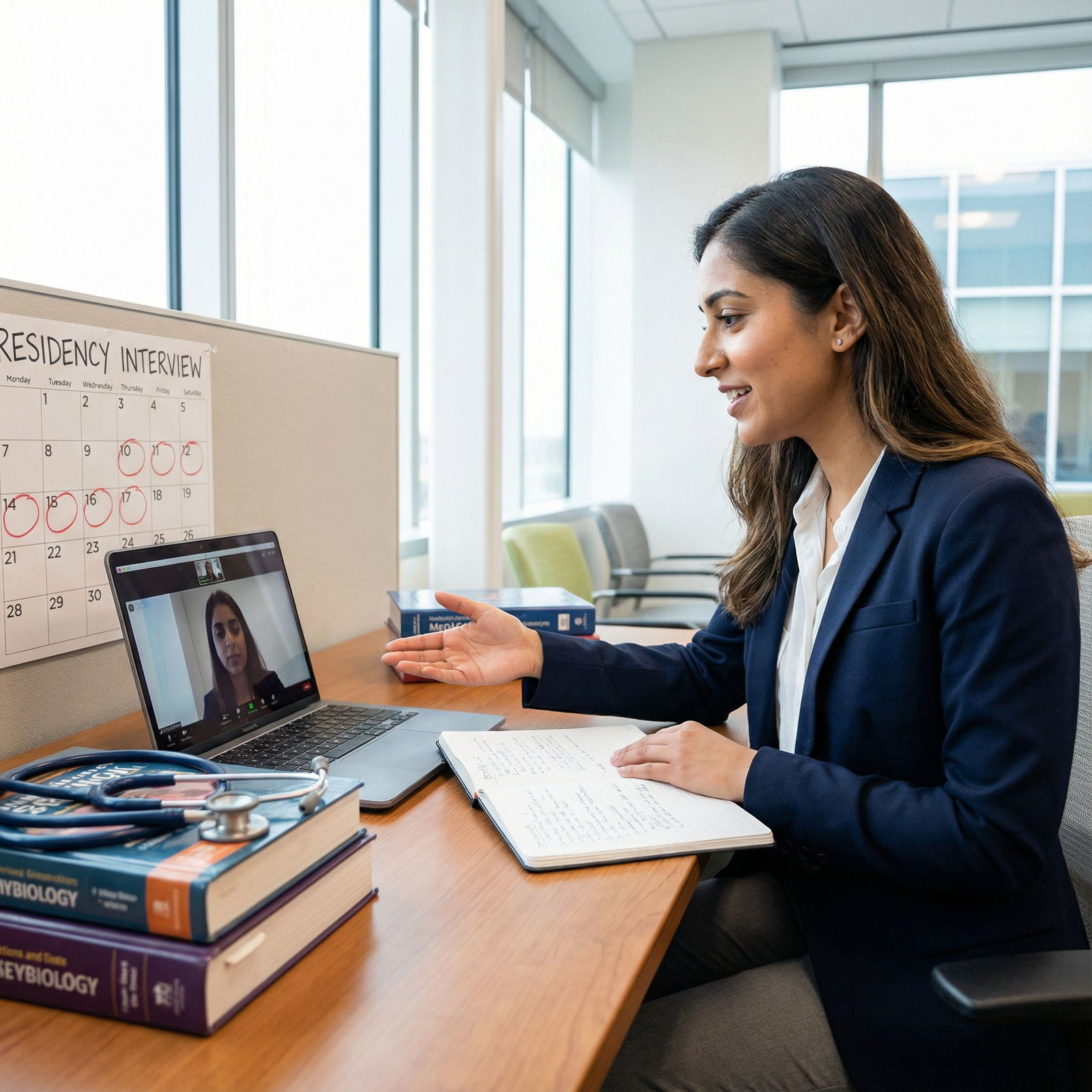
Logistics for Virtual Interviews
Residency Interviews increasingly use virtual platforms, which create their own stressors:
- Tech check: Test your internet, webcam, microphone, and platform (Zoom, Thalamus, etc.).
- Environment: Choose a quiet, well‑lit, neutral background; avoid clutter or distractions.
- Backup plan: Have a phone hotspot and phone numbers for the program coordinator.
- Camera framing: Eye‑level camera, about arm’s length distance, with your upper torso visible.
Eliminating preventable tech issues can dramatically reduce anxiety on interview day.
3. Mind‑Body Practices for Stress Management Before the Interview
Mindfulness and Breathing Techniques
Build a simple daily practice at least 1–2 weeks before your first interview:
Diaphragmatic (belly) breathing
- Inhale slowly through your nose for 4 seconds, expanding your abdomen.
- Hold for 2–3 seconds.
- Exhale gently through pursed lips for 6–8 seconds.
- Repeat for 5–10 cycles, 1–3 times per day.
Box breathing (used by athletes and high‑stress professionals):
- Inhale 4 seconds → Hold 4 seconds → Exhale 4 seconds → Hold 4 seconds.
- Repeat for 1–3 minutes.
Guided imagery
- Visualize yourself entering the interview room calmly, shaking hands, making eye contact, and answering questions confidently.
- Imagine leaving the interview feeling proud of how you showed up, regardless of outcome.
These techniques lower physiological arousal, improve focus, and can be used the morning of and immediately before interviews.
Physical Activity and Sleep Hygiene
- Aim for 20–30 minutes of moderate activity (walking, jogging, yoga, cycling) most days.
- Prioritize consistent sleep:
- 7–9 hours per night.
- Reduce screens at least 30 minutes before bed.
- Use a brief pre‑sleep routine (reading, light stretching, calm music).
Even during busy interview season, small commitments to movement and sleep pay off significantly in mood, cognition, and Anxiety Relief.
Nutrition, Caffeine, and Substances
- Eat balanced meals with protein, complex carbs, and healthy fats.
- Stay hydrated, especially when traveling.
- Be cautious with:
- Caffeine: Too much can mimic or worsen anxiety (jitteriness, palpitations).
- Alcohol or sedatives the night before: May disrupt sleep and impair cognition.
- Avoid trying new supplements or medications right before interviews unless prescribed and monitored by a clinician.
During the Interview: Staying Grounded, Present, and Authentic
No matter how prepared you are, it is normal to feel a surge of nerves at the start of the interview day. The key skills now involve in‑the‑moment Stress Management, cognitive reframing, and communication strategies.
1. Adopting a Helpful Mindset
Reframe the Purpose of the Interview
Instead of:
“They’re trying to catch my weaknesses and decide if I’m good enough.”
Try:
“We’re both trying to determine if this is a good mutual fit for training.”
Remember:
- Programs need residents to function; they are genuinely interested in finding strong colleagues.
- You are also evaluating them: culture, learning environment, wellness, mentorship.
- This is a conversation, not an oral exam.
This reframing can reduce pressure and help you show up more as a professional peer-in-training rather than a test-taker.
Focus on Connection Over Perfection
Interviewers are often more influenced by:
- Your attitude and professionalism
- Your curiosity and questions
- Your self-awareness and humility
- Your ability to reflect on experiences
…than by flawlessly polished answers. Aim for genuine, reflective, and structured, not robotic.
2. Real-Time Stress Management Techniques
Grounding Skills You Can Use During the Interview
If you feel anxiety rising—heart racing, blanking on a question, or feeling self‑critical—try:
Subtle grounding using the 5–4–3–2–1 technique:
- Silently notice: 5 things you can see, 4 you can feel, 3 you can hear, 2 you can smell, 1 you can taste.
- This pulls your attention from internal worry to the present moment.
Anchor to physical sensations:
- Feel your feet against the floor.
- Notice your back supported by the chair.
- Gently press your thumb and index finger together under the table.
Micro‑breathing breaks:
- While the interviewer speaks, take one slow, deeper breath.
- Exhale fully; let your shoulders drop slightly.
These strategies are invisible to others but can meaningfully decrease anxiety spikes.
Giving Yourself Permission to Pause
You are not expected to respond instantly. You can say:
- “That’s a great question—let me take a moment to think about it.”
- “I want to give that some thought; one example that comes to mind is…”
A 2–3 second pause can clarify your thinking and yield a more coherent, confident answer.
3. Communication Strategies That Reduce Anxiety
Ask for Clarification When Needed
If a question is unclear, it is completely appropriate to ask:
- “Just to make sure I’m answering what you’re asking, do you mean…?”
- “Could you please clarify if you’re asking more about the clinical aspect or the interpersonal aspect?”
This buys you time, ensures you respond accurately, and demonstrates thoughtfulness.
Let Your Passion and Purpose Show
Anxiety often quiets when you reconnect to why you are there:
- Why this specialty excites you
- Patients or mentors who shaped your path
- What kind of physician you hope to become
When you speak about what genuinely matters to you, your affect tends to be warmer, your language more fluid, and your connection with the interviewer stronger—naturally counteracting anxiety.
Managing “Tough” Moments
If you:
- Blank on a question
- Misspeak
- Start rambling
You can recover professionally:
- “I realize I went a bit off track there—let me summarize the main point.”
- “I’m blanking on the exact term, but what I mean is…”
- “I don’t know the answer to that, but I would approach it by…”
Handling small missteps calmly often impresses interviewers more than being mistake‑free.
After the Interview: Reflection, Recovery, and Ongoing Stress Management
When the interview ends, adrenaline drops—and a new type of anxiety can appear: replaying answers, second‑guessing, and comparing yourself to others. Intentionally structuring the post‑interview period can protect your mental health across a long interview season.

1. Immediate Post‑Interview Steps
Brief Structured Reflection
Within a few hours of each interview, jot down:
- Program impressions:
- Culture and resident morale
- Strengths and any concerns
- Notable faculty or residents you met
- Factual details:
- Call schedule
- Unique opportunities (tracks, research, global health, etc.)
- Your own performance:
- 2–3 things you did well
- 1–2 things you’d like to improve next time (framed constructively)
This helps you:
- Prepare for rank list season
- Track growth across interviews
- Avoid repetitive rumination without insight
Gratitude and Professional Follow‑Up
Sending short, sincere thank‑you emails within 24–48 hours can provide a sense of closure and reinforce positive impressions.
A simple structure:
- Thank them for their time and specific aspects of the conversation.
- Mention a feature of the program that resonated with you.
- Briefly reinforce your interest and appreciation.
This small act can reduce lingering anxiety about “leaving a good impression.”
2. Managing Ongoing Anxiety Throughout Interview Season
Set Boundaries Around Comparison and Social Media
- Limit time spent on forums or social media where people post:
- Number of interviews
- Program impressions in extreme terms
- Speculations about competitiveness
- Remember: People rarely post their struggles; you’re seeing curated highlight reels.
Consider:
- Designating specific times to check group chats or forums.
- Muting anxiety-provoking threads during heavy interview weeks.
Lean on Your Support Network
Talk openly with:
- Classmates
- Residents you know
- Mentors or advisors
- Family or trusted friends (even if they’re not in medicine)
Normalize saying, “I’m stressed about interviews,” and asking, “Can we talk it through?” Sharing how you feel often cuts anxiety in half.
If anxiety or low mood becomes overwhelming, persistent, or impairs your functioning (sleep, eating, concentration), consider:
- Student health or counseling services
- A therapist, psychiatrist, or primary care clinician
Seeking help is a sign of professionalism and self‑care, not weakness.
Protect Rest and Recovery
During heavy interview weeks:
- Schedule at least one low‑demand day or half‑day each week.
- Do something non-medical that restores you: hobbies, nature, time with loved ones, spiritual practices, or simply doing nothing.
- Give yourself permission to be a human being, not just an applicant.
Sustaining performance over a long season requires intentionally recharging—not just pushing through.
FAQs: Managing Stress and Anxiety for Residency Interviews
1. How can I quickly reduce anxiety right before a residency interview?
Try a 3–5 minute pre‑interview routine:
- Find a quiet space (hallway, car, or private room).
- Do 5–10 cycles of diaphragmatic or box breathing.
- Remind yourself of 2–3 strengths you bring as an applicant.
- Visualize walking into the interview calmly and greeting your interviewer.
- Set one intention, such as: “Be present,” “Be curious,” or “Be authentic.”
This combination of physical, cognitive, and emotional preparation often brings Anxiety Relief right when you need it.
2. What should I do if I feel overwhelmed or start to panic during the interview?
If panic or intense anxiety hits in the moment:
- Focus on one physical anchor (feet on the floor, hands on your lap).
- Take one slow breath while the interviewer is speaking.
- If needed, you can say:
- “Could I have a moment to think about that?”
- “Would it be okay if I get a sip of water?”
If symptoms are severe or recurring, discuss them with a healthcare professional before interview season. They may recommend therapy, skills training, or, in some cases, medication—as part of a comprehensive plan.
3. Is it normal to feel more anxious for some programs than others?
Yes. Higher anxiety often correlates with:
- Programs you see as “dream” or “reach” schools
- Your first few interviews of the season
- Programs with particular personal or geographic importance
Use these high‑anxiety interviews to double down on preparation and self‑care beforehand. As you gain experience, your confidence typically increases and anxiety naturally decreases.
4. How does mindfulness really help with residency interview stress?
Mindfulness helps you:
- Notice anxious thoughts without immediately believing or reacting to them.
- Stay anchored in the present moment instead of ruminating on future outcomes.
- Create a small “pause” between feeling anxious and acting on that anxiety.
Over time, even 5–10 minutes a day of mindfulness practice can:
- Improve emotional regulation
- Enhance focus and listening skills
- Reduce reactivity in high‑pressure situations (like tough interview questions)
5. How should I handle post‑interview overthinking and regret?
Post‑interview rumination is common. To manage it:
- Limit replaying the interview to one structured reflection session (notes, lessons learned).
- After that, when your mind replays it, gently say to yourself, “I’ve already reflected on this,” and redirect attention to another task.
- Remind yourself: No single imperfect answer will ruin your chances; interviewers look at the overall pattern of your performance and your entire application.
If you notice constant replaying or difficulty letting go, use grounding techniques or brief mindfulness exercises, and talk with a trusted mentor or mental health professional if it feels unmanageable.
Handling stress and anxiety around Residency Interviews is a skill you can build. With thoughtful Interview Preparation, deliberate Stress Management techniques, and ongoing support, you can approach each interview with greater calm, clarity, and authenticity. You’ve already done the hard work of medical school; these strategies help you show that work—confidently—when it matters most.