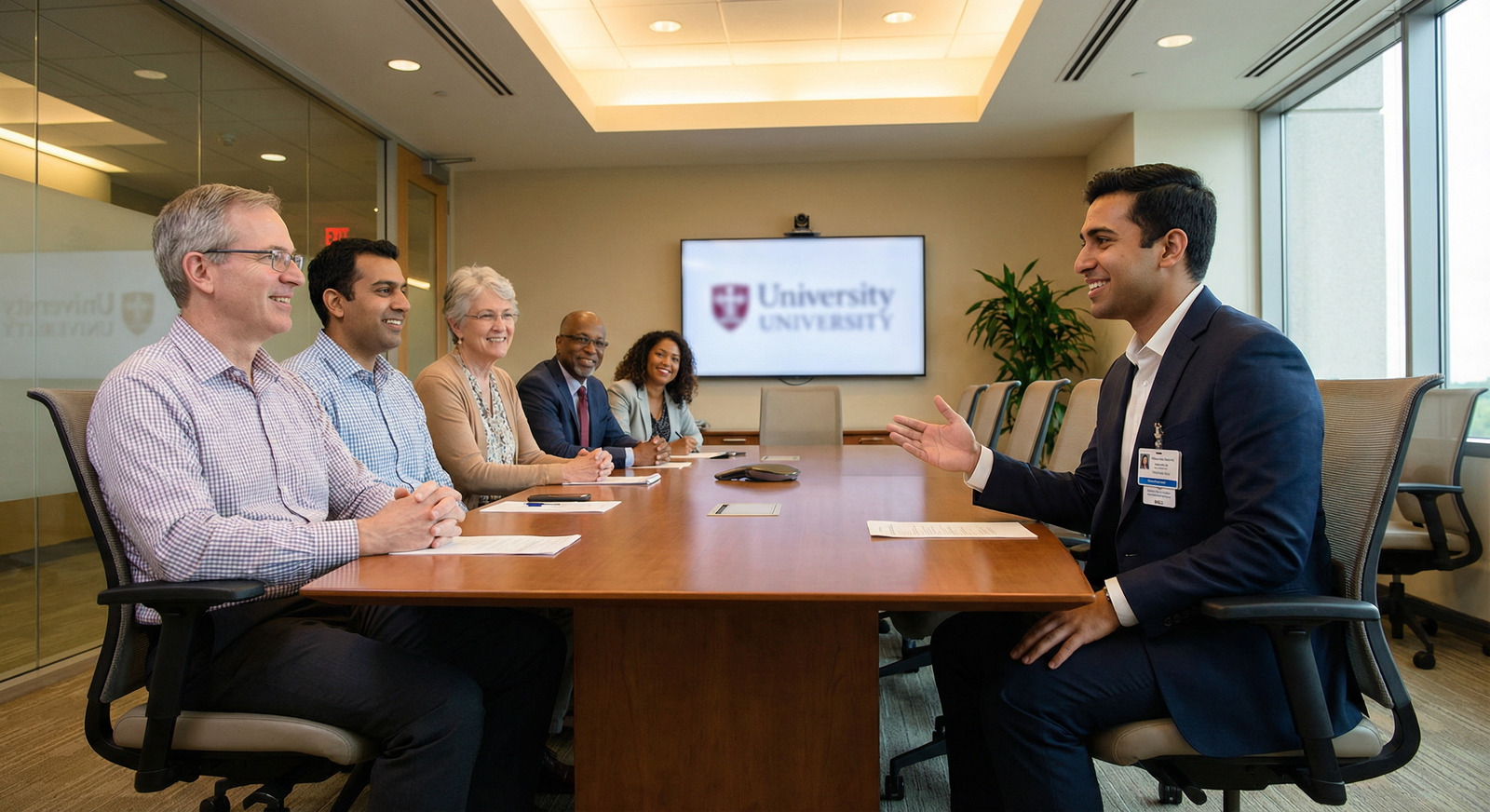
As an international medical graduate (IMG) applying for OB GYN residency, the questions you ask programs are almost as important as the answers you give. Thoughtful, targeted questions show that you understand the specialty, have done your homework, and are seriously evaluating where you will train. This IMG residency guide will walk you through what to ask programs—and why—so you can approach every interaction with confidence and strategy.
Why Your Questions Matter (Especially as an IMG)
Programs are not just evaluating whether they want you; you are also evaluating whether you can thrive there. For IMGs, this is particularly important because:
- You may be adapting to a new health system, culture, and documentation requirements.
- You might need visa sponsorship and extra support with onboarding and orientation.
- You may have specific gaps (e.g., U.S. clinical experience, research, or recent graduation) you want to address.
Your questions should:
- Gather information about training quality, culture, and support systems.
- Signal insight into the challenges of OB GYN residency and the obstetrics match process.
- Highlight your priorities (education, surgical experience, scholarly work, wellness, visa needs, etc.).
- Help you rank programs wisely—not just by name, but by realistic fit.
A strong strategy is to prepare:
- 3–4 “core” questions you ask almost every program, and
- 4–6 more tailored questions for each type of interviewer (program director, faculty, residents, coordinator).
Questions to Ask the Program Director: Strategy, Support, and Outcomes
The program director (PD) is the architect of the program. This is where you focus on overall philosophy, training structure, and IMG-specific support. When planning what to ask the program director, prioritize questions that:
- Show you understand the complexities of training in OB GYN.
- Address long-term outcomes (board pass rates, fellowship match, job placement).
- Clarify the program’s approach to training IMGs.
Here are targeted examples with explanations you can adapt.
1. Training Philosophy and Program Direction
Question to ask:
“Can you describe the overall educational philosophy of the program and what qualities you look for in residents who will thrive here?”
Why it’s powerful:
This gives insight into whether the culture is autonomy-heavy, supervision-focused, research-intensive, or service-driven. It also lets you mirror those qualities in your later responses and communications.
Question to ask:
“How do you see the program evolving over the next 3–5 years, and what major changes do you anticipate?”
What you’ll learn:
- Planned changes in call structure, sites, fellowships, or volume.
- Whether the program is stable, growing, or in transition.
2. Outcomes: Board Pass Rates, Fellowship, and Careers
For an IMG, program outcomes are key to long-term success.
Question to ask:
“How have your graduates done in recent years in terms of ABOG written and oral board pass rates?”
Follow-up:
“What specific supports does the program provide for board preparation?”
Question to ask:
“For residents interested in subspecialty training, what has your fellowship match looked like over the past few years—especially in MFM, REI, Gyn Onc, or MIGS?”
You’re evaluating:
- If graduates are competitive in the U.S. market.
- Whether the program has a track record of supporting career goals similar to yours.
3. Case Volume, Autonomy, and Surgical Experience
OB GYN is hands-on. You need clarity on operative and obstetric experience.
Question to ask:
“How do you ensure residents meet or exceed ACGME case minimums, particularly for cesarean sections, operative vaginal deliveries, and gynecologic surgeries?”
Follow-up:
“If a resident is tracking lower in a particular area, how do you address that?”
Question to ask:
“How is autonomy balanced with supervision in the OR and on L&D, especially for senior residents?”
Look for:
- Structured systems (e.g., rotation design, case tracking, supplemental opportunities).
- Clear progression of responsibility from PGY-1 to PGY-4.
4. Support for International Medical Graduates
This is critical for an IMG residency guide focused on OB GYN. You must not be shy about clarifying support.
Question to ask:
“Approximately what percentage of your residents are IMGs or have non-traditional pathways, and how do you support them specifically?”
Follow-up:
“Are there any additional orientation or onboarding resources for residents new to the U.S. health system or documentation practices?”
You’re listening for:
- Experience with IMGs.
- Systems in place for EMR training, U.S. documentation standards, communication coaching, or cultural adjustment.
Question to ask:
“For IMGs, how do you support integration into the team and help them adapt to communication expectations with nurses, attendings, and patients?”
A thoughtful answer signals a program that understands the real challenges you’ll face.
5. Visa Sponsorship and Administrative Support
If you require a visa, this is non-negotiable information.
Question to ask:
“What types of visas does your institution sponsor for residents currently (e.g., J-1, H-1B), and has that changed in recent years?”
Follow-up:
“Is the sponsorship handled by the GME office, and is there a designated person who helps with the process and timelines?”
You should also clarify:
- Whether H-1B is tied to passing certain USMLE Steps before starting.
- Whether there are institutional caps or limitations.
6. Program Culture and Well-being
Question to ask:
“How do you monitor for burnout among residents, and what changes have you made based on resident feedback?”
Follow-up:
“Can you give an example of a resident-driven change that was implemented in the last few years?”
Look for:
- Concrete examples (schedule changes, wellness days, improved call rooms, mental health resources).
- A genuine resident voice in decisions.

Questions to Ask Faculty: Education, Mentorship, and Clinical Realities
Faculty can reveal how training actually feels on the ground. They are ideal people to ask about teaching style, mentorship, and clinical standards.
1. Teaching and Feedback
Question to ask:
“How is feedback typically given here—formally and informally—and how often do residents get specific feedback on their surgical and clinical skills?”
Follow with:
“Can you share what separates a ‘good’ resident from an ‘excellent’ resident on your service?”
This helps you understand:
- Expectations for performance and professionalism.
- How actively faculty invest in teaching versus service.
2. Mentorship and Career Development
Question to ask:
“How are mentors assigned or chosen for residents, and are there specific faculty who work closely with IMGs or first-generation physicians?”
Follow-up:
“For residents considering subspecialty training or academic careers, what kind of longitudinal mentorship or scholarly support is available?”
You’re assessing:
- Formal vs informal mentorship.
- Opportunities to publish or present (important if you’re rebuilding your CV post-graduation).
3. Clinical Standards and Resident Role
Question to ask:
“How are residents involved in high-risk obstetric cases and complex gynecologic surgery? At what stage of training do you expect them to take the lead?”
Follow-up:
“What are common areas where new interns or IMGs initially struggle, and how do you help them improve?”
This question acknowledges your IMG status while showing insight and humility. It also gives you a realistic picture of challenges and support.
4. Integration of IMGs and Diversity
Question to ask:
“From your perspective, how have IMGs historically integrated into the resident team and faculty group here?”
Follow-up:
“Are there institutional efforts around diversity, equity, and inclusion that involve residents?”
You want:
- Evidence that IMGs are respected contributors, not “exceptions.”
- A positive track record of inclusion.
Questions to Ask Residents: Reality, Culture, and Day-to-Day Life
Residents give you the clearest window into actual training conditions. Think of your interview questions for them as a tool to clarify lifestyle, support, and red flags.
1. Daily Workflow and Call
Question to ask:
“What does a typical day look like for a PGY-1 on L&D or on the gynecology service here?”
Ask about:
- Sign-out times.
- Average number of hours.
- How often duty hours are at risk.
Question to ask:
“How is the night float or call system structured, and do you feel it’s manageable?”
Look for:
- Whether residents seem genuinely exhausted or reasonably stretched.
- Transparency about tough rotations.
2. Surgical and Obstetric Experience
Question to ask:
“Do you feel you get enough hands-on experience with deliveries, cesarean sections, and gyn surgeries? Are there particular rotations that are especially strong or weaker?”
Follow with:
“How early in training did you feel comfortable managing a laboring patient independently (with backup available)?”
This tells you:
- If you’ll graduate confident in both obstetrics and surgery.
- Whether junior residents get enough exposure.
3. Culture, Teamwork, and Support
Question to ask:
“How would you describe the culture among residents—is it collaborative, competitive, or more individual?”
Follow-up:
“Can you tell me about a time when a resident was struggling—how did the program respond?”
You are trying to see:
- Whether residents have each other’s backs.
- If struggling residents are supported or quietly pushed out.
IMG-focused question:
“As an IMG (or as someone who has worked with IMGs), how has the program helped you or your colleagues adjust to U.S. hospital culture and communication norms?”
Their honest tone is more important than the exact words.
4. Life Outside the Hospital
Question to ask:
“Do you feel you have time for life outside of work—family, hobbies, relationships? What do you typically do on a golden weekend?”
This gives:
- Reality-check on workload and burnout.
- A sense of the community around the hospital.
5. Red Flags and Hidden Strengths
Question to ask:
“If you had to choose again, would you still rank this program highly? Is there anything you wish you had known before matching here?”
Follow-up:
“What are the best and most challenging aspects of training here?”
Residents may hint at:
- Leadership changes, resource limitations, or volume concerns.
- Unique strengths you might not see on the website (e.g., strong ultrasound training, passionate faculty, supportive nursing).

Questions to Ask the Program Coordinator and GME: Logistics, Visas, and Onboarding
Program coordinators are invaluable, especially for IMGs. They often understand visa logistics, onboarding, and day-to-day operations more deeply than anyone else.
1. Visa, Licensing, and Onboarding
Question to ask:
“For international medical graduates, what is the typical timeline for visa processing and onboarding paperwork after the match?”
Follow-up:
“Have there been any recent delays or challenges with visas that I should be aware of?”
You’re checking:
- How organized the institution is.
- Whether there’s a history of late start dates or complications.
Question to ask:
“Who will be my main point of contact for questions about licensing, ECFMG documentation, and credentialing before residency starts?”
Having a clear person to reach out to is vital.
2. Orientation and First-Year Support
Question to ask:
“What does orientation look like, and is there additional support for residents who are new to the U.S. health system or EMR?”
Follow-up:
“Is there any shadowing or transitional period before interns take independent calls?”
You want assurance that:
- You won’t be thrown into L&D or the OR unprepared.
- There’s structured help in the early weeks.
3. Practical Logistics and Benefits
Question to ask:
“Can you tell me about housing, parking, and transportation options for residents, especially those moving from abroad?”
Follow-up:
“Are there institutional resources to help with relocation, such as visa-related travel guidance or international employee support?”
Also consider asking about:
- Meal stipends, call rooms, exam reimbursement.
- Institutional wellness programs (counseling, mental health access).
How to Use Your Questions Strategically
Knowing what to ask programs is only half the work. The other half is how and when to ask.
1. Tailor Questions to Each Interviewer
- Program director: program vision, outcomes, IMG and visa policies, big-picture training structure.
- Faculty: teaching style, clinical expectations, mentorship, research.
- Residents: daily life, culture, workload, real experience with IMGs.
- Coordinator/GME: visas, onboarding, logistics, scheduling.
Avoid asking the same generic question to every person unless you are comparing their answers intentionally.
2. Avoid “Website Questions”
Before you ask a question, ask yourself:
“Could I find this easily on their website?”
If yes, rephrase to go deeper, for example:
- Instead of: “Do you have a night float system?”
Ask: “I saw you use a night float system—how has that impacted resident wellness and continuity of care on your services?”
This shows preparation and respect for their time.
3. Weave in Your Story and Priorities
Use questions to highlight your own values and strengths:
“As someone who’s very interested in global women’s health and has prior experience in low-resource settings, what opportunities do residents have to stay involved in international or underserved OB GYN work here?”
“As an IMG who has previously worked in a busy public hospital, I value high-volume obstetrics. How does your labor and delivery unit volume compare to similar programs?”
In this way, interview questions for them become a subtle tool to reinforce your fit.
4. Take Structured Notes
After each interview day, quickly jot down:
- Key strengths of the program (case volume, culture, mentorship).
- Concerns or red flags (support, visa uncertainties, burnout).
- Memorable comments from residents and faculty.
- How you felt: Did you see yourself there? Did you feel welcomed?
This will be crucial later when creating your rank list for the obstetrics match.
Common Mistakes IMGs Make When Asking Questions
Focusing only on visa sponsorship
Visa is crucial, but avoid making it your only topic. Balance visa questions with educational and cultural questions to show you care about training quality.Asking overly personal or sensitive questions directly
Instead of asking, “Have you ever had to fire or not graduate a resident?” you might ask, “How do you handle situations where a resident is struggling academically or clinically?”Sounding like you’re testing them
Your goal is curiosity, not confrontation. Avoid questions that sound accusatory (“Why is your board pass rate lower than others?”). Instead ask, “How has the program responded to board performance trends over recent years?”Not asking any questions
This can be interpreted as lack of interest, passivity, or unpreparedness—especially problematic in a competitive OB GYN residency.
Sample “Core” Question List You Can Adapt
Here is a concise list you can customize for each program:
For Program Directors
- “What qualities distinguish your strongest residents, and how do you help residents who come from diverse training backgrounds, such as IMGs, reach that level?”
- “How have your graduates performed on boards and in obtaining jobs or fellowships in the last 5 years?”
- “How do you see the program changing in the next few years?”
For Faculty
- “How do you balance service needs with resident education on your service?”
- “Can you describe how feedback is typically given on clinical and surgical performance?”
- “What opportunities exist for residents to be involved in research or quality improvement?”
For Residents
- “What surprised you most after starting residency here—good or bad?”
- “Do you feel supported when you’re on a tough rotation or when life outside the hospital is stressful?”
- “As someone who works with IMGs, what has helped them succeed here?”
For Coordinators
- “What are some common challenges new interns—especially IMGs—face during onboarding, and how does the program help them?”
- “What is the usual timeline for visas and licensing paperwork after the match?”
Use this as a flexible framework, adjusting to your strengths, gaps, and priorities.
FAQ: Questions to Ask Programs as an IMG in OB GYN
1. How many questions should I ask during each interview?
Aim for 2–3 thoughtful questions per interviewer, depending on time. Having 8–12 total prepared is reasonable; you’ll rarely use all of them, but you’ll be ready for different scenarios.
2. Is it okay to ask directly about visa sponsorship during the interview?
Yes. For an international medical graduate, visa sponsorship is essential and programs expect you to clarify it. Be professional and concise:
- “Could you share what types of visas your program currently sponsors and if there are any anticipated changes?”
Emphasize that you’re also deeply interested in educational quality and program culture.
3. What if someone already answered my prepared question earlier in the day?
Do not repeat it. Instead:
- Acknowledge the earlier answer: “Dr. X mentioned that residents have a strong gyn surgery experience.”
- Extend it: “From your perspective, how does that surgical training translate into readiness for independent practice or fellowship?”
This shows you listened and can think one step further.
4. Are there any questions I should avoid completely?
Avoid:
- Questions answerable in one click from their website (e.g., “How many residents do you take?”).
- Negative or gossipy questions about individuals or past conflicts.
- Questions about salary or vacation as your first or only topics (those are usually in the offer documents or GME materials; you can clarify them later if needed).
Focus first on training quality, culture, and support—especially as they relate to your goals as an IMG in OB GYN.
By preparing intentional, well-structured questions to ask programs, you demonstrate insight, maturity, and genuine interest—qualities that stand out in a competitive obstetrics match. More importantly, you’ll gather the nuanced information you need to choose a residency where you can truly succeed as an international medical graduate in Obstetrics & Gynecology.