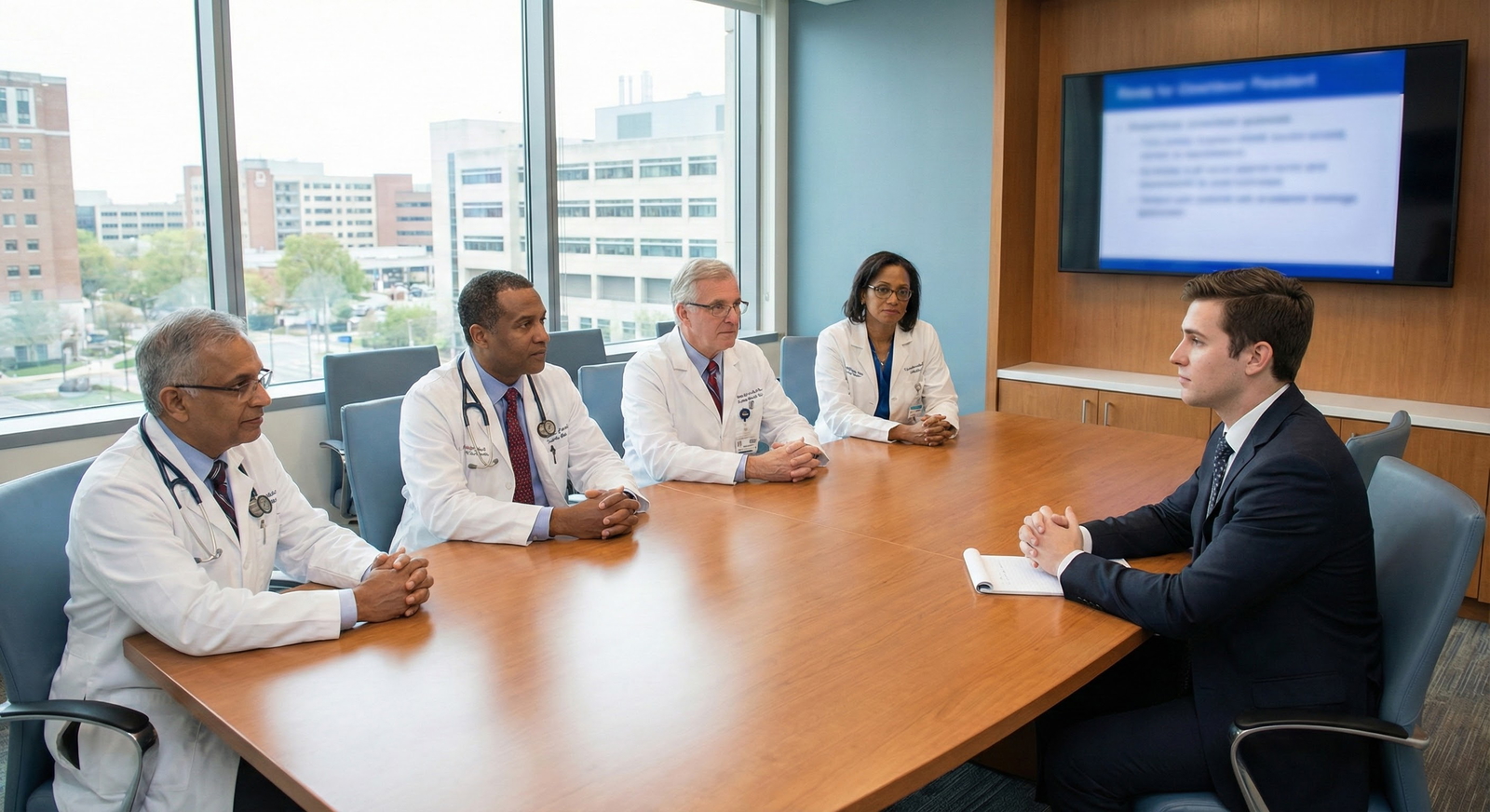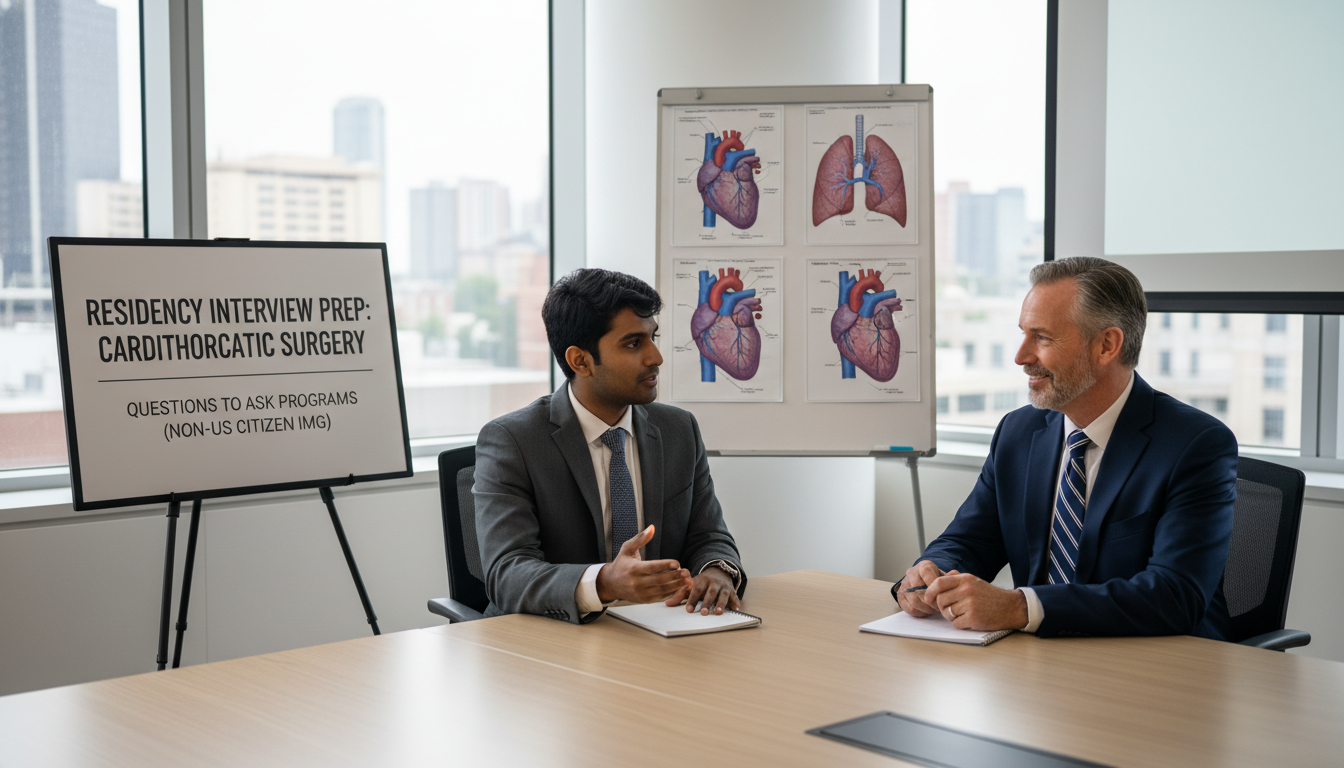
Understanding the Unique Challenges IMGs Face in General Surgery Interviews
For an international medical graduate (IMG), pre-interview preparation for general surgery residency is not just about rehearsing answers. It is about strategically bridging gaps—clinical, cultural, and communicative—while demonstrating that you can thrive in a high-intensity, team-based, procedure-heavy specialty.
Compared with many other specialties, general surgery residency programs tend to emphasize:
- Proven clinical performance in the U.S. system
- Operative potential and technical aptitude
- Work ethic and resilience in a demanding environment
- Maturity, accountability, and teamwork under stress
- Clear and efficient communication with the entire care team
As an IMG, you may also need to address:
- Limited or no U.S. clinical experience in surgery
- Differences in medical education systems and roles
- Visa requirements and long-term career plans
- Accent or communication style differences
- Gaps in training or changes in specialty interest
Your pre-interview preparation should be structured around three main goals:
- Show you understand U.S. surgical training and its demands.
- Demonstrate that you can integrate smoothly into a surgical team.
- Present a coherent, honest, and compelling story of who you are and why surgery in the U.S. is right for you.
This IMG residency guide focuses on how to prepare for interviews specifically in general surgery, with practical steps you can start implementing today.
Step 1: Know the General Surgery Landscape and Each Program
Before you attend any interview, you must understand both the overall specialty environment and the specific program you are visiting.
A. Understand U.S. General Surgery Training
You should be able to explain clearly:
Structure of training
- 5 years of clinical training, sometimes followed by fellowship (e.g., trauma, colorectal, surgical oncology, MIS, vascular).
- PGY-1 to PGY-5 roles and increasing responsibility.
Core features of general surgery residency
- Long hours and in-house call
- High acuity of patients and emergencies
- Multidisciplinary collaboration (anesthesia, ICU, radiology, oncology, etc.)
- Emphasis on service, continuity, and ownership of patients
Competency expectations
- Technical skills plus non-technical skills (leadership, communication, teamwork)
- Comfort with uncertainty and rapid decision-making
- Lifelong learning and interest in quality improvement, outcomes, and surgical innovation
You do not need to be an expert in every area of surgery, but you must show that you know what you are signing up for and that your decision is informed and realistic.
B. Research Each Program in Depth
Every program will expect that you have done your homework. For each program you interview with, prepare a one-page program summary that includes:
- Number of residents per year and total size of the program
- Hospital type (university, community, hybrid, safety-net, VA)
- Case volume and typical operative exposure (e.g., complex oncology, trauma status, transplant presence)
- Strengths and unique features (global surgery track, research year, robotic curriculum, simulation center)
- Rotation sites (VA, children’s hospital, community sites)
- Program’s stated priorities (e.g., academic productivity vs. community practice preparation)
- Recent news or updates (new chair, new program director, new fellowship, accreditation changes)
Use:
- Program website
- FREIDA and ACGME program listings
- Department of Surgery or GME annual reports
- Journal articles or press releases related to the department
Actionable tip:
Create a spreadsheet listing all programs with columns for:
- Program name, city, type
- Key strengths/unique features
- Your genuine reasons for interest
- Potential faculty or areas you’d want to work with
- Questions you want to ask on interview day
This will help you tailor your responses during residency interview preparation and avoid generic statements like “I want strong clinical training and research.”

Step 2: Build a Strong Personal Narrative and Key Messages
Interviewers are listening for a story, not just a list of achievements. Your narrative should answer:
- Who are you?
- Why general surgery?
- Why in the U.S., and why now?
- Why are you a good fit for this type of program?
A. Craft Your Core Story as an IMG in Surgery
Start with a 3–4 sentence “elevator pitch” you can use when asked, “Tell me about yourself.”
A strong structure for IMGs is:
Brief origin and medical background
- “I completed medical school at ___, then did ___ (internship/clinical work) with a growing focus on surgery.”
Key experiences that shaped your commitment to surgery
- Examples: complex cases you followed, mentorship from a surgeon, operative experiences, research in surgical fields.
Transition to U.S. system and what you’ve done here
- U.S. clinical experience, observerships, research, exams, and any steps you took to understand U.S. perioperative care.
Your current goal
- “I am seeking a categorical general surgery position where I can develop strong operative skills and contribute to both patient care and quality improvement/research.”
Example (adapt to your situation):
“I completed medical school at the University of São Paulo in Brazil, where I developed a strong interest in acute care surgery and trauma. During my internship, I was impressed by how surgical teams could rapidly stabilize critically ill patients and then continue their long-term care. Over the past two years, I have been involved in trauma outcomes research at a U.S. academic center and completed U.S. surgical observerships, which helped me understand the expectations of residents here. I’m now looking for a general surgery residency that values clinical excellence, resident autonomy, and scholarly growth.”
B. Anticipate and Clarify “Red Flags”
As an international medical graduate, be ready for interview questions residency programs commonly use to clarify:
Gaps after graduation
- Explain objectively what you were doing (research, clinical work, family reasons, exam preparation) and what you learned.
Multiple attempts on USMLE/COMLEX
- Be honest, brief, and focus on how you changed your approach and demonstrated improved performance later.
Change of specialty (e.g., from internal medicine or another field to surgery)
- Clearly connect your previous path with your final decision for surgery.
Keep your tone calm, accountable, and forward-looking. Avoid sounding defensive or making excuses.
C. Identify 3–4 “Take-Home Messages” About You
You want interviewers to remember a few key themes, such as:
- “Hardworking team player with strong work ethic and reliability”
- “Committed to academic surgery and research productivity”
- “Particularly interested in trauma and critical care”
- “Has already adapted to the U.S. health system and communication culture”
Reinforce these messages subtly in multiple answers. For example, if you want to be remembered as resilient and team-oriented, show this in:
- A challenging case story
- An example of handling long hours or stressful situations
- Responses about conflict resolution or feedback
Step 3: Prepare for Common General Surgery Interview Questions
Effective residency interview preparation requires structured practice with both standard and surgery-specific questions.
A. Core Behavioral and Motivational Questions
These appear in almost every surgery residency match interview:
- “Tell me about yourself.”
- “Why general surgery?”
- “Why this program?”
- “What are your strengths and weaknesses?”
- “Describe a challenging clinical situation and how you handled it.”
- “Tell me about a time you made a mistake.”
- “How do you handle stress and long hours?”
For each, use:
- STAR structure for stories: Situation — Task — Action — Result.
- Clear, concise responses (2–3 minutes), not long monologues.
- Reflection: what you learned, how you grew, and how it will make you a better resident.
B. IMG-Specific and Systems-Adaptation Questions
As an international medical graduate, expect questions exploring your adaptation to the U.S. system:
- “How has your medical training differed from the U.S. system?”
- “What challenges do you anticipate as an IMG in our program?”
- “Tell me about your U.S. clinical experience in surgery.”
- “How have you worked with interprofessional teams (nurses, pharmacists, etc.)?”
Be concrete:
- Describe how rounds were structured in your home country versus in U.S. rotations.
- Mention any effort you made to learn U.S. documentation, EMR usage, or handoff styles (e.g., I-PASS).
- Highlight positive feedback or evaluations from U.S. attendings.
C. General Surgery–Focused Questions
General surgery interviewers may probe your understanding of the specialty:
- “What do you think will be the hardest part of general surgery residency?”
- “Tell me about a surgical patient you will never forget.”
- “What area of surgery interests you most, and why?”
- “How do you feel about the lifestyle and demands of surgery?”
- “Describe a time you worked in a high-pressure or emergency setting.”
Your answers should demonstrate:
- Realistic expectations of workload and call
- Respect for the OR team and interdisciplinary collaboration
- Ability to think through pre-op, intra-op, and post-op care
- Genuine excitement about operating but also about perioperative medicine, ICU care, and longitudinal follow-up
D. Sensitive Topics: Visa, Location, and Future Plans
Programs often must consider long-term stability. You may be asked:
- “Do you require visa sponsorship?”
- “Where do you see yourself in 10 years?”
- “Are you interested in fellowship?”
Be transparent and consistent:
- For visas, answer directly (J-1, H-1B eligibility, etc.). Know your current status and options.
- For future plans, it is okay if you are undecided on a fellowship; you can express openness with a few areas of interest (e.g., trauma/critical care, colorectal, MIS) while emphasizing that your priority is to become an excellent core general surgeon.
Actionable practice tip:
Write out bullet points (not scripts) for the top 20 interview questions residency programs routinely use, and rehearse with:
- A mentor or faculty member
- A co-applicant or friend familiar with U.S. interview style
- Recording yourself on video to review body language and clarity

Step 4: Refine Communication, Professionalism, and Cultural Fluency
For many IMGs, how you communicate is just as important as what you say.
A. Clear, Concise, and Structured Communication
In U.S. surgical culture, communication is often:
- Direct and time-efficient
- Highly structured (SBAR, I-PASS, one-liner presentation)
- Focused on decisions and next steps
During the interview:
- Answer the question directly first, then add brief supporting details.
- Avoid overly long background stories before getting to the point.
- Practice delivering a 1–2 sentence patient summary example if asked.
Example style shift:
- Less effective: “In my country, we see many patients and I remember one particular gentleman who came to our hospital with abdominal pain and he had been sick for many days before he came and his family was very worried…”
- Better: “A memorable case was a 52-year-old man with delayed presentation of perforated appendicitis complicated by sepsis, which taught me the importance of early surgical intervention and multidisciplinary ICU care.”
B. Managing Accent and Listening Challenges
You do not need a “perfect” American accent. What matters is intelligibility and comfort.
- Slow your speech slightly under stress.
- Enunciate key medical terms clearly.
- If you do not understand a question, politely ask for clarification:
- “I’m sorry, could you please repeat or rephrase the question?”
Practice with:
- Mock interviews with native or fluent English speakers
- Listening and repeating common general surgery terms and phrases (perioperative care, anastomotic leak, hemodynamic instability, etc.)
C. Professional Demeanor Aligned with Surgical Culture
Surgery programs generally value:
- Confidence without arrogance
- Emotional stability and composure under pressure
- Willingness to accept feedback and criticism
- Respect for all team members, regardless of role
During your interview:
- Sit upright, maintain good eye contact, and avoid fidgeting.
- Show enthusiasm for hard work rather than complaining about prior workload.
- Express humility: mention things you still need to learn and how you seek feedback.
For example:
“When I first started in the ICU, my attending pointed out that my initial plans were too conservative for our unstable postoperative patients. I took that feedback seriously and began reviewing our ICU protocols and discussing cases proactively, which improved my confidence and performance.”
Step 5: Logistics, Documents, and Day-of Readiness
Excellent content can be undermined by poor logistics. Part of how to prepare for interviews is ensuring that everything else is seamless.
A. Organize Your Application Materials
Before each interview:
- Re-read your ERAS application, personal statement, and CV
- Review each publication, poster, or abstract—be prepared to discuss:
- Your exact role
- Study design and key findings
- Clinical relevance, especially to surgery
Bring (if allowed/appropriate):
- A small portfolio with:
- A printed copy of your CV
- List of publications
- Optional: one-page summary of key research if heavily involved in it
Know your letters of recommendation content broadly—especially from surgeons. Interviewers sometimes reference them.
B. Plan Travel and Time Zones Carefully
Common IMG issues involve:
- Confusing time zones for virtual interviews
- Limited familiarity with U.S. geography and transportation
Minimize risk:
- Double-check interview times in your local time and program’s time zone.
- For in-person interviews, arrive to the city at least one day early to adjust.
- Pre-plan your route and travel time to the hospital or meeting site.
C. Dress Code and Professional Appearance
For both virtual and in-person interviews:
- Formal business attire:
- Suit jacket and dress pants/skirt, conservative colors
- Simple shirt or blouse (avoid busy patterns)
- Clean, neat grooming; avoid strong fragrances.
- For virtual interviews:
- Neutral, uncluttered background
- Good lighting (facing a window or light source)
- Test camera, microphone, and internet in advance
D. Prepare Thoughtful Questions for the Program
Residency interview preparation is incomplete without your questions. These show engagement and help you assess fit.
Ask about:
- Resident autonomy in the OR and on the wards
- Structure of didactics and simulation training
- Trauma/ICU experience and progressive responsibility
- How they support IMGs and diversity (e.g., mentorship, wellness resources)
- Research opportunities and expectations
- Fellowship match outcomes for graduates
Avoid questions that can easily be answered on the website (e.g., “How long is your program?”).
Step 6: Post-Interview Reflection and Continuous Improvement
Pre-interview preparation continues between interviews. Each interview is a chance to refine your approach.
A. Immediately After Each Interview
Within a few hours:
- Write down:
- Names and roles of people you met
- Specific details about the program you liked or had concerns about
- Memorable questions asked and how you answered
- Evaluate:
- What went well?
- Which questions felt weak or awkward?
- Which stories resonated with interviewers?
Use this to adjust your strategy before the next interview.
B. Thank-You Notes and Professional Follow-Up
Programs vary in how much they value thank-you notes, but they are usually safe and professional if:
- Short (3–5 sentences)
- Specific about the conversation or program features
- Sincere and error-free
Example format:
Dear Dr. Smith,
Thank you for taking the time to speak with me today about the general surgery residency at [Program]. I especially appreciated our discussion about resident autonomy in trauma and ICU rotations and the support you provide for IMG residents. Our conversation reinforced my interest in this program’s commitment to both clinical excellence and mentorship.
Sincerely,
[Your Name]
Check the program’s stated preference (some explicitly discourage post-interview communication).
C. Stay Organized for Rank List Decisions
As interviews progress, keep a rank list journal:
- Immediately rate each program on:
- Clinical training strength
- Operative exposure
- Culture and resident happiness
- Support for IMGs and visas
- City and life outside the hospital
- Add your overall impression (“Would I be happy working here 80 hours a week?”).
This will be invaluable when finalizing your rank order list for the surgery residency match.
FAQs: Pre-Interview Preparation for IMGs in General Surgery
1. How early should I start residency interview preparation as an IMG in general surgery?
Start at least 2–3 months before interview season if possible. As an international medical graduate, you may need extra time to:
- Practice English communication in a surgical context
- Learn U.S.-style interviewing expectations
- Refine your personal narrative and address any training gaps
- Review your research and surgical experiences in detail
If you have less time, focus first on:
- Core common questions,
- Program research, and
- Mock interviews with someone familiar with U.S. residency culture.
2. What are the most important interview questions residency programs will ask IMGs in general surgery?
For most IMGs, the critical questions to prepare for include:
- “Tell me about yourself.”
- “Why general surgery?” and “Why in the U.S.?”
- “Why our program?”
- “Tell me about a challenging surgical patient or situation.”
- “How will you handle the workload and stress of surgery residency?”
- “What challenges do you anticipate as an IMG and how will you overcome them?”
- “Do you require visa sponsorship?”
Strong, consistent answers to these often have more impact than perfection on rare or unusual questions.
3. How can I stand out as an IMG among many strong U.S. graduates?
You stand out by combining competence, clarity, and character:
- Show you understand the reality of general surgery training and still want it.
- Demonstrate you have already worked to adapt to the U.S. system (clinical exposure, research, observerships).
- Highlight unique strengths: diverse clinical background, resilience, language skills, global health experience, or special research interests.
- Be reliable and grounded—programs want residents they can trust at 3 a.m. on call.
Programs do not expect you to be a finished surgeon; they want evidence that you will grow quickly and work well on a team.
4. Are there any common mistakes IMGs make during general surgery interviews?
Common pitfalls include:
- Overly long, unfocused answers without a clear structure.
- Not knowing enough about the specific program (generic “why this program” answers).
- Speaking negatively about prior institutions or health systems.
- Appearing uncertain about visa status or long-term plans.
- Underestimating the intensity of general surgery training or appearing hesitant about the workload.
Avoid these by practicing concise answers, doing careful program research, and being honest but positive about your path and goals.
With intentional pre-interview preparation tailored to your background as an international medical graduate, you can present yourself as a capable, adaptable, and motivated future general surgeon—someone programs will be confident to welcome into their operating rooms and call rooms for the next five years.