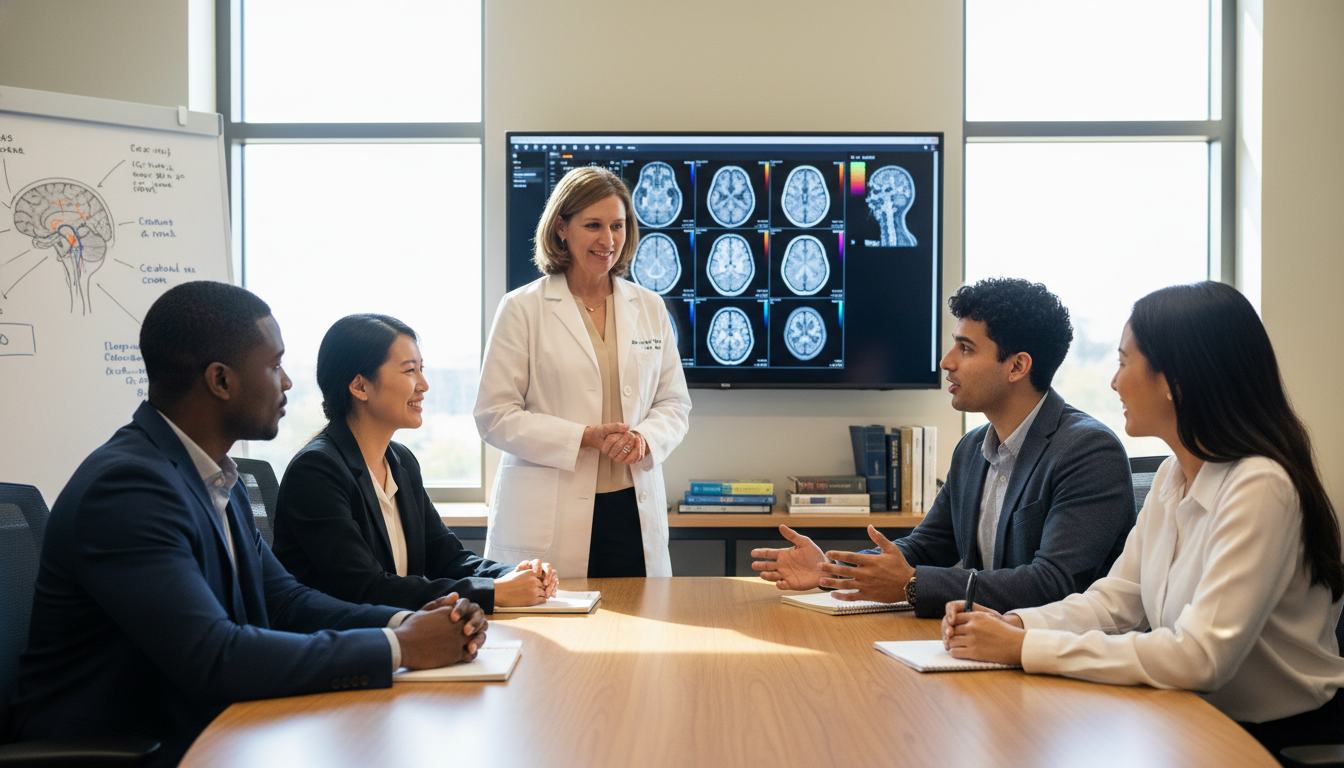
Understanding the Landscape: What Makes Medical Genetics Interviews Unique?
Medical genetics is a small, intellectually demanding specialty that sits at the intersection of clinical medicine, laboratory science, and rapidly evolving genomic technologies. For an international medical graduate (IMG), pre-interview preparation requires not only standard residency interview preparation skills but also a clear understanding of what programs seek specifically in genetics applicants.
What Program Directors Look for in Medical Genetics Applicants
Most medical genetics residency programs (including combined programs like Pediatrics/Medical Genetics, Internal Medicine/Medical Genetics, or standalone Medical Genetics and Genomics) commonly value:
Strong clinical fundamentals
- Solid physical exam and diagnostic reasoning skills
- Good grounding in core specialties (e.g., pediatrics, internal medicine, neurology, OB/GYN)
Demonstrated interest in genetics/genomics
- Electives or observerships in genetics
- Research or scholarly work in genomics, dysmorphology, rare diseases, or related fields
- Participation in case conferences or journal clubs related to genetics
Comfort with complexity and uncertainty
- Ability to synthesize detailed data (genetic tests, family history, imaging, labs)
- Willingness to learn continuously as the field rapidly changes
Excellent communication skills
- Explaining complex concepts (e.g., variants of uncertain significance) in plain language
- High sensitivity to cultural, religious, and emotional aspects of genetic counseling
Teamwork and systems-based thinking
- Collaboration with genetic counselors, lab geneticists, and other specialists
- Awareness of ethical, legal, and social issues in genetics
For an IMG residency guide specifically focused on medical genetics, remember that programs are often smaller and more tightly knit. “Fit” and personality—your ability to work in a small, collaborative team—can matter as much as board scores.
Why Pre-Interview Preparation Matters More for IMGs
As an international medical graduate, you may be:
- Coming from a system where genetics is less developed or structured differently
- Less familiar with U.S. health care culture, terminology, and expectations
- More likely to have to explain non-traditional career paths or time gaps
- Facing visa and licensure questions
Thorough pre-interview preparation allows you to:
- Demonstrate clear, well-informed motivation for medical genetics in the U.S.
- Proactively address potential concerns (e.g., gaps, US clinical experience, visa status)
- Stand out in a niche specialty where passion and clarity of purpose are essential
Your goal: by interview day, you should be able to convincingly answer why medical genetics, why you, and why this specific program, all in a way that feels natural and authentic.
Step 1: Build a Strong Knowledge & Narrative Foundation
Before you practice any interview questions, you need two things: a solid understanding of the field and a coherent personal story.
Refresh Core Medical Genetics Concepts
You are not expected to be a geneticist already, but you are expected to:
Show familiarity with key clinical genetics topics, such as:
- Common syndromes (Down syndrome, Marfan, neurofibromatosis, 22q11.2 deletion, etc.)
- Principles of dysmorphology and developmental delay workup
- Basics of prenatal genetics and carrier screening
Understand fundamental genomic technologies:
- Karyotyping and chromosomal microarray
- Single-gene tests vs. gene panels
- Whole exome and whole genome sequencing
- Concepts of sensitivity, specificity, and limitations of tests
Speak clearly about inheritance and risk:
- Autosomal dominant, recessive, X-linked, mitochondrial inheritance
- De novo variants and recurrence risk
- Penetrance, expressivity, and variants of uncertain significance (VUS)
You do not need fellowship-level detail, but you should demonstrate curiosity, some reading, and the ability to think clinically with genetic information.
Practical actions (2–3 weeks before interview season):
- Skim a practical clinical genetics handbook or reputable online resources (e.g., GeneReviews for selected conditions).
- Review basic genetics lectures or open courses from academic centers.
- Prepare 2–3 short “mini-teaching points” you can naturally reference in answers. For example:
- “During my elective, I learned how chromosomal microarray changed the diagnostic yield in children with developmental delay…”
This makes you sound informed and engaged without overcomplicating explanations.
Craft Your Medical Genetics “Why” Story
Your personal narrative is one of the most powerful tools in residency interview preparation. For genetics, interviewers will almost always ask some version of:
- “Why medical genetics?”
- “What drew you to this specialty?”
- “How did you become interested in genomics?”
As an IMG, you should be ready with a story that connects:
Your background
- Where you trained and clinical experiences you had
- Any exposure to rare diseases or undiagnosed patients in your home country
- Research or projects related to genetics or family medicine
A pivotal experience or theme
- An undiagnosed child you cared for who likely had an underlying genetic cause
- Frustration at lack of genetic diagnostic tools in your country
- A research project that made you realize the impact of genomic medicine
Your future goals in the field
- Bringing genetics expertise back to your region
- Working in academic medicine, rare disease clinics, or genomic diagnostics
- Contributing to capacity building or research involving diverse populations
Example structure:
- Start with a specific case or moment (1–2 sentences).
- Explain what you learned about the limitations of care without genetics.
- Connect that to how U.S. medical genetics training can help you address those gaps.
- End with a forward-looking vision: research, public health genetics, capacity building, or academic career.
Write this out, refine it, then practice saying it aloud clearly in 60–90 seconds.

Step 2: Master Common Interview Questions in Medical Genetics
For effective residency interview preparation, you need to anticipate general, IMG-specific, and genetics-specific questions. Strong answers show insight, maturity, and genuine interest.
General Residency Interview Questions
Many questions will be standard across specialties. You should prepare polished, natural answers for:
- “Tell me about yourself.”
- “Walk me through your CV.”
- “What are your strengths and weaknesses?”
- “Tell me about a clinical challenge and how you handled it.”
- “Describe a situation where you had a conflict in the team.”
- “What are your long-term career goals?”
Tips:
- Keep answers structured (e.g., situation–action–result).
- Include 1–2 brief, concrete examples rather than vague statements.
- Always connect your answer back to skills relevant to medical genetics: careful listening, empathy, teamwork, and analytical thinking.
IMG-Specific Interview Questions
As an international medical graduate, you are likely to face interview questions residency programs frequently ask IMGs:
- “Why did you choose to pursue training in the U.S.?”
- “How has your international background prepared you for residency here?”
- “Can you explain this gap in your CV?”
- “What are your plans regarding visa/immigration?”
- “How have you adapted to the U.S. health system or culture?”
How to handle them:
- Be honest but positive. Avoid defensive or apologetic tones.
- Reframe challenges as strengths. For example, adapting to a new system has developed your resilience, flexibility, and cultural sensitivity.
- Address gaps proactively. If you had a research period, exam preparation, or family responsibilities, explain clearly what you did and what you learned.
Prepare 2–3 brief stories that illustrate:
- Navigating a new culture or language
- Adjusting to a different clinical system
- Building relationships with multidisciplinary teams
Genetics-Specific Interview Questions
For the genetics match, programs want to confirm your motivation, understanding of the field, and realistic expectations. Common questions include:
- “Why medical genetics rather than pediatrics, internal medicine, or neurology alone?”
- “Which areas of genetics interest you the most (e.g., cancer genetics, biochemical genetics, prenatal, adult genetics)?”
- “How do you see genetics evolving in the next 10 years?”
- “Tell us about a case or research project that sparked your interest in genetics.”
- “What do you think is the most challenging aspect of being a geneticist?”
- “How would you explain a genetic concept to a family with limited scientific background?”
How to prepare:
Clarify your specific interests
- Pediatric vs adult genetics
- Cancer genetics, prenatal counseling, neurogenetics, inborn errors of metabolism
- Community or global health genetics
Read about current trends
- Expanding access to genomic sequencing
- Direct-to-consumer testing and its pitfalls
- Equity and representation of diverse populations in genomic research
- Ethical challenges (incidental findings, privacy, discrimination)
Practice simplifying explanations
- Be ready to explain terms like “variant of uncertain significance” or “autosomal recessive” in simple, non-technical language.
- Programs want to see that you can be both scientifically rigorous and deeply human in your communication.
Sample genetics question and answer framework:
- Question: “Why medical genetics?”
- 1–2 sentences: Brief story or case from your experience
- 2–3 sentences: What that taught you about the power/need of genetics
- 2–3 sentences: How your background (skills, interests, experiences) aligns with this field
- 1–2 sentences: Your future goals as a geneticist and why U.S. training is key
Step 3: Prepare Your Materials & Portfolio Strategically
Pre-interview preparation is not just about spoken answers. It also includes organizing documents and evidence that support your story as a committed future geneticist.
Know Your Application Inside Out
Every line of your:
- ERAS application
- CV
- Personal statement
- Publications and presentations
- Recommendation letters (to the extent you know their themes)
can be the basis of an interview question.
Tasks:
- Re-read your personal statement and highlight sections likely to trigger questions (e.g., particular experiences or claims of skills).
- Review each research project, with:
- 2–3 key findings
- Your exact role
- 1–2 things you learned about genetics, statistics, or patient care
- Be prepared to discuss any unusual aspects (career changes, non-clinical work, extended exam prep time).
Highlight Genetics-Relevant Experiences
Programs want evidence that you truly want medical genetics residency, not that you are using it as a backup. Before interviews begin:
Make a list with 2–3 bullets under each of these headings:
- Clinical genetics exposure (electives, clinics, case discussions)
- Research in genetics/genomics (even if basic science or observational)
- Teaching or presentations on genetics topics
- Advocacy/volunteering with rare disease or disability communities
For each experience, prepare:
- A brief 20–30 second summary
- A reflection: What did this teach you about genetics, patient needs, or health systems?
This makes it easy to weave these experiences into your answers.
Build a “Program-Specific” Notes Document
To answer “Why this program?” you need specifics. For each program you interview with, create a one-page summary with:
Key features:
- Size and structure of the genetics department
- Combined programs (e.g., pediatrics/genetics) if applicable
- Special clinics (e.g., cancer genetics, metabolic clinic, prenatal genetics, adult neurogenetics)
- Significant research areas or faculty interests
3–4 reasons the program matches your goals:
- A clinic aligned with your interests (e.g., metabolic disorders if you did related research)
- A strong emphasis on underserved populations or global health
- Opportunities to develop skills you lack (e.g., wet lab exposure, bioinformatics, population genetics)
3–5 customized questions you want to ask faculty and residents:
- About curriculum structure and autonomy
- About support for IMGs (visas, career advising, cultural transition)
- About research mentorship and protected time
Review this sheet the night before each interview so your answers feel specific and genuine.

Step 4: Practice Delivery – Verbal, Non-Verbal, and Virtual Skills
Content matters, but how you present it—especially on virtual platforms—can be decisive in the genetics match. Use structured practice to refine both your message and your presence.
Conduct Structured Mock Interviews
Aim for at least 3–5 mock interviews before real ones, ideally with:
- A mentor familiar with U.S. residency interviews
- A genetics faculty member or fellow (if possible)
- A peer (IMG or otherwise) who can give honest feedback
Focus each mock on a slightly different goal:
- First mock: Basic structure and nerves
- Second: Deep dive into genetics and your story
- Third: Program-fit and questions you ask them
4–5. Refinement and time management (keeping answers concise)
Ask for feedback on:
- Clarity and coherence
- Overuse of jargon vs overly vague responses
- Balance between humility and confidence
- Quality and relevance of examples
Refine Your Non-Verbal Communication
Medical genetics often involves sensitive, emotional conversations. Programs will subconsciously assess:
- Eye contact (including how well you maintain it over video)
- Facial expression (warmth, empathy, attentiveness)
- Posture (upright, engaged but relaxed)
- Fidgeting (minimize repetitive movements)
Record yourself answering 3–4 common questions and watch with a critical eye:
- Do you look rushed or overly rehearsed?
- Do you pause to think, or rush into answers?
- Do you smile occasionally and appear approachable?
Optimize Virtual Interview Setup
Most recent residency interview seasons have included substantial virtual interviewing. For IMGs, virtual interviews can reduce travel cost—but they also demand extra preparation:
Technical checks:
- Stable internet (consider a backup location or hotspot)
- Good-quality camera and microphone (test with a friend)
- Familiarity with Zoom, Teams, or other platforms used
Environment:
- Neutral, uncluttered background (plain wall or tidy bookshelf)
- Soft lighting from in front of you, not behind
- Quiet space; silence phone notifications and alarms
On-screen strategy:
- Keep the camera at eye level
- Look into the camera when speaking, not at your own image
- Keep notes minimal—just short bullet reminders, not full scripts
Practice at least once in full interview attire, on camera, answering real questions, to simulate the real experience.
Step 5: Develop a Question Strategy and Post-Interview Plan
Pre-interview preparation also includes planning what you will ask and how you will handle the time after each interview.
Prepare Thoughtful Questions for Programs
Programs expect you to ask questions—it shows maturity and genuine interest. Avoid basic questions easily answered on their website. Instead, focus on:
Training structure & mentorship
- “How are residents/fellows supported in finding a niche within medical genetics?”
- “How is feedback and evaluation structured here?”
- “Can you describe how residents interact with genetic counselors and lab teams?”
Exposure and case mix
- “What proportion of your patients are pediatric vs adult vs prenatal?”
- “Are there opportunities to see cases in global health/genetic outreach settings?”
Research and academic development
- “How is research mentorship arranged, especially for IMGs who may be new to the U.S. system?”
- “What kinds of scholarly projects have recent residents completed?”
Support for IMGs
- “How has the program supported IMGs with visas and career planning?”
- “Are there dedicated resources for international graduates adapting to the U.S. health care system?”
Prepare 6–8 questions and choose the most relevant ones based on who you’re speaking with (program director, faculty, resident, genetic counselor).
Plan for Post-Interview Reflection
Immediately after each interview, take 10–15 minutes to write down:
Your overall impression of:
- Program culture and collegiality
- Faculty engagement and teaching
- Supportiveness toward IMGs
- Clinical and research opportunities that excited you
Any red flags:
- Dismissive attitudes toward patient populations
- Lack of clarity in supervision/mentoring
- Minimal exposure to your areas of interest
Specific quotes or moments that stood out
These notes will be essential later when you create your rank list for the genetics match and help you recall details that otherwise fade after multiple interviews.
Understand Professional Boundaries in Follow-Up
For U.S. residency programs, there are rules around post-interview communication. General principles:
Thank-you emails:
- Optional, but if you send them, keep them brief and specific
- Reference 1–2 aspects of the conversation you appreciated
- Avoid stating you will rank them #1 or asking about your ranking
Signaling preferences:
- If the NRMP or specialty offers formal signaling mechanisms, follow official guidance
- Avoid sending multiple “interest” emails that may be perceived as pressure
Ranking strategy:
- Rank based on genuine preference, not guesswork about how programs view you
- Use your post-interview notes to guide your final list
FAQs: Pre-Interview Preparation for IMGs in Medical Genetics
1. As an IMG with limited genetics exposure, can I still be a strong candidate?
Yes. Programs understand that many international medical schools have less structured genetics training. What matters is how you address this:
- Show that you have proactively sought exposure (online courses, observerships, self-study).
- Emphasize transferable skills: analytical thinking, communication, empathy with complex diagnoses.
- Highlight 1–2 meaningful experiences (even if not formal genetics rotations) that reflect your interest in rare diseases, inherited conditions, or family-based care.
Demonstrating curiosity, humility, and a concrete plan to grow in genetics during residency is more important than having perfect prior exposure.
2. How technical should my answers be during the interview?
Aim for clinically oriented and clear, not highly technical. Program directors want to assess clinical judgment, communication, and motivation, not your ability to recite complex molecular pathways.
- Use correct terminology when appropriate (e.g., autosomal recessive inheritance) but be ready to explain it simply.
- Focus on patient-centered implications: diagnosis, counseling, management, and family impact.
- If you do not know a technical detail, it is better to say: “I am not completely sure, but my understanding is…” than to guess confidently and be wrong.
3. How can I address gaps or time spent on exam preparation?
Be honest, concise, and forward-looking:
- Briefly explain the gap: e.g., “I dedicated this period to preparing for USMLE and improving my research skills.”
- Emphasize achievements during that time (publications, courses, language improvement, volunteer work).
- Highlight what you learned about perseverance, self-discipline, and time management, and relate those skills to residency.
Avoid long justifications; state the facts, reflect briefly, and move on.
4. What is the best way to prepare for “behavioral” or scenario-based questions?
Behavioral questions (e.g., “Tell me about a time you made a mistake”) are common in residency interview preparation and particularly relevant to genetics, where ethical and communication issues are central.
- Use the STAR method (Situation, Task, Action, Result).
- Choose examples that show:
- Honesty when you made an error
- Respectful handling of disagreements
- Sensitivity to cultural or family dynamics
- Practice 5–7 such stories in advance so you can adapt them to different questions.
By combining a clear understanding of medical genetics with structured interview practice, a compelling personal narrative, and thoughtful program-specific preparation, you will present yourself as a well-prepared, committed international medical graduate ready to thrive in medical genetics residency.