Understanding the Neurology Residency Interview Landscape as an IMG
Neurology is a cognitively demanding, rapidly evolving specialty that attracts applicants who enjoy complex problem-solving and longitudinal patient care. As an international medical graduate (IMG), your pre-interview preparation matters enormously—not only to demonstrate your clinical competence, but also to reassure programs that you understand the U.S. system and can communicate clearly, work efficiently, and fit their team culture.
This IMG residency guide will focus specifically on pre-interview preparation for neurology, helping you bridge common gaps and anticipate what programs are really assessing before and during interview day.
Key goals of neurology residency interviews for IMGs:
- Confirm your clinical reasoning in neurological conditions
- Assess your communication skills, especially with patients and teams
- Evaluate your professionalism and reliability (visa, graduation year, USMLE timeline)
- Understand your motivation for neurology and for their specific program
- Judge your fit and readiness for demanding inpatient neurology services
Your mission in pre-interview preparation is to walk into every conversation already having done three things:
- Clarified your personal neurology story
- Mastered the basics of residency interview preparation
- Strategically organized documents, logistics, and practice so nothing surprises you on interview day
The sections below break this down step-by-step.
Step 1: Build a Strong Foundation in Neurology and Your Own Story
Clarify why neurology, and why now
Programs will always want to understand your “why neurology?” story. This is especially important in neuro match decisions for IMGs, where your choice must look thoughtful and long-term.
Reflect deeply on:
Origin of your interest
- A meaningful neurology patient you cared for (stroke, epilepsy, MS, neuromuscular disease, movement disorders)
- An inspiring mentor or neurology rotation
- Personal or family experience with neurological illness
What keeps your interest now
- Intellectual satisfaction in localizing lesions and forming differential diagnoses
- Longitudinal care of patients with chronic neurological conditions
- The blend of clinical work, imaging, EEG, EMG, and emerging neurotherapies
Future direction
- Any early interests in subspecialties: stroke, epilepsy, neurocritical care, neuromuscular, movement disorders, behavioral neuro, neuroimmunology
- Potential interest in clinician-educator, researcher, or academic vs community practice
Write out a 1–2 minute story that weaves these elements clearly. Practice it out loud until it feels natural, not memorized.
Example structure:
“My interest in neurology began during my final year of medical school when I followed a young woman with new-onset seizures in our neurology clinic. What drew me in was the combination of careful history, EEG findings, and long-term adjustment of her therapy as her life circumstances changed. Since then, I’ve completed multiple neurology electives, including one in the U.S., and each experience confirmed that I enjoy the problem-solving, the technology, and the continuity of care. In the long term, I see myself as a general neurologist with a possible focus on epilepsy and medical education.”
Know your neurology CV inside and out
Before interviews, thoroughly review your:
- ERAS application and personal statement
- Medical school transcript
- US clinical experience (USCE) neurology and internal medicine rotations
- Neurology-related research, posters, or QI projects
- Volunteering and leadership experiences
For each neurology-related entry, be ready to explain:
- What you actually did day-to-day
- What you learned (especially about neurology, teamwork, or communication)
- How it influenced your choice of neurology or practice style
- Any specific patient or case that stands out
Example: If you wrote “Stroke elective at XYZ Hospital,” be prepared for:
- “What was your role on the stroke team?”
- “Describe a memorable stroke patient you managed.”
- “What did you learn about acute stroke systems of care in the U.S.?”
Refresh your core neurology knowledge (especially as an IMG)
Residency interviews are not formal oral exams, but neurology programs appreciate when applicants show basic comfort with core topics. You may be asked informal clinical questions, especially on second looks or pre-interview dinners.
Focus on the “must-know” inpatient neurology topics:
- Acute stroke: presentation, NIHSS concept, tPA / thrombectomy criteria (at least in principle)
- Seizures and status epilepticus: initial stabilization and workup
- Approach to headache: red flags (e.g., SAH, meningitis, mass)
- Demyelinating disease (e.g., MS) basics
- Back pain and radiculopathy vs myelopathy essentials
- Common neuromuscular complaints (weakness, Guillain-Barré basics)
- Common neuroimaging: CT vs MRI indications in emergency settings
Use high-yield resources:
- Neurology review chapters from U.S.-style textbooks (e.g., Harrison’s, Biller’s Practical Neurology)
- Question banks: USMLE Step 2/3 neuro sections, or neurology shelf-style questions
- Short, clinically focused neurology podcasts or online videos
This preparation boosts both your confidence and your ability to speak in a U.S.-style clinical language.
Step 2: Master General Residency Interview Preparation as an IMG
Understand what programs are really assessing
For IMGs, residency interview preparation must address both medical and non-medical concerns. Programs are informally evaluating:
- Communication: clarity of spoken English, ability to explain ideas concisely
- Adaptability: understanding of U.S. healthcare culture and workflows
- Professionalism: punctuality, organization, integrity
- Teamwork: ability to function well with colleagues and allied health staff
- Reliability: visa status, ability to start on time, no major unexplained gaps
Your responses should demonstrate:
- Clear, structured thinking
- Insight into your own strengths and weaknesses
- Concrete examples, not vague statements
- Willingness to learn and accept feedback
Prepare for core “interview questions residency” programs always ask
For neurology residency, you should be prepared for the classic questions, customized to your IMG and neuro story. Draft bullet-point answers and rehearse out loud:
“Tell me about yourself.”
- 1–2 minutes
- Focus on: your background, medical school, key neurology experiences, and what you are looking for in a program
- Avoid excessive personal details; keep it professional but warm
“Why neurology?”
- Use the reflective work from Step 1
- Include a specific patient or experience that made neurology feel right for you
- Connect neurology to your skills (e.g., analytical thinking, patience with chronic disease, interest in imaging/EEG)
“Why our program?”
- Show that you researched them specifically (faculty, subspecialty strengths, resident culture, patient population)
- Identify 2–3 genuinely unique aspects: strong stroke center, epilepsy monitoring unit, supportive IMG environment, global neurology initiatives, etc.
“What are your strengths and weaknesses?”
- Strengths: choose ones relevant to neurology (attention to detail, methodical reasoning, communication with anxious patients, resilience)
- Weaknesses: be honest but constructive (e.g., “I used to struggle with time management in documentation; I improved it by …”)
“Describe a difficult patient or clinical situation.”
- Use a structured format: Situation – Your actions – Outcome – Reflection
- Emphasize empathy, safety, and teamwork
“Tell me about a time you made a mistake.”
- Pick a real but not catastrophic example
- Focus on what you learned and how it changed your practice
- Show accountability, not blame
“What do you see yourself doing after residency?”
- It’s okay if you’re unsure of exact subspecialty
- Show long-term commitment to neurology and continued learning
- If you’re open to academic or community practice, say so honestly
For each answer, avoid memorizing paragraphs. Instead, memorize key points and structure so you can speak naturally.
Practice behavioral and scenario-based questions
Increasingly, programs use behavioral questions to judge how you handle real-world challenges:
- “Tell me about a time you had a conflict with a team member.”
- “Describe a situation where you had to adapt quickly.”
- “When did you receive critical feedback, and how did you respond?”
Use the STAR method:
- Situation – Brief background
- Task – Your responsibility
- Action – What you did
- Result – Outcome and reflection
Example for an IMG:
Situation: “During my U.S. neurology observership, we were very busy with stroke admissions.”
Task: “As the observer, I took responsibility for pre-rounding and preparing case summaries.”
Action: “I organized data for each patient the night before and created standardized templates for daily updates.”
Result: “This helped my team present more efficiently on rounds, and my preceptor commented that my organization significantly improved the flow of the day. I realized how important structured communication is in U.S. practice.”
Conduct mock interviews—especially for IMGs
Practicing with feedback is one of the most powerful tools for how to prepare for interviews effectively.
- Ask a mentor, recent resident, or colleague familiar with U.S. interviews to run a mock session
- Record yourself (video if possible) and watch for:
- Speaking speed and clarity
- Filler words (“um,” “like,” “you know”)
- Eye contact and posture (for video, look at the camera often)
- Overly long or unfocused answers
Try at least 2–3 full mock interviews before your first real one. Use a list of common interview questions residency programs use, including neurology-specific ones like:
- “Tell me about a challenging neurology case you worked on.”
- “How do you localize a lesion in a patient with unilateral weakness?” (If they go clinical)
- “What aspect of neurology is most exciting to you now?”
Step 3: Program-Specific and Neurology-Focused Preparation
Research each program in detail
Before every interview, research the program as if it is already your future workplace. Program directors can easily distinguish generic answers from targeted ones.
Focus on these elements:
Clinical structure
- Size of the program
- Inpatient vs outpatient balance
- Stroke center certification, neuro ICU, epilepsy monitoring unit
- Patient population (academic center, county hospital, VA, private)
Subspecialty strengths
- Are they strong in stroke, epilepsy, neuromuscular, movement disorders, neurocritical care, MS?
- Are there fellowships in-house?
IMG-friendliness
- Proportion of current residents who are IMGs
- Historical track record of sponsoring visas
- Testimonials or YouTube/website content where IMGs share experiences
Education and research
- Morning reports, grand rounds, journal clubs
- Protected didactic time
- Ongoing neurology research (clinical trials, translational neuroscience, education research)
Create a short one-page summary per program with:
- 3 reasons you’re genuinely interested
- 2–3 faculty/resident names you might mention or ask about
- Specific questions you want to ask
Prepare insightful questions for your interviewers
You will almost always be asked, “Do you have any questions for us?” Having thoughtful questions shows serious interest and preparation.
For faculty:
- “How would you describe the balance between stroke, general neurology, and subspecialty exposure in your program?”
- “What qualities have you seen in residents who thrive here, especially IMGs?”
- “How does your program support residents interested in [stroke/epilepsy/neuromuscular/etc.]?”
For residents:
- “What makes this neurology program unique compared to others you considered?”
- “How supportive is the program toward IMGs in adjusting to documentation and the healthcare system?”
- “How is the culture during busy inpatient months, such as stroke or neuro ICU rotations?”
Avoid questions that are easily answered by a brief website check (e.g., “Do you have a stroke unit?”). Instead, ask about experience, not just facts.
Anticipate IMG-specific concerns neurology PDs may have
Programs may be silently wondering:
- Will you adapt quickly to U.S. neurology practice?
- Are you comfortable with rapid decision-making (especially in stroke and status epilepticus)?
- Can you communicate complexity to patients and families clearly?
- Are there any red flags in your application (gaps, exam attempts, old graduation year)?
Address these proactively through your answers:
- Emphasize U.S. neurology or medicine experiences where you handled acute situations or communicated complex issues
- Show that you have systematically worked to improve your U.S.-style clinical reasoning and documentation (EPIC/EMR familiarity if applicable)
- If you have an exam failure or gap year, develop a transparent, mature explanation that focuses on:
- What happened
- What you learned
- How you improved since then
Step 4: Logistics, Technology, and Professional Presentation
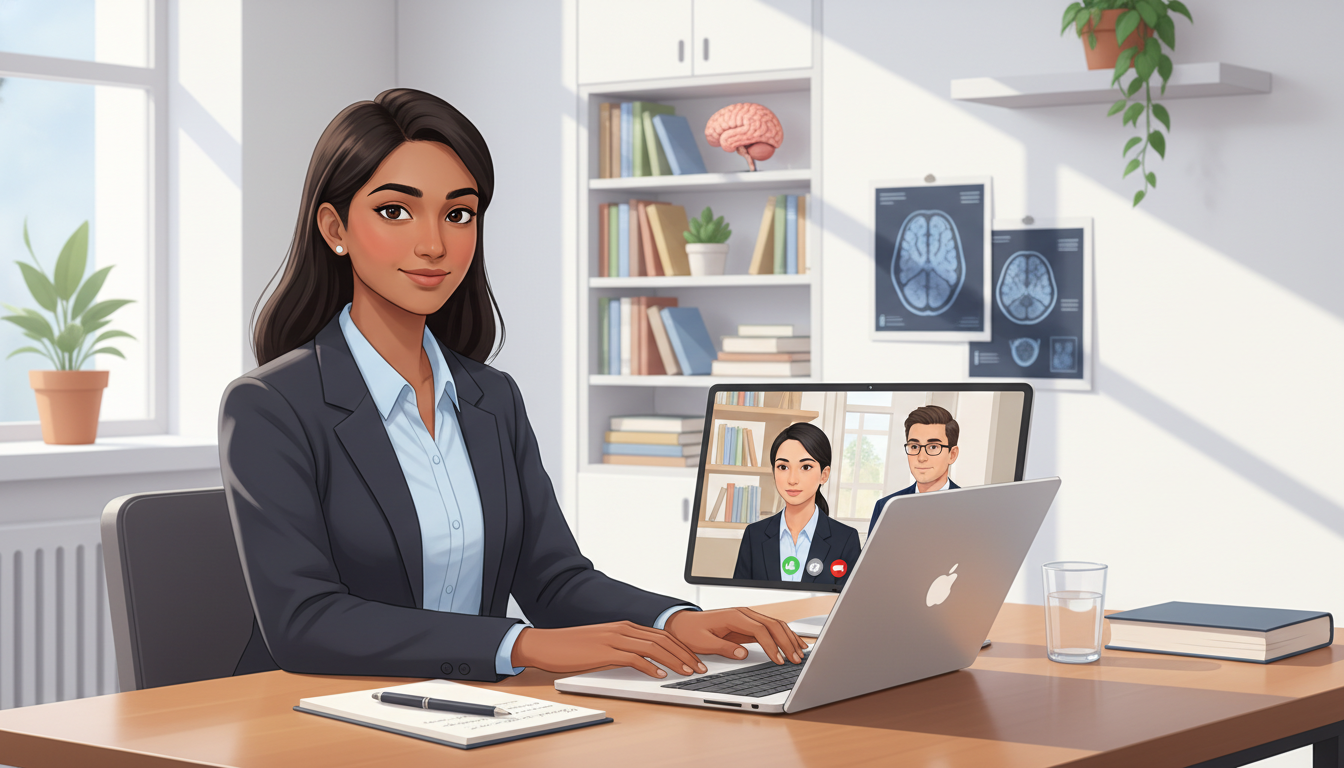
Optimize your virtual interview setup (crucial in current neuro match cycles)
Most neurology residency interviews are virtual or hybrid. Poor technical preparation can seriously harm an otherwise strong impression.
Checklist:
Internet
- Stable, high-speed connection
- Test multiple times (Zoom, Teams, or whatever platform programs use)
Hardware
- Laptop or desktop; avoid using phone
- Functional webcam with clear image
- Microphone/headset with crisp audio
- Backup device (e.g., second laptop or tablet) charged and nearby
Environment
- Quiet, private room
- Neutral background (plain wall or tidy shelf; avoid clutter)
- Good front lighting; avoid strong backlight from windows
- Place the camera at eye level; test framing to include head and upper torso
Technology rehearsal
- Do a test call with a friend or mentor
- Practice muting/unmuting, screen sharing (if required), and joining breakout rooms
- Have the meeting links, passwords, and contact emails printed or easily accessible
Dress professionally with neurology in mind
Neurology residency is generally professional but not overly formal. For interviews:
- For all genders:
- Business formal: suit jacket or blazer, dress shirt/blouse, professional top; tie is optional but recommended for a more formal appearance
- Neutral colors (navy, gray, black, white, light blue)
- Avoid busy patterns and excessive jewelry
- Ensure hair is neat and away from face
Remember: the goal is to look professional and understated so that your words and ideas are the focus.
Organize your documents and schedule
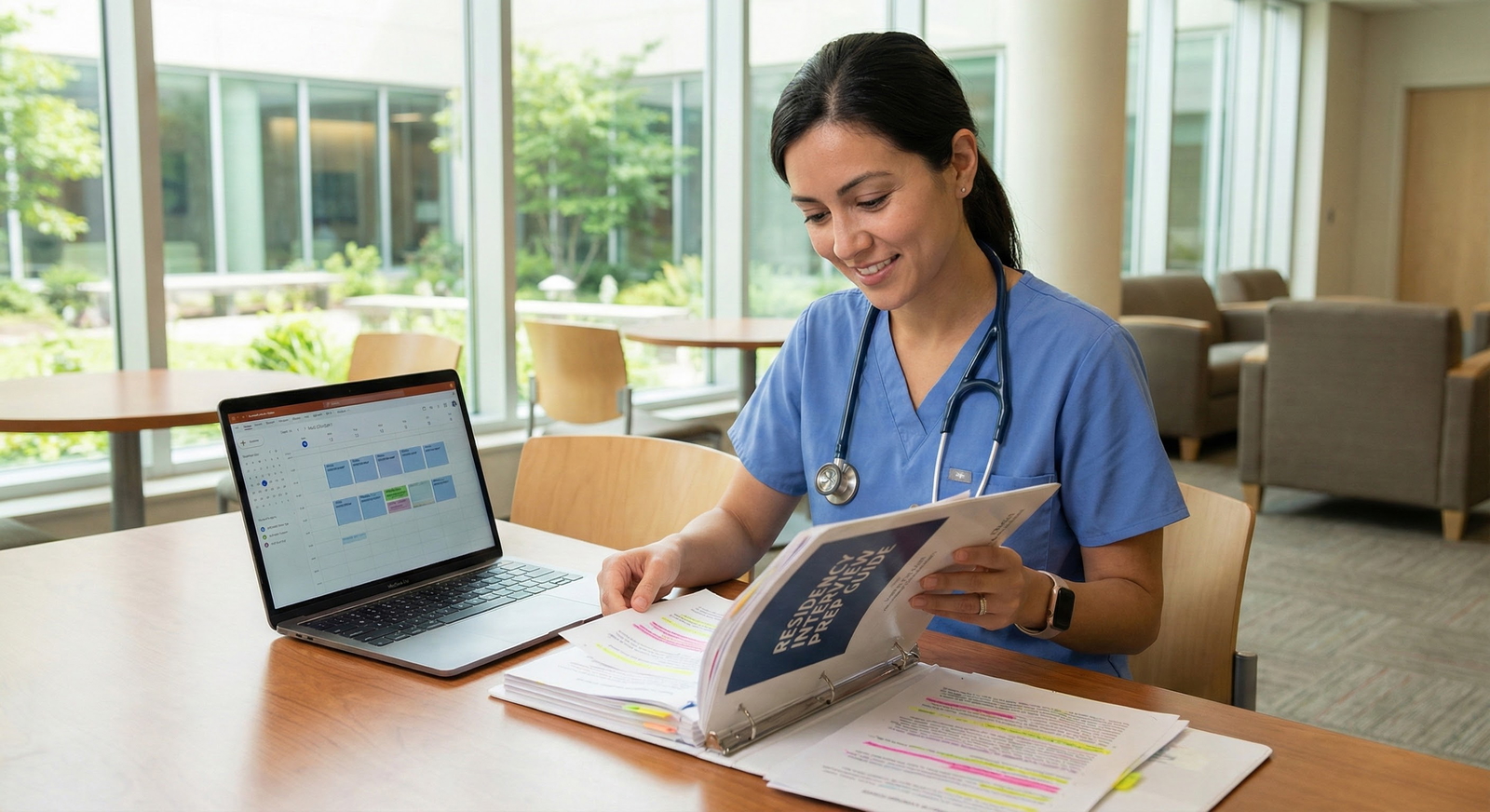
Before interview season, create a centralized system:
Spreadsheet or document with:
- Program names, interview dates, time zones, links
- Program director and coordinator names
- Key program features and your questions
- Notes immediately after interviews (impressions, pros/cons)
A folder (digital or printed) for:
- ERAS application PDF
- Personal statement
- CV
- Any publications, abstracts, or posters
- Copies of emails with coordinators
Neurology interviews often span multiple time zones. As an IMG, double-check:
- Time zone conversions
- Date differences if you are still abroad
- Buffer time between interviews if they’re back to back
Being on time, well-organized, and calm is itself a strong signal of reliability.
Step 5: Mental Preparation, Confidence, and Cultural Nuances for IMGs
Build realistic confidence
Confidence for IMGs comes from preparation plus self-acceptance:
- Acknowledge that you may have an accent; clarity matters more than perfection
- Slow down slightly when speaking about complex neurology concepts
- If you don’t understand a question, it is acceptable to ask:
- “Could you please clarify what you mean by…?”
Practice short pauses before responding, especially when asked challenging questions. This makes your answers more coherent and thoughtful.
Understand common U.S. cultural expectations in interviews
Some nuances that help your IMG residency guide mentality:
Direct but polite communication
- It’s okay to express your opinions respectfully
- Avoid excessively modest or self-diminishing language; state your accomplishments factually
Professional boundaries
- Keep personal details limited and professional (family, religion, politics are usually not central to interviews)
- If asked about relocation or family, respond briefly and emphasize your readiness to move and adapt
Enthusiasm without exaggeration
- Show authentic interest in neurology and the program
- Avoid overpromising (e.g., “I will definitely rank you number 1”)—and remember NRMP communication rules
Create a pre-interview routine
Finally, design a simple routine to do before each interview to manage stress:
The night before:
- Review your program notes and your own application
- Confirm technology and backup options
- Sleep as well as possible; light review is better than all-night cramming
The morning of:
- Dress fully in interview attire
- Check your space, lighting, audio one last time
- Have water, a notebook, and a pen nearby
- Do 5–10 minutes of breathing or relaxation exercises
After each interview:
- Immediately jot down key impressions and people you met
- Note any follow-up actions (e.g., thank-you emails if appropriate, or information to research later)
- Reflect: What did you answer well? What can you improve for the next interview?
This reflection loop is what gradually transforms you from a nervous IMG applicant into a calm, polished neurology candidate over the course of interview season.
Frequently Asked Questions (FAQ)
1. As an IMG, how can I stand out in a neurology residency interview?
You stand out by combining strong clinical reasoning, a clear neurology story, and evidence of adaptation to the U.S. system. Emphasize:
- Significant neurology exposure, including any U.S. rotations or observerships
- Concrete examples of handling complex patients or acute neurological issues
- Ongoing efforts to improve (courses, research, case reports, neurology conferences)
- Professionalism, reliability, and thoughtful career goals in neurology
Programs remember applicants who are well-prepared, thoughtful, and sincerely excited about neurology.
2. Will I be asked clinical neurology questions during residency interviews?
Some programs may ask informal clinical or reasoning questions, especially for neurology. They usually aim to see how you think, not to fail you. Prepare for:
- Basic approaches (e.g., a patient with unilateral weakness, first seizure, acute headache)
- Simple lesion localization questions
- How you would initially evaluate and stabilize an acute neurological complaint
If you don’t know, be honest, reason through it, and express what you would do to learn more or seek help.
3. How important is U.S. clinical experience (USCE) in neurology for IMGs before interviews?
USCE is very valuable, particularly in internal medicine and neurology. It helps programs trust that you:
- Understand U.S. workflows, documentation, and team structures
- Have been observed by U.S. faculty who can write letters
- Can communicate effectively in real clinical settings
If you lack formal U.S. neurology rotations, highlight related experiences (internal medicine, ICU, stroke units abroad, telehealth observerships) and demonstrate active learning about U.S. neurology practice.
4. How should I address gaps, exam failures, or older year of graduation in interviews?
Address these proactively, honestly, and constructively:
- Briefly explain the context (health issues, family responsibilities, needing to work, adapting to new exam styles, etc.)
- Focus on what you did to improve (study strategy changes, additional coursework, clinical work, research)
- Show the outcome (subsequent exam success, stronger clinical skills, new achievements)
- Reassure them that you are now fully ready for the demands of neurology residency
Programs are more concerned about unexplained issues than about past difficulties you have clearly learned from.
With systematic pre-interview preparation, you can transform the neurology residency interview from a high-stress unknown into a structured, manageable process. As an international medical graduate, your unique background is an asset—when combined with clear communication, thoughtful reflection, and a genuine passion for neurology, you can make a lasting impression on every program you meet.