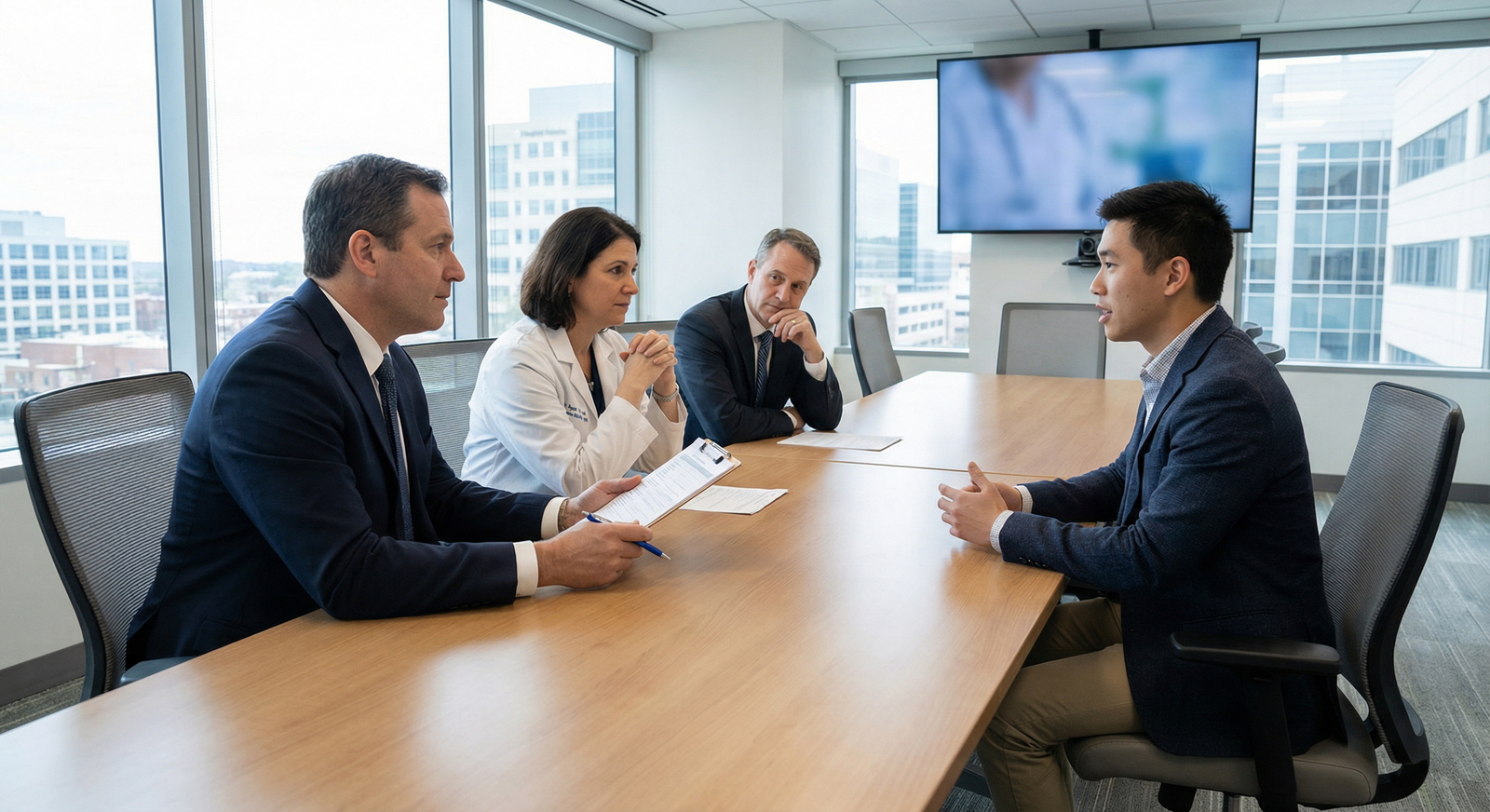
Understanding the Unique Landscape of Pediatrics-Psychiatry for IMGs
Pediatrics-Psychiatry-Child & Adolescent Psychiatry (often called “triple board” or peds psych residency) is a highly specialized training path. As an international medical graduate (IMG), you must prepare not only for general residency interview preparation, but also for the distinctive expectations of this combined program.
Triple board programs are looking for applicants who:
- Understand both pediatric medicine and child/adolescent mental health
- Are comfortable with complex, multi-system cases (e.g., chronic illness with psychiatric comorbidities)
- Value integrated care and interdisciplinary teamwork
- Show resilience, insight, and cultural humility
Before you even step into the (virtual or in-person) interview room, your pre-interview preparation will shape whether you can convincingly show you belong in this niche. This IMG residency guide focuses on how to prepare for interviews specifically as an IMG applying to Pediatrics-Psychiatry.
Key goals of pre-interview preparation:
- Clarify your personal narrative as an IMG interested in triple board
- Develop strong, concise answers to common interview questions residency programs use
- Anticipate IMG-specific concerns (visas, transition to U.S. systems, communication)
- Demonstrate true understanding of peds psych residency training and career paths
Step 1: Deep-Dive Research on Programs and the Triple Board Path
A. Understand the Triple Board Structure and Identity
Before your interview, you must be able to explain what triple board training is and why it fits you.
Most triple board programs:
- Are 5 years in length
- Lead to board eligibility in:
- Pediatrics
- General Psychiatry
- Child & Adolescent Psychiatry
- Include integrated rotations where pediatric and psychiatric aspects intersect
- Emphasize care for children with complex developmental, psychiatric, and medical conditions
You should be able to speak clearly about:
- What excites you about integrated pediatric and psychiatric training
- How you see yourself using all three boards in your future practice
- Why you are choosing triple board vs. categorical pediatrics or categorical psychiatry alone
Action step:
Write a 3–4 sentence explanation in your own words:
- What triple board is
- Why it fits your background and goals
- What kind of patients and settings you envision working in 5–10 years
Practice saying this aloud until it sounds natural.
B. Program-Specific Research: Move Beyond the Website
General advice for residency interview preparation applies, but as an IMG in pediatrics-psychiatry, you must go deeper.
For each program:
- Review:
- Program website (curriculum, call schedule, research opportunities)
- Faculty bios (especially with dual training, developmental, or global health interests)
- Recent publications or projects in child psychiatry, developmental disorders, or integrated care
- Pay attention to:
- How the program structures its triple board rotations
- Community/population served (urban, underserved, refugee, rural, etc.)
- Any explicit mention of global health, cultural psychiatry, or immigrant populations
Create a “Program Snapshot” document for each interview:
Include:
- 3 reasons you are genuinely interested in this specific program
- 2 questions you want to ask faculty
- 1 or 2 questions for current residents
- Any connection between your background (e.g., child mental health work in your home country) and the population this program serves
This not only helps you answer “Why our program?” but also shows that you understand the role of a triple board physician in that local context.
C. Understand the U.S. Healthcare and Training Context
As an international medical graduate, programs may wonder:
- How well you understand the U.S. healthcare system
- Whether you can navigate multidisciplinary teams, EMRs, and U.S. cultural norms
- How you’ll adapt from your prior training environment
Pre-interview, review:
- Basic structure of U.S. graduate medical education (ACGME, board exams, duty hours)
- Role of pediatricians and child psychiatrists in primary vs. subspecialty care
- Concepts like:
- Integrated behavioral health in primary care
- Trauma-informed care
- Patient- and family-centered care
You don’t need to be an expert, but you do need to show curiosity, awareness, and readiness to adapt.

Step 2: Constructing Your IMG Story and Triple Board Motivation
A. Build a Clear, Cohesive Personal Narrative
Your personal story is central to residency interview preparation. As an IMG applicant to triple board, your narrative must connect:
- Your early exposure or interest in pediatrics and mental health
- Your clinical experiences with children and adolescents
- Your decision to train in the U.S.
- Your motivation for integrated triple board training
Ask yourself:
- What was the first time I noticed the link between physical and mental health in a child?
- Have I cared for children with:
- Chronic medical disease and depression/anxiety
- Neurodevelopmental disorders (autism, ADHD, intellectual disability)
- Behavioral issues linked to social stress, trauma, or family dynamics
- How did those experiences shape me?
Action step: Draft a 1–2 minute “origin story”:
- How you got interested in medicine
- Why you gravitated to pediatrics and psychiatry specifically
- One or two defining clinical experiences that sealed your interest in this combined path
Practice it enough that it sounds natural, not memorized.
B. Addressing the IMG Perspective Strategically
Programs will naturally have questions about your path as an international medical graduate:
Common concerns (spoken or unspoken):
- Can this applicant adapt to a U.S. training environment?
- How strong is their clinical reasoning and communication?
- Are there gaps or delays in their training, and why?
Before interviews, prepare to address:
Why the U.S.?
- Emphasize:
- Training quality and structure
- Exposure to diverse patient populations
- Opportunities in child psychiatry, research, or public health
- Avoid:
- Criticizing your home country’s system
- Sounding like you are only coming for financial reasons
- Emphasize:
Language and communication
- Be candid about your journey with English (if applicable)
- Highlight concrete steps you took to improve (courses, clinical observerships, USCE)
- Emphasize your commitment to clear, empathic communication with children and families
Gaps, visa issues, or step exam delays
- Prepare brief, honest explanations
- Focus on what you did during that time (research, teaching, clinical practice, caregiving)
- Emphasize growth, not excuses
C. Connecting Your Background to Child and Adolescent Mental Health
Triple board programs appreciate IMGs who bring unique strengths:
- Familiarity with:
- Trauma in conflict zones or migration
- Cultural variations in mental health stigma and expression
- Multilingual communication with children and families
Before interviews, identify:
- 1–2 examples from your home country or previous work where:
- Cultural interpretation of mental illness changed the clinical approach
- Family dynamics played a major role in a child’s health
- You had to advocate for mental health care in a setting where it was stigmatized
These stories can be used when answering questions about:
- Cultural competence
- Diversity and inclusion
- Reasons for choosing child psychiatry
Step 3: Mastering Common Residency Interview Questions (With a Triple Board Lens)
A core part of how to prepare for interviews is anticipating and practicing answers to high-yield interview questions residency programs tend to ask. For triple board and peds psych residency applicants, certain themes recur.
A. Foundational Questions You Must Nail
Prepare clear, structured responses to:
“Tell me about yourself.”
- 3-part structure:
- Brief background (where you trained, IMG context)
- Key experiences in pediatrics and psychiatry
- Current interests and why you are applying to triple board
- 3-part structure:
“Why pediatrics-psychiatry?” / “Why triple board instead of categorical?”
Include:- Specific clinical experiences showing the intertwining of medical and psychiatric issues
- Your desire to treat “the whole child” across both physical and mental health
- Future goals (e.g., integrated clinics, school-based mental health, complex developmental clinics)
“Why this program?”
- Use your “Program Snapshot” notes
- Mention:
- Specific curriculum features
- Faculty whose interests align with yours
- Community or population you are excited to serve
“What are your strengths and weaknesses?”
- Link strengths to triple board-specific skills:
- Patience and communication with children and families
- Ability to collaborate with multidisciplinary teams
- Cultural humility and flexibility
- For weaknesses:
- Be honest but choose something that can be improved (e.g., perfectionism, time management)
- Describe concrete steps you are taking to work on it
- Link strengths to triple board-specific skills:
B. Triple Board–Specific Clinical and Ethical Questions
Programs may probe your understanding of the dual nature of training.
Be ready for scenario-based questions such as:
“Describe a child you have cared for who had both medical and psychiatric needs.”
- Outline:
- Brief case summary
- Your role
- How you considered both physical and mental health
- What you learned and how it shaped your interest in triple board
- Outline:
“What challenges do you anticipate in doing three boards in five years?”
- Discuss:
- High workload and switching between disciplines
- Need for organization and self-care
- Your plan to stay organized (calendars, checklists, mentorship)
- Discuss:
“How would you handle a situation where parents disagree with mental health treatment for their child?”
- Highlight:
- Cultural sensitivity
- Education and shared decision-making
- Respect for family values while advocating for the child’s well-being
- Highlight:
C. IMG-Focused Questions to Prepare For
You may encounter questions like:
- “Tell me about a challenge you faced as an IMG and how you handled it.”
- “How do you think your background will influence your work as a child psychiatrist and pediatrician?”
- “Describe a time when there was a communication barrier with a patient or family.”
Prepare structured, reflective answers:
- Use the STAR method (Situation, Task, Action, Result)
- Show insight, not just description
- Emphasize growth, resilience, and adaptability
Action step:
Write out bullet-point outlines (not scripts) for 10–15 common questions. Practice aloud with a friend, mentor, or in front of a mirror.

Step 4: Practical Skills: Communication, Logistics, and Professional Presentation
A. Communication Skills: The Heart of Pediatrics and Psychiatry
Strong communication is non-negotiable for peds psych residency. Pre-interview, focus on:
Clarity and pacing
- Practice speaking slowly enough for others to follow
- Avoid overly complex medical jargon unless needed
- Use simple, family-friendly language when describing children’s issues
Nonverbal communication
- Maintain eye contact (or camera gaze in virtual interviews)
- Sit upright, relaxed but attentive
- Nod and use appropriate facial expressions to show engagement
Empathy and reflective statements
- Programs look for you to reflect on feelings as well as facts
- For clinical stories, mention:
- How the family might have felt
- How you responded emotionally
- What you learned about supporting them
Practice technique:
Record yourself answering a question like, “Tell me about a difficult pediatric patient encounter.” Watch for:
- Rambling vs. concise structure
- Overuse of filler words (“um,” “like”)
- Whether your tone conveys empathy and professionalism
B. Virtual and In-Person Logistics: Details That Matter
Whether your interviews are virtual or in-person, meticulous logistics are a key part of pre-interview preparation.
For virtual interviews:
- Check:
- Internet connection (do a test call)
- Camera and microphone quality
- Lighting (natural or soft front light; avoid backlighting)
- Background:
- Neutral, uncluttered
- No distracting posters or personal items
- If needed, use a simple virtual background
- On the day:
- Log in 15–20 minutes early
- Have:
- Printed or digital copy of your CV and personal statement
- Program notes
- A short list of questions for interviewers
- Water and a notepad
For in-person interviews:
- Plan travel early and confirm:
- Flight times, hotel, transit to hospital
- Time zone differences if you’re coming from abroad
- The day before:
- Visit the hospital or area if possible so you’re comfortable with directions
- Prepare your outfit and documents (ID, invitation, notebook)
- On the day:
- Aim to arrive 20–30 minutes early
- Bring:
- A professional folder or padfolio
- Extra copies of your CV
- A small list of key questions
C. Professional Attire and First Impressions
As an IMG, you may come from a different cultural norm for professional dress. For U.S. residency interviews:
- General rule:
- Dark or neutral suit (black, navy, gray)
- Simple blouse or shirt
- Conservative tie if you wear one
- Closed-toe shoes, low to moderate heel if worn
- Keep accessories minimal; avoid:
- Bright, distracting patterns
- Heavy fragrances
- Noisy jewelry
First impressions form rapidly. Professional, neat attire signals respect and seriousness.
Step 5: Questions to Ask, Red Flags to Notice, and Post-Interview Strategy
A. Thoughtful Questions to Ask Interviewers
Good questions show you are truly engaged with the specialty and program. Before interviews, prepare 5–10 questions you can rotate through, for example:
For program directors/faculty:
- “How do residents integrate skills between pediatrics and psychiatry rotations in your triple board program?”
- “What types of careers do your recent triple board graduates pursue?”
- “How does the program support resident wellness, especially given the intensity of a triple board schedule?”
- “Are there opportunities to work with immigrant or refugee populations, or children from diverse cultural backgrounds?”
For residents:
- “What made you choose this triple board program over others?”
- “How supported do you feel by faculty when transitioning between pediatrics and psychiatry rotations?”
- “What does a typical week look like in your first year?”
- “If you could change one thing about the program, what would it be?”
Avoid questions easily answered on the website. Make them specific to triple board and to that program’s strengths.
B. Recognizing Red Flags
During your pre-interview and interview process, be mindful of signals that a program may not be ideal for an IMG or for triple board training:
- No clear description of how they support IMGs with visas or transition issues
- Residents reporting:
- Frequent burnout without meaningful support
- Lack of supervision or feedback
- Disrespectful environment or unaddressed mistreatment
- Dismissive responses to questions about:
- Diversity, equity, and inclusion
- Cultural competence in child psychiatry
- Support for mental health among residents and staff
Make note of your impressions right after each interview. Over time, a pattern will emerge that helps you rank programs.
C. Post-Interview Reflection and Professional Follow-Up
Your preparation doesn’t end when the interview finishes.
Immediately after each interview:
- Write down:
- Who you spoke with
- Interesting details or comments about the program
- Your emotional reaction (excited, uncertain, concerned)
- How well you see yourself thriving there
- Update your program comparison document:
- Pros and cons list
- Fit with your career goals
Thank-you notes:
- Some programs state they do not require or read thank-you notes; respect their guidelines
- If appropriate:
- Send brief, specific emails within 3–5 days
- Mention something you discussed that was meaningful
- Reaffirm your interest without making premature promises
Example (concise):
Dear Dr. Smith,
Thank you for taking the time to speak with me during my interview for the Pediatrics-Psychiatry-Child & Adolescent Psychiatry position. Our conversation about integrated care for children with autism and co-occurring anxiety reinforced my interest in your triple board program, especially given its strong collaboration with the developmental pediatrics team. I appreciate your insights into how residents balance pediatric and psychiatry rotations and would be honored to train in such a supportive environment.
Sincerely,
[Your Name]
FAQs: Pre-Interview Preparation for IMGs in Pediatrics-Psychiatry
1. As an IMG, how can I stand out when applying to a peds psych residency or triple board program?
- Demonstrate clear understanding of triple board training and why you want it instead of categorical pediatrics or psychiatry.
- Highlight unique experiences from your home country:
- Working with children exposed to trauma, migration, or social adversity
- Addressing cultural stigma around child mental health
- Show strong English communication skills and readiness to adapt to U.S. systems.
- Emphasize any U.S. clinical experience, especially in pediatrics, psychiatry, or primary care.
2. What types of interview questions should I expect specifically for triple board?
Expect a mix of:
- Standard questions: “Tell me about yourself,” “Why this program?”
- Specialty questions:
- “Why triple board vs categorical pediatrics or psychiatry?”
- “Describe a case where the child’s medical and psychiatric needs were intertwined.”
- “How will you manage the demands of three specialties in five years?”
- IMG-focused questions:
- “How has your background prepared you for training in the U.S.?”
- “What challenges have you faced as an international medical graduate?”
Prepare structured answers and emphasize integrated, whole-child thinking.
3. How can I improve my communication skills before the interview as a non-native English speaker?
- Practice mock interviews with:
- Friends, mentors, or faculty
- IMG advising services or mentorship networks
- Record yourself answering common questions and review:
- Pacing, clarity, filler words
- Nonverbal behavior
- Read or listen to child psychiatry and pediatrics case discussions to familiarize yourself with:
- U.S. medical terminology
- Common phrases used with families and colleagues
- Focus on being clear and empathic, not on sounding “perfect.”
4. Are there any specific resources to better understand pediatrics-psychiatry before interviews?
Helpful resources include:
- Triple Board program websites and FAQs
- American Academy of Child and Adolescent Psychiatry (AACAP) resources
- American Academy of Pediatrics (AAP) sections on mental health and developmental-behavioral pediatrics
- Webinars or talks on integrated pediatric behavioral health
- Articles or case reports about complex children with both medical and psychiatric conditions
Incorporating insights from these resources into your interview answers will show that you’ve thoughtfully explored the field and are serious about a peds psych residency path.
By combining deep program research, a compelling IMG narrative, structured practice of interview questions residency programs use, and polished communication skills, you can turn your pre-interview preparation into a powerful advantage. As an international medical graduate committed to pediatrics-psychiatry and triple board training, your unique experiences and perspectives are not just acceptable—they are exactly what many programs are hoping to find.