Why Your Questions Matter as an IMG Applying to PM&R
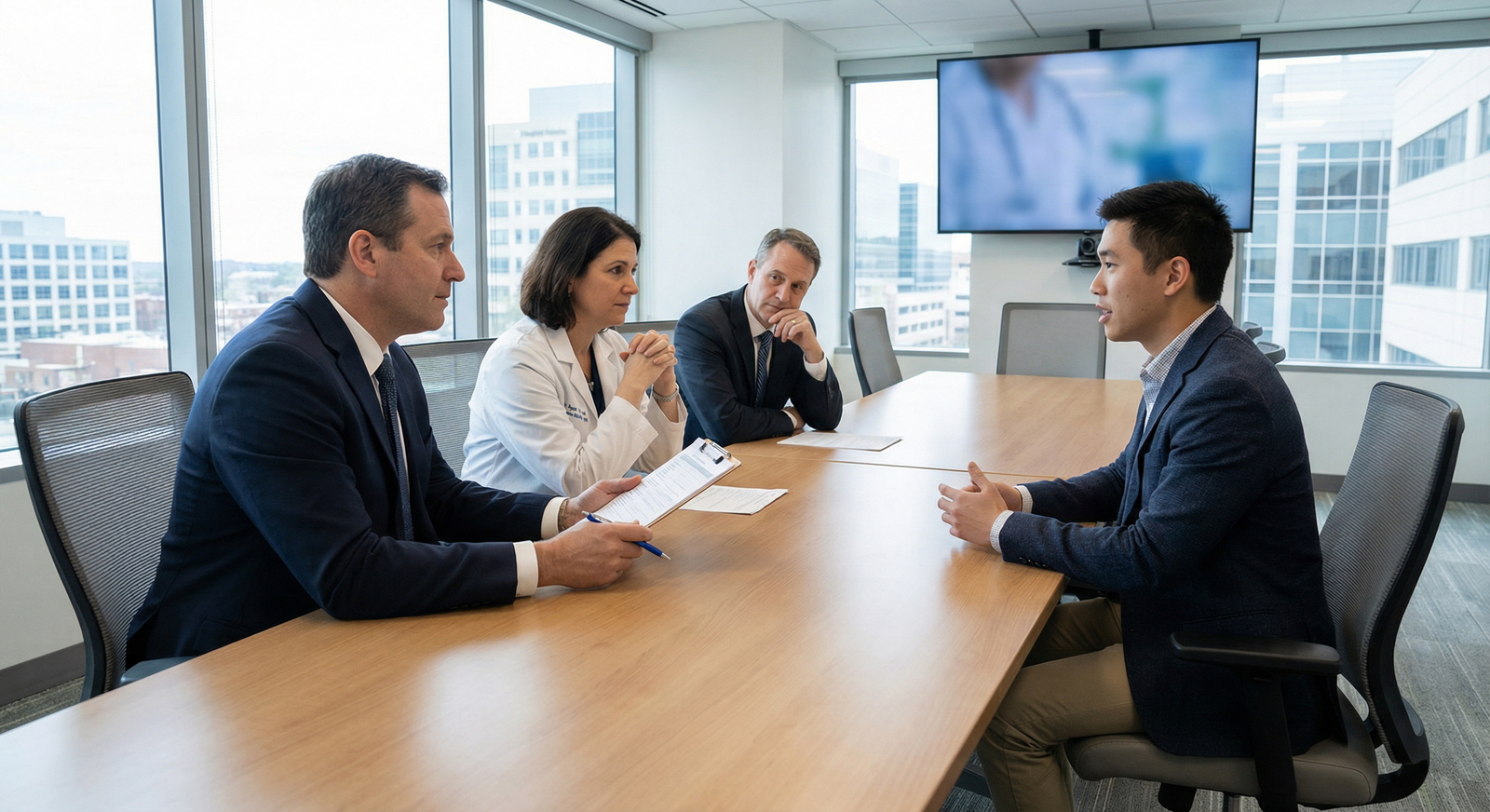
In a competitive physiatry match, especially as an international medical graduate (IMG), what you ask during interviews and virtual sessions can matter as much as how you answer. Thoughtful, targeted questions signal that you:
- Understand Physical Medicine & Rehabilitation (PM&R) as a specialty
- Have done your homework about the program
- Know what you need to succeed as an IMG
- Are evaluating whether the program is a good fit for you, not just the other way around
This IMG residency guide focuses specifically on questions to ask programs—including what to ask program directors, residents, coordinators, and faculty—to help you navigate the PM&R interview process strategically.
You do not need to ask all of these in a single encounter; think of them as a menu. Select the ones that best match your priorities and the flow of each conversation.
Core Strategy: How to Use Your Questions Effectively
Before specific examples, it helps to think strategically about how to ask questions in PM&R residency interviews.
1. Align Your Questions With Your Goals
As an IMG in PM&R, your main priorities might include:
- Visa support and long-term sponsorship
- Board pass rates and academic support
- Procedural exposure (EMG, ultrasound, injections)
- Exposure to diverse rehab populations (SCI, TBI, stroke, amputee, pediatric rehab, cancer rehab, sports, pain)
- Research opportunities and mentorship
- Integration into the team and support for adaptation to the US system
Identify your top 3–5 goals. Choose questions that help you judge whether the program actually supports those goals.
2. Adapt the Question to the Person
You’ll usually interact with:
- Program Director (PD) or Associate PD
- Residents (juniors and seniors)
- Faculty (e.g., subspecialty attendings)
- Program Coordinator
- Occasionally, Chair or Department Leadership
For example:
- PD: big-picture philosophy, curriculum, support for IMGs
- Residents: daily life, culture, actual workload
- Faculty: subspecialty exposure, mentorship, teaching style
- Coordinator: logistics, visas, onboarding details
A strong strategy is to prepare 3–4 core questions per group, then personalize them during each conversation.
3. Avoid Easily Googleable Questions
You demonstrate respect and preparation by not asking things clearly listed on the website (e.g., “How many residents per year?” if it’s on the homepage).
Instead, refer to what you’ve read:
“On your website you mention longitudinal EMG exposure. How is that structured through PGY-2 to PGY-4, and what distinguishes residents who become particularly strong in EMG?”
This turns a generic question into a nuanced, high-yield one.
High-Impact Questions to Ask the Program Director (PD) and Leadership
When you think about what to ask program director level leadership, focus on big-picture themes: training philosophy, graduate outcomes, IMG support, and long-term vision. Here are targeted, high-yield options.
A. Training Philosophy and Program Identity
“How would you describe the type of physiatrist your program aims to graduate?”
- Why this works: Shows you care about your long-term development, not just matching anywhere.
- Listen for: Balance of inpatient/outpatient, procedural vs. non-procedural skills, academic vs. community focus.
“What aspects of your PM&R residency make it distinct from other programs in the region or nationally?”
- Helps you understand the program’s true strengths (e.g., SCI expertise, sports, research).
“How has the program changed in the past 3–5 years, and what changes do you anticipate in the next few years?”
- Shows you are thinking long-term and want a program that is improving, not stagnating.
B. Education, Curriculum, and Board Preparation
“Can you walk me through the structure of inpatient vs. outpatient exposure across PGY-2 to PGY-4?”
- Clarifies whether you’ll get robust inpatient rehab, continuity clinics, and diverse pathologies.
“What systems do you have in place to support residents in board preparation, especially those who may be less familiar with the US exam style, like some IMGs?”
- Watch for: board review curriculum, question banks, protected didactic time, faculty-led sessions.
“How do you handle a resident who is struggling academically or clinically?”
- Strong programs have clear, supportive remediation processes rather than vague answers.
C. IMG-Specific Considerations and Visa Support
“How experienced is your program in training and supporting international medical graduates?”
- Good signs: clear examples of successful IMGs, not just “We’re open to IMGs.”
“What types of visas do you sponsor, and how has your approach to visas changed recently?”
- Clarifies if they truly sponsor H-1B or only J-1, and whether policies have been stable.
“For IMGs, what additional support or orientation is provided to help adjust to the US healthcare system and documentation requirements?”
- Look for: EMR training, orientation structure, early mentorship, cultural/communication support.
D. Procedural and Subspecialty Exposure
“How do residents gain competence and confidence in core PM&R procedures such as EMG, ultrasound-guided injections, and spasticity management (botulinum toxin, phenol)?”
- A strong answer will cover: number of procedures, supervision, and progressive autonomy.
“Are there structured rotations or electives in subspecialties like sports medicine, pain, cancer rehab, or pediatric rehab?”
- Especially important if you’re considering fellowship.
E. Outcomes and Career Planning
“Where have your recent graduates gone in terms of fellowship vs. direct practice, and what kind of support do you offer with the fellowship or job search process?”
- Listen for: strong network, faculty advocacy, alumni connections.
“How involved are faculty in mentoring residents about career planning, especially for IMGs who may be less familiar with the US system?”
- A good program will describe early and intentional mentorship.
F. Program Culture and Well-Being
“In your view, what characteristics make a resident particularly successful and happy in this program?”
- Helps you self-assess fit and also subtly reminds them of what to look for in you.
“How do you monitor and support resident wellness and prevent burnout?”
- Look for: wellness initiatives, mental health resources, reasonable call structure, responsiveness to feedback.
Questions to Ask Residents: Real-Life Training, Culture, and Fit
Residents are your best source of honest insight into day-to-day life. Many of your most important interview questions for them should be targeted to reality rather than policy.
A. Day-to-Day Workflow and Supervision
“Can you walk me through a typical day on your busiest inpatient rotation as a PGY-2?”
- Clarify: number of patients, rounding style, notes, timing of consults, attending availability.
“When you first started as a PGY-2 in PM&R, how supported did you feel? Were attendings accessible when you needed help?”
- Pay attention to body language; they often reveal more than their words.
“How is the night float or call system structured, and how manageable does it feel in reality?”
- Understand call frequency, support, and how it affects fatigue.
B. Educational Environment and Learning Climate
“Do you feel the program protects educational time? Is it common for clinical responsibilities to interrupt lectures?”
- Strong programs protect didactics; weak ones allow constant interruptions.
“How approachable are faculty when you don’t know something or make a mistake?”
- You want psychological safety, not fear-based teaching.
“Do you feel well-prepared for the boards based on the program’s teaching and structure?”
- Ask seniors especially; they’ve seen the full curriculum.
C. IMG Experience and Integration
“As an IMG (or from what you’ve seen with IMGs here), what were the biggest challenges starting residency, and how did the program help?”
- Listen for practical examples: documentation tips, feedback style, extra teaching, peer support.
“How are IMGs perceived in this program—do you feel there’s true equality in opportunities (leadership roles, electives, letters of recommendation)?”
- You’re looking for evidence of equitable treatment, not just “We love diversity.”
D. Culture, Morale, and Support
“How would you describe the culture among residents—collaborative, competitive, close-knit?”
- Ask a few different residents; consistent answers are reassuring.
“When someone is struggling—personally or clinically—how does the resident group respond?”
- A strong culture: “We help with notes, swap calls, check on each other,” not “That’s between them and the PD.”
- “What do you wish you had known about this program before you matched here?”
- Often reveals unadvertised strengths or weaknesses.
E. Practical Life: Location, Housing, and Lifestyle
- “What is it like living in this city as a resident—cost of living, commute, safety, things to do on days off?”
- PM&R has physically and emotionally demanding rotations; quality of life matters.
- “Do residents generally live close to the main hospital? How is parking or public transportation?”
- Especially important if you don’t plan to drive immediately in the US.
- “If you had to make the choice again, would you choose this program?”
- The pause before they answer is often very informative.
Questions to Ask About Curriculum, Rotations, and Procedural Training
Since PM&R is broad, a smart IMG residency guide for physiatry match preparation emphasizes understanding how you’ll be trained in key domains.
A. Inpatient and Consult Experience
“How are the inpatient rehabilitation services structured (stroke/TBI/SCI/amputee/mixed), and what is the resident’s role on these teams?”
“What opportunities do residents have to participate in acute care consults (e.g., on neurology or trauma services)?”
- Helps gauge exposure to the early phases of rehab.
“Is there exposure to specialized inpatient units, such as spinal cord injury or brain injury rehabilitation?”
- Important if you might pursue fellowship in these subspecialties.
B. Outpatient Clinics and Continuity
“How is continuity clinic organized, and what types of diagnoses do you commonly see?”
- Clarifies balance between musculoskeletal, spasticity, pain, neuromuscular, etc.
“Are there dedicated clinics for EMG, spasticity management, prosthetics and orthotics, or sports medicine?”
- You’re checking that “exposure” is not just a few random consults.
“Do residents have any opportunity to follow complex patients longitudinally from inpatient rehab to outpatient care?”
- Longitudinal experience is valuable for understanding full rehab trajectories.
C. Procedure-Focused Questions
“How early do residents start performing EMGs, and approximately how many studies do graduates complete by the end of residency?”
“What is the typical volume and variety of ultrasound-guided procedures performed by residents?”
“How are residents trained in spasticity management with botulinum toxin and phenol—are there dedicated injection clinics?”
“Are there structured opportunities to learn fluoroscopy-guided procedures, and if not, how do graduates gain exposure to them?”
For each of these, ask for approximate numbers (e.g., “Do most residents graduate with 100+ EMG studies?”). Numbers help you compare programs more objectively.
Questions About Research, Mentorship, and Career Development
For many IMGs, research and strong mentorship can be powerful ways to stand out in the physiatry match and beyond.
A. Research Infrastructure and Expectations
“What kinds of research opportunities are available for residents—clinical, outcomes-based, quality improvement, basic science?”
“Is there a requirement to complete a scholarly project, and how are residents supported in identifying mentors and topics?”
“Do residents often present at national meetings such as AAPM&R, AAP, or specialty societies?”
- Shows the program’s national visibility and support for conference travel.
“Are there protected research blocks or elective time that residents can use for larger projects?”
B. Mentorship and Long-Term Career Planning
“How does your program approach mentorship—are mentors assigned, chosen by residents, or both?”
“Are there faculty who have a track record of mentoring IMGs toward competitive fellowships or academic positions?”
“How early in training do residents start discussing fellowship or job planning with faculty?”
“What support is provided for residents interested in nontraditional paths, such as global rehabilitation, leadership, or health policy?”
C. Fellowship and Job Placement
“What have been the most common fellowships pursued by your recent graduates (e.g., sports, pain, SCI, TBI, peds, neuromuscular)?”
“For residents who do not pursue fellowship, what types of jobs do they typically obtain, and in what practice settings (academic vs. private practice vs. rehab hospitals)?”
“How involved are faculty in making calls or writing advocacy letters for residents applying to fellowships or jobs?”
Questions to Ask the Coordinator and About Logistics (Especially Important for IMGs)
Program coordinators are invaluable sources for practical and administrative details. They’re ideal for things that feel “too detailed” to ask the PD.
A. Visa, Licensing, and Onboarding
“Can you walk me through the typical timeline and steps for visa processing for matched IMGs?”
“Are there any common issues that IMGs face with credentialing or state licensing, and how does the program support them?”
“Is there an extended orientation or boot camp for incoming residents, and does it include EMR training, documentation, and billing education?”
B. Schedule, Salary, and Benefits
“What are the typical duty hours, and does the schedule allow time for self-study and board prep?”
“Can you share approximate call frequency by year and whether it’s in-house or home call?”
“What benefits are provided for residents (health insurance, conference funding, board review materials, meal stipends, parking)?”
C. Practical Life and Support Services
“Is there support for relocation, and do you have resources or contacts to help incoming residents find housing?”
“Are there institutional resources for international trainees, such as an office of international services or IMG support group?”
“If a resident faces personal or family emergencies, how flexible is the program with leave, and what is the process?”
How to Prioritize and Personalize Your Question List
You cannot ask every possible question at every program. Here’s how to be strategic.
Step 1: Identify Your “Non-Negotiables”
For many IMGs in PM&R, these often include:
- Visa sponsorship consistency
- Supportive culture and IMG integration
- Strong core rehab exposure (inpatient + outpatient)
- Adequate procedure and board prep experience
Prepare 1–2 direct questions for each non-negotiable.
Step 2: Prepare a Short List per Person
For each interview day, aim for:
- PD / Leadership: 3–4 big-picture questions
- Residents: 4–6 daily-life and culture questions
- Faculty / Subspecialists: 2–3 subspecialty/procedural questions
- Coordinator: 3–4 logistical questions
Have a larger master list, but choose what to ask based on what has not yet been answered in presentations or earlier conversations.
Step 3: Take Brief Notes Immediately After
For each program, quickly jot down:
- Key answers to your most important questions
- Red flags (evasive responses, inconsistent messages)
- Positive signs (concrete examples, transparent data, resident enthusiasm)
These notes will be invaluable when creating your rank list and comparing programs days or weeks later.
Frequently Asked Questions (FAQ)
1. How many questions should I ask during each PM&R residency interview?
Aim for 2–3 thoughtful questions per conversation (e.g., with the PD, each faculty member, and each resident group). It’s better to ask fewer, high-quality questions than a long list that feels rushed. Pay attention to time and cues from the interviewer; if they seem behind schedule, prioritize your most important question.
2. Is it okay to ask directly about visa sponsorship as an IMG?
Yes, and you should. Phrase it professionally, for example:
“As an international medical graduate, long-term visa stability is important for me. Could you share what types of visas you sponsor and how consistently you’ve been able to support IMGs in the past few years?”
This is a critical part of any IMG residency guide: clarity about visas protects your future.
3. What are good “closing” or final questions to ask at the end of an interview?
Strong options include:
- “Is there anything in my background that you would like me to clarify or that you feel I should further develop to be successful here?”
- “What qualities do you see in your most successful residents that I should try to cultivate as I move forward in my training?”
- “What would you say is the single biggest strength of this program that might not be obvious from the website?”
These questions demonstrate insight, humility, and genuine interest.
4. How can I ensure my questions don’t sound generic or scripted?
- Reference something specific you learned: “I read that you have a strong SCI program…”
- Connect to your goals: “I’m very interested in EMG and neuromuscular medicine, so I wanted to ask…”
- Listen actively and build from what they’ve just said rather than moving to a completely unrelated topic.
By preparing a focused, thoughtful set of questions to ask residency programs—and tailoring them to PM&R and your IMG background—you turn each interaction into a deeper assessment of fit, while showcasing yourself as a mature, intentional future physiatrist.