Understanding the Interview Landscape for IMGs in Preliminary Medicine
Securing a preliminary medicine year (prelim IM) as an international medical graduate (IMG) is both an opportunity and a challenge. You are competing not only with other IMGs, but also with U.S. graduates who may be applying to prelim positions as part of advanced programs (e.g., neurology, radiology, anesthesia).
Before you start formal residency interview preparation, it helps to understand what programs are actually trying to assess:
- Clinical readiness: Can you function safely and effectively as an intern on day one?
- Communication skills: Will you communicate clearly with patients, nurses, consultants, and your team—especially in a new health system?
- Professionalism and reliability: Can they trust you on nights, during cross-cover, and in high-stress situations?
- Fit with the team and culture: Are you someone residents and attendings want to work with, especially in high-volume prelim medicine services?
- Long-term trajectory: Even though it’s “only” a one-year position, do you have a thoughtful plan and do you understand the role of a preliminary medicine year in your larger career path?
For an IMG residency guide focused on prelim IM, pre-interview preparation is your chance to demonstrate that you are not just clinically capable but also adaptable, motivated, and prepared for the reality of a demanding intern year.
Step 1: Researching Programs and Building a Strategy
Thorough program research is the foundation of effective residency interview preparation. It shapes your answers, your questions, and even your demeanor during the conversation.
1.1 Clarify Your Goals for a Preliminary Medicine Year
As an IMG, programs will expect you to articulate clearly why you are choosing a preliminary medicine year:
- Are you pursuing an advanced specialty requiring a prelim year (e.g., neurology, anesthesia, radiology, PM&R, dermatology)?
- Are you using prelim IM as a way to gain U.S. clinical experience and then reapply to categorical internal medicine or another specialty?
- Are you trying to strengthen your profile (US clinical experience, letters, networking) for fellowship or a reapplication?
Be ready with a concise, honest explanation such as:
- “I matched into an advanced neurology program and need a strong internal medicine foundation. I chose your prelim IM program because of its high acuity, strong teaching, and exposure to diverse pathologies that will help me become a better neurologist.”
- “As an international medical graduate, I see a preliminary medicine year as a structured way to build U.S. clinical skills and professional networks while preparing to apply to categorical internal medicine next cycle.”
1.2 Investigate Each Program Thoroughly
For each program, create a one-page summary. Focus on:
- Type of program:
- Academic vs. community vs. hybrid
- Size of prelim cohort vs. categorical IM cohort
- Clinical environment:
- Patient population (safety net hospital, tertiary referral center, community hospital)
- ICU exposure, night float systems, ED shifts
- Education and support:
- Presence of formal didactics, simulation, mentorship
- Support for IMGs (visa sponsorship history, percentage of IMG residents)
- Preliminary-specific details:
- Whether prelims are integrated with categorical interns or kept separate
- Typical schedules and rotation mix (wards, ICU, electives, night float)
- Track record of prelim graduates: where they go after (advanced specialties, categorical IM, etc.)
Use:
- Program websites
- FREIDA / AAMC resources
- Doximity (with caution; it’s more reputation-focused)
- Alumni or seniors from your medical school who have rotated or matched there
- Social media (program Twitter/X, Instagram, LinkedIn) for culture and recent updates
1.3 Create a Personal “Program Fit” Framework
To answer interview questions residency programs frequently ask about “fit,” you need your own criteria. Rank what matters most to you:
- Robust internal medicine exposure (wards, ICU, night coverage)
- Teaching culture, feedback, and supervision patterns
- Support for advanced specialty plans (e.g., opportunities to work with neurology/radiology/anesthesia teams)
- IMG-friendly environment and visa support (J-1, H-1B if relevant)
- Location (cost of living, support system, community resources)
During your residency interview preparation, note how each program fits into this framework. This will help you give specific, authentic answers instead of generic compliments.

Step 2: Mastering Core Interview Content (Stories, Themes, and Examples)
An IMG residency guide that ignores narrative preparation will leave you underprepared. U.S. interviews are heavily behavioral: they want your stories, not just your scores.
2.1 Define Your Core Themes as an IMG
As an international medical graduate, your path is inherently different. Programs want to understand:
- Why you chose medicine and then internal medicine exposure or prelim IM
- Why you chose to pursue residency in the U.S. health system
- How your international training and experience add value to their team
- How you’ve adapted to transitions in the past (new health systems, languages, cultures)
Common themes you can highlight:
- Adaptability and resilience: Navigating a new country, system, and expectations
- Resourcefulness: Providing high-quality care in resource-limited settings
- Cultural humility and communication: Caring for diverse populations
- Growth trajectory: How your USMLE/clinical experiences show consistent improvement
2.2 Build a Bank of Strong Clinical and Behavioral Stories
Collect 8–12 detailed stories that illustrate:
- Clinical scenarios:
- Managing acutely ill patients
- Working nights/on-calls
- Handling uncertainty and asking for help
- Interpersonal skills:
- Working within a multidisciplinary team
- Handling conflict with a colleague or supervisor respectfully
- Communicating with anxious or non-adherent patients/families
- Professionalism and ethics:
- Dealing with an error or near-miss
- Advocating for patient safety or fairness
- Owning responsibility when something goes wrong
Organize them using STAR (Situation, Task, Action, Result) or PAR (Problem, Action, Result):
- Situation/Problem: Concise context
- Task: Your specific responsibility
- Action: What you did, how you thought, what skills you used
- Result: What happened, what you learned, how you grew
Example (for “a time you made a mistake”):
- Situation: As a junior doctor in [country], I was on call in the internal medicine ward caring for a patient with uncontrolled diabetes.
- Task: I was responsible for adjusting insulin and monitoring blood glucose.
- Action: I misread the sliding scale and ordered a slightly higher dose than indicated. Fortunately, the nurse noticed the unusual dose and called to confirm, and I realized my error. I corrected the order, thanked the nurse, and documented the incident. Afterwards, I discussed it with my supervisor and created my own double-check system for high-risk medications.
- Result: The patient remained stable; no harm occurred. The event reinforced my respect for team communication, standardized protocols, and double-checking orders—especially in a new system.
This kind of response shows self-awareness, team respect, and patient safety focus—key attributes for a prelim IM intern.
2.3 Anticipate High-Yield Interview Questions for Preliminary Medicine
You will likely encounter variations of the following interview questions residency programs often use for prelim IM:
- “Why preliminary medicine and not categorical internal medicine?”
- “What is your long-term career plan after this preliminary year?”
- “Why did you choose to pursue residency in the U.S. as an IMG?”
- “Tell me about a challenging case you managed in internal medicine.”
- “Describe a time you had a conflict with a nurse or colleague and how you resolved it.”
- “How do you handle stress and fatigue during heavy workloads?”
- “Can you tell me about a time you worked with limited resources?” (particularly relevant for IMGs)
- “What are you looking for in a preliminary medicine program?”
For each, write a brief outline, not a script. Focus on:
- Clarity: Answer the question directly in the first 1–2 sentences.
- Specificity: Tie your answer to your actual experiences and to that program’s features when possible.
- Balance: Be honest about challenges (e.g., visa, delay between graduation and match) but frame them as growth experiences.
2.4 Addressing Common IMG-Specific Concerns Proactively
Programs may be quietly (or openly) concerned about:
- Gaps since graduation: Explain what you did—research, observerships, work, family responsibilities—and what skills you maintained or gained.
- Limited U.S. clinical experience: Emphasize observerships, externships, hands-on experiences, telemedicine, or relevant international work with similar standards.
- Visa status: Be clear, concise, and knowledgeable about what type(s) of visa you can accept (J-1, H-1B, etc.) and whether you’ve discussed this with advisors.
Prepare calm, factual answers that show you understand the system and your own situation, and that you are not easily discouraged by obstacles.
Step 3: Practicing Communication and Presentation Skills
Knowing how to prepare for interviews as an IMG means more than memorizing answers. It includes communication style, non-verbal cues, and cultural awareness.
3.1 Language and Accent Considerations
Your accent is not a problem as long as you are clear and understandable. To optimize:
- Practice answers aloud daily; record yourself and listen for clarity and pacing.
- Focus on:
- Slowing down your speech slightly
- Ending sentences cleanly (avoid trailing off)
- Pausing briefly between key points
- Ask a U.S.-based mentor, attending, or senior to give feedback on specific words/phrases you may need to adjust.
You are not expected to sound “American,” but patients and teams must understand you easily. This is a safety and teamwork issue, not a judgment of your background.
3.2 Non-Verbal Communication and Cultural Norms
Most residency programs value:
- Steady but not intense eye contact during conversations
- Open posture; avoid crossed arms or constantly looking away
- Brief, natural smiles when greeting and thanking interviewers
- Professional but friendly tone; not overly formal or robotic
If interviewing virtually:
- Look at the camera when answering (to simulate eye contact)
- Ensure good lighting on your face (window or lamp in front of you, not behind)
- Minimize background distractions and noise
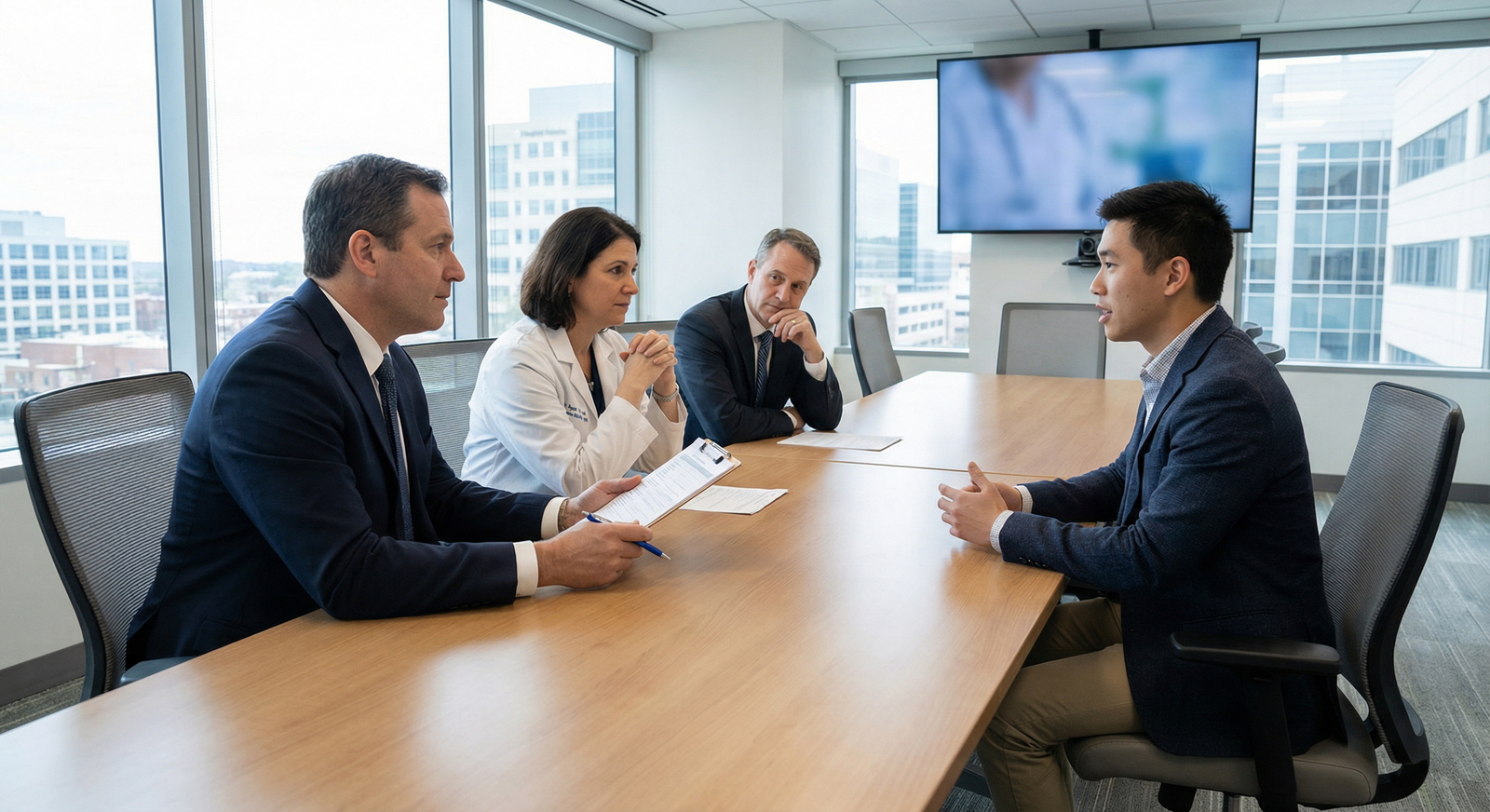
3.3 Structured Mock Interviews
At least 3–5 full mock interviews are critical to residency interview preparation:
- With a faculty mentor or attending (ideally someone who interviews applicants)
- With a peer or recent graduate who matched in the U.S.
- Self-recorded mock interview (watch the video yourself critically)
Ask your mock interviewers to evaluate:
- Clarity and organization of answers
- Emotional tone (too flat vs. too anxious, too rehearsed vs. too vague)
- How well you explain your IMG journey and prelim goals
- Whether you seem like someone they’d want on their team during a heavy call night
Take notes after each mock session and refine your answers—not to memorize them word-for-word, but to clarify your key messages.
Step 4: Preparing Logistically and Technically (Especially for Virtual Interviews)
Many IMG candidates face time zone differences, visa-related travel concerns, and variable technology access. Solid pre-interview preparation in these areas prevents preventable mishaps.
4.1 Scheduling Strategy and Time Zone Management
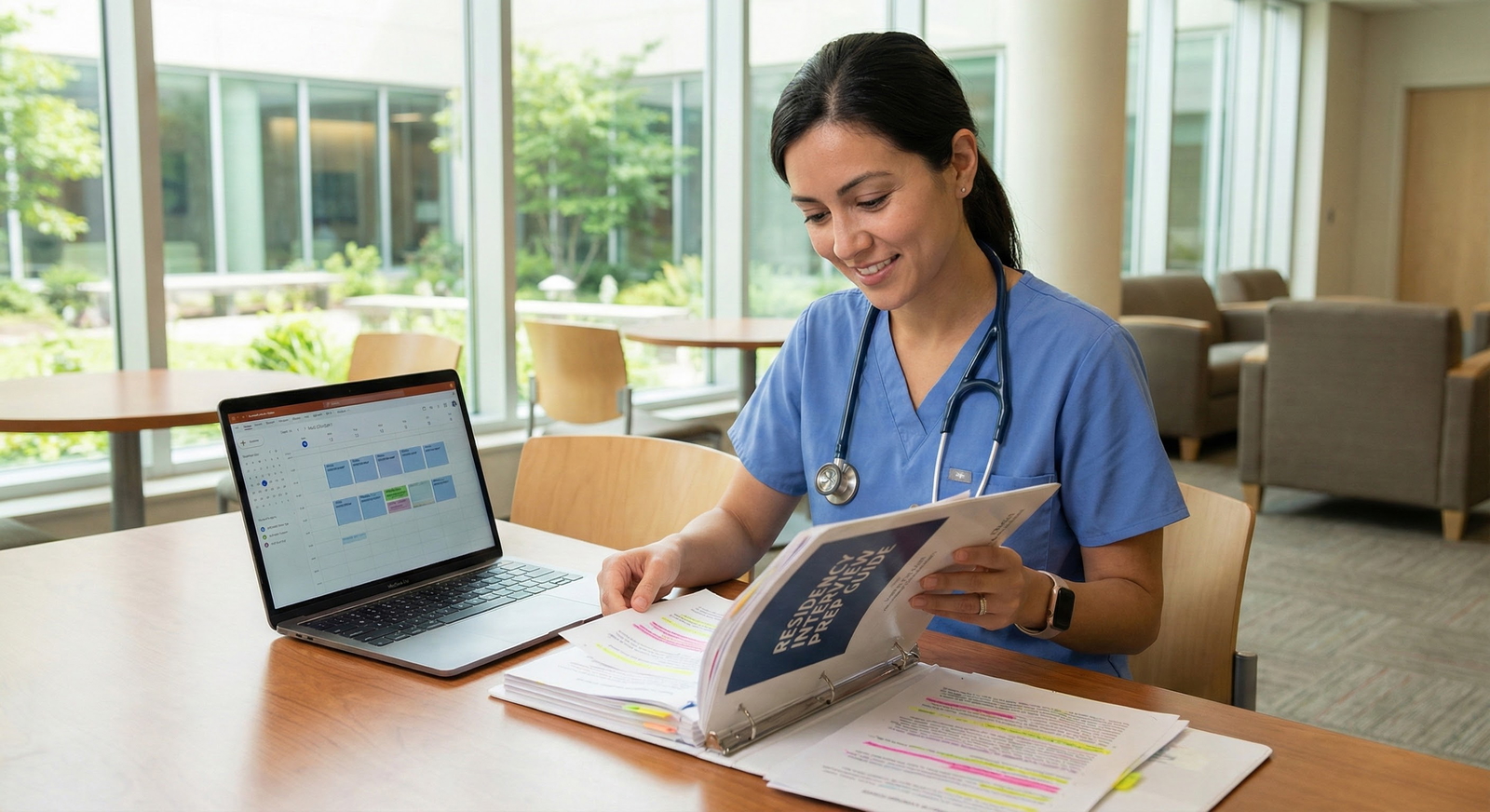
- Use a calendar system (Google Calendar, Outlook) and convert all interviews to your local time immediately.
- Double-check that you correctly accounted for daylight saving time changes in the U.S.
- Avoid scheduling interviews too close together; allow time for:
- Technical difficulties
- Running over time
- Short breaks between sessions
If you’re in a vastly different time zone, practice being alert and articulate at the times your interviews will occur (e.g., if you must interview at 2–4 AM local time, adjust sleep schedule briefly around interview days).
4.2 Technical Setup for Virtual Interviews
Before the interview season starts:
- Internet: Use the most stable connection you can (wired if possible). Test with a video call platform similar to Zoom, Webex, or Thalamus.
- Device: Prefer a laptop or desktop with a good camera; avoid using only a phone unless absolutely necessary.
- Environment: Quiet, private, neutral background (plain wall, tidy bookshelf). Avoid clutter and personal items that might distract.
- Audio: Use wired or high-quality wireless earbuds/headset. Test mic and speakers in advance.
- Backup plan: Have a secondary device and hotspot ready. Save program contact emails/phone numbers in case you get disconnected.
Practice at least one full-length mock interview with all your real equipment and setup. This is as important as your content practice.

4.3 Professional Appearance and Documents
For both virtual and in-person interviews:
- Attire:
- Men: Button-down shirt, tie, blazer or suit jacket; conservative colors.
- Women: Blouse with blazer, conservative dress or pantsuit; minimal, professional jewelry.
- Avoid white coats during interviews; they are not necessary and can look out of place.
- Grooming: Neat hair, trimmed facial hair if applicable, minimal strong fragrances.
Prepare a digital interview folder:
- ERAS application PDF
- CV
- Personal statement
- List of programs with notes
- List of questions to ask interviewers
- Copies of emails confirming interview dates/times, meeting links
Have these easily accessible but do not read from them during the actual interview.
Step 5: Pre-Interview Day Routines and Mindset
The 24–48 hours before your interview are critical. Structured routines reduce anxiety and help you appear calm and confident.
5.1 Final Program Review
The day before each interview:
- Re-read your one-page program summary.
- Identify 2–3 specific features to mention (e.g., strong ICU experience, exposure to complex pathology, track record with IMGs, collaboration with your intended advanced specialty).
- Prepare 3–5 tailored questions for:
- Program director or associate program director
- Current residents (especially prelims if available)
- Faculty from relevant subspecialties
Examples:
- “How are preliminary interns integrated with categorical interns on ward and ICU rotations?”
- “What kind of mentorship or support is available to prelims who are applying to advanced specialties or reapplying to categorical programs?”
- “Can you describe the typical balance between ward months, ICU, and elective time for prelim IM interns?”
5.2 Mental and Physical Preparation
- Sleep: Prioritize 7–8 hours if possible, adjusted for time zone issues.
- Food and hydration: Eat a simple, familiar meal before the interview. Avoid excessive caffeine if it increases your anxiety.
- Warm-up: 30 minutes before the interview:
- Review 3–4 key stories
- Answer 2–3 practice questions out loud to “warm up” your speech
- Do a brief calming routine (deep breaths, short walk, stretching)
5.3 Mindset as an IMG Applying to Prelim IM
Remind yourself:
- You bring unique strengths: cross-cultural experience, adaptability, resilience, and often significant hands-on responsibility from your home system.
- A preliminary medicine year is not “less than” a categorical year; it is different in structure but intense in responsibility, and programs need strong, reliable interns.
- Programs that invite you already see potential fit. The interview is your chance to confirm what they suspect: that you can function as a safe, hardworking, collegial intern in their specific environment.
Instead of thinking, “They’re judging me as an IMG,” reframe to, “They are trying to understand how my unique background will help their patients and team.”
5.4 Post-Interview Notes and Thank-You Messages
Immediately after each interview:
- Write down:
- Names and roles of interviewers
- Specific things you discussed
- Your impressions of resident culture, schedule, and support for IMGs
- How the program aligns with your goals (prelim year + future specialty)
Within 24–48 hours, send short, personalized thank-you emails:
- Refer to one or two specific discussion points.
- Reaffirm your interest and your understanding of the prelim IM role.
- Keep messages professional and concise.
While not mandatory at every institution, these messages can reinforce a positive impression, especially in smaller or community-based programs where PDs remember individual applicants more easily.
FAQs: Pre-Interview Preparation for IMGs in Preliminary Medicine
1. As an IMG, how should I explain my interest in a preliminary medicine year instead of categorical internal medicine?
Be honest and specific. If you have an advanced match (e.g., neurology, anesthesia), emphasize how a solid prelim IM foundation will make you a better specialist. If you’re planning to apply to categorical IM or another specialty later, explain that you see prelim IM as a structured path to gain U.S. clinical experience, letters, and familiarity with the health system. Always show that you understand the demands of a prelim intern year and that you are committed to doing it well, not treating it as “just a transition.”
2. What are the most important interview questions residency programs will ask IMGs applying for prelim IM?
Expect variations of: “Why the U.S.?” “Why preliminary medicine?” “What are your long-term plans?” “Tell me about a difficult patient or clinical case.” “How do you handle stress?” and “Tell me about a time you made a mistake.” They will also often probe your IMG journey—gaps in training, US clinical experiences, visa needs. Prepare 8–12 strong stories that demonstrate clinical judgment, teamwork, professionalism, and adaptability.
3. How can I stand out during residency interview preparation if I have limited U.S. clinical experience?
Highlight the quality, not just the location, of your experience. Emphasize:
- High-responsibility roles you held in your home country
- Rotations or observerships in systems similar to the U.S.
- Concrete examples of working with limited resources, complex patients, or busy services
- Any U.S.-based letters of recommendation and what they say about your performance
Show that you understand the differences between your prior system and the U.S. and that you have a plan to bridge any gaps quickly as a prelim intern.
4. How early should I begin residency interview preparation for a preliminary medicine application as an IMG?
Start at least 2–3 months before typical interview season (often October–January). Use the first few weeks to research programs and define your goals clearly. Then spend several weeks building and refining your story bank, doing mock interviews, and optimizing your virtual setup. As interviews approach, shift your focus to program-specific preparation, sleep and schedule management, and mental readiness. Early, consistent practice is far more effective than trying to “cram” one week before your first interview.
By combining targeted research, structured storytelling, focused practice, and thoughtful logistics, you can enter each prelim IM interview as an international medical graduate who is prepared, confident, and ready to contribute meaningfully from day one of residency.