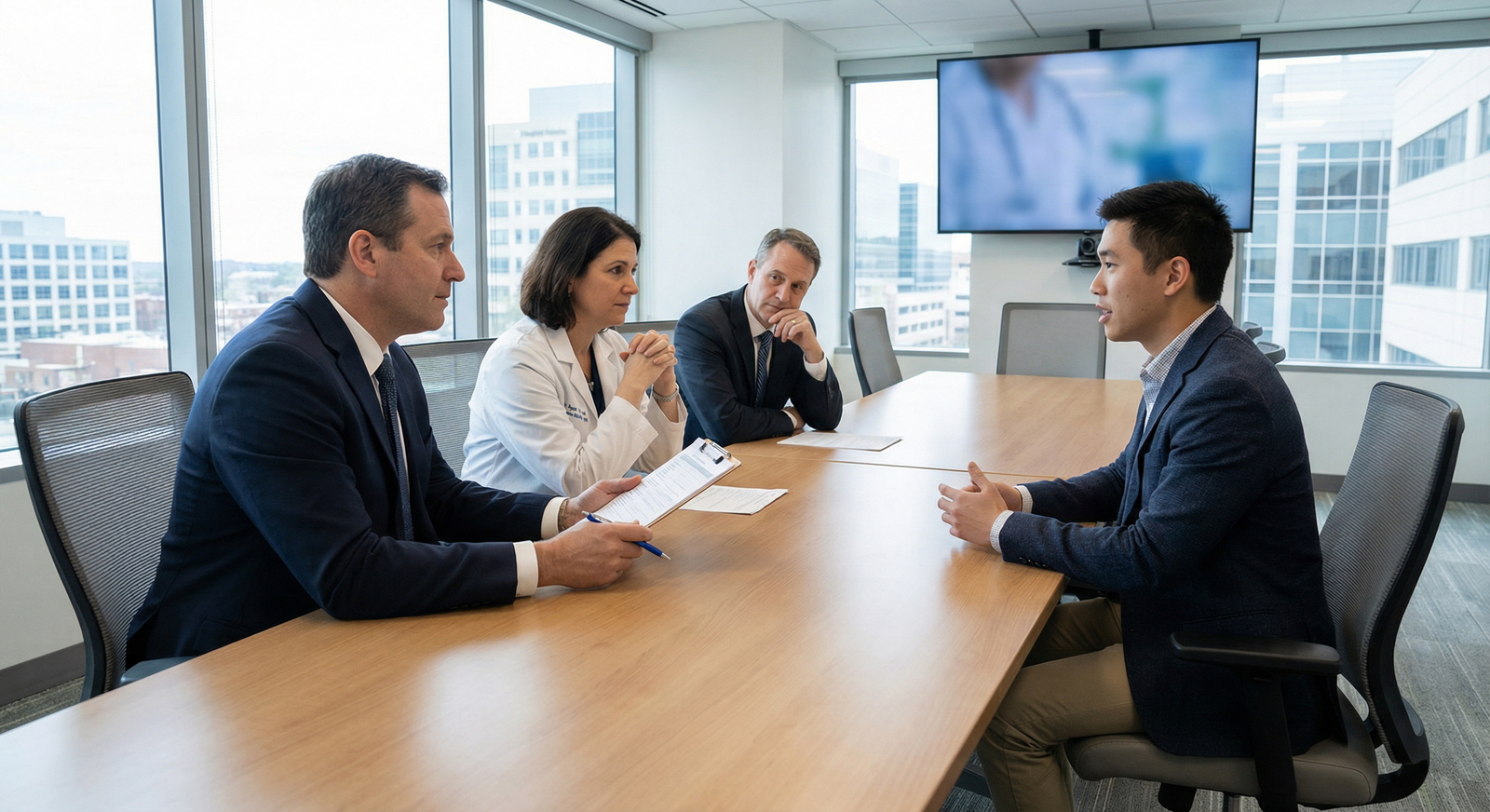
Understanding the Preliminary Surgery Pathway as an IMG
A strong pre-interview strategy starts with clarity about the path you’re pursuing. As an international medical graduate (IMG) aiming for a preliminary surgery year, you are entering a track that is often misunderstood—even by applicants.
What is a Preliminary Surgery Residency?
A prelim surgery residency is a 1-year position, usually PGY-1, in general surgery that does not guarantee continuation to PGY-2 within that program. It is distinct from:
- Categorical General Surgery – 5+ year tracked program leading to board eligibility.
- Transitional Year – Broad, mixed specialty internship with more electives.
Prelim surgery years are used for:
- Applicants planning to re-apply for categorical surgery or another surgical specialty.
- Future anesthesiologists, radiologists, urologists, ophthalmologists, etc., who need a surgical internship.
- IMGs trying to build US experience, strengthen their CV, and earn strong letters.
Understanding this context will shape how you frame your story and goals during residency interview preparation.
What Programs Look for in an IMG Prelim Surgery Applicant
Before you prepare answers, know what they are actually judging:
Work ethic and resilience
Prelim surgery is heavy on service: long hours, high patient volume, and frequent cross-coverage. Programs need reliable, tireless interns.Teamwork and communication
You will interact with residents from different specialties, OR staff, nurses, and consultants. Strong spoken English and clear communication are essential.Adaptability to the U.S. system
IMGs are evaluated on how quickly they can learn U.S. workflows, documentation, EMR use, and OR safety culture.Professionalism and humility
You may come with significant experience, but as a prelim intern you must be teachable, receptive to feedback, and ready to do foundational work.Evidence of surgical interest and reliability
For many programs, prelims are the “workhorse” layer. They look for applicants who want surgery (even if ultimately applying elsewhere) and who will show up, help the team, and put patients first.
Pre-interview preparation is about demonstrating these qualities, consistently, throughout your application, behavior, and answers.
Step 1: Clarify Your Goals and Narrative
Before you practice interview questions residency programs might ask, you need a coherent narrative. Strong answers come from a clear understanding of your own story.
Define Your Short-Term and Long-Term Goals
Write these down:
Short-term (1–2 years)
- Complete a preliminary surgery year in a U.S. teaching hospital.
- Gain robust U.S. clinical experience and letters.
- Improve comfort in the OR and U.S. wards.
- Potentially reapply to categorical surgery or apply to your intended advanced specialty.
Long-term (5–10 years)
- Become a board-certified surgeon or specialist in the U.S.
- Practice in a particular environment: academic, community, rural, research-intensive, etc.
- Focus on areas you care about: surgical education, global surgery, quality improvement, or subspecialty training.
Programs want to hear a plausible, honest plan, even if it doesn’t guarantee you’ll stay in surgery long-term.
Connect Your Story to Preliminary Surgery
You should be ready to answer variations of:
- “Why are you applying to a prelim surgery residency instead of categorical?”
- “Where do you see yourself after this one-year position?”
- “How does this preliminary surgery year fit into your career goals as an international medical graduate?”
Prepare a framework like:
“As an international medical graduate, my goal is to build a career in [surgical field / related specialty] in the U.S. My previous training in [country] gave me strong clinical fundamentals, but I need structured U.S. surgical experience, exposure to OR protocols, and U.S. letters of recommendation. A preliminary surgery year is the most efficient and honest way to gain these. I expect a challenging year with high workload, and I’m ready for that. In return, I hope to contribute reliable patient care and strong team support.”
Make sure your IMG residency guide (your own personal plan) has this narrative reinforced in your CV, personal statement, and future answers.
Step 2: Research Programs Strategically and Thoroughly
One of the most overlooked parts of how to prepare for interviews is program research. Generic answers reveal themselves quickly to faculty.
Build a Program Research Template
For each interview you receive, create a one-page summary with:
Program basics
- Size of prelim class and categorical class
- Trauma center level, case volume, night float structure
- Affiliated hospitals, VA or county hospital involvement
Prelim-specific outcomes
- Do they keep some prelims as categorical PGY-2s if spots open?
- Where have prior prelims matched (e.g., anesthesia, radiology, surgery categorical)?
- Are there formal mentorship or advising systems for prelims?
Program culture and strengths
- Known research areas (trauma, colorectal, surgical oncology, critical care, etc.)
- Emphasis on service vs. education (clues from resident comments on forums, FREIDA, program website)
- Diversity and international presence among current residents
Why this program fits you
- What specific aspects match your goals as an IMG (e.g., strong simulation lab, robust ICU exposure, history of supporting IMGs)?
This preparation lets you answer the classic question “Why our program?” with specific, credible details.
Leverage IMG-Specific Resources
As an international medical graduate, you have unique constraints and opportunities. Use targeted resources:
- FREIDA, program websites, and alumni networks to identify:
- Programs that historically accept IMGs
- Visa sponsorship (J-1 vs. H-1B)
- Former or current IMGs at the institution via LinkedIn or professional networks
- Online communities and forums (with caution; cross-check information with official sources)
Your goal is to walk into each interview understanding:
- How IMGs fare at that program
- How prelims are treated and supported
- Whether the culture aligns with what you need as a new physician in the U.S.

Step 3: Master Core Residency Interview Questions (with a Surgery Focus)
Systematic practice with high-yield interview questions residency programs commonly ask is central to residency interview preparation. For a preliminary surgery year, emphasize endurance, team spirit, and adaptability.
High-Yield Traditional Questions and How to Structure Answers
Use the “3-part answer” method: brief headline → 1–2 concrete examples → connection to program/surgery.
Tell me about yourself.
- Keep it 1.5–2 minutes.
- Include: origin, medical training, key steps that led you to surgery/US, and what you’re looking for in a prelim year.
- End with: “So today I’m applying for a preliminary surgery year to gain structured U.S. surgical training and contribute to a high-volume team.”
Why surgery? Why now?
- Mention specific experiences (clerkships, cases, mentors) that drew you to surgery.
- Highlight traits surgery rewards: decisiveness, manual skills, stamina, comfort with responsibility.
- Show you understand the lifestyle and still want it.
Why a preliminary surgery year instead of a categorical spot?
- Be honest but strategic:
- Need U.S. experience and letters
- USMLE attempts or score profile
- Transitioning from another system/specialty and needing proof of performance
- Avoid sounding like this is a “backup” you don’t value.
- Be honest but strategic:
Tell me about a challenging clinical situation or conflict.
- Use STAR (Situation, Task, Action, Result).
- Emphasize communication, calm under pressure, and patient safety.
- Include how you changed your behavior or learned from it.
What are your weaknesses?
- Choose a real, manageable weakness (e.g., initial hesitation in delegating, accent/communication adaptation, early difficulty with documentation speed).
- Focus on what you are doing to improve and concrete outcomes.
How will you handle the workload of a surgical prelim year?
- Show prior evidence of long hours: internships, night shifts, call.
- Talk about your systems: sleep hygiene, time management, asking for help early, and respecting patient safety over pride.
Behavioral and Ethics-Focused Questions
Programs increasingly test professionalism and fit:
“Describe a time you made a mistake.”
- Choose something real but not catastrophic; show accountability and learning.
“How do you handle feedback and criticism?”
- Give an example in which critical feedback improved your practice.
“Have you ever worked with someone difficult?”
- Show empathy, communication attempts, and escalation only when needed.
“What would you do if you felt a senior’s plan endangered a patient?”
- Emphasize respectful questioning, gathering facts, and safe escalation through appropriate channels.
Practice Strategy for IMGs
As an IMG, you may face extra challenges with accent, idioms, and speed of speech. Prepare by:
Recording yourself answering 5–7 core questions and watching critically:
- Are you clear?
- Do you ramble?
- Do you give enough detail?
Practicing with:
- Native or fluent English speakers
- Mentors familiar with U.S. interview styles
- Mock interviews via your medical school, observership sites, or IMG coaching groups
Focus not only on what you say, but how confidently and concisely you deliver it.
Step 4: Address IMG-Specific Challenges Directly and Professionally
The IMG residency guide for interviews must include strategies for common, difficult topics you’re likely to face.
Explaining Gaps, Attempts, or Red Flags
Typical issues may include: time since graduation, USMLE failures, repeating years, career changes, or immigration interruptions.
Be honest, succinct, and future-oriented
- Briefly describe what happened.
- Take responsibility where appropriate.
- Emphasize what you learned and how you changed your approach.
Example (USMLE Step failure):
“I failed Step 2 on my first attempt during a period when I was working full-time and preparing for exams without structured support. I reassessed my study methods, enrolled in a formal review course, used question banks more systematically, and passed with a significantly improved score. That experience changed how I approach large tasks: I now seek mentorship early, build clear schedules, and monitor my progress objectively.”
Link your growth to preparation for a demanding prelim year
- Emphasize resilience, adaptability, and improved systems for performance.
Communicating Training from Your Home Country
Many interviewers are unfamiliar with non-U.S. training structures. Clarify:
- Your level of responsibility (e.g., “equivalent to an intern” or “junior resident”).
- Volume of patients, on-call duties, and exposure to surgical care.
- Any prior surgical experiences: assisting in OR, minor procedures, pre- and post-op management.
This helps them see that you’re not starting from zero—you’re transitioning into a new system.
Visa and Long-Term Planning
You may be asked indirectly about immigration status or intentions. Do:
- Know what visa you qualify for (J-1 vs. H-1B) and what the program sponsors.
- Express your intention to complete appropriate training in the U.S. while respecting program policies and national regulations.
Avoid sounding uncertain or uninterested in the U.S. training system; programs invest heavily even in prelims and want you to take this seriously.

Step 5: Optimize Logistics, Presentation, and Professionalism
Pre-interview preparation also includes practical, non-academic aspects: appearance, technology, time zones, and documents.
Appearance and Professional Dress
For both virtual and in-person interviews:
Wear conservative, professional attire:
- Dark suit (navy, black, or charcoal) with light shirt/blouse.
- Minimal jewelry and fragrance.
- Neat grooming; if you wear a hijab, turban, or other religious covering, choose professional, solid colors.
Check how your outfit looks on camera (for virtual sessions):
- Avoid busy patterns.
- Ensure good contrast with your background.
Virtual Interview Setup (Common for Many Programs)
If interviews are virtual, prepare:
- Background: neutral wall, tidy bookshelf, or simple decor. Avoid clutter and distractions.
- Lighting: face a window or use a lamp behind your camera for front lighting.
- Audio: use a quality headset or quiet environment; test echo and background noise.
- Internet: wired connection if possible; have a backup (mobile hotspot).
Practice looking into the camera when speaking—it simulates eye contact.
Time Management and Time Zones
As an IMG, you may be interviewing from outside the U.S.:
- Convert time zones carefully and confirm the program’s location (e.g., EST vs. CST).
- Set multiple alarms and reminders.
- Have a written schedule of your interview day: sign-in times, breaks, social events with residents.
Late arrival or technical chaos can overshadow a strong application.
Organizing Your Documents and Notes
Have ready access to:
- Your ERAS application, CV, and personal statement.
- A one-page summary of each program (from your research).
- A list of:
- 4–5 key examples to use in behavioral questions.
- 5–7 questions to ask faculty and residents.
Don’t read from notes directly during the interview, but having them prepared beforehand increases your confidence and fluency.
Step 6: Prepare Insightful Questions for Faculty and Residents
Your questions are part of how programs evaluate your maturity, insight, and seriousness about their prelim position.
Questions for Program Directors/Faculty
Focus on structure, support, and outcomes for prelims:
- “How are preliminary residents integrated into the team compared with categorical residents?”
- “What mechanisms are in place to support prelims who are reapplying to categorical surgery or other specialties?”
- “Could you describe typical operative exposure for prelim residents over the year?”
- “How often have prelims from your program successfully transitioned to categorical surgery or advanced positions, either here or elsewhere?”
These questions show you understand the reality of a preliminary surgery year and are thinking strategically.
Questions for Current Residents
Focus on culture and day-to-day reality:
- “How are prelims treated on your team? Do you feel they receive mentorship and significant responsibility?”
- “What does a typical day and week look like for a prelim on your most demanding rotation?”
- “How approachable are attendings and chiefs when you have questions or concerns?”
- “What advice would you give to an IMG starting here as a prelim?”
Listen for red flags: consistent themes of lack of support, extreme service burden without teaching, or poor treatment of prelims.
Step 7: Final 72-Hour Checklist Before Each Interview
To make your residency interview preparation practical, here is a targeted checklist:
3 Days Before
- Re-review:
- Program website and your one-page program summary.
- Your personal statement and CV to remember details you may be asked about.
- Refresh key examples:
- 2–3 patient care stories.
- 1–2 conflict or error stories.
- 1 research or project story (even if not surgery-related).
- Do a 30-minute mock interview focusing on:
- “Tell me about yourself.”
- “Why surgery? Why prelim?”
- “Why this program?”
1 Day Before
- Test technology (for virtual interviews): sound, camera, internet speed.
- Choose clothes; prepare backups (tie, blouse, etc.).
- Print or set aside:
- Interview schedule and contact email/phone in case of technical issues.
- Short list of questions to ask.
- Sleep early; avoid heavy late-night studying that increases anxiety.
Morning of the Interview
- Check time zone and sign-in instructions again.
- 10 minutes of warm-up:
- Speak aloud in English to clear your voice and accent.
- Review your 60–90 second “Tell me about yourself” and “Why prelim surgery?” answers.
- Prepare water and a notepad.
By transforming this into a routine, each new interview will feel less stressful and more controlled.
FAQs: Pre-Interview Preparation for IMGs in Preliminary Surgery
1. As an IMG, should I openly say I plan to reapply for categorical surgery or another specialty?
Yes, but phrase it thoughtfully. Programs understand that many prelim surgery residency positions are stepping stones. You might say:
“My long-term goal is categorical training in [general surgery / another specialty]. I see this preliminary surgery year as a critical opportunity to build U.S.-based clinical skills, earn strong letters, and contribute meaningfully to a busy service. I’m fully committed to giving my best to this program during the year, regardless of where I match afterward.”
Programs value honesty combined with commitment to the immediate role.
2. How can I stand out as an international medical graduate among many applicants?
Stand out by combining:
- Clear, consistent narrative: why surgery, why U.S., why prelim.
- Evidence of resilience and work ethic: prior training, call duties, overcoming obstacles.
- Good communication: concise, fluent responses and active listening.
- Understanding of the U.S. system: familiarity with teamwork, safety culture, and patient-centered care.
You don’t need to be perfect; you need to be credible, teachable, and hardworking.
3. How much should I talk about my home country’s surgical experience?
Use it to your advantage, but translate it into U.S. terms. Briefly explain:
- Your role (“similar to an intern/junior resident”).
- Patient volume and typical responsibilities.
- Any OR involvement.
Then emphasize how this background will help you adapt quickly to the demands of a prelim surgery year. Avoid sounding like you think you already know everything; emphasize your readiness to learn U.S.-specific protocols and culture.
4. What if my accent or English fluency is not perfect?
Programs do not expect complete accent-free English, but they do expect clear, functional communication. To prepare:
- Practice speaking daily, especially medical scenarios.
- Use mock interviews with native speakers who can give feedback.
- Slow your speaking pace slightly; clarity is more important than speed.
- Ask for clarification during interviews if you don’t understand a question: “I want to be sure I answer correctly—could you please repeat or rephrase that?”
Demonstrating awareness and steady improvement is more important than sounding like a native speaker on day one.
Thorough pre-interview preparation as an IMG pursuing a preliminary surgery year is not only about memorizing answers; it is about understanding your own story, the program’s needs, and the reality of the job you are seeking. If you align these three elements—your goals, their expectations, and the demands of prelim surgery—you will present as a focused, mature, and reliable future colleague.