Understanding the Transitional Year Landscape as an IMG
Transitional Year (TY) residency programs are uniquely attractive for many international medical graduates (IMGs): they provide a broad clinical foundation, a relatively lighter call schedule in some programs, and time to clarify or strengthen your path into advanced specialties (e.g., radiology, anesthesiology, dermatology, PM&R).
To prepare effectively for residency interviews, you first need a clear understanding of:
- What a Transitional Year program is
- What TY program directors look for, especially in IMGs
- How your profile and goals align with specific programs
What is a Transitional Year (TY) Program?
A Transitional Year residency is:
- A one-year, ACGME-accredited, broad-based clinical training year
- Typically followed by an advanced residency (e.g., radiology, anesthesiology, neurology, radiation oncology)
- Designed to provide rotations across core disciplines such as internal medicine, surgery, emergency medicine, and electives
Programs vary widely:
- Some are more inpatient-heavy, similar to preliminary medicine or surgery
- Others are more flexible, allowing substantial elective time, research blocks, or subspecialty exposure
As an IMG, you must be ready in your interviews to:
- Explain why a TY year (and not prelim medicine/surgery) fits your trajectory
- Connect the TY program’s structure with your specific long-term specialty and career goals
Why Program Directors Are Cautious and Hopeful About IMGs
Program directors often describe IMGs as:
- Highly motivated and hardworking
- Frequently experienced clinicians with substantial patient care exposure
- Sometimes less familiar with U.S. healthcare systems, documentation, communication styles, and team dynamics
For an IMG residency guide specifically tailored to TY programs, you must counter common concerns in your pre-interview preparation:
- Communication and language: Clear, concise English in both patient and team interactions
- System familiarity: Understanding of EMR, U.S. hospital hierarchy, handoffs, and documentation expectations
- Adaptability: Ability to adapt to culture, expectations, and workflows quickly
- Long-term fit: Evidence you have a realistic plan beyond the TY year
Program directors want to see that you:
- Understand exactly what a TY offers (and its limits)
- Have a credible long-term plan (e.g., already matched into an advanced position, applying next cycle, or strengthening your profile)
- Will be reliable, low-drama, and teachable from day one
Strategic Pre-Interview Planning for IMGs Applying to TY Programs
Pre-interview preparation starts long before you pick out an outfit. It is a structured process that should begin as soon as you start getting interview invitations.
Step 1: Clarify Your Narrative and Career Plan
Before you practice any interview questions, you must be crystal clear on your own story.
Ask yourself:
Why do I want a Transitional Year specifically?
- Example: “I am starting diagnostic radiology next year and want broad clinical exposure and strong intern-level competence to be a better consultant.”
- Example: “I am building U.S. clinical experience while applying for anesthesiology; a flexible TY gives me exposure to perioperative medicine and critical care.”
What is my long-term specialty goal?
- If you already have an advanced spot, say so clearly.
- If you are reapplying, explain what you are doing differently and how the TY year fits into your improvement plan.
How does my IMG background strengthen a TY program?
- Diverse clinical experience, multilingual ability, resilience, adaptability, prior leadership/teaching, etc.
Write out a one-page personal narrative that includes:
- Where you trained and your major experiences (home country + U.S.)
- Why you chose your long-term specialty
- Why you are seeking a Transitional Year specifically
- How you see yourself contributing to and benefiting from the program
- Your 5–10 year career vision in the U.S.
This narrative will be the foundation for many interview answers, including “Tell me about yourself” and “Why this program?”
Step 2: Build a Program-Specific Preparation System
IMGs frequently interview across very different institutions—community vs. academic, large vs. small—so a structured approach is critical.
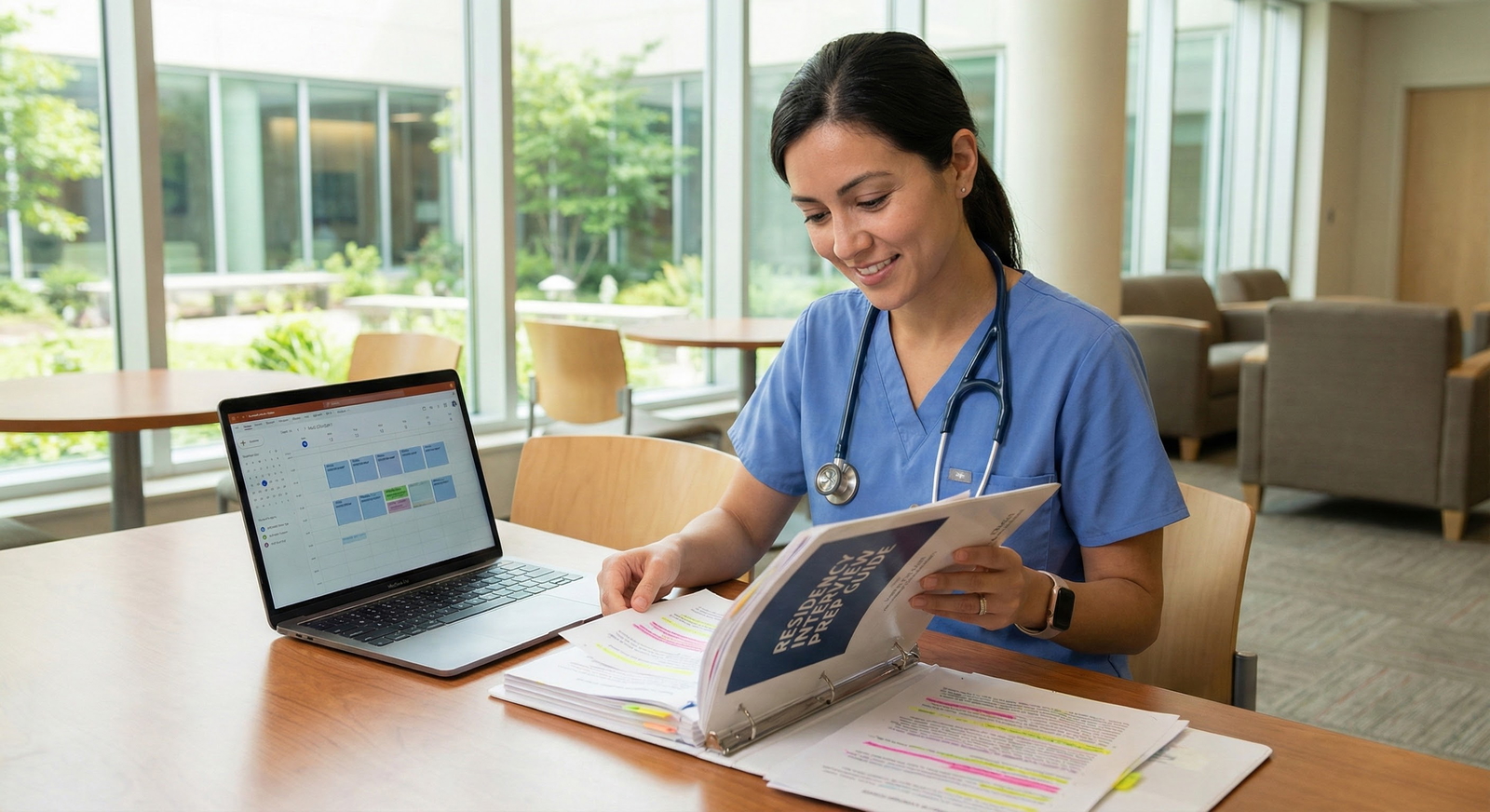
Create a program tracker (spreadsheet or document) including:
- Program name and location
- Hospital type: Academic / community / hybrid
- Key features of the TY program:
- Inpatient months
- Elective time and structure
- Night float / call system
- Affiliated advanced specialties (radiology, anesthesia, etc.)
- Unique strengths:
- Research opportunities
- Simulation training
- Global health or community service tracks
- Wellness or mentorship programs
- People to remember:
- Program Director (PD)
- Associate PDs (APDs)
- Chief residents
- Any faculty whose interests align with yours
- Your fit talking points: 3–4 bullet points per program
- Questions to ask: at least 4–6 thoughtful, tailored questions
This helps you quickly review each program the evening before your interview and ensures that your responses feel customized, not generic.

Deep Program Research: Turning Facts into Interview Advantages
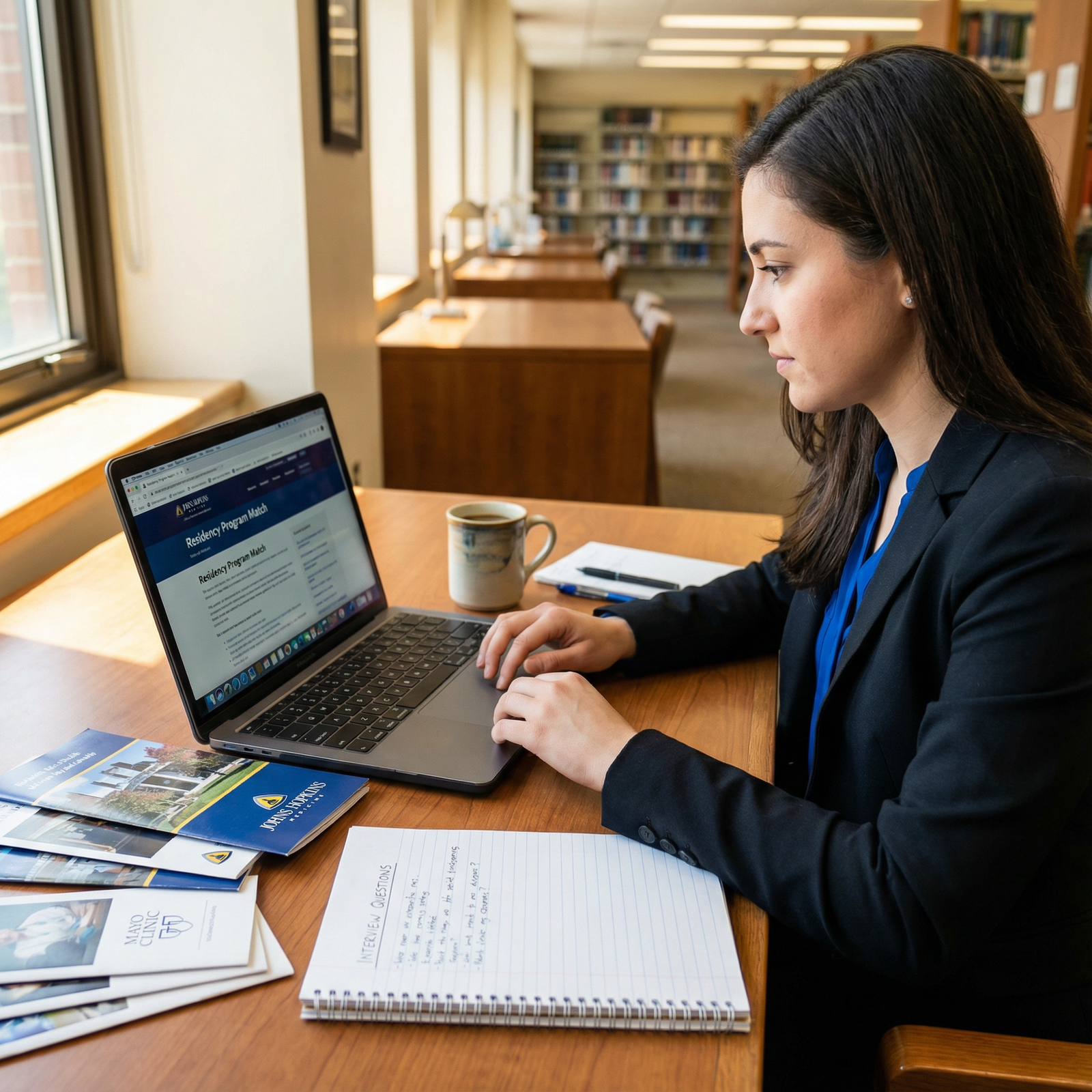
Thorough research is one of the most powerful forms of pre-interview preparation—and a key differentiator in residency interview preparation for IMGs.
Where and How to Research TY Programs
Use multiple sources:
Official program website
- Rotation schedule (PGY-1)
- Didactics and conferences
- Evaluation and feedback systems
- Wellness initiatives
- Resident lists and alumni paths, especially into your target specialty
FREIDA / AAMC / NRMP data
- Number of positions
- IMG-friendliness (number of IMGs in recent classes)
- USMLE requirements
Resident/Alumni Profiles & LinkedIn
- Where do past TY residents go for advanced training?
- Do they match into your target specialty or institutions you admire?
Doximity, Reddit, and forums (with caution)
- May reveal themes about culture, workload, or geography
- Only use as context, not absolute truth
Turning Research into Talking Points
For each program, translate your research into specific ways you fit:
Example 1: Strong elective time for radiology-bound applicant
- Fact: Program offers 3–4 months of electives; close affiliation with radiology department.
- Talking point: “As someone starting diagnostic radiology, your elective time in ICU and radiology, combined with structured ultrasound training, aligns perfectly with the kind of clinical foundation I want before R1.”
Example 2: IMG-friendly, education-focused community program
- Fact: 40–50% of residents are IMGs; structured orientation and documentation training.
- Talking point: “As an international medical graduate, I value how your program intentionally supports residents transitioning into the U.S. system, especially with your early EMR training and direct observational feedback in the first months.”
This kind of specificity shows you took the time to understand the program and signals genuine interest.
Mastering Core Residency Interview Questions (with an IMG–TY Focus)
Structured practice is the heart of how to prepare for interviews successfully. Transitional Year interviews will cover standard residency topics plus TY-specific themes.
Below are common interview questions residency committees ask, with tailored guidance and IMG-focused examples.
1. “Tell me about yourself.”
This is not your entire CV; it’s a 2-minute, structured narrative:
Suggested structure:
- Present: Who you are now (IMG status, recent roles, current location)
- Past: Key experiences that shaped you (medical school, USCE, research)
- Future: Why TY + your long-term specialty and career goals
Example (Radiology-bound IMG):
“I’m an international medical graduate from [Country], currently completing a clinical observership in internal medicine at [Hospital]. During medical school, I developed a strong interest in diagnostic reasoning and imaging, which led to several radiology electives and a research project on CT utilization in the ED. I’ve secured a diagnostic radiology position starting in 2026, and I’m seeking a Transitional Year that will make me a strong, clinically grounded intern. I’m particularly drawn to programs that offer robust inpatient medicine training, ICU exposure, and opportunities to collaborate closely with radiology teams, which is why I’m excited to meet with your program today.”
2. “Why a Transitional Year?” / “Why not a Preliminary year?”
Frame your answer around breadth, flexibility, and alignment with your long-term goals.
- Emphasize the value of broad clinical exposure
- Highlight elective time that supports your advanced specialty
- Distinguish TY from prelim years by discussing customization and balance
Key elements to include:
- You understand that a TY is not a “year off” but a rigorous intern year
- You have a clear plan for how you’ll use electives
- You see TY as integral to becoming a better future [specialist]
3. “Why our program?”
This is where your research pays off. Structure your answer:
- Clinical training strengths you value
- Unique program features tied to your goals
- Your own contribution to the program
Example structure:
“I’m looking for a Transitional Year that provides strong inpatient exposure, early responsibility with appropriate supervision, and elective time aligned with [specialty]. From what I’ve learned, your program offers [X, Y, Z unique features]. I’m especially interested in [specific track / rotation / didactic]. With my background in [relevant experience], I see myself contributing by [specific way you’ll add value].”
4. “Tell me about a challenge you faced as an IMG and how you handled it.”
Program directors want insight into:
- Your resilience
- Your problem-solving skills
- Your cultural adaptability
Use the STAR method (Situation–Task–Action–Result) and choose a story that:
- Is honest but shows you in a positive light
- Involves some element of cultural or system transition
- Ends with clear growth and practical lessons
Avoid stories that:
- Make you appear inflexible, chronically overwhelmed, or blaming
- Center on conflicts you handled unprofessionally
5. “What are your strengths and weaknesses?”
Strengths should be grounded in observable behaviors, not vague adjectives. Examples:
- “I’m reliable and consistent with follow-through; during my U.S. observership, I was often asked to help with handover materials because of my attention to detail.”
- “I communicate clearly and calmly with patients, and I’m comfortable working through language barriers and using interpreters.”
Weaknesses should:
- Be genuine but not dangerous (e.g., “time management in high-volume clinics,” not “I can’t wake up for morning rounds”)
- Include clear steps you’re taking to improve
Example:
“I used to struggle with speaking up in large multidisciplinary team meetings, especially in a new system. Over time, I’ve worked on preparing my key points in advance, asking clarifying questions early, and seeking feedback from my supervisors. I still get a bit nervous in big groups, but I’m now consistently sharing my thoughts and advocating for patient needs.”
6. Behavioral and Ethical Scenarios
Common behavioral questions:
- “Tell me about a time you made a mistake.”
- “Describe a conflict with a coworker and how you resolved it.”
- “Tell me about a time you handled an ethical dilemma.”
Your goals:
- Demonstrate insight, accountability, and growth
- Show that you can navigate team dynamics and patient care ethically
- Reflect an understanding of U.S. professional standards (privacy, informed consent, documentation)
Practice 3–4 stories covering:
- A clinical error or near-miss
- A communication conflict
- An ethical or cultural challenge
- A leadership or teaching moment
You can reuse the same stories in different ways, as long as you adapt them to the question.

Practical Mock Interview and Communication Skills Training
For any IMG residency guide focusing on how to prepare for interviews, mock practice is non-negotiable—especially to refine communication style, pace, and clarity in English.
Designing Effective Mock Interviews
Aim for 3–5 mock interviews before your first real interview:
Who to practice with:
- U.S.-trained physician mentors
- Residents (especially IMGs)
- Faculty from observerships or research positions
- If none available, experienced peers + online mock services
Format:
- 30–45 minutes of questions
- 15–20 minutes of feedback
- Record at least one session (video if possible) to review body language and clarity
Include both:
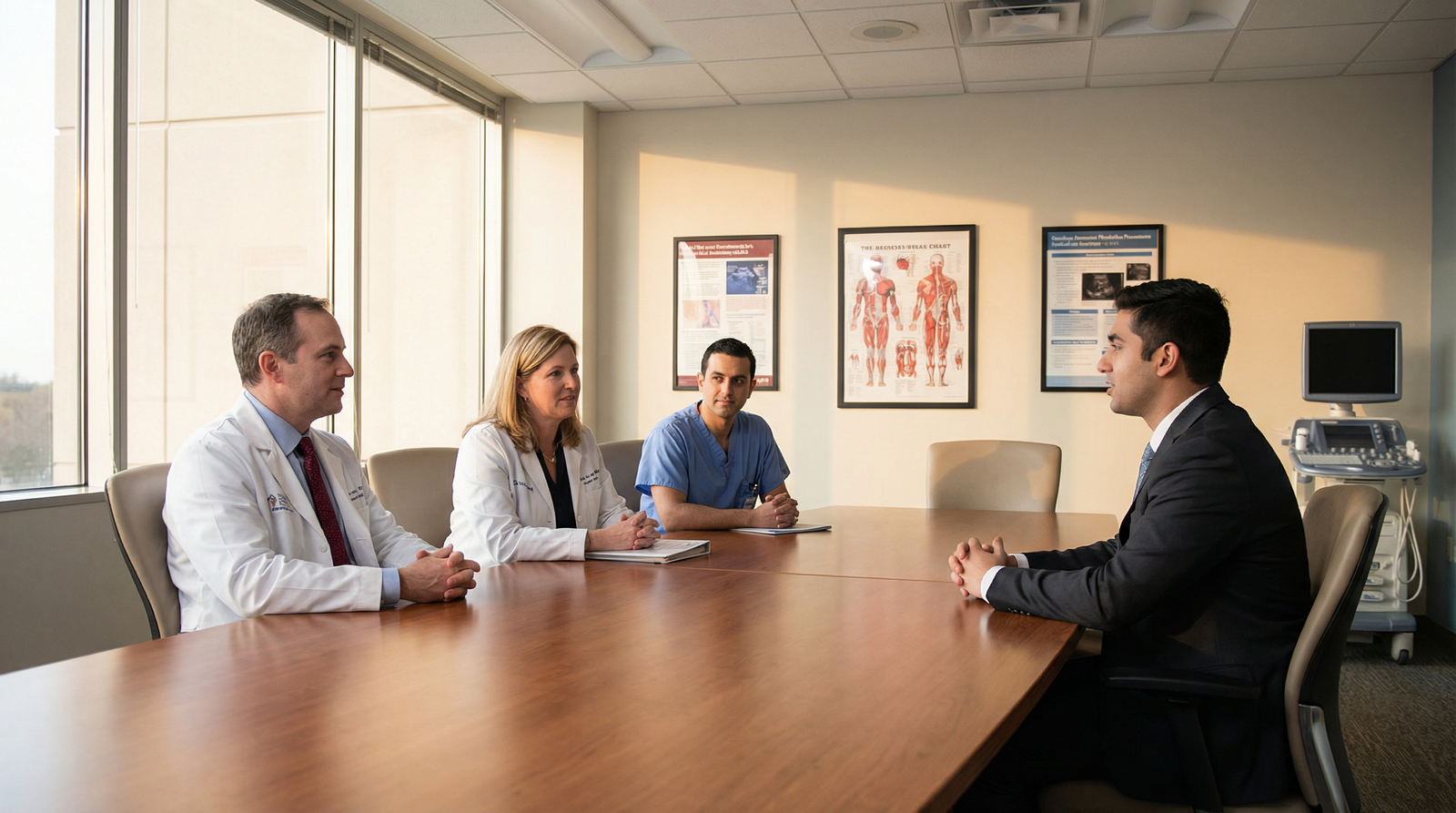
- Traditional interviews (1-on-1 faculty or PD style)
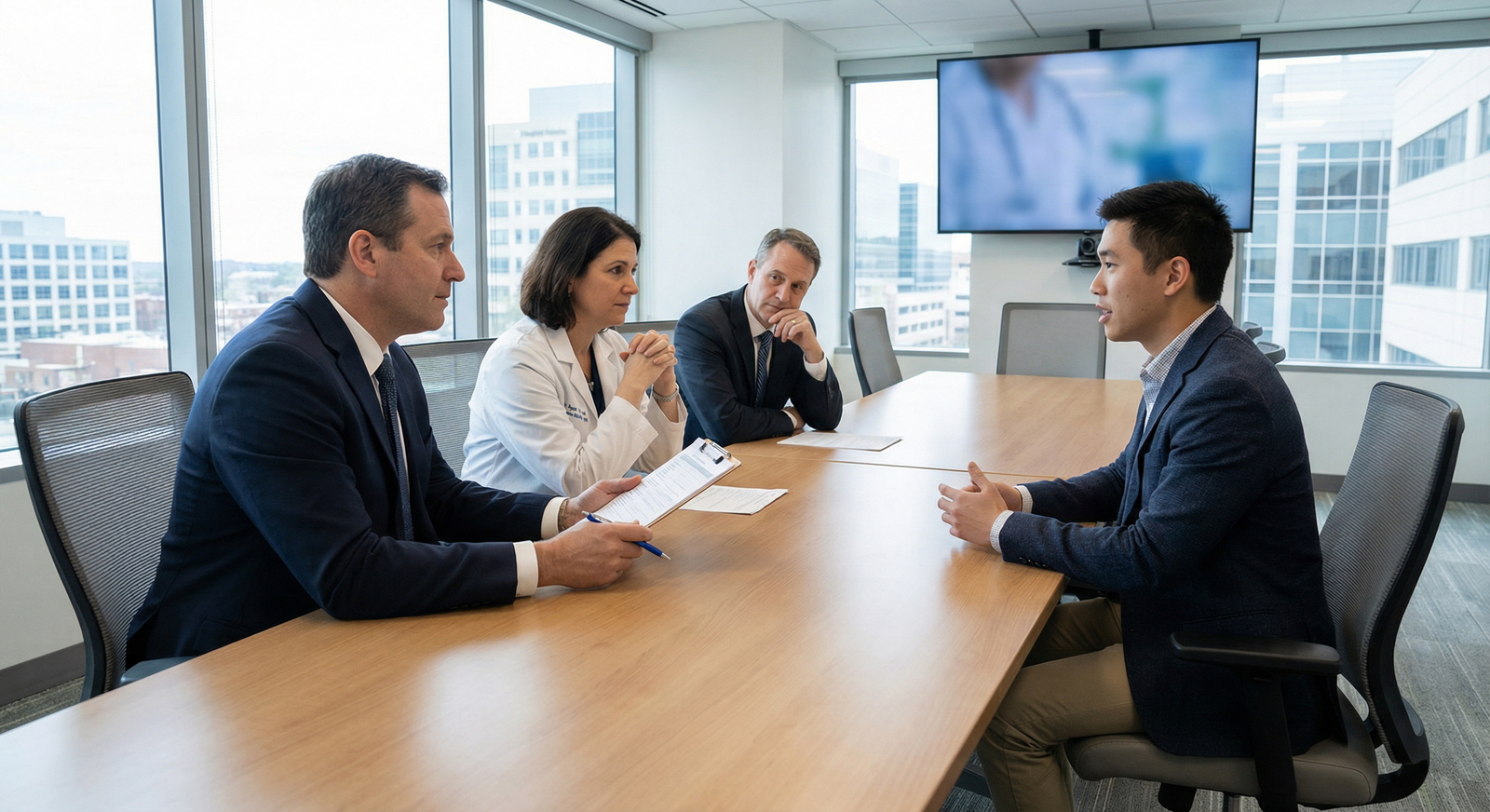
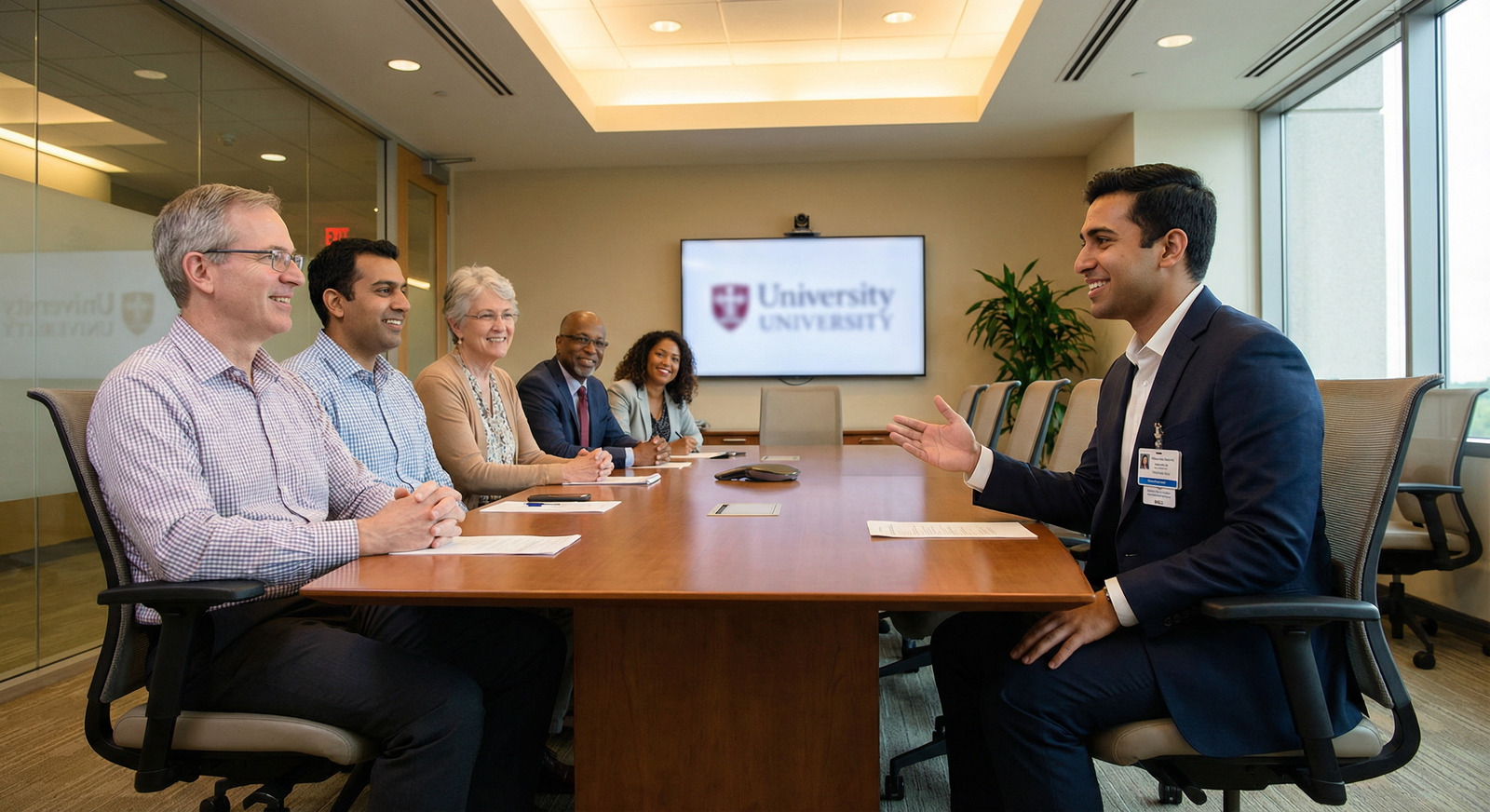
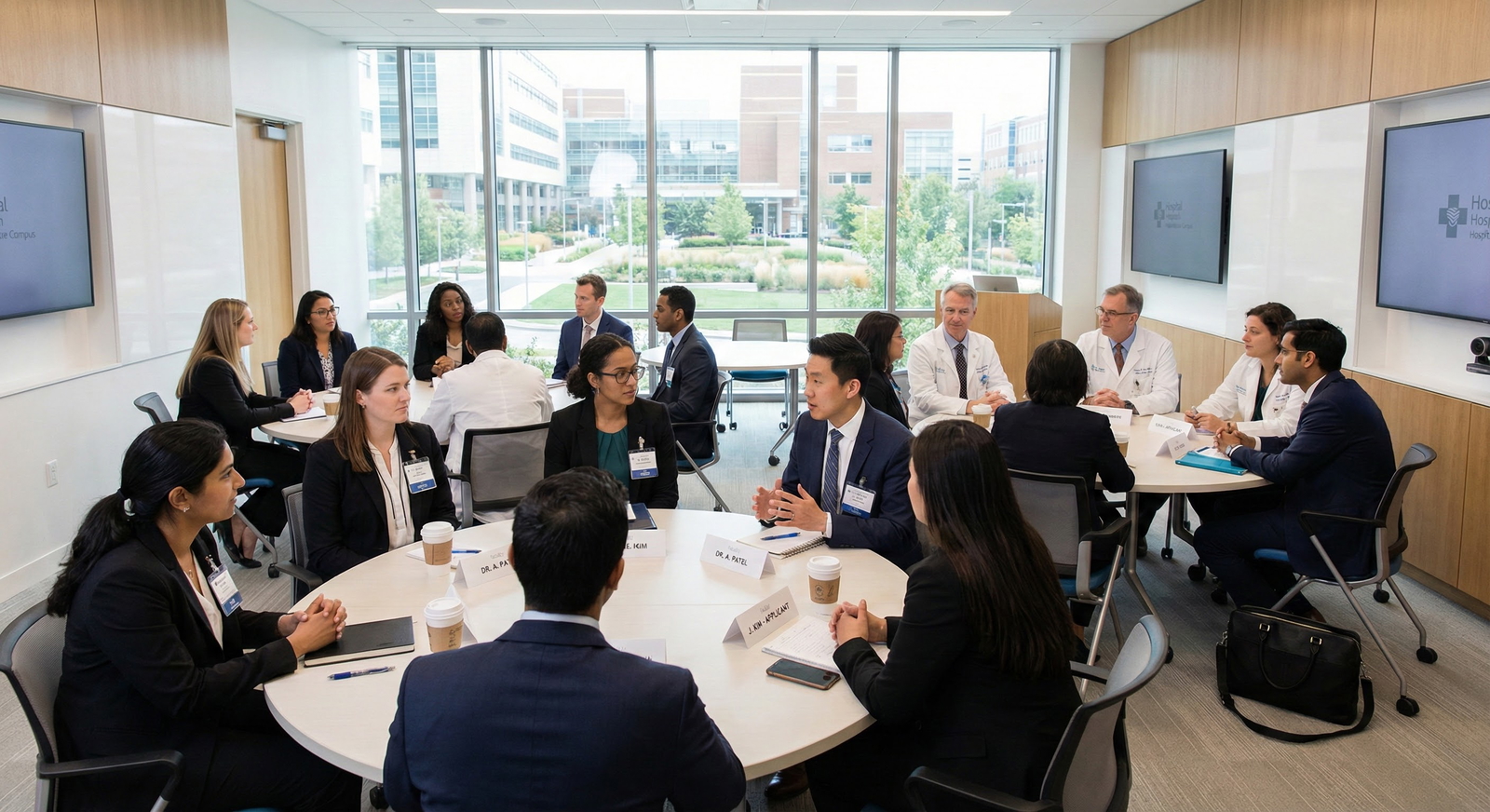
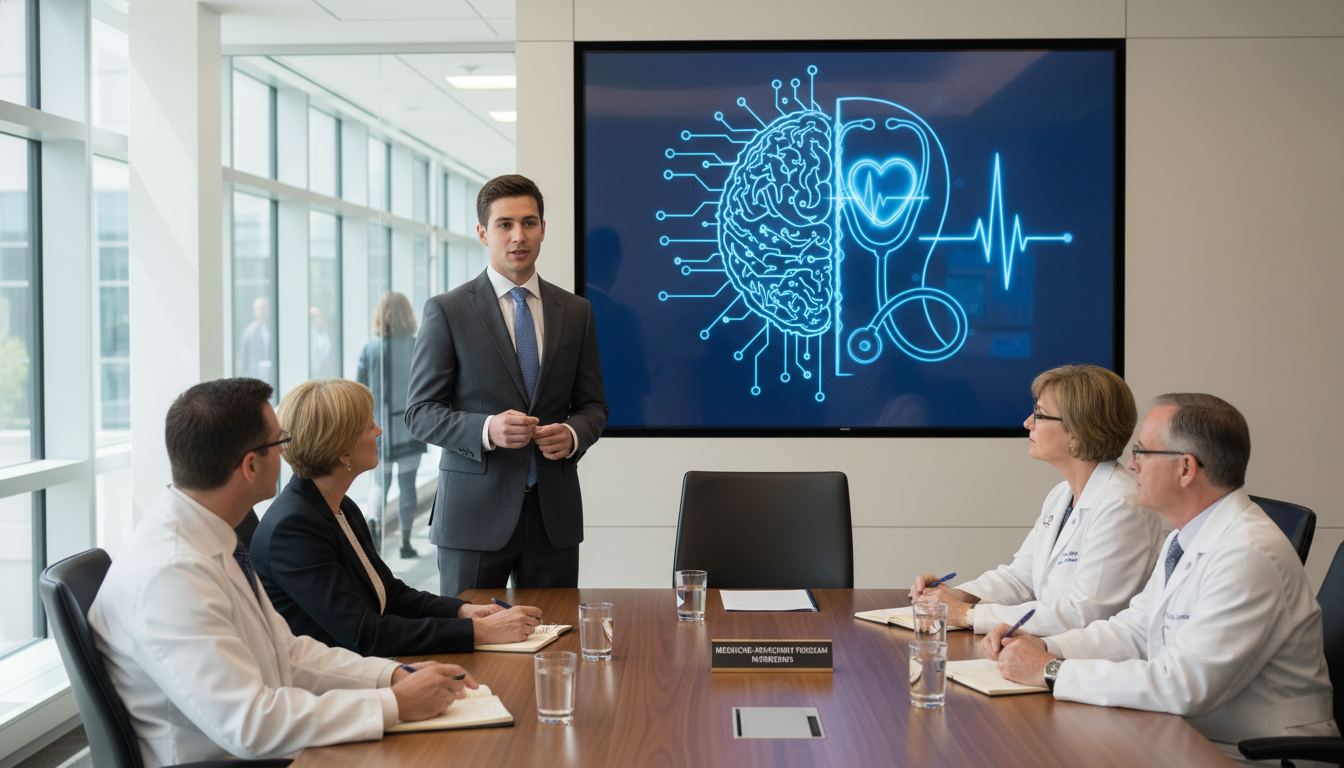
- Panel or group formats (multiple interviewers)
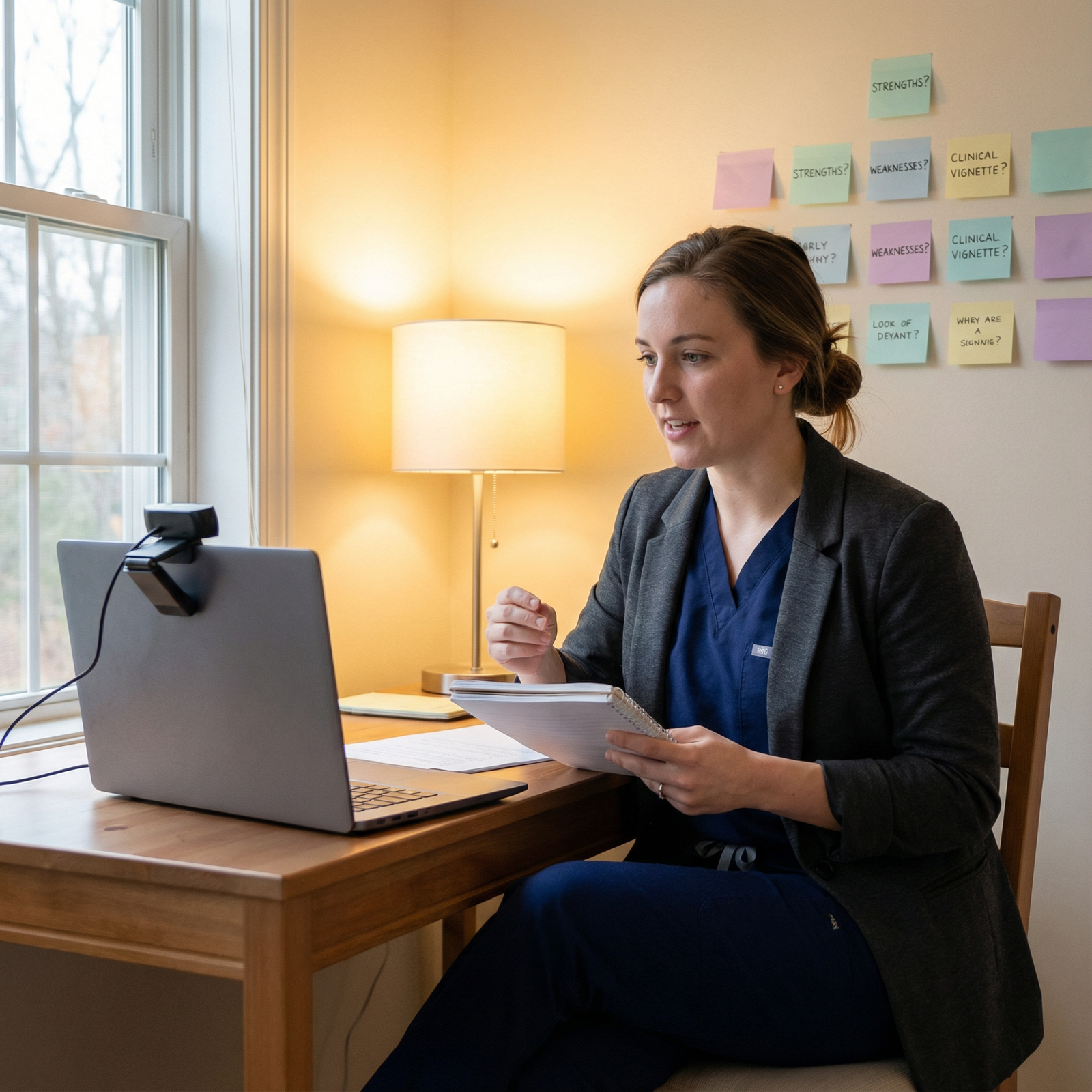
- Virtual interview practice (most TY programs use virtual or hybrid formats)
Communication and Accent Considerations
Programs do not expect you to have a “perfect” American accent. They do expect:
- Clarity: Can patients and team members easily understand you?
- Conciseness: Can you answer the question directly?
- Professional tone: Respectful, mature, and confident
Targeted improvement strategies:
- Slow your speaking pace by 5–10%
- Prioritize short, structured sentences over long, complex ones
- Practice pausing for a second before answering, so you can respond thoughtfully
- Ask your mock interviewers for specific feedback:
- “Any words or phrases that are hard to understand?”
- “Do I sound too fast, too quiet, or too hesitant?”
If needed, consider:
- Short focused sessions with an English coach or accent reduction program
- Regular practice through case presentations during observerships or journal clubs
Non-Verbal Communication
Even in virtual settings, your body language is evaluated:
- Eye contact: Look at the camera, not just the screen
- Posture: Upright, open, and engaged
- Facial expression: Neutral-to-positive; nod to show active listening
- Gestures: Natural but not excessive; keep hands within the camera frame
Record yourself and watch:
- Do you look interested and enthusiastic?
- Do you appear tense, distracted, or disengaged?
- Are you smiling occasionally and showing warmth?
Logistical and Mental Preparation for Interview Day
Excellent answers are not enough if poor logistics or mental readiness undermines your performance. Pre-interview preparation must also cover practical and psychological aspects.
Technical Setup for Virtual Interviews
Many transitional year and TY program interviews remain virtual or hybrid. Prepare your environment:
Location:
- Quiet, well-lit room
- Neutral, uncluttered background
- No visible bed or distractions if possible
Technology:
- Stable internet; use wired connection if possible
- Test your microphone and camera; use headphones to reduce echo
- Keep backup devices ready (phone/tablet)
- Familiarize yourself with Zoom, Teams, or program’s chosen platform
Dress code:
- Business formal (suit jacket, conservative colors)
- Ensure your outfit looks professional on camera (do a test recording)
Do at least one full-length mock interview with the exact setup you’ll use on the real day.
Organizing Documents and Information
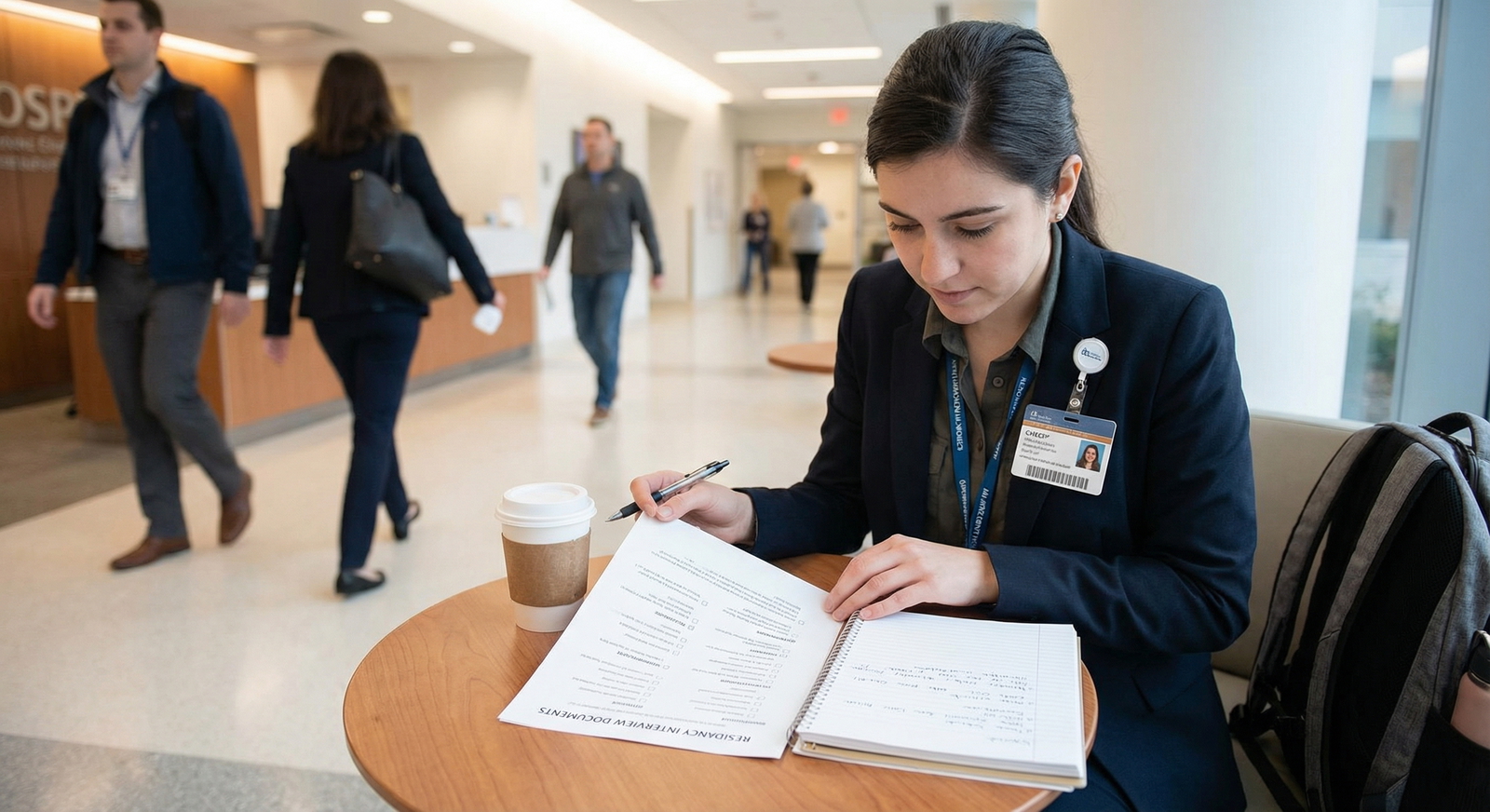
Before each interview, prepare:
- Updated CV and ERAS application (easily accessible)
- Personal statement (re-read to recall what you wrote)
- Program notes (highlight key features and question prompts)
- List of your research projects with 2–3 talking points each
- List of questions to ask specific to that program
Have a pen and notepad nearby for quick notes—but do not read from a script during responses.
Mental and Physical Preparation
To perform well under pressure:
- Sleep: Aim for 7–8 hours the night before; avoid late-night cramming
- Nutrition: Light, balanced meal beforehand; avoid heavy or spicy foods
- Hydration & caffeine: Drink water, moderate caffeine if you normally use it
- Breathing exercises: 2–3 minutes of slow breathing before logging in:
- Inhale for 4 seconds → hold for 4 → exhale for 6–8 seconds
Prepare brief, positive affirmations:
- “I am prepared, I have valuable experience, and I belong here.”
- “I may have an accent, but I am clear, competent, and professional.”
Finally, plan your day around the interview:
- No major errands or emotionally draining tasks
- Time for a short walk or stretch before and after
- Reflection period afterward to note impressions and possible follow-up
Post-Interview Reflection and Follow-Up
Pre-interview preparation should include planning for what happens immediately after each interview—this will improve later interviews and help with ranking decisions.
Structured Post-Interview Notes
Right after each interview (same day), document:
- Your overall impression of program culture and people
- Strengths of the program (training, support, electives, location)
- Potential concerns (workload, vibe, fit, location challenges)
- Specific faculty or residents you connected with
- Notable quotes or themes you want to remember
Also reflect on your own performance:
- Which questions went well?
- Which questions felt weak or awkward?
- Any answers you want to refine for the next interview?
This turns each interview into a learning experience.
Thank-You Notes and Professionalism
Many programs do not require thank-you notes, but polite and concise messages can reinforce positive impressions.
Guidelines:
- Send within 24–72 hours
- Use short, specific emails:
- Thank them for their time
- Mention one or two specific things you appreciated or learned
- Reiterate genuine interest (if true)
- Avoid overwhelming them (don’t send multiple long messages)
Example:
“Dear Dr. [Name],
Thank you for taking the time to speak with me yesterday during my interview with the Transitional Year program at [Institution]. I especially appreciated our discussion about how your program supports TY residents pursuing [specialty], particularly through [specific rotation/mentorship]. Our conversation reinforced my strong interest in your program’s balanced clinical training and supportive culture.
Sincerely,
[Your Name]”
FAQs: Pre-Interview Preparation for IMGs in Transitional Year Programs
1. How is interview preparation for a Transitional Year different from categorical programs?
You must clearly show:
- Understanding of the TY structure (broad-based, 1-year, often with electives)
- Alignment with your long-term specialty (radiology, anesthesiology, etc.)
- A plan for how you will use the year intentionally, not just “fill time”
- Respect for the fact that TY residents are full interns, not observers or students
Program directors want to be sure you are not treating their TY program as a backup or a casual placeholder.
2. As an IMG, how do I handle questions about visa status and long-term plans?
Answer these questions directly and calmly:
- Know whether you are eligible for J-1, H-1B, or both
- State clearly if you already have or are seeking an advanced position
- If reapplying, describe your strategy for strengthening your application (research, USCE, exams, letters)
Example:
“I am eligible for a J-1 visa and understand your program sponsors J-1s. I plan to apply for an anesthesiology position during my TY year, focusing on building strong U.S. clinical evaluations, letters of recommendation, and possibly participating in perioperative research.”
3. What are the most important aspects of residency interview preparation I should prioritize as an IMG?
Focus on:
- A clear, compelling narrative (who you are, why TY, why your specialty)
- Polished answers to common interview questions residency programs ask
- Mock interviews to refine communication, body language, and timing
- Program-specific research to answer “Why our program?” convincingly
- Practical technical and logistical preparation for virtual interviews
4. How do I address gaps, low scores, or failures in my application during interviews?
Be honest, concise, and growth-oriented:
- Briefly explain the context (without making excuses)
- Emphasize what you learned and specific steps you took to improve
- Show evidence of subsequent success (improved scores, clinical performance, research productivity)
Programs know that many IMGs have non-linear paths. They are more concerned about your current trajectory and reliability than one past setback.
By building a structured plan—clarifying your narrative, researching programs, rehearsing answers, refining communication skills, and preparing logistics—you can approach each Transitional Year residency interview as a confident, well-prepared international medical graduate. This level of pre-interview preparation not only improves your performance but also signals to program directors that you are serious, thoughtful, and ready to contribute meaningfully from day one of your TY year.