Understanding the Unique Landscape: IMG + Clinical Informatics
Clinical informatics is not a traditional residency in most systems; it is often a fellowship or a specialized training path that bridges medicine, data, and technology. As an international medical graduate (IMG), you face an additional layer of complexity: navigating a new healthcare system, different cultural expectations, and a field that is still unfamiliar to many clinicians.
Before diving into residency interview preparation and health IT training specifics, you need to understand what programs are really assessing:
- Clinical foundation: Solid understanding of patient care, workflow, and safety.
- Informatics mindset: Ability to think in systems, processes, and data, not just individual patients.
- Technical fluency: Not necessarily coding expertise, but comfort with EHRs, clinical decision support, interoperability, and basic data concepts.
- Adaptability as an IMG: Capacity to integrate into a new culture, learn a new healthcare system, and communicate clearly.
- Professionalism and maturity: Especially important for clinical informatics fellowship or residency-like tracks, where many candidates may have prior training or experience.
In other words, pre-interview preparation is as much about positioning your background as it is about rehearsing answers. This IMG residency guide will focus on what you should do in the weeks before you ever set foot (or log in) to an interview.
Step 1: Clarify Your Narrative and Career Path
Before you can handle any residency interview preparation, you must be crystal clear about your story: who you are, how you got here, and why clinical informatics.
Build a Coherent Professional Narrative
Programs will expect a clear, logical path to clinical informatics. Create a concise “career storyline” that you can adapt to different questions:
Origin:
- Where you trained (medical school and/or residency abroad)
- Your core clinical interests and early exposure to technology or systems
Motivation for Informatics:
- A specific clinical problem you saw repeatedly (e.g., medication errors, poor handoffs, missing lab follow-up)
- How those experiences made you question workflows, data use, or system design
- Any concrete steps you took (quality improvement, small-scale data analysis, EHR optimization involvement)
Transition as an IMG:
- Why you are seeking training in this country’s health system
- How your international background gives you a unique systems perspective
- Any prior exposure to health IT in your home country (even if limited)
Future Direction:
- How you plan to combine clinical practice and informatics
- Types of projects or roles you hope to lead (clinical decision support, data analytics, EHR implementation, patient safety, digital health innovation)
Write this out in 3 versions:
- 30-second version: Elevator pitch
- 2-minute version: For “Tell me about yourself”
- 5-minute version: For in-depth interviewer conversations
Keep this narrative aligned with what you wrote in your personal statement and ERAS/other application materials.
Translate Your IMG Experience into Informatics Strengths
Many IMGs underestimate how valuable their international perspective is.
Map your experiences to informatics competencies:
Resource-limited settings → Innovation and efficiency:
If you’ve worked with limited access to tests or technology, explain how that sharpened your ability to prioritize information and design pragmatic workflows.Different documentation systems → Flexibility:
Paper charts, hybrid systems, or local EHRs show you’ve already adapted across systems and can compare strengths and weaknesses.Language and culture → User-centered design:
Navigating multiple languages/cultures is directly relevant to building usable, equitable digital tools and informatics solutions.
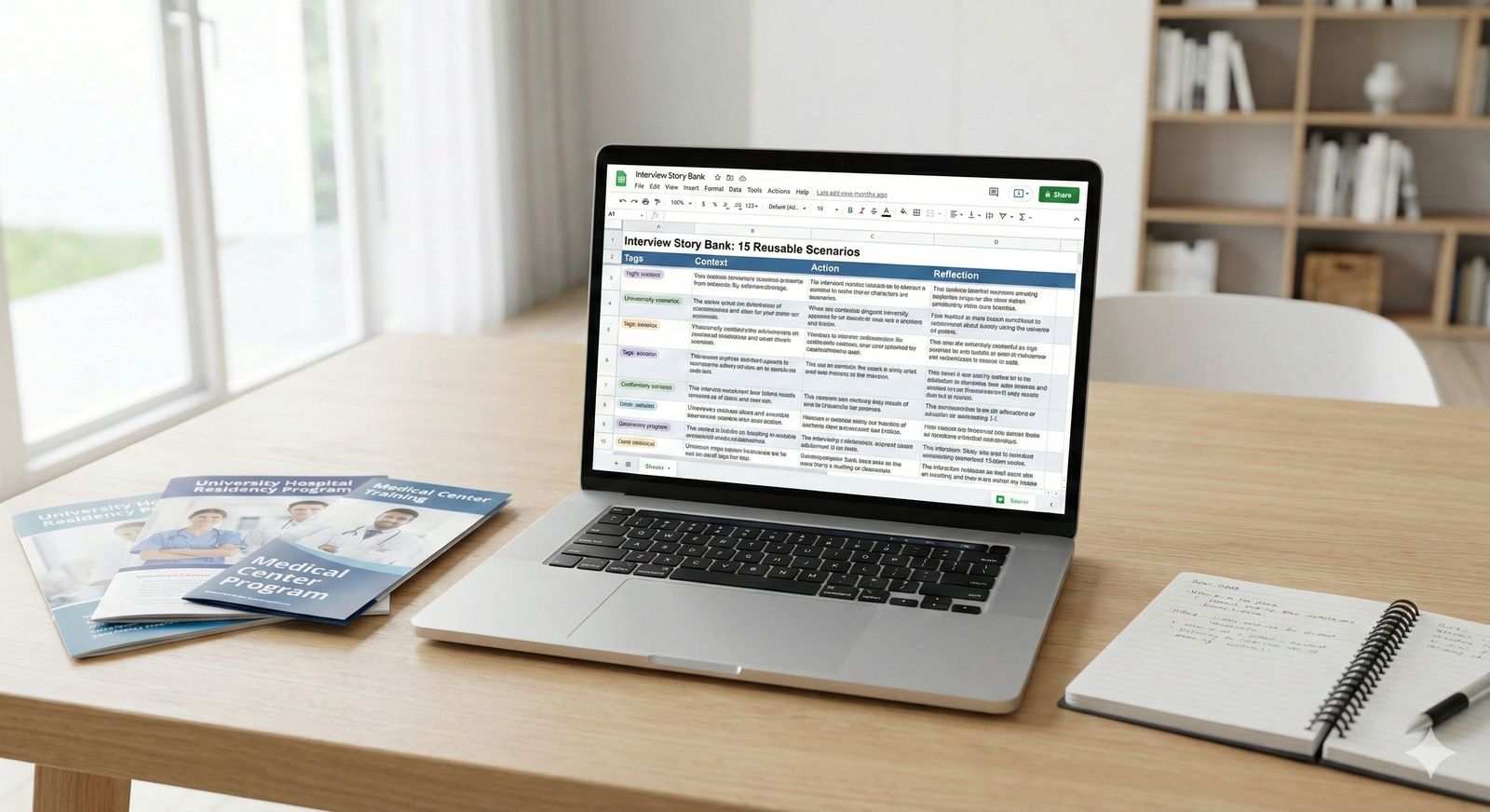
Make a table for yourself with 3 columns:
- Past experience (e.g., “Paper-based hospital in [Country]”)
- Challenge (e.g., “Lost lab results and poor handoffs”)
- Informatics-relevant skill (e.g., “Understanding information flow, importance of closed-loop communication and tracking systems”)
You can use these examples to enrich your interview answers.
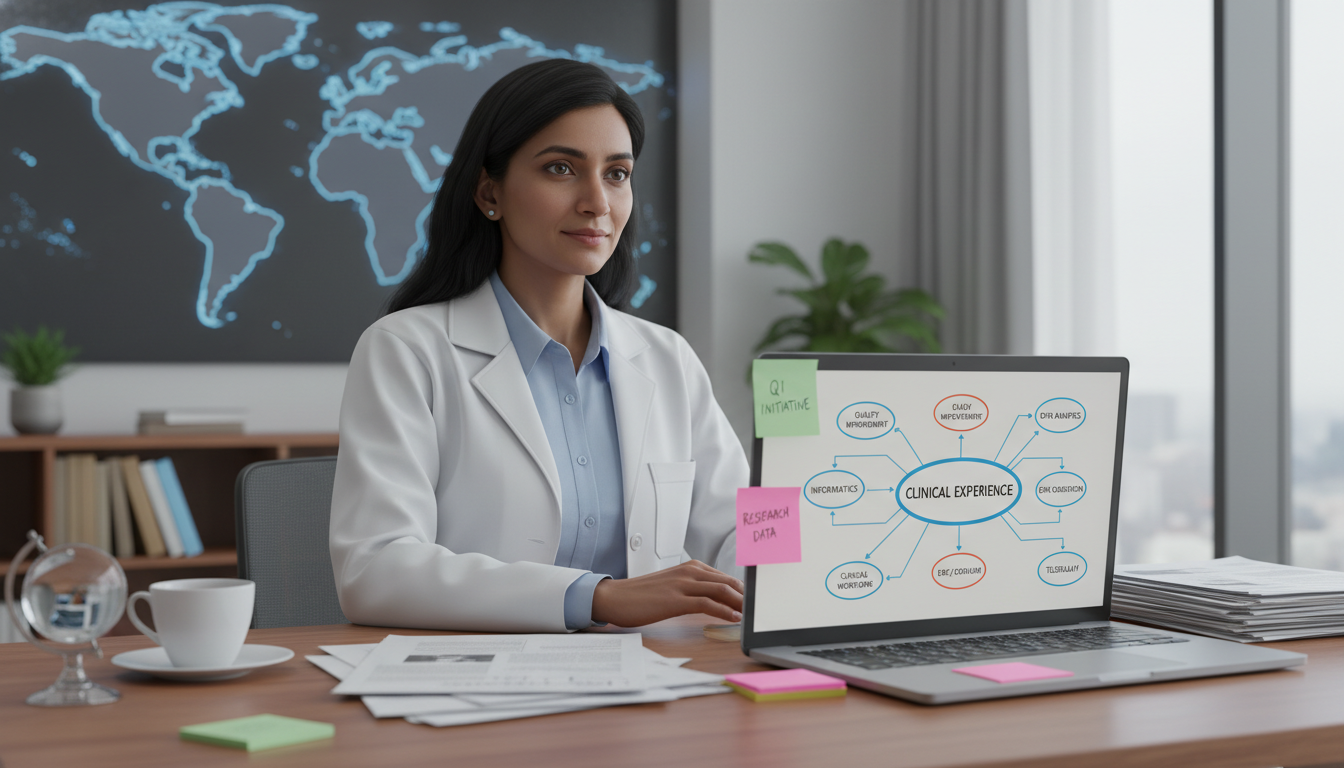
Step 2: Deepen Your Clinical Informatics Knowledge (Pre-Interview Study Plan)
You do not need to be an informatics expert before the interview, but you must be conversant in core concepts. This shows genuine interest and readiness for health IT training.
Core Topics to Review
Focus on high-yield fundamentals that often lead to interview questions for residency and fellowship-level positions:
What is Clinical Informatics?
- Definitions (e.g., AMIA / board definitions)
- Scope: EHRs, data analytics, clinical decision support, interoperability, workflow optimization, patient safety, telemedicine, digital health
- Distinguish it from:
- IT support
- Software development
- Pure research or biostatistics
EHR and Workflow Basics
- Computerized Provider Order Entry (CPOE)
- Clinical decision support (alerts, reminders, order sets)
- Clinical documentation and templates
- Medication reconciliation and e-prescribing
- Clinical workflow concepts: admission–discharge–transfer, handoffs, discharge summary
Data and Standards (at a conceptual level)
- Structured vs unstructured data
- Coding systems: ICD, CPT, SNOMED CT, LOINC, RxNorm (basic understanding of what they are used for)
- Interoperability and data exchange (e.g., HL7, FHIR conceptually)
- Registries and quality metrics
Patient Safety and Quality Improvement
- How informatics supports patient safety (hard stops, alerts, checklists, dashboards)
- Common issues: alert fatigue, copy-paste risks, wrong-patient errors
- Example of a simple PDSA cycle (Plan-Do-Study-Act)
Governance and Implementation
- Clinical informatics as bridge between clinicians and IT
- Key players: CMIO, CNIO, IT analysts, vendor staff, frontline clinicians
- Change management basics: stakeholder engagement, training, go-live support
Prepare brief, clear explanations for each topic as if you were explaining to a junior colleague. Interviewers may ask open-ended questions such as:
- “What does clinical informatics mean to you?”
- “How do you see informatics improving patient care?”
- “What informatics or quality improvement project would you like to work on here?”
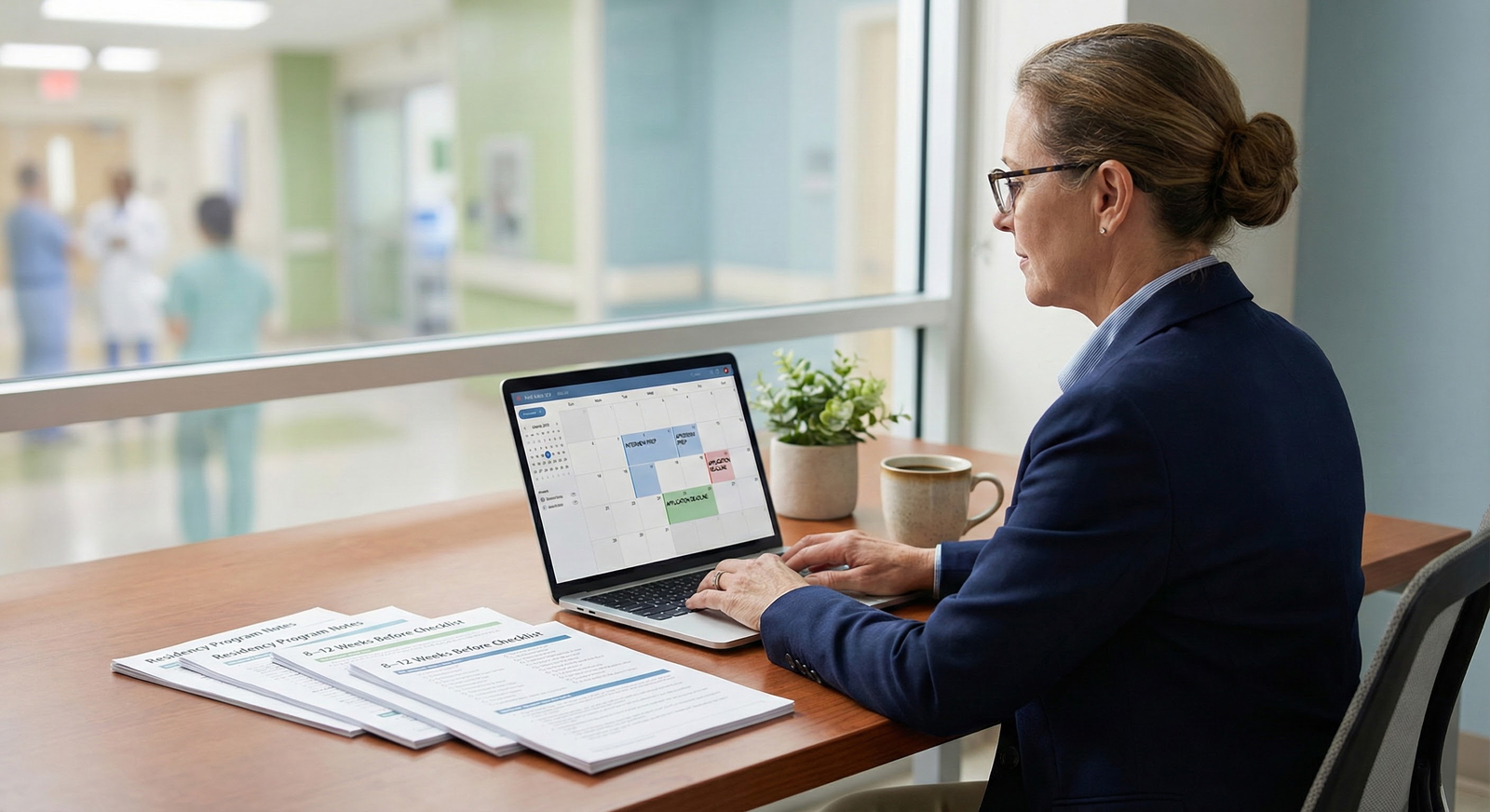
Suggested Short Pre-Interview Study Plan (2–3 Weeks)
Week 1: Foundation
- Read:
- A short introduction from a clinical informatics textbook or AMIA/ABPM resources
- The program’s own description of their clinical informatics fellowship or informatics track
- Watch:
- A few introductory lectures or webinars on EHRs, CDS, and health IT safety
- Task:
- Write 1-page notes: “My definition of clinical informatics” and “Examples I have seen in practice”
Week 2: Applied Knowledge
- Review:
- Case studies: EHR implementation, medication error reduction, sepsis alerts, or patient portal optimization
- Task:
- Prepare 2–3 case-based stories you can share:
- A problem
- How technology could help
- How poor technology design could make it worse
- Prepare 2–3 case-based stories you can share:
Week 3: Program-Specific Preparation
- Explore:
- Each program’s website, particularly:
- Ongoing projects
- Partnerships with IT vendors or other institutions
- Research or quality improvement initiatives
- Each program’s website, particularly:
- Task:
- For each program, list:
- 2–3 specific aspects of their program that excite you
- 1–2 ways your background could contribute to their ongoing work
- For each program, list:
You are not just showing that you know informatics terms; you are showing you can think like an informatician.
Step 3: Mastering Residency Interview Preparation Fundamentals as an IMG
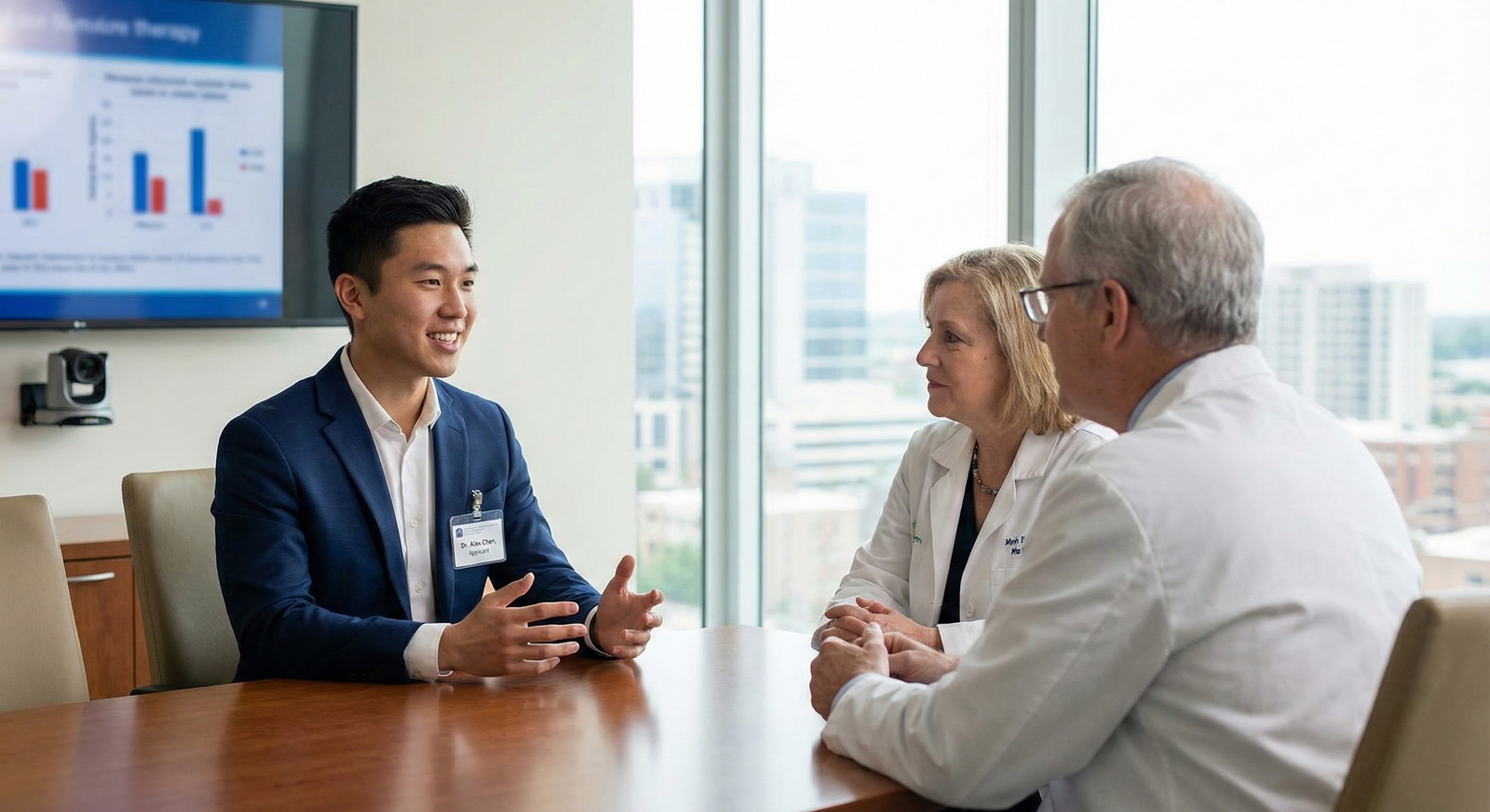
Even for a clinical informatics track, you will still be asked classic interview questions. As an IMG, you must be especially intentional in how you prepare.
Core Behavioral and Motivational Questions
Expect variations of these common interview questions for residency or fellowship:
- “Tell me about yourself.”
- “Why this specialty (or fellowship) and why this program?”
- “Why clinical informatics instead of a purely clinical route?”
- “Walk me through your CV.”
- “Tell me about a challenging case or situation and how you handled it.”
- “Describe a mistake you made and what you learned.”
- “Tell me about a time you worked in a team and faced conflict.”
- “Where do you see yourself in 5–10 years?”
For each, prepare:
- Core message (1–2 sentences)
- Structured story (1–2 minutes) using the STAR framework:
- Situation
- Task
- Action
- Result
- Informatics angle if appropriate:
- Highlight workflow thinking
- Use data or systems examples
- Mention how the experience led you to care about informatics
Example (team conflict + informatics angle):
- Situation: Multi-disciplinary team frustrated by inefficient lab result communication.
- Action: You mapped the workflow, suggested a standardized reporting template or informal “result tracking” sheet, and later imagined how an EHR notification system could automate this.
- Result: Fewer missed results; sparked your interest in how systems and tools can reduce error.
Addressing IMG-Specific Concerns Confidently
Programs may not ask directly, but you should be prepared to discuss:
Gap years or non-clinical periods:
- Explain clearly: exams, research, family responsibilities, or transition time.
- Link to productivity: informatics coursework, data projects, language learning, or health IT exposure.
Limited US clinical experience:
- Highlight any observerships, research, or virtual participation in US-based projects.
- Emphasize your understanding of system differences and your eagerness to learn and adapt.
Visa issues (if applicable):
- Know the basics of your visa category eligibility (e.g., J-1, H-1B).
- Provide brief, factual answers; do not center your interview on visa concerns, but be honest and prepared.
Practice Out Loud, Not Only in Your Head
Especially if English is your second or third language, oral practice is essential:
- Record yourself answering 5–7 common questions.
- Time your answers (most main answers should be 1–2 minutes).
- Listen for clarity, excessive filler words, or overly complex sentences.
- Adjust your speaking pace—slightly slower is often better for clarity.
Try to schedule at least 2–3 mock interviews:
- One with a mentor familiar with US interviews.
- One with a peer or friend who can play “skeptical interviewer.”
- One self-directed session with recordings and self-review.
If possible, find someone in clinical informatics (even via online forums or alumni networks) who can focus on how you explain your informatics interest and knowledge.
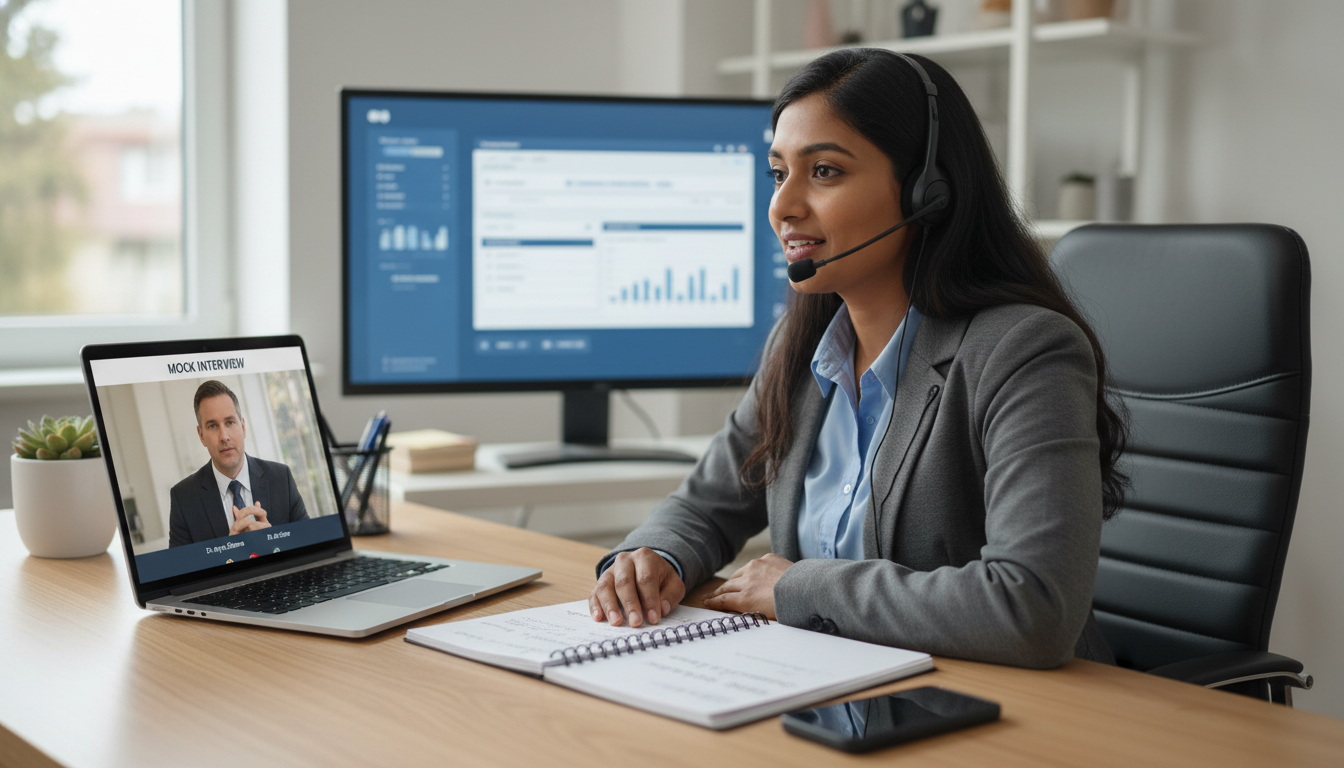
Step 4: Technical and Logistical Preparation (Especially for Virtual Interviews)
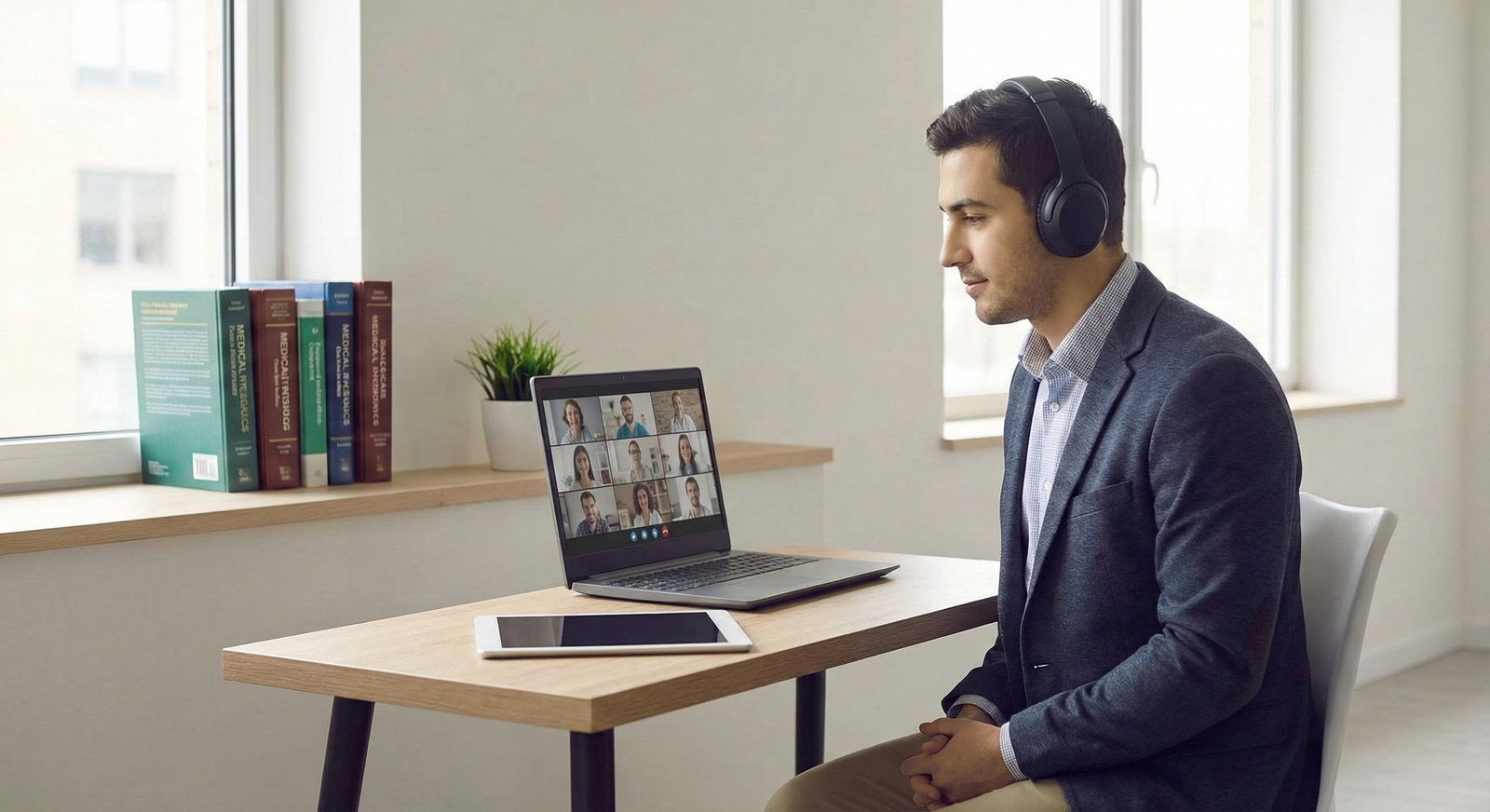
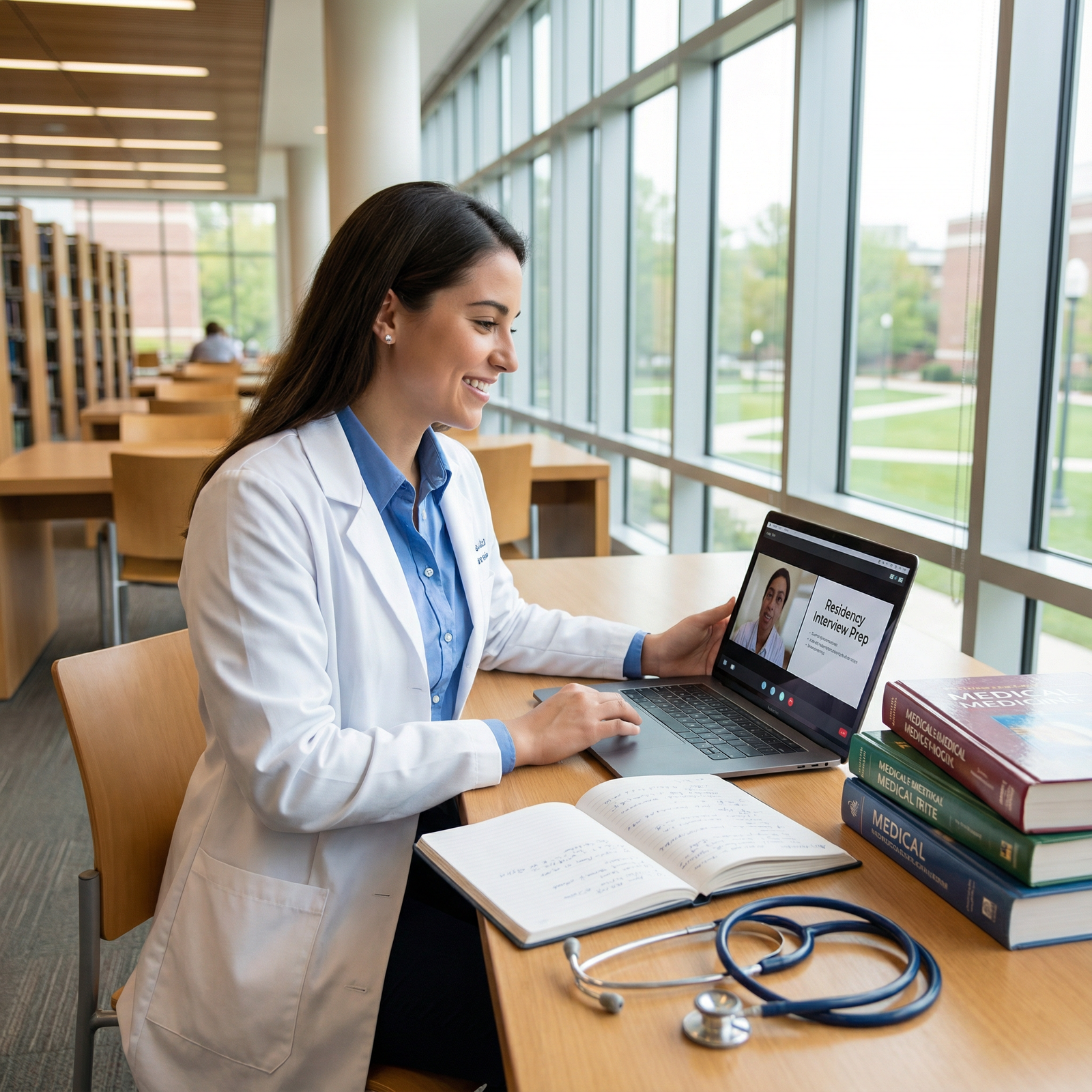
Most clinical informatics interviews now include virtual components (and sometimes fully virtual days). Your technical setup must demonstrate that you are comfortable with technology—this is health IT training, after all.
Optimize Your Virtual Interview Environment
1. Technology Setup
Hardware:
- Laptop or desktop (avoid using your phone).
- Webcam at eye level; if laptop, raise it on a stack of books.
- Headset or good-quality microphone to minimize echo and background noise.
Internet:
- Use wired connection if possible; otherwise sit very close to your router.
- Test connection with a friend in another country/state at the same time of day as the interview.
Platform Familiarity:
- Test Zoom, Teams, Webex, or whatever platform programs use.
- Learn basic functions: mute/unmute, camera on/off, screen share, chat.
2. Visual and Audio Environment
Background:
- Neutral, uncluttered—plain wall, bookshelf, or tidy office.
- Avoid bright windows behind you; face the light instead.
Lighting:
- Use a lamp or natural light in front of you, at eye level if possible.
- Avoid harsh shadows or dim environments.
Audio:
- Quiet room; inform family or roommates of times.
- Turn off notifications on your computer and phone.
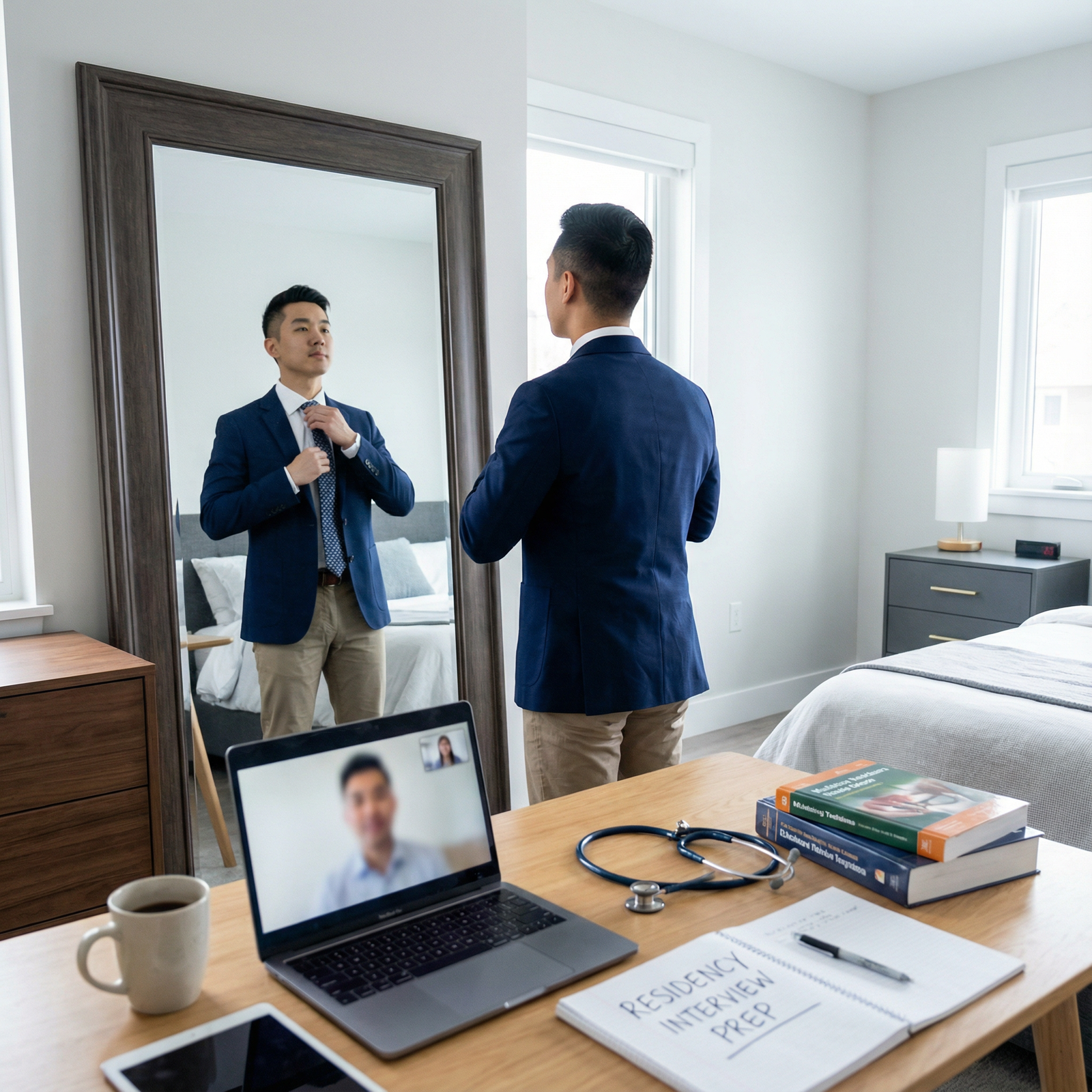
Professional Appearance and Nonverbal Communication
Your appearance and nonverbal behavior contribute significantly to the program’s first impression.
Clothing:
- Business formal (suit jacket or blazer, dress shirt/blouse).
- Solid or subtle patterns; avoid loud colors or distracting prints.
- Comfort matters, but look polished.
Body Language:
- Look at the camera frequently to simulate eye contact.
- Sit upright, avoid rocking in your chair.
- Use gentle hand gestures, but keep movements controlled and within frame.
- Nod occasionally to show engagement when they speak.
Energy and Tone:
- Speaking in a second language can sometimes flatten affect—compensate slightly with warmth in your voice and facial expressions.
- Smile appropriately; you don’t need to be overly enthusiastic, just genuinely engaged.
Organizing Your Interview Day Materials
Before each interview day, prepare a small “interview station”:
- Printed or easily accessible:
- CV and personal statement
- List of programs with key notes and questions
- A few bullet points for each interviewer type (program director, faculty, fellow, IT partner)
- A notepad (physical or digital) for brief notes after each interaction.
- A bottle of water and perhaps a small snack for breaks.
During the interview, avoid reading from notes. Use them only to quickly review between sessions.
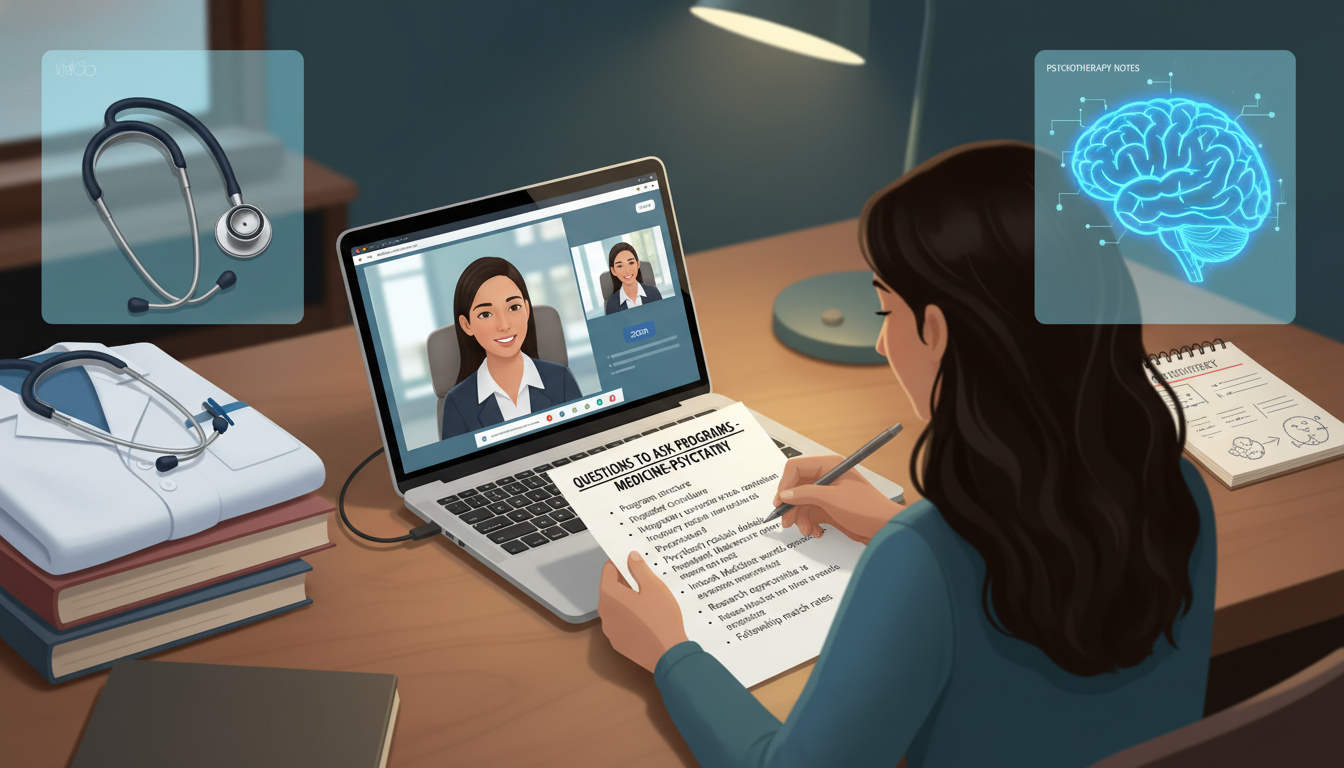
Step 5: Program Research and Crafting Your Questions
In clinical informatics, the quality of your questions is often as important as the quality of your answers. It demonstrates how you think, what you value, and whether you truly understand the nature of the training.
How to Research Programs Effectively
For each program:
Website and Brochures
- Track-specific information: clinical informatics fellowship or residency pathway
- Affiliated hospitals and health systems
- Major EHR vendors used (Epic, Cerner, etc.)
- Listed projects: CDS tools, dashboards, population health, telehealth, digital front door initiatives
Publications and Presentations
- Search PubMed or Google Scholar for faculty names.
- Identify 1–2 projects that overlap with your interests (e.g., clinical decision support in sepsis, data analytics for readmissions, patient portals).
News and Social Media
- Check institution news for recent informatics initiatives.
- Review social media for informatics groups, AMIA chapters, or related events.
Crafting Strong, Program-Specific Questions
Avoid generic questions like “What makes your program unique?” Instead, ask targeted questions that show preparation and curiosity.
Examples:
- “I noticed your team implemented [EHR system] across multiple sites. How are trainees involved in ongoing optimization projects or user feedback cycles?”
- “Your faculty recently published on [topic]. Are there opportunities for fellows/residents to join related projects or datasets?”
- “How does your clinical informatics training interact with hospital IT and operations? For example, do trainees attend change control or governance meetings?”
- “What types of clinical decision support projects are trainees most commonly involved in?”
- “How do you support IMGs in understanding the US healthcare system and documentation standards, particularly in the context of health IT?”
Prepare at least 5–7 questions per program, and choose the most relevant ones depending on whom you’re speaking with:
- For Program Director: curriculum, mentorship, graduate outcomes.
- For Faculty: projects, research, collaboration.
- For Fellows/Residents: culture, workload, day-to-day life, how much hands-on EHR work vs. theoretical training.
FAQ: Pre-Interview Preparation for IMGs in Clinical Informatics
Q1: I don’t have a technical or programming background. Will this hurt my chances?
Not necessarily. Many successful clinical informaticians start with limited formal technical training. Programs typically look for:
- Strong clinical reasoning and workflow understanding.
- Curiosity about systems and data.
- Willingness to learn technical concepts. Pre-interview, you can strengthen your profile by:
- Completing short, beginner-friendly courses (e.g., basic data literacy, intro to SQL or Python, healthcare data analytics).
- Being ready to describe how you have used EHRs or data in clinical decision-making or quality improvement.
Q2: How should I answer if they ask why I chose clinical informatics instead of a purely clinical specialty or fellowship?
Frame your answer around impact and scale:
- Explain that you value direct patient care but also want to improve systems for many patients at once.
- Give examples of recurring problems in your clinical experience that were not solvable by individual clinicians alone (e.g., missing results, inefficient workflows, unsafe handoffs).
- Emphasize that clinical informatics allows you to combine clinical knowledge with data and technology to address root causes.
Q3: As an IMG, how can I address my limited US clinical experience in interviews?
Be transparent but focus on your preparation and adaptability:
- Highlight any US-based observerships, research, or remote collaborations.
- Show that you’ve studied US documentation practices, quality metrics, and EHR use.
- Emphasize your willingness to learn and how your international experience brings a broad systems perspective that is valuable in informatics.
Q4: What are the most important things to do in the final 48 hours before my interview?
Focus on refinement, not cramming:
- Re-review your narrative and key behavioral stories.
- Rehearse answers to:
- “Tell me about yourself”
- “Why clinical informatics?”
- “Why our program?”
- Review each program’s specific notes and prepare tailored questions.
- Test your interview setup (camera, microphone, internet).
- Plan your schedule, including time zones, breaks, meals, and a good night’s sleep.
Preparing for interviews as an international medical graduate pursuing clinical informatics demands both traditional residency interview preparation skills and a clear understanding of this evolving specialty. By clarifying your narrative, deepening your informatics knowledge, practicing targeted responses, and aligning your experience with health IT training goals, you position yourself as a thoughtful, adaptable candidate ready to bridge clinical care and technology in any healthcare system.