Understanding the EM-IM Landscape as an IMG
Emergency Medicine–Internal Medicine (EM-IM) combined residency is a demanding but rewarding pathway. As an international medical graduate (IMG), your pre-interview preparation needs to be strategic and tailored to both:
- The combined nature of the specialty, and
- The unique expectations programs have for IMGs.
This article is an IMG residency guide focused on how to prepare for interviews in EM-IM specifically, with emphasis on residency interview preparation, common interview questions residency programs may ask, and how to present your unique background effectively.
What Makes EM-IM Different?
EM-IM is a 5-year combined program that prepares you for:
- Certification/eligibility in both Emergency Medicine and Internal Medicine
- Careers in:
- Academic medicine (ED–inpatient bridge roles)
- Critical care pathways (in some settings)
- ED observation units or medical decision units
- Leadership/administration roles
- Rural or resource-limited settings requiring broad skill sets
Programs expect applicants to:
- Tolerate high-acuity, fast-paced environments (EM)
- Manage complex, chronic, and multisystem disease (IM)
- Communicate clearly across settings and teams
- Demonstrate maturity, resilience, and self-awareness
As an IMG, you also need to show:
- That you understand U.S. healthcare culture and expectations
- That you can adapt quickly to new systems
- That your unique background is an asset, not a liability
Pre-interview preparation is your opportunity to align your story with what EM-IM programs are seeking.
Step 1: Strategic Program Research for EM-IM as an IMG
Before you even think about what to say in an interview, you must deeply understand where you are interviewing and what they value.
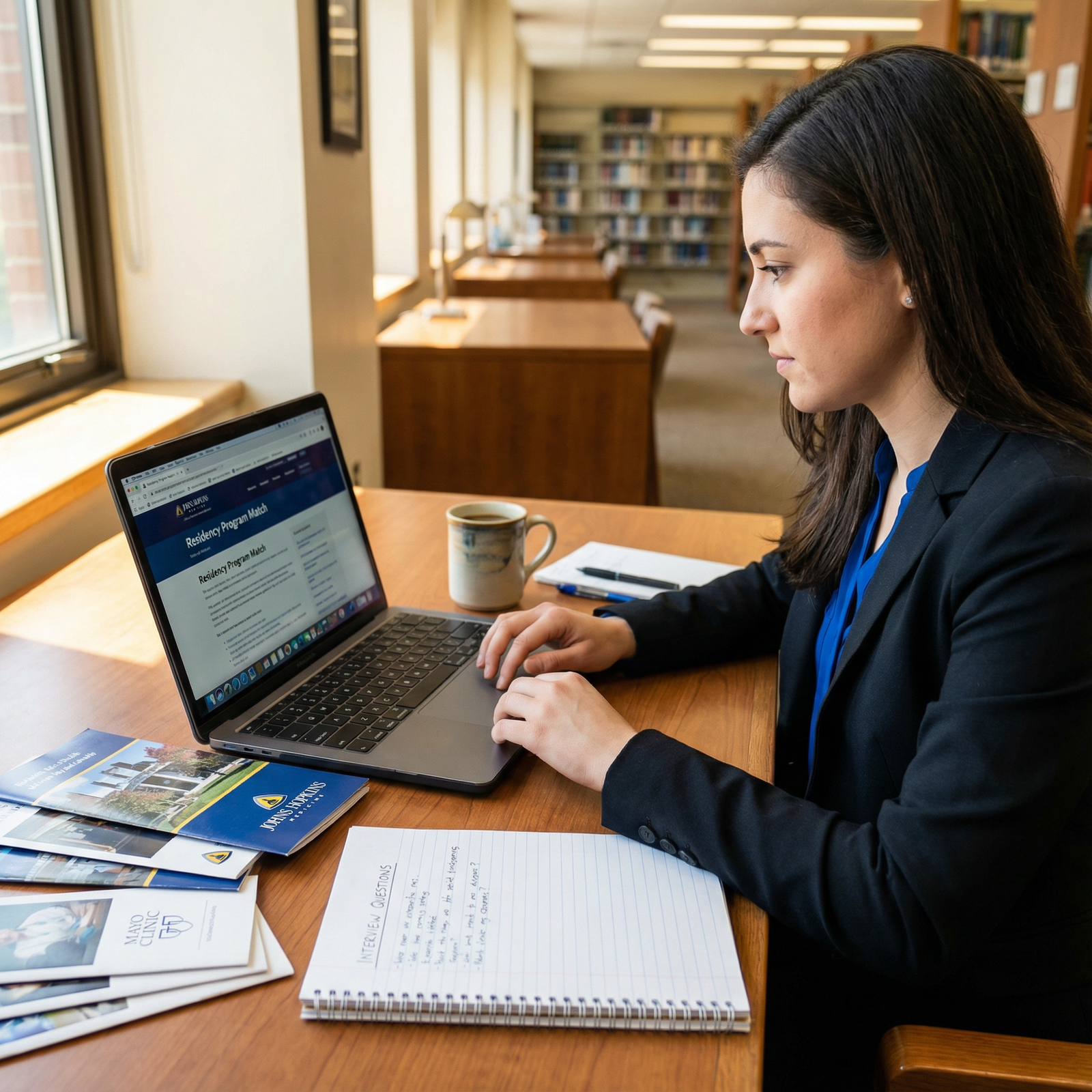
Build a Program Research Template
Create a simple spreadsheet or document for each EM-IM program with:
Program basics
- Name, location, hospital system
- Number of EM-IM residents per year
- EM department characteristics (level of trauma center, ED volume, academic vs community)
- IM department strengths (subspecialties, research, ICU exposure)
Curriculum and training structure
- How rotations are split between EM and IM
- Exposure to ICU, ultrasound, procedures, resuscitation
- Opportunities in global health, medical education, administration, or research
- EM-IM-specific didactics or tracks
Culture and values
- Mission statements: EM, IM, and combined program if separate
- Emphasis on underserved care, academic careers, community practice, etc.
- Diversity/inclusion statements
- Any explicit mention of presence or support for IMGs
IMG-specific information
- Current or past EM-IM residents who are IMGs
- Visa policy (J-1, H-1B acceptance)
- Any international/global health focus that aligns with your background
Faculty and resident profiles
- Program director and associate PDs (EM, IM, EM-IM)
- Faculty whose interests overlap with yours (global health, ultrasound, QI, etc.)
- Resident bios, especially combined EM-IM residents
This template becomes the foundation for tailoring your answers and for asking thoughtful questions during the interview.
Research Sources to Use
Use multiple layers of research:
Official Program Website
- Curriculum schedule
- Rotation blocks for each PGY year
- EM-IM program description (not just EM or IM separately)
- Photos or profiles of current house staff
FREIDA / AAMC / NRMP
- Lists program details, visa sponsorship
- Helps you confirm official data (positions per year, accreditation)
Social Media (X/Twitter, Instagram, LinkedIn)
- See what the program celebrates: resident achievements, wellness, education
- Identify recurring themes (community engagement, ultrasound, disaster medicine, etc.)
Alumni and Residents
- If possible, connect via:
- Medical school alumni who matched there
- LinkedIn or professional societies (ACEP, SAEM, ACP, SGIM)
- Ask focused, respectful questions: culture, workload, EM-IM identity, support for IMGs
- If possible, connect via:
Turn Research into Interview Readiness
For each program, prepare:
- Three unique reasons you are drawn to that EM-IM program
- Two specific features of the curriculum or culture you can mention by name
- One question that shows you understand combined training (e.g., “How do you help EM-IM residents maintain a cohesive identity between both departments?”)
This preparation signals to programs that you are serious, informed, and intentional about EM-IM rather than just applying broadly.

Step 2: Crafting Your EM-IM Story as an IMG
Your narrative must connect three elements:
- Why you chose medicine
- Why you are drawn specifically to Emergency Medicine–Internal Medicine combined
- Why your IMG background makes you especially well-suited to this path
Clarify Your Motivation for EM-IM (Not Just EM or IM)
Programs often ask:
- “Why EM-IM instead of EM alone?”
- “Why do 5 years when you could do 3?”
- “What do you envision doing with dual training?”
Prepare a direct, honest, and forward-looking explanation. For example:
- You enjoy undifferentiated emergencies and rapid stabilization (EM) but also
- Want to manage complex inpatient cases longitudinally (IM)
- Value continuity with high-risk patients who frequently use the ED
- Are interested in ED–hospital system design, observation units, or critical care
You might say:
- “I’m drawn to emergency medicine for the immediacy of resuscitation and frontline decision-making, but I felt incomplete without deeper engagement in complex chronic disease and inpatient management. EM-IM allows me to stabilize patients in the ED, then follow them through the ICU or wards, particularly in resource-limited settings where broad-based skill is essential.”
Highlight IMG Strengths in a Focused Way
As an international medical graduate, emphasize strengths that naturally align with EM-IM:
- Adaptability and resilience from working in different healthcare systems
- Comfort with resource-limited environments (valuable in crowded EDs, safety-net hospitals)
- Multilingual capabilities and cultural humility, crucial in diverse ED populations
- Broader clinical exposure in your home country (if applicable), including handling undifferentiated complaints with limited diagnostics
Prepare concrete examples:
- A time you adapted quickly to a new clinical environment
- A situation where your cultural understanding improved patient care
- A challenging acute case where you stabilized a patient with limited resources
Build a Coherent, Short “Professional Introduction”
You will often start interviews with something like, “Tell me about yourself.”
Prepare a 60–90 second summary that:
- Starts with where you trained and your current status
- Briefly explains your path (medical school → key clinical experience → US exposure)
- Transitions into why EM-IM
- Ends with what you hope to do with EM-IM training
Example structure:
- “I completed my medical degree at [school, country], where I first became interested in acute care while working in [ED/ICU/community hospital]. After graduation, I worked in [role] where I saw [type of cases] that made me appreciate both rapid stabilization and the need for strong inpatient management. During my U.S. clinical experiences at [institutions], I was drawn to the interface between the ED and the hospital—particularly for complex patients with multiple comorbidities. EM-IM appealed to me because it allows me to combine frontline emergency care with comprehensive internal medicine skills, which I hope to use in [academic, global health, critical care, or system-level] roles in the future.”
Practice this introduction until it feels natural but not memorized.
Step 3: Mastering Common EM-IM Residency Interview Questions
Pre-interview preparation should include structured practice with high-yield interview questions residency programs commonly ask, adapted to an EM-IM and IMG context.
Core Motivational and Fit Questions
Be ready to answer:
- Why Emergency Medicine-Internal Medicine?
- Why this program?
- What are your career goals after residency?
- How do you see yourself using both EM and IM training?
- What strengths will you bring to our residency?
- What are your main areas for growth?
For each, build:
- 1–2 key messages
- Specific illustrations from your experience
- Connections to EM-IM or the particular program
Clinical Scenario and Judgment Questions
EM-IM programs often test clinical thinking and prioritization. Examples:
- “Describe a time you took care of a critically ill patient. What did you do?”
- “Tell me about a diagnostic dilemma you encountered and how you approached it.”
- “Describe a situation where you had to manage multiple sick patients at once.”
Focus on:
- How you organized your thoughts and prioritized
- How you communicated with nurses and consultants
- How you balanced EM-style urgency and IM-style thoroughness
Use the STAR format (Situation, Task, Action, Result) to structure answers.
Behavioral and Professionalism Questions
Expect questions about:
- Team conflict (“Tell me about a conflict with a colleague and how you handled it.”)
- Mistakes (“Tell me about a time you made a clinical error or near-miss.”)
- Stress and burnout (“How do you cope with stress?”)
Programs want to see:
- Accountability (you acknowledge your role, avoid blaming)
- Insight (what you learned)
- Systems thinking (how you would prevent recurrence)
- Healthy coping strategies and support networks
IMG-Specific and Systems Adaptation Questions
You may be asked:
- “How have you adapted to the U.S. healthcare system?”
- “Tell me about your U.S. clinical experience and what you learned from it.”
- “What challenges have you faced as an IMG, and how did you overcome them?”
Prepare to discuss:
- Concrete differences between your home system and U.S. practice (documentation, EMR, patient autonomy, team structure)
- How you quickly learned local protocols, communication style, and expectations
- Evidence that you’re comfortable with:
- Electronic health records
- Interprofessional collaboration
- Shared decision-making with patients
Ethical and Cross-Cultural Scenarios
Given your background and EM-IM’s diverse patient populations, you may be asked:
- “Describe a situation where cultural differences influenced patient care.”
- “How would you handle a patient refusing a life-saving intervention?”
Show:
- Respect for autonomy
- Cultural humility
- Clear, empathetic communication
- Understanding of typical U.S. ethical frameworks (autonomy, beneficence, non-maleficence, justice)
Actionable Practice Plan
- List 15–20 likely questions across categories
- For each, write bullet points, not full scripts
- Practice out loud with:
- A mentor
- A fellow applicant
- A recording tool (phone, computer) for self-review
- Focus on clarity, structure, and time (most answers 1–2 minutes)
Step 4: Building Your Interview-Day Toolkit
Pre-interview preparation is not just about what you say, but also how you show up—logistically, technically, and professionally.
Organize Your Application Materials
Before each interview:
- Re-read:
- Your personal statement
- Your ERAS application
- Your CV
- Review:
- Any research, QI, or leadership activities listed
- EM or IM-related experiences that may prompt questions
Highlight 3–4 experiences that:
- Reflect EM-IM qualities: resilience, critical thinking, teamwork
- You can discuss in detail if prompted
Prepare a “Program Packet” for Each Interview
For each EM-IM program, have:
- A brief summary page with:
- Program name and location
- Key features you like
- Names/roles of interviewers (if provided in advance)
- Your top 3 reasons for interest
- 3–5 questions to ask
This helps you remain focused and avoids repeating generic questions.
Develop Strong, Specific Questions for Interviewers
Good questions show depth and help you decide if the program fits you. Examples:
For Program Directors / Leadership:
- “How do EM-IM residents integrate into both departments culturally and academically?”
- “What types of careers do your EM-IM graduates typically pursue?”
- “How do you support residents who are interested in [global health / critical care / education / administration] during training?”
For EM-IM Faculty or Chief Residents:
- “What are the biggest challenges unique to EM-IM residents here, and how does the program support them?”
- “How are EM-IM residents scheduled for ED vs inpatient vs ICU rotations across the five years?”
- “Can you describe how EM-IM residents participate in teaching medical students or junior residents?”
For Current Residents:
- “What made you choose EM-IM instead of categorical EM or IM?”
- “How do you maintain wellness with the demands of combined training?”
- “If you had to decide again, would you choose this program?”
Avoid overly basic questions clearly answered on the website, such as “How many EM-IM residents do you accept each year?” unless you’re clarifying something specific.
Technical and Environmental Preparation (Virtual Interviews)
Most residency interviews are virtual or partially virtual. Prepare by:
Testing:
- Internet connection
- Camera and microphone
- Lighting (front-lit, not backlit)
- Platform (Zoom, Thalamus, Webex, etc.)
Setting your environment:
- Neutral, uncluttered background
- Professional attire (full outfit—not just the top)
- Printed or digital notes positioned subtly, not as a script
Backup plans:
- A second device (phone/tablet)
- Contact email/phone of program coordinator in case of technical failure
Practice mock virtual interviews with the same setup you’ll use on interview day.

Step 5: Polishing Communication, Professional Presence, and Follow-Up
Beyond content, EM-IM programs will be evaluating:
- Communication clarity under time pressure
- Professionalism and reliability
- Emotional intelligence and team compatibility
Verbal and Nonverbal Communication
Practice:
- Speaking clearly and at a moderate pace
- Using specific examples instead of generalities
- Maintaining eye contact with the camera (for virtual interviews)
- Sitting upright with open, engaged posture
As an IMG, if you have an accent, that is completely acceptable; focus instead on:
- Enunciating clearly
- Avoiding overly complex sentences
- Pausing briefly when needed to gather your thoughts
Handling Difficult or Unexpected Questions
When you encounter a question that surprises you:
- Pause for a second—collect thoughts
- Restate or reflect the question briefly (“You’re asking about how I handle conflict within a team…”)
- Choose a structured example or a principled answer
- Keep answers honest—if you don’t know something, say so and pivot to how you’d approach learning it
Dealing with “Weaknesses” and Gaps
Programs may ask about:
- Gaps after graduation
- Low exam scores or multiple attempts
- Limited U.S. clinical experience
Prepare concise, honest explanations that:
- Take responsibility where appropriate
- Explain the context without excuses
- Emphasize growth, reflection, and what has changed
For example:
- “During my first attempt at Step 1, I underestimated the adjustment needed for a different exam style. Since then, I have changed my study approach significantly—using more U.S.-based question banks, timed exams, and group discussions—which is reflected in my improved performance on Step 2. The experience taught me discipline and adaptability that I bring to residency.”
Post-Interview Etiquette and Follow-Up
Pre-interview preparation should also include planning how you’ll document impressions and follow up.
Immediately after each interview day:
- Write down:
- People you spoke with (names, roles, distinctive details)
- Specific things you liked or concerns you noted
- How you felt about:
- The culture
- Resident interactions
- Fit with your goals
Within a few days:
- Send brief, personalized thank-you emails to:
- Program director
- Key faculty or residents you interviewed with (if emails are provided or publicly available)
Keep messages:
- Short (3–5 sentences)
- Specific (mention a particular conversation topic or program feature you appreciated)
- Professional (avoid discussing rank or promises)
This reinforces your interest and professionalism without crossing NRMP or program communication boundaries.
FAQs: Pre-Interview Preparation for EM-IM IMGs
1. How early should I start residency interview preparation as an IMG?
Begin structured residency interview preparation at least 4–6 weeks before your first scheduled interview. As an international medical graduate, you may need extra time to:
- Adjust to U.S.-style behavioral interviewing
- Refine language or communication nuances
- Practice virtual interview technology across time zones
- Clarify your EM-IM narrative and career goals
Use this time to research programs, draft your key stories, and do several mock interviews.
2. Are EM-IM interview questions very different from categorical EM or IM?
Many core questions overlap (motivation, strengths, weaknesses, teamwork), but EM-IM interviews typically emphasize:
- Why you specifically chose combined training
- How you plan to use both skill sets in your career
- Your ability to balance the cultures and expectations of two departments
You should prepare answers that clearly differentiate EM-IM from “EM plus a fellowship” or “IM plus extra ED time.”
3. How can I address limited U.S. clinical experience as an IMG?
If your U.S. clinical experience is limited:
- Emphasize the quality and relevance of what you do have (e.g., EM observerships, IM sub-internships, ICU rotations)
- Show understanding of U.S. systems through:
- Concrete examples of learning EMR, handoffs, or multidisciplinary rounds
- Insight into differences from your home system
- Highlight your adaptability and rapid learning from prior transitions
Be honest about limitations while demonstrating readiness and eagerness to integrate into U.S. residency training.
4. What can I do if I feel nervous or lack confidence in English during interviews?
Prepare systematically:
- Practice out loud with mentors or peers, ideally including native or fluent English speakers
- Record yourself and adjust pace, clarity, and filler words
- Keep your answers structured and simple—clarity matters more than complex vocabulary
- Prepare short anchor phrases for transitions (“In that situation, what I learned was…”)
Programs are accustomed to accents; they primarily care about clear communication, professionalism, and clinical reasoning, not perfect language.
By investing time in structured, intentional pre-interview preparation focused on the unique demands of Emergency Medicine–Internal Medicine and the realities of being an international medical graduate, you significantly increase your chances of standing out for the right reasons—clarity of purpose, readiness for combined training, and the resilience and perspective that IMGs bring to U.S. residency programs.