Understanding the Diagnostic Radiology Interview Landscape as an IMG
Entering the diagnostic radiology match as an international medical graduate (IMG) involves more than strong scores and solid clinical experience. Pre-interview preparation often determines whether you can transform an invitation into a rankable impression. This IMG residency guide focuses specifically on what to do before you step into the (virtual or in‑person) interview for diagnostic radiology.
Radiology programs are looking for more than high test scores and a strong CV. They want residents who:
- Communicate clearly with patients and teams
- Work safely and thoughtfully with complex information
- Demonstrate maturity, professionalism, and reliability
- Understand radiology’s evolving role in patient care
- Fit their specific program culture and workflow
As an IMG, you also carry additional questions in the minds of interviewers:
- Can you adapt quickly to the U.S. healthcare system?
- How strong are your English communication skills?
- Will you require visa sponsorship and is that feasible?
- Do you have a realistic understanding of diagnostic radiology in the U.S.?
Pre-interview preparation is where you quietly answer these questions ahead of time—by how you present your story, your knowledge of radiology, and your understanding of their program.
This article will guide you systematically through:
- Clarifying your radiology narrative and personal brand
- Understanding diagnostic radiology practice and program expectations
- Mastering residency interview preparation fundamentals
- Preparing for common and radiology-specific interview questions
- Optimizing logistics, technology, and professional presentation as an IMG
- Practicing effectively and avoiding common IMG pitfalls
Clarifying Your Radiology Story and Professional Identity
Before any formal residency interview preparation, you need a coherent, honest, and compelling story about who you are and why you belong in diagnostic radiology.
1. Define Your Core Radiology Narrative
Interviewers will often start with a broad question like, “Tell me about yourself” or “Why diagnostic radiology?” A strong answer is not a random biography; it is a narrative with clear themes.
Reflect on:
- Origin of interest in radiology
- A specific clinical encounter involving imaging
- A radiology elective/rotation that changed your perspective
- A mentor in radiology who influenced you
- Long-term professional aims
- Academic versus community practice
- Interest in subspecialties (e.g., neuroradiology, interventional radiology, breast imaging, pediatric radiology)
- Interest in research, quality improvement, AI, or global health
- Your strengths that align with radiology
- Pattern recognition and visual-spatial skills
- Enjoyment of solving complex diagnostic puzzles
- Attention to detail and systematic thinking
- Comfort with technology and data
- Ability to communicate clearly written and verbally
Draft a short paragraph (3–5 sentences) that captures:
- Who you are (background and identity as an IMG)
- Why radiology is the right specialty for you
- What you hope to contribute as a future radiologist
Example (for practice, not for memorization):
I completed my medical training in India, where limited access to imaging made me realize how crucial radiology is in triaging and managing patients efficiently. During my observership at a U.S. academic center, I appreciated how radiologists integrate imaging, clinical data, and multidisciplinary discussions to guide care. I am drawn to diagnostic radiology because I enjoy pattern recognition, complex problem solving, and continuous learning in technology-driven environments. Long term, I hope to contribute to academic radiology through resident education and research in imaging quality and access.
2. Clarify Your IMG Identity and Journey
As an international medical graduate, your path is often more complex than a typical U.S. graduate’s. Interviewers may wonder:
- Why did you choose to pursue training in the U.S.?
- What did you do between graduation and the match?
- How do your experiences abroad add value?
Prepare clear, non-defensive, confident explanations for:
- Gaps after graduation
- Explain what you did (clinical work, exams, research, personal situation)
- Emphasize continued engagement with medicine or meaningful growth
- Licensing exams timeline and performance
- Frame challenges as learning points, focusing on what you changed
- Transition to U.S. healthcare
- Observerships, externships, or research positions
- How these experiences improved your understanding of U.S. systems and expectations
Avoid over-apologizing; instead, present your path as a diverse, enriching journey that prepared you well for rigorous training.
3. Articulate Your “Fit” for Radiology Programs
Diagnostic radiology programs differ widely: size, academic vs community focus, research intensity, patient population, and case mix. Pre-interview, you should:
- Identify 3–4 personal and professional qualities that make you a good radiology resident (e.g., reliability, collaborative mindset, curiosity, resilience).
- Link each quality to specific, brief examples from your experience.
- Consider how these qualities align with radiology training demands: overnight call, independent decision-making, rapid reading, multidisciplinary conferences, and communication with referring physicians.
Understanding Diagnostic Radiology Practice and Program Expectations
Pre-interview preparation for an IMG applying to radiology residency must show that you understand the realities of diagnostic radiology in the U.S.
1. Ground Yourself in Modern Diagnostic Radiology Practice
You are not expected to be a radiologist already, but you should show:
- Awareness of core imaging modalities
- X-ray, ultrasound, CT, MRI, nuclear medicine (including PET)
- Basic understanding of workflow
- Inpatient vs outpatient imaging
- Emergency imaging and call structure
- Protocoling studies and contrast decisions
- Evolving roles of radiologists
- Consultants in multidisciplinary teams
- Quality and safety leaders
- Teachers of medical students and other trainees
- Increasing involvement with AI and informatics
Specific actions:
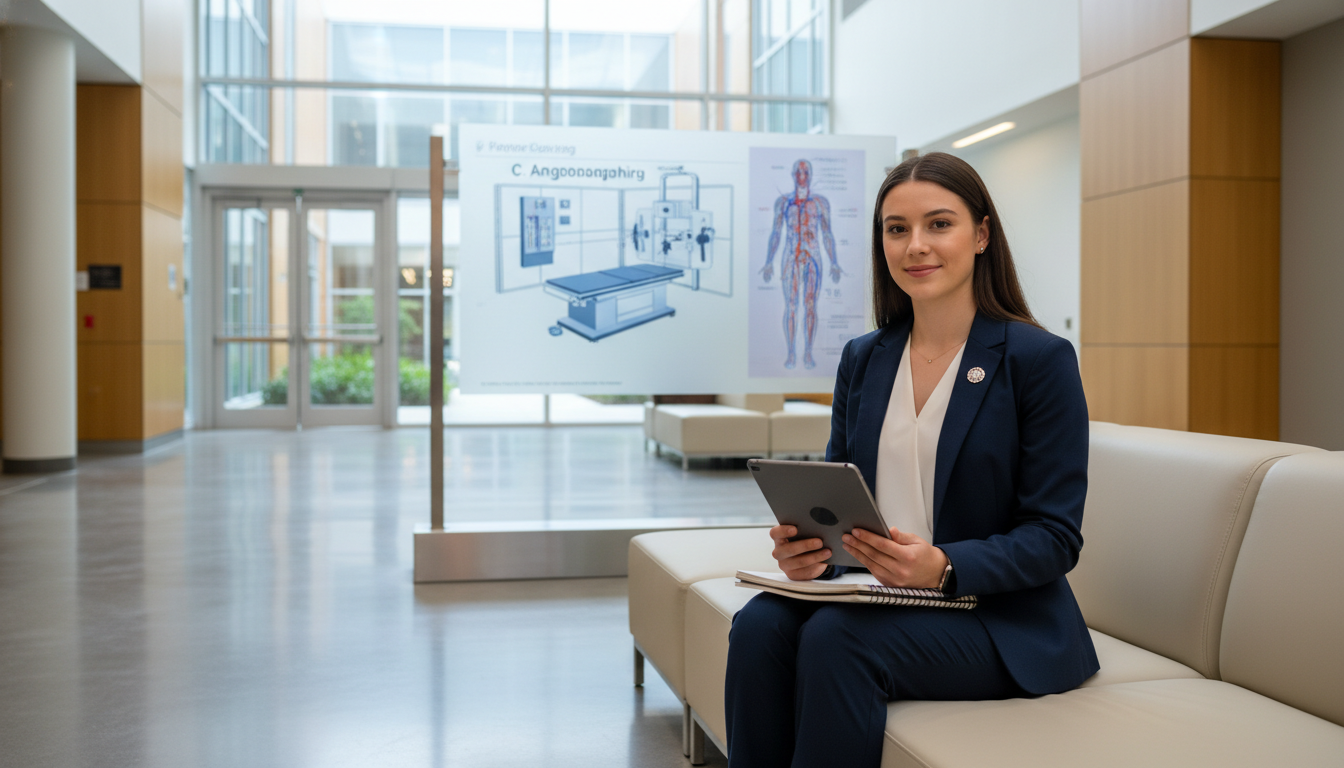
- Read introductory resources
- Review a basic radiology textbook chapter (e.g., Felson’s for chest radiology, or an introductory diagnostic radiology handbook).
- Familiarize yourself with common U.S. radiology terminology (e.g., “STAT head CT,” “trauma pan-scan,” “critical results communication”).
- Attend online radiology webinars (many societies and departments offer free sessions, including case conferences and intro talks for students/IMGs).
- Review radiology society websites
- ACR (American College of Radiology)
- RSNA (Radiological Society of North America)
- ARRS (American Roentgen Ray Society)
You do not need subspecialty-level depth, but you should sound informed and curious, not naive.
2. Research the Structure and Culture of Each Program
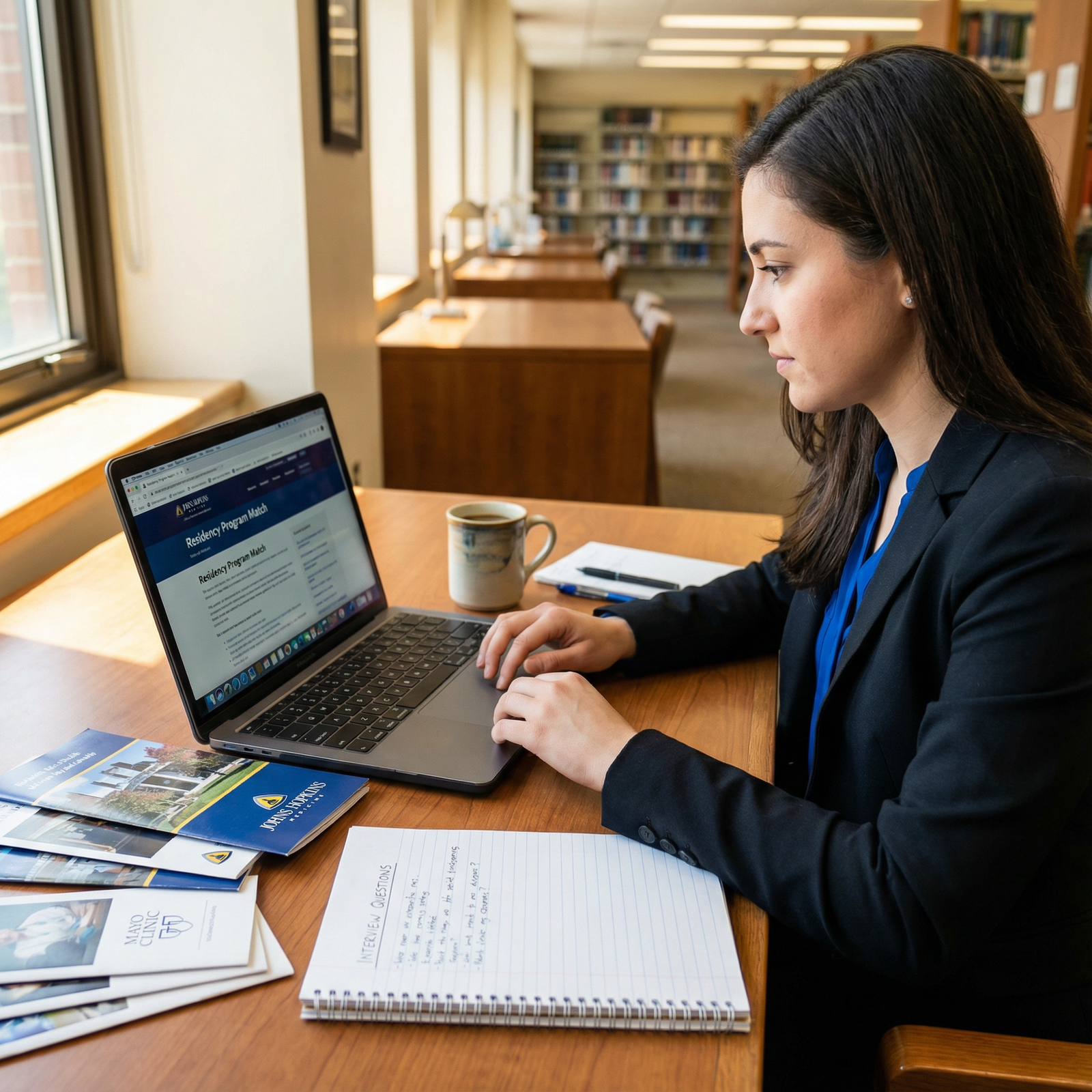
Before every interview, perform program-specific research—not just the homepage.
Focus on:
- Program structure
- Number of residents per year
- Rotation schedule (e.g., 4-week blocks, early exposure to subspecialties)
- Call system (night float vs traditional call, early vs late implementation)
- Academic identity
- Affiliation with medical school and teaching hospitals
- Presence of fellowship programs
- Major areas of research or subspecialty strength
- Program culture and values
- Emphasis on teaching vs clinical volume
- Diversity and inclusion statements
- Resident wellness initiatives
- IMG friendliness
- Historic match data (if available through forums or alumni networks)
- Visa sponsorship information (J-1, sometimes H-1B)
Use:
- Program websites
- Resident bios and photos
- Social media (program Twitter/X, Instagram, YouTube, podcasts)
- Virtual open houses or information sessions
Keep a one-page summary for each program including:
- 3 things that genuinely attract you to the program
- 2 questions you want to ask
- Any unique features (e.g., early independence, strong AI lab, high oncology volume)
3. Understand What Programs Look for in Radiology Residents
Programs often value:
- Strong clinical and anatomical knowledge base
- Reliable, hard-working, and independent learners
- Evidence of teamwork and communication
- Interest in life-long learning and adapting to new technology
- For IMGs: evidence you can function effectively in a U.S. clinical environment
Your pre-interview preparation should focus on highlighting those qualities through stories, not just claims.
Core Residency Interview Preparation: Strategy for IMGs
The fundamentals of residency interview preparation are similar across specialties, but an international medical graduate should pay extra attention to communication skills, cultural familiarity, and logistics.
1. Mastering Common Residency Interview Questions
When asking “how to prepare for interviews,” start with common questions asked across all specialties. These include:
- “Tell me about yourself.”
- “Why diagnostic radiology?”
- “Why our program?”
- “What are your strengths and weaknesses?”
- “Tell me about a challenge you faced and how you handled it.”
- “Describe a time you had a conflict in a team and how you resolved it.”
- “Tell me about a mistake you made in clinical care.”
- “Where do you see yourself in 5–10 years?”
- “What do you like to do outside of medicine?”
For each:
- Write bullet-point answers first, not a script.
- Use the STAR framework (Situation, Task, Action, Result) for behavioral questions.
- Practice speaking your answer out loud and time yourself (1–2 minutes is ideal).
- Ensure your examples are authentic, not overly rehearsed or exaggerated.
Example using STAR for a conflict question:
- Situation: “During my internal medicine rotation in my home country, a senior resident and I disagreed about the imaging needed for a suspected PE.”
- Task: “I was responsible for presenting the case and recommending a diagnostic plan.”
- Action: “I respectfully discussed my concerns, reviewed guidelines, and proposed discussing with a radiologist.”
- Result: “We agreed on a CT pulmonary angiogram after consulting radiology. The final diagnosis confirmed our concern, and this experience taught me the importance of respectful communication and multidisciplinary collaboration.”
2. Anticipating IMG-Specific Questions
Programs interviewing IMGs may ask:
- “Why did you choose to train in the U.S. rather than your home country?”
- “How have you adapted to the U.S. healthcare system?”
- “Can you describe your U.S. clinical or research experiences?”
- “How comfortable are you communicating with patients and teams in English?”
- “What challenges have you faced as an IMG, and how did you overcome them?”
Prepare concise, confident responses that:
- Emphasize your commitment to U.S. training and appreciation for your home background
- Highlight your flexibility and resilience
- Show ongoing effort to improve language and communication skills
- Avoid speaking negatively about your country’s system or prior institutions
3. Practicing English Fluency and Cultural Nuance
Even if you are fluent, residency interview preparation as an IMG must include deliberate attention to communication.
Strategies:
- Practice with native or near-native English speakers (friends, mentors, alumni).
- Record yourself answering typical interview questions; review pace, clarity, and filler words.
- Simplify overly complex sentences—clarity is more important than perfect grammar.
- Familiarize yourself with common American idioms or references, but avoid using unfamiliar expressions in the interview.
- Practice active listening: short verbal affirmations (“I see,” “That makes sense”) and brief clarifying questions when needed.
Working with a mentor who has gone through the diagnostic radiology match can be particularly valuable for realistic feedback.
Deep Dive: Radiology-Specific Interview Preparation
To stand out in the diagnostic radiology match, you need targeted preparation beyond generic residency interview techniques.
1. Prepare for Radiology-Focused Questions
Common diagnostic radiology interview questions include:
- “What attracted you specifically to diagnostic radiology versus other specialties?”
- “How do you see the role of the radiologist in patient care?”
- “What do you think are the biggest challenges facing radiology today?”
- “Are you interested in any particular subspecialty areas?”
- “Tell me about any radiology-related experiences or projects you’ve done.”
- “How do you handle uncertainty in imaging findings?”
Develop thoughtful answers that incorporate:
- Your exposure to imaging in clinical settings
- Clear understanding that radiology is not just “behind the scenes”
- Awareness of issues such as radiation safety, overutilization, burnout, AI integration, and communication with referring physicians
Example theme points:
- Radiologists are critical consultants, not just report generators.
- Communication of findings (especially urgent ones) is pivotal.
- Radiology is central to multidisciplinary care (tumor boards, trauma teams, stroke codes).
- Technology and AI will support, not replace, radiologists—requiring adaptability and critical thinking.
2. Know Your Radiology-Related CV Content Thoroughly
Anything radiology-related on your application is fair game for deeper questions:
- Observerships or elective rotations in radiology
- Imaging-focused research projects or abstracts
- Quality improvement or audit projects involving imaging
- Case reports based on imaging findings
For each project or experience, prepare to explain:
- The main objective or clinical question
- Your specific role and responsibilities
- Key findings or lessons learned
- Any challenges and how you addressed them
- How this experience reinforced your interest in radiology
If you list radiology skills (e.g., familiarity with PACS, basic imaging interpretation), be ready with concrete examples of how you used them.
3. Prepare to Discuss Technology, AI, and the Future of Radiology
Many interviewers enjoy assessing how applicants think about the future of the field. Pre-interview preparation should include a basic understanding of:
- AI and machine learning in image analysis
- Teleradiology and remote reading
- Radiation dose optimization and safety
- Role of radiologists in multidisciplinary care, not just image interpretation
You are not expected to be an expert, but you should be able to articulate:
- Curiosity and openness to technological change
- Recognition that human judgment, communication, and ethical decision-making remain central
- Interest, if applicable, in informatics or data science
Useful steps:
- Skim recent ACR or RSNA articles on AI in radiology.
- Watch brief introductory talks on YouTube or society sites on “AI in radiology” or “future of diagnostic radiology.”
4. Tailor “Why Our Program?” to Radiology
Generic answers hurt you. For each program, build a radiology-specific response:
- Mention specific program strengths:
- “Your strong neuroradiology division and robust stroke imaging volume…”
- “Early exposure to independent overnight call with direct faculty support…”
- “Integration of residents into tumor boards and multidisciplinary conferences…”
- Connect program features with your goals:
- “I am interested in academic radiology; your strong research mentorship and resident-driven projects align with my goals.”
- “Your diverse patient population and high ED volume would provide excellent training in emergency radiology, which I value for building strong fundamentals.”
Keep it sincere; programs can tell when answers are copy-pasted across interviews.
Logistics, Professional Image, and Technical Setup (Especially for Virtual Interviews)
Pre-interview preparation for IMGs must pay careful attention to practical details. A polished, professional setup communicates reliability and respect.
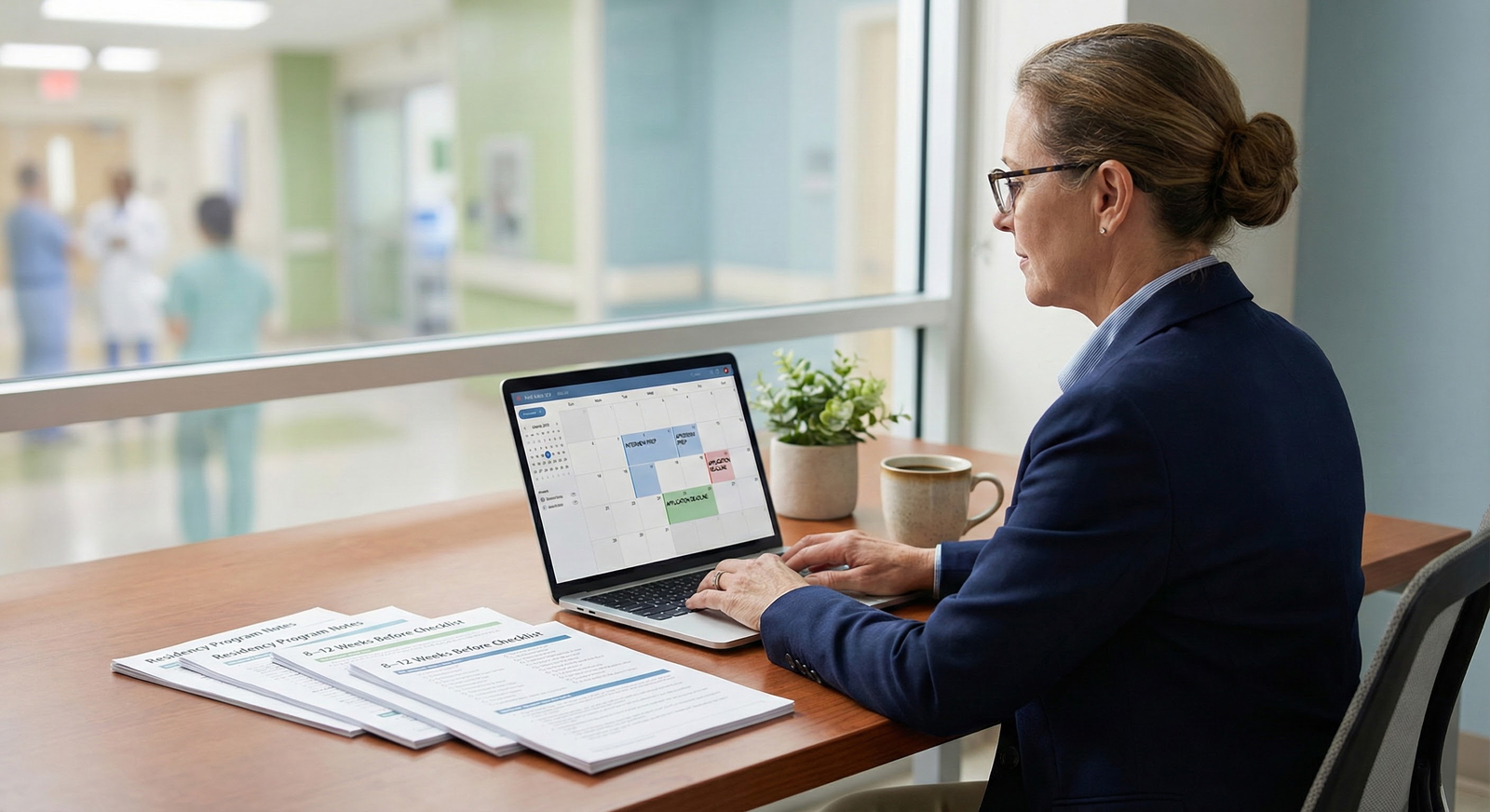
1. Organizing Your Interview Season
- Create a master spreadsheet with:
- Program name and location
- Interview date, start time, time zone
- Platform (Zoom, Thalamus, Webex, etc.)
- Interviewer names and roles (if provided)
- Notes about program features and your questions
- Factor in time zone differences if you are outside the U.S.—this is a common IMG pitfall.
- Confirm any pre-interview social events and prepare light, conversational questions.
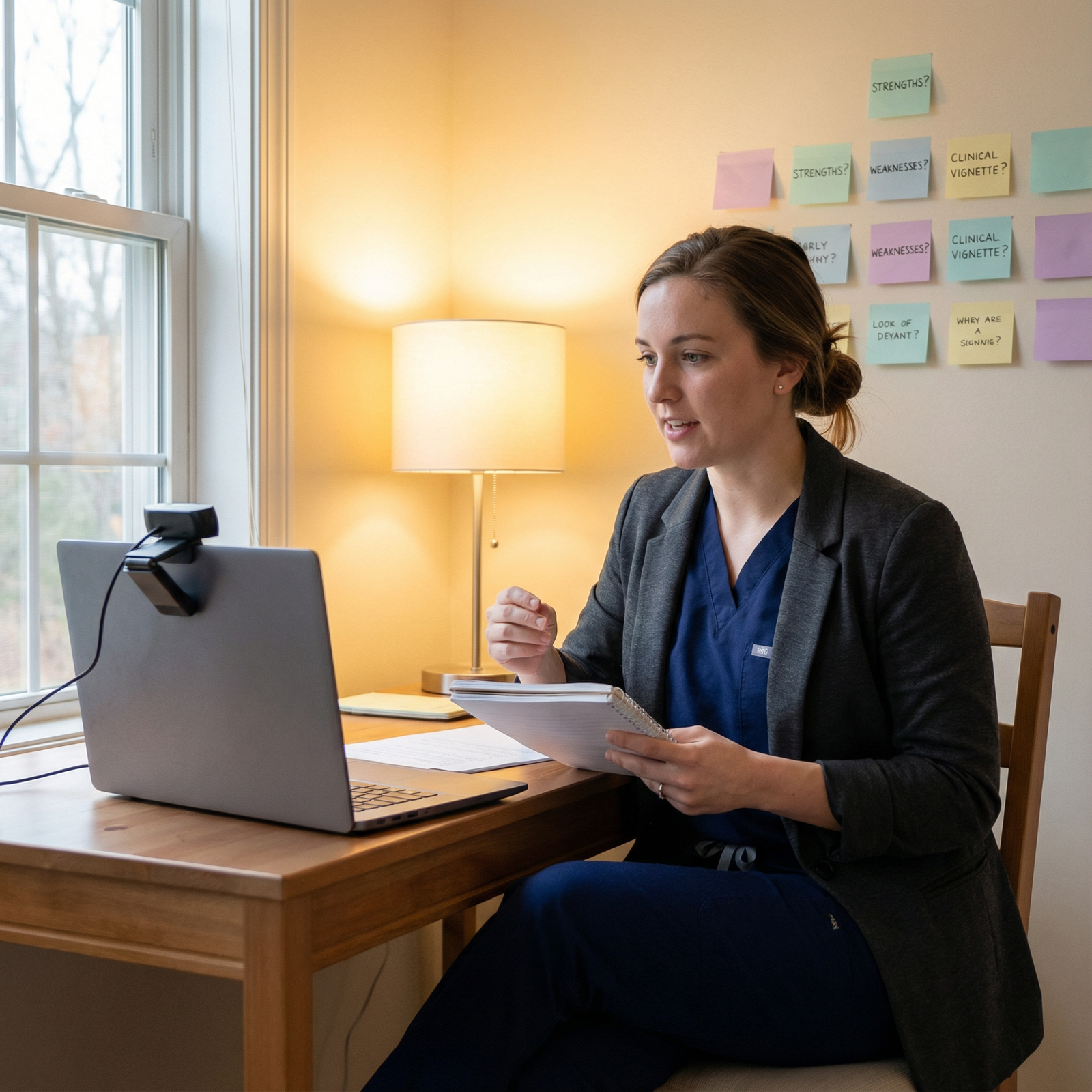
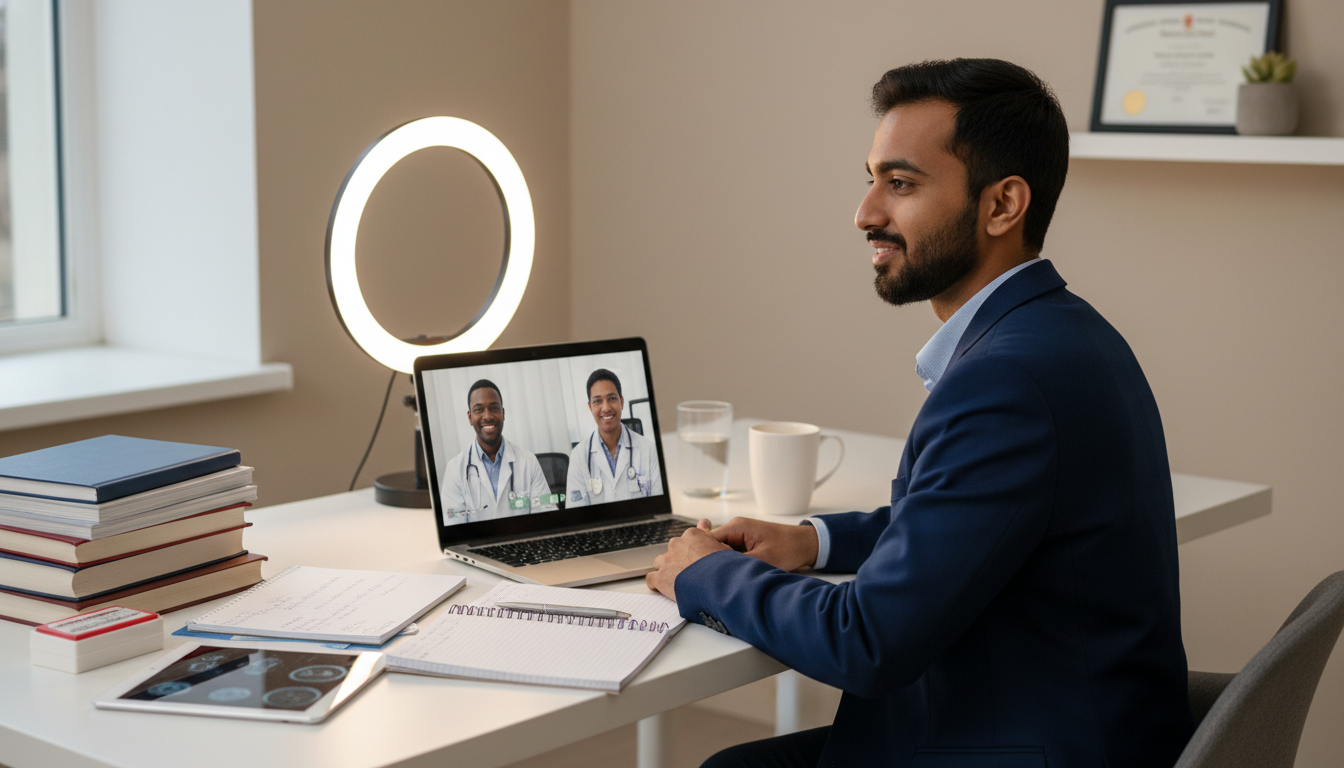
2. Optimizing Virtual Interview Technology
For virtual interviews, test everything well ahead:
- Internet connection: stable, wired if possible. Have a backup (hotspot).
- Device: laptop or desktop preferred over phone or tablet.
- Camera and audio:
- Use headphones or earbuds with a microphone for clearer sound.
- Check framing: your head and shoulders visible, camera at eye level.
- Platform familiarity: practice with Zoom, Webex, Thalamus, or any specified platform; know how to mute/unmute, turn video on/off, and share screen if needed.
- Lighting and background:
- Neutral, uncluttered background.
- Light source in front of you, not behind.
- Backup plan: a second device ready; contact email/phone of coordinator in case of technical failure.
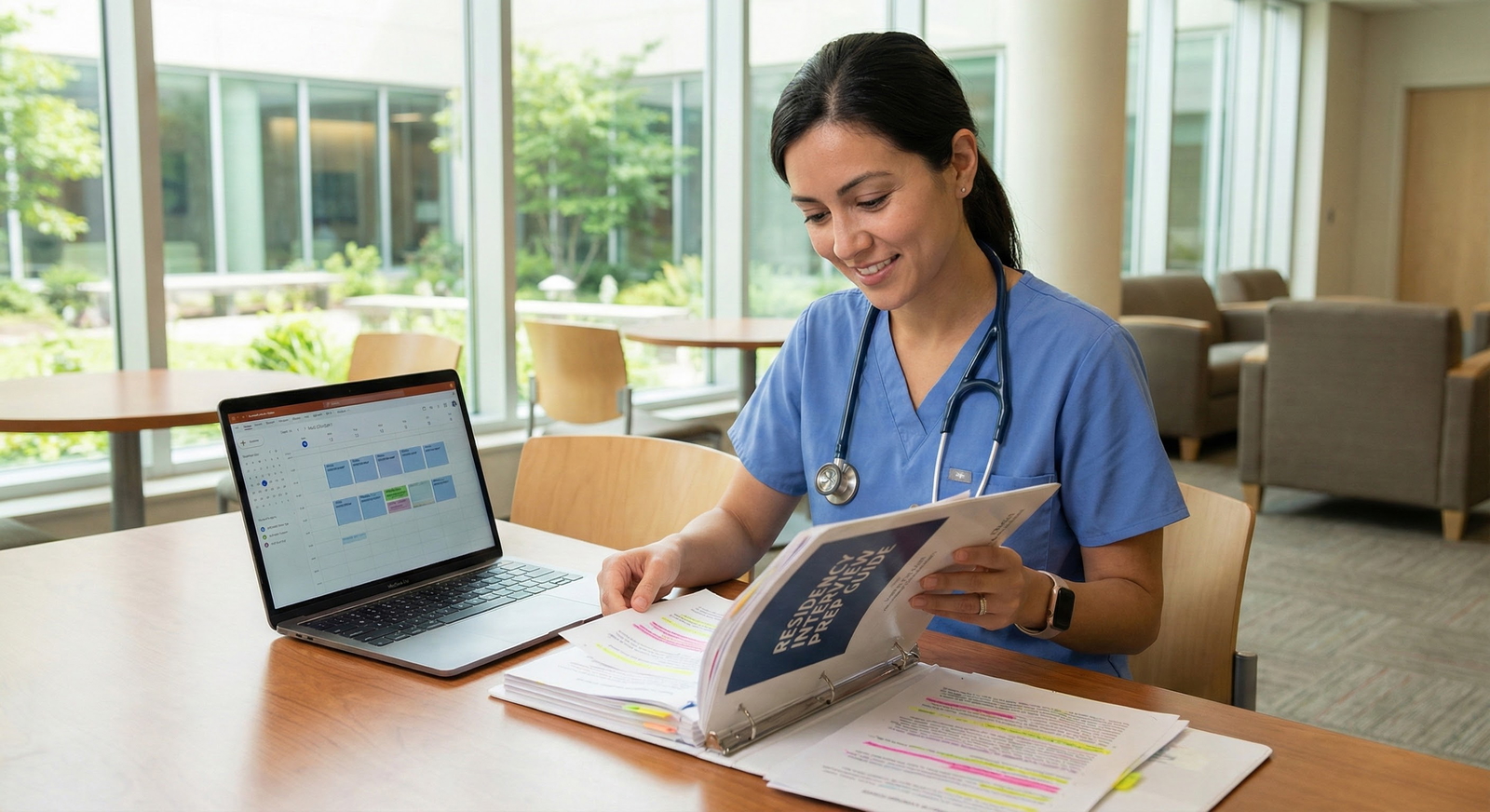
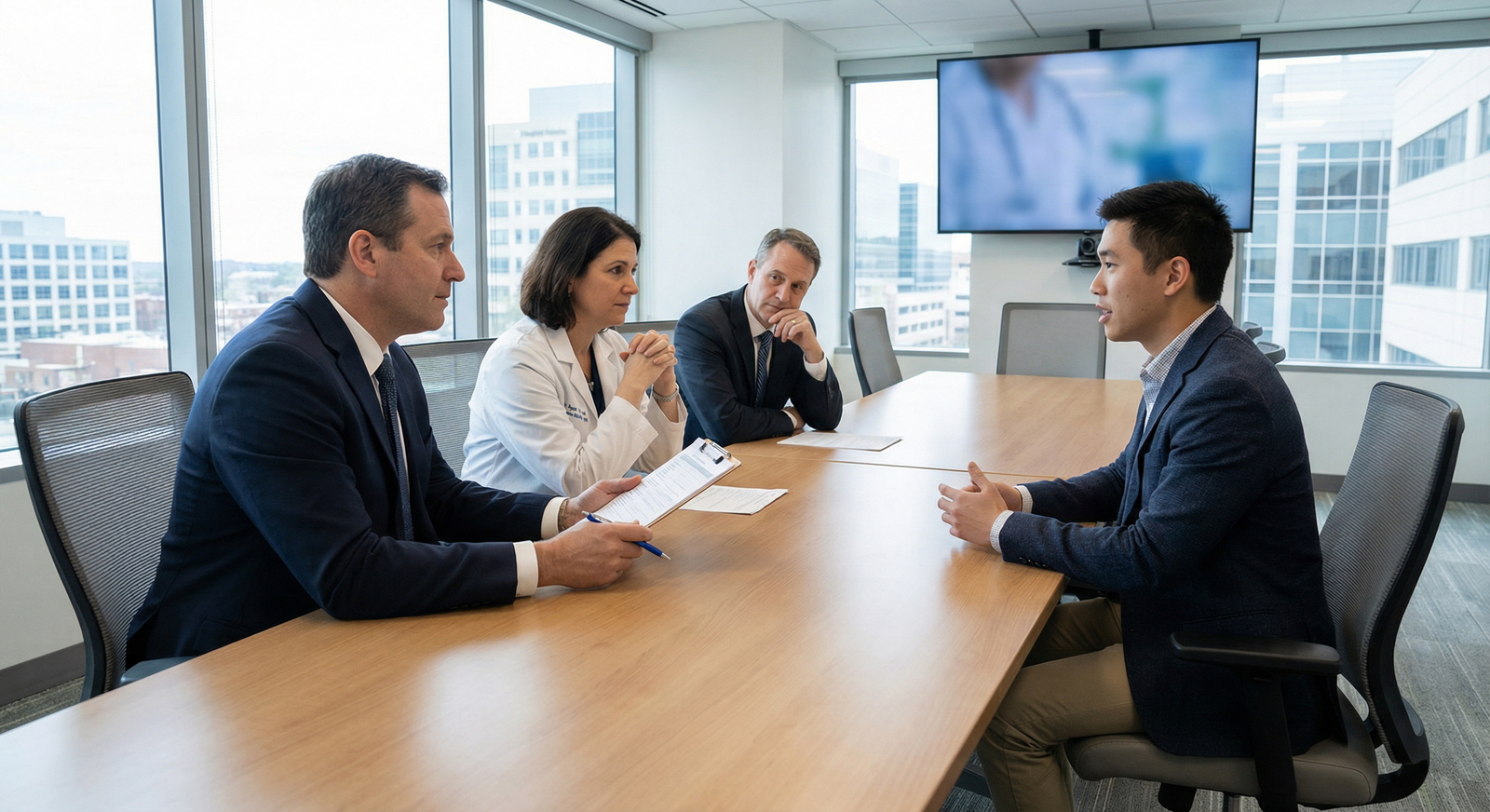
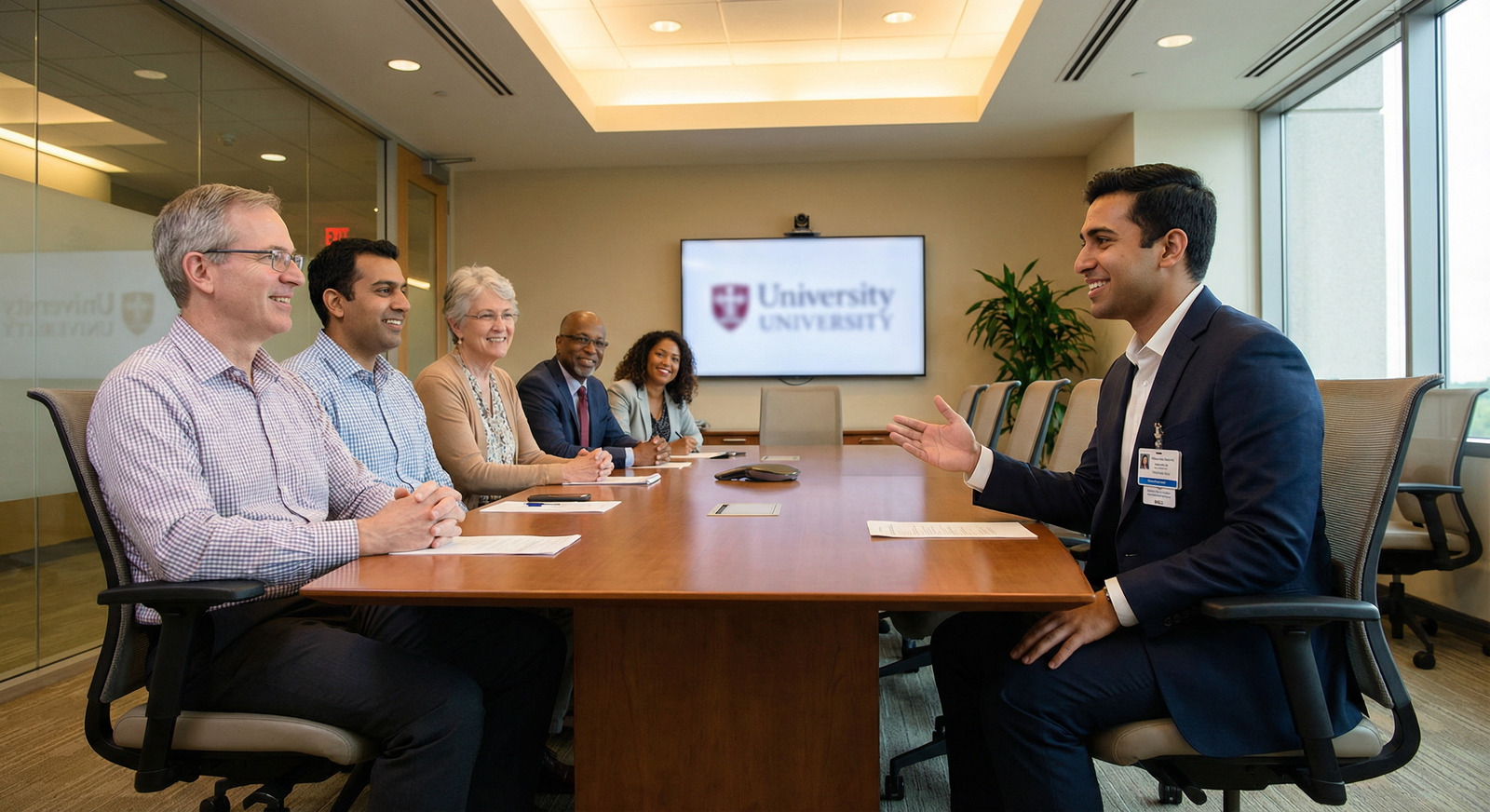
Do a full mock run with a friend or mentor to simulate the actual interview.
3. Professional Appearance and Nonverbal Communication
- Dress code: conservative business attire (suit jacket or blazer, dress shirt or blouse; tie is typically recommended for men).
- Posture: sit upright but relaxed.
- Eye contact: look at the camera when speaking; glance at the screen to read facial cues.
- Facial expression: neutral to pleasant; small smiles are appropriate.
- Hand movements: natural but not exaggerated.
For many IMGs, nonverbal style in their home culture may be more reserved or formal; become aware of this and adjust slightly for U.S. expectations while still feeling authentic.
4. Preparing Your Questions for Interviewers
Good questions show preparation and curiosity. Avoid questions easily answered on the website.
Examples tailored to radiology:
- “How are residents involved in multidisciplinary conferences and tumor boards?”
- “Can you describe the level of independence residents have during overnight call and how attending support is structured?”
- “What opportunities exist for residents interested in AI, informatics, or quality improvement in radiology?”
- “How does your program support IMG residents in adjusting to U.S. training and life?”
- “How do you see the program evolving over the next 5 years?”
Have 3–5 strong questions ready for program directors, faculty, and residents respectively.
Practicing Effectively and Avoiding Common IMG Pitfalls
The most successful IMG applicants in the diagnostic radiology match treat interview preparation as a skill-building process, not a last-minute cram.
1. Build a Structured Practice Plan
2–4 weeks before interviews begin:
- Schedule mock interviews
- With peers also applying to residency
- With mentors familiar with U.S. training
- Ideally with at least one radiology faculty member
- Alternate between:
- General residency interview practice
- Radiology-focused practice
- IMG-specific communication and storytelling practice
- After each mock session, write down:
- What went well
- What felt awkward or unclear
- One or two specific changes for next time
Repeat until you feel confident but not memorized.
2. Avoid Over-Rehearsal
Many IMGs memorize answers word-for-word; this often sounds robotic and unnatural.
Better approach:
- Memorize key points and structure, not exact sentences.
- Practice flexible wording each time.
- Allow your answers to vary slightly between sessions; keep the essence, not the script.
3. Be Honest About Weaknesses and Red Flags
If you have:
- Gaps in training
- Lower exam scores or failures
- Limited or no U.S. clinical experience
- Visa issues
Prepare a brief, honest explanation that:
- Takes responsibility where appropriate
- Focuses on what you learned and how you improved
- Shows that the issue is resolved or actively managed
Programs respect insight and growth much more than perfection.
4. Practice Professional Email and Follow-Up
As part of your pre-interview preparation:
- Draft a professional thank-you email template that you can personalize after each interview.
- Keep a log of interviewers and any personal details to reference in your thank-you notes (e.g., “I appreciated our discussion about your stroke imaging rotation.”)
- Be concise, respectful, and avoid pushing for ranking commitments.
FAQs: Pre-Interview Preparation for IMGs in Diagnostic Radiology
1. As an IMG, how early should I start residency interview preparation for diagnostic radiology?
Ideally, begin serious residency interview preparation 4–6 weeks before your first scheduled interview. This gives time to:
- Clarify your personal and radiology-specific narrative
- Practice common and specialty-specific interview questions
- Improve English fluency and cultural nuances if needed
- Prepare technology, wardrobe, and logistical organization
If you know radiology is your desired specialty early on, you can start reflecting on your narrative and gaining radiology exposure even sooner, during observerships and electives.
2. How much radiology knowledge do I need before the interview?
Programs do not expect you to interpret complex studies like a radiologist. However, you should:
- Understand basic imaging modalities and when they are commonly used
- Be familiar with the workflow of a radiology department (protocoling, reading, reporting, communication)
- Show awareness of current topics such as AI, radiation safety, and multidisciplinary care
Your primary task is to demonstrate genuine interest, curiosity, and readiness to learn, not advanced expertise.
3. What are the most important aspects of pre-interview preparation for an IMG?
For an international medical graduate, the highest-yield areas are:
- Clear, confident narrative about your journey to radiology and the U.S. system
- Strong communication skills in English, both verbal and nonverbal
- Understanding of radiology’s role and realistic expectations of training
- Program-specific research and tailored “Why this program?” answers
- Flawless logistics (time zones, technology, professional appearance)
These factors can differentiate you significantly in the diagnostic radiology match, even compared with applicants who may have stronger exam scores.
4. How can I get radiology-focused feedback if my home institution has no radiology mentors?
Consider:
- Reaching out via email to radiology faculty where you did observerships or electives, asking politely for a brief mock interview or feedback.
- Attending virtual events hosted by U.S. radiology departments specifically for medical students and IMGs; some offer office hours or mentorship programs.
- Joining online radiology interest groups or forums (e.g., Radiology societies’ trainee sections) where residents or fellows may volunteer as mentors.
Even one or two targeted sessions with a radiologist can significantly refine your understanding of specialty-specific expectations.
Thorough, structured pre-interview preparation will help you present yourself as a mature, well-informed, and highly motivated candidate for diagnostic radiology—someone who not only wants to match, but is truly ready to contribute as a resident in the U.S. healthcare system.