Why Your Questions Matter as an IMG in Radiation Oncology
As an international medical graduate (IMG) entering the highly specialized world of radiation oncology, the questions you ask programs can be just as important as the answers you give. Programs will judge your curiosity, insight, and professionalism by the quality of your questions. At the same time, you need clear information to decide whether a program is a good fit for your background, goals, and immigration needs.
This IMG residency guide focuses on questions to ask programs—program directors, faculty, and residents—specifically tailored to radiation oncology residency in the United States. It will help you:
- Understand what to ask and whom to ask
- Avoid generic or weak questions that make you look unprepared
- Target issues especially critical for IMGs (visa, board eligibility, support structure)
- Compare programs realistically and choose where you can thrive
Throughout, we’ll also highlight how these questions signal maturity, insight, and readiness for the rigor of a rad onc match.
How to Approach Asking Questions During Interviews
Before diving into specific examples, it helps to understand how to use your questions strategically.
Principles for Strong Questions
Be specific to radiation oncology.
Avoid questions any applicant could ask in any specialty. Show you’ve thought deeply about contouring, treatment planning, multidisciplinary care, and oncology research.Show that you did your homework.
Reference things from the program’s website, publications, or case volume. Instead of, “What research is available here?” ask, “I saw your publications in prostate SBRT and adaptive radiotherapy—how can residents get involved in those projects?”Prioritize what matters for you as an IMG.
For example, visa sponsorship, ECGMG deadlines, your prior training, and step exam timing. These are not “bonus” topics—they are central to your decision.Balance curiosity with respect for time.
Ask focused, well-structured questions. Avoid long preambles about your CV unless it’s necessary context.Tailor questions to the person.
- Program Director (PD): program vision, curriculum, selection criteria
- APD/Faculty: mentoring, clinical training, evaluation
- Residents: culture, workload, unspoken realities
When to Ask What
You’ll usually have:
- A PD or faculty interview (formal)
- One or more resident interviews/socials (less formal)
- A group Q&A or closing session
You don’t need to ask everything in one sitting. Plan to spread your most important questions across these touchpoints.
Core Questions for Program Directors and Faculty
Program directors expect strong, thoughtful interview questions for them. These help them gauge how you think and what you value. As an IMG, they are also your main source of information about visas, credentialing, and institutional support.
1. Questions About Training Structure and Case Exposure
You want a clear picture of your day-to-day training and long-term development:
“How is resident time divided between clinic, contouring, treatment planning, on-treatment visits, and follow-up clinics at different PGY levels?”
Shows you understand the workflow of radiation oncology and are thinking concretely about skill development.“What is the typical case mix here (e.g., CNS, head and neck, thoracic, breast, GI, GU, pediatrics)? Are there any disease sites for which residents need to seek outside rotations to gain adequate exposure?”
This helps you assess whether you will become a broadly competent rad onc attending.“How early are residents involved in independent contouring and treatment planning, and what kind of feedback do they receive?”
Rad onc is very contour- and plan-driven. This question demonstrates insight into technical training.“Could you describe the evolution of resident autonomy from PGY-2 through PGY-5?”
You’re signifying that you want progressive responsibility, not just observation.
2. Questions About Education and Board Prep
Board exams are critical for your future, especially as an international medical graduate whose long-term credibility depends heavily on certification.
“How is the didactic curriculum structured across the four years, and how do you integrate physics and radiobiology with clinical teaching?”
“What formal support do residents receive for written and oral board preparation in radiation oncology and physics?”
“What has been your recent board pass rate in radiation oncology and physics, and what changes have you made when outcomes did not meet your expectations?”
Note: Phrase this respectfully—it shows you’re outcome-focused without sounding confrontational.“How do you support residents who may need extra help with physics or radiobiology, especially those whose prior medical education did not emphasize these areas?”
Tailors the question to IMG realities.
3. Questions About Research Expectations and Opportunities
Radiation oncology remains a research-intense specialty. Strong questions show you understand the academic culture.
“What are the expectations for resident scholarly output by graduation (e.g., abstracts, presentations, first-author manuscripts)?”
“Could you describe the types of research residents most commonly engage in here—clinical outcomes, physics, informatics, translational, or health services research?”
“How is protected research time structured, and how is it respected in practice?”
“As an IMG, if I’m interested in pursuing a fellowship or a research-focused academic career, how does the program support that—especially in terms of mentorship and networking?”
If there’s a lab or PI you’re specifically interested in, show that you’ve done your homework:
- “I saw Dr. X’s work in adaptive radiotherapy and MRI-guided treatments. How accessible are such projects to residents, and what would be the best way to get involved?”
4. Questions About Program Culture and Resident Support
Programs know that international medical graduates may face cultural, linguistic, and system-navigation challenges. You can probe support without sounding negative.
“How would you describe the culture of your program—particularly in terms of approachability of faculty and openness to feedback from residents?”
“What mechanisms exist for residents to provide feedback about rotations or faculty teaching, and can you share an example of a change made in response to resident feedback?”
“How does the program support residents during challenging times, such as personal or family stress, illness, or visa-related uncertainties?”
This question can open a discussion about wellness and support systems important in an IMG residency guide.“What qualities do your most successful residents tend to share, and what traits do you look for specifically in IMGs joining your program?”
Gives you insight into their values and expectations.
5. Questions About Visa, Licensing, and IMG-Specific Issues
These topics are crucial in a rad onc match for IMGs. They’re not a nuisance; they are central to your professional survival.
Be direct but professional:
“How experienced is your GME office with visa sponsorship for IMGs in radiation oncology, and which visa types do you typically sponsor (e.g., J-1, H-1B)?”
“Have there been any recent challenges or delays with credentialing or visa processes for your international residents, and how were those handled?”
“For IMGs, are there any additional institutional requirements (such as specific Step scores, English proficiency, or prior US clinical experience) beyond what is listed on ERAS?”
“Can you share examples of previous IMGs in your radiation oncology residency and how their career trajectories evolved after graduation?”
This helps you assess how welcoming the program truly is to IMGs.
If the program does not explicitly list visa support, ask this early in the cycle (by email or open house) so you don’t waste interview slots at institutions that cannot sponsor you.
High-Value Questions to Ask Residents
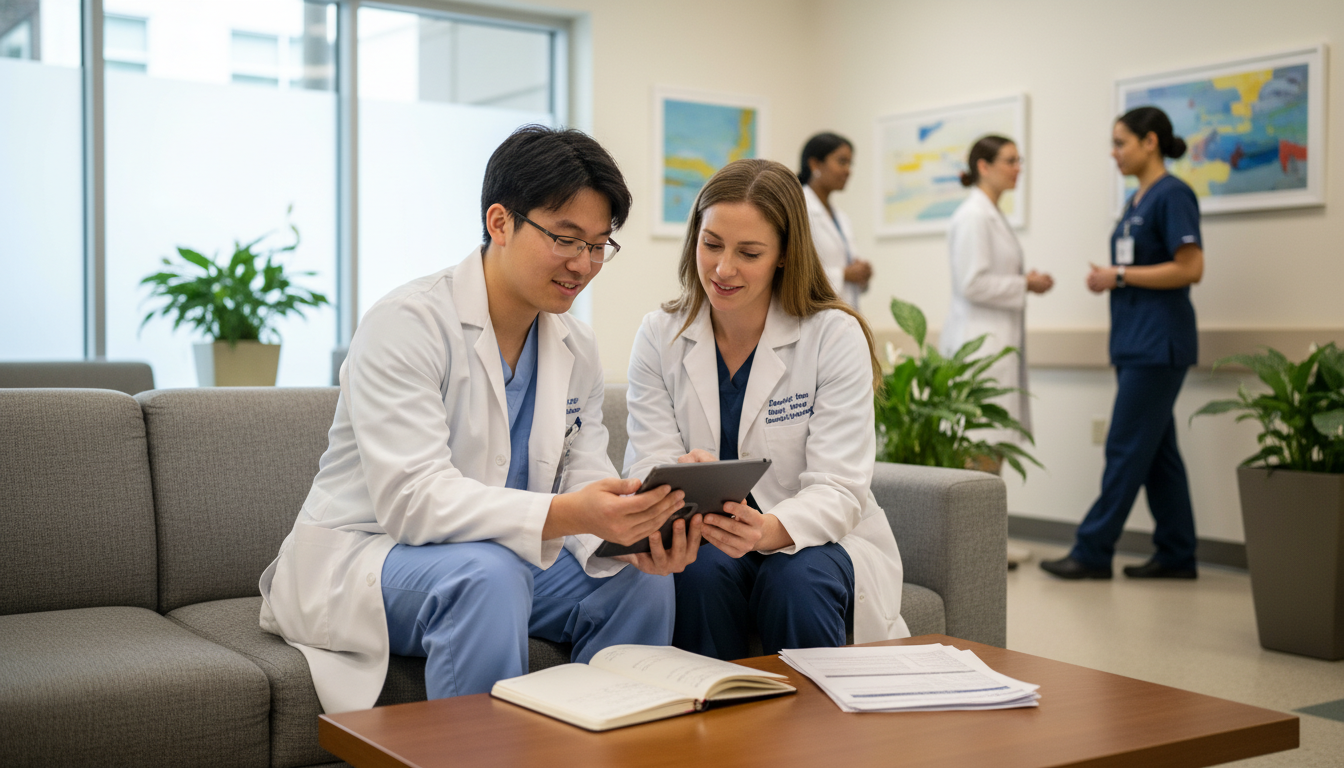
Residents will give you the clearest sense of day-to-day reality. They are the best people to ask about workload, unwritten expectations, and the true culture of the department.
1. Questions About Daily Life and Workload
These questions help you see how you would function practically in the program:
“What does a typical day look like for a PGY-2 on a busy service here, from start time to finish?”
“How many new patients, on-treatment visits, and follow-ups does a resident typically see in a week on your busiest rotation?”
“How much time do you realistically get for contouring and plan review during the workday, versus after hours?”
“How often do you stay significantly past 5 or 6 pm, and what are the usual reasons (contouring, documentation, urgent cases)?”
“How is call structured in this program, and how stressful is it in practice?”
For rad onc, “call” can vary widely—from mostly phone calls and inpatient consults to cross-covering brachytherapy or on-call machines.
2. Questions About Mentorship and Feedback
You need to know if residents feel guided and supported, especially as an IMG adapting to a new system.
“How accessible are faculty for teaching during clinics or contour review?”
“Do you feel you receive clear, constructive feedback on your performance and progress?”
“Is there formal mentorship for residents interested in specific niches, like SBRT, proton therapy, brachytherapy, or informatics?”
“As IMGs or those from non-traditional backgrounds, have residents felt well-mentored in navigating the US job market or academic positions?”
3. Questions About Culture, Inclusion, and IMG Experience
You want to understand whether you will be welcomed and supported as an international medical graduate:
“How many current or recent residents are IMGs, and how has the program supported them with adjustment to the US system, communication expectations, or visa issues?”
“Have you seen any challenges related to cultural differences, accents, or communication styles, and how have faculty and staff responded?”
“How would you describe the relationship between residents—collaborative, competitive, or somewhere in between?”
“Do residents feel comfortable raising concerns about workload, mistreatment, or academic struggles?”
4. Questions About Career Outcomes
Residents are honest historians of program outcomes:
“Where have recent graduates gone—academia, private practice, fellowships? Do any choose to work internationally?”
“How active is the program in helping residents prepare for the job search—mock interviews, networking, or introductions to alumni?”
“For IMGs, have there been any additional challenges in obtaining positions after graduation, and how has the program helped address those?”
These questions not only inform you; they also signal that you’re thinking beyond residency to long-term impact.
Smart Ways to Phrase Difficult or Sensitive Questions
Some of the most important questions to ask residency programs are also the most delicate—for example about workload, conflict, or problematic rotations. You can ask these without sounding antagonistic.
Asking About Weaknesses and Challenges
Instead of:
- “What are the problems with this program?”
Try:
- “Every program has areas it’s working to improve. What have been your main focus areas for improvement in the last few years, and what changes have you implemented?”
For residents, you might ask:
- “If you could change one thing about this program, what would it be?”
Asking About Performance Remediation
Instead of:
- “How do you handle weak residents?”
Try:
- “What supports are in place for residents who may struggle with a particular aspect of training—such as physics, communication, or adapting to the health system?”
For an IMG, this is especially relevant as you adapt to a new environment.
Asking About Workload and Burnout
Instead of:
- “Are you overworked?”
Try:
“How manageable do you find the workload overall, and what strategies has the program used to monitor for and prevent burnout?”
“Have any significant changes been made to scheduling or staffing recently in response to resident feedback about workload?”
Asking About IMG-Specific Concerns Without Stigma
Instead of:
- “Do you prefer US grads over IMGs?”
Try:
“What characteristics make IMGs especially successful in this program, and how do you ensure they are fully integrated and supported?”
“Historically, what proportion of your residents have been IMGs, and how has that influenced the culture of your residency?”
These formulations keep the conversation professional and constructive while still getting you the information you need.
What Not to Ask—and Questions to Upgrade
Some questions can hurt your impression or waste time. Often, the problem isn’t the topic but the way it’s phrased.
1. Avoid Easily Searchable Basics
Weak: “What are your board pass rates?” (If clearly on their website.)
Better: “I saw your strong board pass rates listed online—what do you think contributes most to that, and how do you support residents who might be at risk of struggling?”Weak: “Do you have research?”
Better: “I noticed your projects in stereotactic radiosurgery and hypofractionation. How early do residents typically get involved, and can you share examples of resident-led projects?”
2. Avoid Questions That Sound Self-Centered or Premature
Weak: “How many vacation weeks do I get?” as your first or second question.
Better: “How are vacation and conference time structured so that residents can balance clinical responsibilities with rest and academic growth?”Weak: “Do you sponsor H-1B?” without context.
Better (earlier in season by email and during interviews):
“As an IMG on [visa type], long-term eligibility is very important in my planning. Could you share which visa types your institution currently supports for radiation oncology residents and whether that has been stable over recent years?”
3. Avoid Questions That Put Interviewers on the Defensive
Weak: “Why is your program less prestigious than [Top Program X]?”
Better: “What distinguishes your program’s training philosophy or strengths from other radiation oncology programs in the region?”Weak: “Why shouldn’t I rank you low?”
Better: “What do you think applicants sometimes underestimate or overlook about your program that you consider one of its strengths?”
Turning Answers into a Real Comparison Tool
As you move through the rad onc match process, you’ll gather a huge amount of information. Turn your questions and answers into a structured comparison.
Create a Post-Interview Reflection Template
For each program, immediately after the interview day, capture:
Training & Case Mix
- Breadth of disease sites
- Brachytherapy, SBRT, SRS, proton access
Education & Boards
- Physics and biology support
- Board pass rates and remediation
Research & Career Support
- Protected time, mentorship
- Fellowship/job placement, especially for IMGs
Culture & Support
- Resident morale, inclusion of IMGs
- Faculty approachability
IMG-Specific Factors
- Visa stability and GME experience
- Prior track record with IMGs
Your Gut Feeling
- Can you see yourself here for four challenging years?
- Did the program’s answers align with its stated values?
During Rank List Time
Review your notes through the lens of:
- Where will I receive the best overall training?
- Where am I most likely to pass boards on first attempt?
- Where will I be most supported as an international medical graduate facing visa, cultural, and system challenges?
- Where do I feel a genuine sense of belonging and safety?
The questions to ask residency programs are not just for show—they are the skeleton of a decision-making framework you’ll rely on when emotions and fatigue cloud your memory.
FAQ: Common Questions About What to Ask Radiation Oncology Programs as an IMG
1. Is it acceptable to ask directly about visa sponsorship during interviews?
Yes. Programs expect IMGs to clarify visa and sponsorship details. It’s usually best to:
- Confirm broad eligibility before interviews (emails, open houses, or website).
- During interviews, ask more nuanced questions:
- “Which visa types have you successfully sponsored for radiation oncology residents in recent years?”
- “Have there been any recent policy changes that might affect future IMGs?”
You will not hurt your chances by asking professionally and succinctly.
2. How many questions should I ask in each interview?
Aim for 2–4 focused questions per one-on-one faculty or PD interview, and several more in group or resident sessions. Prioritize quality over quantity. If you already got an answer in an earlier session, don’t repeat the same question to another interviewer unless you’re clarifying or seeking a different perspective.
3. What if I feel like all my questions have been answered by the website or pre-interview materials?
You can still show engagement with more advanced or reflective questions, for example:
- “Your website answered many of my structural questions. Based on your experience, what do you think truly differentiates residents who excel in this program?”
- “Is there anything about your program that you think applicants often misunderstand or underestimate?”
If a PD asks, “Do you have any questions?” never say, “No, I’m fine.” Have at least one thoughtful question ready.
4. Should I ask the same question to both the PD and the residents?
For some topics, yes—especially culture, workload, and support. Their perspectives may differ, and that contrast is instructive. For example:
- PD: “How do you monitor resident workload and prevent burnout?”
- Residents: “From your perspective, how manageable is the workload, and have you felt the program responds when concerns arise?”
Comparing these answers will give you a more complete picture of the program’s reality.
By approaching each interaction with targeted, thoughtful questions, you not only gather the information you need—you demonstrate the intellectual curiosity, professionalism, and strategic thinking that radiation oncology programs seek in their future colleagues. As an international medical graduate navigating the rad onc match, your questions are one of your strongest tools. Use them deliberately.