
International medical graduates (IMGs) aiming for vascular surgery face an especially competitive and nuanced path. One of your strongest tools in this process is not just how you answer questions—but how you ask them. Thoughtful, well-structured questions to ask programs signal maturity, insight, and genuine interest, and they help you determine whether a vascular surgery residency or integrated vascular program is the right fit for you.
This IMG residency guide will walk you through high-yield, targeted questions to ask at every stage of the process—on interview day, during social events, and in follow-up emails. It is written specifically for the international medical graduate interested in vascular surgery residency.
Why Your Questions Matter So Much as an IMG in Vascular Surgery
For an international medical graduate, your questions are a crucial part of your “interview performance”:
- They demonstrate preparation: Strong, specific questions show you understand vascular surgery’s demands and have studied the program.
- They signal fit and professionalism: Programs look for residents who are curious, proactive, and team-oriented.
- They clarify IMG-specific issues: Visa, licensing, research capacity, and support systems are often more complex for IMGs.
- They protect your long-term goals: You need honest information about case volume, board pass rates, and fellowship/job outcomes.
Always remember: interviews are a two-way evaluation. You are not just being assessed—you are assessing them. Having thoughtful, customized questions to ask residency programs is not optional; it is a core strategy for a successful match.
Core Question Strategy: What to Ask and Whom to Ask
Before diving into topic-specific lists, it helps to organize your approach. Think about three key categories:
Program-Level Questions
- Best for: Program Director, Associate Program Director, Chair, Chief of Vascular Surgery.
- Focus: Structure, culture, outcomes, expectations, and support.
Resident-Level Questions
- Best for: Current residents, especially IMGs, PGY-1 to PGY-5/PGY-7.
- Focus: Day-to-day life, workload, teaching, morale, reality vs. brochure.
Administrative/Logistical Questions
- Best for: Program Coordinator, GME Office, institutional international office.
- Focus: Visas, onboarding, contracts, licensing, HR/process details.
General Principles for Good Questions
Be specific, not generic
Instead of: “What’s the call schedule?”
Try: “How is vascular call structured for junior residents, and how does it evolve as residents progress to senior years?”Avoid questions easily answered online
Don’t ask things that are clearly on the website (e.g., “How many positions do you have?”). Use that information and build on it.Prioritize depth over quantity
A few well-thought-out questions with genuine follow-up are better than a long list you rush through.Tailor to your IMG context
Incorporate your background naturally: “As an international medical graduate with most of my clinical training abroad…”
High-Yield Questions for the Program Director and Leadership
When you think about what to ask program director or leadership, prioritize questions that reveal philosophy, expectations, and long-term outcomes. These are also the people best positioned to answer questions about strategy, vision, and how IMGs have historically done in their program.
1. Program Philosophy, Culture, and Vision
Use these to understand whether the program’s mission and style match your learning needs.
- “How would you describe the overall training philosophy of your vascular surgery residency or integrated vascular program?”
- “What characteristics do successful residents in your program typically share?”
- “How has the program evolved over the last 5–10 years, and what changes do you anticipate in the near future?”
- “How do you balance autonomy with supervision, especially in the OR, as residents progress?”
Listen for themes: Are they focused on high-volume operative experience, research productivity, work-life balance, or pure service? Match this to your priorities.
2. Case Volume, Autonomy, and Operative Experience
In a procedural specialty like vascular surgery, this is critical.
- “How do you ensure that residents graduate as confident, independent vascular surgeons in both open and endovascular techniques?”
- “Could you describe how operative autonomy is granted over the course of training—for example, what a typical junior vs. senior resident case might look like?”
- “What are the typical case numbers for graduating residents in core procedures such as carotid endarterectomy, lower extremity bypass, EVAR/TEVAR, and dialysis access?”
- “Are there any competing fellowships or services (e.g., cardiology, interventional radiology) that significantly impact vascular residents’ case exposure?”
If they quote impressive numbers but can’t explain how those cases are distributed among residents, that is a red flag.
3. Education, Mentorship, and Feedback
You are looking for structured education, not just “learn as you go.”
- “What does the formal educational curriculum look like for vascular surgery residents? For example, protected didactic time, simulation, journal clubs, or board review sessions?”
- “How often do residents receive formal feedback, and in what format (written, in-person, milestone-based)?”
- “How are faculty involved in mentoring residents, especially IMGs who may be navigating a new system?”
- “Is there a dedicated faculty advisor or mentorship program for each resident?”
Programs that invest in education can clearly outline their structure.
4. Outcomes: Board Pass Rates, Jobs, and Fellowships
This is non-negotiable. The IMG residency guide approach emphasizes understanding where graduates go.
- “Where have your graduates gone in the last 5 years—academia vs. private practice, geographic regions, and types of vascular practices?”
- “What is your recent first-time pass rate for the Vascular Surgery Qualifying and Certifying examinations?”
- “How do you support residents who may be struggling academically or clinically?”
- “For the integrated vascular program, how do early years (PGY-1 to PGY-3) prepare residents for the senior vascular years, and how do outcomes compare with independent track graduates?”
You are looking for confidence and transparency. Evasive or vague answers may signal problems.
5. IMG-Specific Questions for Leadership
These target the realities you face as an international medical graduate.
- “How many current or past residents in your vascular surgery program have been international medical graduates?”
- “What have you found to be the strengths IMGs bring to your program, and what challenges do they typically encounter?”
- “How does the program support IMGs with acclimating to the U.S. healthcare system, documentation, and communication expectations?”
- “Are there specific resources or faculty who have particular experience mentoring IMGs?”
If they’ve never matched an IMG or seem uncomfortable with IMG-related questions, note that carefully.

Key Questions for Current Residents: Daily Life, Culture, and Reality
Residents are often your most honest source of information. Tailor your interview questions for them to fill in gaps left by official presentations.
1. Workload, Call, and Schedule
You need a clear picture of the day-to-day reality.
- “How would you describe a typical day on the vascular surgery service for a junior resident? For a senior resident?”
- “How is call structured—home vs. in-house, frequency, and level of support from attendings and fellows?”
- “Do duty hours feel manageable in practice, and are they actually respected?”
- “When you are on call, how do you balance OR emergencies, consults, and floor responsibilities?”
Ask follow-up questions with real scenarios: “What did your last call shift look like?” Their stories tell you more than numbers.
2. Culture, Collegiality, and Support
A toxic environment can ruin even a high-volume program.
- “How would you describe the overall culture here—collaborative, hierarchical, stressful, supportive?”
- “How approachable are the vascular attendings for questions, especially when you are unsure or early in your training?”
- “Have you ever felt intimidated or unsafe speaking up in the OR or during patient care?”
- “How do residents handle conflict or concerns—are there mechanisms that actually work?”
You want to hear about psychological safety: the ability to ask questions, admit uncertainty, and make mistakes without humiliation.
3. Education vs. Service
You are looking for balance between learning and workload.
- “Do you feel the program prioritizes education over service, or does service sometimes overwhelm your learning opportunities?”
- “How often are conferences or didactics canceled for clinical demands?”
- “Do residents have protected time for educational conferences, simulation, or research?”
- “Could you give an example of a time the program clearly prioritized resident education?”
Patterns of canceled teaching sessions or constant service overload are warning signs.
4. Research, Academic Opportunities, and IMG Experience
For IMGs, research is often part of the narrative, so ask targeted questions.
- “What research opportunities are realistically available to residents, especially those without a strong U.S.-based research background?”
- “How do residents typically get involved in vascular research—ongoing projects, quality improvement, clinical trials?”
- “Do residents regularly present at regional or national vascular meetings (e.g., SVS, regional vascular societies)? Is there financial support for this?”
- “For IMGs currently in the program: What was the hardest adjustment coming here, and how did the program help you adapt?”
If possible, specifically seek out an IMG resident and ask:
- “As an IMG, what do you wish you had known before joining this program?”
- “How supportive has the program been with visas, credentialing, and any cultural or communication challenges?”
5. Life Outside the Hospital
Burnout risk is high in any surgical training.
- “How manageable is life outside of work here—housing, transportation, cost of living, family life?”
- “Do residents have time for families, hobbies, or rest?”
- “Do people actually take their vacation, and is it respected?”
- “What’s morale like among the residents right now?”
You’re not looking for perfection, but for honesty and evidence that residents still see a long-term future in vascular surgery.
Practical Questions for Coordinators and Administration: Visas, Licensure, and Logistics
Your program coordinator is usually the best initial source for logistical and visa-related information. These are some of the most essential questions to ask residency staff as an IMG.
1. Visa Sponsorship and Immigration
Clarify this early and clearly.
- “What types of visas does your institution sponsor for residents (e.g., J-1 only, J-1 and H-1B)?”
- “Have you previously sponsored IMG residents in vascular surgery on my type of visa?”
- “Are there any institutional limits on the number of H-1B or J-1 positions?”
- “Do you have an international office or immigration lawyer who works with residents on visa issues, renewals, and potential transitions after residency?”
Ask for concrete past examples, not just theoretical possibilities.
2. Licensing, Exams, and Onboarding for IMGs
Technical details can delay or jeopardize your start.
- “Are there specific state licensing timelines I should be aware of as an IMG, especially regarding ECFMG certification or primary source verification?”
- “What typical challenges have IMG residents faced with licensing or credentialing at your hospital, and how does the program help address them?”
- “Who should I contact if I have questions about visa documentation, ECFMG processes, or background checks?”
3. Salary, Benefits, and Support Services
These matter more if you are relocating internationally.
- “What is the salary structure by PGY level, and what benefits are included (health, dental, retirement, disability)?”
- “Is there support for relocation expenses or temporary housing for incoming residents, especially those coming from abroad?”
- “Do you offer any institutional support for wellness, counseling, or mental health for residents?”
- “Are there language or communication resources (e.g., ESL, accent reduction, writing support) available if needed?”
You don’t need to get deeply into financial details during the interview, but you should know the basics before ranking the program.
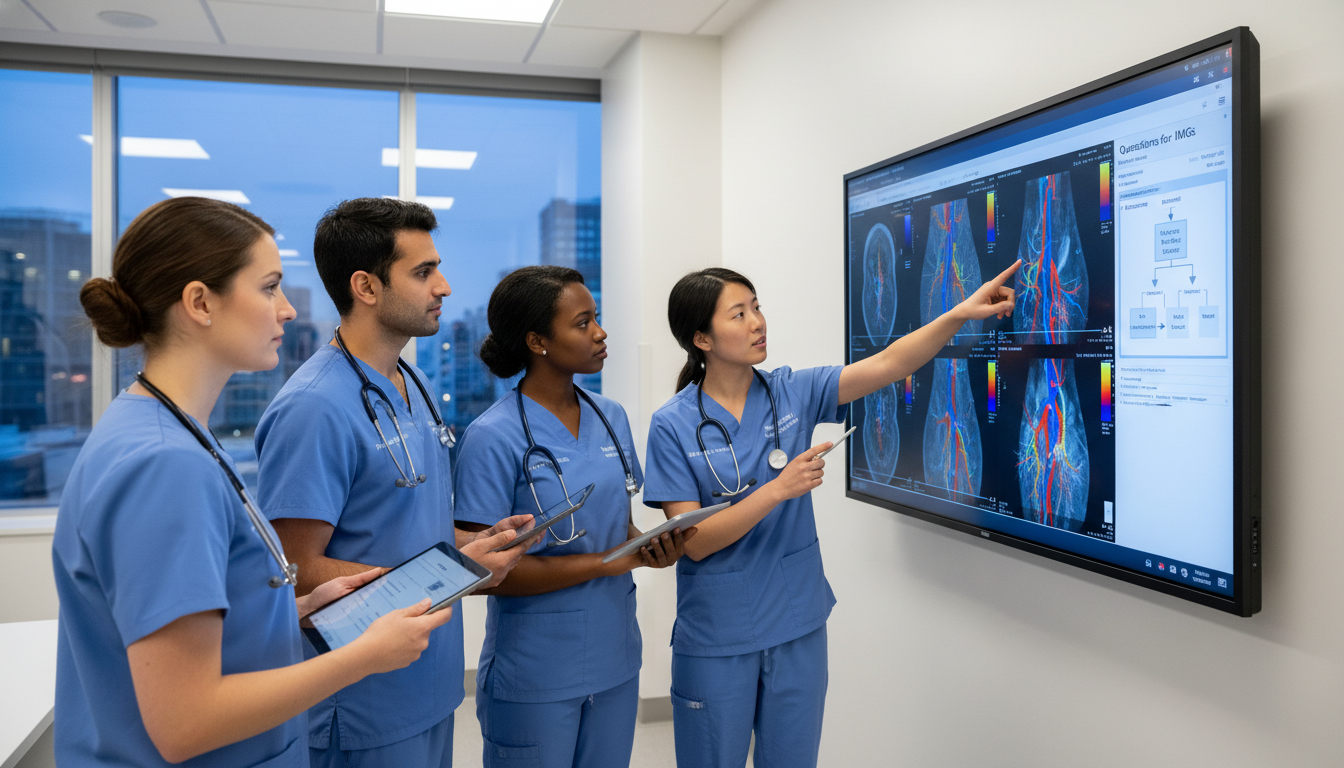
Specialty-Specific Angles: Vascular Surgery and Integrated Programs
Vascular surgery training has unique features, especially in integrated pathways. Use these targeted questions to dig deeper.
1. Structure of the Vascular Training Experience
- “How are rotations structured across vascular surgery, general surgery, ICU, and other subspecialties during the residency?”
- “For the integrated vascular program, what percentage of time is dedicated to vascular vs. general surgery in the early years?”
- “Are there away rotations or partnerships with other institutions to broaden vascular exposure (e.g., complex aortic work, limb salvage, hybrid procedures)?”
2. Relationship with Other Services
Vascular overlaps heavily with other fields.
- “How is the relationship between vascular surgery and interventional radiology/cardiology here? Are there clear boundaries for vascular cases?”
- “Do vascular residents ever feel that endovascular cases are lost to other departments, or is there a collaborative model?”
- “Who primarily manages dialysis access, peripheral interventions, and complex aortic work at this institution?”
You want a robust, resident-centered procedural experience.
3. Technology, Innovation, and Endovascular Training
Modern vascular surgery is highly dependent on evolving technology.
- “What types of endovascular technologies and devices do residents routinely work with (e.g., advanced EVAR devices, fenestrated/branched grafts, atherectomy, drug-coated balloons)?”
- “Is there a hybrid OR, and how often do residents participate in hybrid procedures?”
- “How are residents trained to evaluate and incorporate new vascular technologies critically and safely?”
This speaks to how well you will be prepared for future practice, not just current standards.
4. Special IMG Considerations in Vascular Surgery
Because vascular surgery is relatively small and tight-knit, relationships matter.
- “How does the program help residents, particularly IMGs, with networking in the broader vascular community (e.g., at SVS, regional societies, or collaborative groups)?”
- “Are there faculty or alumni who are IMGs and now practicing vascular surgeons with whom I could potentially connect?”
- “If I plan to pursue a career in the U.S. after residency, how does the program help with job placement, letters, and introductions?”
These questions not only help you gather information but also subtly convey that you are career-focused and long-term minded.
How to Use These Questions Strategically on Interview Day
Knowing what to ask is only half of the equation. You also need to deploy questions skillfully.
1. Prepare a Short, Prioritized List
- Draft 10–15 questions overall.
- Mark 3–5 as “must-ask” for each interview (PD, residents, coordinator).
- Be ready to adapt depending on who is in front of you and what has already been covered.
2. Customize Questions for Each Program
Review the website, program brochure, and any pre-interview materials. Then tailor:
Instead of:
- “What research opportunities do you have?”
Try:
- “I saw on your website that your division is involved in a limb salvage outcomes project. How can residents get involved in that work or similar vascular research initiatives?”
This shows you are interested in their program specifically, not just any program.
3. Integrate Your Background into the Question
As an IMG, smoothly weave your story into your questions:
- “Coming from a healthcare system where vascular imaging was more limited, I’m very interested in learning advanced endovascular techniques. How does your program support juniors in early exposure to these cases?”
- “As an international medical graduate who has done research in vascular access, I’m curious how residents here typically balance research with the clinical workload.”
This signals self-awareness and maturity.
4. Avoid Restricted Topics and Pitfalls
Do not ask about:
- How programs will rank you.
- Sensitive internal politics.
- Questions that challenge fairness (e.g., “Why don’t you take more IMGs?” in an accusatory tone).
Instead, focus on questions that invite honest but professional discussion.
5. Close Each Conversation Gracefully
Have a “closing” question for the program director or senior leadership:
- “Is there anything about my background or application that you would like me to clarify or expand on?”
- “What qualities are you hoping to add to your incoming class, and how can I best demonstrate that I would be a good fit?”
This gives them a chance to revisit concerns and gives you one more opportunity to leave a strong impression.
Frequently Asked Questions (FAQ)
1. As an IMG, should I ask directly whether they have taken IMGs before?
Yes, but phrase it professionally and constructively. For example:
- “Could you tell me about your experience training international medical graduates in this program, and how they have done in terms of performance and outcomes?”
This frames the question as curiosity about history and success, not a challenge.
2. How many questions should I ask during an interview?
Aim for 2–4 thoughtful questions per interviewer, depending on time. It’s better to ask fewer, deeper questions than many superficial ones. If an interviewer has already answered a question you planned, acknowledge that and pivot:
- “You’ve already addressed much of what I planned to ask about case volume. May I instead ask about…”
3. Is it appropriate to ask about visa sponsorship during the interview?
Yes—but usually better with the program coordinator or GME office, not the program director, unless they bring it up. You can ask in a neutral, factual way:
- “I’m on an F-1 visa and will need sponsorship after graduation. Could you clarify which visas your institution typically sponsors for residents?”
4. Should I send follow-up questions after the interview day?
If something truly important was not addressed or you forgot to ask, a brief, professional follow-up email to the program coordinator is appropriate. Keep it focused:
- Reintroduce yourself (name, interview date).
- Ask 1–2 concise, high-yield questions.
- Thank them for their time and assistance.
Avoid overwhelming them with a long list—save that for your own research and comparison process.
As an international medical graduate targeting vascular surgery residency or an integrated vascular program, the questions you ask are a powerful reflection of your readiness, insight, and professionalism. Use them not just to impress, but to protect your goals and choose a program where you can become the kind of vascular surgeon you aspire to be.