Understanding the PM&R Interview Landscape as an IMG
Physical Medicine & Rehabilitation (PM&R) is a relatively small but rapidly growing specialty, and the interview process reflects that: programs are often tight-knit, faculty know each other well, and “fit” matters enormously. As an international medical graduate (IMG), you’re evaluated on the same core competencies as U.S. graduates—but program directors also pay close attention to how easily you’ll integrate into the team, communicate with patients, and adapt to the U.S. clinical environment.
Before you dive into residency interview preparation, it helps to understand what PM&R programs are trying to assess:
- Genuine interest in physiatry: Do you understand what PM&R actually is? Can you articulate why you chose this specialty over others?
- Clinical maturity and teamwork: Can you function safely on an inpatient rehab unit, coordinate with therapists, and communicate with consultants?
- Longitudinal patient care mindset: Rehabilitation is often about months to years of progress, not quick fixes. Programs look for patience, empathy, and resilience.
- Communication skills: Many PM&R patients have complex neurologic, cognitive, or communication impairments. Programs want residents who can adapt their communication style and show compassion.
- Commitment and stability: PM&R is relatively niche; programs want to see evidence that you are serious about staying in physiatry and in their program.
As an IMG, additional considerations may include:
- Visa needs and timing (J‑1 vs H‑1B, previous US visas)
- Adaptation to U.S. clinical practice (EHR use, multidisciplinary rounds, patient-centered communication style)
- Language and cultural communication (speaking clearly, understanding idioms, and navigating difficult conversations)
Keeping these goals in mind will help you tailor your pre-interview preparation so every story, answer, and question you offer reinforces that you are a strong, committed future physiatrist.
Step 1: Build a Strong PM&R Foundation Before Interview Day
To stand out in the physiatry match, especially as an IMG, you need to demonstrate that your interest in PM&R is deep, informed, and sustained—not something you discovered a month before ERAS opened.
Know the Scope of PM&R Beyond Buzzwords
Programs quickly recognize applicants who only know superficial talking points (e.g., “I like helping people regain function”). Before interviews, make sure you can discuss:
- Core PM&R domains:
- Neurorehabilitation (stroke, spinal cord injury, TBI)
- Musculoskeletal medicine and pain
- Pediatric rehabilitation
- Amputee and prosthetics/orthotics
- Cancer rehabilitation and cardiopulmonary rehab
- Inpatient vs outpatient PM&R:
- Inpatient: rehabilitation units, acute rehab, interdisciplinary rounds, discharge planning
- Outpatient: spasticity management (e.g., botulinum toxin), EMG, musculoskeletal clinics, sports medicine, pain procedures
- Interdisciplinary team roles:
- Physiatrist, physical therapist, occupational therapist, speech-language pathologist, rehab nurse, psychologist, social worker, prosthetist/orthotist, case manager
Be ready with 1–2 specific examples illustrating your understanding. For instance, you might describe a stroke patient’s journey from ICU to acute rehab to outpatient therapy and how the physiatrist’s role evolved along the way.
Connect Your Background to PM&R
As an international medical graduate, your pathways into physiatry may be less straightforward. Programs will often ask: “What led you to PM&R?” or “How did you discover this field?”
Prepare to connect your previous experiences to PM&R through concrete narratives:
- Prior specialty exposure: If you have internal medicine, neurology, or orthopedics experience, highlight how:
- You saw patients left with significant disability after acute treatment.
- You felt something was missing—long-term functional follow-up—and discovered PM&R as the solution.
- Rehabilitation experiences in your home country:
- Community rehab centers, prosthetics clinics, or physiotherapy units you’ve worked with.
- Differences between rehab possibilities in your country and the U.S., and how that motivated you.
- Personal or family experiences with disability or chronic illness:
- If applicable, describe them respectfully and frame how they shaped your empathy and interest in function.
Your goal: After hearing your story, an interviewer should clearly understand why PM&R and why now, especially given any detours, prior specialties, or gaps.
Update Your PM&R Knowledge
Even before you step into residency interview preparation, ensure your knowledge is fresh:
- Skim a PM&R introductory textbook (e.g., Braddom’s or Cuccurullo’s review).
- Read 1–2 recent review articles on:
- Stroke rehabilitation
- Spinal cord injury care
- Musculoskeletal ultrasound or EMG in PM&R
- Follow a PM&R podcast or blog (e.g., AAPM&R resources) and note any topics you can casually mention in conversations.
You do not need to sound like a fellow, but you should demonstrate a basic, current understanding of where the field is going: e.g., interest in technology in rehab, neurorecovery, or value-based care.
Step 2: Systematic Residency Interview Preparation for IMGs
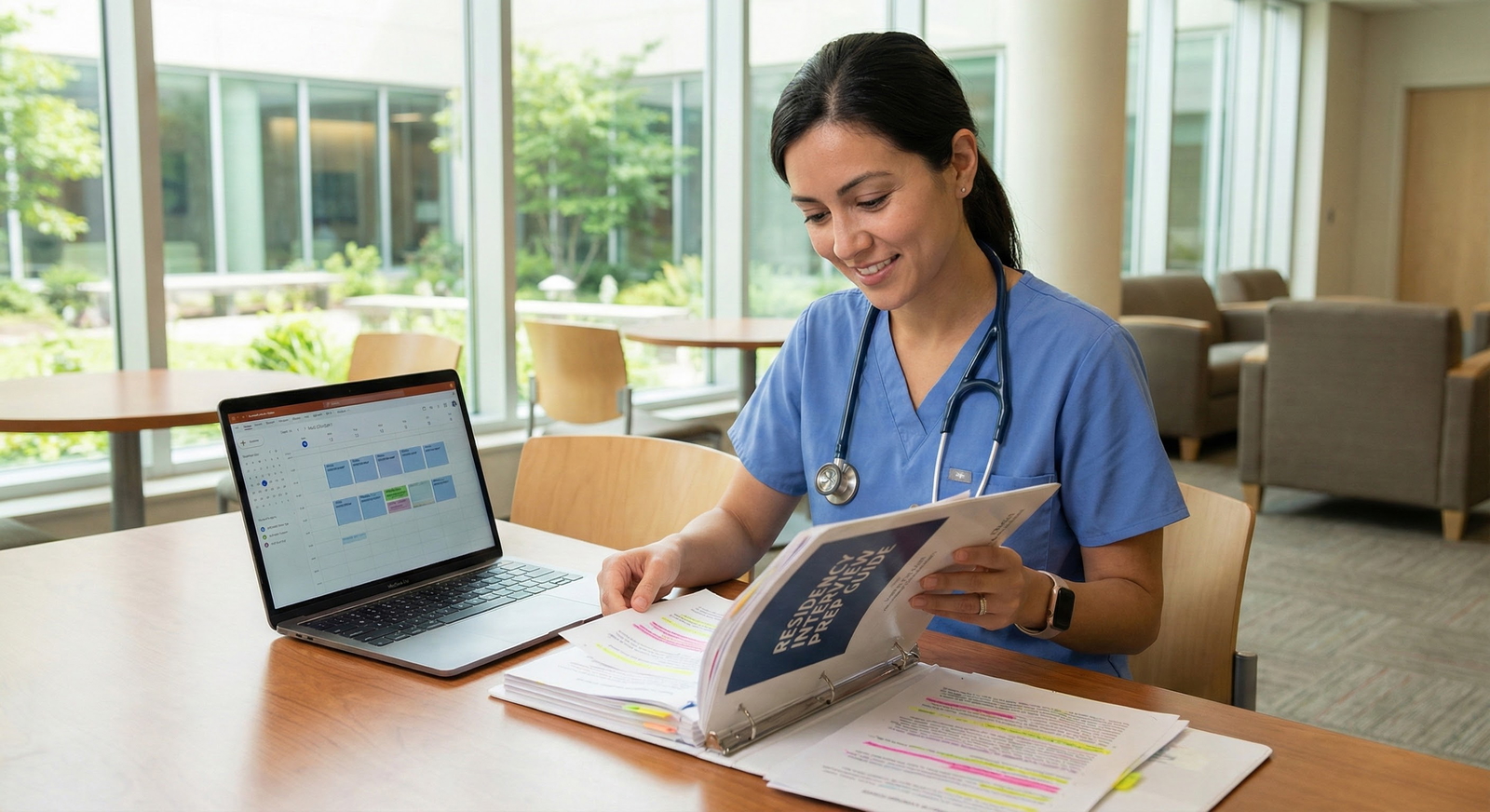
Once you have a solid PM&R foundation, you can move into targeted residency interview preparation. For an IMG, this includes content prep (what you will say) and communication prep (how you will say it, especially in a second language).
Clarify Your Core Story and “Brand”
Interviewers will meet dozens of strong candidates. What should they remember about you?
Define 2–3 key themes you want to convey:
- “Clinically mature, team-oriented physician with strong inpatient rehab experience in my home country.”
- “Research-focused applicant interested in spinal cord injury and neurorehabilitation.”
- “Former physiotherapist turned physiatrist, passionate about musculoskeletal medicine and function.”
Then map your stories to these themes:
- Theme: Long-term patient commitment
- Story: Following a spinal cord injury patient from acute hospital to community reintegration.
- Theme: Teamwork
- Story: Leading coordination between PT, OT, and family for a complex stroke rehab discharge.
- Theme: Adaptability as an IMG
- Story: Transitioning from a resource-limited rehab setting to a U.S. observership and what you learned.
Use these themes to guide your answers, even to broad questions like “Tell me about yourself” or “Why should we rank you highly?”
Prepare for Common Interview Questions in PM&R
You will face standard interview questions residency programs ask plus a few PM&R-specific ones. For effective residency interview preparation, create bullet-pointed answers—not scripts—for each.
Common general questions:
- Tell me about yourself.
- Why PM&R? Why not neurology/orthopedics/internal medicine?
- Why did you choose our program?
- What are your strengths and weaknesses?
- Describe a difficult patient or conflict with a team member and how you handled it.
- Tell me about a time you failed or made a mistake.
PM&R-focused questions:
- What do you think are the main challenges in rehabilitation medicine today?
- Which patient population in PM&R interests you the most and why?
- How do you see yourself using EMG, ultrasound, or procedures in your future practice?
- Tell me about a patient who made you want to pursue PM&R.
- How would you explain the role of a physiatrist to a patient or family?
IMG-specific questions (sometimes explicit, often implicit):
- Why did you choose to train in the U.S.?
- How have you adapted to the U.S. healthcare system?
- Tell me about your visa status and future plans.
- How do you handle practicing in a non-native language?
For each question, structure your answers using STAR (Situation, Task, Action, Result) where possible. Keep answers focused (1–2 minutes) and always circle back to what you learned and how it prepares you for PM&R.
Practice High-Yield Questions Aloud
Knowing how to prepare for interviews is as important as the content. Especially for IMGs, spoken practice is essential:
- Record yourself answering:
- “Tell me about yourself.”
- “Why PM&R?”
- “What questions do you have for us?”
- Watch the recordings:
- Are you speaking clearly and at a moderate pace?
- Are your answers focused or rambling?
- Do you sound enthusiastic but professional?
- Practice with:
- A mentor or attending physician.
- A co-applicant familiar with the physiatry match.
- A friend or relative fluent in English who can comment on clarity and accent.
Avoid memorizing exact scripts. Instead, memorize bullet points and let the exact phrasing be natural during the interview.
Step 3: Program-Specific Research and Strategy
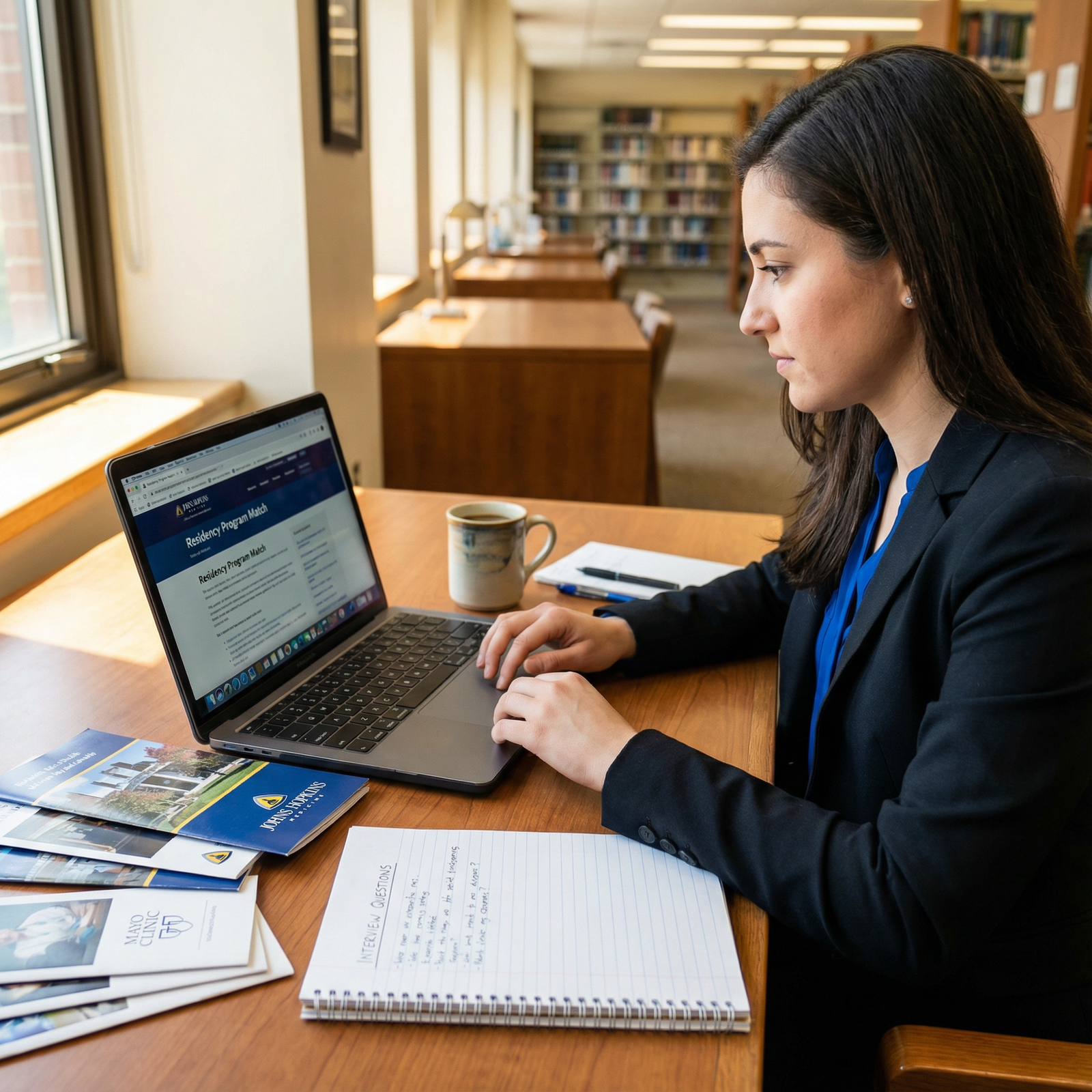
Thorough program research is central to any strong IMG residency guide. It signals to interviewers that you’re serious, organized, and likely to rank them fairly.
Build a Structured Program Research Template
Create a spreadsheet or document for each program, including:
- Program basics:
- Location, size (number of residents per year), call schedule pattern.
- Length and structure of inpatient rotations vs outpatient.
- Focus areas:
- Strong in SCI? Stroke? Pain? EMG? Sports? Pediatric rehab?
- Linked with a VA hospital, academic center, or community rehab.
- Research and subspecialty opportunities:
- Does the program have fellowships in sports, SCI, pain, brain injury, pediatrics?
- Recent resident or faculty publications in areas that interest you.
- IMG-related factors:
- History of matching international medical graduates.
- Visa sponsorship type (J‑1 vs H‑1B), if publicly stated.
- Unique features that stand out to you:
- Innovative clinic (e.g., adaptive sports programs).
- Strong interprofessional education with PT/OT/SLP.
- Notable faculty interests aligned with yours.
Use the program website, FREIDA, social media, and resident bios. If possible, attend virtual open houses or Q&A sessions to refine your notes.
Translate Research into Targeted Questions
Program directors expect thoughtful questions. Avoid generic ones you can answer by reading the website. Instead, ask questions that:
- Reflect knowledge of their program.
- Connect to your interests.
- Help you evaluate whether you’d thrive there.
Examples:
- “I noticed your program has a strong SCI service at the VA. How early in training are residents exposed to SCI patients, and what opportunities exist for research in that area?”
- “I’m particularly interested in outpatient musculoskeletal medicine and ultrasound. How do residents build procedural skills over the three years here?”
- “I see that several of your alumni have gone into sports medicine fellowships. How does the program support residents aiming for competitive fellowships?”
- For IMGs: “I saw that your program has previously trained international medical graduates. Are there particular supports in place to help IMGs adapt to your documentation and communication systems?”
Have 3–5 program-specific questions ready for each interview day, and 1–2 general backup questions you can use anywhere.
Step 4: Communication, Culture, and Professionalism for IMGs
Even strong CVs can be overshadowed by communication issues. As an IMG, pay particular attention to how you present yourself verbally and nonverbally.
Polish Your English and Medical Communication
You do not need a perfect accent, but you must be:
- Understandable without frequent repetition.
- Comfortable with common idioms and small talk.
- Capable of explaining complex concepts in simple language.
Practical steps:
- Practice with English-speaking colleagues: Ask them to correct unclear phrasing or over-formal expressions.
- Focus on patient-friendly language: For example, instead of “hemiparesis,” say “weakness on one side of the body that affects how they walk and use their arm.”
- Review common PM&R terms (spasticity, ADLs, gait training, functional independence, EMG, orthotics) and be able to explain them clearly.
During interviews, aim for:
- Short, clear sentences.
- Natural pauses—don’t rush.
- Brief confirmation if you didn’t understand a question:
“Could you please repeat or rephrase that question?” is perfectly acceptable.
Adjust to U.S. Professional Norms
Cultural expectations may differ from your home country. Pay attention to:
- Formality: Use “Dr. [Last Name]” unless invited to use first names.
- Eye contact: Maintain comfortable eye contact (in person) or look at the camera (virtually).
- Humility and confidence balance:
- Acknowledge limitations, but also clearly express strengths and achievements.
- Avoid self-deprecation that sounds like lack of confidence.
Prepare for ethical or behavioral scenarios where cultural norms may differ, such as:
- Breaking bad news and shared decision-making.
- Respecting patient autonomy even when family preferences are different.
- Responding to team disagreement or hierarchy respectfully.
Address Visa and Training Path Issues Briefly and Confidently
You may be asked about immigration status. Be ready with a concise, factual answer:
- “I’m currently on a J‑1 visa and understand the two-year home requirement.”
- “I will require J‑1 sponsorship; I’ve reviewed the process and understand the associated responsibilities.”
Avoid turning this into a long discussion or appearing anxious. Show that you’ve done your homework and are prepared to comply with requirements.
Step 5: Logistics, Technology, and Mock Interviews
Great content and communication can be undermined by poor logistics—especially in the era of virtual interviews.
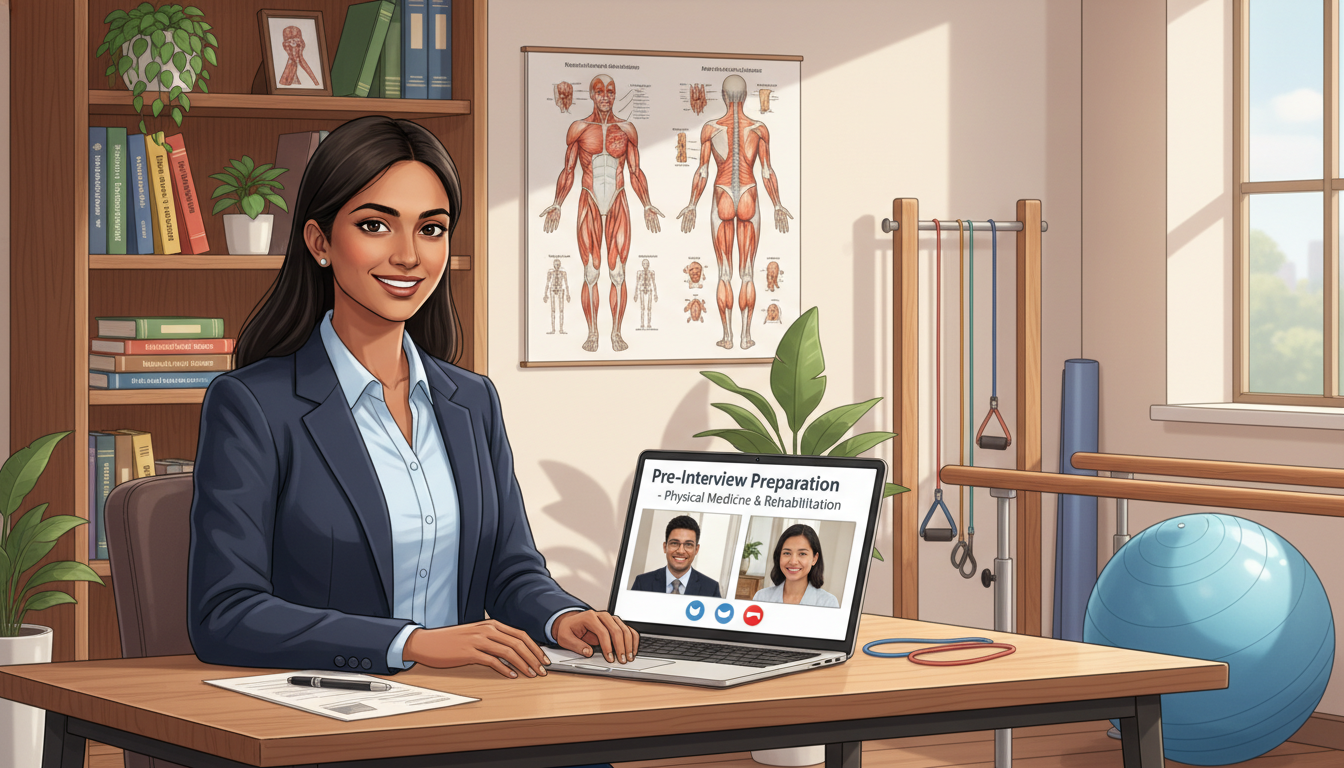
Master the Technical Setup (for Virtual Interviews)
For each interview day:
- Internet:
- Use a wired connection if possible; otherwise, sit close to the router.
- Test video platforms (Zoom, Teams, WebEx) at least a day before.
- Camera and audio:
- Position the camera at eye level; frame your head and shoulders.
- Use a dedicated microphone or wired headphones with a mic for clear sound.
- Background:
- Neutral wall or bookshelf; avoid clutter.
- Soft, indirect light from in front of you, not behind.
Join practice calls with a friend to check:
- How your name appears (use full name, not a nickname or email address).
- Whether your video angle and lighting appear professional.
- If the audio has echo or background noise.
Plan Your Professional Appearance
Even though the focus is on PM&R content, your attire sends a message of reliability and attention to detail:
- Clothing:
- Business formal (suit jacket, dress shirt or blouse; tie optional but preferred for men).
- Neutral colors (navy, gray, black) and minimal patterns.
- Accessories:
- Keep jewelry and accessories subtle.
- Avoid visible distractions (e.g., large headphones if possible—use discreet earbuds).
- Non-verbal behavior:
- Sit upright, avoid fidgeting or rocking in your chair.
- Nod occasionally to show engagement, especially in group sessions.
Use Mock Interviews Strategically
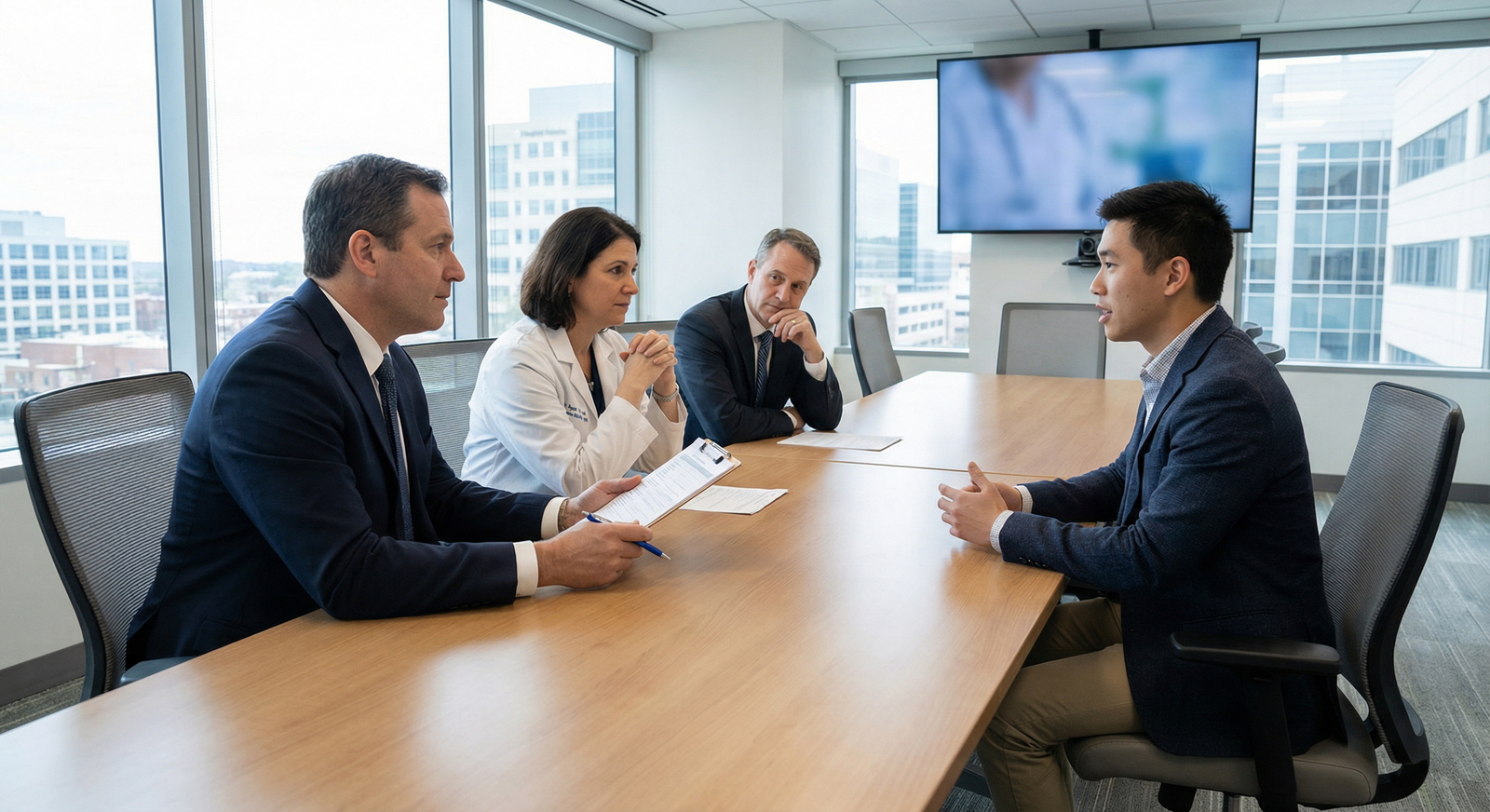
Schedule 2–4 mock interviews before the main interview season:
- General mock (with a mentor, advisor, or IMG colleague):
- Focus: timing, clarity, answering common questions.
- PM&R-specific mock (if possible with a physiatrist or PM&R fellow):
- Focus: “Why PM&R,” patient cases, understanding of rehab.
- Group mock (with other applicants):
- Practice group dynamics, asking questions in group Q&A, and managing limited speaking time.
- Optional recorded self-mock:
- Review your body language and speech patterns.
After each mock interview:
- Write down 3 things that went well and 3 specific areas to improve.
- Incorporate feedback into the next practice, but avoid overcoaching yourself into sounding robotic.
Step 6: Pre- and Post-Interview Professional Habits
Interview day performance is influenced heavily by how you manage your time and mindset before and after each interview.
The 24–48 Hours Before the Interview
Use a structured checklist:
- Re-review the program’s webpage and your notes.
- Re-read your ERAS application:
- Personal statement (so your spoken story aligns with what they’ve already read).
- Activities and research experiences (be prepared to discuss any item).
- Prepare:
- 3–4 key points you want them to remember about you.
- A short, confident answer to “Is there anything else you’d like us to know?”
The night before:
- Set at least two alarms (phone and a backup).
- Print or save the day’s schedule and contact details.
- Lay out clothes and check your tech again (for virtual interviews).
- Aim for adequate sleep; light exercise or stretching can help reduce stress.
During the Interview Day
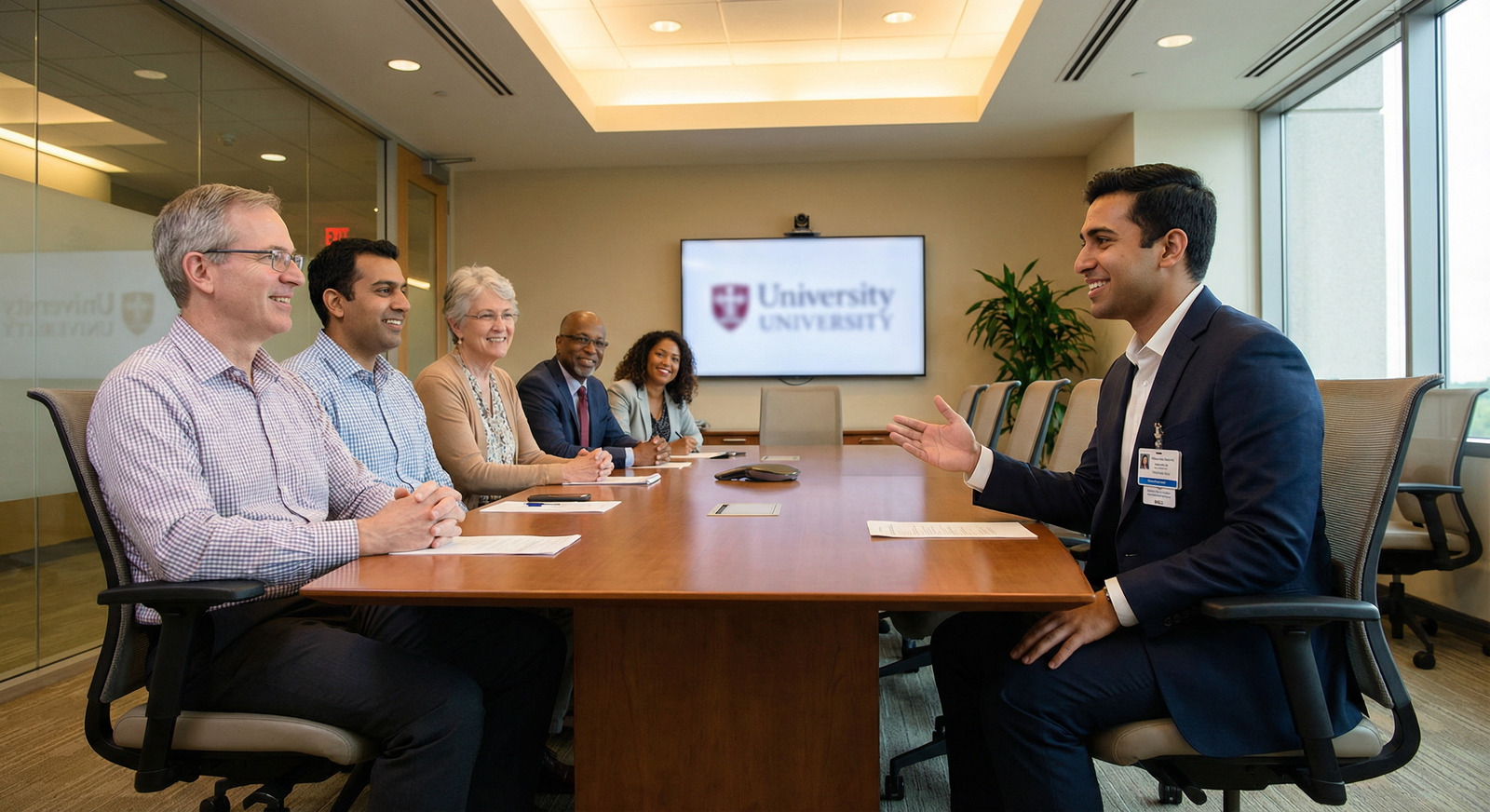
Treat every interaction as part of the evaluation:
- Check-ins and coordinators: Be polite, grateful, and professional—coordinators often share impressions with the committee.
- Resident socials or pre-interview dinners:
- Be yourself, but avoid controversial topics (politics, salary, comparing programs negatively).
- Ask residents about teaching culture, wellness, and how IMGs have been supported.
- Group sessions:
- Participate actively but don’t dominate conversation.
- If another applicant is quiet, make space: it quietly signals collegiality.
After the Interview: Reflection and Thank-You Notes
Immediately after each interview:
- Spend 15–20 minutes writing down:
- People you met (names, roles, specific comments).
- Program features you liked or disliked.
- Your overall “feel” of the culture and fit.
- Rate the program on a few dimensions:
- Academic strength, clinical exposure, support for IMGs, location, fellowship opportunities, “gut feeling.”
Within 24–72 hours:
- Send concise thank-you emails to:
- Program director.
- Key faculty you interviewed with.
- Possibly the chief resident or coordinator, if they had a significant role.
Keep them short and specific:
- Mention one or two things you appreciated or learned from your conversation.
- Briefly restate your interest, especially if the program is high on your list.
- Avoid promises about ranking order, but you may say, “Your program will be strongly considered on my rank list.”
Over the season, these notes will help when you create your final rank list, and thoughtful communication reflects well on your professionalism.
FAQs: PM&R Interview Preparation for IMGs
1. As an IMG with limited formal PM&R rotations in the U.S., how can I still be competitive in interviews?
Emphasize any form of rehab-related experience, even if it wasn’t labeled “PM&R”: neurology or orthopedic rotations with strong functional focus, physiotherapy exposure, community rehab clinics, prosthetics services, or long-term care. Highlight:
- Clear understanding of PM&R’s scope and team-based approach.
- A coherent story of how you discovered and committed to physiatry.
- Evidence of self-education: courses, conferences, PM&R electives or observerships, and reading.
Use patient stories that demonstrate you think in terms of function, not just diagnosis.
2. What PM&R-specific topics should I definitely be ready to discuss in interviews?
Focus on high-yield, core concepts:
- Rehabilitation after stroke, spinal cord injury, and traumatic brain injury.
- Basics of inpatient rehab units: DVT prophylaxis, bowel/bladder management, spasticity, skin integrity, and discharge planning.
- Understanding of ADLs, IADLs, FIM or functional measures (even at a conceptual level).
- Overview of EMG, ultrasound-guided injections, and spasticity management (oral meds, botulinum toxin, intrathecal baclofen). You don’t need expert-level detail, but you should understand the overall goals and PM&R physician’s role.
3. How do I handle questions about gaps in my CV or years since graduation as an IMG?
Be honest, concise, and forward-looking:
- Briefly explain the reason (family responsibility, additional training, research, immigration processing, exam preparation).
- Emphasize what you did to maintain or improve your clinical skills (observerships, continuing education, courses, research).
- Connect the experience to maturity and readiness for residency.
Avoid sounding defensive or making long justifications; show insight and resilience.
4. What are some red flags during interviews that programs might notice in IMG applicants—and how can I avoid them?
Common concerns include:
- Unclear or superficial interest in PM&R → Prepare a detailed “Why PM&R” and demonstrate specific knowledge of the field.
- Communication difficulties → Practice extensively in English, get feedback, and slow down your speech.
- Inflexibility about location or visa → Be honest about constraints but avoid sounding demanding; focus on your adaptability.
- Negative talk about previous training or countries → Maintain professionalism and respect; frame your move as seeking new opportunities, not escaping problems.
By preparing thoughtfully and practicing your communication, you can present yourself as a capable, motivated, and well-informed candidate for the physiatry match—even as an international medical graduate navigating a new system.