Understanding the Pre-Interview Landscape as an IMG
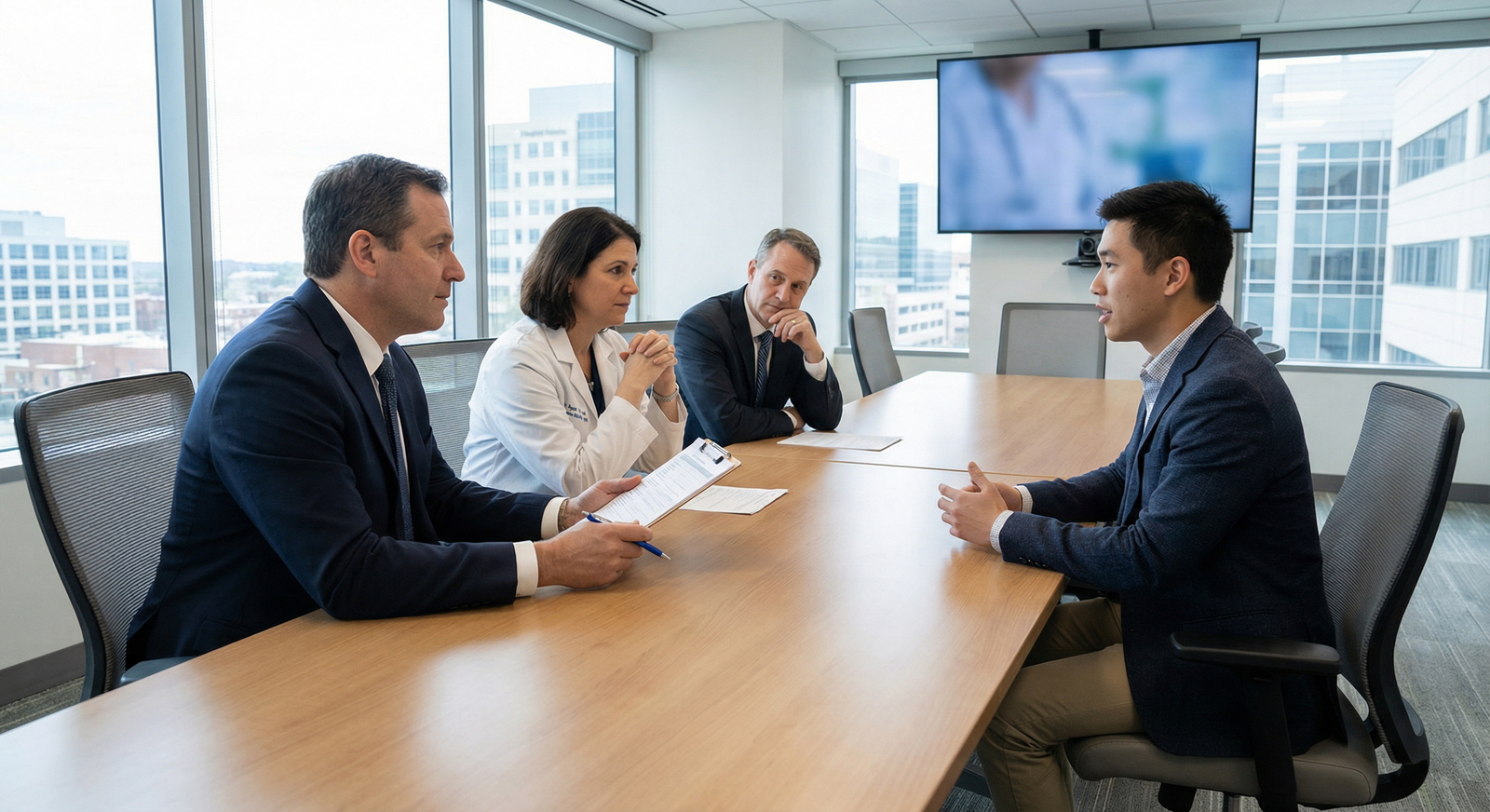
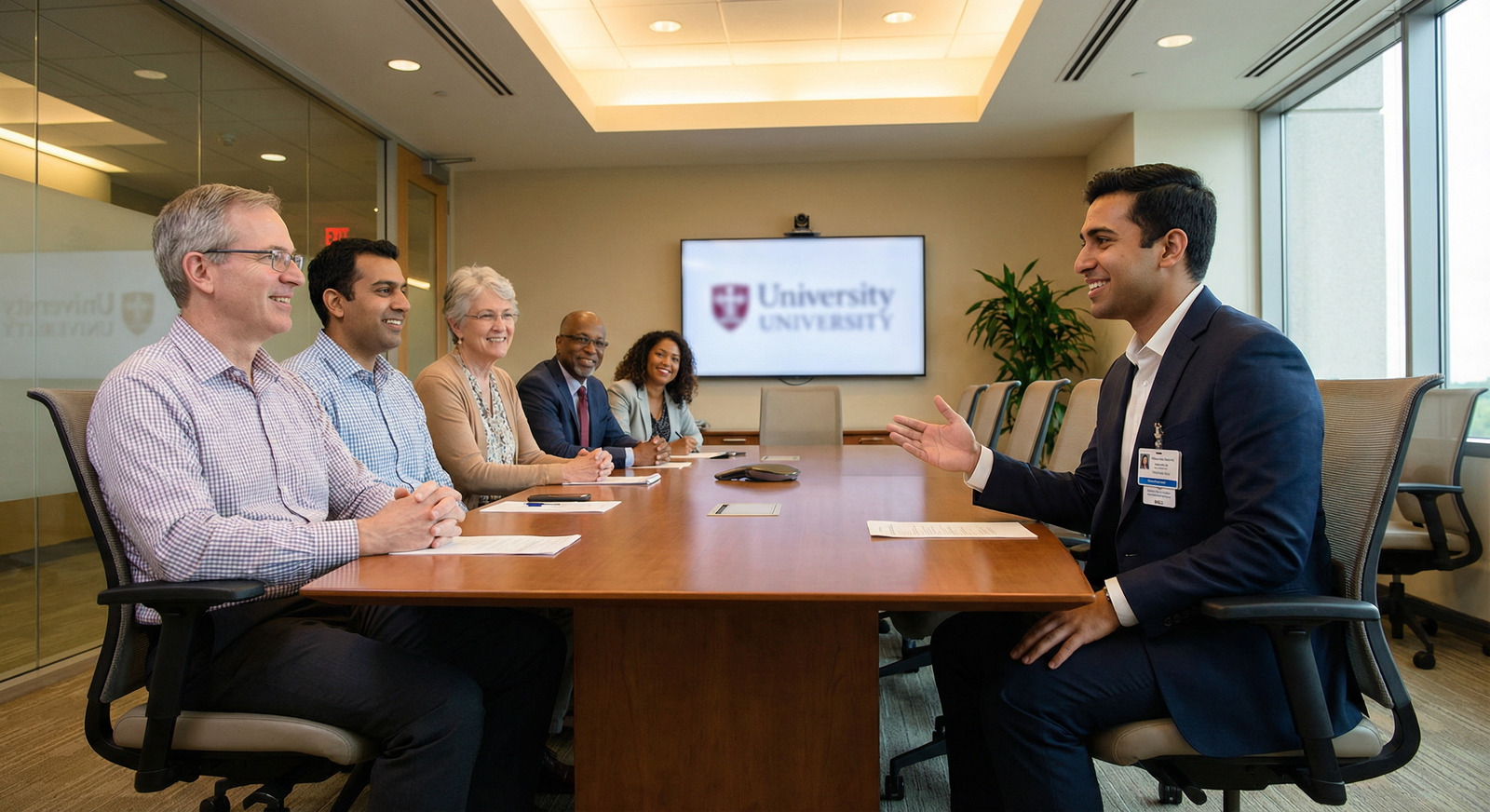
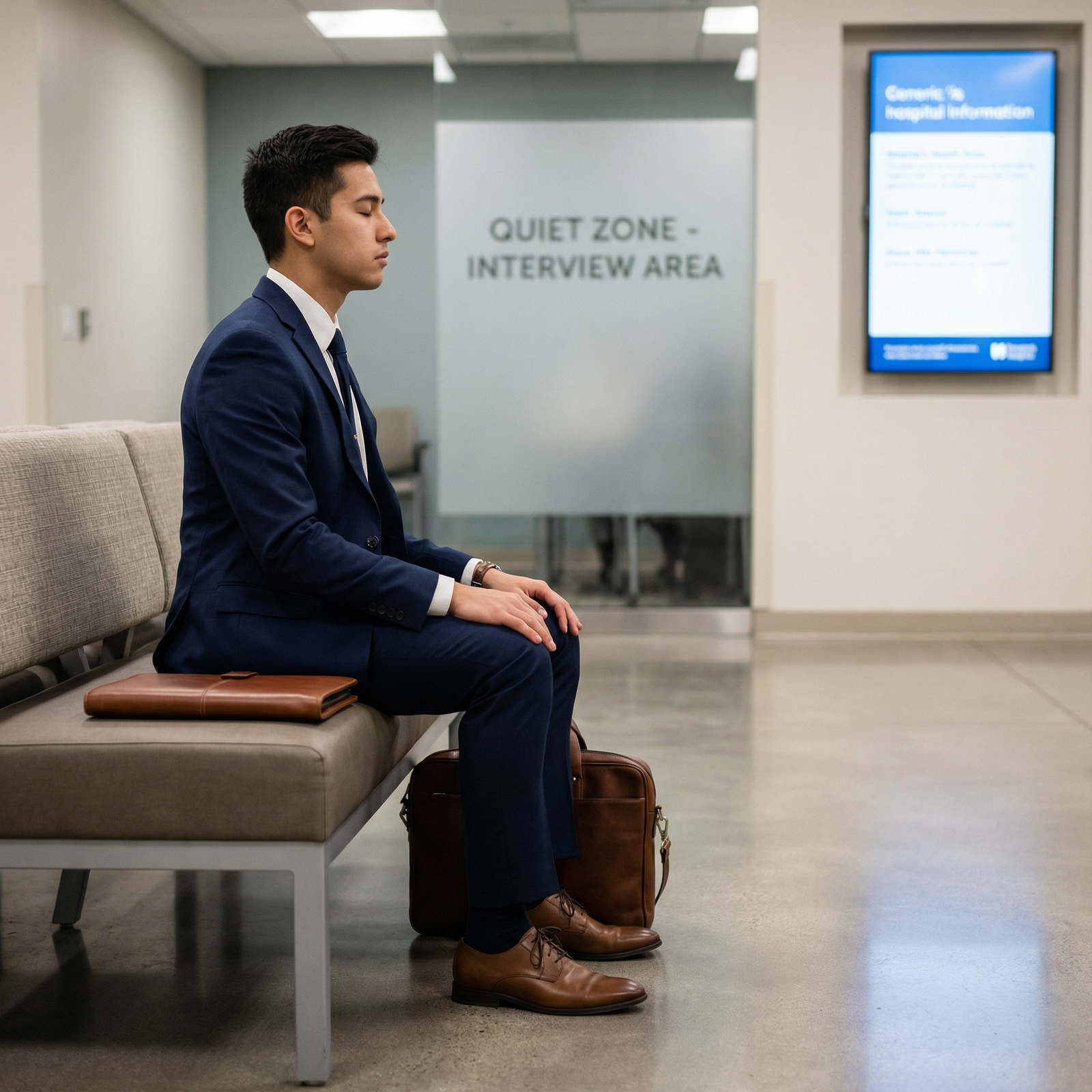
For an international medical graduate (IMG), a residency interview in the United States is more than just a conversation—it is often the pivotal moment that determines your match outcome. A strong application may earn you invitations, but your performance on interview day usually decides your rank position. Effective pre-interview preparation is therefore a non-negotiable priority.
This IMG residency guide focuses specifically on pre-interview preparation strategies—the work you should do weeks to months before your interview day. You will learn how to:
- Understand what programs are really assessing
- Build a targeted preparation plan
- Practice high-yield interview questions for residency
- Strengthen communication and cultural competence as an IMG
- Organize your logistics to avoid last-minute stress
The perspective here is tailored to the realities, strengths, and challenges of international medical graduates navigating the U.S. residency system.
1. Know What Residency Programs Are Really Evaluating
Before you can prepare effectively, you must understand what programs are looking for during residency interviews.
1.1 Core Attributes Programs Assess
While each specialty and program has its nuances, interviewers generally assess:
Communication skills
- Clarity, organization, and fluency in English
- Ability to explain complex ideas simply
- Listening skills and how you respond to questions
Clinical reasoning and professionalism
- How you think through clinical problems
- Awareness of limitations and willingness to learn
- Work ethic, reliability, and integrity
Teamwork and “fit”
- How you collaborate with others
- Your attitude toward feedback and supervision
- Whether your personality and goals align with the program’s culture
Motivation and career goals
- Why you chose this specialty
- Your long-term career plans
- How the specific program aligns with your goals
Resilience and adaptability
- How you handle stress, setbacks, and long hours
- Examples of overcoming challenges, especially as an IMG
1.2 Additional Factors Programs Consider for IMGs
As an international medical graduate, interviewers may pay extra attention to:
Clinical readiness in the U.S. system
- USCE (U.S. Clinical Experience) and what you learned from it
- Comfort with EMR, multidisciplinary teams, and patient-centered care
Language and cultural adaptation
- Ability to communicate with diverse patients and colleagues
- Understanding of U.S. patient expectations and healthcare norms
Visa and long-term commitment
- Your visa needs (if applicable) and immigration plans
- Whether you plan to practice in the U.S. long term
Knowing these priorities helps you target your preparation, rather than trying to memorize generic answers.
2. Build a Structured Pre-Interview Preparation Plan
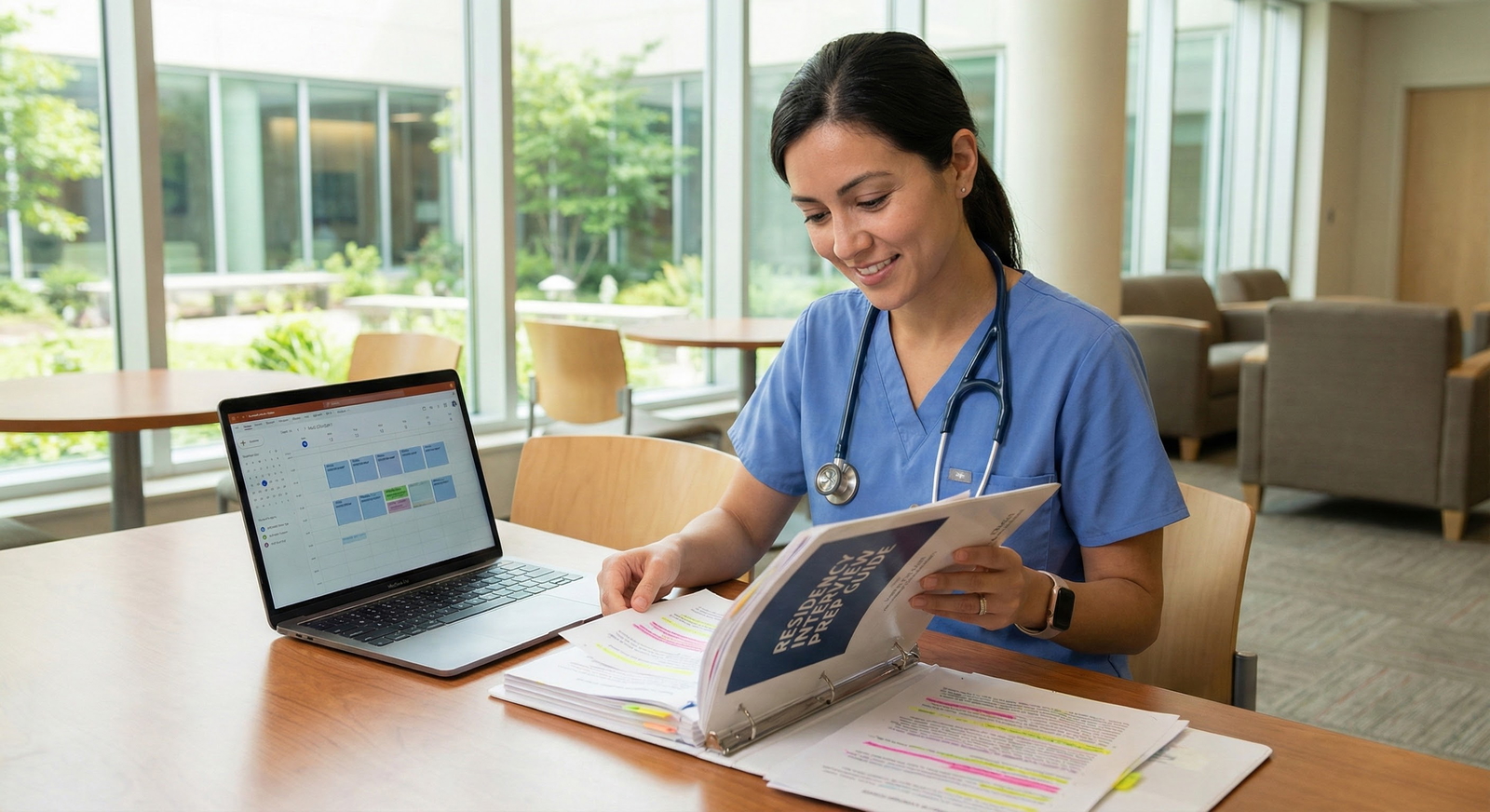
A random, last-minute approach to residency interview preparation is risky—especially for IMGs who may need extra practice with English fluency, cultural nuances, and U.S.-style interviewing. Instead, create a structured, time-based plan.
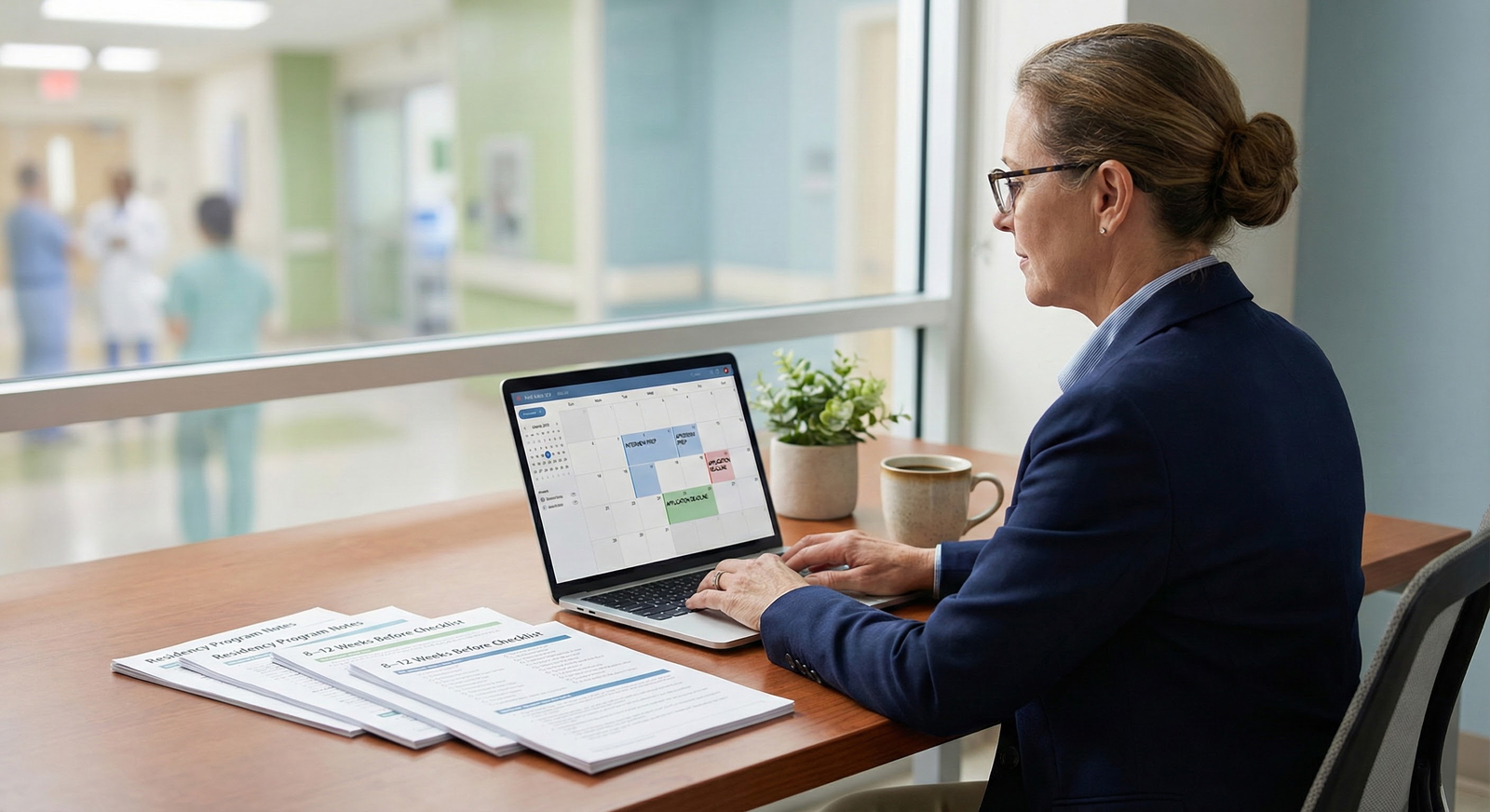
2.1 Start Early: Ideal Timeline
Use this as a rough framework:
8–12 weeks before interviews
- Review your entire application (ERAS, personal statement, CV, MSPE, LORs if you’ve seen them)
- Identify strengths and weaknesses in your profile
- Start reading about common interview questions for residency
- Arrange mock interviews (mentors, alumni, faculty, or professional services)
4–8 weeks before
- Practice behavioral and situational questions with sample answers
- Deep-dive into your own application content—be ready to discuss everything you wrote
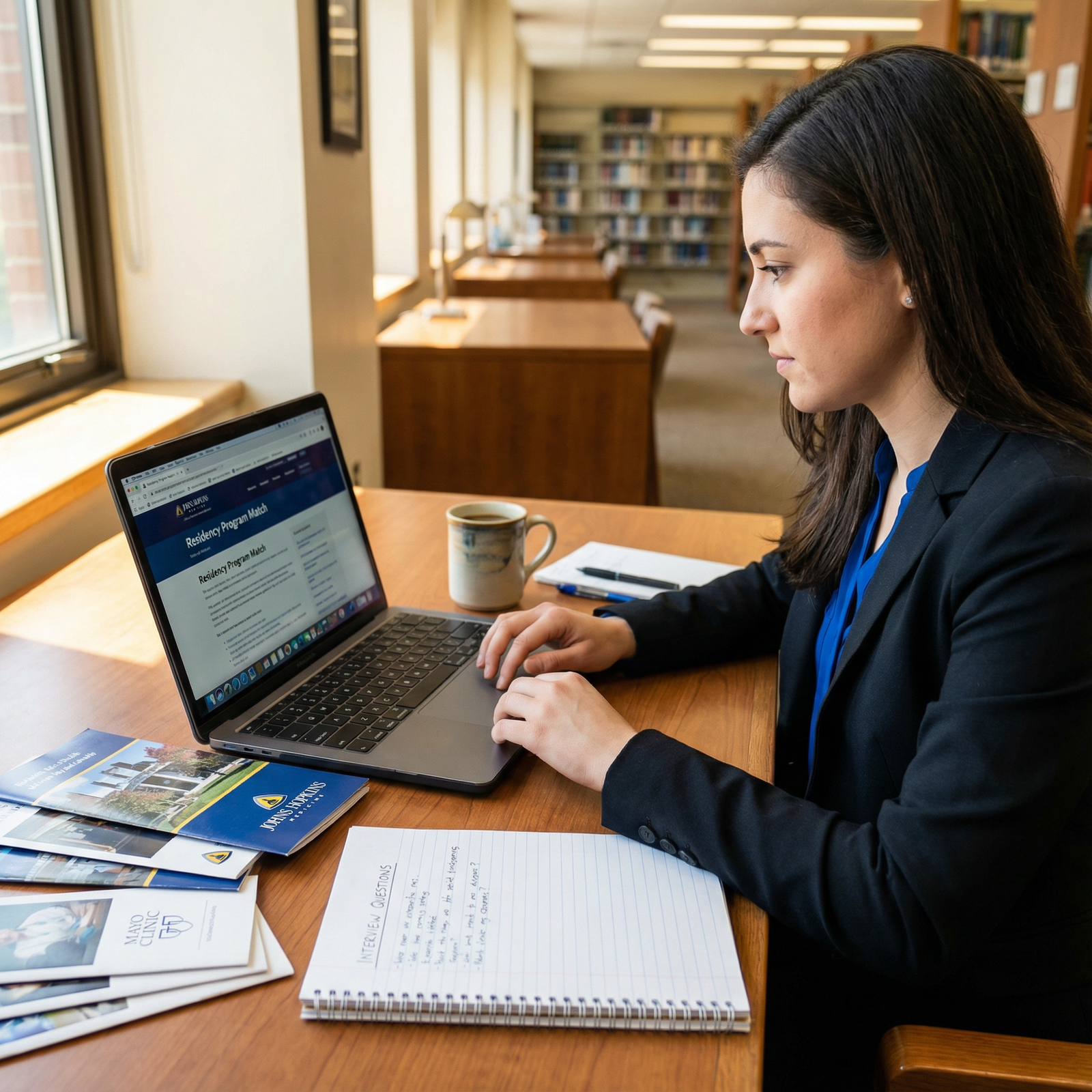
- Research programs that have invited you (or that you are targeting) in detail
2–4 weeks before
- Refine key stories and examples (clinical experiences, leadership, research, adversity)
- Focus on U.S. communication style—concise, structured, patient-centered
- Ensure technology readiness (for virtual interviews) or travel planning (for in-person)
1–2 weeks before
- Finalize answers to most common core questions
- Confirm logistics: interview schedule, time zones, internet, backup devices
- Reduce intensity and focus on rest, review, and confidence-building
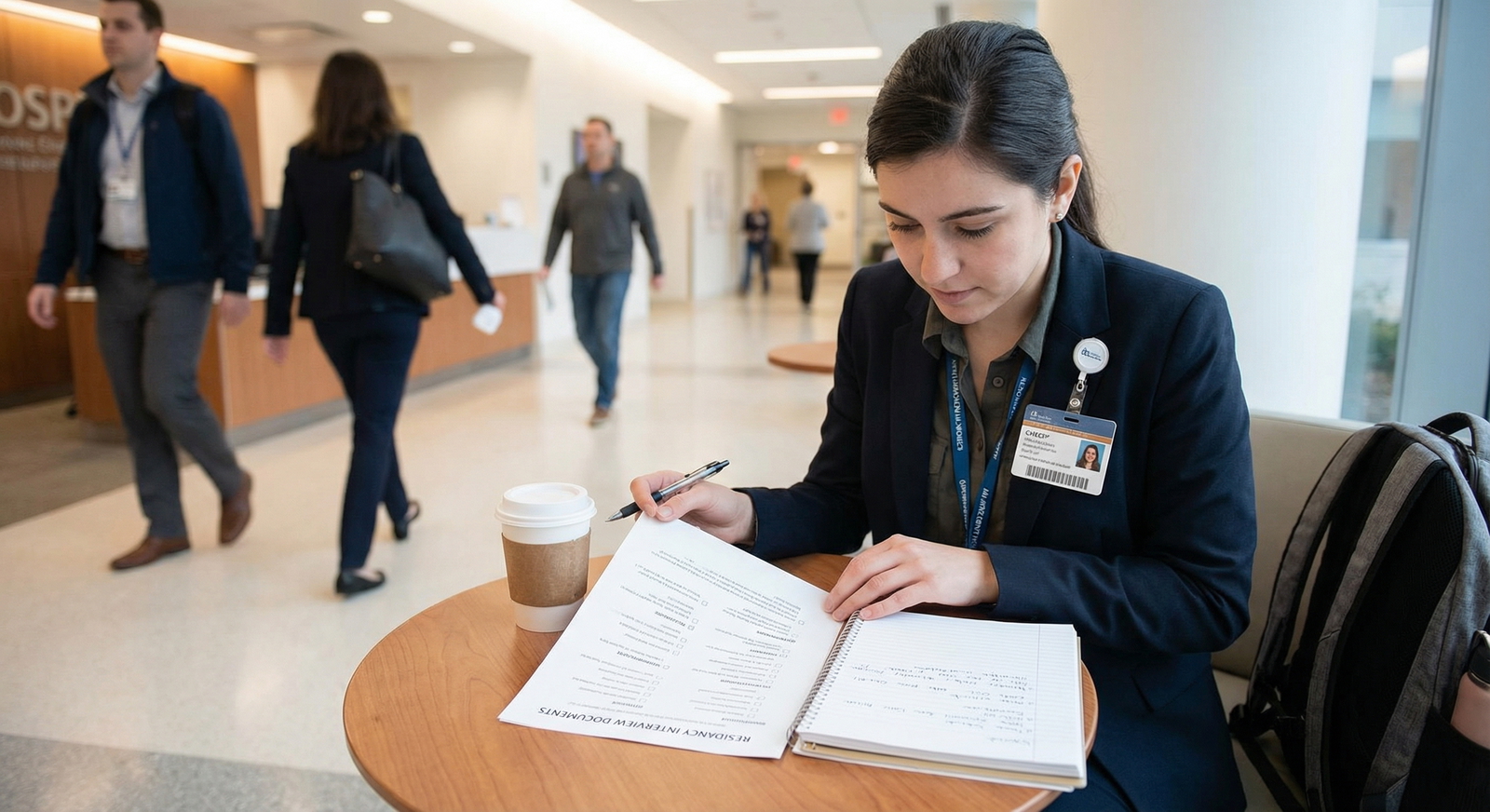
2.2 Create a Personal Interview Preparation Notebook
Digital or paper, but keep it organized. Suggested sections:
Section 1: Personal narrative
- 2–3 versions of “Tell me about yourself”
- Your “Why this specialty?” and “Why the U.S.?” stories
Section 2: Key experiences
- 6–10 detailed stories using a structured format (e.g., STAR—Situation, Task, Action, Result) for:
- Clinical cases
- Leadership/teaching
- Ethical dilemmas
- Difficult team dynamics
- Failure/feedback and growth
- 6–10 detailed stories using a structured format (e.g., STAR—Situation, Task, Action, Result) for:
Section 3: Program research notes
- For each program: location, size, strengths, tracks, notable faculty, unique features
- Tailored reasons why you’re interested in that program
Section 4: Questions to ask programs
- Education, teaching, research, wellness, mentorship, schedule, and support for IMGs
Section 5: Self-reflection
- Common weaknesses and how you address them
- Lessons learned from your path as an IMG
Use this notebook repeatedly in your residency interview preparation sessions.

3. Master High-Yield Residency Interview Questions (with IMG-Focused Examples)
Although no list can cover every question, many interviews revolve around predictable themes. As an IMG, your goal is not to memorize scripts but to internalize your stories and deliver them naturally.
3.1 Core Introductory Questions
1. “Tell me about yourself.”
Your answer should be 1–2 minutes, structured and relevant to medicine.
Suggested structure for IMGs:
Brief background
- “I’m an international medical graduate from [country] where I completed my medical school at [institution].”
Key experiences and strengths
- Highlight 2–3 experiences that reflect your clinical, research, or leadership strengths, ideally including U.S. clinical exposure.
Transition to your interest in the specialty and program
- End with why you’re here: “These experiences led me to pursue residency in [specialty], particularly in a program like yours that emphasizes [specific program feature].”
Practice tip: Record yourself answering; aim for clear, confident, and concise delivery.
2. “Why this specialty?”
For an international medical graduate, this answer must move beyond “I enjoy internal medicine” or “I like surgery.” Focus on:
- Exposure in medical school or residency abroad
- Specific aspects that resonate with your strengths (procedures, continuity of care, diagnostic reasoning, acute care, etc.)
- Clear connection to your long-term goals
Example outline:
- A formative clinical experience that introduced you to the specialty
- What you enjoy day-to-day about this work
- Why your personality and skills are suited to this specialty
- How this specialty fits your future plans in the U.S.
3. “Why our program?”
This is where targeted research pays off. Avoid generic answers like “diverse pathology” or “strong teaching”—every program claims that.
Instead:
Mention specific features:
- Tracks (research, primary care, global health)
- Patient populations
- Unique curricula or scholarly opportunities
- Reputation for supporting IMGs, mentorship, or wellness
Connect those features to your goals:
- “Your [X] track directly aligns with my interest in [Y].”
As part of your residency interview preparation, create 3–4 bullet points per program that you can adapt during the conversation.
3.2 Behavioral Questions: Practice Using the STAR Method
Behavioral questions often start with:
- “Tell me about a time when…”
- “Describe a situation where…”
- “Give me an example of…”
These questions help assess how you behave in real situations. Use STAR:
- Situation – context
- Task – your role or responsibility
- Action – what you did
- Result – what happened and what you learned
Common themes and IMG-centered examples to prepare:
1. Handling a difficult patient or family
As an IMG, you might emphasize:
- Cultural considerations (language differences, health beliefs)
- Use of interpreter services (in U.S. experiences)
- Emotional intelligence and empathy
2. Conflict within a team
You might discuss:
- A disagreement with another trainee or attending
- A misunderstanding due to cultural differences or communication style
- How you actively resolved the issue and improved collaboration
3. Making or witnessing a mistake
Be honest but professional:
- A non-catastrophic error or near-miss you were involved in or observed
- How you ensured patient safety and transparency
- Systems issues you recognized and what you learned
4. Receiving critical feedback
Highlight:
- A time you received direct or challenging feedback
- How you processed it without becoming defensive
- The concrete steps you took to improve
Have at least 6–8 well-developed STAR stories that can be adapted to various questions.
3.3 Common IMG-Specific Questions to Anticipate
Residency interviewers know your path is different. Prepare for:
1. “Why did you choose to train in the U.S.?”
Include:
- Clinical, academic, or research opportunities in the U.S.
- Desire for exposure to diverse patient populations
- Structured, evidence-based training environment
Avoid over-criticizing your home country’s system; focus on positive pull factors, not negative push factors.
2. “Tell me about your US clinical experience (USCE).”
Be ready with:
- Where and when you did observerships, externships, sub-internships, or research
- What you learned about:
- Interprofessional teams
- Documentation and EMR
- Patient-centered communication
- How you adapted from your home system to the U.S. environment
3. “You have a gap (or repeated an exam). Can you explain that?”
For an international medical graduate, this is common. Use:
- Honesty without unnecessary detail
- Accountability without self-criticism
- Emphasis on:
- What you did during gaps (research, volunteering, family responsibilities, exam preparation)
- What you learned and how you’ve grown
4. “Do you need a visa?” or “What are your long-term plans in the U.S.?”
Prepare a clear, calm answer:
- State your visa needs (J-1, H-1B if applicable) clearly if asked
- Affirm your commitment to completing residency and contributing to the U.S. healthcare system
- Outline realistic long-term goals (fellowship, practice plans, academic interests)
4. Strengthen Communication & Cultural Competence as an IMG
Even clinically strong IMGs may struggle in interviews because of communication style or cultural expectations. Addressing this explicitly is a major competitive advantage.
4.1 Practical English & Communication Skills
No matter your level, targeted refinement helps, especially for residency interview preparation.
Action steps:
Record mock interviews (video and audio)
- Evaluate your clarity, pacing, and filler words (“um,” “like,” “you know”)
- Ask a native or fluent English speaker for feedback
Work on concise answers
- Many IMGs tend to over-explain; interviewers value structure and brevity
- Aim for 1–2 minute answers for most questions, unless they ask for more detail
Practice medical and emotional vocabulary
- Phrases like “I empathized with the patient by…” or “We discussed goals of care…”
- How to describe difficult conversations, error disclosure, or breaking bad news in U.S. style
Consider language coaching if needed
- Accent reduction is not mandatory, but intelligibility is
- Clear pronunciation and natural rhythm help you be understood, especially on virtual platforms
4.2 Understand U.S. Professional Culture
As an international medical graduate, differences in hierarchy and communication can be significant.
Key points:
U.S. interviews value humility + confidence.
- Avoid sounding either arrogant or excessively self-deprecating
- It’s acceptable to say “I’m proud of…” when describing achievements
Eye contact, posture, and non-verbal cues
- Maintain comfortable eye contact (or look at the camera in virtual interviews)
- Sit upright, lean slightly forward, avoid crossing arms
Direct yet respectful communication
- Clearly state your opinions and experiences
- Use “I” statements: “I learned,” “I contributed,” “I led the team”
Discussing sensitive topics
- Be professional when discussing politics, religion, or controversial health topics
- Focus on patient welfare, ethics, and respect for diversity

5. Prepare for Both Virtual and In-Person Interview Logistics
Strong content can be undermined by poor logistics. IMGs often contend with time zones, travel, visas, and technology. Address these early in your pre-interview preparation.
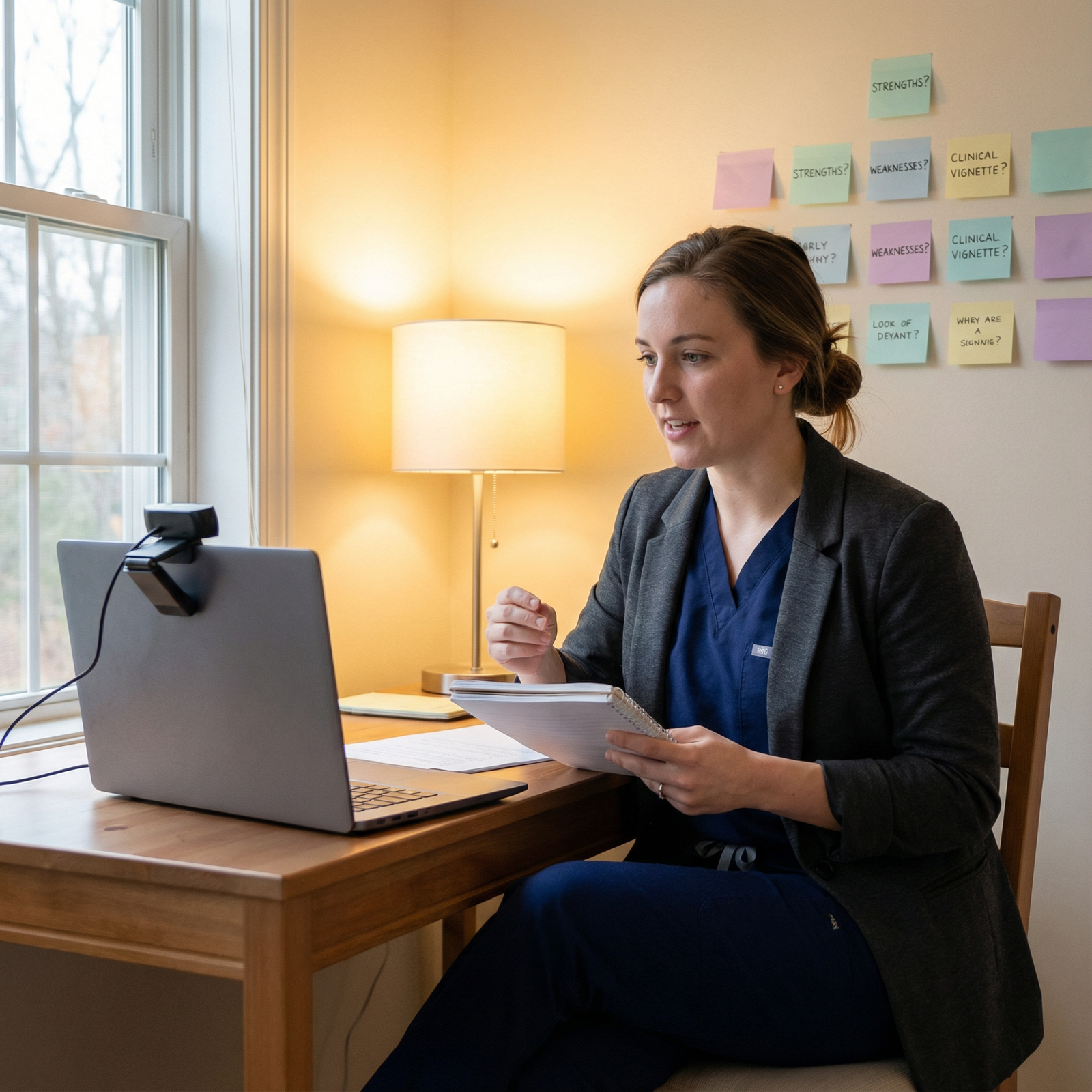
5.1 Virtual Interview Readiness
Many programs continue to use virtual interviews. Treat them as seriously as in-person ones.
Technical Setup Checklist:
Internet
- Stable, high-speed connection; if possible, use wired Ethernet
- Test connectivity at the same time of day as your interview
Hardware
- Laptop with reliable webcam and microphone (headset often improves sound)
- Backup device (tablet or second laptop) ready and charged
Software
- Install and test Zoom, Microsoft Teams, Webex, or whatever the program uses
- Create a professional profile name (First Last, MD or MBBS)
Environment
- Neutral, clean background; remove distractions or clutter
- Good front-facing lighting (avoid bright window behind you)
- Quiet room; inform housemates and silence your phone
Do at least 2–3 full mock virtual interviews with video on and record them. Review posture, eye contact, distractions, and voice clarity.
5.2 In-Person Interview Preparation (If Applicable)
When programs offer or require in-person interviews, IMGs must also consider:
Travel documents
- Visa status, I-94, passport validity, any local ID requirements
- Copies of invitation emails and program contacts
Travel logistics
- Arrive at least one day early to manage jet lag and delays
- Confirm transportation from airport to hotel and from hotel to hospital
Professional appearance
- Conservative business attire (suit for all genders is standard)
- Polished but comfortable shoes—there may be tours and walking
- Neat grooming and minimal distracting accessories
On-site etiquette
- Greet staff, residents, coordinators, and faculty courteously
- Remember: you are being evaluated throughout the visit, not just in the formal interview room
6. Strategic Mindset, Wellbeing, and Final Rehearsals
Beyond content and logistics, successful residency interview preparation for IMGs also requires the right psychological approach.
6.1 Shift from “Pleading” to “Partnering”
Many IMGs feel like they must “convince” programs to accept them. That mindset can create anxiety and passive body language.
Reframe your mindset:
- You bring unique strengths: bilingual skills, global perspective, resilience, adaptability.
- Interviews are two-way evaluations: you are also deciding whether this program fits your needs and goals.
- Your goal is not to sound perfect but to present an honest, competent, and committed future colleague.
6.2 Develop a Pre-Interview Routine
In the final 3–5 days before each interview:
Review, don’t cram
- Skim your notebook and key stories
- Review your program-specific notes
Sleep and nutrition
- Protect time for rest; cognitive performance drops sharply with poor sleep
- Avoid heavy meals or excessive caffeine right before interviews
Light rehearsal
- Practice your intro answers: “Tell me about yourself,” “Why this specialty,” “Why this program”
- Rehearse out loud, but avoid over-memorization—aim for natural delivery
Stress management
- Deep-breathing exercises or mindfulness apps
- Brief physical activity: stretching or a short walk
6.3 After Each Interview: Immediate Reflection
Pre-interview preparation also means preparing for continuous improvement.
After each interview:
Within an hour, write down:
- Questions you found difficult
- Answers you wish you had given differently
- New questions programs asked that you hadn’t anticipated
Update your notebook so you’re better prepared next time. Over multiple interviews, your performance will generally improve—if you actively reflect and adjust.
Frequently Asked Questions (FAQ)
1. How early should an international medical graduate start residency interview preparation?
Ideally, you should start 8–12 weeks before the expected interview season. As an IMG, you may need additional time to:
- Refine English communication for a professional setting
- Practice U.S.-style behavioral and situational questions
- Understand cultural expectations in U.S. residency programs
If you’re late to start, focus on high-yield areas: personal narrative, core questions, program research, and at least a few mock interviews.
2. What are the most important interview questions residency programs will ask IMGs?
While every program is different, most IMGs should be fully prepared for:
- “Tell me about yourself.”
- “Why this specialty?”
- “Why did you choose to pursue training in the U.S.?”
- “Why our program?”
- “Tell me about your US clinical experience.”
- “Tell me about a challenging clinical situation and how you handled it.”
- “What are your strengths and weaknesses?”
- “Do you need a visa, and what are your long-term plans?”
Use structured frameworks like STAR for stories and practice your delivery aloud.
3. How can I improve my English and communication skills specifically for interviews as an IMG?
Practical strategies include:
- Recording mock interviews and getting feedback from fluent speakers
- Watching sample U.S. residency or medical interviews online to model tone and structure
- Joining conversation groups or working with a communication coach, if possible
- Focusing on clarity and structure, not on sounding “perfect” or accent-free
- Practicing concise, 1–2 minute responses to common questions
Consistent practice over several weeks often leads to substantial improvement.
4. Is it necessary to tailor my answers for each program, or can I use the same responses?
You can—and should—reuse your core stories and themes, but you must tailor:
- Your “Why our program?” answer
- Specific questions you ask residents and faculty
- How you connect your goals to the program’s unique strengths
For example, your main reason for choosing internal medicine might be the same, but how you express interest in a community-based program vs. a large academic center should differ. Program-specific tailoring shows genuine interest and professionalism, which can significantly influence how you are ranked.
By approaching your residency interview preparation with structure, self-awareness, and deliberate practice, you can transform your IMG status from a perceived obstacle into a story of resilience, adaptability, and global perspective—qualities that many programs value deeply in their residents.